
Reviewed · GION & GEISHA WALKS
Kyoto: Gion Geisha District Walking Tour – Stories of Geisha
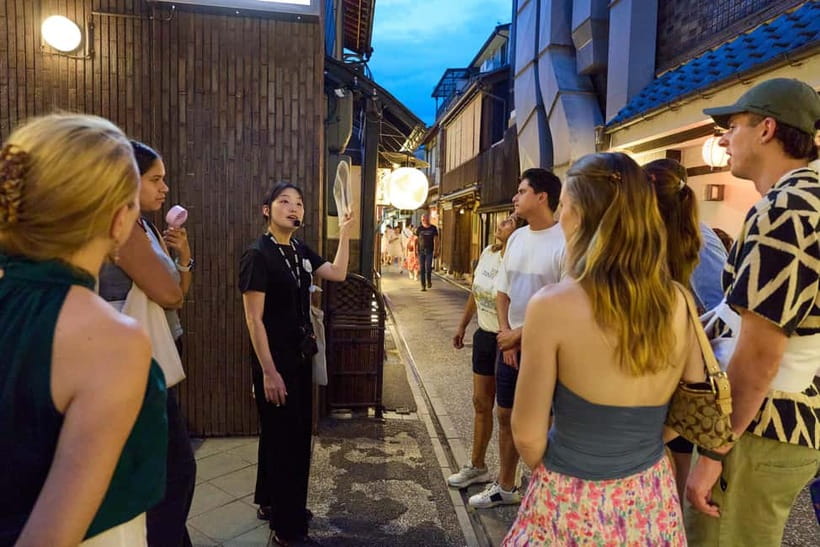
Kyoto’s geisha districts make the most sense after sunset, when lanterns glow outside wooden teahouses and the narrow lanes take on a quieter, more secretive mood. This two-hour walk links Pontocho and Gion, explaining the work, training, customs, and changing place of geiko and maiko in Kyoto life.
I like the clear route, which takes you from Pontocho Alley and the Izumo-no-Okuni statue to Yasaka Shrine and Hanamikoji Street. I also like the guide-led storytelling. Guides such as Yuki, Nami, Yukari, Deborah, and Manuel are praised for making room for questions rather than delivering a stiff speech.
The main catch is that seeing a geiko or maiko is never guaranteed. Evening darkness can also make some sights harder to see, and the tour ends away from its starting point, so you should pay attention to your final location.
In This Review
- Key points to know before you book
- Why Gion is better understood on foot at night
- Pontocho Alley and the old teahouse streets
- The Izumo-no-Okuni statue and the birth of kabuki
- Entering Gion through Yasaka Shrine
- Gion Corner and Hanamikoji Street
- What the guides add to the experience
- How much walking and how fast is the route?
- Is $20 a fair price?
- Who should book this Kyoto walk?
- My verdict on the Gion Geisha District Walking Tour
- FAQ
- Where does the tour meet?
- How long does the walking tour last?
- Which areas does the route visit?
- Is the tour offered in English?
- Can I see a geisha or maiko during the walk?
- Are young children allowed to join?
Key points to know before you book
- Nighttime setting: See Gion and Pontocho when teahouses open and performers may be heading to appointments.
- Two famous districts: Visit both Pontocho Alley and Gion, rather than seeing only one small section.
- Useful cultural context: Learn the difference between geiko and maiko, along with their training and traditions.
- Strong guide element: English and Spanish-speaking guides explain the area and answer questions along the way.
- Easy walking pace: The two-hour route includes regular stops for stories, photographs, and questions.
- Good value: At $20 per person, this is an inexpensive way to add meaning to a self-guided visit.
Why Gion is better understood on foot at night
Gion is often presented as a place to spot geisha, but that narrow goal misses much of what makes the district worth visiting. The streets, teahouses, shrines, etiquette, and old entertainment customs all connect. A local guide helps you see those links instead of simply wandering past closed doors.
The experience begins in central Kyoto, in front of Ben’s Cookies Kyoto Shijo. Your guide holds a sign board, giving you a clear meeting point in a busy part of the city. From there, you set off on foot toward Pontocho.
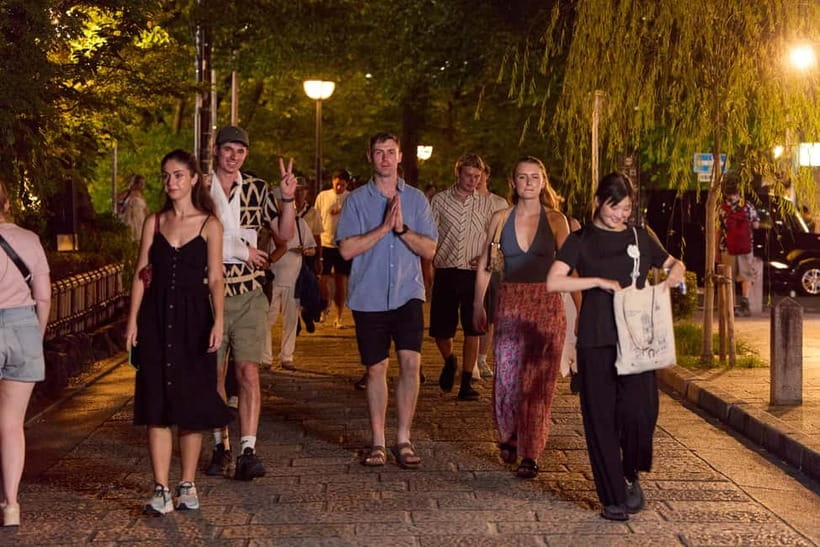
The tour lasts two hours, which is long enough to cover the main sights without turning into an exhausting march. You should bring water and wear comfortable shoes. The route uses narrow lanes and ordinary city streets, with several stops where you can pause and listen.
The evening timing matters. The districts can feel quite different after dark, with old façades, small signs, and restaurant entrances taking on a more intimate feel. It is also the time when geiko and maiko may be traveling to appointments. Keep your expectations sensible, though. The guide can help you spot them respectfully, but no tour can promise an encounter.
A few more Kyoto tours and experiences worth a look

Pontocho Alley and the old teahouse streets
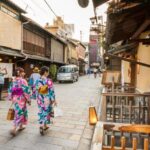
Pontocho Alley is one of the tour’s most atmospheric stretches. It is a narrow lane lined with traditional Japanese restaurants and exclusive clubs, many operating behind modest wooden fronts. You will not be touring the interiors, but the street itself gives you a useful sense of how Kyoto’s old entertainment districts are arranged.
This is where the guide begins to explain the role of teahouses and the social world around them. The point is not simply that the buildings look old. Their design, discreet entrances, and private atmosphere reflect a setting where conversation, performance, and formal hospitality have long mattered.
I find this part especially useful if you know little about geisha culture. The word geisha is often used as a catchall, but Kyoto more commonly uses geiko for its professional entertainers. Maiko are apprentices, and their clothing, hairstyles, makeup, and level of training differ. A good guide makes these distinctions understandable without burying you in terminology.
Pontocho is also a practical place to continue your evening after the walk. It is lined with eateries, but the tour does not include food or drinks. If you plan to eat nearby, remember that some establishments in the district are private or expensive, so a little research helps.
The Izumo-no-Okuni statue and the birth of kabuki
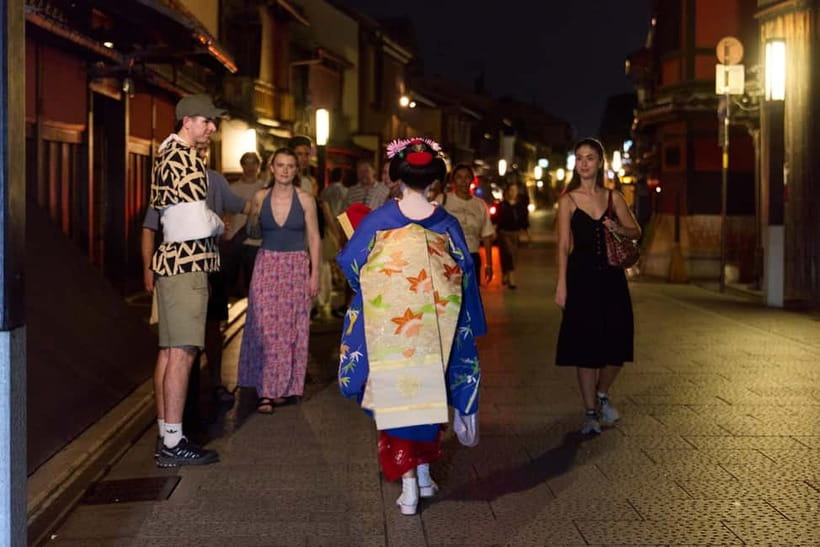
After walking through Pontocho, the route crosses the river and stops at the statue of Izumo-no-Okuni. This pause adds a different strand to the evening: the story of the woman associated with the creation of kabuki.
The stop lasts about 15 minutes, enough time for the guide to explain why this performer matters and how popular entertainment developed in Kyoto. It also breaks up the walk nicely. Rather than rushing from one district to the next, you get a fixed point where the wider story of Japanese performance comes into view.
I like this connection because it shows that the evening is not only about spotting people in traditional dress. Kyoto’s entertainment culture includes theater, music, dance, ceremony, and hospitality. The geiko and maiko traditions belong to that larger world.
The statue itself is a brief stop, not a major monument visit. You should think of it as a storytelling point rather than a destination that requires a long visit. The guide’s explanation is what gives it value.
Entering Gion through Yasaka Shrine
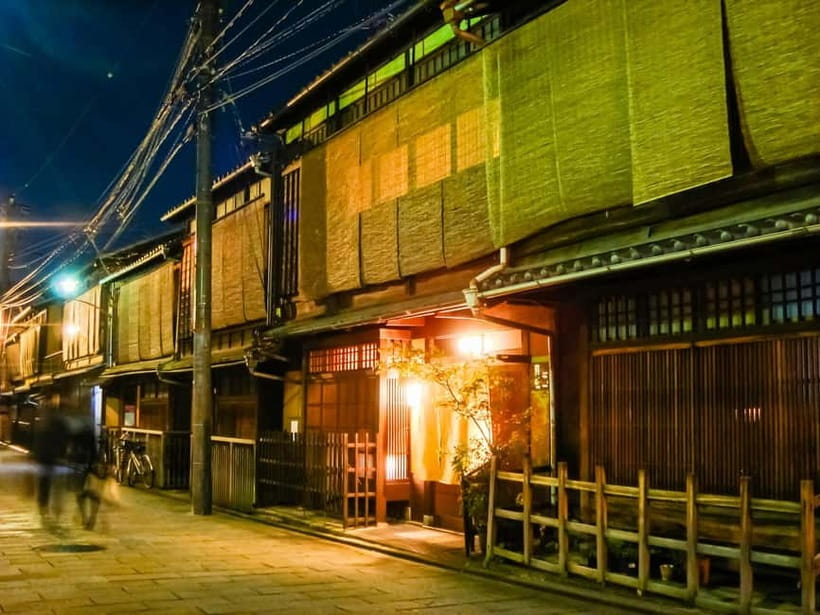
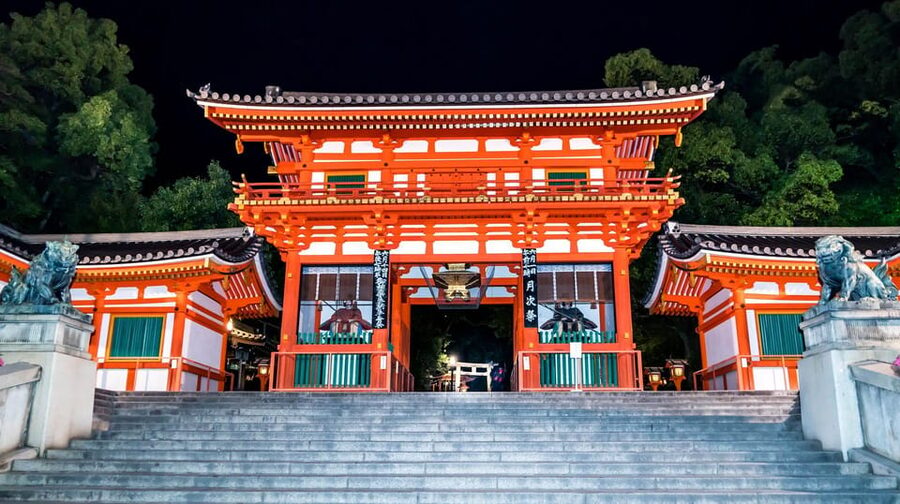
The group then continues into Gion, Kyoto’s best-known geisha district. The route includes about 30 minutes in Gion, followed by a longer stop at Yasaka Shrine.
Gion is a place where you should slow down and look closely. Old wooden buildings line streets and lanes, while restaurants and teahouses sit behind understated entrances. Some of the most interesting details are easy to miss if you are focused only on taking photographs.
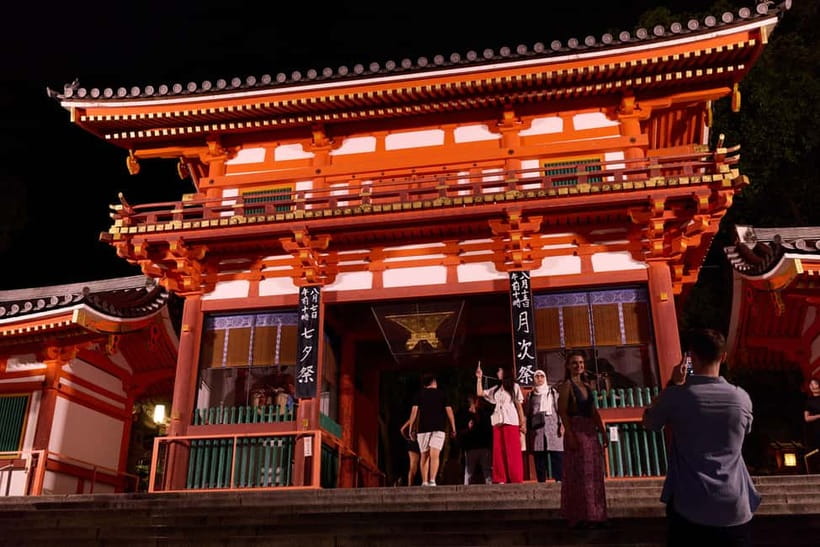
Yasaka Shrine provides a welcome change of pace. The guide explains its place in the area and gives you a chance to see one of Kyoto’s important religious sites as part of the surrounding neighborhood, not as an isolated attraction. The shrine stop lasts about 25 minutes, so there is time to listen and take photographs.
This part also helps place Gion in everyday Kyoto. The district is not a stage set built only for visitors. It is a working area with businesses, residents, religious sites, and long-standing professional traditions. That is why respectful behavior matters. Stay with the group, keep voices down in narrow lanes, and follow the guide’s advice if a geiko or maiko passes by.
Gion Corner and Hanamikoji Street
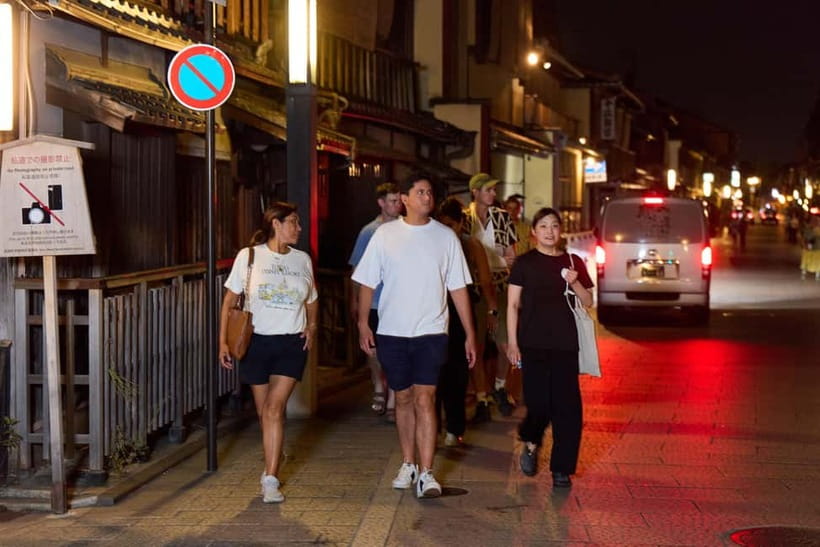
The walk includes a short stop at Gion Corner, followed by about 15 minutes on Hanamikoji Street. These are useful final stops because they bring together the visual side of the district and the cultural explanation you have been building throughout the evening.
Hanamikoji is known for its traditional wooden architecture and formal teahouse atmosphere. In the evening, the street can be particularly appealing, but darkness has a drawback: some details are easier to appreciate in daylight. One person who took the tour in autumn noted that the early sunset made certain sights less clear, even though the nighttime mood was ideal for spotting geiko and maiko.
Gion Corner is a quick visit rather than a performance included in the tour. Treat it as a location connected to Kyoto’s traditional arts, not as a ticketed show. The guide uses the stop to add context before the walk finishes.
The final stretch is also where you may encounter a geiko or maiko heading to an appointment. Sightings can be exciting, but they should be treated as brief cultural encounters, not photo opportunities arranged for the group. The best approach is to watch quietly and avoid blocking the lane.
Other walking tours we've reviewed in Kyoto




What the guides add to the experience
The strongest part of this tour is the person leading it. The guide roster changes, so you cannot rely on receiving a particular individual, but the names attached to especially strong experiences include Yuki, Nami, Yukari, Deborah, Manuel, Kenji, Michael, Adrian, Akari, Shin, and Melanie.
Yuki is repeatedly praised for his warmth, local perspective, and pride in Kyoto. He has led small groups of six as well as larger groups, and his explanations cover both geisha customs and ordinary Japanese manners. Nami is noted for clear communication, a good pace, and regular checks to make sure everyone can keep up and ask questions.
Deborah uses photographs to explain geiko and maiko life, which can help when the streets are dark or when you need to understand clothing and hairstyles. Yukari is praised for making the walk relaxed and approachable. Manuel is described as lively and well informed, with a talent for turning facts into an interesting story.
The exact personality of your guide will vary, but the format encourages conversation. You can ask about training, clothing, the difference between geiko and maiko, teahouse customs, and the way these traditions fit into present-day Kyoto. That makes the tour useful for beginners and still worthwhile for anyone who already has some interest in the subject.
How much walking and how fast is the route?
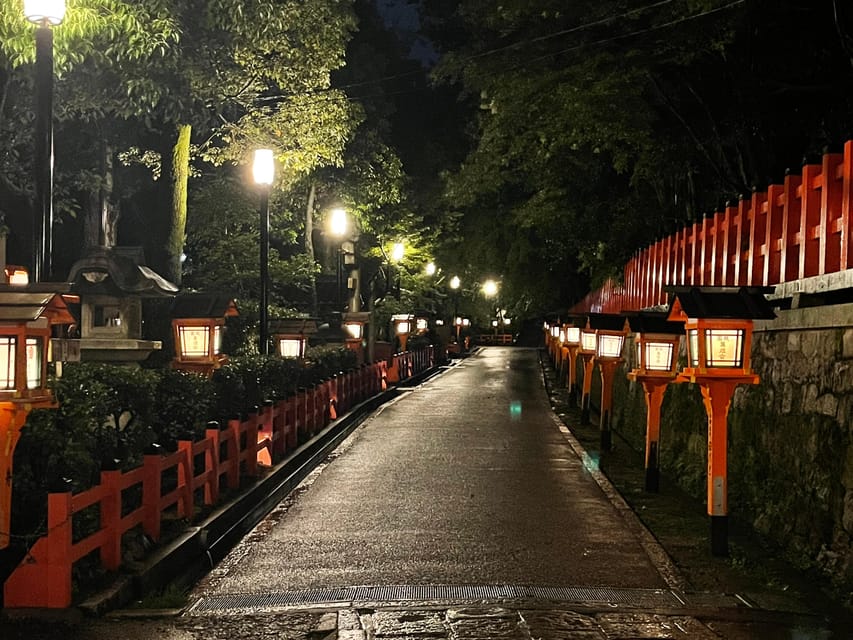
The tour takes two hours and moves through several districts, but it is not described as strenuous. The pace allows time for explanations, questions, and photographs. Guides have also adapted to rain by finding sheltered places for stops, though poor weather will still affect the atmosphere and visibility.
You should plan for an open-air experience. Bring water, dress for the forecast, and choose shoes you can comfortably use on city streets for two hours. Children under 10 are not permitted, so this is aimed at older children and adults.
The meeting point is straightforward, but the ending deserves attention. The walk does not finish at Ben’s Cookies Kyoto Shijo, and one participant found the return journey slightly confusing. Before you leave the guide, confirm where you are and how you plan to continue your evening.
Is $20 a fair price?
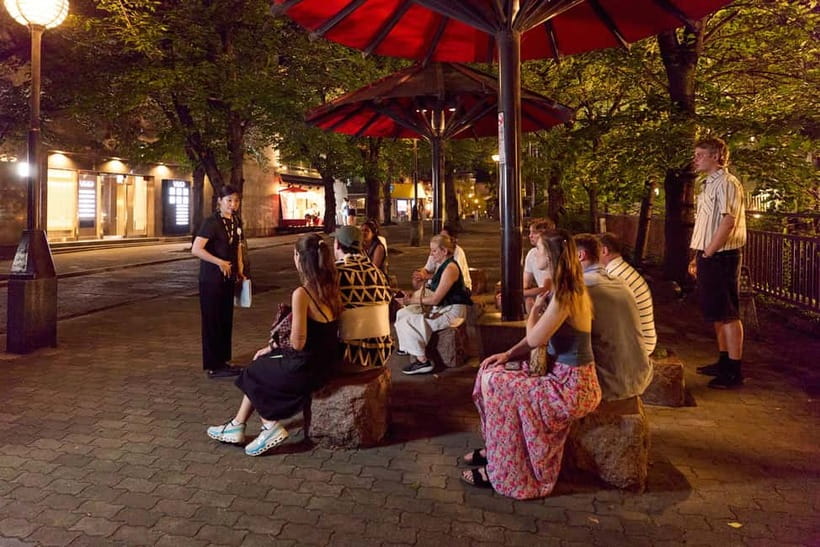
At $20 per person, this is strong value if you want cultural context rather than a private or theatrical geisha encounter. You are paying for a two-hour walking route, a local guide, and explanations at several important sites. There is no meal, drink, show, or guaranteed meeting with a geiko or maiko.
Compared with wandering through Gion alone, the price buys you a framework. You learn what you are looking at, why the teahouses matter, and how geiko and maiko fit into Kyoto’s traditional arts. That context can improve the rest of your time in the city, especially if you visit Gion again on your own.
The tour has a listed rating of 4.7 from 2,187 reviews, with repeated praise for the guides’ warmth, clarity, pacing, and ability to answer questions. That consistency matters more here than a long list of stops, since the experience depends heavily on the quality of the explanation.
You can cancel up to 24 hours before the start for a full refund, and the reserve now, pay later option keeps your plans flexible. English and Spanish tours are available, though you should check the available starting time and language when booking.
Who should book this Kyoto walk?
I would recommend it to first-time visitors who want an introduction to Gion without spending a large amount on a formal cultural show. It also suits couples, friends, and families with children aged 10 or older who enjoy walking and asking questions.
It is a good first-evening activity because it gives you a useful map of Pontocho and Gion. Several guides also offer suggestions for what to do with limited time in Kyoto, so you may finish with ideas for the rest of your stay.
You should think twice if your main goal is a guaranteed geisha appearance or a private visit inside a teahouse. This tour offers a chance to see geiko or maiko in the street, but the central promise is education and neighborhood exploration.
I would also avoid booking it if you dislike walking at night, narrow lanes, or changing weather. The route is easy for many people, but it is still a two-hour outdoor activity, and some parts of the district are harder to see after dark.
My verdict on the Gion Geisha District Walking Tour
Book this tour if you want a reasonably priced, respectful introduction to Kyoto’s geiko and maiko traditions. The route covers the right places, and the best guides turn a pleasant night walk into a lesson you can use for the rest of your visit.
Go with realistic expectations. You may see a maiko, a geiko, or neither. You will not enter a private teahouse or attend a performance. What you do receive is a guided look at Pontocho and Gion, thoughtful stories about training and ceremony, and a better understanding of why these districts still matter.
For $20 and two hours, that is a sensible addition to a Kyoto itinerary, particularly when your guide is one of the lively local storytellers such as Yuki, Nami, Yukari, Deborah, or Manuel.
FAQ
Where does the tour meet?
Meet in front of the Ben’s Cookies Kyoto Shijo shop. Your guide will be holding a sign board.
How long does the walking tour last?
The tour lasts two hours.
Which areas does the route visit?
The route includes Pontocho Alley, the statue of Izumo-no-Okuni, Gion, Yasaka Shrine, Gion Corner, and Hanamikoji Street.
Is the tour offered in English?
Yes. Live guides are available in English and Spanish.
Can I see a geisha or maiko during the walk?
You may encounter geiko or maiko traveling to appointments, but an appearance is not guaranteed.
Are young children allowed to join?
No. The tour is not suitable for children under 10 years old.
More Walking Tours in Kyoto
More Gion & Geisha Walks in Kyoto
More tours in Kyoto we've reviewed




Gion & Geisha Walks, compared.
 ★ 4.7Kyoto Geisha Walking Tour: Gion District & Hidden GemsFrom $252 hours
 ★ 4.9Best of Kyoto: Gion, Geisha, Pagodas & CobblestonesFrom $242 hours
 ★ 4.5Night Walk in Gion: Kyoto’s Geisha DistrictFrom $211h 40m
 ★ 5.0Kyoto Night Foodie Tour in Gion (9+ dishes + 6 Sake tastings)From $163
 ★ 5.0Kyoto Gion Geisha District Walking Tour – The Stories of GeishaFrom $25
 ★ 4.9Kyoto: Gion Magical Night Walking Tour with Geisha InsightsFrom $34