
Reviewed · KYOTO BUS TOURS
Kyoto: Hop-on Hop-off Sightseeing Bus Ticket
Kyoto’s major sights are spread across the city, and this bus gives you a simple way to connect them without wrestling with unfamiliar train stations or crowded city buses. You can ride the full loop for an overview, then hop off at places such as Kinkakuji, Nijo Castle, and Gion when something catches your eye.
I like the freedom to spend ten minutes at a photo stop or several hours inside a temple complex, and I like the friendly staff and clear service. Guides and attendants such as Miyuki, Casey, Lauren, and Frederick have earned special praise for answering questions and adding local tips. The main drawback is timing: buses can be about 45 minutes apart, and traffic or a missed bus can eat into your sightseeing day.
In This Review
- Key points for planning your Kyoto ride
- Why this bus works well in Kyoto
- Kyoto Station begins the day
- Nishiki Market and central Kyoto
- Nijo Castle gives you a strong first temple alternative
- Kinkakuji requires planning, patience, and cash
- Ginkakuji is a reason to choose the two-day pass
- Imperial Palace, Heian-jingu, and Okazaki Park
- Gion and Kiyomizu-dera finish the eastern route
- What the open-top bus feels like
- How much value do you get for $27?
- Timing, staff, and practical comfort
- Who should book this Kyoto bus?
- Should you book it?
- FAQ
- Where can I board the Kyoto sightseeing bus?
- How long is the ticket valid?
- Which major attractions does the bus serve?
- Is audio commentary included?
- Is Wi-Fi available on the bus?
- Are entrance fees included?
- Can young children ride free?
- What happens in bad weather?
Key points for planning your Kyoto ride
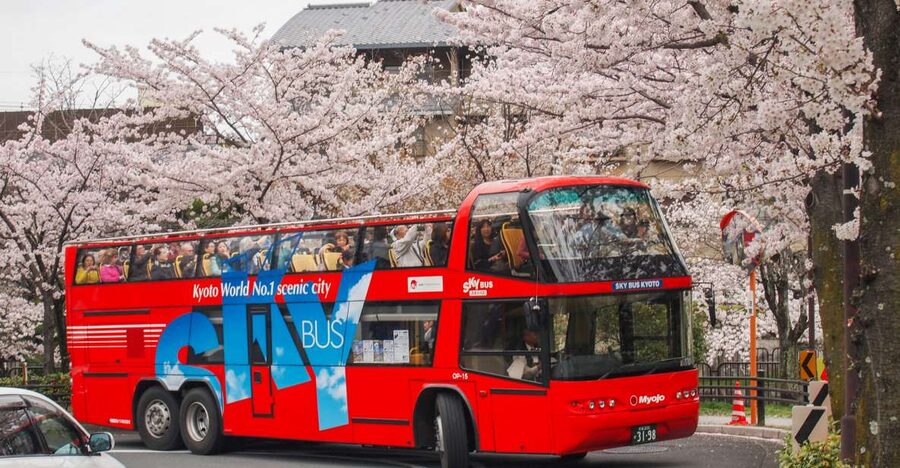
- Kyoto’s famous sights are linked by one ticket: Stops serve Kinkakuji, Ginkakuji, Kiyomizu-dera, Nijo Castle, Gion, Kyoto Imperial Palace, and more.
- A two-day pass is the calmer choice: Use the first ride to learn the routes, then return to your favorite stops without rushing.
- The open top gives you a city overview: You see traditional streets, modern Kyoto, temple districts, and mountain-framed views from above street level.
- Audio comes in seven languages: Choose English, French, Japanese, Korean, Chinese, Spanish, or German.
- Bus spacing affects your plans: A wait of 45 minutes or more can matter, especially between late morning and lunchtime.
- Bring cash for Kinkakuji: The Golden Pavilion accepts cash, and there is no ATM on the premises.
Why this bus works well in Kyoto
Kyoto is not difficult because its sights are hard to find on a map. It is difficult because the sights are scattered. Nijo Castle sits west of central Kyoto, Kinkakuji is farther north, Ginkakuji is on the eastern side, and Kiyomizu-dera and Gion are south of there.
This service links those districts with unlimited rides for one or two days. That matters most if you want to see several famous places but do not want every transfer to become a small transport puzzle.
You can board at Kyoto Station, directly in front of the Isetan department store near the north central exit, or at any listed stop. Show your mobile voucher when boarding. The arrangement is especially useful on your first morning, when you may still be learning how Kyoto’s streets and rail lines fit together.
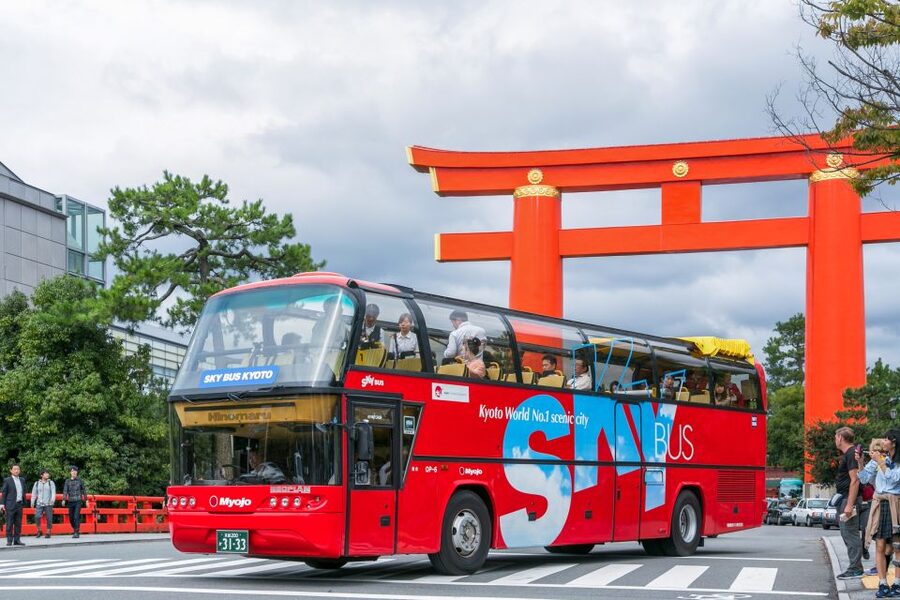
The bus is best used as a sightseeing tool, not simply as a taxi. A complete circuit takes about 45 minutes according to the operating information provided by the service. Ride the full loop early in your first day, listen to the commentary, and note the stops that deserve a closer look.
The service has been described as using red and blue routes. Pay close attention to the route signs and timetable, since a little confusion between the two lines can cost time. The app or booking information may not always make the route distinction as clear as it should.
A few more Kyoto tours and experiences worth a look

Kyoto Station begins the day
Kyoto Station is the most practical starting point for many visitors. It is easy to reach from hotels, trains, and airport connections, and the stop is directly in front of Isetan at the station’s north central exit.
Give yourself a few minutes to locate the sightseeing bus stop rather than assuming every bus stand serves the same route. Attendants are often present and have been praised for explaining the service, helping with directions, and keeping boarding orderly.
Kyoto Station itself gives you useful food, shopping, and comfort facilities before or after your ride. That makes it a good place to begin, especially if you arrive early or return after a long circuit.
From here, you can ride past Nishihonganji and the Kyoto Tokyu Hotel before reaching central shopping areas. Nishihonganji is a major Buddhist temple, though this bus stop is more useful as a nearby orientation point than as a replacement for a proper temple visit.
Nishiki Market and central Kyoto
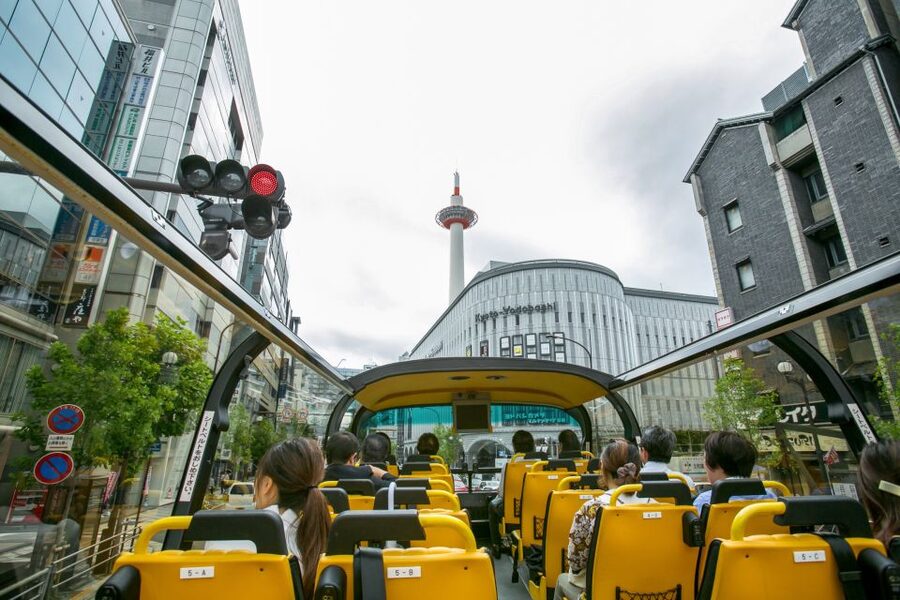
The Shijo Karasuma and Nishiki-ichiba Market stop puts you near one of Kyoto’s best areas for food, shopping, and traditional streets. Nishiki Market is a narrow commercial lane packed with small food stalls and shops, while nearby Teramachi-dori and Kawaramachi offer more room for browsing.
This is a good place to split your day. You might ride the west side of the route in the morning, get off here for lunch and shopping, then continue toward the eastern temples.
Do not treat the market as a quick photo stop. You may want time to browse, eat, and walk the surrounding arcades. Since the bus may not arrive again for roughly 45 minutes, check the departure time before walking away from the stop.
Food and drinks are not included, and food is not allowed on the bus. You can bring a soft drink with a lid, such as a plastic bottle or lidded coffee, but leave open containers and snacks for your stop.
Nijo Castle gives you a strong first temple alternative
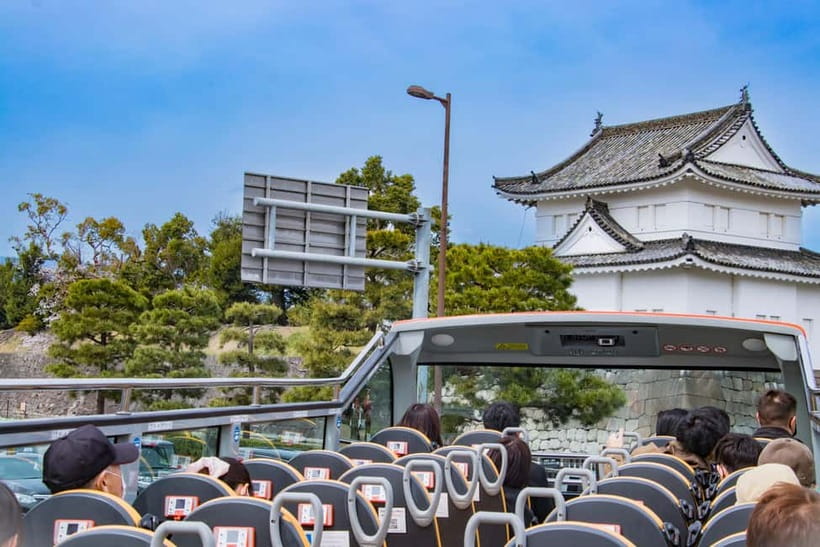
The Nijo-jo Castle stop serves one of Kyoto’s most important historic sites. The castle is a useful counterpoint to the temples and shrines elsewhere on the route, with its formal grounds and connection to Japan’s political past.
The bus gets you close, but your ticket does not include admission. Allow enough time for the grounds and interior areas if you plan to enter. A hurried stop here can feel disappointing because the site asks for more attention than a quick look from the street.
Nijo Castle also works well on a rainy or very hot day because it gives you a break from sitting outside on the upper deck. Keep in mind that the bus itself has open areas and direct sun, so a temple visit can be a welcome change of pace.
Kinkakuji requires planning, patience, and cash
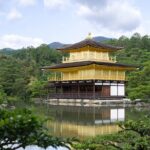
Kinkakuji, the Golden Pavilion, is one of the service’s most important stops. The famous gold-covered structure sits beside a pond and is among Kyoto’s most photographed sights.
The bus stop is convenient, but the ticket does not cover admission. Bring cash, since the pavilion accepts cash and there is no ATM on the premises. This is one of those small details that can save you a wasted journey.
Allow for crowds, particularly during popular seasons. The stop can get you to the district efficiently, but it cannot remove the lines and congestion inside a major Kyoto attraction. You may find the temple area much more enjoyable if you arrive early and avoid trying to combine too many other major sights in the same morning.
Nearby Daitokuji Temple offers a quieter change in tone, though you should check the time you have before getting off. The attraction stops are not all equally close to each other on foot, and the bus is most useful when you plan one main visit per stop.
A few more Kyoto tours and experiences worth a look


Ginkakuji is a reason to choose the two-day pass
Ginkakuji, the Silver Pavilion, is on the eastern side of the route. It is often overshadowed by Kinkakuji, yet the stop gives you access to a different style of Kyoto temple setting.
The surrounding area connects naturally with a walk along the Philosopher’s Path, although the bus ticket itself only covers transport and does not include admission or walking tours. Plan this as a proper half-day area if you want to take your time.
The two-day option makes Ginkakuji easier to fit in. On day one, you can ride the full service and decide which eastern stops interest you. On day two, return with a more realistic plan instead of trying to see Kinkakuji, Ginkakuji, Kiyomizu-dera, and Nijo Castle in a single rushed circuit.
Imperial Palace, Heian-jingu, and Okazaki Park
The Kyoto Imperial Palace stop is near Doshisha University. This area gives you a look at Kyoto’s imperial role and broad open grounds, a useful pause after the tighter streets around markets and temple lanes.
Further along, the Heian-jingu Shrine and Okazaki Park stop serves one of the city’s most recognizable shrine approaches. The large torii and spacious setting make this area feel different from the older, more enclosed temple compounds.
The audio commentary can add useful background as you pass these locations, but keep your expectations in check. It is an overview, not a full guided visit. One practical limitation is that the narration can cut off as the bus nears a stop, switching to a brief announcement pointing out the location. The backing music has also been louder than the spoken audio at times.
For a first orientation, that is fine. If you want detailed history, use the commentary to decide where to get off, then explore the site itself.
Gion and Kiyomizu-dera finish the eastern route
The Gion stop near Kotowa Kyoto Yasaka places you in one of Kyoto’s best-known traditional districts. Gion is valuable less as a single attraction than as an area to explore slowly, with lanes, teahouses, restaurants, and access toward Yasaka Shrine.
The Gojozaka stop serves Kiyomizu-dera and the southern Gion area. Kiyomizu-dera is one of Kyoto’s essential visits, but the stop is not a door-to-door ride to every part of the temple. Expect a walk uphill from the bus area, and wear comfortable shoes.
This is another stop where time matters. Kiyomizu-dera and Gion can easily fill several hours, especially if you want to browse the streets around the temple. If you leave the site just after a bus departs, the next ride may not come quickly.
The Sanjusangendo and Kyoto National Museum stop, near the Hyatt Regency Kyoto, gives you another eastern option. It is useful for combining a temple or museum visit with the route, but remember that admission fees are separate.
What the open-top bus feels like
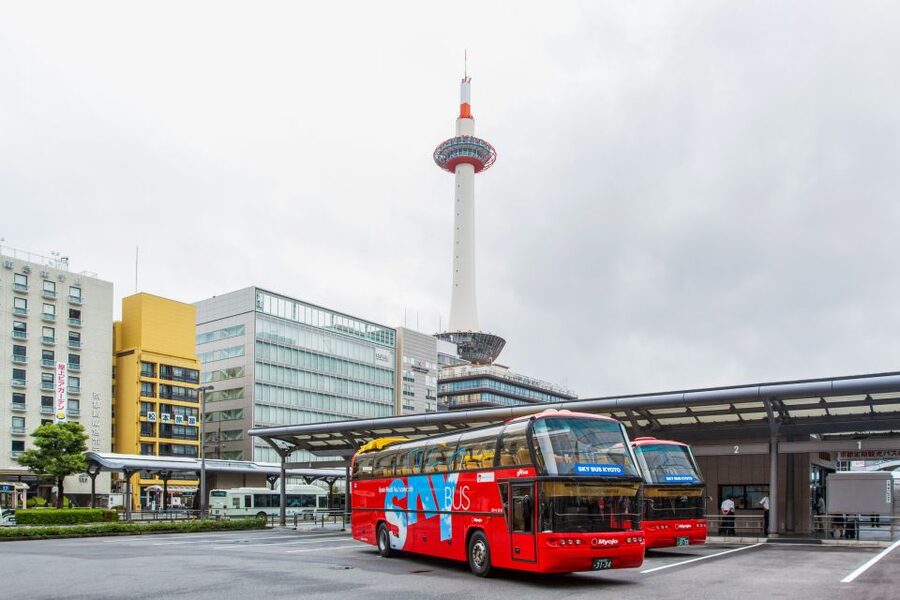
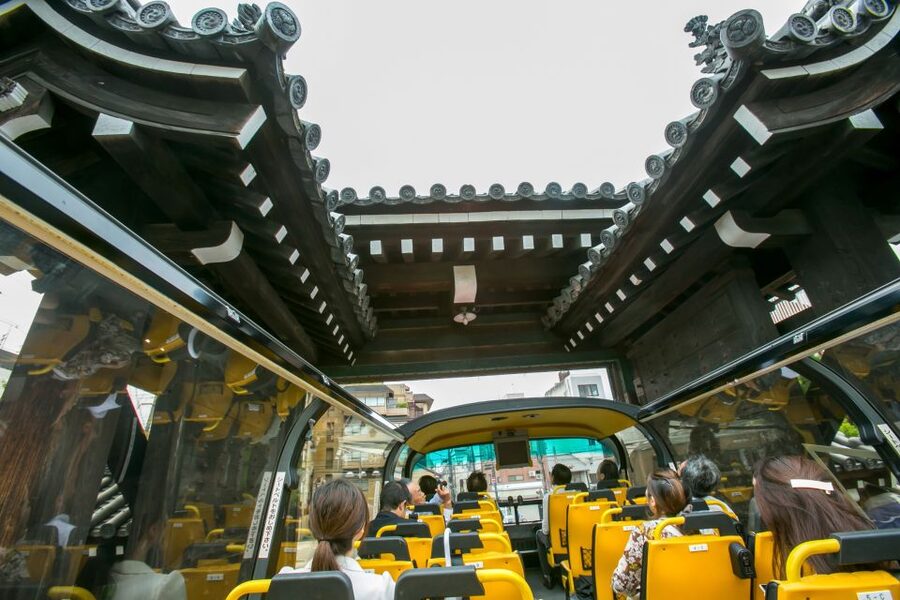
The upper deck gives you a broad view of Kyoto as you move between districts. You can see the change from station towers and commercial streets to low traditional buildings and temple neighborhoods. It is a fine way to understand the city’s shape before choosing where to spend your limited time.
The roof is not always fully open. Some seating is covered, and rain protection may be provided in wet weather. Raincoats are supplied when conditions are damp, but you should still dress for direct sun, wind, or cold.
Summer can be hot on top, while winter can feel sharply cold. One passenger found the cold difficult, and another appreciated the air-conditioned bus during hot weather. The lower deck is the sensible choice in poor weather, though visibility is less rewarding there.
The bus does not allow smoking, selfie sticks, umbrellas, food, or alcohol. These rules are easy to follow, but they affect how you plan your day. Carry a compact camera or phone without an extended stick, and keep your snacks for the stops.
Wi-Fi is listed as temporarily suspended, so do not count on the bus for internet access. If you want to track the bus or check maps, download what you need before setting out or use your own mobile connection.
How much value do you get for $27?
At $27 per person, the pass can be good value if you use it as transport between several distant sights. Two standard taxi or ride-hailing trips could approach the cost of the ticket, while this pass gives you unlimited rides during its validity.
The value falls if you only ride once or twice. Kyoto also has ordinary public transport, and a visitor who plans to stay in one neighborhood may not need a sightseeing bus.
The two-day pass generally makes more sense for a first visit. It lets you spend real time at Kinkakuji, Ginkakuji, Kiyomizu-dera, or Nijo Castle instead of watching the clock. It also lets you use the first day for orientation, then make more focused stops on the second.
A one-day pass suits a short stay or a compact plan. Choose it if you mainly want an overview and two or three major stops. If you hope to visit nearly every listed district, the one-day schedule may feel tight.
Timing, staff, and practical comfort
Staff support is one of the strongest parts of the service. Attendants and drivers have been described as friendly, punctual, and helpful in English. Individual guides named Miyuki, Casey, Lauren, and Frederick have been praised for clear explanations, local suggestions, humor, and careful driving.
That personal help matters when you are unsure which route to take or where a stop leads. One attendant even helped point out shops for Japanese candy, special coffee, and a workout facility near the bus route.
Still, staff cannot control Kyoto traffic. Buses may run late, and the gap between buses can be frustrating. If you miss one, you might wait about 45 minutes, with longer waits possible during busy periods or service changes.
The service has a clean, comfortable feel, but lower-deck seating and accessibility can be limited. One passenger specifically wanted a ramp and more lower-deck seats for older passengers. If you need those facilities, ask staff before boarding rather than assuming the open-top bus has full step-free access.
The activity allows cancellation up to 24 hours before departure for a full refund, and you can reserve now and pay later. Those policies are useful if your Kyoto schedule is still changing, but they do not solve weather disruption. Severe weather such as typhoons or thunderstorms can stop the buses.
Who should book this Kyoto bus?
I recommend it most strongly if you are visiting Kyoto for the first time, staying only a short time, or feeling unsure about the city’s transport system. It removes much of the mental work from reaching the main sights.
It also suits families and mixed-age groups who want the option to sit, ride, and rest between temple visits. Children aged five and under ride free when sitting on the lap of an adult with a ticket, limited to one child per ticketed adult.
You should think twice if you prefer quiet back streets, long walks, or detailed guided visits. The audio is useful but brief, and the bus cannot take you inside the attractions. It is a sightseeing framework, not a substitute for exploring Kyoto on foot.
Should you book it?
Book the two-day pass if Kinkakuji, Ginkakuji, Kiyomizu-dera, Gion, and Nijo Castle are all on your list. Use day one to ride the full circuit and learn the route, then use day two for the stops that deserve time.
Choose one day if you have a short schedule and want a practical city overview. Start early, check the red and blue route information carefully, and build in waiting time.
At $27, this is a sensible purchase when you use several rides. Just bring cash for Kinkakuji, protect yourself from sun or cold on the upper deck, and avoid packing a schedule so tight that one missed bus ruins the day.
FAQ
Where can I board the Kyoto sightseeing bus?
You can board at any stop along the route. The first stop is at Kyoto Station, directly in front of the Isetan department store near the station’s north central exit.
How long is the ticket valid?
You can choose a one-day or two-day ticket. The ticket provides unlimited rides during the selected period.
Which major attractions does the bus serve?
Stops include Nijo Castle, Kinkakuji Temple, Ginkakuji Temple, Kiyomizu-dera Temple, Gion, Kyoto Imperial Palace, Heian-jingu Shrine, Daitokuji Temple, Nishiki-ichiba Market, Sanjusangendo, and the Kyoto National Museum.
Is audio commentary included?
Yes. Audio guidance is included in English, French, Japanese, Korean, Chinese, Spanish, and German.
Is Wi-Fi available on the bus?
Wi-Fi is listed as temporarily suspended, so you should not rely on the bus for internet access.
Are entrance fees included?
No. The ticket covers the bus service and audio commentary, but attraction admission, food, and drinks are separate.
Can young children ride free?
Children aged five and under do not need a ticket when sitting on the lap of an adult passenger with a ticket. The allowance is one child per ticketed adult.
What happens in bad weather?
The bus may stop operating during severe weather, including typhoons or thunderstorms. The bus has an open top and direct sunlight, while raincoats are provided in wet weather.
More Tickets in Kyoto
More Kyoto Bus Tours in Kyoto
More tours in Kyoto we've reviewed

Kyoto Bus Tours, compared.
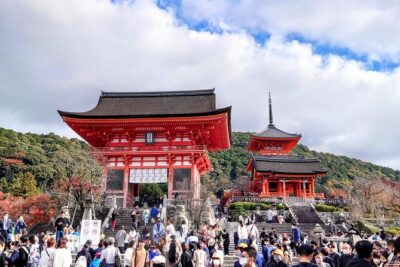 ★ 5.0PERFECT KYOTO 1-Day Bus TourFrom $129
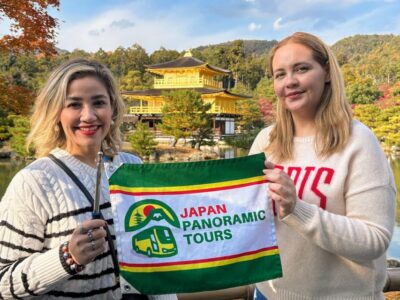 ★ 4.8Kyoto: Fushimi Inari, Kinkakuji, Bamboo Grove 1 Day Bus TourFrom $122510 minutes - 9 hours
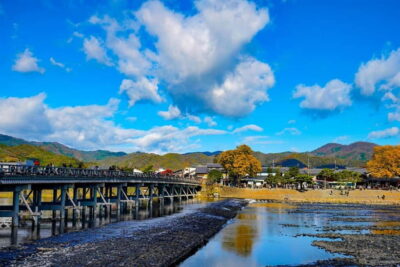 ★ 4.7Kyoto/Osaka: Nara, Fushimi Inari Taisha, Arashiyama Bus TourFrom $529 - 10 hours
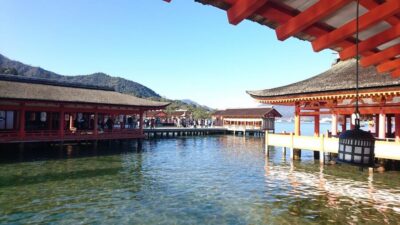 ★ 4.7Osaka/Kyoto: Hiroshima Miyajima Bus Tour & Shinkansen TicketFrom $27712 hours
 ★ 4.6Kyoto: Full-Day Guided Bus Tour to Top Highlights & TicketsFrom $50
 ★ 4.9Kyoto: Nara & Traditional Matcha Experience Bus TourFrom $1228h 30m