Reviewed · CONCERTS
Private Japanese music concert
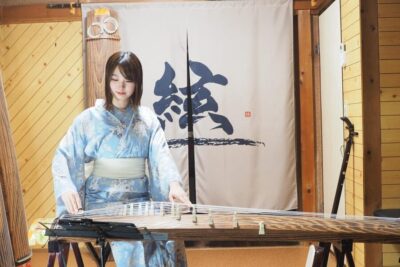
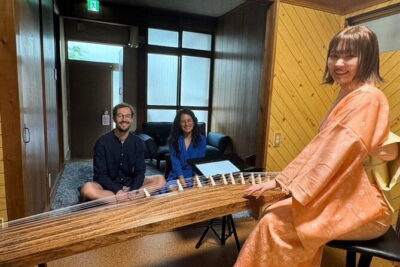
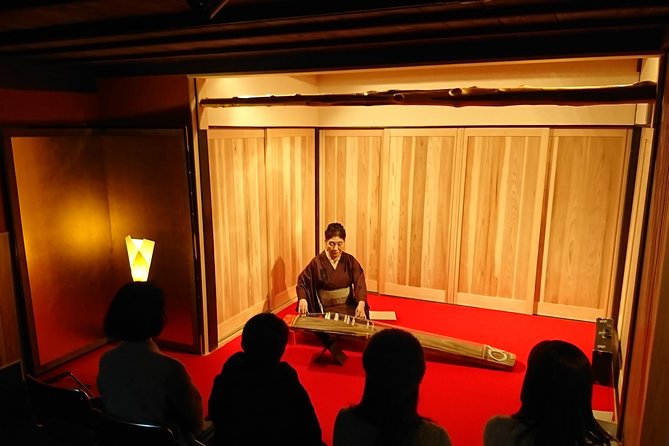
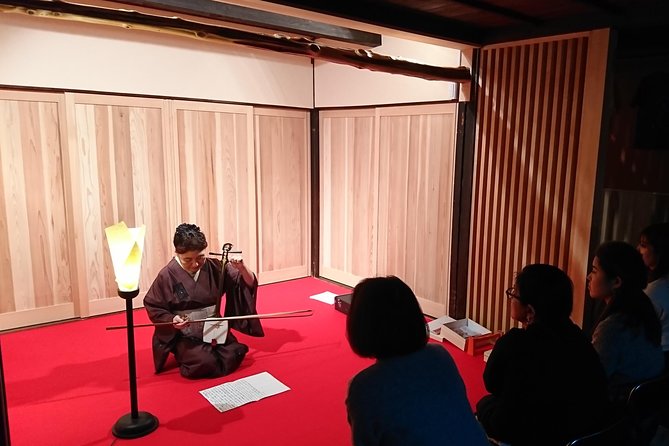
The special thing here is the setting: a private concert inside a renovated Kyomachiya townhouse, not a large theater. A performer plays the koto, Japan’s harp-like zither, and kokyu for your small party while you sit close enough to study the instruments and watch the technique.
I like the relaxed chairs and the chance to try the koto after the performance. I also like the personal contact. The session can include stories about the instruments and conversation with the musicians, including the assistant teacher at Kyomachiya Kiotto. The main consideration is simple: at about one hour, this is a focused introduction rather than a full evening of music.
In This Review
- Key points to know before booking
- A private concert in a Kyoto machiya
- What happens during the one-hour visit
- Why the townhouse setting changes the music
- The koto and kokyu, heard at close range
- The hands-on moment is especially good for families
- Value at $57.23 per person
- Who should book this Kyoto music experience
- Practical timing and booking advice
- Should you book Kyomachiya Kiotto?
- FAQ
- Where does the private Japanese music concert take place?
- How long does the experience last?
- Which instruments are performed?
- Is the concert private?
- Do I sit on the floor?
- Can children participate?
- Can I try the koto?
- How much does the experience cost?
- Is the venue near public transportation?
- What is the cancellation policy?
Key points to know before booking
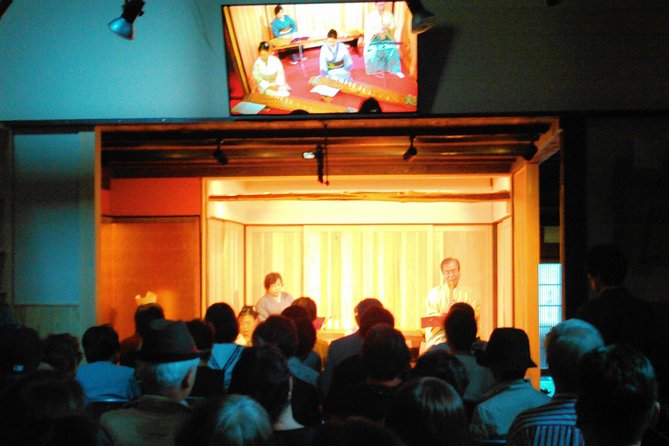
- Private music in a Kyoto townhouse: You hear the performance in the renovated Kyomachiya Kiotto, where the room gives the music a more personal feel than a concert hall.
- Koto and kokyu up close: The program centers on two traditional Japanese instruments, with a chance to see their construction and playing technique at close range.
- Hands-on ending: Children and adults may be invited to try the instruments after the performance, depending on the session.
- Comfortable one-hour format: You sit in a chair, making this an easy cultural stop between sightseeing plans.
- Personal conversation matters: The experience can include explanations, instrument history, and time to speak with the teacher and performer.
- Good value for a small private group: At $57.23 per person, the price makes the most sense if you value personal attention rather than a long stage show.
A private concert in a Kyoto machiya
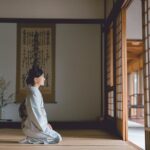
Many Kyoto music experiences place you in a formal hall, where you watch from a distance and leave once the applause ends. This one takes a quieter route. You enter Kyomachiya Kiotto, a traditional Kyoto townhouse that has been renovated for use as a shop and performance space, then settle into a chair for a private live session.
That setting changes the mood. A townhouse room feels closer and more domestic than a theater. You are not looking across a wide stage. You can watch the player’s hands, see the strings and body of the instruments, and hear the sound without the separation that comes with a large venue.
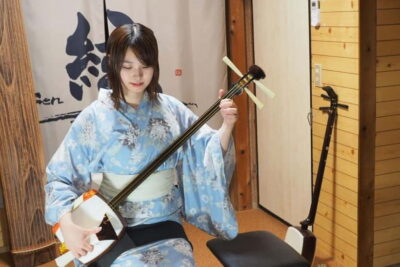
The program focuses on the koto and kokyu. The koto is often described as a Japanese harp, though its playing style and shape differ from a Western harp. It is a long stringed instrument played horizontally, with the performer plucking the strings. The kokyu is a bowed Japanese instrument. Hearing both in the same session gives you a useful contrast between plucked and bowed sounds.
The performer works as an assistant teacher at Kyomachiya Kiotto. The exact performer’s name is not provided in the booking information, so you should not expect a named celebrity recital. The appeal is the close encounter with the instruments and the chance to speak directly with the people presenting them.
Other private tours in Kyoto


What happens during the one-hour visit
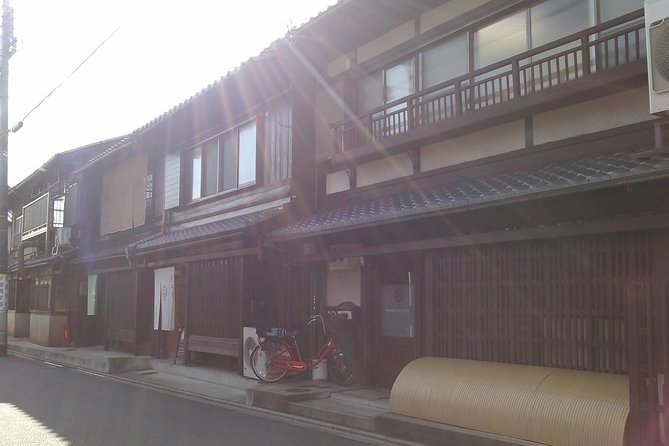
The visit has a straightforward flow. You arrive at Kyomachiya Kiotto, at 9-10 Mibu Hinokicho in Kyoto’s Nakagyo Ward, and are welcomed into the space. The venue is near public transportation, but the supplied information does not specify a station or walking time, so check the map carefully before setting out.
The main part of the hour is the private live performance. You sit in a chair and listen to the koto and kokyu while the performer plays at close range. The phrase private live means the musicians perform just for your party, rather than as part of a large public concert. Group discounts are available, though the discount amount is not stated.
The session is not only about listening. The format can include an explanation of the instruments and their background. One family described learning about the instruments, trying the koto, and speaking with the teacher and master koto player. That makes the hour more useful than a performance with no context. You leave with a better idea of how the instruments work, not just an impression of their sound.
At the end, children may be encouraged to try the instruments, and adults may have the same opportunity. This hands-on part is especially valuable because traditional instruments can otherwise feel untouchable. The supplied information does not promise instrument practice at every booking, so regard it as part of the possible interaction rather than a guaranteed lesson.
Why the townhouse setting changes the music
A concert hall is built for projection. A machiya room is built for atmosphere and closeness. Here, the townhouse itself is part of the experience.
Kyomachiya are traditional wooden townhouses associated with Kyoto. This venue has been renovated, so you get a historic-style setting without being asked to sit on the floor. The chairs are a practical touch. They make the event easier for anyone who prefers standard seating, and they let you concentrate on the music rather than adjusting to a formal Japanese floor arrangement.
The smaller room also gives the performance a sense of occasion. A musician playing directly for your party can explain details and respond to questions. In a hall, even a beautiful recital may leave you wondering what you heard. Here, the conversation helps connect the sound to the instruments.
There is a trade-off. A private townhouse performance is not designed to offer a grand stage production, a large ensemble, or a long set of music. If you want a full concert with several performers and elaborate staging, this is probably too modest. If you want a personal introduction to Japanese music in a local-feeling room, the setting is the point.
The koto and kokyu, heard at close range
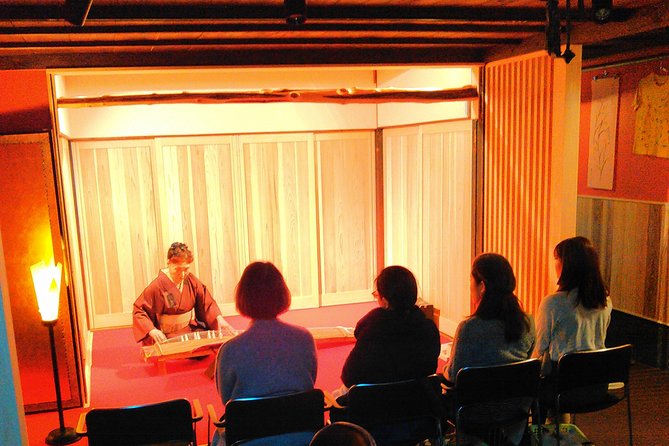
The koto is the main attraction. Its long body and many strings make it visually striking, but the best part is watching the performer shape the sound. The music can seem delicate from a distance. In a small room, you get a clearer sense of the plucking, resonance, and movement across the strings.
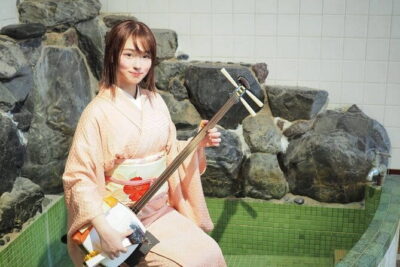
The kokyu adds another color. Unlike the koto, it is played with a bow, so its sound comes from sustained movement rather than individual plucked notes. Hearing the two instruments together gives you a compact lesson in the range of traditional Japanese music.
The performance is presented as authentic traditional music, but the experience is still approachable. You do not need prior musical training. The setting is informal enough for questions and discussion, and the instrument demonstration helps if you know little about Japanese music.
This is also a good choice if you have already seen temples, gardens, and major cultural sites during your Kyoto stay. Those sights show you architecture and religion. This hour adds sound and craft to the picture of Kyoto. It does not require you to spend half a day at a museum, and it gives you an activity that feels different from standard sightseeing.
The hands-on moment is especially good for families
The chance to try the koto gives this experience extra value for families. Children who might struggle to sit through a formal recital have a clear reason to pay attention. They can hear the performer first, then handle the instrument under guidance if the session includes that opportunity.
One family’s experience included children being encouraged to try the instruments, with both presenters described as kind and friendly. That points to a welcoming teaching style, though you should remember that a private cultural activity still requires children to sit quietly during the performance portion.
Adults can benefit just as much. Trying a traditional instrument, even briefly, makes you aware of the skill behind the music. The koto may look simple until you see how much control is needed to create a clean sound. A short hands-on moment can turn passive listening into something you remember.
The booking information says most people can participate, and service animals are allowed. No special physical demands are described. The chairs are helpful, but details about the room’s full accessibility are not provided, so contact the provider if you need specific access arrangements.
A few more Kyoto tours and experiences worth a look
Value at $57.23 per person
At $57.23 per person, this is not the cheapest way to hear music in Kyoto. It can be a good buy if you are booking for a small group and want a private presentation, close seating, explanations, and possible instrument practice in a traditional setting.
The price is easier to justify when you think of it as a cultural appointment rather than a one-hour concert ticket. You are paying for the performance, the private format, the venue, and the chance for conversation. The intimacy is the product. If you only want background music, you can find less expensive ways to fill an hour.
The value improves for families and small groups. Group discounts are offered, although the actual terms are not specified. Ask about the group rate when booking if several people are going together.
The experience receives a 4.8 rating from four published ratings. That is a very small sample, so I would not treat the number as a guarantee. The praise is consistent in the areas that matter here: beautiful music, skilled playing, personal conversation, instrument explanations, and the chance to try the koto.
A useful detail from one account is that the experience also included conversation with the teacher and master koto player. Another participant brought a poem as a gift. Those details suggest room for a personal exchange, but they should not be treated as scheduled parts of every visit.
Who should book this Kyoto music experience
I would recommend this to you if you want one distinctly Japanese activity that does not take up an entire afternoon. The one-hour length makes it easy to place before dinner, after a morning of sightseeing, or between visits around Kyoto.
It is particularly well suited to:
- Families with children who enjoy trying things, not just watching.
- Couples looking for a quiet cultural activity.
- First-time visitors who want an introduction to traditional Japanese instruments.
- Music lovers who appreciate close listening and small-scale performances.
- Anyone who prefers chairs to floor seating.
- Small groups that can make use of the private format or group discount.
You may want to skip it if you need a large, polished stage production or a long concert. The performance is designed around contact and intimacy. It is also not the right choice if you want a general tour of Kyoto’s neighborhoods, since the activity stays centered on the townhouse and music.
Practical timing and booking advice
The experience lasts about one hour, so allow extra time to reach the address at 9-10 Mibu Hinokicho in Nakagyo Ward. The venue is near public transportation, but no exact station instructions are supplied. Use the provided map and confirm the meeting details before leaving your hotel.
Confirmation is sent within 48 hours of booking, subject to availability. Since the experience is private and the average booking is made nine days ahead, I would not wait until the last minute if your Kyoto schedule is tight.
You receive a mobile ticket, which keeps the arrival process simple. The cancellation terms are reasonable but firm: cancel at least 24 hours before the local start time for a full refund. Cancellations or changes made less than 24 hours before the start are not refunded or accepted.
The provider is 京町屋 Kiotto, also presented as Kyomachiya Kiotto. Keep both names handy when checking directions, since the English and Japanese names may appear differently.
Should you book Kyomachiya Kiotto?
Book this experience if you want close-up traditional music in a real Kyoto-style setting, with time to ask questions and possibly try the koto. The townhouse, chairs, private format, and hands-on ending give it more personality than a standard recital.
At $57.23 per person, the cost is fair for a small private cultural session, especially with a group discount. Just keep your expectations focused. This is a compact introduction, not a grand concert or a full lesson.
For a family, a couple, or a music-minded visitor with one free hour, I would put it on the short list. You will hear beautiful instruments, meet the people presenting them, and gain a small but memorable piece of Kyoto that temples alone cannot provide.
FAQ
Where does the private Japanese music concert take place?
It takes place at Kyomachiya Kiotto, located at 9-10 Mibu Hinokicho, Nakagyo Ward, Kyoto City.
How long does the experience last?
The concert lasts approximately one hour.
Which instruments are performed?
The performance features the koto, a traditional Japanese string instrument often compared with a harp, and the kokyu, a traditional Japanese bowed instrument.
Is the concert private?
Yes. The format is described as a private live performance for your party.
Do I sit on the floor?
No. The experience provides chairs in the renovated Kyomachiya setting.
Can children participate?
Most people can participate, and children have been encouraged to try the instruments at the end of the session. The information does not state a minimum age.
Can I try the koto?
You may have the opportunity to try the koto after the performance. Instrument practice is described as part of the experience, but it is not stated as a guaranteed feature of every booking.
How much does the experience cost?
The listed price is $57.23 per person. Group discounts are available, though the discount amount is not specified.
Is the venue near public transportation?
Yes. The venue is described as being near public transportation, but no specific station or route is provided.
What is the cancellation policy?
You can cancel for a full refund if you cancel at least 24 hours before the experience’s local start time. Cancellations or changes made less than 24 hours before the start are not accepted or refunded.