
Reviewed · TEA CEREMONY EXPERIENCES
Kyoto: Tea Ceremony Ju-An at Jotokuji Temple
Kyoto’s Ju-An tea ceremony gives you more than a cup of matcha. You enter Jotokuji Temple, take part in a purification ritual, then sit in the Grand Tearoom as the tea master explains each measured movement. The ceremony is calm, hands-on, and easy to follow in English.
I like the small group size, limited to 10, and the chance to prepare your own matcha under guidance. I also like the setting: the temple, red benches, purification fountain, and traditional tearoom all help give the ritual a sense of place. The main consideration is comfort, since the tearoom has three steps and the usual seating is on the floor, though stools and seats can be provided.
In This Review
- Key points to know
- Why this 70-minute ceremony works so well
- Finding Ju-An at Jotokuji Temple
- A quiet walk through the temple grounds
- Entering the Grand Tearoom
- Watching the tea master prepare matcha
- Drinking matcha and tasting sweets
- Making your own cup of tea
- What the atmosphere is really like
- Is the $29 price good value?
- Who should book this experience?
- Booking tips for a smoother visit
- Should you book Ju-An at Jotokuji Temple?
- FAQ
- How long does the Kyoto tea ceremony at Jotokuji Temple last?
- How much does the experience cost?
- Is the tea ceremony conducted in English?
- How many people can join the group?
- Where is the meeting point?
- What happens before entering the tearoom?
- Do I need to remove my shoes?
- Is seating on the floor required?
- Is the tearoom wheelchair accessible?
- Are meals or kimono rental included?
Key points to know
- The temple visit comes first: Enter through Jotokuji’s main gate, see the temple grounds, and take part in a traditional purification ritual.
- The ceremony is hands-on: Watch the tea master prepare matcha, then make your own cup with the ceremonial tools.
- English instruction is provided: Guides such as Kate and Taka have been praised for clear explanations and patient help.
- The group stays small: With no more than 10 participants, you have a better chance to ask questions and take part.
- The setting is quiet and traditional: The Grand Tearoom gives the ceremony a peaceful atmosphere away from Kyoto’s busy streets.
- Plan for simple comfort needs: Shoes come off, floor seating is traditional, and the tearoom has three steps.
Why this 70-minute ceremony works so well
A tea ceremony can look mysterious if you only watch from a distance. Every movement seems deliberate, and the silence can make you wonder when you should bow, turn the bowl, or drink.
Ju-An makes the process more welcoming. The English-speaking guide explains what is happening, while the tea master demonstrates the actions. You are not expected to know Japanese manners in advance. That matters because the ceremony is built around attention and respect, not performance.
The 70-minute length is also sensible. A full Japanese tea ceremony can take several hours, while this experience gives you a clear introduction without taking half a day from your Kyoto plans. You learn the basic ideas, see the formal preparation, taste matcha, and prepare tea yourself.
I would not describe it as a complete study of chanoyu. It is an introduction. But for most people visiting Kyoto, that is the useful part. You get enough explanation to understand what you are seeing, and enough participation to remember it later.
The activity costs $29 per person. That is a fair price for a small English-speaking workshop in a temple setting, especially since the experience includes a guide, the tea ceremony, matcha, and the chance to make your own tea. It is not the cheapest way to drink matcha in Kyoto, but you are paying for instruction and setting rather than just a beverage.
A few more Kyoto tours and experiences worth a look
Finding Ju-An at Jotokuji Temple
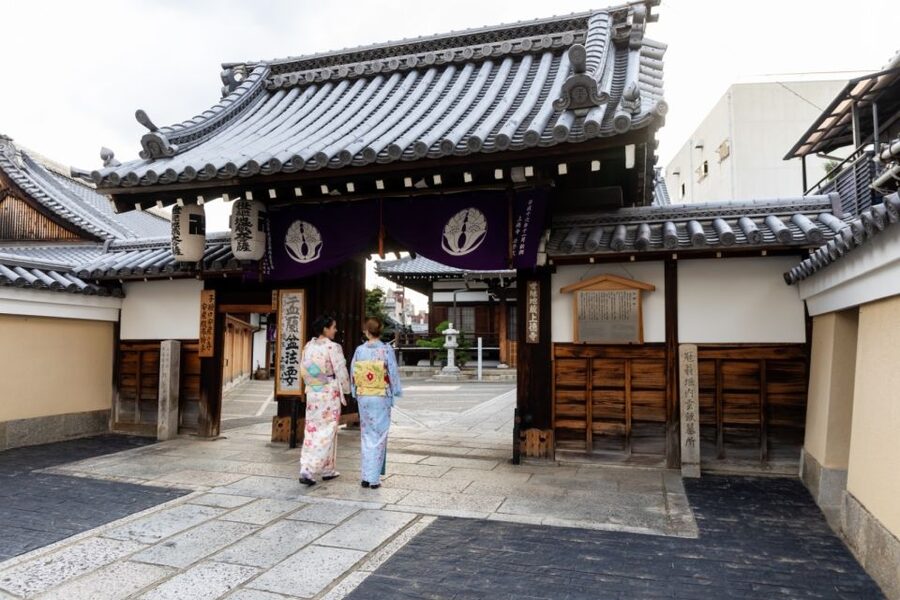
The meeting point is Tea Ceremony Ju-An at 556, Gojo-sagaru, Tominokoji Dori, Shimogyo-Ku, Kyoto. Once inside the temple, face the Main Hall and look to your left. A few steps lead to the tea room.
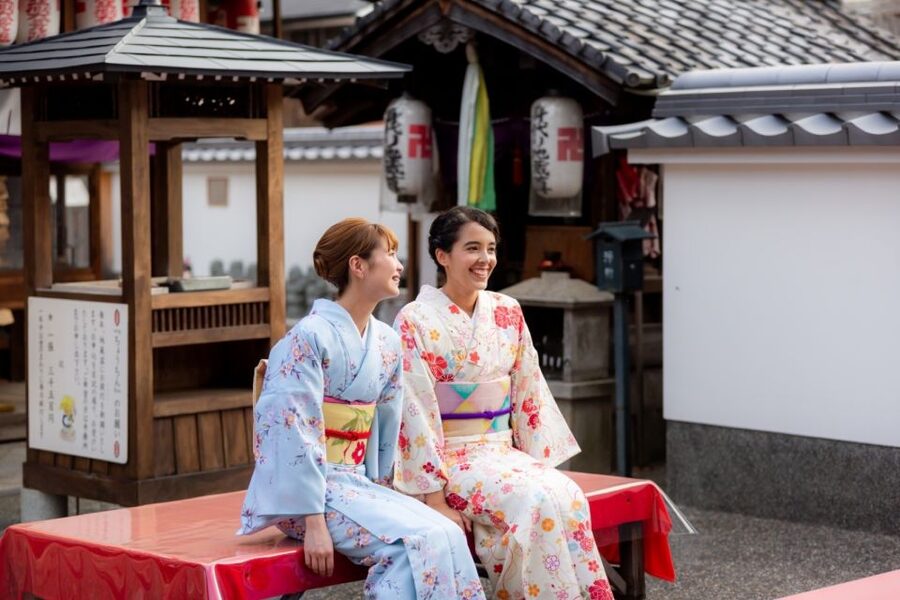
At the main gate, you will pass the entrance to the Grand Tearoom on your left, with a parish shop beside it. The guide meets you near the red benches. This arrangement gives you a useful moment to get your bearings before the ceremony begins.
The red benches are part of the practical setup. If the weather is pleasant, you can sit there and take in the temple atmosphere before entering the tearoom. If rain arrives, you can wait under the shop’s gable or inside the Grand Tearoom.
Give yourself enough time to find the temple entrance. The meeting point is not simply a large roadside sign with a tour desk. Once you are inside, the directions are clear, but the first step is making sure you are at the right gate.
A quiet walk through the temple grounds
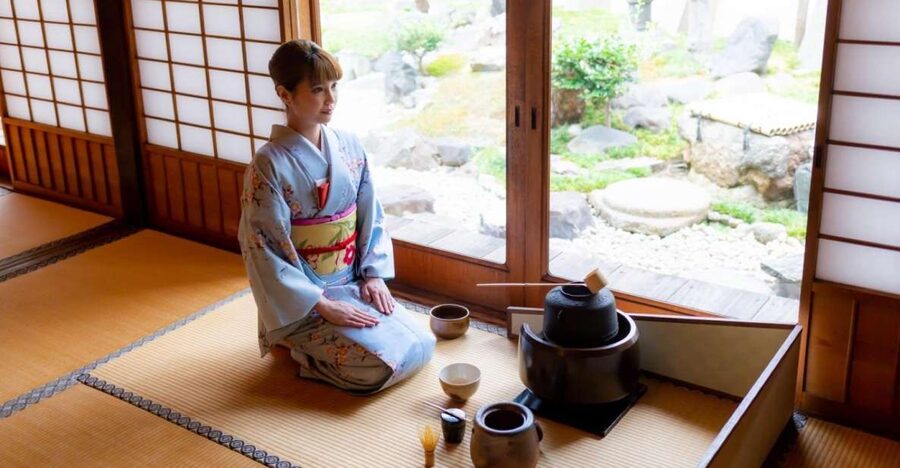
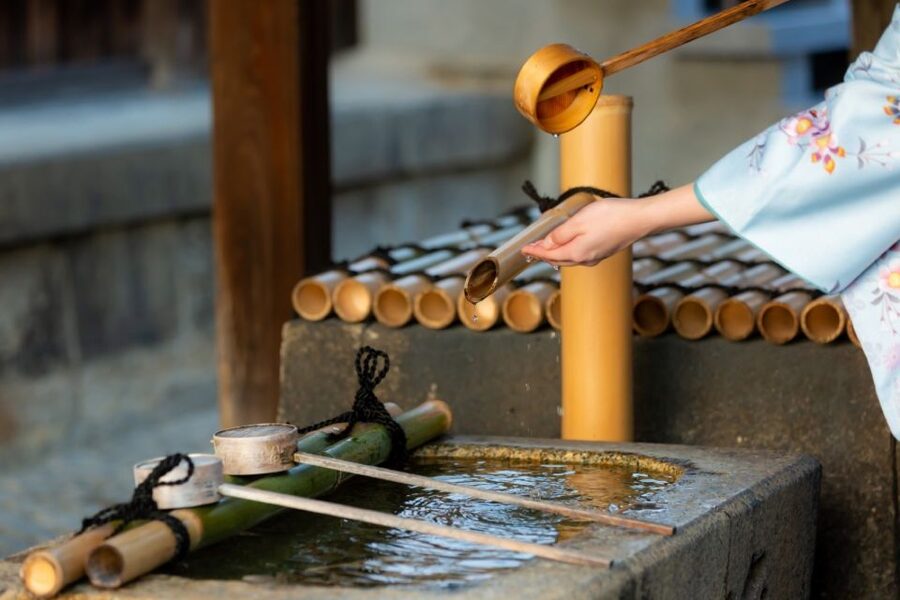
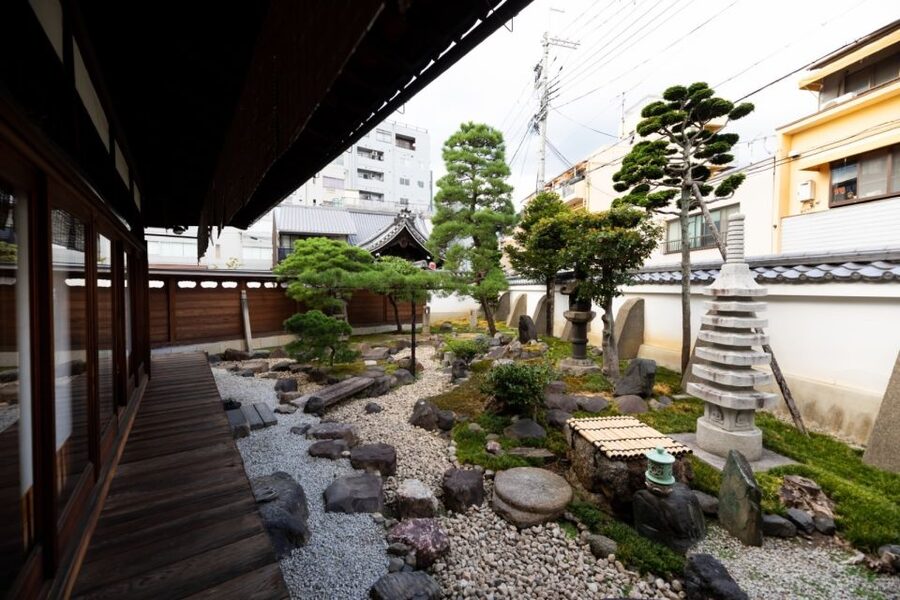
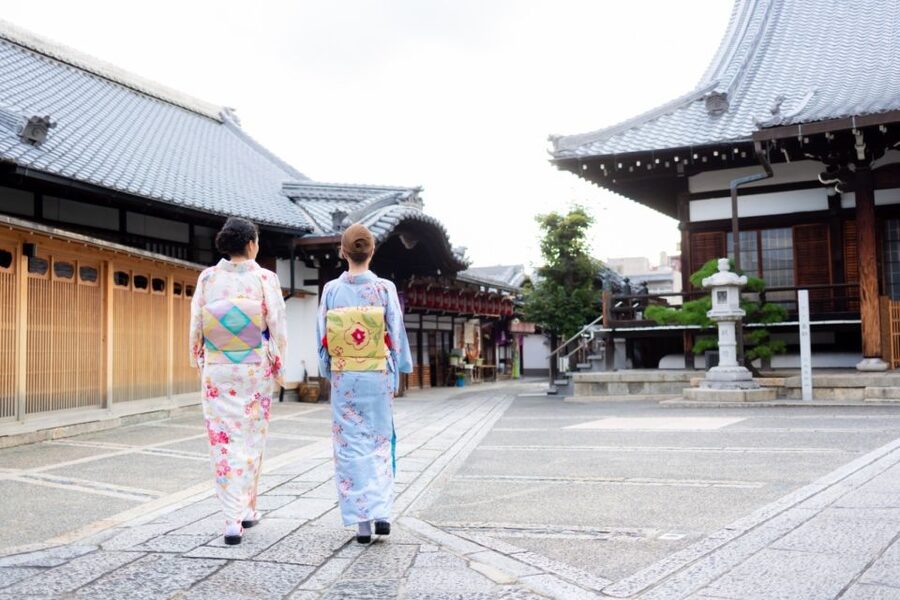
The experience begins before the matcha is whisked. As you walk through Jotokuji Temple, you can pause to admire the architecture and look at the purification fountain.
This short temple introduction helps put the ceremony in context. You are not being taken straight into a rented room with Japanese decorations. The ritual begins in a real religious setting, and the path from the gate to the tearoom gives the activity a natural rhythm.
The temple portion is not a long sightseeing tour. You should think of it as a calm introduction to the place where the ceremony happens. If you want a major temple visit with many halls and extended commentary, this activity will feel brief. If you want a peaceful setting before sitting down with the tea master, it does the job well.
The purification ritual is one of the most useful parts for first-time visitors from outside Japan. You are shown how to take part rather than left to guess. It gives you a practical way to approach the ceremony with the right frame of mind.
Entering the Grand Tearoom
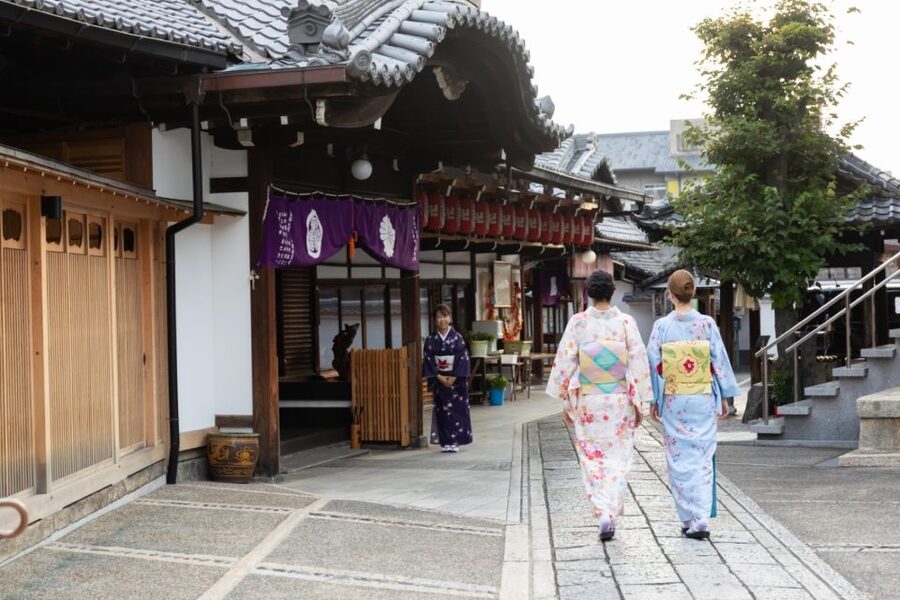
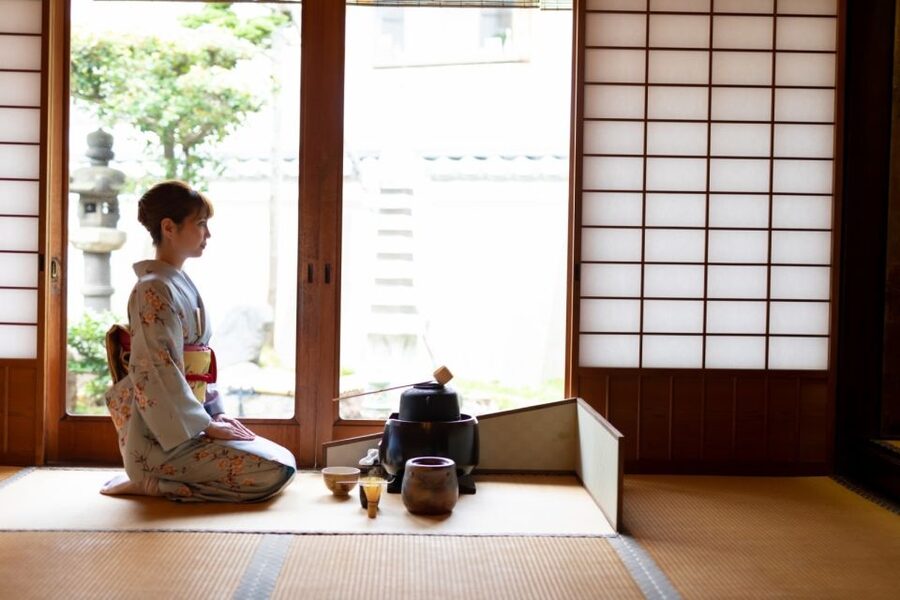
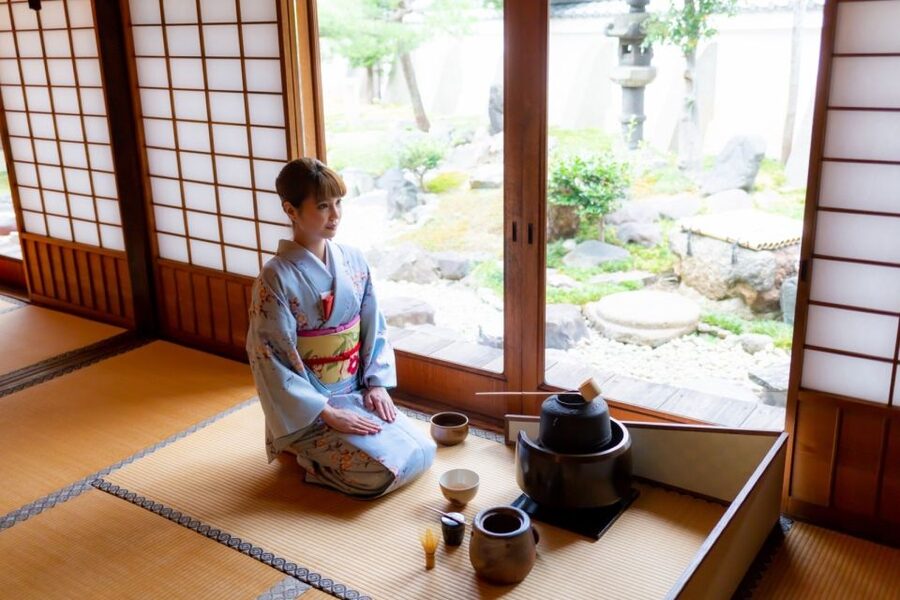
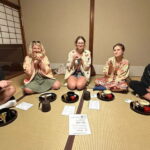
Before entering the Grand Tearoom, you remove your shoes. This is a small detail, but it shapes the experience. The room feels separate from the ordinary pace of the street, and the change from outdoor shoes to indoor seating marks the beginning of the formal part.
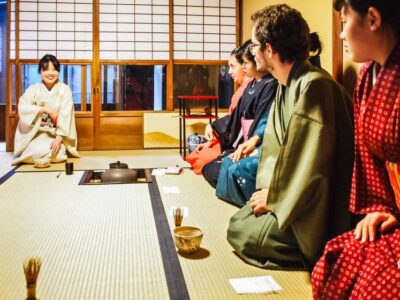
Traditional tea rooms are designed around simplicity, careful movement, and attention to small objects. Here, the room and its decorations help make those ideas visible. You do not need to know the name or purpose of every item to appreciate the care given to the setting.
The standard position is sitting on the floor. If that is uncomfortable, seats and stools can be provided, so tell the staff when you arrive rather than trying to endure the full ceremony in an awkward position.
The tearoom is not wheelchair accessible because of three steps, even though the temple itself is wheelchair accessible. This distinction is important. Wheelchair users should not book this activity, according to the provided information, while people who simply need raised seating can request a stool or chair.
Watching the tea master prepare matcha
Inside, the tea master leads you through the preparation of matcha. The movements are measured and thoughtful, and the guide explains what each stage means.
You see the tools handled with care rather than treated as ordinary kitchen equipment. The point is not speed. The preparation asks you to notice the bowl, utensils, gestures, and order of the actions.
This is where the English guidance adds real value. Names including Kate and Taka have been associated with especially clear explanations, and the teaching style is meant to keep you involved rather than silent and uncertain. The guides explain the history and purpose of the ceremony, answer questions, and help connect the formal actions with everyday Japanese ideas about respect and presence.
The tea master may be the focus of the room, but the guide remains important. A tea ceremony has visual details that can pass quickly if nobody explains them. With interpretation and commentary, you can follow the meaning behind the gestures instead of simply watching an elegant sequence.
A few more Kyoto tours and experiences worth a look


Drinking matcha and tasting sweets
You will sample matcha prepared in the proper style. Matcha has a strong, earthy taste, and it is not the same as a sweet green tea drink from a café. A traditional sweet is served as part of the experience, providing a contrast to the tea.
The ceremony teaches you how to drink matcha in the expected manner. This includes more than lifting the bowl and taking a sip. The guide explains the etiquette and the reason behind the actions, so you can participate with confidence.
The sweets are a useful part of the tasting. They make the tea easier for newcomers to approach and show how the two are meant to work together. If you already enjoy matcha, you will likely appreciate tasting it in this formal setting. If you are unsure about its bitter or grassy flavor, the sweet helps balance it.
Meals are not included. This is a tasting and workshop, not a food tour, so plan to eat separately.
Making your own cup of tea
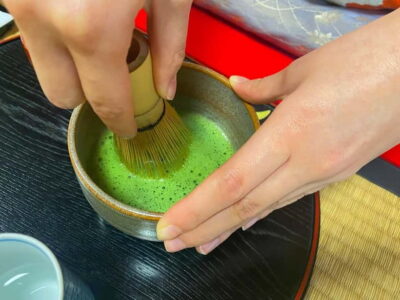
The strongest feature of Ju-An is the chance to prepare matcha yourself. After watching the tea master, you use the ceremonial implements under guidance.
This changes the activity from a demonstration into a lesson. You quickly notice that the bowl, whisk, scoop, and tea powder all require controlled handling. You also see why the preparation is treated as a complete ritual rather than a quick method for making a drink.
Do not worry about getting every movement perfect. The instructor is there to show you what to do and help you through the steps. The tone is welcoming and patient, which is especially helpful if you feel awkward about participating in a formal Japanese tradition.
I like this part because it gives you something concrete to remember. You are not only recalling a quiet room and a graceful performance. You have handled the tools, prepared matcha, and learned how the ceremony feels from the participant’s side.
The group size makes a difference here. Ten people is small enough for the workshop to remain personal, though the exact level of individual attention can depend on the size of your session and the number of instructors present.
What the atmosphere is really like
The mood is peaceful, but not stiff. The best sessions combine quiet ritual with warm explanation, allowing you to ask questions without feeling that you are interrupting something sacred.
Several parts of the experience support that calm feeling: the walk through the temple, the purification ritual, the removal of shoes, and the slow preparation of the tea. Together, they create a clear break from Kyoto’s crowded sightseeing routes.
This may be the right activity if you need a pause in the middle of a busy itinerary. It is also a good choice for people who are not usually drawn to organized tours. You receive structure, but the focus stays on one place and one cultural practice rather than a rushed list of sights.
At the same time, you should not expect complete silence or a private ceremony. It is a shared workshop with an English-speaking guide and up to nine other participants. If you want a highly formal, private tea ceremony, this is not that format.
Is the $29 price good value?
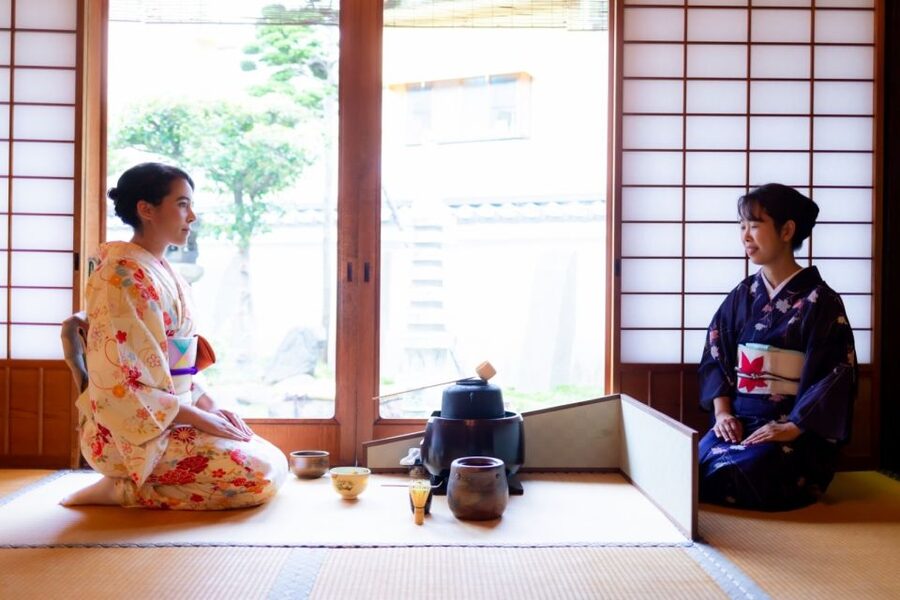
For $29, you get a 70-minute cultural activity in a temple setting with a guide, tea master, matcha, sweets, and practical instruction. The chance to prepare your own tea is the detail that makes the price easier to justify.
You can find matcha for much less in Kyoto. But a café cup will not include the purification ritual, temple setting, explanation of chanoyu, or use of ceremonial tools. The value here comes from the complete sequence.
The activity is also less expensive in time than a long formal ceremony. If you have only a few days in Kyoto, a 70-minute introduction lets you learn something substantial while leaving room for temples, meals, and neighborhoods afterward.
Kimono rental is not included. If wearing traditional clothing matters to you, it can be rented separately, but you should add that cost to your budget. The ceremony itself does not depend on wearing a kimono.
Who should book this experience?
I would recommend Ju-An to first-time visitors who want a clear introduction to Japanese tea culture without committing to a four-hour ceremony. It suits couples, families with older children, solo visitors, and anyone who enjoys learning by doing.
It is especially good for you if:
- You want an English-speaking cultural activity in Kyoto.
- You prefer a small group to a large sightseeing tour.
- You want to visit a temple and take part in a ritual.
- You like workshops that include hands-on practice.
- You are curious about Japanese etiquette but worry about making a mistake.
- You can manage three steps and either floor seating or a provided chair.
It may be less suitable if your priority is accessibility, a full meal, a kimono experience included in the price, or a long and highly formal tea ceremony. People who dislike sitting on the floor should request a stool or seat, but wheelchair users should choose another activity because the tearoom is not accessible.
Booking tips for a smoother visit
Book with the 24-hour cancellation window in mind. You can cancel up to 24 hours before the activity for a full refund, and the reserve-now, pay-later option gives you some flexibility while planning your Kyoto days.
Choose a time that lets you arrive without rushing. The experience starts at the temple entrance, and you will want a moment to locate the Main Hall, red benches, and tea room access.
Wear something that makes removing shoes easy. You should also choose clothing that allows you to sit comfortably, even if you plan to use a stool. The ceremony is not physically demanding, but comfort helps you pay attention to the instruction.
Treat the purification ritual and tea preparation with respect. You do not need expert knowledge, but listening carefully and following the guide’s directions will make the ceremony more enjoyable for everyone.
Should you book Ju-An at Jotokuji Temple?
Book this experience if you want a short, affordable, hands-on introduction to one of Japan’s best-known traditions. The temple setting, patient English instruction, small group, matcha tasting, sweets, and chance to make your own tea give the 70 minutes a clear sense of purpose.
I would skip it only if the three steps create a serious access problem, you want a private ceremony, or you are looking for a full meal or kimono package. For most visitors, Ju-An offers a thoughtful way to slow down in Kyoto and understand why the tea ceremony matters, not just what it looks like.
FAQ
How long does the Kyoto tea ceremony at Jotokuji Temple last?
The activity lasts 70 minutes.
How much does the experience cost?
The listed price is $29 per person.
Is the tea ceremony conducted in English?
Yes. The instructor and activity language are English.
How many people can join the group?
The group is limited to 10 participants.
Where is the meeting point?
Meet at Tea Ceremony Ju-An, 556, Gojo-sagaru, Tominokoji Dori, Shimogyo-Ku, Kyoto. Inside the temple, face the Main Hall and look left for the steps leading to the tea room.
What happens before entering the tearoom?
You enter through Jotokuji Temple, can view the grounds and purification fountain, and take part in a traditional purification ritual.
Do I need to remove my shoes?
Yes. Shoes are removed at the entrance to the Grand Tearoom.
Is seating on the floor required?
Traditional seating is on the floor, but seats and stools can be provided for people who are not comfortable sitting in that position.
Is the tearoom wheelchair accessible?
No. The temple is wheelchair accessible, but the tearoom has three steps and is not wheelchair accessible.
Are meals or kimono rental included?
No. Meals are not included, and kimono rental is available separately.
More Golden Pavilion & Temple Tours in Kyoto
More Tea Ceremony Experiences in Kyoto
More tours in Kyoto we've reviewed




Tea Ceremony Experiences, compared.
 ★ 4.9Kyoto: Tea Ceremony in a Traditional Tea House in KiyomizuFrom $4945 min
 ★ 4.3Kyoto: 45-Minute Tea Ceremony Lesson ExperienceFrom $2245 min
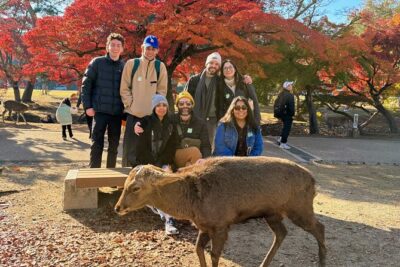 ★ 5.0World Heritage Kyoto & Nara Uji Authentic Matcha ExperienceFrom $129
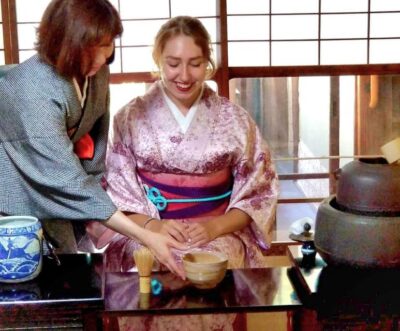 ★ 4.9Kyoto: Table-Style Tea Ceremony at a Kyo-MachiyaFrom $451h 30m
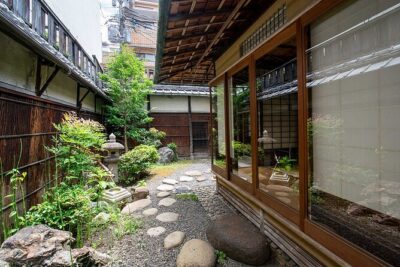 ★ 5.0Kimono Tea Ceremony at Kyoto Maikoya, NISHIKIFrom $65
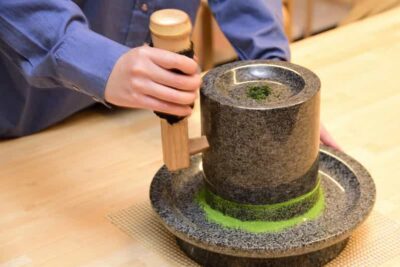 ★ 4.9Kyoto: Tea Museum Tickets and Matcha Grinding ExperienceFrom $231 hour