
Reviewed · WORKSHOPS
Kyoto: Calligraphy Workshop with Meditation
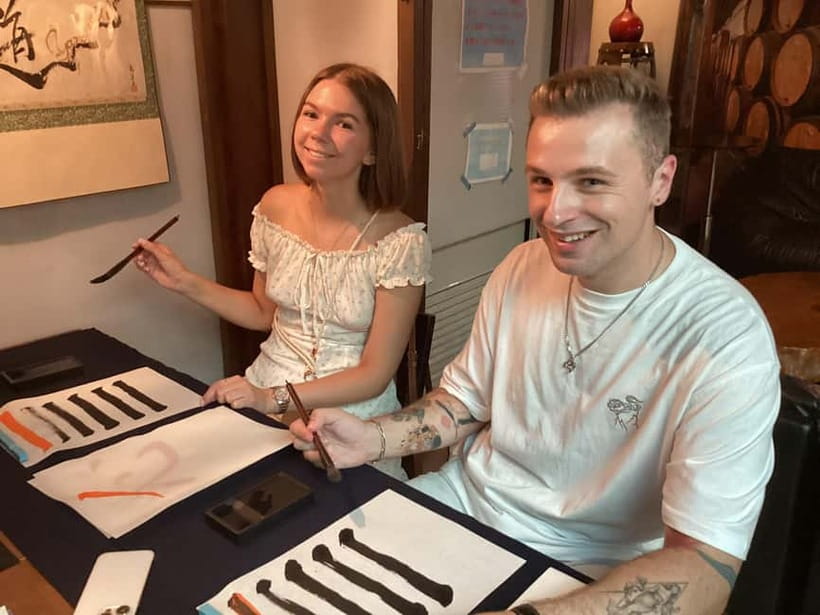
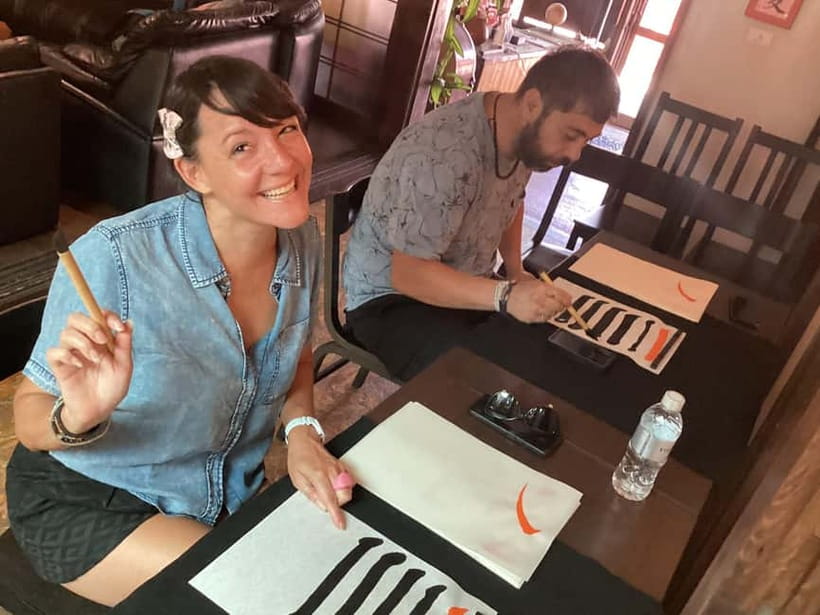
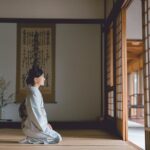
Japanese calligraphy asks you to slow down and pay attention. At Gojo Paradiso, a traditional townhouse beside Kyoto’s Takase River, you begin with a short meditation before picking up the brush. That small pause helps you shift out of sightseeing mode and focus on each stroke.
I like two things here. First, you create a real souvenir rather than simply watching a demonstration. Second, the class connects brushwork with self-reflection, so your chosen character can express how you feel in Kyoto. The main consideration is that this is a quiet, focused workshop, not a fast-moving cultural show. If you want lots of activity or a broad lesson in Japanese history, this may feel too still.
In This Review
- Key points
- A Quiet Start Beside the Takase River
- Meditation Before the First Brushstroke
- Learning Posture, Grip, and Basic Brush Control
- Choosing a Character That Means Something to You
- Creating Your Final Artwork on Paper or a Postcard
- What the $47 Price Gets You
- Who Will Enjoy This Kyoto Workshop Most
- Language, Reservations, and Timing Choices
- My Take on the Calm, Creative Format
- Should You Book Gojo Paradiso Calligraphy?
- FAQ
- Where does the calligraphy workshop meet?
- How do I reach Gojo Paradiso?
- Is meditation part of the workshop?
- Do I need previous calligraphy experience?
- What will I make during the class?
- Are children allowed to participate?
- What is included in the $47 price?
Key points
- Meditation comes first: A short guided session helps you settle your mind before writing.
- Historic Kyoto setting: The workshop takes place at Gojo Paradiso, a traditional townhouse along the Takase River.
- Beginner-friendly instruction: Learn posture, brush grip, simple strokes, and basic technique step by step.
- Your choice of character: Select from sample letters and use the writing to express your present mood.
- A handmade souvenir: Finish your work on colored paper or a postcard and take it home.
- Easy central meeting point: Gojo Paradiso is a five-minute walk from Keihan Kiyomizu Gojo Station.
A Quiet Start Beside the Takase River
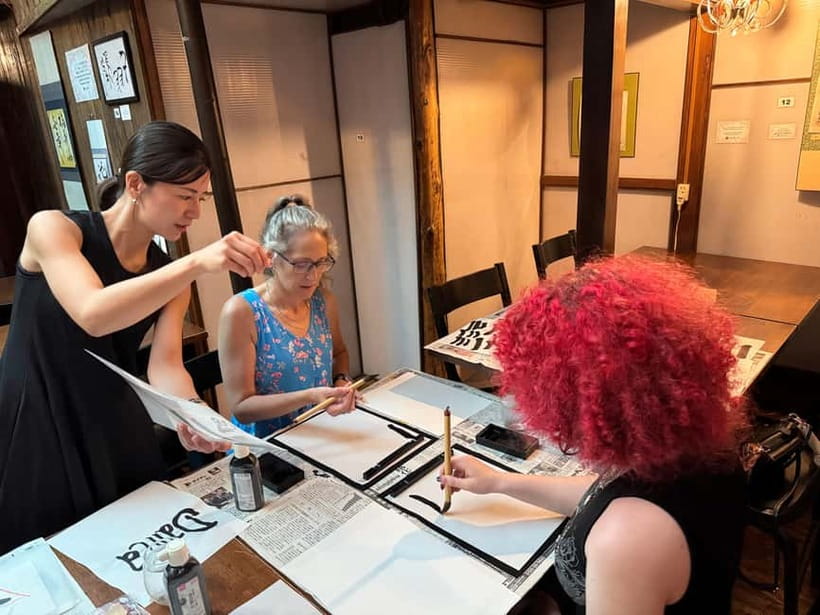
The location does much of the early work. Gojo Paradiso sits along the Takase River on Kiyamachi Street, in the Gojo area of central Kyoto. You are not being taken out to a distant craft village or a large activity center. You meet in a traditional townhouse, which gives the lesson a more personal setting.
From Keihan Kiyomizu Gojo Station, the walk takes about five minutes. From Keihan Shichijo Station, allow about ten minutes. The meeting point is listed as 386 meters from Kiyomizu Gojo Station, so the approach is simple, but you should still allow a few extra minutes to find the entrance on Kiyamachi Street.
Once inside, the mood changes from city movement to quiet concentration. The setting suits calligraphy because the surroundings do not compete with the activity. You have a place to sit, prepare, and pay attention to the brush.
The activity begins and ends at Gojo Paradiso. That makes it easy to fit into a day of Kyoto sightseeing, especially if you are staying near the central or eastern parts of the city. You will not need to arrange a separate ride at the end.
A few more Kyoto tours and experiences worth a look


Meditation Before the First Brushstroke
The meditation is a key part of this experience, not an afterthought. Before you practice writing, the instructor guides you through a brief session designed to improve focus and help you reflect.
The instructor is certified in yoga and Pilates, which adds a useful physical side to the opening. You are encouraged to settle your posture and attention before handling the brush. That matters because calligraphy is sensitive to small movements. A rushed grip or tense arm can affect the line before you have even finished the character.
I like this opening because it gives the workshop a clear purpose. You are not only learning how to form Japanese characters. You are also being asked to notice your state of mind before you write. The class treats calligraphy as a form of expression, not just handwriting practice.
You should not expect a long meditation retreat. It is described as a brief session, so the focus remains on preparing for the writing lesson. If you are new to meditation, you do not need special experience. The practical aim is simply to quiet your attention for a while.
This can be especially useful after a busy morning in Kyoto. Temples, markets, buses, and crowded lanes can fill your head quickly. A few calm minutes before the brushwork give you a chance to reset.
Learning Posture, Grip, and Basic Brush Control
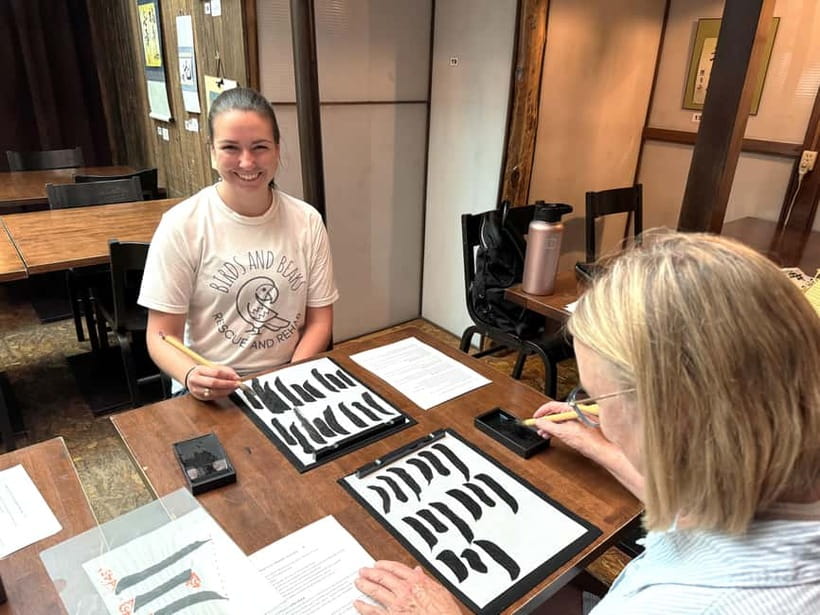
After meditation, the instructor introduces the main ideas of Japanese calligraphy. You learn how to sit, how to hold the brush, and how to make simple strokes.
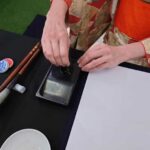
These basics can look easy until you try them. A calligraphy brush does not behave like a ballpoint pen. Pressure, direction, speed, and the amount of ink all affect the line. The lesson gives you a chance to learn those controls without worrying about producing a finished artwork right away.
The step-by-step order is helpful for first-time students. You start with simple movements before choosing a character. That lets you become familiar with the brush and supplies, and it lowers the pressure to make something perfect on your first attempt.
The instructor is described as an expert calligraphy artist, and the class includes guidance throughout the process. A first-time student can ask for help with technique and receive corrections as the work develops. A person with some prior experience can use the session to refine posture or brush control.
The class does not require you to arrive with a knowledge of Japanese. You work from sample letters and receive instruction in English or Japanese. The emphasis is on learning through demonstration and practice, so the experience remains open to beginners.
Choosing a Character That Means Something to You
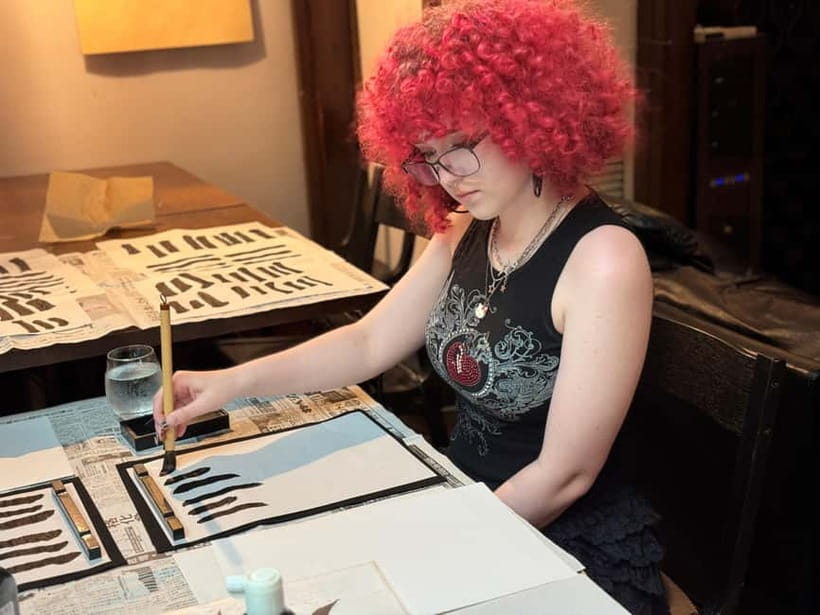
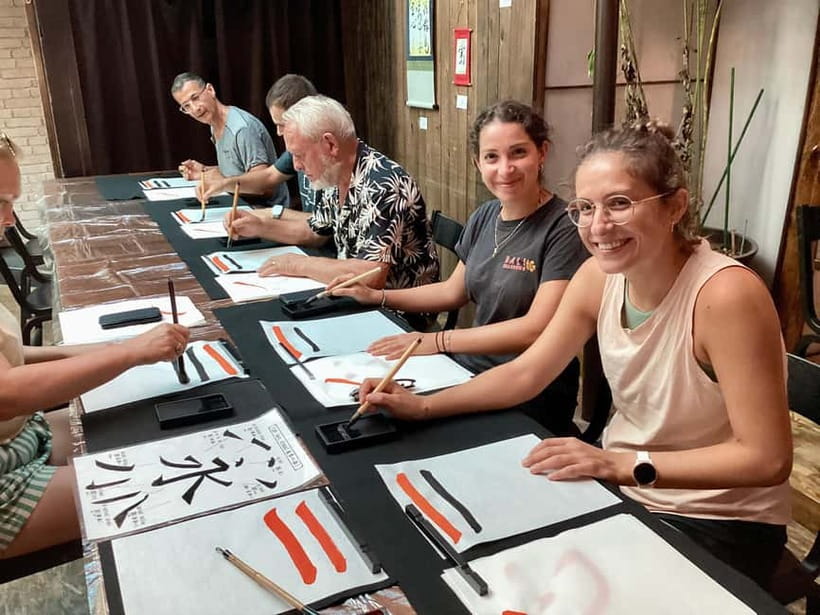
The personal part begins when you choose a character from the provided samples. You are not limited to copying a single design selected by the instructor. Instead, you have a chance to pick a character that connects with your mood or the kind of feeling you want to remember from Kyoto.
This is where the workshop moves beyond a basic craft class. Calligraphy reflects the person writing it, and each stroke can show the emotion and energy you bring to the page. The activity invites you to face yourself for a moment and express that feeling in written form.
You do not need to treat the choice as a major philosophical exercise. You can select a character because you like its shape, because its meaning fits your trip, or because it represents something you want to carry home. The value is in making the choice yourself.
The practice stage gives you room to try the character before making the final piece. This is important. You can test the shape, adjust your brush handling, and get guidance before committing to colored paper or a postcard.
I would pay attention to the process rather than chase perfect lines. Traditional calligraphy has a handmade quality, and a small variation can make the finished piece feel like your own. The goal is not to produce a printed-looking symbol. It is to create a personal work with visible brush movement.
Creating Your Final Artwork on Paper or a Postcard
At the end of the writing practice, you make a final piece on colored paper or a postcard. Your finished artwork is yours to take home.
That makes the souvenir more meaningful than a shop purchase. You made the marks yourself, and the character connects to the mood of your visit. It is compact enough to pack easily, yet personal enough to bring back a story about your time in Kyoto.
You may want to think about how you will carry it before booking a full day of sightseeing afterward. The supplied information does not specify protective packaging, so bringing a folder or keeping a firm place in your bag could be sensible if you plan to continue walking around.
The final piece also works well for families. Children can take part, but they must be accompanied by a parent or guardian. The activity gives you something to do together without needing prior calligraphy skill. Parents should be ready to help children stay patient during the meditation and practice stages.
For adults, the final artwork can mark a personal moment in the trip. You might choose a character connected to calm, courage, balance, or another feeling that matters to you. The class does not prescribe that meaning, which leaves room for your own interpretation.
What the $47 Price Gets You
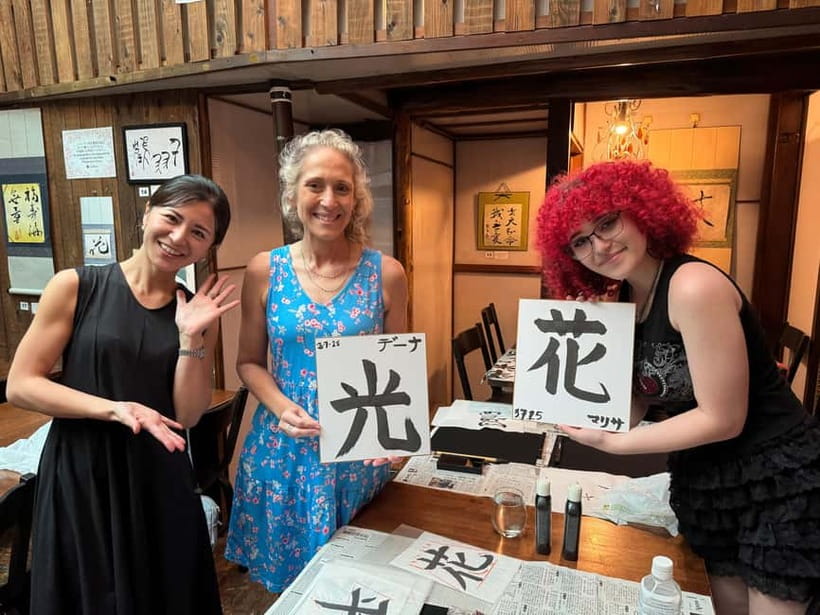
The price is $47 per person. That includes an expert calligraphy artist, all calligraphy supplies used during the class, meditation guidance, instruction in brush technique, practice time, and the final artwork you take home.
For a hands-on cultural activity in central Kyoto, the price is reasonable if you value personal instruction and a finished souvenir. You are paying for more than access to materials. The instructor helps you understand how to sit, hold the brush, form strokes, and prepare your final piece.
The value is less clear if you only want to try a brush for a few minutes. This workshop asks you to give time and attention to the process. You will get more from it if you enjoy careful activities and want a calmer break from sightseeing.
The class also offers something that a museum visit cannot. You are not only looking at Japanese art or hearing about it. You are practicing one small part of the tradition and leaving with something you made. That direct participation is the strongest reason to consider the price worthwhile.
The cost is per person, so families should calculate the total before booking. Children need an accompanying parent or guardian, and each participant should have a reservation.
Who Will Enjoy This Kyoto Workshop Most
This is a good fit for first-time calligraphy students. The instruction begins with basic posture, grip, and strokes, and the instructor supports you as you move toward the final character. You do not need a previous class.
It also suits people who prefer a slower cultural activity. The meditation, quiet setting, and focus on self-expression make this different from a cooking class or a busy walking tour. You have time to pay attention to what your hands are doing.
Couples, parents and children, and solo visitors can all find a natural reason to book. Two people can choose different characters and compare the finished pieces. A parent and child can share a creative task, while a solo visitor can use the quiet setting as a break from the usual sightseeing schedule.
I would be less likely to recommend it to someone who wants a broad introduction to Japanese culture in one session. The workshop concentrates on calligraphy, reflection, and technique. It does not promise a wide survey of Japanese customs, architecture, or history.
It may also be a poor match if you dislike guided meditation or activities that require patience. The meditation is brief, but it is part of the design. The experience works best when you accept the slower pace rather than treat it as something to hurry through.
Language, Reservations, and Timing Choices
Instruction is available in English and Japanese. That makes the class practical for international visitors, though the exact balance between the two languages may depend on the group and instructor on the day.
You must reserve at least one day before your preferred date. This is not an activity to count on arranging at the last minute. Book ahead if you have a fixed Kyoto schedule, particularly if you want to place the workshop between popular temple visits.
The activity ends back at the meeting point. You can continue along Kiyamachi Street, walk toward the Takase River, or connect with other central Kyoto plans afterward. Since no duration is provided, do not build an overly tight schedule around it. Leave room before and after the booking.
The booking terms are visitor-friendly. You can reserve and pay later, and cancellation up to 24 hours in advance brings a full refund. Those policies help if your Kyoto plans are still changing, but you should still reserve early because payment flexibility does not remove the one-day advance booking rule.
My Take on the Calm, Creative Format
The strongest part of this experience is the combination of meditation and making. Many cultural activities give you a finished item or a quick demonstration. Here, the short pause at the beginning changes how you approach the brush, and the final piece records your own effort.
I also like the fact that the workshop does not require artistic confidence. You begin with small strokes, receive instruction, and then select a character from examples. That gives you a clear path through the lesson without taking away your choice.
The main limitation is its narrow focus. You will not see a large collection of calligraphy works or move through several Kyoto neighborhoods. You will spend the session in one traditional townhouse, working carefully with ink and brush.
That narrow focus is also the point. If you have already spent the day visiting major sights, this gives you a quieter way to connect with Japan. It asks you to stop looking outward for a while and pay attention to your own movements.
Should You Book Gojo Paradiso Calligraphy?
Book this workshop if you want a personal Kyoto souvenir, clear beginner instruction, and a peaceful cultural activity near the Takase River. The $47 price makes the most sense when you value the meditation, expert help, supplies, and finished artwork as one complete experience.
Skip it if you want a fast activity, a large group performance, or a broad lesson covering many parts of Japanese culture. For everyone else, especially first-time students and families with patient children, this is a thoughtful way to spend time in Kyoto. Reserve at least one day ahead, arrive at Gojo Paradiso with a little time to spare, and let the final character be your own.
FAQ
Where does the calligraphy workshop meet?
The meeting point is Gojo Paradiso on Kiyamachi Street, along the Takase River in Kyoto’s Gojo area.
How do I reach Gojo Paradiso?
The location is about a five-minute walk from Keihan Kiyomizu Gojo Station and about a ten-minute walk from Keihan Shichijo Station. It is listed as 386 meters from Kiyomizu Gojo Station.
Is meditation part of the workshop?
Yes. The workshop begins with a brief meditation session intended to help you reflect and improve your concentration before writing.
Do I need previous calligraphy experience?
No. Beginners and people with some previous experience are welcome. The class covers posture, brush grip, basic techniques, and simple practice strokes.
What will I make during the class?
You will choose a character from sample letters, practice writing it, and create a final piece on colored paper or a postcard. You can take the completed artwork home.
Are children allowed to participate?
Yes, but children must be accompanied by a parent or guardian.
What is included in the $47 price?
The price includes an expert calligraphy artist and the calligraphy supplies used during the class.
More Workshops & Classes in Kyoto
More tours in Kyoto we've reviewed

Workshops, compared.
 ★ 4.3Kyoto: 45-Minute Tea Ceremony Lesson ExperienceFrom $2245 min
 ★ 5.0Ramen Cooking Class at Ramen Factory in KyotoFrom $131
 ★ 4.9Kyoto: Ramen Cooking Class at a Ramen Factory with SouvenirFrom $1271h 30m
 ★ 4.9Kyoto: Samurai Class, Become a Samurai WarriorFrom $70
 ★ 5.0Ninja 1-hour Hands-on Lesson by Japanese master in Kyoto -EntryFrom $80
 ★ 5.0Kyoto: Ramen, Gyoza, and Onigiri Cooking ClassFrom $901h 30m