
Reviewed · FUSHIMI INARI TOURS
Kyoto: Fushimi Inari-taisha y Kiyomizu-dera (Spanish Guide)
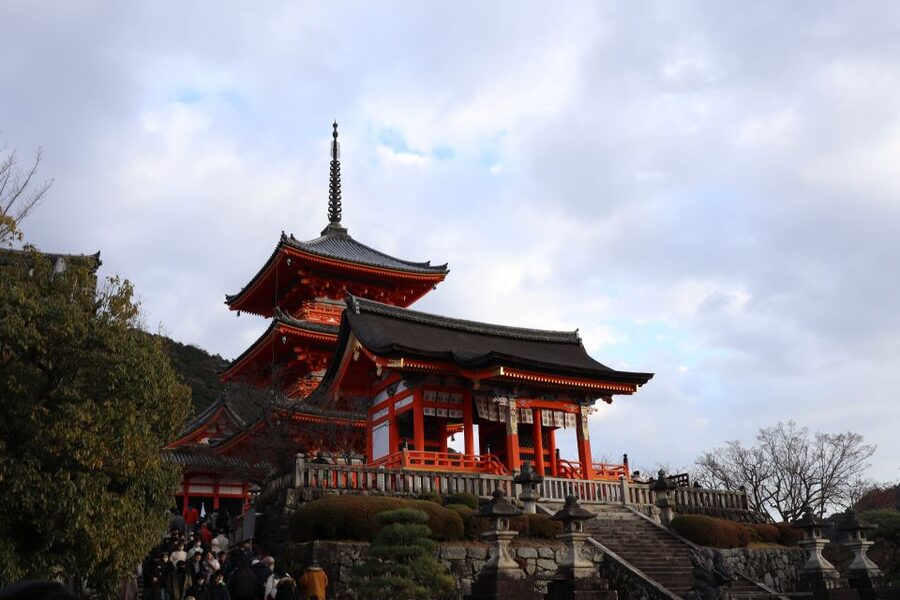
Kyoto’s most photogenic walk links Fushimi Inari’s thousands of red torii with the wooden stage and hilltop views of Kiyomizudera. Along the way, you also pass smaller religious sites that help explain how Shinto and Buddhism share space in Kyoto.
I like the chance to explore Fushimi Inari beyond the first crowded gate, and I like the route through Otani Hombyo and Sannenzaka before the final temple visit. The main concern is guide quality: Alejandro was praised as fantastic and attentive, while Miriam was criticized for offering little historical explanation. The experience can feel either like a proper tour or an expensive companion walk.
In This Review
- Key points to know before booking
- Starting beside the fox statue at Fushimi-Inari Station
- Three and a half hours among the torii
- The train ride and lunch pause in Pontocho
- Otani Hombyo and the Buddhist side of Kyoto
- Otani Cemetery and the walk toward Kiyomizudera
- Kiyomizudera and its famous wooden platform
- Sannenzaka, old streets, and the final stop
- What the $76 price really buys you
- Who will get the most from this Kyoto walk?
- Should you book this Spanish guided tour?
- FAQ
- Where does the tour begin?
- Where does the tour finish?
- How long does the activity last?
- Is the tour conducted in Spanish?
- How much does the experience cost?
- Is transportation between Fushimi Inari and Kiyomizudera included?
- Is lunch included?
- Is the Kiyomizudera entrance ticket included?
- How physically demanding is the route?
- Can people with mobility impairments join?
Key points to know before booking
- Fushimi Inari takes 3.5 hours: Expect mountain trails, stairs, small altars, shrine buildings, and views toward Kyoto.
- The tour ends at Kiyomizudera: You finish in the Higashiyama area, at 1-chōme-286-1 Kiyomizu.
- A Spanish-speaking guide leads the day: Alejandro was praised in one review, but guide quality appears to be an important variable.
- Transport is not included between the main sights: The train ride from Fushimi-Inari to the central area is listed at about 15 minutes, but that transport cost is yours.
- Kiyomizudera admission is included: This helps offset the $76 price, especially if you want explanations in Spanish.
- The walk requires real effort: Comfortable shoes are essential, and the activity is not suited to people with mobility impairments.
Starting beside the fox statue at Fushimi-Inari Station
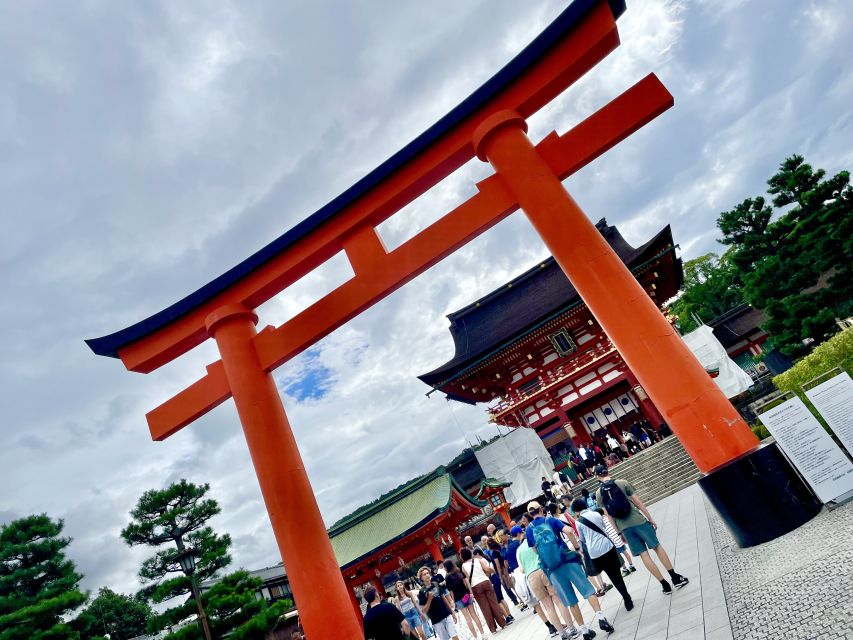
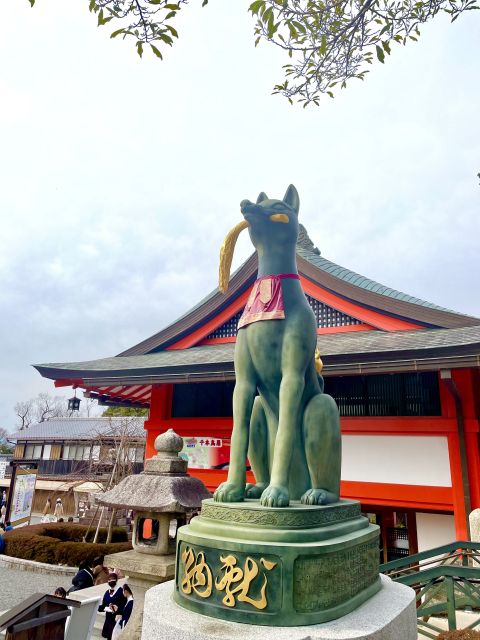
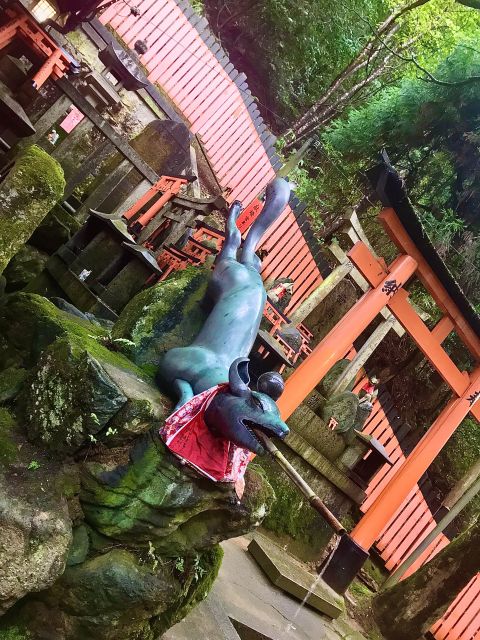
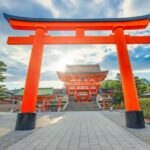
The meeting point is in front of JR Inari Station, beside the fox statue. That is a useful landmark because Fushimi Inari is one of Kyoto’s busiest religious sites, and the red torii begin close to the station. You will not need to search through a hotel lobby or a large transport terminal.
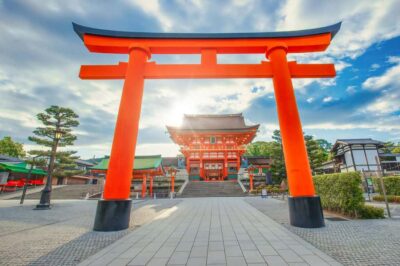
The opening section is the heart of the experience. Fushimi Inari-taisha is dedicated to Inari, the Shinto deity linked with rice, prosperity, and business. Fox statues appear around the shrine because foxes are regarded as Inari’s messengers. The tour description promises a route through Shinto beliefs, so this is where the guide’s ability to explain symbols matters most.
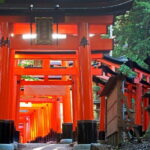
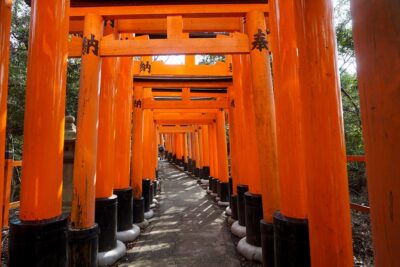
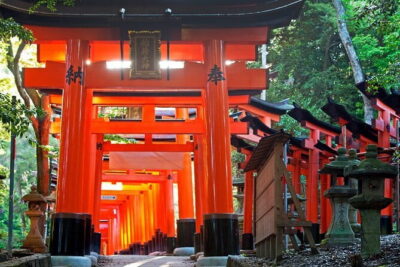
The first torii are usually the most crowded and the easiest to photograph. The value of a guided visit comes from continuing farther, where the path winds uphill through a long series of gates and reaches smaller altars and side shrines. You should allow the guide to set a steady pace, but also take time to look beyond the main path. The small religious sites are part of what gives Fushimi Inari its character.
A few more Kyoto tours and experiences worth a look

Three and a half hours among the torii
The Fushimi Inari portion lasts about 3.5 hours, including guided sightseeing, walking, hiking, and scenic stops. That is a generous amount of time. You are not being rushed through the first gate, taking two photos, and leaving.
It is also the reason you need to take the physical warning seriously. The mountain route uses trails and stairs, and the activity is described as requiring moderate physical effort. People who are comfortable walking uphill should find the route manageable, but it is not a flat shrine visit. Wear shoes with good support, use comfortable clothing, and bring only what you want to carry for several hours.
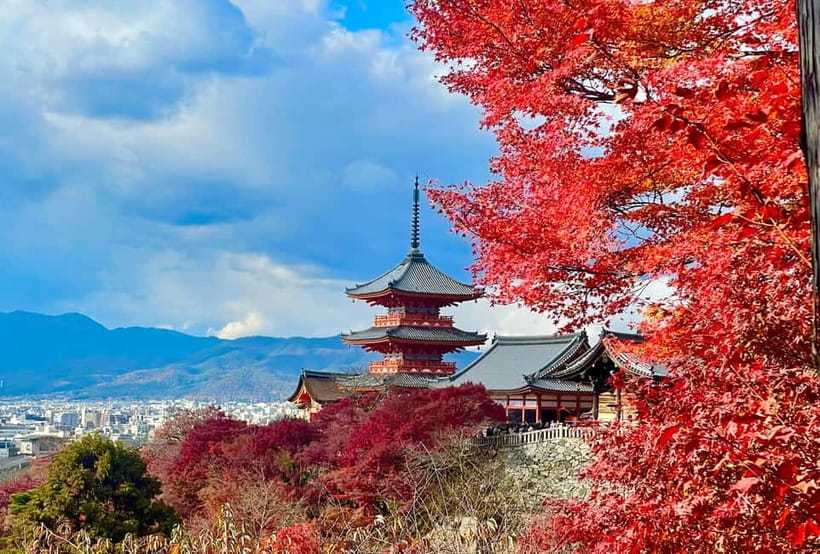
The higher paths offer views toward Kyoto, although the exact visibility depends on conditions. The view is only part of the reward. The changing rhythm of the torii, quiet corners, and smaller altars make the walk more interesting than a simple photo stop.
A practical point: the tour may spend a large part of the day at Fushimi Inari before reaching Kiyomizudera. If your main goal is the famous wooden stage, remember that the second temple comes later. This route suits you if you want context and a slower visit, not if you want to collect both sights as quickly as possible.
The train ride and lunch pause in Pontocho
After Fushimi Inari, the route includes a train journey of about 15 minutes and a one-hour break in Pontocho. The transport from Fushimi-Inari to Kiyomizudera is not included, so you should expect to pay your own fare.
Pontocho is a useful place for a pause because the day has already included a long uphill walk. The schedule gives you one hour for lunch, but the food itself is not included. You can use this break to eat, rest your legs, and prepare for the afternoon walk.
The itinerary does not specify a restaurant or a fixed meal. That gives you some freedom, but it also means the lunch stop is not a hosted food experience. If you need a particular diet or want a full sit-down meal, ask the guide how the break will work when you meet.
Otani Hombyo and the Buddhist side of Kyoto
From Pontocho, you walk for about 30 minutes before reaching Otani Hombyo Temple, the mausoleum of Shinran. This part adds a useful change of mood and religious tradition. Fushimi Inari introduces Shinto practice, while Otani Hombyo brings the route into the Buddhist setting connected with Shinran.
The visit lasts about 45 minutes. You can expect guided walking, scenic views along the way, and time to pass through the site. The schedule calls it both a visit and a stop along the route, so it may not have the same extended focus as Fushimi Inari or Kiyomizudera.
I like this inclusion because it keeps the day from becoming a two-sight checklist. You see how Kyoto’s religious identity is not confined to one grand temple. The route moves from gates and fox imagery to a Buddhist mausoleum, then onward to Kiyomizudera. That contrast gives the Spanish explanations a clear purpose.
At the same time, the quality of this section depends heavily on the guide. One verified review praised Alejandro for being fantastic and attentive. Another, concerning Miriam, said the experience lacked temple history and felt more like companionship than a guided tour. That criticism is especially relevant here, where context is more important than simply following a path.
Otani Cemetery and the walk toward Kiyomizudera
The next stop is Otani Cemetery, with about 30 minutes for sightseeing, photographs, and guided walking. A cemetery may not be on every visitor’s list, but it can provide a quieter look at Buddhist customs and the local religious setting.
The schedule describes this as a photo stop and visit rather than a major monument. Keep your expectations in check. You are not getting a separate museum-style presentation, and the available information does not promise specific memorials or an extended history lesson.
From here, the route continues on foot toward Kiyomizudera. This walking section is part of the experience, not just a way to fill time. You move through the eastern Kyoto area before reaching the temple, and the steady sequence of religious sites makes the day feel connected.
You should also expect tired legs by this stage. Fushimi Inari includes stairs and mountain paths, followed by a train ride, lunch, and another walk. The combination is rewarding for active visitors but a poor match for anyone who needs frequent sitting or step-free access.
A few more Kyoto tours and experiences worth a look


Kiyomizudera and its famous wooden platform
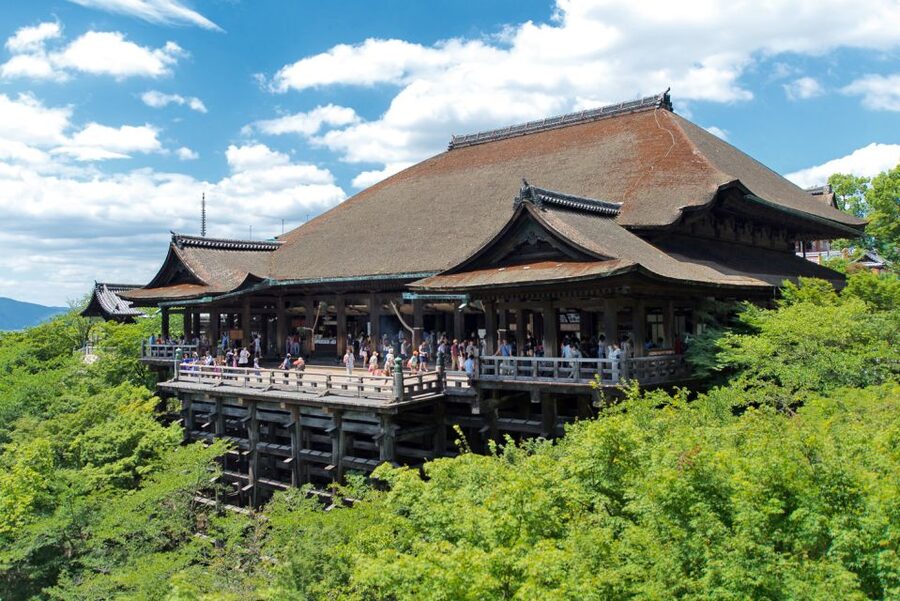
Kiyomizudera receives about 1.5 hours. The entrance ticket is included, which is one of the clearest benefits of the $76 price. You can enter the temple with the guide rather than arranging admission separately.
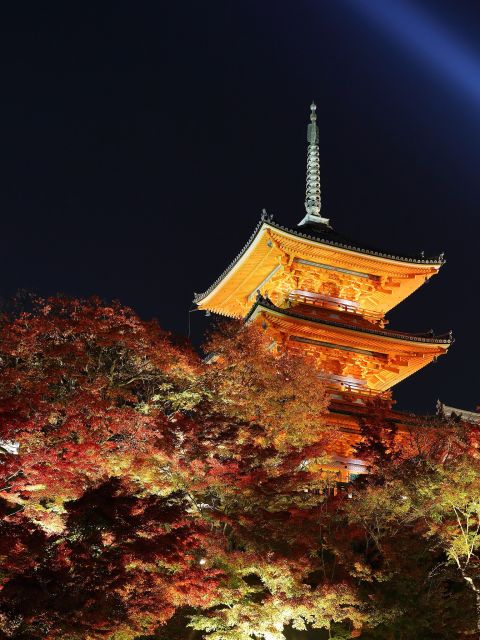
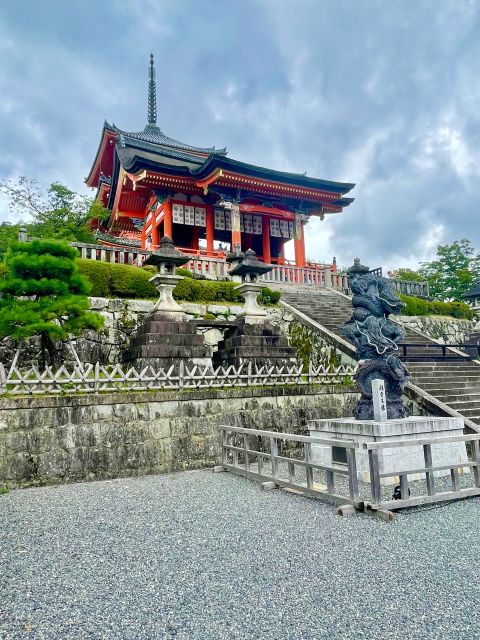
The temple sits on a hill and is known for its traditional architecture and broad views from the wooden platform extending over the slope. The main hall and surrounding gardens are the main focus of the visit. The setting gives you a strong finish after the darker, more enclosed torii paths at Fushimi Inari.
The tour includes guided sightseeing, photographs, walking, and scenic views. That should give you time to take in the building and the view, but one and a half hours is not an unlimited temple visit. If you want to explore every corner at your own pace, you may feel the schedule is structured.
Kiyomizudera is also the point where a good guide can add real value. The building is visually impressive on its own, but explanations about Buddhist practice, the main hall, and the temple’s place in Kyoto make the stop more memorable. The mixed feedback about guide performance means you should confirm that your guide will provide historical and cultural explanation in Spanish, not just lead you from gate to gate.
Sannenzaka, old streets, and the final stop
The final 30 minutes take you through Sannenzaka for guided walking, sightseeing, shopping, and photographs. This historic street area is a natural ending because it links Kiyomizudera with traditional Kyoto scenery and shops.
You finish at 1-chōme-286-1 Kiyomizu in Higashiyama Ward, not back at Fushimi Inari. That matters when planning the rest of your day. From the finish, you can continue exploring the Higashiyama area, but the activity itself does not include a return transfer.
Sannenzaka is also the least controlled part of the route. The schedule allows only about 30 minutes, so you can browse and take photos, but you should not expect a long shopping session. If you see something you want, keep an eye on the time and stay with the group.
What the $76 price really buys you
At $76 per person, this is not a budget walking tour. The price covers a seven-hour guided day, Spanish-language guiding, guided visits at both major religious sites, and the Kiyomizudera entrance ticket. It does not cover the train from Fushimi-Inari, lunch, or other personal costs.
The value depends on what you want from a guide. If you need Spanish explanations and prefer having the route organized across several districts, the price may be reasonable. You are getting a full day rather than a short temple introduction, and the route includes places beyond the two headline sights.
If the guide offers only basic directions and little cultural information, the calculation changes. One verified review rated the experience poorly because it felt like paying for company rather than a proper tour. Another gave a very positive account of Alejandro, describing him as attentive and fantastic. With an overall rating of 2.9 from four reviews, I would treat guide assignment as the key uncertainty.
The best reason to book is the combination of logistics and cultural framing. The weaker reason is the promise of a guaranteed expert lecture, because the available feedback does not show consistent guide quality. Ask for the assigned guide’s name and confirm the level of historical explanation before committing if that matters to you.
Who will get the most from this Kyoto walk?
This experience suits you if you:
- Want a Spanish-speaking guide for Kyoto’s major Shinto and Buddhist sites
- Can walk uphill and handle stairs for several hours
- Prefer a full-day route with organized sightseeing
- Want to finish near Kiyomizudera and Sannenzaka
- Like seeing smaller religious sites as well as famous landmarks
- Appreciate having Kiyomizudera admission included
It is less suitable if you have mobility impairments, need a flat route, or are traveling with a baby stroller. Unaccompanied minors are not allowed. You should also think twice if you prefer a short visit with lots of free time, since the day has a fixed sequence and several guided stops.
Bring comfortable shoes and comfortable clothes. The combination of mountain paths, stairs, city walking, and temple grounds makes footwear more important than dressy clothes. The activity is seven hours, so plan around the full length rather than assuming the main visits will be over by midday.
Should you book this Spanish guided tour?
Book it if you want a physically active day that connects Fushimi Inari, Otani, Kiyomizudera, and Sannenzaka in one route, and if Spanish guidance is important to you. The strongest parts are the long Fushimi Inari visit, the included Kiyomizudera admission, and the chance to compare Shinto and Buddhist settings.
I would book with one condition: confirm who the guide will be and what level of historical explanation you can expect. Alejandro received strong praise for being attentive, while the criticism directed at Miriam raises a real concern about consistency. If you want a guide who explains symbols, history, and religious customs, that question matters more than the photographs.
For an active visitor comfortable with stairs, the route offers a lot in seven hours. For someone seeking guaranteed scholarly commentary or an easy-access Kyoto day, a different option may be safer.
FAQ
Where does the tour begin?
It begins in front of JR Inari Station, beside the statue of the fox.
Where does the tour finish?
It finishes at 1-chōme-286-1 Kiyomizu, Higashiyama Ward, Kyoto, 605-0862, Japan.
How long does the activity last?
The activity lasts seven hours.
Is the tour conducted in Spanish?
Yes. The live tour guide language is Spanish.
How much does the experience cost?
The listed price is $76 per person.
Is transportation between Fushimi Inari and Kiyomizudera included?
No. Transport from Fushimi-Inari to Kiyomizudera is not included. The route lists a train journey of about 15 minutes.
Is lunch included?
No. The itinerary includes a one-hour lunch break in Pontocho, but lunch is not listed as included.
Is the Kiyomizudera entrance ticket included?
Yes. The Kiyomizudera entrance ticket is included.
How physically demanding is the route?
The activity requires moderate physical effort. The Fushimi Inari visit includes mountain trails and stairs, and comfortable shoes are recommended.
Can people with mobility impairments join?
No. The activity is not suitable for people with mobility impairments. Baby strollers are also not allowed, and unaccompanied minors cannot participate.
More Guided Tours in Kyoto



More Golden Pavilion & Temple Tours in Kyoto
More Fushimi Inari Tours in Kyoto

More tours in Kyoto we've reviewed




Fushimi Inari Tours, compared.
 ★ 4.8Kyoto: Fushimi Inari, Kinkakuji, Bamboo Grove 1 Day Bus TourFrom $122510 minutes - 9 hours
 ★ 5.0Fushimi Inari Hidden Hiking Tour (Private Option Available)From $63
 ★ 4.7Kyoto/Osaka: Nara, Fushimi Inari Taisha, Arashiyama Bus TourFrom $529 - 10 hours
 ★ 4.4Osaka/Kyoto: Arashiyama, Nara & Fushimi Inari Shrine w/LunchFrom $61
 ★ 5.0Kyoto: Nijo, Kinkaku-ji, Arashiyama, Kiyomizu & Fushimi InariFrom $51
 ★ 5.0Kyoto Fushimi-Inari Night Walking TourFrom $43