

Reviewed · GION & GEISHA WALKS
Best of Kyoto: Gion, Geisha, Pagodas & Cobblestones
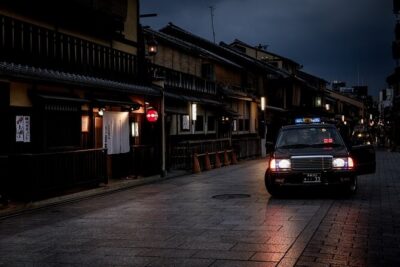
Kyoto’s Gion district changes after dark. Lanterns glow on wooden buildings, tourist crowds thin out, and the narrow lanes take on a quieter, more mysterious feel. This two-hour walk gives you a useful first look at Gion and Higashiyama, with local stories rather than a quick round of photo stops.
I like two things in particular: the route mixes famous sights with cultural explanation, and the evening timing lets you see the old streets without the daytime crush. Guides such as Karim, Kevin, Ben, and Janelle are praised for making difficult subjects, especially geiko and maiko life, easy to understand.
The main consideration is simple: night brings atmosphere, but also darker stretches and less detail for photography. You should also treat a glimpse of a geiko or maiko as luck, not a promise. The tour teaches you about their world even if none appear.
In This Review
- Key points to know before you book
- Why nighttime is the right setting for Gion
- Starting near Yasaka Shrine
- Walking Ninenzaka’s old stone streets
- The Hōkan-ji Temple pagoda photo stop
- A quieter pause at Yasui Kompira-Gu
- Forty-five minutes in Gion
- What $24 buys you
- Timing, pace, and guide style
- Who should book this Gion night walk
- Booking details that matter
- Should you book it?
- FAQ
- How long does the Best of Kyoto night tour last?
- What places are visited?
- Is food included?
- Can I see a geisha or maiko?
- What languages are available?
- Is this a private tour?
- What happens if I cannot find the meeting point?
Key points to know before you book
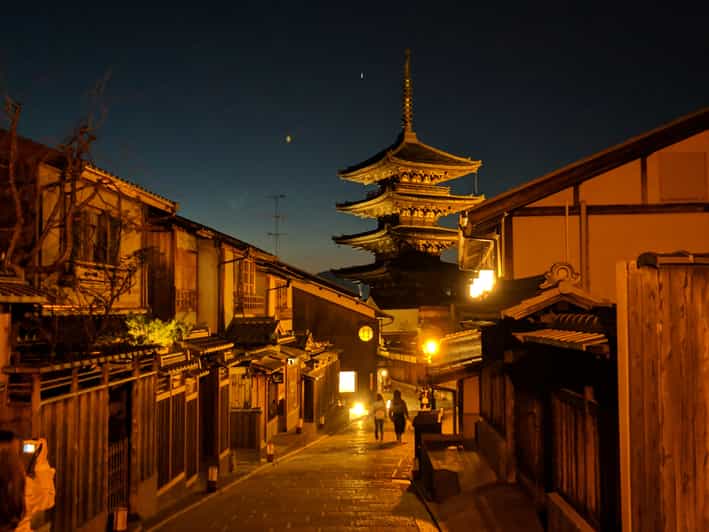
- Gion after dark: See Kyoto’s old entertainment quarter when the lanes are quieter and the lanterns are lit.
- Five cultural stops: Visit Yasaka Shrine, Ninenzaka, Hōkan-ji Temple, Yasui Kompira-Gu Shrine, and Gion.
- Respectful geisha insight: Learn about the training, customs, and daily work of geiko and apprentice maiko.
- Useful first-day tour: Get an early sense of Kyoto’s districts, religions, customs, and places to eat afterward.
- Flexible format: Choose an English or French tour, with private and small-group options available.
- Low-cost introduction: At $24 per person, the walk offers solid value if you want context as well as scenery.
Why nighttime is the right setting for Gion
Gion is best understood as more than a pretty collection of old buildings. It is Kyoto’s centuries-old entertainment district, tied to tea houses, traditional arts, restaurants, and the women known locally as geiko and maiko. At night, the setting helps you notice the relationship between the buildings, lanterns, shrines, and narrow streets.
I like that the tour does not rush straight to a geisha sighting. Instead, you walk through the district and learn how the area works. That matters because a costumed woman hurrying between appointments is not a street performer waiting for photographs.
The route also moves into Higashiyama, where slopes, stone lanes, temples, and shrines give the evening a different rhythm. You get a compact look at several parts of old Kyoto in two hours, though you should expect a brisk walking tour rather than a slow temple visit.
The quieter streets are a major advantage. Several guides, including Karim, Kevin, and Janelle, are praised for leading relaxed walks and making time for questions. You may still encounter other people in popular sections, but the late timing generally gives the area more breathing room than a daytime visit.
A few more Kyoto tours and experiences worth a look
Starting near Yasaka Shrine
The meeting point can vary with the option you book. The listed starting locations are the Tsuruha Drug Yasaka Shrine Store, FamilyMart, and Kyoto Gion, so check your confirmation carefully before leaving your hotel. If you have trouble finding the guide, the guide’s phone number is shared with you, and WhatsApp is recommended.
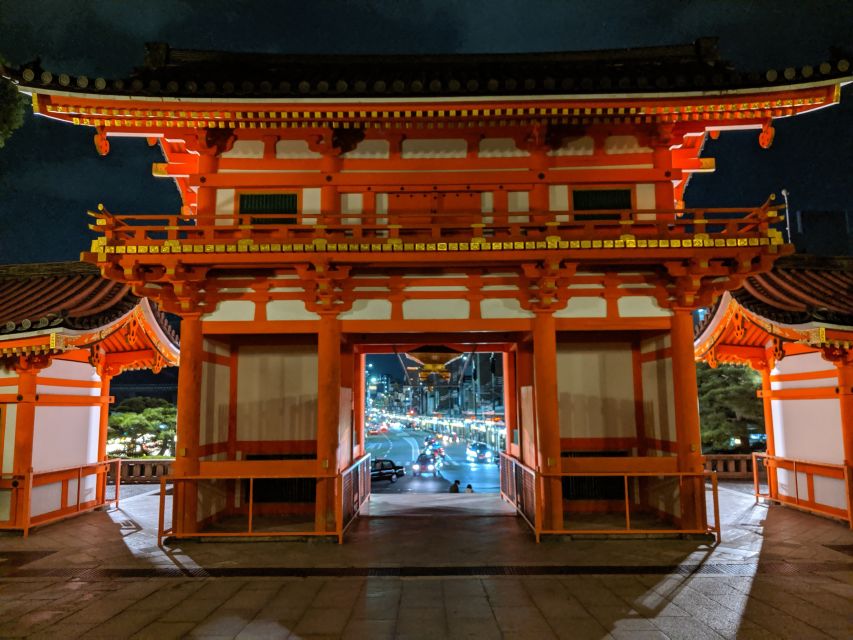
The walk begins at or near Yasaka Shrine, one of the best-known religious sites in the Gion area. You spend about 20 minutes here with the guide. That is enough time for a clear introduction to the shrine and its customs, without turning the tour into a long formal visit.
A night visit changes how you read the place. Daytime crowds can make a shrine feel like a stop on a sightseeing conveyor belt. In the evening, the lit entrance and quieter grounds make it easier to pay attention to the relationship between worship, local festivals, and the surrounding entertainment district.
Your guide can also help you avoid small cultural mistakes. That is useful at any shrine, especially if this is your first visit to Japan. The tour’s value begins here because you get explanations at the site instead of trying to connect unfamiliar customs to a guidebook later.
Walking Ninenzaka’s old stone streets
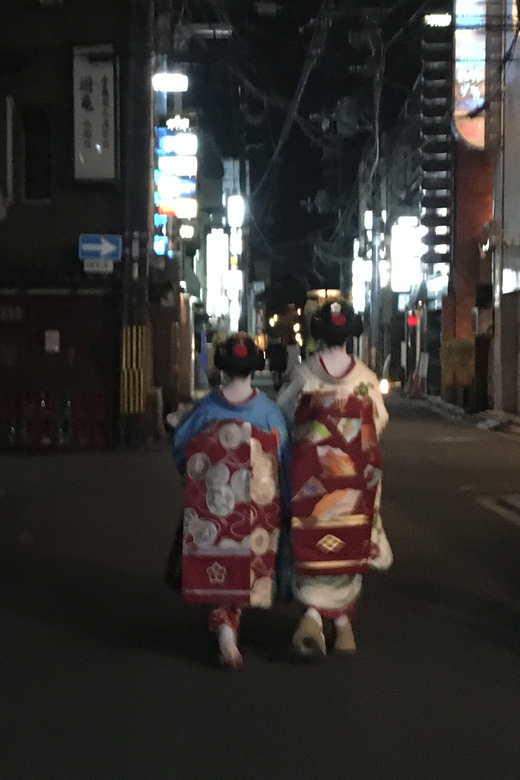
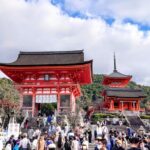
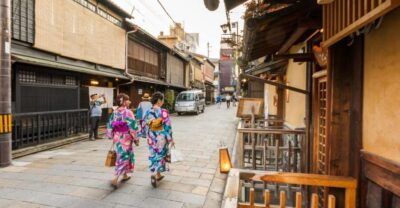
From Yasaka Shrine, the route continues to Ninenzaka, with about 20 minutes of guided walking. This area is known for its sloping lanes and traditional-looking buildings, and it is one of the most photogenic parts of Higashiyama.
At night, the emphasis shifts from shopping to atmosphere. Wooden facades and stone paving catch the light, while the quieter streets make the walk feel less hurried. You will want comfortable shoes, since the route is on foot and includes old lanes rather than smooth modern sidewalks throughout.
This is also where the guide’s storytelling matters. A good explanation can turn a row of attractive buildings into a picture of how Kyoto’s old quarters developed. Ben has used visual material on a tablet to help explain history and culture, while other guides, including Kevin and Karim, are praised for answering questions without overwhelming the group.
Do not expect a full shopping visit here. The tour allows time to see and understand the district, not to browse every shop or stop for snacks. If a particular store or café interests you, ask your guide for a recommendation to return to later.
The Hōkan-ji Temple pagoda photo stop
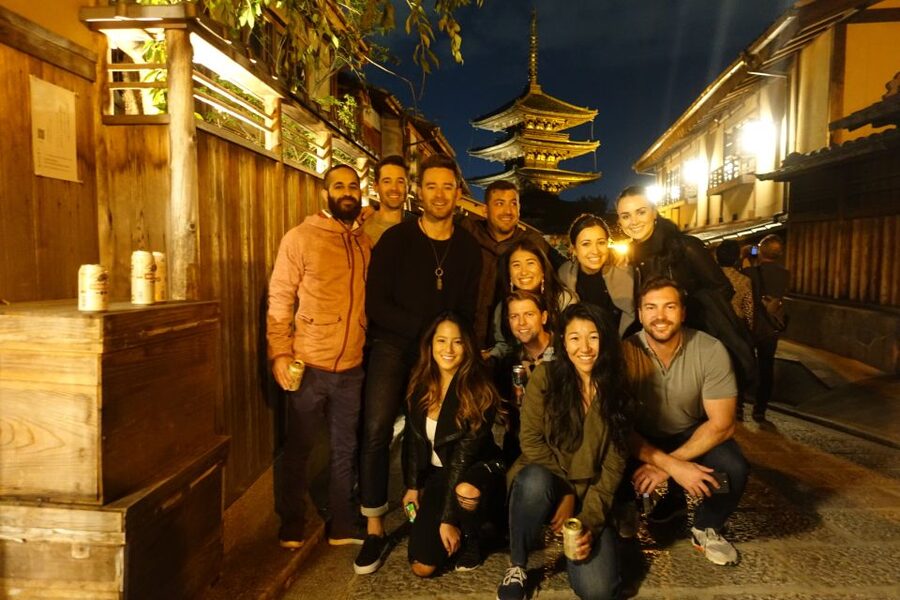
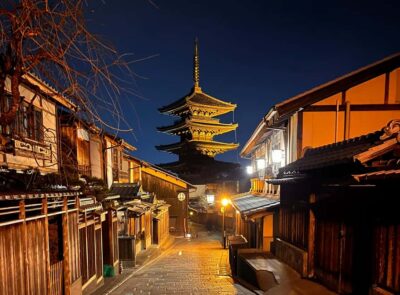
Hōkan-ji Temple is next, with about 20 minutes set aside for a photo stop. Its pagoda is one of the instantly recognizable sights in the Higashiyama area, particularly when illuminated at night.
This is one of the tour’s strongest visual moments. The pagoda gives you a clear photograph, but the guide can also explain what you are seeing and place it within the wider setting of Kyoto’s temples and old streets. The stop is long enough to take pictures and listen, though serious photographers may wish they had more time.
Night photography has tradeoffs. Lantern light and the lit pagoda create a striking mood, but darker corners can make phone photos less reliable. Bring a phone or camera with a steady grip, and do not expect every image to come out perfectly.
The group format affects this stop. A private or small group should allow more room for questions and photos. With a larger group, you may need to stay close and share the best viewpoints. Either way, the guide keeps the stop tied to the wider cultural story rather than treating it as a quick backdrop.
A quieter pause at Yasui Kompira-Gu
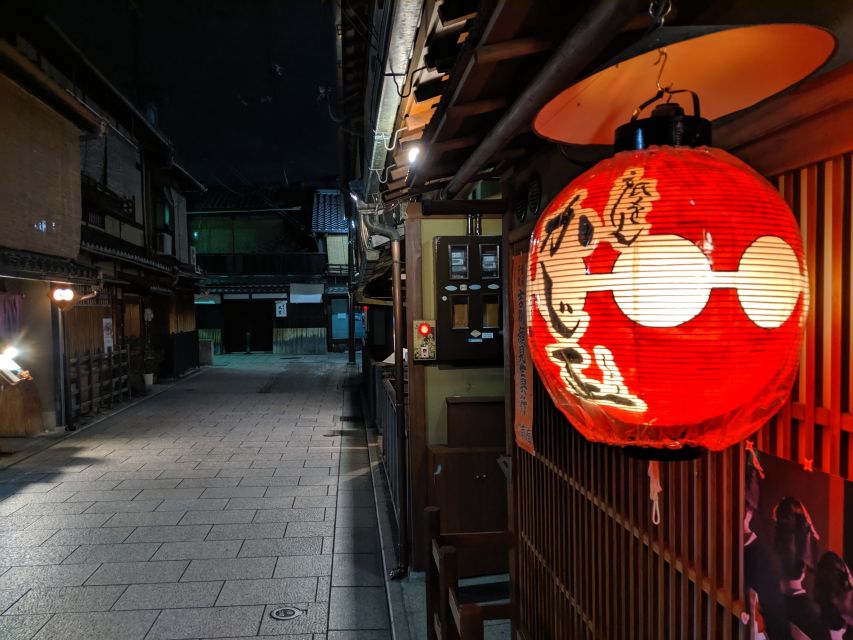
The walk then reaches Yasui Kompira-Gu Shrine for about 15 minutes. Compared with the highly photographed streets around Ninenzaka and Hōkan-ji, this stop offers a calmer pause.
The shrine is known for its distinctive customs, and your guide explains how to approach the site and what local practices mean. The supplied information does not promise a formal ceremony or a hands-on ritual, so expect a guided visit and cultural context rather than a scheduled religious event.
I value this stop because it breaks up the picture-taking. Kyoto can become a string of famous views if you are not careful. A smaller shrine visit gives you space to think about how religion fits into daily life, and it lets the guide answer questions about Japanese customs in a more relaxed setting.
The 15-minute timing is practical. You get an introduction without losing the evening’s main focus, Gion. If you are hoping to linger, pray, or explore every corner on your own, you may find this part short.

Forty-five minutes in Gion
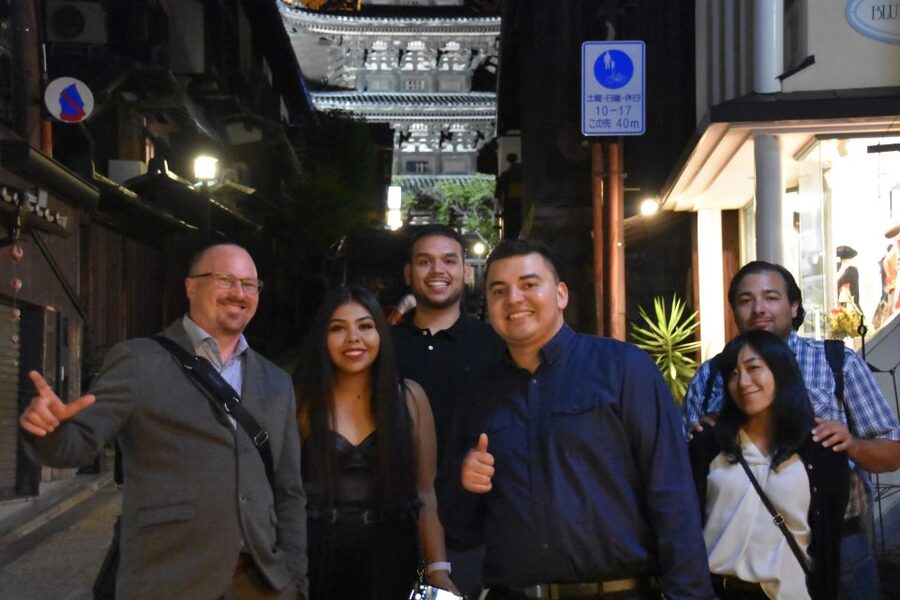
The longest part of the tour, about 45 minutes, is spent in Gion. This is where the evening’s themes come together: wooden townhouses, narrow lanes, entertainment traditions, religious sites, and the modern pressures placed on a famous historic district.
Your guide explains the difference between geiko and maiko, along with their customs and training. The terms matter. Geiko are Kyoto’s professional entertainers, while maiko are apprentices still undergoing training. The women work in a demanding traditional art form, and the best guides present that life with respect rather than turning it into a costume spectacle.
Several guides are especially praised for this subject. Karim is described as offering a thorough and respectful explanation of Gion culture. Kevin is praised for clear explanations of geiko education and daily life. Ben has a reputation for supplying extra context and practical recommendations, while Janelle and Janiel are noted for their lively, engaging style.
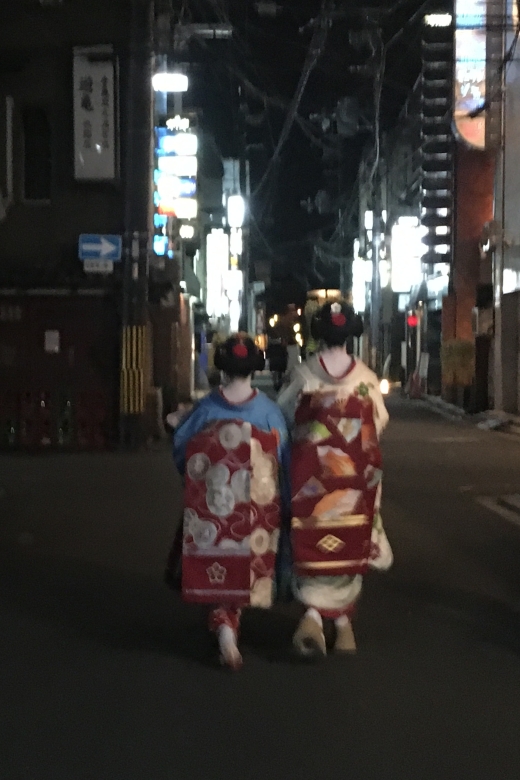
You might see a geiko or maiko toward the end of the walk, particularly in the busier parts of Gion. Some groups have reported seeing several, but sightings depend on timing and chance. Do not block a doorway, follow anyone, or treat a passing performer as part of the tour. The guide can help you behave properly, which is one of the more useful reasons to walk here with someone familiar with the area.
The Gion section is also a good place to ask questions. Guides have discussed religion, local life, Kyoto history, and Japanese customs, and they often adjust the conversation to the group. Kevin, Karim, Ben, Hina, Salomé, and others have been praised for combining facts with humor and personal conversation.
What $24 buys you
At $24 per person, this is a reasonably priced introduction to Kyoto’s old center. You are paying for a live guide, two hours of walking, and a planned route through five significant stops. There is no food, drink, temple admission package, or transport included, so the value depends on how much you want interpretation.
If you only want to photograph Yasaka Shrine and Hōkan-ji, you can visit the area independently. The tour earns its price by explaining what you are looking at and by helping you understand geiko and maiko culture without relying on stereotypes.
I would especially consider it good value on your first day in Kyoto. The route gives you a mental map of Gion and Higashiyama, and the guide can point you toward places to eat or have a drink afterward. That advice can save you from wandering hungry through a district where restaurant choices and access rules may not be obvious.
Food and drinks cost extra, and the tour does not include a meal. Plan to eat before the walk or use the guide’s recommendations afterward. Since the tour ends in Gion, you are already in a useful area for continuing your evening, though the exact recommendation will depend on your guide and the option booked.
Timing, pace, and guide style
The activity lasts two hours, with starting times available according to the date you choose. Late evening is the best match for the advertised mood, since the streets tend to be quieter and the lanterns more noticeable. A late afternoon option is also available in at least some bookings, giving you a mix of fading daylight and evening atmosphere.
The pace is a steady city walk. You stop for explanations at Yasaka Shrine, Ninenzaka, and Yasui Kompira-Gu, pause for photos at Hōkan-ji, and spend the largest block of time in Gion. Wear shoes you can walk in comfortably and bring a layer, since winter groups have found the experience cold despite enjoying it.
One important detail is the darker setting. The evening calm is part of the appeal, but some stretches are dim. Keep your phone handy for the meeting-point message, stay with the group, and contact the guide at least ten minutes before the start if you cannot find the location.
Private and small-group options are available. These formats suit you if you want to ask many questions, set a gentler photo pace, or discuss a particular interest such as religion, architecture, or geiko culture. The precise group size depends on the option you select.
English and French tours are offered. The guide assigned to you may be Karim, Kevin, Janelle, Janiel, Ben, Hina, Salomé, or another member of the team, so do not book solely to receive one named guide unless the booking specifically confirms that person.
Who should book this Gion night walk
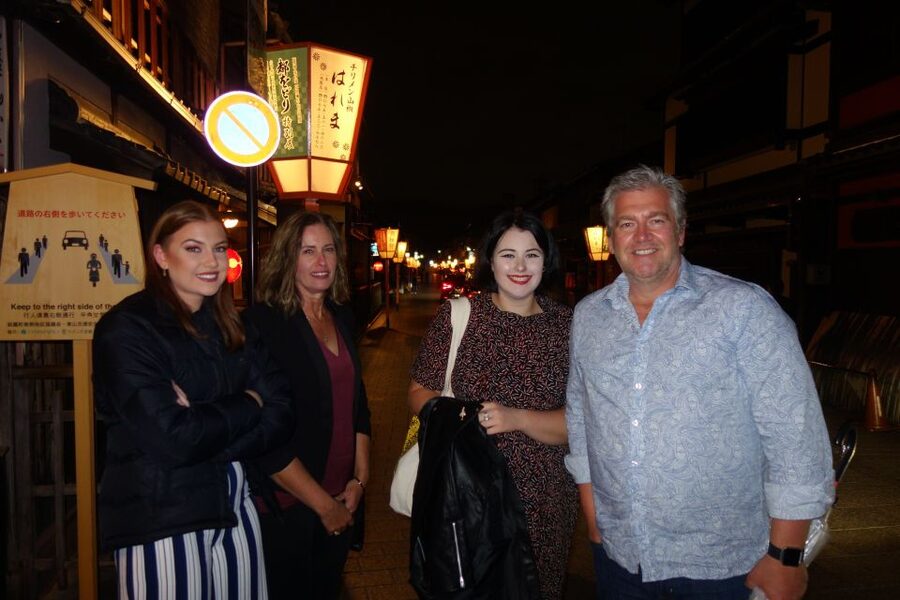
I recommend this tour for a first visit to Kyoto, especially if you want help making sense of the city’s religious and cultural traditions. It also suits repeat visitors who have seen the daytime sights but want a quieter evening route and a better understanding of geiko life.
It is a good fit if you enjoy walking, asking questions, and learning as you go. The guides are often praised for a friendly tone, useful anecdotes, and the ability to explain complicated subjects in an easy way.
You may want something else if you need a long temple visit, a food tour, or a guaranteed geisha performance. This is not a ticketed show, and food is not included. It is a guided introduction to a living neighborhood.
The tour also suits cautious photographers. You get strong views of the pagoda and lantern-lit lanes, plus help identifying respectful places to take pictures. If you want bright, detailed images at every stop, daytime may be easier.
Booking details that matter
You can cancel up to 24 hours before the activity for a full refund. A reserve-now, pay-later option is available, which is helpful when your Kyoto plans may shift.
Pay close attention to the meeting point because it may change with the option booked. Late arrivals or people who cannot find the guide are not refunded, so allow time to reach the starting location and call the guide if needed.
The activity includes the guided walk and guide only. Food, drinks, and any personal purchases are separate. The route is compact enough for a two-hour introduction, but it is still a walking tour on city streets, so plan accordingly.
Should you book it?
Book this tour if you want a calm, useful first evening in Kyoto, with famous sights, local customs, and a respectful explanation of geiko and maiko life. At $24, it is a sensible buy for the context alone, and the chance of seeing a geiko or maiko is an added bonus.
Skip it if you prefer to explore Gion silently at your own pace or want a formal performance instead. For most first-time visitors, though, the combination of quiet lanes, Yasaka Shrine, Hōkan-ji’s pagoda, and a well-prepared guide makes this a practical way to begin understanding Kyoto.
FAQ
How long does the Best of Kyoto night tour last?
The tour lasts two hours.
What places are visited?
The route includes Yasaka Shrine, Ninenzaka, Hōkan-ji Temple, Yasui Kompira-Gu Shrine, and the Gion district.
Is food included?
No. Food and drinks are not included, though the guide can offer recommendations for a place to eat or have a drink afterward.
Can I see a geisha or maiko?
You might catch a glimpse of geiko or apprentice maiko toward the end of the tour, but sightings are not guaranteed.
What languages are available?
The tour is offered in English and French.
Is this a private tour?
Private and small-group options are available, depending on the option you book.
What happens if I cannot find the meeting point?
Your guide’s phone number will be shared with you. If you have trouble locating the meeting point, call the guide at least ten minutes before the tour begins. Late arrivals and people unable to find their guide are not eligible for a refund.
More Gion & Geisha Walks in Kyoto
More tours in Kyoto we've reviewed




Gion & Geisha Walks, compared.
 ★ 4.7Kyoto Geisha Walking Tour: Gion District & Hidden GemsFrom $252 hours
 ★ 4.7Kyoto: Gion Geisha District Walking Tour – Stories of GeishaFrom $202 hours
 ★ 4.5Night Walk in Gion: Kyoto’s Geisha DistrictFrom $211h 40m
 ★ 5.0Kyoto Night Foodie Tour in Gion (9+ dishes + 6 Sake tastings)From $163
 ★ 5.0Kyoto Gion Geisha District Walking Tour – The Stories of GeishaFrom $25
 ★ 4.9Kyoto: Gion Magical Night Walking Tour with Geisha InsightsFrom $34