
Reviewed · TEA CEREMONY EXPERIENCES
Kyoto: Tea Ceremony in a Traditional Tea House in Kiyomizu
Kyoto’s most memorable cultural moments often happen behind an ordinary gate. At Sakaguchian, just off busy Sannenzaka, you enter a traditional tea house with a quiet garden designed by Ogawa Jihei VII. Inside, an English-speaking host explains the ceremony’s 500-year story, then a tea master performs each graceful step before you prepare matcha yourself.
I like the contrast between the crowded approach and the calm room beyond it. I also like that you do more than watch: you drink tea prepared by the master, whisk your own bowl, taste a customary sweet, and take home a group photo. The main consideration is time. At 45 minutes, this is a polished introduction rather than a long lesson in tea culture, and the $49 price may feel high if you want only a quick cup of matcha.
In This Review
- Key points at a glance
- Finding Sakaguchian on Sannenzaka
- A quiet room behind a crowded street
- The 500-year story behind the ceremony
- Watching the tea master work
- Making your own bowl of matcha
- The garden photo and final moments
- Is $49 a fair price?
- Who will enjoy this Kyoto tea ceremony?
- Timing it with Kiyomizu-Dera
- What to know before you book
- Should you book it?
- FAQ
- Where does the Kyoto tea ceremony take place?
- How do I find the meeting point?
- How long does the tea ceremony last?
- Is the experience offered in English?
- How much does the experience cost?
- How much matcha is included?
- Is a Japanese sweet included?
- Is kimono rental included?
- Are children allowed to attend?
- Can I cancel for a refund?
Key points at a glance
- A peaceful garden beside Kiyomizu-Dera: The tea house looks onto a garden associated with Ogawa Jihei VII, giving the ceremony a striking setting.
- You prepare your own matcha: Watch the tea master first, then use the tools yourself and drink your finished bowl.
- A clear English introduction: The host explains the ceremony, its meaning, and its long tradition before the demonstration.
- A compact 45-minute format: It fits neatly between sightseeing stops in eastern Kyoto.
- Small-group atmosphere: Sessions are described as groups of roughly eight to ten people, though the exact size can vary.
- No kimono required: You receive the cultural experience without paying extra for costume rental or changing clothes.
Finding Sakaguchian on Sannenzaka
The meeting point is easy to miss if you simply follow the main stream of people toward Kiyomizu-Dera. Go down Sanneizaka near the temple, then look for a large gate on the right after about 50 meters. You should be able to see the Japanese garden through the gate.
Once inside, walk straight for about 10 meters and pass through the white gate on your left. Sakaguchian is there. One useful visual clue is a long lane with lanterns leading back from the street. If you arrive by taxi, tell the driver to head toward Kodaiji Temple and get out at the intersection of Sanneizaka and Ishin-no-michi.
Give yourself a little extra time. The lanes around Kiyomizu-Dera are busy, the entrance sits slightly back from the street, and stopping to search for the gate can make you late. Large bags and luggage are not allowed, so leave suitcases at your hotel or storage facility before coming.
A few more Kyoto tours and experiences worth a look
A quiet room behind a crowded street
The first surprise is the change in mood. Sannenzaka is one of Kyoto’s busiest sightseeing lanes, with people moving toward shops and Kiyomizu-Dera. Pass through the entrance, and the noise gives way to a more composed setting centered on the garden.
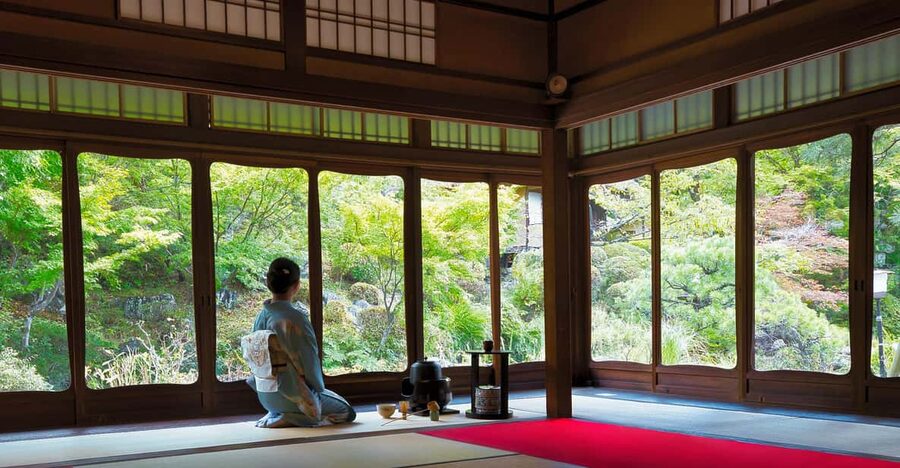
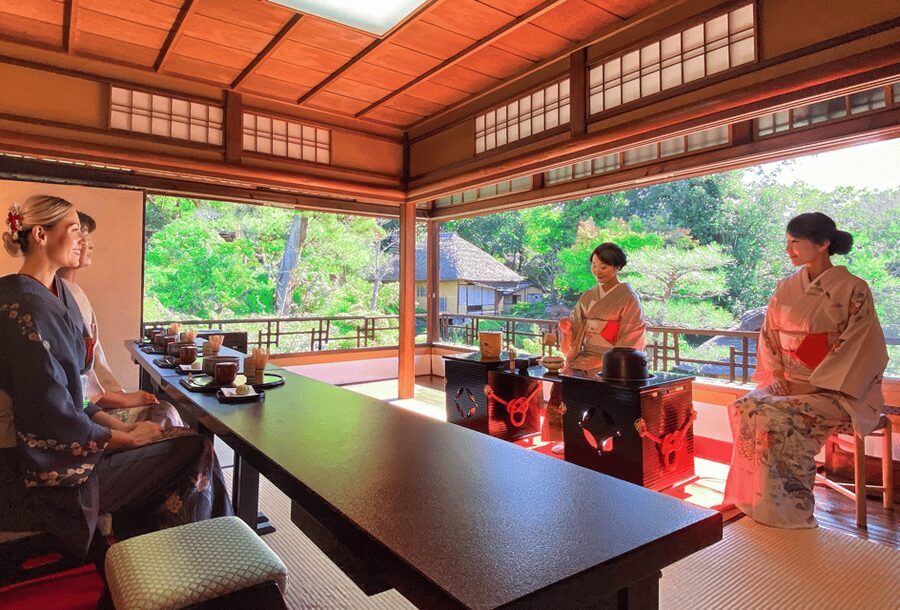
The garden is not just a backdrop for the final photo. It helps explain why tea practice places such weight on attention and calm. You sit with a view of carefully arranged greenery while the host gives a short introduction. The setting encourages you to slow down, even though the activity itself is tightly timed.
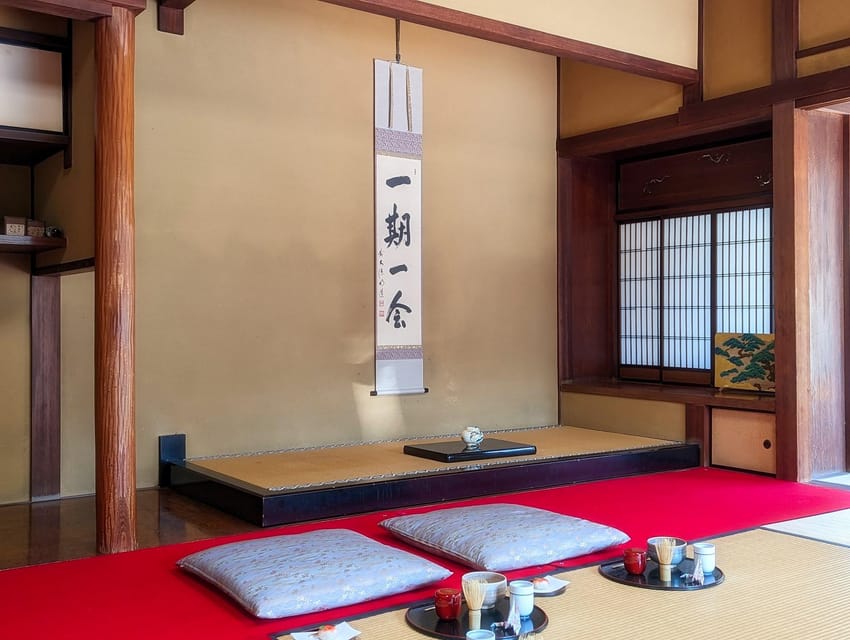
The tea house is traditional in style, and the ceremony takes place indoors with the garden visible from the room. You do not need to rent a kimono. That is a plus for anyone who wants the focus on tea rather than clothing, and it also makes the experience easier to fit into a busy sightseeing day.
The 500-year story behind the ceremony
Before the tea master begins, the English-speaking host explains the basic ideas behind Japanese tea practice. You hear about the ceremony’s 500-year history and learn that the movements are not random decoration. The placement of the utensils, the way the tea is offered, and the attention given to each action all carry meaning.
The explanation is brief, but it gives you enough context to understand what follows. A ceremony can look mysterious if you see only the formal gestures. A short introduction helps you read the scene as a sequence of choices, not simply a performance.
May is named as one of the hosts in the experience feedback, and her clear English and lively explanations received particular praise. The staff may vary by session, but English is the operating language, and the format is designed for people who are new to the ceremony.
If you have a strong interest in Japanese tea schools, utensils, or the finer points of etiquette, you may want more historical detail than this 45-minute program offers. For a first introduction, the balance is sensible. You get the essential ideas without sitting through a lecture.
Watching the tea master work
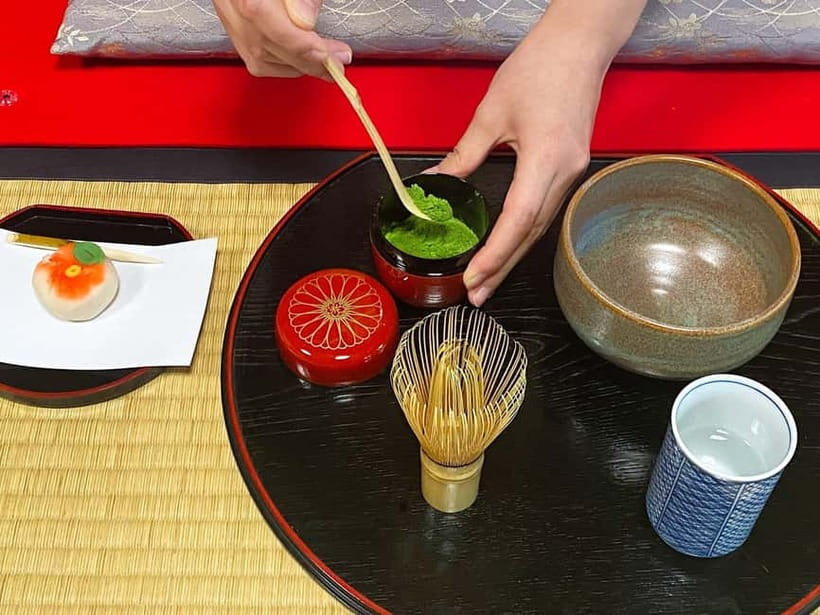
The central part of the activity is the tea master’s demonstration. Watch closely as she handles the bowl, scoop, whisk, and other tools with measured movements. The appeal is partly visual, but it is also about discipline. A simple drink becomes a carefully ordered act of hospitality.
The tea master performs before you make your own matcha, so you have a model to follow. The graceful movements are easy to admire, yet the demonstration also shows why making good matcha takes practice. The session gives you a respectful glimpse of the skill involved without pretending that one lesson turns you into a tea master.
This is where the experience feels more substantial than a standard tasting. You are not handed a prepared beverage and sent on your way. You see the process, learn the basic purpose of the actions, and then take part.
The room’s view matters here. While the tea master works, the garden remains in sight, giving the demonstration a calm visual frame. It is a strong choice for photographs, but you should resist treating the ceremony as a photo session. One person specifically noted the importance of not walking around while the ceremony is in progress. Stay seated, watch quietly, and save your pictures for the appropriate moment.
Making your own bowl of matcha
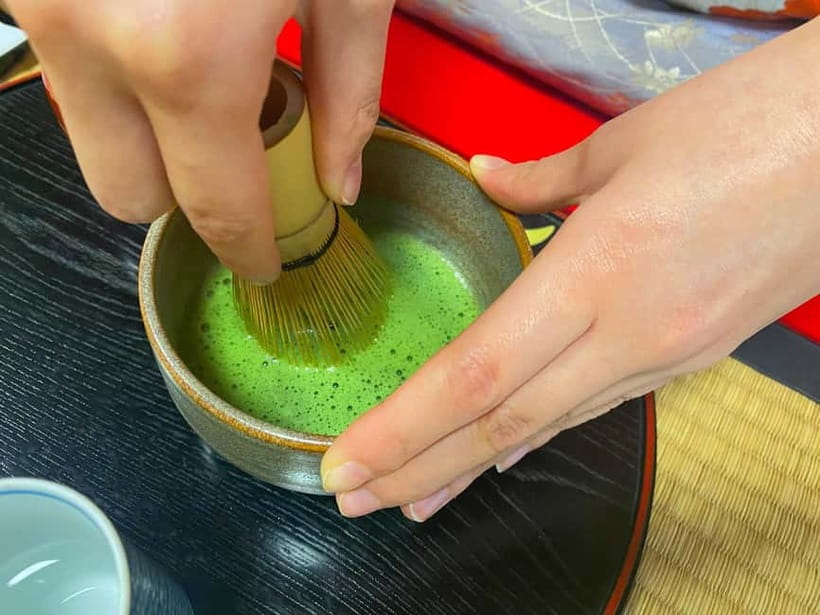
After the demonstration, you get your turn. You learn the basic method for preparing matcha and then whisk your own bowl. The aim is not to test you. The host or tea master guides you through the steps, so even first-time matcha drinkers can follow along.
This hands-on portion is one of the activity’s strongest features. You remember the lesson better because your hands are involved. You also learn quickly that small differences in whisking affect the texture and foam.
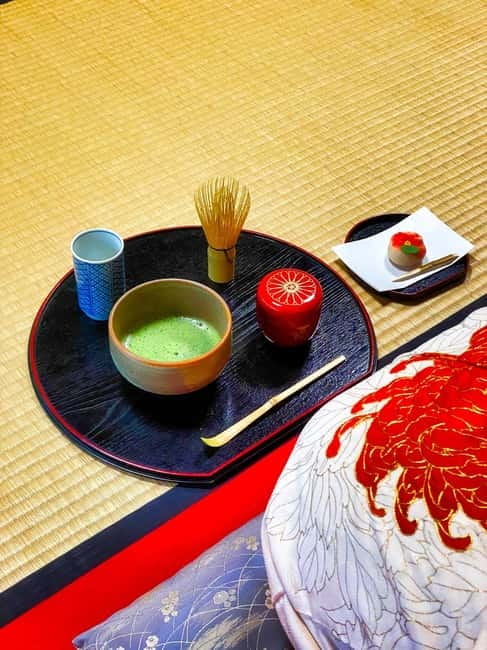
Two cups of matcha are included in total. One is prepared by the tea master, and the other is the bowl you make yourself. That arrangement lets you compare the polished result with your own effort, while keeping the experience relaxed and friendly.
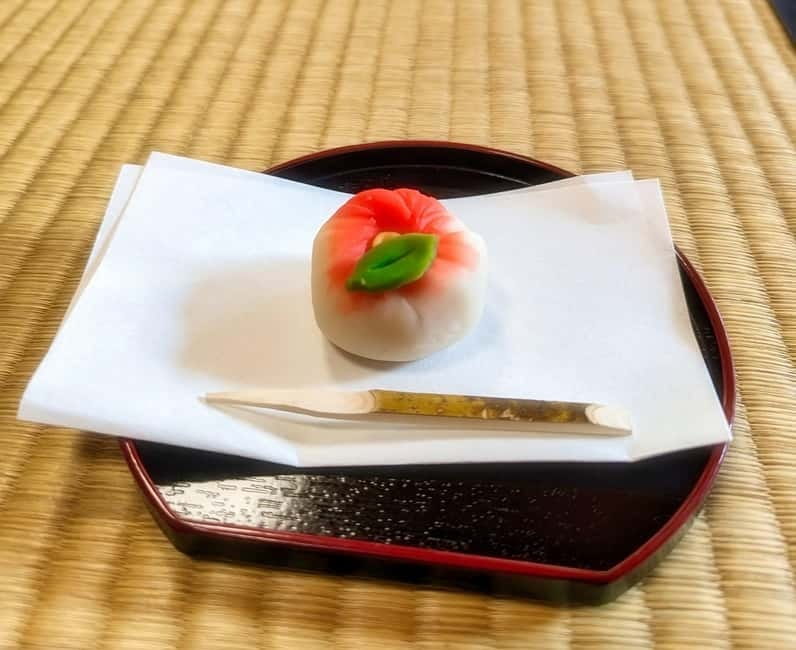
Matcha can be bitter, especially if you are used to sweetened tea drinks. The traditional sweet served alongside it helps balance the flavor. Several people who were unsure about matcha found the tea more approachable in this setting, while others simply enjoyed learning how to prepare it properly.
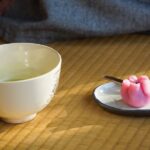
The sweet is modest, as you would expect from a tea ceremony. It is there to complement the tea, not become a separate dessert course. Eat it according to the host’s instructions, then sip the matcha. The pairing is part of the ceremony’s rhythm.
A few more Kyoto tours and experiences worth a look


The garden photo and final moments
At the end, you can pose for a photo with the group and the garden behind you. It is a simple inclusion, but a useful one. Cultural activities often finish with everyone packing up quickly, leaving you without a good record of the occasion. Here, the photo gives you a keepsake without requiring you to interrupt the ceremony.
The garden is at its most useful during this closing moment. It provides a sense of place that a plain interior would not. The photo also captures the unusual setting: a peaceful tea room only a short distance from one of Kyoto’s busiest temple approaches.
Do not expect a private portrait session or a long garden tour. The photo is a short closing feature. If you want more time with the garden, plan to enjoy the broader Kiyomizu and Higashiyama area before or after the ceremony.
Is $49 a fair price?
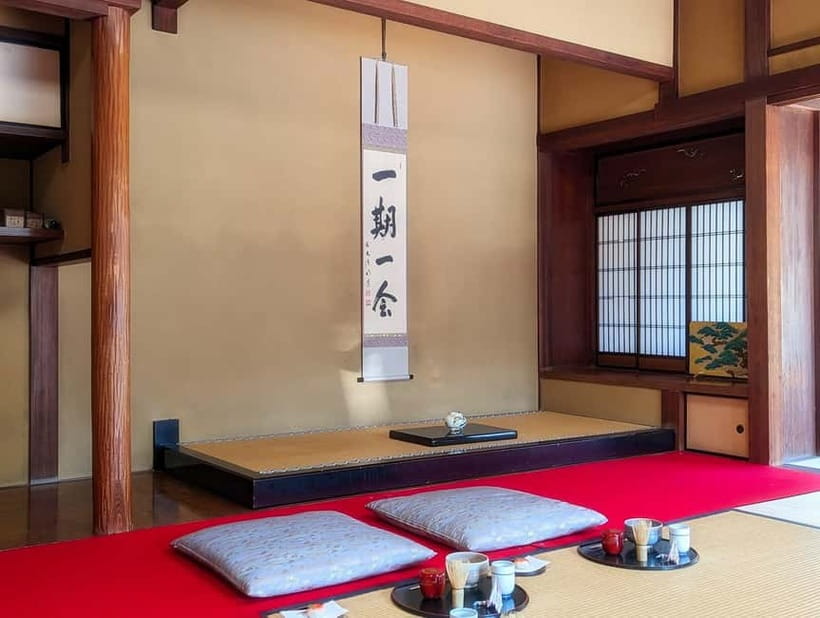
At $49 per person, this is not the cheapest way to taste matcha in Kyoto. You can find tea drinks for far less. The price makes more sense when you count the full package: an English explanation, a formal demonstration, two bowls of matcha, a traditional sweet, access to a traditional tea house, the garden setting, and a group photo.
You are paying for instruction and atmosphere as much as for tea. That can be good value if you want an organized cultural experience and do not speak Japanese. The English guidance removes much of the guesswork and lets you understand why the ceremony unfolds as it does.
The value is also tied to the location. You can combine the activity with Kiyomizu-Dera, Sannenzaka, Ninenzaka, and nearby sights in eastern Kyoto. A 45-minute appointment fits well into that area, especially in the middle of a day when you want a quiet pause.
Still, the cost may not suit everyone. If you already know how to prepare matcha, or if you prefer a long, highly detailed tea lesson, the short format may feel limited. If this is your first visit to Japan and you want one well-organized encounter with tea culture, the price is easier to justify.
Who will enjoy this Kyoto tea ceremony?
This activity works best for first-time visitors who want a clear introduction to Japanese tea culture without committing to a formal multi-hour study session. Couples, solo visitors, and families with older children can all fit comfortably into the format.
Children under seven are not permitted. Older children can enjoy it if they can sit quietly during the demonstration. One family attended with children aged nine and thirteen and found the experience enjoyable, while another group included two children and received patient guidance.
The session also suits people who are curious about matcha but have not liked it before. You prepare it yourself, learn how the tea is handled, and taste it with a traditional sweet. That context can make the flavor easier to appreciate.
It is less suitable for anyone carrying luggage, anyone who dislikes sitting still, or anyone seeking a private ceremony. The activity takes place rain or shine, so the garden view may look different in poor weather, but the ceremony continues indoors.
Timing it with Kiyomizu-Dera
The location makes this a natural companion to a visit to Kiyomizu-Dera. You can schedule the ceremony before visiting the temple, or use it as a quiet break after walking through the temple grounds and the steep lanes around them.
Keep your route simple. The meeting point is near the Kiyomizu area, but the exact gate is set back from the main street. A late arrival can create stress, so avoid booking the activity immediately after a distant attraction.
The 45-minute length is practical. You get enough time for context, the master’s demonstration, your own tea preparation, the sweet, and the photo. You do not lose half a day, but you also do not feel that you only stopped for a drink.
If the weather is wet, do not cancel simply because the garden will not look its best. The experience takes place in all weather, and the indoor tea house remains the main setting. Rain may even reinforce the quiet mood, though that is naturally a matter of taste.
What to know before you book
Book this if you value explanation, participation, and setting. The strongest part is the combination of all three. You see a formal demonstration, learn enough to understand it, then make matcha yourself in a traditional room facing a garden.
Arrive with only what you need. Large bags are not allowed, and the narrow approach makes luggage especially awkward. Wear clothing that allows you to sit comfortably and follow the instructions, though no special dress is required.
Expect English instruction, but not an advanced academic course. The history is introduced in a compact way, and the focus stays on the ceremony and basic matcha preparation. If you want more background, use the host’s explanation as a starting point and ask questions during the appropriate time.
The small-group format helps keep the atmosphere personal. Group size can vary, but sessions have been described as around eight to ten people. That is large enough to feel social and small enough for everyone to participate.
Free cancellation is available up to 24 hours before the start time for a full refund, and you can reserve now and pay later. Those terms are useful when your Kyoto plans are still shifting, but you should still check the available start times before building your day around the appointment.
Should you book it?
I would book this tea ceremony if you want a polished, accessible first look at Japanese tea culture near Kiyomizu-Dera. The garden, the graceful demonstration, the chance to whisk your own matcha, and the English explanations give the 45 minutes real substance.
I would skip it if you want a private ceremony, a kimono experience, or a long technical lesson. You should also think twice if $49 feels too steep for a short activity.
For most first-time visitors, though, this is a strong use of a small slice of your Kyoto day. The best reason to go is not simply that you get matcha. It is that you learn to notice the care behind an ordinary bowl of tea, then carry that awareness back into the noisy streets of Higashiyama.
FAQ
Where does the Kyoto tea ceremony take place?
It takes place at Sakaguchian, a traditional tea house in Sannenzaka near Kiyomizu-Dera Temple in Kyoto.
How do I find the meeting point?
Go down Sanneizaka near Kiyomizu-Dera, walk about 50 meters, and enter the large gate on the right. After entering, walk straight for about 10 meters and go through the white gate on the left to find Sakaguchian.
How long does the tea ceremony last?
The activity lasts 45 minutes.
Is the experience offered in English?
Yes. The instructor language is English.
How much does the experience cost?
The price is $49 per person.
How much matcha is included?
Two cups of matcha are included. You receive tea prepared by the tea master and prepare your own bowl as part of the lesson.
Is a Japanese sweet included?
Yes. A traditional Japanese sweet is included with the tea ceremony.
Is kimono rental included?
No. Kimono rental is not included.
Are children allowed to attend?
Children under seven are not permitted. Children aged seven and older may attend.
Can I cancel for a refund?
Yes. You can cancel up to 24 hours in advance for a full refund. You can also reserve now and pay later.
More Golden Pavilion & Temple Tours in Kyoto
More Tea Ceremony Experiences in Kyoto
More tours in Kyoto we've reviewed





Tea Ceremony Experiences, compared.
 ★ 4.9Kyoto: Tea Ceremony Ju-An at Jotokuji TempleFrom $291h 10m
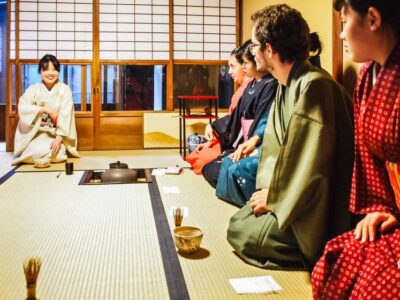 ★ 4.3Kyoto: 45-Minute Tea Ceremony Lesson ExperienceFrom $2245 min
 ★ 5.0World Heritage Kyoto & Nara Uji Authentic Matcha ExperienceFrom $129
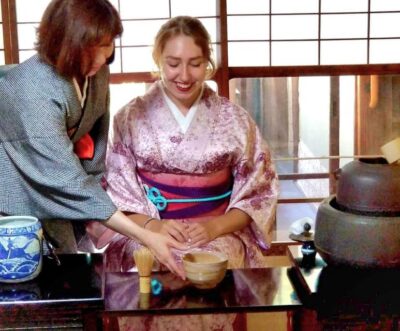 ★ 4.9Kyoto: Table-Style Tea Ceremony at a Kyo-MachiyaFrom $451h 30m
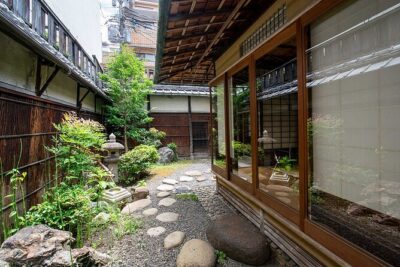 ★ 5.0Kimono Tea Ceremony at Kyoto Maikoya, NISHIKIFrom $65
 ★ 4.9Kyoto: Tea Museum Tickets and Matcha Grinding ExperienceFrom $231 hour