
Reviewed · UJI & MATCHA TRIPS
Osaka: Kyoto & Uji Historical Sites and Scenic Delights Tour
Kyoto’s best-known sights are packed into one long day here, from the gold-leafed Kinkaku-ji to Uji’s famous Byodo-in Temple. I like the easy transport from Osaka and the chance to see both major Kyoto temples and tea-centered Uji without arranging several train trips yourself.
I also like the flexible end of the day: you can get off in Kyoto or continue to Osaka. The main caution is time. Kiyomizu-dera gets a generous visit, but Ninenzaka can feel packed and commercial, while Uji’s 100-minute stop asks you to choose your sights carefully.
In This Review
- Key points to know before booking
- Why this day works from Osaka
- Kinkaku-ji and the first look at Kyoto
- Kiyomizu-dera and the Kyoto view
- Ninenzaka, snacks, and the busy side of Kyoto
- Yasaka Koshindo’s colorful religious setting
- Uji River and the birthplace of matcha
- Uji Shrine and the town’s older character
- Byodo-in and the ten-yen coin view
- What the guide adds to the day
- Transport, walking, and the long day
- Is $54 a good value?
- Who should book this Kyoto and Uji day?
- Should you book it?
- FAQ
- Where does the tour depart?
- Can I finish the tour in Kyoto instead of Osaka?
- Are temple admission fees included?
- Is the tour conducted in English?
- How much walking should I expect?
- Can I cancel or pay later?
Key points to know before booking
- Three major temple areas in one day: Kinkaku-ji, Kiyomizu-dera, and Byodo-in are difficult to link efficiently without organized transport.
- A useful Osaka base option: Depart at 8:00 AM from Osaka or 9:00 AM from Kyoto, then return to either city.
- Guide Amy earns special praise: She is noted for interesting historical explanations, practical suggestions, and multilingual support.
- Uji adds a calmer tea-town finish: Walk beside the Uji River, see Uji Shrine, and visit the Phoenix Hall shown on Japan’s ten-yen coin.
- Expect moderate walking: Comfortable shoes matter, especially around temple grounds, slopes, and old streets.
- Budget-friendly, but not all-inclusive: The $54 price covers transport, guide service, tolls, parking, fuel, and taxes, but temple admission and food are extra.
Why this day works from Osaka
Kyoto is close to Osaka on a map, but its famous sights are spread across different parts of the city. Kinkaku-ji lies in the northwest, Kiyomizu-dera is in the eastern hills, and Uji is south of Kyoto. Connecting all three by local transport takes planning, transfers, and patience.
For $54, I see the main value in the vehicle and route design. You are paying to let someone else handle the road connections, parking costs, tolls, and fuel while an English-speaking guide gives structure to the day. That is a fair price for a 10-hour outing, particularly if you are staying in Osaka and want more than a quick train visit to central Kyoto.
The tradeoff is independence. You will have set departure and sightseeing periods rather than the freedom to linger wherever you like. This suits you best if your priority is seeing several headline sights in one day, not exploring one Kyoto neighborhood at a slow pace.
The tour starts at 8:00 AM from Osaka or 9:00 AM from Kyoto, depending on the option you choose. You need to reach the assigned meeting point 15 minutes early. The pickup place varies, so check it carefully before leaving your hotel. It cannot be changed on the day itself, though a needed change can be reported one day ahead.
A few more Osaka tours and experiences worth a look
Kinkaku-ji and the first look at Kyoto
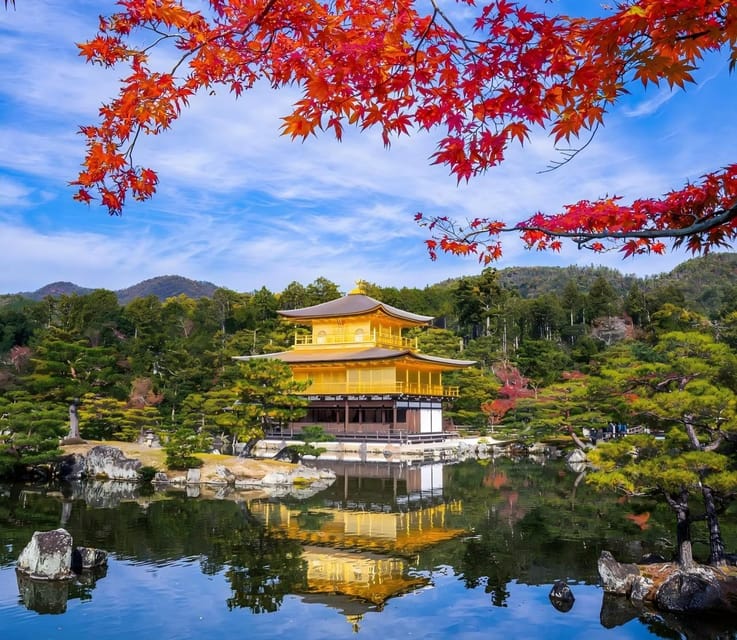
The first major stop is Kinkaku-ji, better known as the Golden Pavilion. Its upper halls are covered in gold leaf, and the building is designed to catch attention across the pond. The image is polished and striking, especially when the pavilion reflects in the water.
You receive about 40 minutes here for sightseeing and photographs. That is enough to follow the main path and take in the pavilion, but it is not enough for a slow study of every garden corner. I would arrive with one clear goal: enjoy the view, take your photos, and avoid spending the whole stop waiting for a perfect empty frame.
Kinkaku-ji has been a UNESCO World Heritage Site since 1994. Its importance comes from more than its color. The site expresses several layers of Japanese religious and architectural tradition, while the garden and pond create the setting that makes the pavilion so memorable.
The grounds can be crowded, especially during popular seasons. The short visit helps the group keep moving, but it also means you should not expect a quiet, private temple experience. This is a famous sight with a famous view, and the crowds are part of the practical reality.
Kiyomizu-dera and the Kyoto view
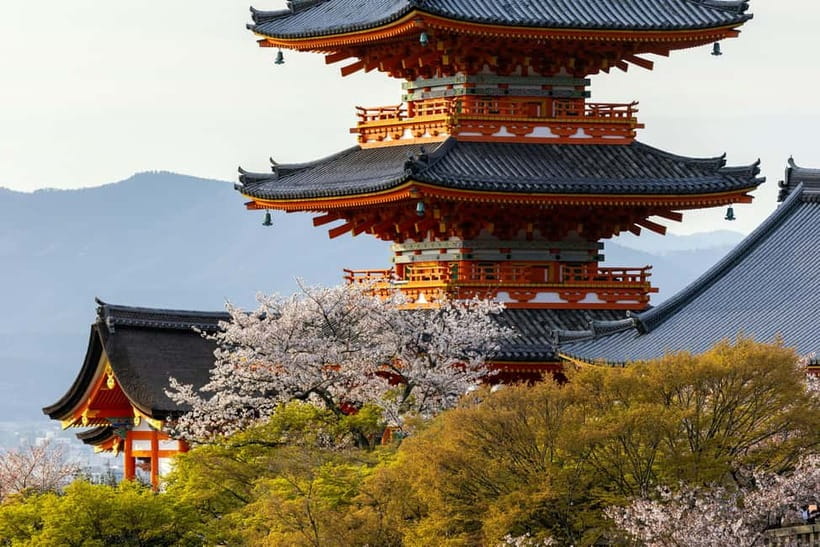
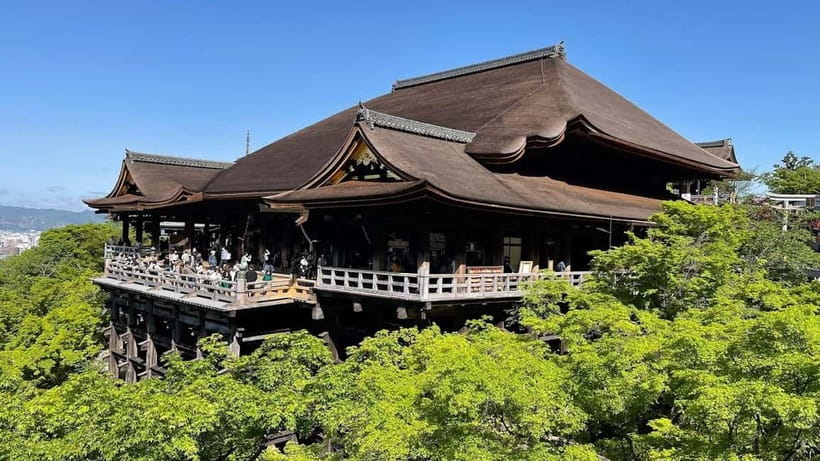
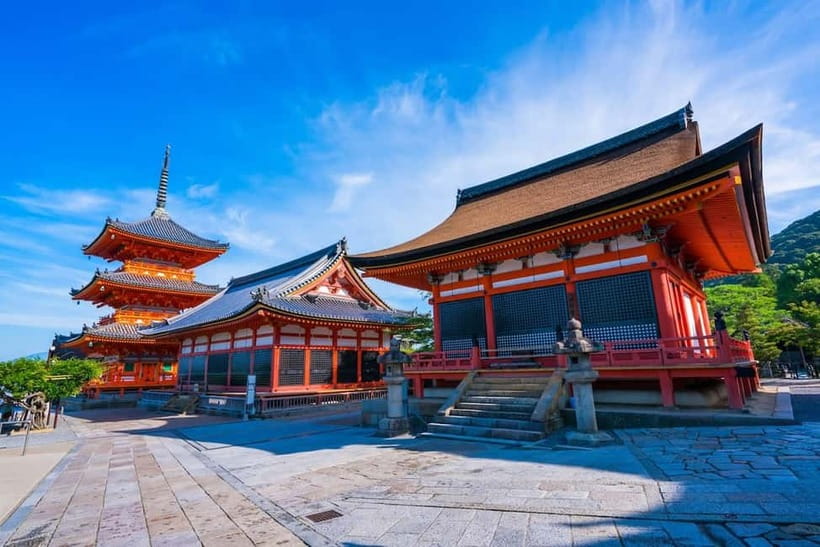
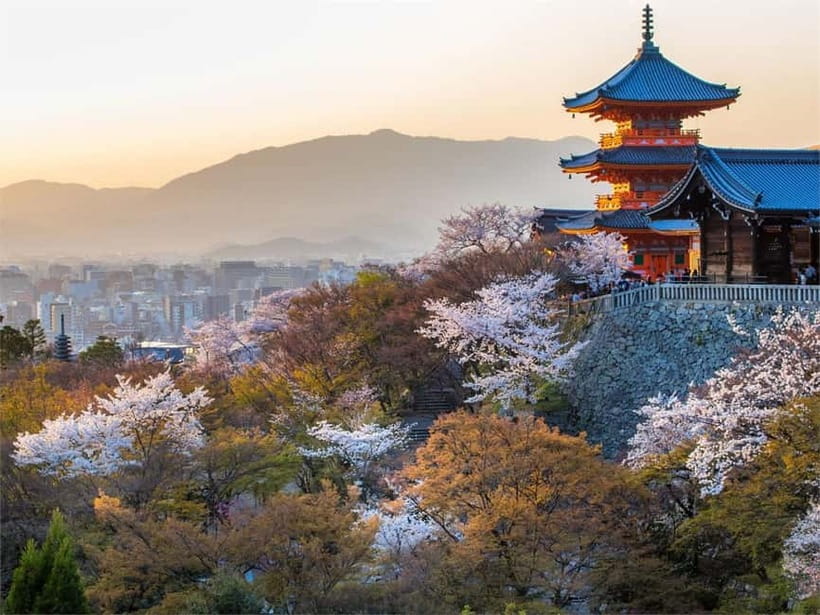
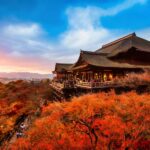
Kiyomizu-dera is the longest stop, with about two hours and 40 minutes available for the temple area. That extra time matters because this is not one small building. You can visit the temple, see the celebrated Kiyomizu Stage, walk through nearby lanes, and pause for snacks or photos.
The temple is one of Kyoto’s oldest and is recognized as a national treasure and UNESCO site. Its wooden stage projects from the hillside and gives you broad views across Kyoto. The height, timber construction, and surrounding slopes make this stop feel different from the formal pond setting at Kinkaku-ji.
I would use the first part of the stop for the temple itself, then leave room for the surrounding streets. Kiyomizu-dera is popular, and the paths may be crowded. Good shoes are important because the visit involves a moderate amount of walking, with sloping sections and busy pedestrian areas.
Admission to Kiyomizu-dera is not included. Bring extra money for this and the other temple entries, along with food and drinks. The tour price is low partly because these costs remain with you rather than being bundled into the ticket.
Ninenzaka, snacks, and the busy side of Kyoto
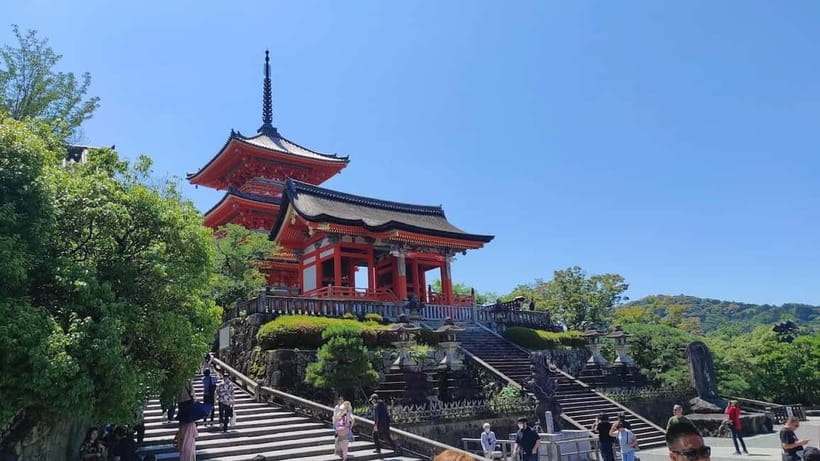
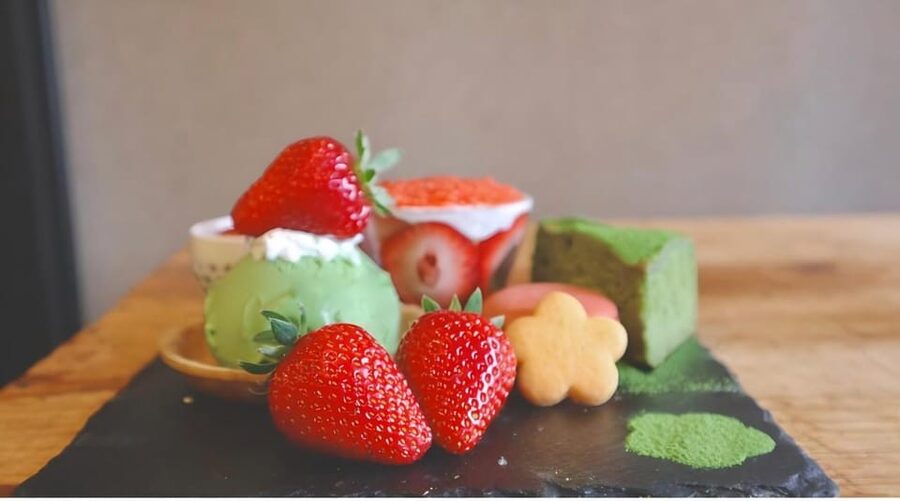
Ninenzaka is the traditional approach toward Kiyomizu-dera, lined with old-style buildings, shops, and food stops. It is a good place to see how Kyoto presents its historic streets for modern visitors. You can browse small shops, try matcha ice cream, or stop for coffee at MASUDA Tea Shop.
This is also the part of the day that requires realistic expectations. The lane can be extremely crowded, and some shops sell expensive souvenirs that may feel mass-produced. If you want a quiet old Kyoto street, Ninenzaka may disappoint. If you treat it as a lively shopping lane leading to a major temple, it makes more sense.
I would not spend the whole free period buying souvenirs. Take a short walk, look up at the traditional façades, sample one tea-flavored treat, and keep track of the meeting time. The route is photogenic, but it is not an untouched historic village.
Yasaka Koshindo’s colorful religious setting
Yasaka Koshindo offers a brief change of mood. The temple is known for its multicolored balls, which give the site a distinctive look and make it popular for photographs. It also has a strong religious atmosphere, so this is more than a decorative photo stop.
The temple has gained online attention and has appeared as a backdrop connected with Detective Conan. That may appeal to fans, but you do not need to know the series to appreciate the setting. I like this stop because it adds a small, less predictable shrine experience between the better-known Kiyomizu area and the Uji portion of the day.
Keep your visit respectful. Take photographs where permitted, but remember that this is an active religious place rather than a themed display. The stop is short, so listen for the guide’s instructions and stay aware of the group’s departure time.

Uji River and the birthplace of matcha
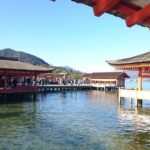
After Kyoto, the tour heads to Uji, a town closely linked with Japanese green tea and matcha. The pace here shifts from major-city sightseeing to a walk around the Uji River, bridge area, shrine grounds, and tea-focused streets.
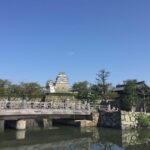
The river gives you a chance to slow down and take photographs. Uji Bridge and the water provide a different setting from Kyoto’s temple hills, while the scent of tea shops helps explain why this town is so strongly associated with matcha. You can browse local sweets and tea products along the shopping streets, but the 100-minute stop is not long enough for an unhurried exploration of every corner.
I would decide in advance what matters most. If you want atmosphere and photos, spend time beside the river and around the bridge. If you want the main cultural sight, go directly toward Byodo-in. If tea is your priority, leave some time for the local food street.
Uji Shrine and the town’s older character
Uji Shrine is included as one of the historic stops in town. It gives the Uji visit a quieter religious counterpoint to the more heavily visited Kyoto temples. You can enter, walk around on your own, and take in the shrine setting before continuing toward Byodo-in.
The self-guided format means the guide may provide background and orientation, but you control the details of your visit. I like that arrangement in Uji because you can set your own pace rather than follow a long formal explanation at every gate.
Still, watch the clock. Uji contains enough sights and food shops to fill a full day, but this tour gives you only a compact introduction. The smart approach is to see the river, shrine, and Byodo-in without trying to turn the stop into a complete Uji study.
Byodo-in and the ten-yen coin view
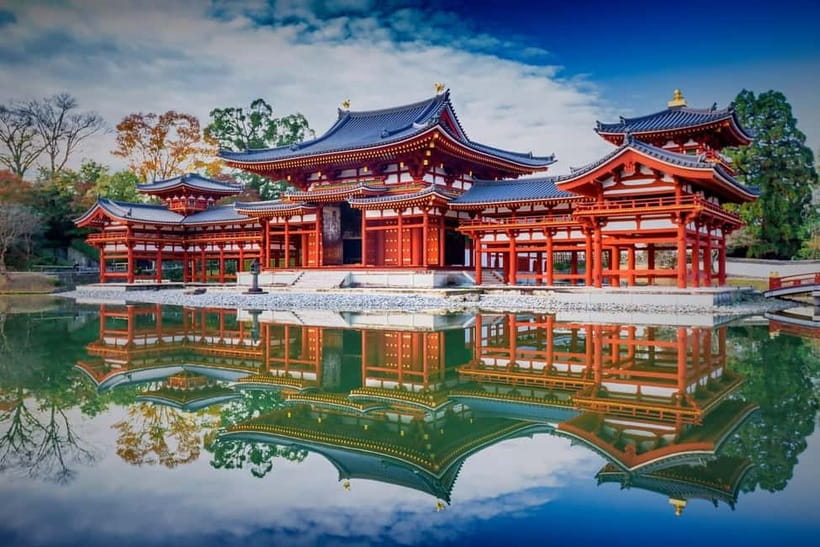
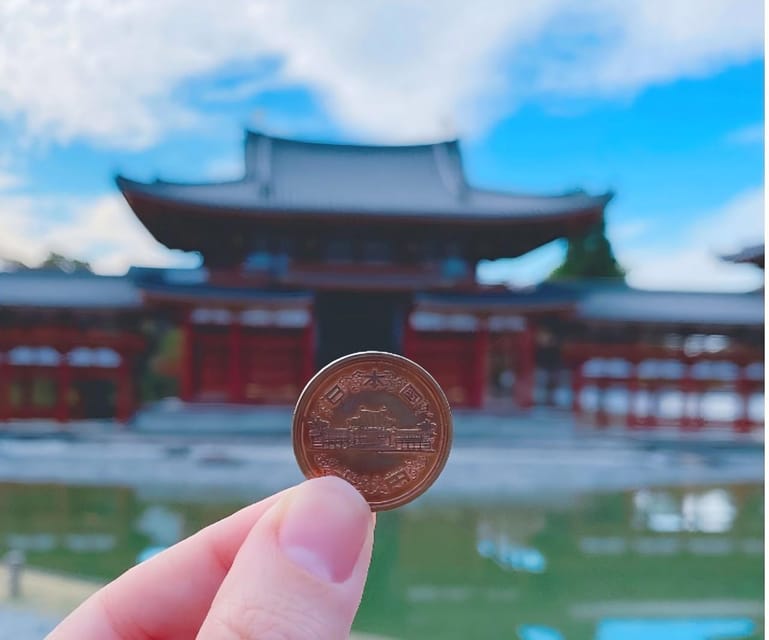
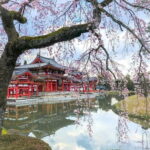
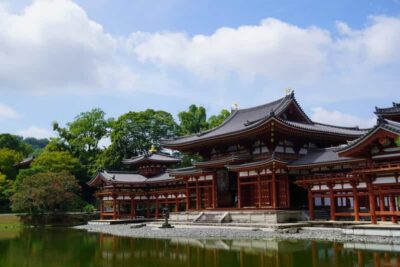
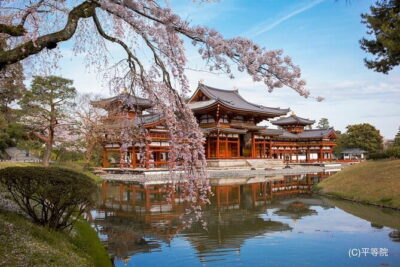
Byodo-in is the key reason many people will want the Uji portion. Its Phoenix Hall appears on Japan’s ten-yen coin and is also shown on the ten-thousand-yen note. Seeing the building in person gives a familiar piece of Japanese currency a real setting and scale.
The temple is a UNESCO World Heritage site, and the Phoenix Hall sits beside a pond in a carefully arranged complex. Its name comes from the phoenix forms associated with the building. Even if you are not especially interested in temple architecture, the connection to the coin makes this an easy sight to remember.
Admission is extra, so budget for it alongside Kinkaku-ji and Kiyomizu-dera. Byodo-in Omotesando, the street leading toward the temple, is also worth some attention. It is packed with tea products, sweets, and local food, giving you an easy chance to taste Uji rather than only photograph it.
The Uji stop is a strong finish because it adds a new region and a new theme. Kyoto supplies grand temples and old lanes. Uji supplies river views, tea culture, and the instantly recognizable Phoenix Hall.
What the guide adds to the day
The guide service is in English, and the strongest personal feedback centers on Amy. She is described as friendly, professional, and able to provide useful history and recommendations at each stop. Her multilingual ability is also a benefit if members of your group are more comfortable with languages besides English.
That support matters on a tightly timed day. At Kinkaku-ji, the guide can help you understand what you are looking at before you enter. Around Kiyomizu-dera and Ninenzaka, clear directions can keep you from losing time. In Uji, practical advice helps you choose between the river, shrine, temple, and tea shops.
The visits are mainly self-guided rather than long lecture sessions. I see that as a plus if you like some independence. You get an organized route and context, then have room to look around, shop, take photographs, or pause for a snack.
A private group option is available. If you prefer a more personal pace or are traveling with family and friends, check that option when booking. The standard experience may suit you if you are happy to share the day with other participants.
Transport, walking, and the long day
The vehicle has air conditioning, which is useful after walking through temple grounds and crowded lanes. The overall duration is 10 hours, so this is a full day rather than a light sightseeing outing.
The transport time helps connect distant stops, but the road schedule can change with traffic and weather. You should not plan a tightly timed evening reservation immediately after the expected return. The final drop-off can be in Kyoto or Osaka, but traffic may affect the actual arrival time.
Wear comfortable clothes and walking shoes. Strollers or large luggage should be reported when booking, and the experience is not suitable for wheelchair users, people with mobility impairments, people with back problems, or pregnant women. People aged 70 and above, as well as pregnant participants, are asked to sign a travel waiver on arrival.
Smoking is not allowed. Meals and drinks are also not included, so carry water and plan to buy food during the Kyoto or Uji stops. Because you will be moving between several busy sites, a small bag is easier than bulky luggage.
Is $54 a good value?
At $54 per person, this is a strong transport value for the route. You receive an English-speaking guide, an air-conditioned vehicle, round-trip transfers from the meeting point, and coverage of taxes, parking, tolls, fuel, and environmental fees.
The price does not cover admission to Kinkaku-ji, Kiyomizu-dera, or Byodo-in. It also excludes meals, drinks, and personal purchases. Your final cost will therefore be higher, but the base price remains modest for a 10-hour trip linking Osaka, Kyoto, and Uji.
I would compare it with the cost of arranging several trains, local buses, and taxis on your own. Independent transport may offer more freedom, but it also takes time and requires you to navigate between sights. This tour earns its value from convenience and coverage, not from luxurious extras or long private guiding at every stop.
Who should book this Kyoto and Uji day?
I would choose this tour if you are staying in Osaka, have one open day, and want the major Kyoto sights without handling the connections yourself. It is also useful if you are visiting Kyoto for the first time and want a clear introduction before returning for slower neighborhood walks.
It suits people who enjoy famous sights, temple architecture, photography, shopping streets, and Japanese tea culture. The flexible drop-off is helpful if you begin in Osaka but want to finish in Kyoto, or begin in Kyoto and return to Osaka.
I would hesitate if crowds frustrate you, if you want deep time at one temple, or if you dislike fixed schedules. Ninenzaka may feel too commercial, and the full route involves enough walking to tire anyone wearing poor shoes. Uji is rewarding, but its short visit means you must make choices.
Should you book it?
Book this tour if you want efficient coverage and a low base price. Kinkaku-ji, Kiyomizu-dera, Ninenzaka, and Byodo-in are a lot to fit into one day, and the vehicle removes much of the transport work. The guide support, especially the clear recommendations associated with Amy, adds useful structure.
Skip it if your ideal Kyoto day means lingering, wandering side streets, and avoiding famous crowds. For everyone else, this is a practical first look at Kyoto and Uji, with enough temple, tea, river, and shopping time to make the long day worthwhile.
FAQ
Where does the tour depart?
Departure is at 8:00 AM from Osaka or 9:00 AM from Kyoto, depending on the option selected. The exact meeting point varies, so arrive 15 minutes early.
Can I finish the tour in Kyoto instead of Osaka?
Yes. Regardless of where you board, you can choose to disembark in either Osaka or Kyoto.
Are temple admission fees included?
No. Admission to Kinkaku-ji, Kiyomizu-dera, and Byodo-in Temple is not included. Meals, drinks, and personal expenses are also separate.
Is the tour conducted in English?
Yes. The tour includes a live English-speaking guide. A private group option is available.
How much walking should I expect?
Expect a moderate amount of walking around temple grounds, shrine paths, historic streets, and the Uji River area. Comfortable shoes and clothes are recommended.
Can I cancel or pay later?
You can cancel up to 24 hours before departure for a full refund. Reserve now and pay later is available, allowing you to hold a place without paying immediately.
More Historical Tours in Osaka
More Uji & Matcha Trips in Osaka
More tours in Osaka we've reviewed


Uji & Matcha Trips, compared.
 ★ 5.0World Heritage Kyoto & Nara Uji Authentic Matcha ExperienceFrom $129
 ★ 4.8Uji: Green Tea Tour with Byodoin and Koshoji Temple VisitsFrom $111
 ★ 4.6Uji: UNESCO Heritage & Tea Ceremony Walking TourFrom $663 hours
 ★ 4.5Kyoto & Nara & Uji: Full Day Sightseeing Tour from Osaka or KyotoFrom $67
 ★ 5.0Matcha Grinding Experience and Walking Tour in Uji KyotoFrom $130
 ★ 5.0Kyoto & Uji: Full Day Sightseeing Tour from Osaka or KyotoFrom $57