
Reviewed · ARASHIYAMA & BAMBOO TOURS
Katsuo-ji Temple, Arashiyama Forest, & Nara Park
Katsuo-ji’s thousands of red Daruma dolls give this Osaka day trip an unusual first stop, followed by the tall bamboo of Arashiyama and the friendly deer of Nara Park. I like the three very different settings and the ease of reaching them without changing trains. I also like the generous free time, especially if you prefer to explore at your own pace.
The catch is that this often works more like a transportation-based day trip than a fully guided cultural tour. Some guides, including Nancy, Alex, Marco, Pohey, and Alice on different departures, have offered helpful explanations and care, while other departures have provided little background beyond meeting times.
In This Review
- Key points to know before booking
- Three famous Japanese stops in one long day
- Katsuo-ji: Daruma dolls and a personal fortune
- Arashiyama Bamboo Grove: beautiful, brief, and busy
- Nara Park: deer, temples, and the day’s biggest reward
- A flexible format, but not always a guided tour
- Is $91.65 a fair price?
- Timing, group size, and the meeting point
- Who should book this Osaka day trip?
- My verdict: book it for coverage, not depth
- FAQ
- How long does the tour last?
- Where does the tour start?
- Where does the tour finish?
- How much free time is provided at each stop?
- Are meals and drinks included?
- Is transportation included?
- How large can the group be?
- Is the tour canceled if there are not enough people?
- Can I cancel for a full refund?
Key points to know before booking
- Katsuo-ji begins the day with Daruma dolls and fortune traditions, a memorable change from Osaka’s city streets.
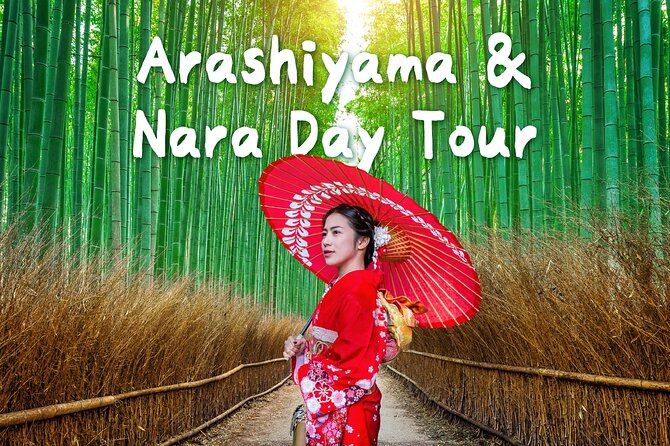
- Arashiyama gives you about 90 minutes, enough for the bamboo grove and a quick look around, but not a full exploration of the district.
- Nara Park is the emotional highlight for many people, thanks to its free-roaming deer and nearby temples.
- Free time is built into every stop, so you are not required to stay beside the guide.
- The $91.65 price mainly pays for convenience and transport, not a long guided lecture at each sight.
- Check the booking option carefully, since some options may include a separate kimono experience with an extra charge.
Three famous Japanese stops in one long day
This 11-hour outing covers Osaka, Kyoto, and Nara in a single sweep. That sounds ambitious because it is. You will see three of Japan’s best-known day-trip sights, but you will not have time to study each place in depth.
I see the tour as a practical sampler. If you have only a short stay around Osaka, it removes much of the train planning and gives you a simple way to reach places that sit in different cities. If you have several days and enjoy lingering in temples, gardens, shops, and side streets, the schedule may feel tight.
The tour begins at 2 Chome-2 Umeda, in Osaka’s Kita Ward, and returns there at the end. The vehicle is air-conditioned, and the transport cost and driver or guide tip are included. Meals, drinks, and personal purchases are not included, so you should plan to buy food during the day or carry something with you.
The group can reach 45 people, which matters. A large group can make boarding and regrouping slower, and it may be harder to hear explanations. On the other hand, the shared coach keeps the price below what a private car and guide would cost.
A few more Osaka tours and experiences worth a look
Katsuo-ji: Daruma dolls and a personal fortune
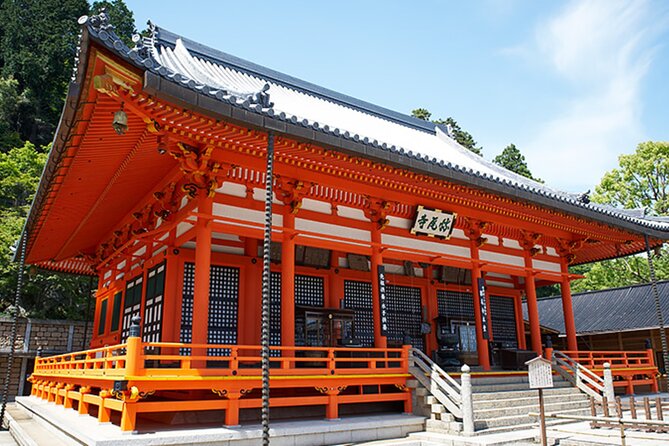
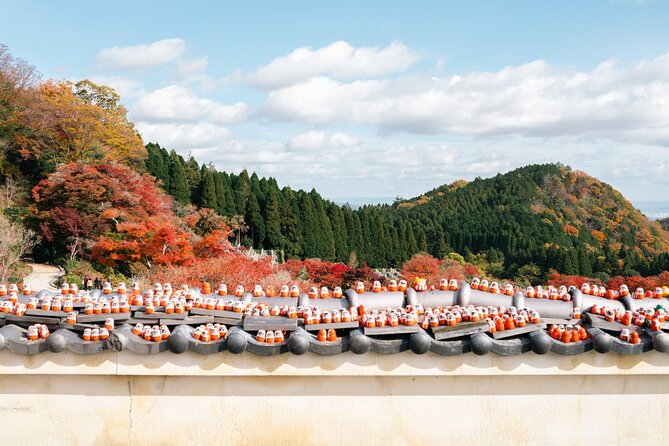
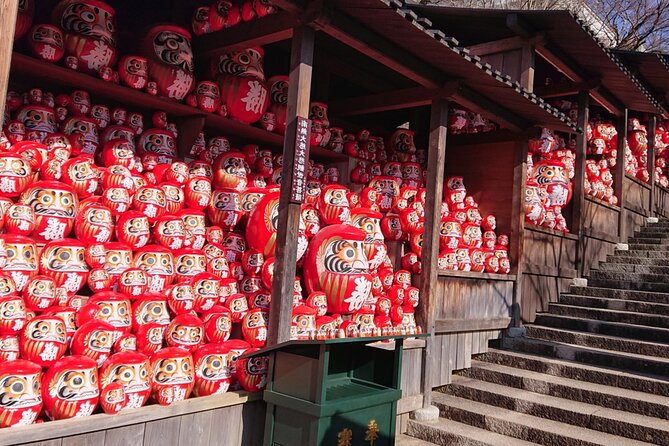
Katsuo-ji Temple is the most distinctive opening stop. The grounds are known for thousands of Daruma dolls, the round Japanese figures often associated with wishes, goals, and perseverance. Their bright red color and unusual shapes give the temple a playful look that differs from the solemn atmosphere of many older Buddhist sites.
You are scheduled to have about two hours here. That is a useful amount of time for walking through the temple grounds, taking photographs, noticing the small Daruma figures placed around the site, and reading your fortune. The fortune-reading element gives you something active to do rather than simply looking at buildings from the outside.
The tour description lists admission as free for the stop, but personal spending is not included. If you choose to buy a fortune, souvenir, food, or drink, that cost is yours.
This is a good place to let the guide’s role set your expectations. On some departures, the guide has explained the sites and pointed out where to go. On others, the guide has mainly announced the destination and the time to return to the vehicle. Before you set off, ask for a simple orientation: where the main temple area is, where the Daruma displays are, and exactly where the group will meet.
Two hours can pass quickly if you stop often for pictures. It can also feel long if you are hoping for a detailed temple tour and receive no explanation. I would read a little about Katsuo-ji before leaving Osaka, especially if the cultural meaning of the Daruma figures matters to you.
Arashiyama Bamboo Grove: beautiful, brief, and busy
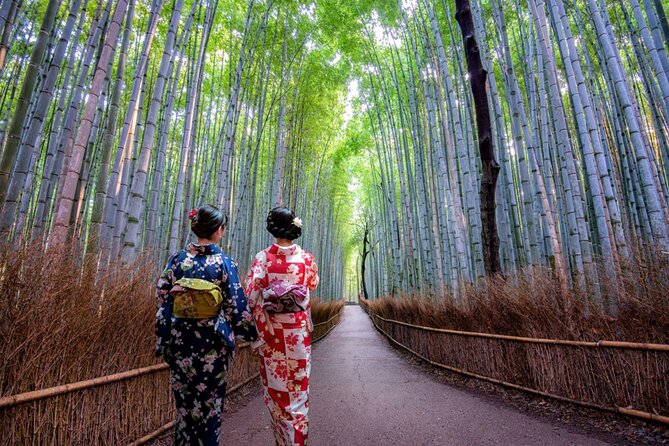
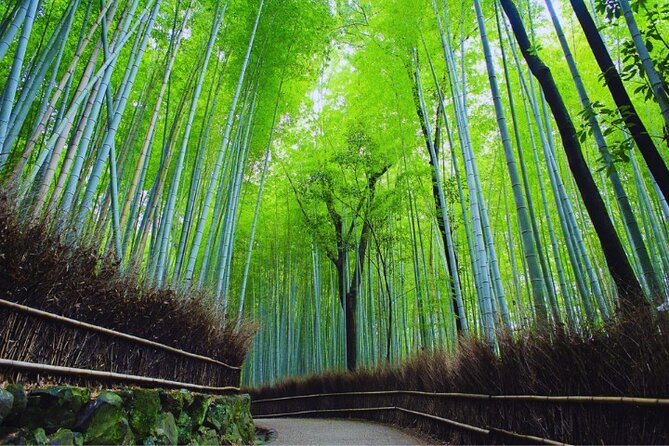
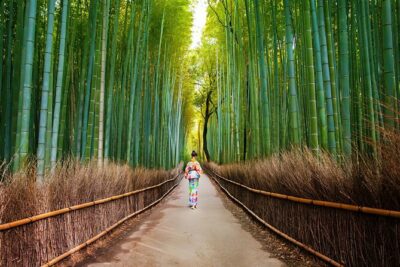
The second stop takes you to Kyoto’s Arashiyama district. The Bamboo Grove is famous for its tall stalks rising on both sides of a walking path. The effect is striking, with narrow views, filtered light, and bamboo stretching high overhead.
You have about 90 minutes here. That gives you time to walk through the grove, take photographs, and make a short visit to nearby parts of Arashiyama. It does not give you enough time to treat the whole district as a relaxed Kyoto outing.
This is where the tour’s speed becomes most obvious. Arashiyama offers more than one famous path, and the area has temples, gardens, food shops, and river views. With a fixed return time, you need to decide what matters most before leaving the vehicle.
I would head directly toward the bamboo path first. The grove is the reason most people choose this stop, and taking photographs can slow you down. Keep an eye on the clock rather than assuming the guide will come find you. The arrangement is usually independent exploration, followed by a return to a set meeting point.
The bamboo is photogenic, but do not expect silence. The grove is a major attraction, and the short visit is designed to give you a taste rather than a full day in the district. If you want long walks, careful temple visits, or time beside the river, book a separate Arashiyama visit.
Nara Park: deer, temples, and the day’s biggest reward
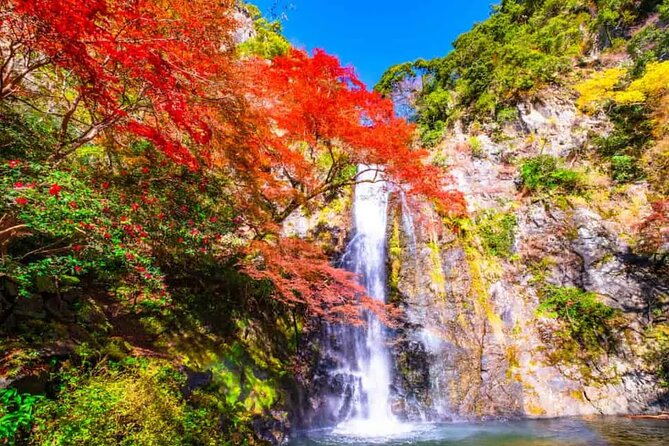
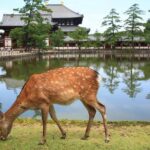
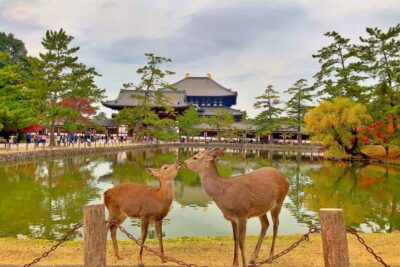
Nara Park is scheduled for about two hours and is likely to be the most memorable stop. Hundreds of tame deer roam freely through the park, approaching people in search of food. Their confidence makes the experience feel very different from a normal temple visit.
You can walk through the park, watch the deer, and visit nearby temple areas within the allotted time. The famous Todai-ji Buddha is a particular highlight for some visitors, and one account describes the Great Buddha as the most impressive part of the day. The itinerary does not list a separate admission fee for the tour, so you should confirm any optional attraction costs before entering.
Nara rewards a little patience. The deer may approach quickly, but the experience is not only about feeding or taking a photograph. Watch how they move through the park and how comfortable they are around people. The park’s appeal comes from the mix of open space, old religious sites, and animals moving freely among them.
Two hours is enough for a first look, but not enough for every corner of Nara Park and every major temple. If Todai-ji is your priority, go there early in the stop. If the deer are your main goal, allow time to walk rather than staying at the first group you meet.
You should also pay attention to your belongings and follow the local guidance around the deer. The activity description emphasizes their friendly nature, but friendly does not mean predictable. Keep food secured until you are ready to use it, and listen to instructions from the guide.
A flexible format, but not always a guided tour
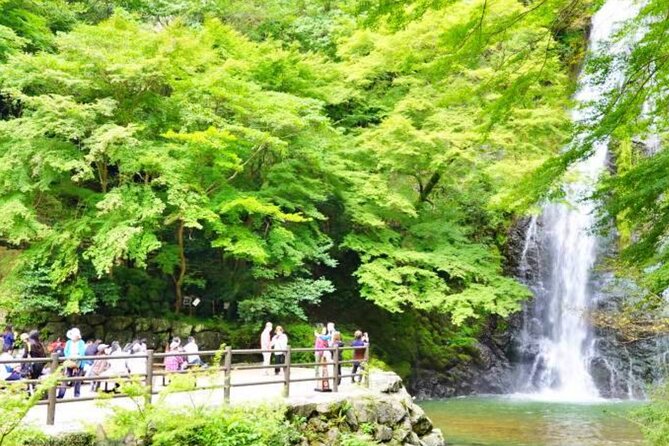
The most important question is what you expect from the word tour. This experience gives you transport between the three destinations and set blocks of free time. That is excellent if you like to make your own route, stop for snacks, and avoid being led through every minute.
Several guides have been praised for being helpful and attentive. Nancy is noted for assisting people during the day and even helping someone obtain medication after the tour. Alex has been described as attentive, friendly, and humorous. Marco has been praised for making the group feel cared for, while Pohey has worked across English, Chinese, and other languages to accommodate the group. Alice has used maps to explain each stop and help people return to the correct meeting point.
Those strengths can make a major difference on a long day. A guide who gives a clear map, explains the meeting place, and keeps an eye on the schedule adds real value even when you explore independently.
Still, the service may vary. Some departures have been experienced as a shuttle service, with little historical or cultural explanation. A multilingual group can also mean that information is split among languages, leaving less time for detailed commentary in English.
I would book this with the expectation of organized transport plus orientation, not a private walking tour. If the guide gives you a thorough introduction, treat it as a bonus. If you need detailed stories at each temple, you may be happier arranging separate guided visits.


Is $91.65 a fair price?
At $91.65 per person, the value depends on how much you dislike arranging transport. The day connects three major sites in three different areas, and the air-conditioned vehicle takes care of the long transfers. The driver or guide tip is included, and you return to the original Osaka meeting point.
That convenience has a real value. You do not need to work out several train routes, coordinate transfers, or calculate how long you can stay at each location. For a first visit with limited time, the ability to see Katsuo-ji, Arashiyama, and Nara in one day may justify the price.
The value is weaker if you are comfortable using Japan’s rail system and want a slower schedule. You may prefer to spend a full day in Kyoto, another in Nara, and a separate half-day at Katsuo-ji. This tour trades depth for coverage.
Meals and drinks are not included. Since the day is long, budget for food and allow time to buy it during one of the stops. Personal purchases, such as fortunes or souvenirs, also cost extra.
Pay close attention to the option you choose while booking. Some customers have been assigned a kimono experience that carried an additional charge of 5,000 yen per person, with a cancellation charge reported at 2,000 yen per person. The supplied information does not establish that every booking includes this, so the safest approach is to check the exact option, inclusions, and cancellation terms before paying.
Timing, group size, and the meeting point
The day begins in Umeda, at 2 Chome-2 Umeda, Kita Ward, Osaka, 530-0001. The meeting point is near public transportation, but it can be difficult to identify in a busy city area. Arrive early and keep the meeting instructions available on your phone.
The activity uses a mobile ticket, and booking confirmation is received at the time of booking. The tour ends back at the same meeting point, which is useful if you have evening plans in Osaka.
The minimum departure requirement is eight people. If that number is not reached, the operator can cancel the experience and notify you four days in advance. The maximum group size is 45.
That maximum is worth considering if you value quiet travel. A large coach group can work well for transport, but you need to be disciplined about meeting times. The guide may not be able to search for anyone who wanders off, so save the meeting location and return with a few minutes to spare.
The cancellation policy allows a full refund if you cancel at least 24 hours before the start time. Changes or cancellations inside that window are not accepted for a refund. Poor weather or failure to reach the minimum group size can also lead to a change of date or a full refund.
Who should book this Osaka day trip?
I would choose this experience if you have a short Osaka stay and want to sample Kyoto and Nara without planning several separate journeys. It suits independent-minded people who like being dropped near a sight, receiving a time limit, and setting their own route.
It also suits families and mixed-age groups who may appreciate an air-conditioned vehicle and a simple return to Osaka. Most people can participate, according to the activity information, and the free time lets each person choose a comfortable pace.
I would hesitate if your main reason for booking is expert cultural interpretation. The guide quality appears to vary, and the format may leave you largely on your own. It is also not ideal if you want a relaxed day at Arashiyama or a detailed visit to every major temple in Nara.
My verdict: book it for coverage, not depth
This is a useful one-day sampler with three strong attractions: Daruma dolls at Katsuo-ji, bamboo at Arashiyama, and deer at Nara Park. The flexible format, shared transport, and return to Osaka make it simple and practical.
Book it if you value seeing more places in less time and are willing to do some research before departure. Skip it if you want a slow, deeply explained temple experience or if independent train travel sounds easy to you.
Before you pay, confirm the meeting point, the exact booking option, whether a kimono experience is included, and what kind of guide service is promised. Those checks will help you get what this tour does best: a long but efficient day connecting three of Japan’s most recognizable sights.
FAQ
How long does the tour last?
The experience lasts approximately 11 hours.
Where does the tour start?
It starts at 2 Chome-2 Umeda, Kita Ward, Osaka, 530-0001, Japan.
Where does the tour finish?
The activity ends back at the original meeting point in Umeda.
How much free time is provided at each stop?
The planned time is about two hours at Katsuo-ji Temple, 90 minutes at Arashiyama, and two hours at Nara Park.
Are meals and drinks included?
No. Meals and beverages are not included, and personal consumption is also excluded.
Is transportation included?
Yes. The experience includes round-trip transportation in an air-conditioned vehicle.
How large can the group be?
The tour requires at least eight people to depart and can have a maximum of 45 participants.
Is the tour canceled if there are not enough people?
Yes. If the minimum of eight participants is not reached, the tour may be canceled, with notification provided four days in advance. You may be offered another date or experience, or a full refund.
Can I cancel for a full refund?
Yes. You can receive a full refund if you cancel at least 24 hours before the experience begins. Cancellations or changes made less than 24 hours before the start time are not refunded.
More Nara Day Trips in Osaka
More Golden Pavilion & Temple Tours in Osaka
More Arashiyama & Bamboo Tours in Osaka

More tours in Osaka we've reviewed


Arashiyama & Bamboo Tours, compared.
 ★ 4.8Kyoto: Fushimi Inari, Kinkakuji, Bamboo Grove 1 Day Bus TourFrom $122510 minutes - 9 hours
 ★ 4.1Osaka/Kyoto:Kinkakuji,Arashiyama,FushimiInariShrine,NaraParkFrom $66
 ★ 4.7Kyoto/Osaka: Nara, Fushimi Inari Taisha, Arashiyama Bus TourFrom $529 - 10 hours
 ★ 5.0Kyoto Arashiyama Walking Tour: Bamboo, Monkeys, Gardens & SecretsFrom $65
 ★ 4.8Arashiyama Bamboo, Temple, Monkeys, or Secret Sake BreweryFrom $875 hours - 330 minutes
 ★ 4.4Osaka/Kyoto: Arashiyama, Nara & Fushimi Inari Shrine w/LunchFrom $61