
Reviewed · PRIVATE
Treasures of Kyoto: Geishas & Traditions Private Tour
Kyoto’s geisha district makes far more sense when someone explains what you are seeing. This private walk leads you through Gion’s old streets, from the statue of kabuki founder Izumo no Okuni and Minamiza Theatre to traditional banquet houses, shrines, temples, and the lanes around Nene-no-Michi.
I like the private format, which lets you set the pace and ask direct questions. I also like the way the route links geisha culture with Shinto, Buddhism, kabuki, and Kyoto’s old street plan, rather than treating Gion as a photo backdrop. The main drawback is time: 2 hours and 30 minutes gives you a good introduction, but not a full temple visit or a long stop at each sight.
In This Review
- Key points at a glance
- Why this Gion walk works well
- Starting with kabuki at Izumo no Okuni and Minamiza
- Reading Gion’s streets and traditional districts
- Chion-in Temple and the walk through Maruyama Park
- Yasaka Shrine, Shijo Dori, and Kyoto’s old avenue plan
- Finishing near the pagoda and a local cafe
- What the private format is worth at $135.45
- Timing, fitness, and who should book
- What this tour does not try to be
- Should you book Treasures of Kyoto?
- FAQ
- How long is the Treasures of Kyoto tour?
- Is this a private tour?
- Where does the tour start?
- Where does the tour finish?
- Are hotel pickup and drop-off included?
- Is food included?
- Can I cancel for a full refund?
Key points at a glance
- Gion through local context: Learn how geiko and maiko traditions fit into Kyoto’s older entertainment districts.
- A private walk for your party: You avoid a large group and can ask questions as you go.
- Eleven short stops: The route covers Minamiza Theatre, Shinbashi Dori, Tatsumi Daimyojin Shrine, Chion-in Temple, Maruyama Park, Yasaka Shrine, and more.
- Strong guide feedback: Guides named Ted, Guia, Maha, Kako, and Shohei have been praised for warmth, cultural insight, and adapting to children.
- Mostly outdoor sightseeing: Expect streets, lanes, steps, temple grounds, and shrine approaches rather than long indoor visits.
- Good for a first Gion walk: It helps you get oriented without planning a route through Kyoto’s maze of backstreets.
Why this Gion walk works well
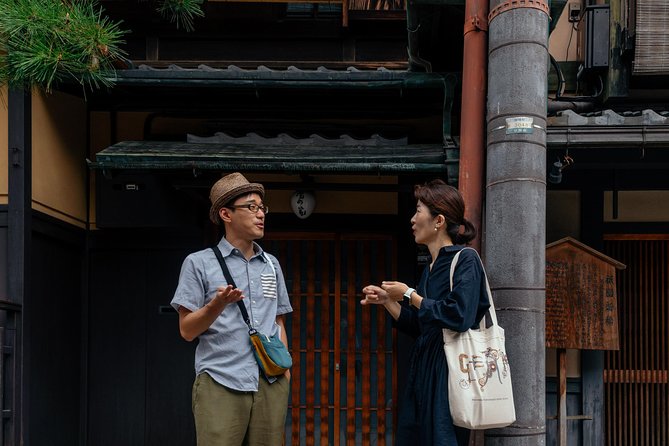
The best part of this experience is its focus. Gion can look simple on a map, but the meaning of its buildings and customs is easy to miss. A traditional wooden townhouse may be a private residence, a restaurant, or a former banquet house. A shrine may reflect Shinto practice, Buddhist influence, or both. Your guide gives you the basic tools to tell these places apart.
The route also covers a compact part of eastern Kyoto. You are not spending the afternoon crossing the city by bus. Instead, you move on foot between closely placed sights, with time for photos and conversation. One particularly useful detail is that the walk reaches quieter backstreets, where a guide can help you stay oriented and explain what you are seeing.
The tour has earned a 4.9 rating from 36 ratings, with 97 percent recommending it. The most consistent praise centers on the guides’ warmth, cultural explanations, and ability to adjust the conversation. Ted has been especially well received for explaining geiko traditions and answering children’s questions. Guia has been praised for bringing stories to life, while Shohei has been described as friendly and easy to follow. Your guide may be someone else, but these examples show the personal style the experience aims for.
Other private tours in Kyoto


Starting with kabuki at Izumo no Okuni and Minamiza
The walk begins near Kawabatacho in Higashiyama Ward, close to the Statue of Izumo no Okuni. Okuni is credited as the originator of kabuki theater, so this is a smart opening point for a tour about Kyoto’s performance traditions.
You spend about 20 minutes here, with no admission charge. The statue gives your guide a chance to explain how theater, dance, costume, and entertainment developed in Kyoto. It also keeps the introduction grounded in a real person and place instead of starting with a broad lecture about Japanese culture.
Next comes Minamiza Theatre, where the roots reach back to the early Edo period, from 1596 to 1615. You have about 20 minutes at this stop. The theater is important because Gion was not only a place of private entertainment. It was also tied to public performance and the arts.
Do not expect a scheduled show or a full theater tour. The listed visit is an outside stop with free admission. Still, it gives you useful context before you reach the geisha streets.
Reading Gion’s streets and traditional districts
The route then turns into Gion, including Gion Shinbashi and the area south of Shijo Street. Gion Shinbashi is protected as a traditional business preservation area, while the southern section is protected for its historic scenery. Those designations matter because they help explain the careful appearance of the streets and the effort to retain older building styles.
You have only about 10 minutes listed for the broad Gion stop, but the walk continues through nearby areas. That short timing suggests this is an orientation stop, not a long photographic pause. If you want detailed architectural study, ask your guide questions as you walk.
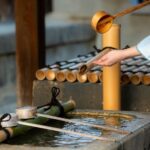
At Tatsumi Daimyojin Shrine, you spend about 20 minutes learning about Japanese religion. The key lesson is that Shinto and Buddhism have often existed side by side in Japan. This stop is valuable because visitors can otherwise treat every sacred site as simply a temple or shrine, missing the differences in practice, symbols, and purpose.
The tour then reaches Shinbashi Dori for about 10 minutes. Here, you stand outside traditional banquet buildings connected with geisha entertainment and learn more about the work and culture of geiko and maiko. This is one of the most meaningful parts of the walk because it places the discussion in the actual district where these traditions developed.
Your guide can also help you behave respectfully. Gion is a lived-in neighborhood, not a stage set. The experience is about understanding the culture, not chasing people for photographs. The supplied information does not promise a geisha encounter, so you should book this for the explanation of the district rather than for a guaranteed sighting.
Chion-in Temple and the walk through Maruyama Park
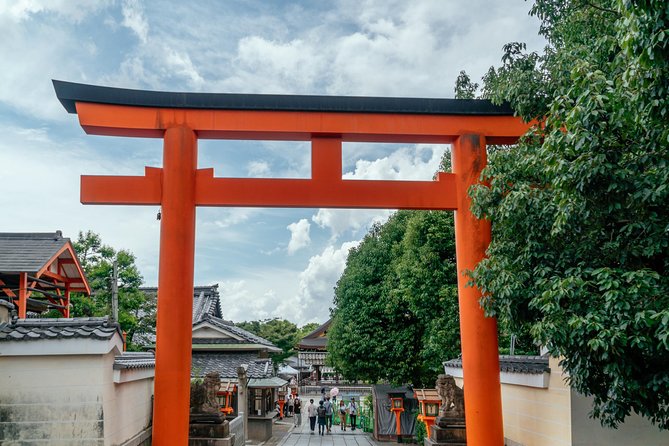
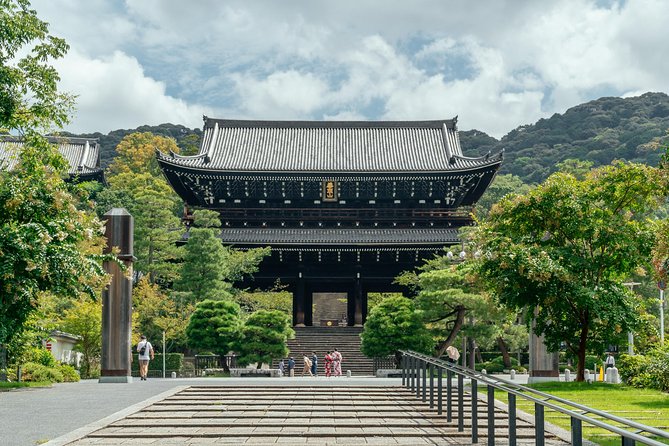
Chion-in Temple brings a change of mood. After the narrow streets of Gion, you walk up steps toward the temple and its garden area. About 10 minutes is scheduled here, so this is a brief look rather than a complete temple visit.
The steps are worth noting. The tour requires a moderate level of physical fitness, and the route includes walking and an uphill approach. Comfortable shoes will make the outing more pleasant. The short temple stop also means you may not have time to explore every building or garden section.
From Chion-in, the route continues toward Maruyama Park, with about 20 minutes in the park area. This gives you a little breathing room after the denser streets and temple approach. Your guide can connect the park with the nearby religious sites and older parts of Higashiyama.
The pacing sounds relaxed rather than rushed. A detailed route with eleven stops could feel hurried if handled like a checklist, but the private format lets you pause for questions and photos. At the same time, you should keep your expectations realistic: each named stop receives a short amount of time.
Yasaka Shrine, Shijo Dori, and Kyoto’s old avenue plan
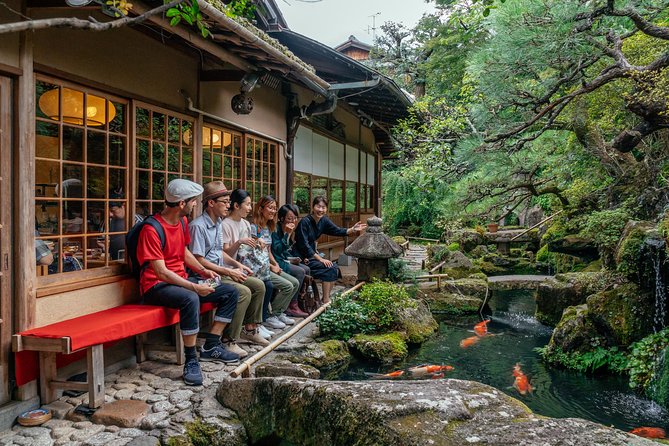
Yasaka Shrine receives a short 10-minute visit. The shrine’s traditional story traces its origins as far back as AD 656, well before the Heian era. That early date helps place Kyoto’s religious life in a much longer timeline than the city’s role as an imperial capital.
From there, you walk along Shijo Dori. The name means Fourth Avenue of Heian-kyo, the old capital’s planned street system. This is a small but useful detail. It shows that modern Kyoto’s streets still preserve pieces of the city’s ancient design.
Shijo Dori is also a practical orientation point. If you are staying in central Kyoto, you may use this major street during your visit. Hearing how it fits into the old capital gives an ordinary shopping and transport corridor more meaning.
The route continues to Nene-no-Michi, a scenic lane named after Nene, the wife of Toyotomi Hideyoshi. Nearby Kodaiji Temple was built in 1605 at her request. The listed stop is about 10 minutes, so your guide will likely focus on the lane’s story and setting rather than take you through the entire temple complex.
This is another place where a guide adds value. You may walk through the lane on your own and enjoy its appearance, but the connection to Nene and Kodaiji gives the street a clear historical anchor.

Finishing near the pagoda and a local cafe
The final stop is listed as Yasaka Shrine and describes a picturesque five-story Buddhist pagoda with sweeping views from the top. The endpoint is in Yasaka Kamimachi, near Yasaka no To temple. The naming may look confusing when you plan your day, so check the exact meeting and ending locations on your confirmation.
The tour finishes at a local cafe nearby. Food and drinks are not included, but ending near a cafe gives you a natural place to continue the conversation or take a break. You can also use the final location as a starting point for further exploration in eastern Kyoto.
Again, the listed schedule allows about 10 minutes for this final stop. Do not assume the price includes pagoda admission, a cafe drink, or a full visit inside every religious site. The tour is mainly a guided neighborhood walk with free outdoor stops.
What the private format is worth at $135.45
At $135.45 per person, this is not the cheapest way to walk through Gion. Its value depends on how much you want interpretation and personal attention. For a party that would otherwise pay for several separate activities, the price may feel high. For a couple or family that wants a focused introduction without a large group, the private arrangement can justify the cost.
You are paying for a local guide, route planning, cultural explanation, and the freedom to ask questions. You are not paying for meals, hotel transport, or a series of included admissions. Since the stops are free, the central benefit is the guide rather than entry access.
The tour is often booked 47 days ahead on average. That suggests you should arrange it early if the timing matters, especially during a popular Kyoto visit. Group discounts may reduce the per-person cost for a larger party, so check the price for your exact group size before deciding.
The tour is also described as carbon neutral. That matters to people who prefer a low-impact activity, although the walk still requires you to reach the meeting point on your own.
Timing, fitness, and who should book
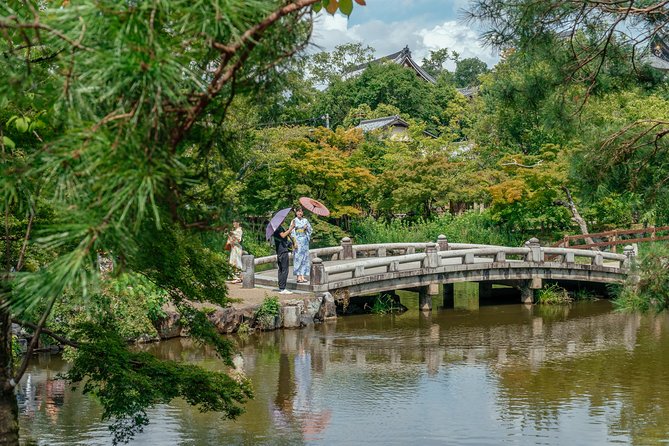
This experience suits first-time Kyoto visitors who want a clear introduction to Gion in a short window. It is also a good fit if you have already seen major temples and now want help understanding geisha customs, neighborhood design, and the relationship between Shinto and Buddhism.
Families can do well here. Guides such as Ted have adjusted explanations for children aged 10 and 14, and the private setting makes it easier to follow a child’s questions. The tour also works for adults who prefer conversation over a formal lecture.
You should be ready for about 2 hours and 30 minutes on foot. The route includes steps at Chion-in and movement through streets, park paths, and temple approaches. A moderate fitness level is required, and comfortable shoes are a sensible choice.
The meeting point is on Kawabatacho in Higashiyama Ward. The tour does not include hotel pickup or drop-off, so allow time to reach it by public transport or on foot. Service animals are allowed, and the meeting area is near public transportation.
Free cancellation is available if you cancel at least 24 hours before the local start time. Changes or cancellations made later are not refunded.
What this tour does not try to be
This is not a full-day Kyoto highlights tour. It does not include major indoor temple complexes, a meal, a geisha performance, or hotel transfers. The itinerary gives you short stops at many locations, so the experience favors range and context over long visits.
That design is both its strength and its limit. You can connect kabuki, Gion, religion, parks, historic streets, and the old capital plan in one compact walk. But if you want time for detailed photography, quiet garden viewing, or a long visit inside Chion-in or Kodaiji, you will need to return on your own.
The tour also cannot promise that you will see geiko or maiko. Its real subject is the district and the traditions behind it. That is a better reason to book, and it encourages a more respectful approach to a neighborhood where people live and work.
Should you book Treasures of Kyoto?
Book this walk if you want a private, conversational introduction to Gion and you value explanations more than admission tickets. The strongest reasons are the compact route, personal pacing, and clear links between geisha culture, kabuki, Shinto, Buddhism, and Kyoto’s old streets.
I would recommend it most for first-time visitors with limited time, families with questions, and couples who want to explore Gion without managing the route themselves. I would skip it if you prefer long temple visits, a food-focused tour, or a guaranteed cultural performance.
At $135.45 per person, the guide is the product. If your guide is as engaging as Ted, Guia, Maha, Kako, or Shohei have been described, you receive far more than directions between sights. You get a useful framework for seeing Kyoto with greater care.
FAQ
How long is the Treasures of Kyoto tour?
The tour lasts approximately 2 hours and 30 minutes.
Is this a private tour?
Yes. Only your party participates, so you can explore at a more personal pace and ask questions directly.
Where does the tour start?
The meeting point is Kawabatacho, Higashiyama Ward, Kyoto, 605-0076, Japan.
Where does the tour finish?
The tour ends in Yasaka Kamimachi, Higashiyama Ward, Kyoto, 605-0827, near Yasaka no To temple.
Are hotel pickup and drop-off included?
No. Hotel pickup and drop-off are not included.
Is food included?
No. Food and beverages are not included unless specifically listed as inclusions. The tour finishes near a local cafe.
Can I cancel for a full refund?
Yes, if you cancel at least 24 hours before the experience start time. Cancellations made less than 24 hours before the start are not refunded.
More Private Tours in Kyoto

More tours in Kyoto we've reviewed





Private, compared.
 ★ 5.0Fushimi Inari Hidden Hiking Tour (Private Option Available)From $63
 ★ 5.0Private Kyoto Tour with a Local, Highlights & Hidden Gems, PersonalisedFrom $102
 ★ 5.0Kyoto 6hr Private Tour with Government-Licensed GuideFrom $155
 ★ 5.010 Must-see Spots in Kyoto One Day Private Tour (up to 7 people)From $179
 ★ 5.0Kyoto 4hr Private Tour with Government-Licensed GuideFrom $109
 ★ 4.8Kyoto: Private Tour with Local Licensed GuideFrom $1064 - 8 hours