
Reviewed · FUSHIMI INARI TOURS
Kyoto Early Bird English Tour: Fushimi-Inari and Arashiyama
Kyoto’s most famous sights are best seen before the day heats up and the crowds arrive. This 4.5-hour walking tour gets you to Fushimi Inari Shrine and Arashiyama early, then links the Bamboo Grove with Tenryu-ji Temple, three headline stops that can be awkward to organize on your own.
I like the small group, limited to nine people, and the practical help from guides such as Vincent and Hiro. I also like that the tour gives you more than photo stops: you get explanations of Shinto and Zen traditions, local restaurant suggestions, and help using Kyoto’s trains. The tradeoff is clear: about 9,000 steps and public transportation make this a poor choice if you need a gentle morning.
In This Review
- Key points at a glance
- Why the early start matters in Kyoto
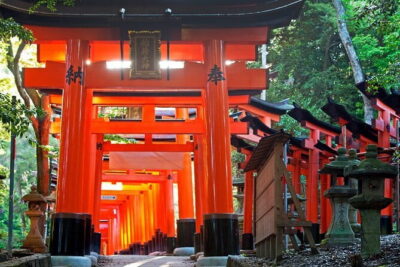
- Walking beneath Fushimi Inari’s orange torii gates
- Moving between Kyoto’s famous districts by train
- Arashiyama Bamboo Grove before the crowds build
- A short Arashiyama pause for coffee and shopping
- Kimono Forest and Togetsu-kyo Bridge
- Tenryu-ji and the Zen story behind the temple
- What $102 buys you
- The walking level and who should skip it
- What the guides add to the morning
- Booking details worth knowing
- Should you book the Fushimi Inari and Arashiyama morning tour?
- FAQ
- Where does the tour start?
- Where does the tour finish?
- How long does the experience last?
- Which attractions are included?
- Is Tenryu-ji admission included?
- Are train fares included?
- How much walking is involved?
- What languages are available?
- Do I need WhatsApp or SMS?
Key points at a glance
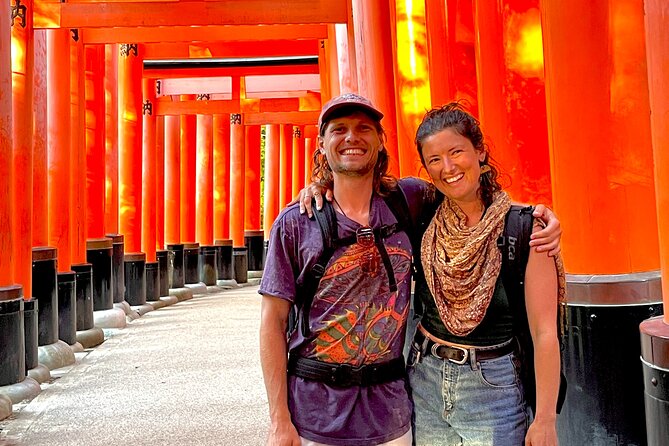
- Start early for Fushimi Inari: The first morning time slots offer the best chance of a calmer walk beneath the shrine’s orange torii gates.
- Three major sights in one morning: See Fushimi Inari, Arashiyama Bamboo Grove, and Tenryu-ji without spending a full day on the route.
- Small groups help: With no more than nine participants, it is easier to hear the guide and ask questions.
- Guides add useful local context: Vincent and Hiro explain temple customs, Japanese life, food, and transport as you walk.
- Expect a brisk physical outing: The tour uses trains and includes roughly 9,000 steps, with uneven temple and shrine paths.
- Budget for transport: Admission to Tenryu-ji is included, but local train fares cost about 630 yen and are paid separately.
Why the early start matters in Kyoto
The clever part of this tour is not simply the list of places. It is the order and timing. Fushimi Inari and Arashiyama are two of Kyoto’s most photographed sights, and both can become difficult to enjoy once large groups and midday heat arrive.
An early start gives you a better shot at walking through the torii gates without stopping every few steps for a clear photograph. It also makes the Bamboo Grove feel less hectic. The word early matters here, so choose the first available starting time if quiet paths are a main reason for booking.
You begin at Kyoto Station, then take a train for about 15 minutes to Fushimi Inari. From there, another train ride of roughly 30 minutes takes you toward Arashiyama. The transport keeps the route practical, but you are still moving at a steady pace from the start.
The tour is conducted in English, with Japanese also available from the guide. Before the outing, you need access to WhatsApp or SMS because the guide uses one of those services to contact you. That is a small but important detail, especially if your phone plan or messaging setup is limited in Japan.
A few more Kyoto tours and experiences worth a look

Walking beneath Fushimi Inari’s orange torii gates
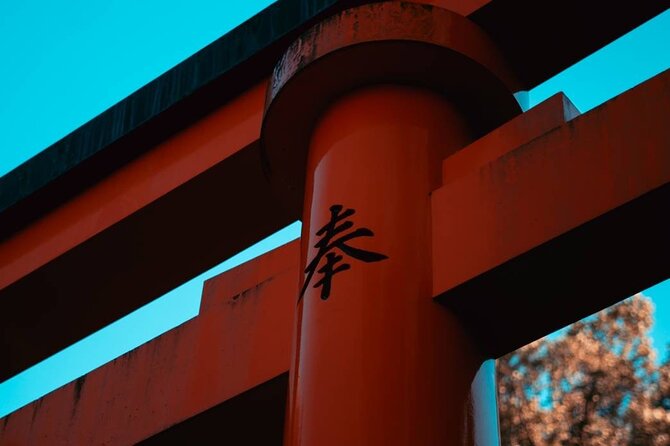
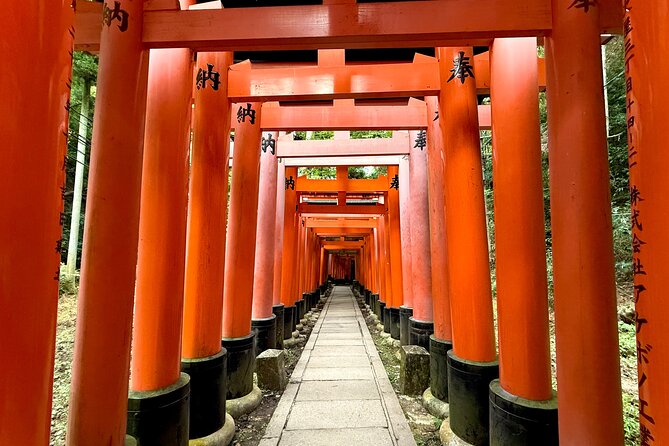
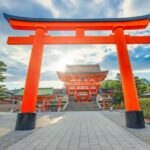
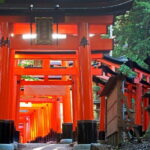
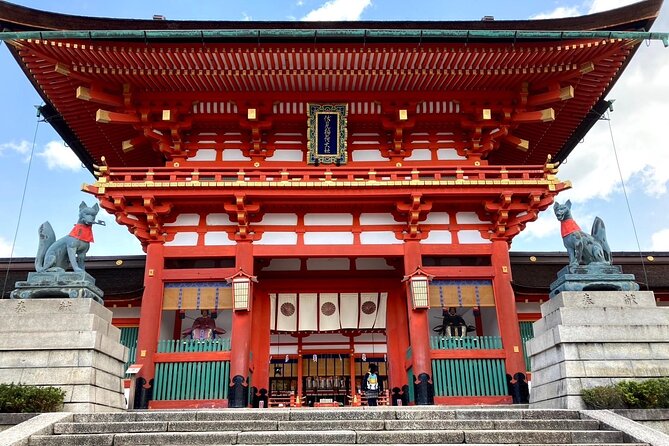
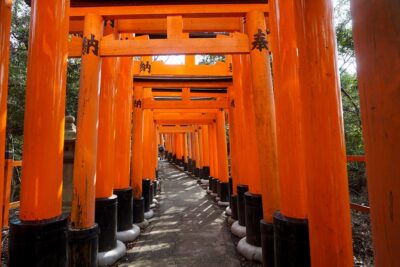
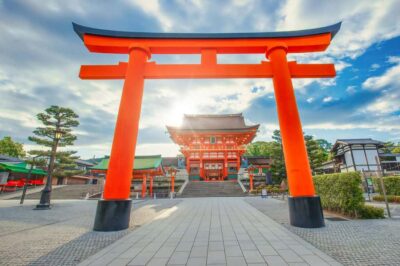
Fushimi Inari Taisha is the morning’s first major stop. The shrine is famous for its long series of orange torii gates, which climb the wooded slopes behind the main shrine area. You will have about an hour for guided sightseeing and photographs.
The guide helps turn a familiar picture into a place with meaning. You can ask about the shrine’s religious role, the symbolism of its gates, and the difference between visiting a Shinto shrine and a Buddhist temple. The experience is more useful than simply arriving, taking pictures, and leaving without knowing what you have seen.
The hour is long enough to appreciate the setting, but not long enough for a full climb through the entire mountain route. That is not a flaw for most people. Fushimi Inari can take much longer if you walk high into the forest, so this tour gives you a focused introduction before moving on to Arashiyama.
Wear shoes with good grip. Even if the walking route does not involve the complete mountain climb, shrine paths and steps still make this an active stop. You should also carry cash for small personal expenses and transport.
Moving between Kyoto’s famous districts by train
The train rides are part of the morning, not wasted time. They show you how this tour fits Kyoto’s major sights into a compact half-day without relying on a private vehicle.
Transportation costs are not included. The total is approximately 630 yen, which is modest, but you should have cash ready. The guide helps the group move between locations, so you are not left to work out the route alone.
The train connection also means the tour is not a hotel pickup service. You make your own way to Kyoto Station, and the tour finishes at Togetsu-kyo Bridge in Arashiyama. That ending works well if you plan to keep exploring the district after the guide leaves.
Arashiyama Bamboo Grove before the crowds build
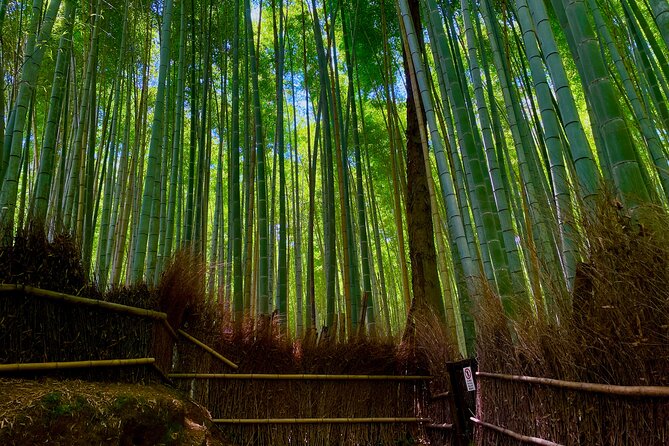
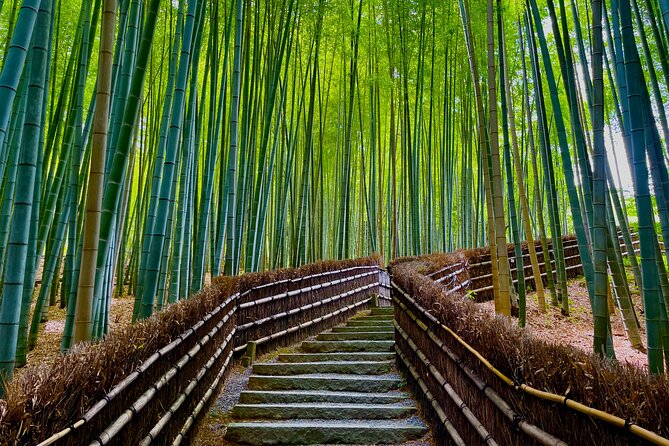
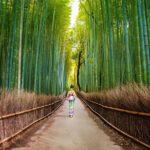
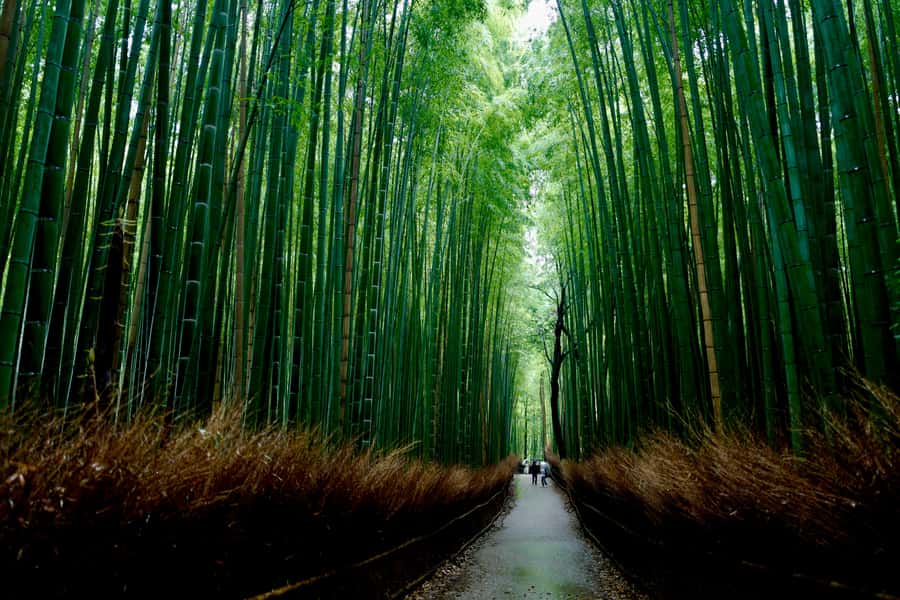
After the train ride, the group spends about an hour around the Arashiyama Bamboo Grove. The tall bamboo is the visual star, but the setting is best understood as a short walking route rather than a vast wilderness trail.
The early timing is especially useful here. The grove is narrow in places, so heavy foot traffic can turn a peaceful-looking path into a slow-moving line. An early visit gives you more breathing room and makes it easier to listen while the guide explains what you are seeing.
This is also a place where expectations matter. The Bamboo Grove is not a full-day hike, and the famous section is relatively brief. The value comes from seeing it as part of a wider Arashiyama visit, with a guide who connects the grove to the temple, bridge, and surrounding district.
You will have guided sightseeing and time for photographs. Keep your camera ready, but do not let the photo stop become the whole visit. The guide can give you context that you would likely miss if you hurried through alone.
A short Arashiyama pause for coffee and shopping
The schedule includes about 20 minutes of free time in Arashiyama. This is a welcome breathing space after the first shrine and bamboo walk.
One useful detail from the morning format is that you may not have eaten before setting out. The early departure is the reason the tour avoids heat and crowds, but it also means breakfast can be rushed. One previous participant appreciated having a short pause for coffee between the main sights.
Do not expect a full meal break. Twenty minutes is enough for a quick drink, a snack, or a look at nearby shops, but not a leisurely café stop. If you need a substantial breakfast, eat before meeting the group or carry something small.
The free time also helps the morning feel less like a forced march. You get a moment to regroup before the smaller Arashiyama stops and Tenryu-ji.
A few more Kyoto tours and experiences worth a look
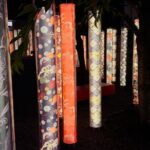
Kimono Forest and Togetsu-kyo Bridge
The next stops are brief, but they help fill out the Arashiyama picture. You pass through Kimono Forest, a display of patterned textile cylinders near the station area, with about five minutes of guided attention.
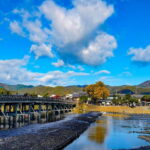
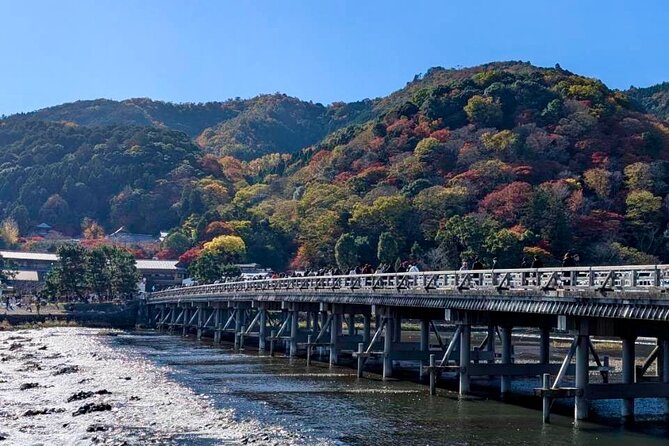
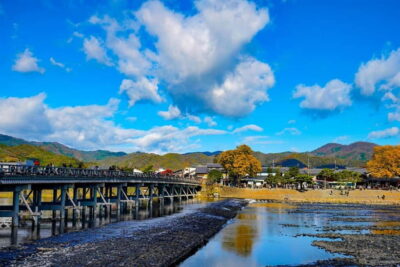
You then see Togetsu-kyo Bridge, one of Arashiyama’s best-known landmarks. The schedule allows around five minutes for a photo stop and explanation. That is enough to orient yourself and take pictures, but not enough for a long riverside walk.
The bridge is also the practical finish point. Once the tour ends, you are already in a part of Kyoto with more time to explore independently. The guide can offer restaurant suggestions, which may be especially helpful if you want to turn the half-day into a longer Arashiyama visit.
Because these stops are short, you should think of them as connectors rather than full attractions. The main value is that the guide gives you the district’s key points in a logical sequence without making you plan every turn.
Tenryu-ji and the Zen story behind the temple
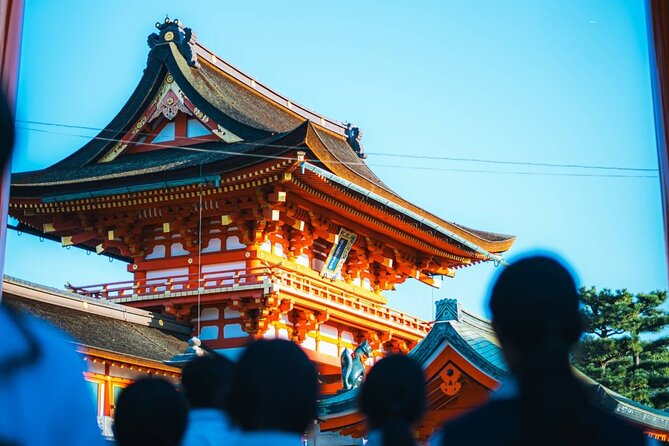
Tenryu-ji is the final major sight, with about an hour for guided sightseeing. Admission is included, which adds real value to the $102 price.
The temple gives the morning a different tone from Fushimi Inari. Fushimi Inari is a Shinto shrine, while Tenryu-ji is a Zen Buddhist temple. Having both in one tour lets you compare two important parts of Japanese religious culture rather than treating Kyoto’s historic sites as interchangeable backdrops.
The guide focuses on the temple’s Zen tradition and helps explain why the site matters. This is where a good English-speaking guide can make a noticeable difference. Vincent has been especially praised for clear English, friendly help, and useful answers about local life. Hiro has also offered explanations of the shrines, Japanese living, and places to eat.
The temple visit is not just a quick exterior photograph. Since entry is included and the schedule allows an hour, you have time for a more complete introduction. Still, the pace remains fixed. If you prefer to sit quietly in one temple garden for a long time or read every sign at your own speed, an independent visit gives you more control.
The tour finishes at Togetsu-kyo Bridge rather than returning you to Kyoto Station. Plan the rest of your day from Arashiyama, or allow extra time to make your own way back.
What $102 buys you
At $102 per person, this is not the cheapest way to see Kyoto. You can reach the shrine and Arashiyama by public transportation on your own for much less, and independent visitors can choose how long to stay.
The price makes more sense if you value guidance, structure, and a small group. You are paying for an English-speaking guide, the planning between separate districts, and admission to Tenryu-ji. You also get practical help with trains and suggestions for food and later sightseeing.
The group limit of nine is important. A large coach tour would be less personal and harder to manage on narrow paths. A group this size gives you a better chance to hear explanations and ask about Japanese customs, restaurants, or daily life.
I would not book this mainly to save money. I would book it to save planning time and avoid losing a morning to navigation. If you are comfortable using Kyoto’s trains and reading shrine and temple information on your own, the fee may feel high. If you are visiting Kyoto for the first time and want a well-organized introduction, the cost is easier to justify.
The walking level and who should skip it
The tour requires roughly 9,000 steps over 4.5 hours. That includes shrine paths, bamboo lanes, temple grounds, station transfers, and movement between meeting points.
You should wear comfortable shoes and be ready to keep moving. The early start can also make the morning feel demanding if you have just arrived in Kyoto or stayed out late the night before.
This experience is not suitable for wheelchair users or people with mobility impairments. The combination of walking, public transportation, and shrine and temple paths requires a reasonable level of mobility.
I think it suits couples, families with older children, solo visitors, and small groups who want cultural background without committing to a full-day tour. A family of four can fit comfortably within the small-group setting, and the guide’s help can reduce the stress of finding each place independently.
It is less suitable for anyone seeking a slow, highly flexible outing. You will not have unlimited time at each stop, and the early departure is part of the bargain.
What the guides add to the morning
The strongest feature is the human side of the tour. Vincent has been described as friendly, helpful, and clear in English, with the ability to answer questions beyond the formal history of the sites. That matters when you want to understand daily life in Japan as well as temple and shrine customs.
Hiro has also provided a friendly morning with explanations of the shrines, the bamboo area, and Japanese life. His food suggestions are useful because the tour ends in Arashiyama, where you may want to continue your day.
The guide is not just there to point out the next gate. You can use the time to ask practical questions: how to behave at a shrine, what a temple represents, which foods to try, or where to eat afterward. The small group makes these conversations possible.
Guide quality can vary from one departure to another, but the named guides connected with this experience have received especially strong praise. The tour is rated five out of five from 17 reviews, with repeated approval for the organization, English ability, historical explanations, and friendly manner.
Booking details worth knowing
You can cancel up to 24 hours before the tour for a full refund. You can also reserve now and pay later, which helps if your Kyoto schedule is still changing.
The exact start time depends on availability. Since the main advantage is avoiding crowds and heat, I would choose the earliest slot you can manage rather than treating all departure times as equal.
Bring comfortable shoes and cash. Make sure WhatsApp or SMS works before the tour, since the guide uses those services to contact you.
The tour price does not include hotel pickup or drop-off, personal expenses, or public transportation. The transport cost is approximately 630 yen. Admission to Tenryu-ji is included, which keeps the extra costs fairly simple.
Should you book the Fushimi Inari and Arashiyama morning tour?
Book it if you want to see three major Kyoto sights in one organized morning, prefer an English-speaking guide, and can handle a brisk 9,000-step route. It is particularly useful for a first visit, a short stay, or anyone uneasy about linking Fushimi Inari and Arashiyama by train.
Choose the earliest departure for the best chance of quieter paths. Go with comfortable shoes, a small amount of cash, and a breakfast plan.
Skip it if you want to linger, avoid walking, or keep the cost as low as possible. Independent sightseeing will give you more time and flexibility. For many first-time visitors, though, the mix of early access, small-group guidance, Tenryu-ji admission, and practical Kyoto advice makes this a solid half-day introduction.
FAQ
Where does the tour start?
The tour starts at Kyoto Station.
Where does the tour finish?
The tour finishes at Togetsu-kyo Bridge in Arashiyama.
How long does the experience last?
The tour lasts 4.5 hours.
Which attractions are included?
The tour visits Fushimi Inari Shrine, Arashiyama Bamboo Grove, Kimono Forest, Togetsu-kyo Bridge, and Tenryu-ji Temple.
Is Tenryu-ji admission included?
Yes. Admission to Tenryu-ji Temple is included in the tour price.
Are train fares included?
No. Public transportation is used between the locations, and the transportation cost is approximately 630 yen.
How much walking is involved?
You should expect approximately 9,000 steps during the guided walking tour.
What languages are available?
The live guide service is available in English and Japanese.
Do I need WhatsApp or SMS?
Yes. WhatsApp or SMS must be available because the guide uses one of these services for communication before the tour.
More Arashiyama & Bamboo Tours in Kyoto
More Fushimi Inari Tours in Kyoto
More tours in Kyoto we've reviewed


Fushimi Inari Tours, compared.
 ★ 4.8Kyoto: Fushimi Inari, Kinkakuji, Bamboo Grove 1 Day Bus TourFrom $122510 minutes - 9 hours
 ★ 5.0Fushimi Inari Hidden Hiking Tour (Private Option Available)From $63
 ★ 4.7Kyoto/Osaka: Nara, Fushimi Inari Taisha, Arashiyama Bus TourFrom $529 - 10 hours
 ★ 4.4Osaka/Kyoto: Arashiyama, Nara & Fushimi Inari Shrine w/LunchFrom $61
 ★ 5.0Kyoto: Nijo, Kinkaku-ji, Arashiyama, Kiyomizu & Fushimi InariFrom $51
 ★ 5.0Kyoto Fushimi-Inari Night Walking TourFrom $43