
Reviewed · OSAKA & HIROSHIMA DEPARTURES
Kyoto Full Day Sightseeing Tour from Osaka or Kyoto
Kyoto’s biggest sights are spread across the city, and this full-day Kyoto tour fits several of them into one long outing. You’ll see the Golden Pavilion, walk beneath the torii gates of Fushimi Inari, and visit Arashiyama before returning to Osaka or Kyoto.
I like the simple transport plan, especially if you do not want to puzzle out Kyoto’s buses and rail lines. I also like the mix of famous sights and smaller stops, including Nonomiya Shrine, Togetsukyo Bridge, and the Kimono Forest.
The tradeoff is pace. With a maximum of 45 people, fixed departure times, and several stops, this is a highlights tour rather than a slow cultural walk. Some guides stay with the group and explain each place; others mainly lead you to the entrance and let you explore alone.
In This Review
- Key points to know before booking
- What this Kyoto day tour is really designed to do
- Nijo Castle and the Tokugawa starting point
- Arashiyama’s bamboo, shrine, bridge, and textile art
- Kinkaku-ji, Kyoto’s Golden Pavilion
- Fushimi Inari and the red torii path
- The value of $67, plus the extra fees
- Heat, rain, walking, and group size
- Communication can make or break the day
- Who should book this Kyoto tour
- My call: book it for coverage, not for lingering
- FAQ
- How long does the Kyoto sightseeing tour last?
- Where can I start the tour?
- Which major Kyoto attractions are included?
- What does the Arashiyama portion include?
- Are entrance fees included?
- Is lunch included?
- How large can the group be?
- Can I cancel for a refund?
Key points to know before booking
- Four major Kyoto sights in one day: Nijo Castle, Kinkaku-ji, Fushimi Inari Taisha, and Arashiyama form the backbone of the route.
- Arashiyama comes in several short visits: You’ll see the bamboo grove, Nonomiya Shrine, Kimono Forest, and Togetsukyo Bridge, but each stop has a firm time limit.
- Admission costs extra: Budget ¥1,300 for Nijo Castle and Ninomaru Palace, plus ¥500 for Kinkaku-ji.
- Guide quality matters: Jackson, Amy, Saki, Allan, and Theodore received especially warm praise for organization, communication, and explanations.
- Expect walking and crowds: Comfortable shoes help, and the tour can be tiring in summer heat or bad weather.
- Air-conditioned transport saves effort: This is useful for a Kyoto day trip from Osaka, where changing trains and buses can eat up valuable time.
What this Kyoto day tour is really designed to do
This is a sightseeing sweep, not a private tour. You board an air-conditioned vehicle, follow a set route, and spend the day moving between Kyoto’s best-known sights. The plan is efficient on paper, but it leaves little room for lingering, shopping, or changing the order of stops.
The listed duration is about nine hours, though some departures have run closer to 11 hours. That difference matters if you have dinner reservations, evening train plans, or a show booked in Osaka. Traffic, loading passengers, and walks from parking areas can stretch the day.
The vehicle holds up to 45 people. That keeps the price at a reasonable $67 per person, but it also means a large group may gather at every meeting point. I would choose this tour for coverage and convenience, not for quiet, personal attention.
The guide is the key variable. Strong guides such as Jackson, Amy, Saki, Allan, and Theodore have been praised for sending timely WhatsApp messages, sharing photo spots and lunch advice, keeping people on schedule, and explaining the places well. Still, the experience has not been consistent. Some guides have provided only a few comments on the bus and escorted the group to an entrance without joining the visit.
Before you book, make sure you understand that distinction. You may receive a useful guided day with clear explanations, or you may get transport between sights with brief orientation. If detailed interpretation is your main reason for booking, ask the provider about the guide and guiding format before paying.
A few more Osaka tours and experiences worth a look

Nijo Castle and the Tokugawa starting point
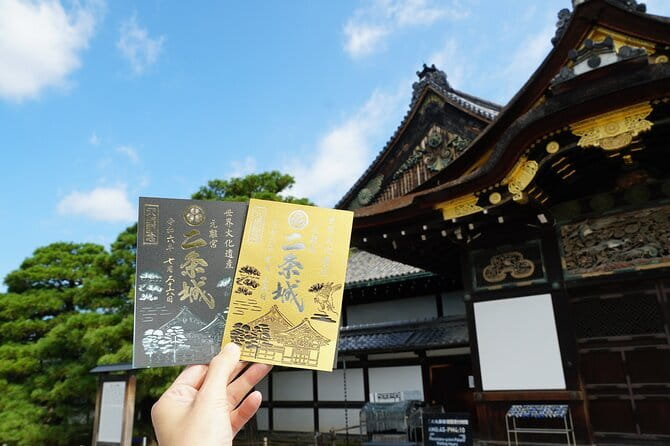
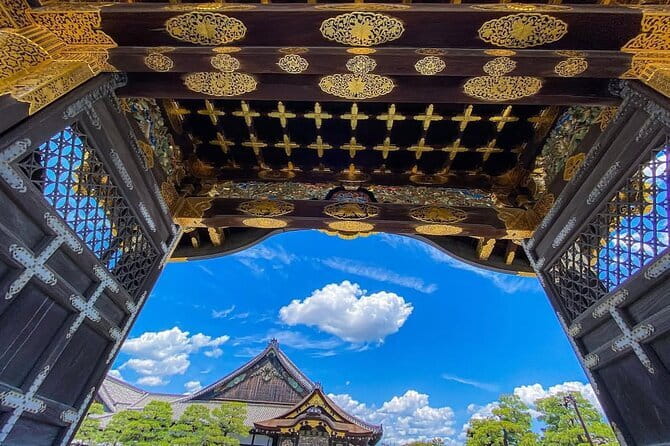
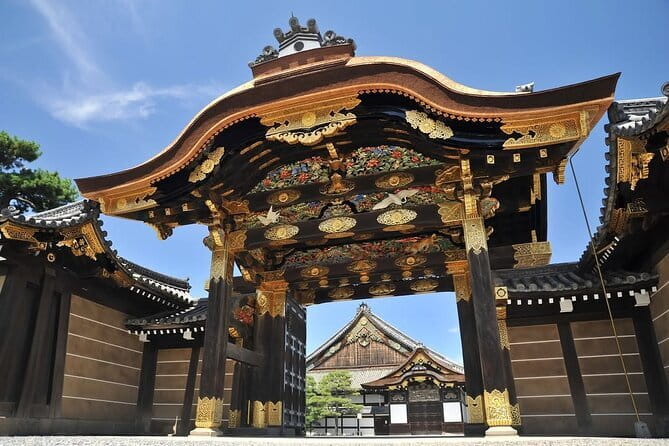
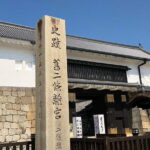
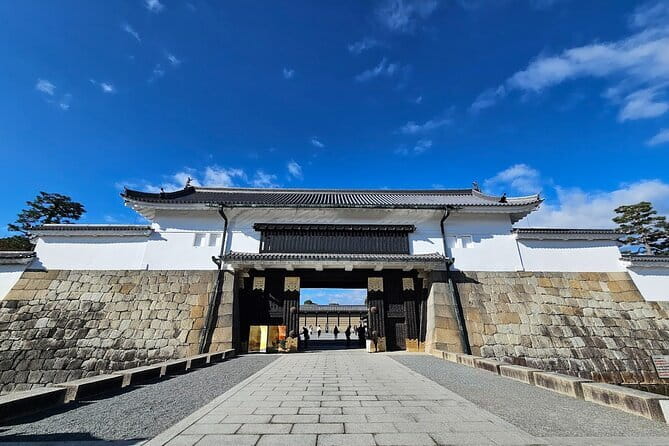
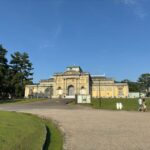
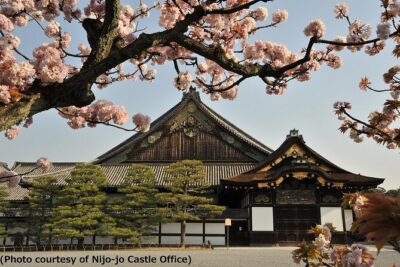
Nijo Castle is the first listed stop, with about an hour inside the castle grounds. Tokugawa Ieyasu built it in 1603 as his Kyoto residence, at the start of the Edo period. The palace buildings are among Japan’s finest surviving examples of feudal-era castle palace design.
The castle also carries real political weight. Important events unfolded here during its 400-year story, and its UNESCO World Heritage designation in 1994 confirms its importance beyond its handsome walls and gardens.
The main practical issue is admission. Entry to Nijo Castle and the Ninomaru Goten Palace costs ¥1,300 per person and is not included in the tour price. Bring extra yen or be ready to pay separately, and remember that one hour is enough for a brisk visit, not a full study of every room and garden detail.
This is a place where a guide can make a major difference. The famous palace interiors and their details are much easier to appreciate with explanation. If your guide only gives directions at the entrance, pick up the provided information and stay aware of the meeting time.
Arashiyama’s bamboo, shrine, bridge, and textile art
Arashiyama is the day’s most varied area. It sits in western Kyoto and has long been valued for its scenery and historic sites. The schedule breaks the district into several short stops, which helps you see more but can make the visit feel hurried.
You get about 20 minutes in the wider Arashiyama area, followed by 40 minutes in the Bamboo Forest. The tall bamboo is one of Kyoto’s signature sights, with narrow paths passing between dense green stalks. The setting can feel calm, but the route is also one of Kyoto’s most popular photo stops, so do not expect solitude.
Forty minutes is enough to walk a section, take photos, and get a sense of the place. It is not enough for a long wander through every path. Keep an eye on your watch, since the vehicle will not wait for a relaxed second lap.
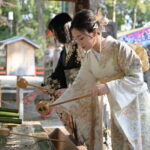
Nonomiya Shrine receives about 20 minutes. This small Shinto shrine is known for its black torii gate, a notable contrast to the vermilion gates seen at many other shrines. Its modest scale gives you a quick change of mood after the crowded bamboo path.
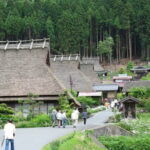
The Kimono Forest is another 20-minute stop. Around 600 clear acrylic cylinders, each about two meters tall, display kimono fabrics in different patterns. It is a modern installation rather than an old temple, and it gives the Arashiyama portion a colorful design element without requiring a long visit.
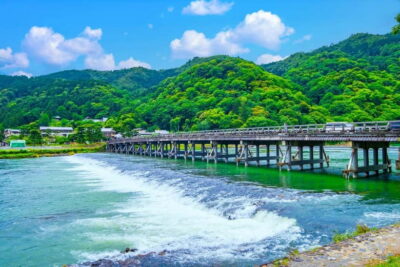
Togetsukyo Bridge also gets about 20 minutes. The bridge crosses the Katsura River and is Arashiyama’s best-known landmark. Its origins reach back to the Heian period, from 794 to 1185, though the current bridge was rebuilt in the 1930s.
These short visits work best if you treat them as snapshots. I would choose one priority before you arrive. If the bamboo grove matters most, walk directly there and take your photos first. If you prefer views and atmosphere, spend your time near Togetsukyo Bridge. Trying to examine every stop in detail will leave you watching the clock.
Kinkaku-ji, Kyoto’s Golden Pavilion

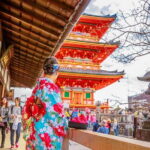
Kinkaku-ji, or the Golden Pavilion, is one of Kyoto’s most recognizable sights. The Zen Buddhist temple is famous for its gold-covered exterior reflected beside a pond, with landscaped temple grounds around it. Its appearance is striking even if you have seen countless photographs.
The visit lasts about 40 minutes, and admission costs ¥500, not included in the $67 tour price. That is a small extra cost, but you should add the two admission fees together when working out your real budget.
The time limit is the main concern here. One person had hoped for more time at Kinkaku-ji and less at Fushimi Inari, a sensible point if the Golden Pavilion is high on your list. You can see the pavilion and follow the route through the grounds in 40 minutes, but you may not have time to pause at every garden view or browse at an easy pace.
I would place Kinkaku-ji near the top of your personal priority list. When the group arrives, walk with purpose, take the main view first, and then explore as time allows. A good guide can point out the best angles and explain the temple’s role in Kyoto’s religious and artistic life. A weak guide may simply leave you to find the pavilion on your own.
Fushimi Inari and the red torii path
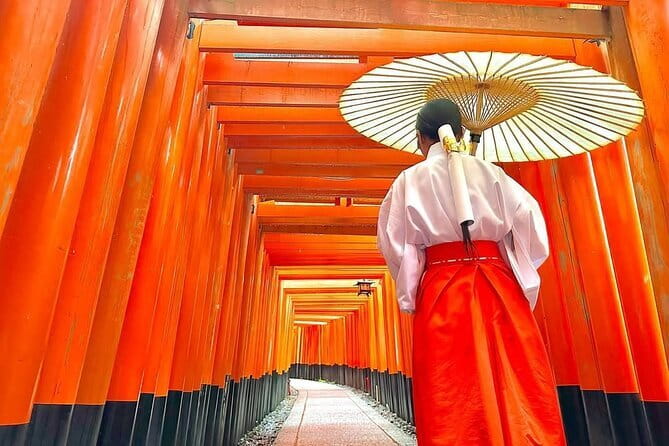
Fushimi Inari Taisha receives the longest scheduled visit, about one hour and 10 minutes. It is the head shrine of the roughly 30,000 Inari shrines across Japan and is dedicated to Inari, the Shinto deity associated with rice.
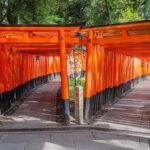
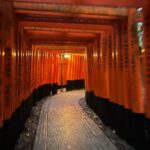
The shrine is best known for Senbon Torii, the thousands of vermilion gates that climb the wooded hillside. The gates create one of Kyoto’s most memorable walks, but you do not need to reach the summit to enjoy the experience. The route rises gradually, and an hour gives you time to pass through a good section before returning to the meeting point.
The longer stop makes sense because Fushimi Inari is not a single building you view and leave. It is a path, a shrine complex, and a hill walk. Still, some people would prefer to shift part of this time to Kinkaku-ji. That is the choice you are making with this schedule: more walking at Fushimi Inari, less flexibility elsewhere.
Stay alert to the meeting instructions. The shrine can be crowded, and one poor experience occurred when a guide walked ahead and did not wait for everyone to leave the vehicle. Good guides have used WhatsApp to help people find the parked bus, but you should still note the parking location and return time before setting off.
A few more Osaka tours and experiences worth a look
The value of $67, plus the extra fees
At $67 per person, the tour offers solid value if your goal is to see several famous Kyoto locations in a single day. The air-conditioned vehicle is the main saving. From Osaka, independent travel to Nijo Castle, Arashiyama, Kinkaku-ji, and Fushimi Inari requires several train or bus connections, careful timing, and repeated navigation through crowded areas.
The tour price does not cover lunch or the two paid attractions. Add ¥1,800 for Nijo Castle with Ninomaru Palace and Kinkaku-ji, then budget for food. The true cost is still reasonable for a full day of transport and sightseeing, but it is not an all-inclusive ticket.
The value drops if you want long visits, a small group, or detailed guiding at every site. A large vehicle can feel crowded, and the schedule does not leave much room for missed turns or slow walks. The value rises if you are based in Osaka, have only one open day for Kyoto, or prefer someone else to manage the route.
Heat, rain, walking, and group size
Bring comfortable shoes. You will walk through castle grounds, temple paths, shrine approaches, bridge areas, and the bamboo grove. Fushimi Inari adds a hill walk, and the day may feel tiring even when the vehicle is cool.
Summer heat has been manageable for some people because of the organized pacing and air conditioning, but one older participant found an 11-hour version exhausting. I would not book this as a gentle day for anyone who needs frequent rests.
Rain can also change the experience. The route continues in poor weather, so an umbrella and shoes with a good grip are sensible. A rainy day can make the bamboo grove atmospheric, but wet paths and a long day outside are not an easy combination.
The company asks you to mention a stroller or large luggage when booking. Most people can participate, but the distance from some parking areas to the sights can be five to 10 minutes on foot. If mobility is a concern, ask for a front seat and confirm exactly how much walking is required at each stop.
Communication can make or break the day
The best part of the service is often simple communication. Guides such as Jackson have contacted people through WhatsApp before departure to confirm the meeting point, then sent reminders during the day. Theodore has been praised for sharing practical tips, restaurant suggestions, and photo locations through a group chat.
That help matters in Kyoto. A missed turn at a crowded shrine or a delayed return to the vehicle can create real stress. A guide who counts the group, uses a microphone, and repeats the meeting point gives you much more freedom to explore.
Do not assume every guide will offer the same level of help. English ability and site explanations have varied. Some guides were funny, warm, and careful with the group, while others spoke too quietly or focused more on bus comments than on the attractions.
If you receive a message before departure, save it and keep your phone charged. If you book separately from relatives or friends, tell the operator at least one day ahead so you have a better chance of being assigned to the same vehicle.
Who should book this Kyoto tour
I would recommend this tour to a first-time visitor who wants Kyoto’s headline sights without handling the transport. It also suits people staying in Osaka, families who value a set plan, and anyone with only one day available.
The tour is less suitable for you if you want to photograph the bamboo grove in peace, spend half a day at one temple, or receive a detailed explanation at every stop. Independent travel or a smaller private tour would give you more control.
The guide names worth noting are Jackson, Amy, Saki, Allan, and Theodore, all praised for clear communication, care, and useful explanations. That does not guarantee your guide will be one of them, but it shows how much the quality of the day depends on the person leading it.
Free cancellation is available up to 24 hours before the start time for a full refund. Changes or cancellations made less than 24 hours ahead are not accepted for a refund.
My call: book it for coverage, not for lingering
I would book this Kyoto full-day sightseeing tour if I wanted to cover Nijo Castle, Arashiyama, Kinkaku-ji, and Fushimi Inari in one sweep. The $67 price is fair once you add the ¥1,800 in admission fees, and air-conditioned transport is a real advantage from Osaka.
I would skip it if a slow pace and steady interpretation matter more than the number of sights. Go in expecting a well-organized route with variable guiding, keep your footwear comfortable, and treat each stop as a focused visit. With that mindset, this can be a practical first look at Kyoto rather than an exhausting attempt to see everything.
FAQ
How long does the Kyoto sightseeing tour last?
The listed duration is approximately nine hours. Some departures have taken closer to 11 hours, so avoid scheduling a tight evening commitment after the tour.
Where can I start the tour?
You can depart from Osaka or Kyoto. The exact meeting point is provided with your booking information.
Which major Kyoto attractions are included?
The main attractions are Nijo Castle, Kinkaku-ji, Fushimi Inari Taisha, and the Arashiyama area.
What does the Arashiyama portion include?
The route includes Arashiyama, the Bamboo Forest, Nonomiya Shrine, Arashiyama Kimono Forest, and Togetsukyo Bridge.
Are entrance fees included?
No. Nijo Castle and Ninomaru Goten Palace cost ¥1,300 per person, and Kinkaku-ji costs ¥500 per person. Lunch is also not included.
Is lunch included?
No. You need to arrange and pay for lunch yourself during the day.
How large can the group be?
The vehicle can carry up to 45 people. This is a group tour, not a private or small-group experience.
Can I cancel for a refund?
Yes. You can cancel at least 24 hours before the local start time for a full refund. Cancellations or changes made less than 24 hours before departure are not accepted for a refund.
More Full-Day in Osaka
More Osaka & Hiroshima Departures in Osaka
More tours in Osaka we've reviewed



Osaka & Hiroshima Departures, compared.
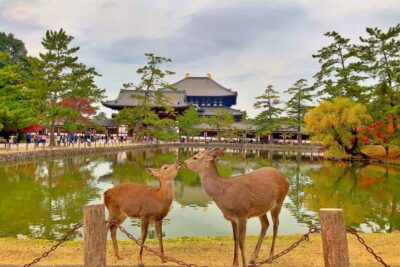 ★ 4.1Osaka/Kyoto:Kinkakuji,Arashiyama,FushimiInariShrine,NaraParkFrom $66
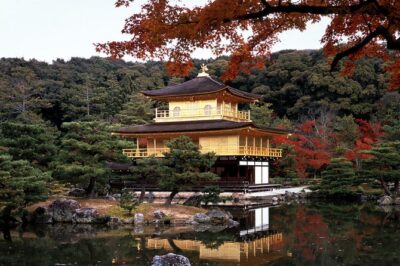 ★ 4.5One-Day Tour of Kyoto’s Highlights from Osaka/KyotoFrom $66
 ★ 4.7Osaka/Kyoto: Hiroshima Miyajima Bus Tour & Shinkansen TicketFrom $27712 hours
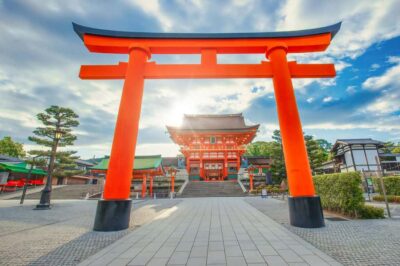 ★ 4.4Osaka/Kyoto: Arashiyama, Nara & Fushimi Inari Shrine w/LunchFrom $61
 ★ 4.3From Osaka: Sagano Train Ride and Kyoto Guided Day TourFrom $66
 ★ 4.0Kyoto and Nara Day Trip from OsakaFrom $198