
Reviewed · OSAKA & HIROSHIMA DEPARTURES
From Osaka/Kyoto:Mount Koya, Wakayama & Nachi Waterfall Trip
Mount Koya’s lantern-lit cemetery and Wakayama’s clifftop temples give this long day trip its real appeal. You move from castle history to Shingon Buddhist worship, then into forests, coastal caves, or the dramatic spray of Nachi Waterfall.
I like the small group of up to six, which makes schedule changes and photo stops much easier than on a large coach tour. I also like the choice of two routes, especially if Nachi Waterfall is high on your Japan wish list. The drawback is distance: this is a packed 12-hour day with plenty of stairs and road time.
- Wakayama Castle offers broad city views and samurai-era exhibits.
- Kongobuji Temple introduces you to the main temple of Shingon Buddhism.
- Okunoin Cemetery is best known for stone markers and lantern-lit paths through the forest.
- Nachi Waterfall is available on the longer route, when open and operating normally.
- Private-style transport for up to six people allows a more personal pace.
- Guides including Faizan, Rana, Muhammad Ahmad, Tahir, and Hamza have been praised for patience, courteous service, good English, and careful driving.
In This Review
- A long day linking Wakayama’s best sights
- Choosing between the two routes
- Wakayama Castle and the first taste of regional history
- Kongobuji Temple and the world of Shingon Buddhism
- Mount Koya Museum and a 176-year-old market
- Walking through Okunoin Cemetery
- Sandanbeki Cave and Wakayama’s rugged coast
- Ending at Nachi Waterfall and Nachi Taisha Shrine
- What the private transport adds
- Is $910 good value for six people?
- Walking, weather, and who should book
- Cancellation and practical booking notes
- Should you book this Wakayama day trip?
- FAQ
- How long is the tour?
- Where can pickup and drop-off take place?
- What are the two route options?
- Is Nachi Waterfall currently open?
- Is lunch included?
- What should I bring?
- Is the tour suitable for wheelchair users?
- Can I cancel the tour?
A long day linking Wakayama’s best sights
This is not a quick city outing. From Osaka, Kyoto, or Nara, you set out for a full day among castles, Buddhist temples, old burial paths, coastal cliffs, and one of Japan’s most famous waterfalls.
The appeal is variety. You are not spending 12 hours looking at similar shrines or shopping streets. Instead, the day moves through several sides of the Kansai region: political power at Wakayama Castle, religious practice on Mount Koya, solemn memorial grounds at Okunoin, and wild scenery around the coast or Nachi.
The small group matters here. With only six people, you can ask questions, take photographs, and discuss changes to the day more easily. Guides such as Faizan have adjusted timing for long photo stops, while Rana has been praised for making the day feel fully customized. That flexibility is useful, but do not mistake it for an unlimited tailor-made tour. The route covers a lot of ground, so your guide still has to manage driving time and opening hours.
Choosing between the two routes
You have two main versions of the day.
The first combines Wakayama Castle, Mount Koya, Okunoin Cemetery, and Sandanbeki Cave. This is the better choice if you want a wider look at Wakayama, including a castle, sacred mountain, and coastal rock formations.
The second begins at Mount Koya and ends at Nachi Waterfall. It gives more attention to the religious heart of the region and finishes with a major natural sight. If Nachi is the reason you are considering this trip, this is the route to request.
Nachi Waterfall had a stated restoration closure through January 5, 2025. That date may no longer apply, but you should still confirm the waterfall’s current access before paying, especially if it is the main reason for booking. Conditions, restoration work, and weather can change the available view.
A few more Osaka tours and experiences worth a look

Wakayama Castle and the first taste of regional history
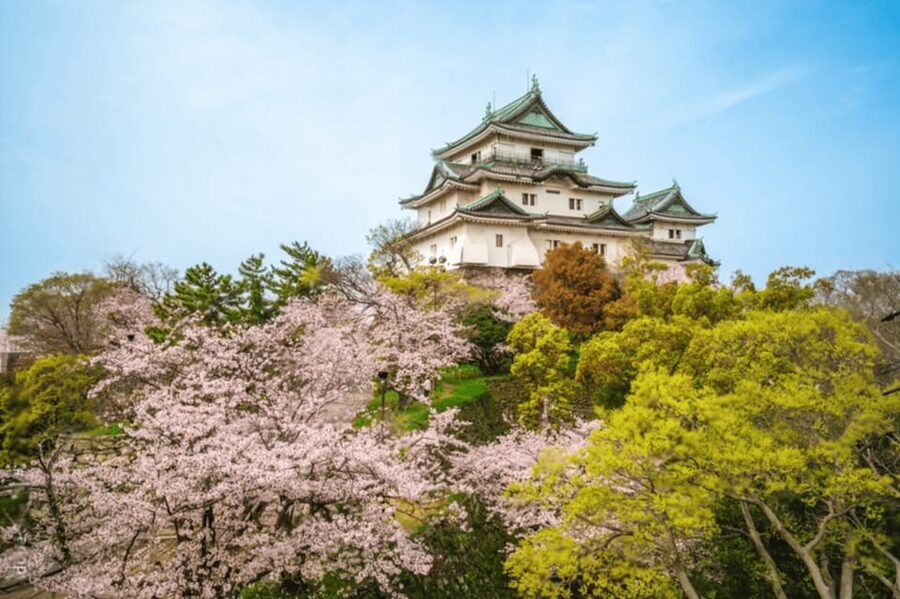
Wakayama Castle is a strong opening stop because it gives the day a clear sense of place. The 16th-century castle sits above the city, offering panoramic views and exhibits connected with samurai history and artifacts.
The climb is part of the visit. Expect stairs, and do not arrive assuming this will be a flat museum stop. One group specifically found the castle stairs, waterfall approaches, and shrine paths demanding, particularly when several people in the party were out of shape.
I like starting here because the castle provides context before the Buddhist sites. You first see Wakayama as a seat of local power, then move toward Mount Koya, where the focus shifts from rulers and warfare to prayer, ritual, and memorials.
Bring water and wear shoes with a firm sole. The tour asks you to bring a hat, sunscreen, and a camera, and those simple items make sense on a day that moves between open viewpoints and wooded paths.
Kongobuji Temple and the world of Shingon Buddhism
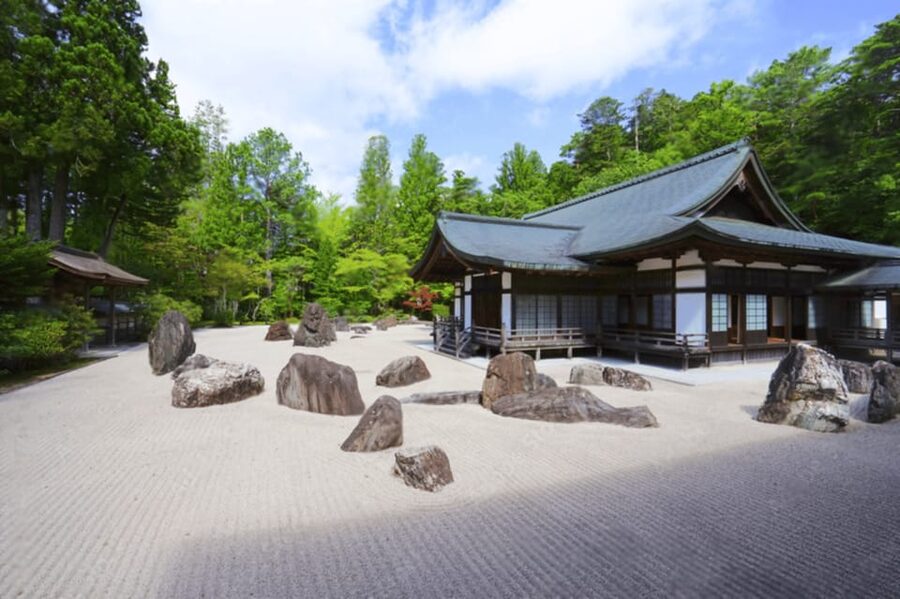
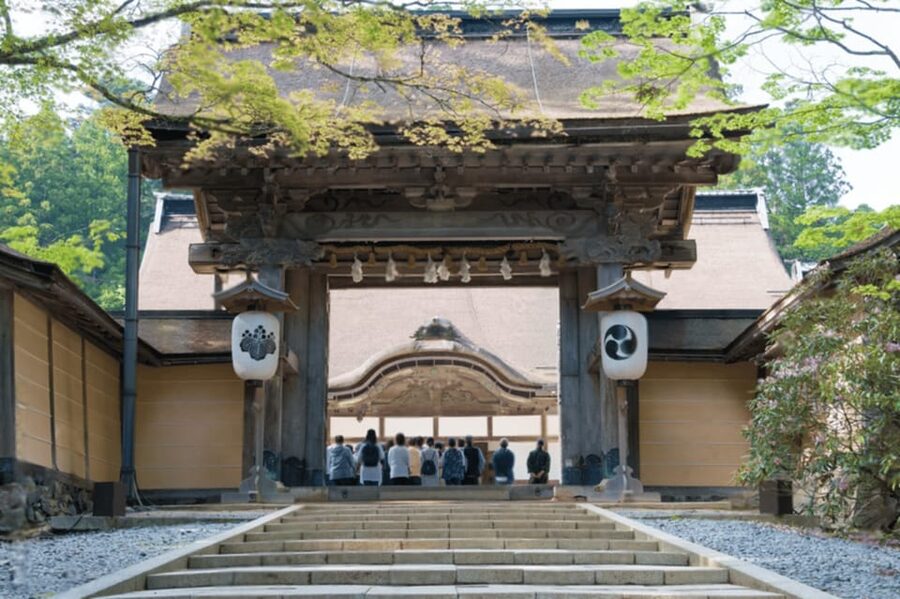
Mount Koya is the spiritual center of the day. Kongobuji Temple is the main temple of Shingon Buddhism, and its traditional halls and rock garden offer a calmer pace after the castle visit.
This is a place where your guide’s explanation can add real value. The buildings and garden are attractive on their own, but the visit becomes more meaningful when you understand that you are looking at the practices and sacred setting of a major Buddhist sect.
The temple is also a place for quiet attention. Photography is allowed, but flash photography is not permitted inside temples. You should expect to remove some of the usual sightseeing habits here: lower your voice, watch where you step, and give yourself time to notice the architecture rather than rushing from room to room.
The supplied information is not fully consistent about entrance fees. Some site admissions are included, but not necessarily every fee, so check the final booking terms for the exact coverage.
Mount Koya Museum and a 176-year-old market
The Mount Koya Museum adds an art and history stop to the temple visits. Its exhibits focus on Shingon Buddhism, giving you a way to see religious objects and learn about the sect beyond the buildings themselves.
The second route also includes a market in Mount Koya described as 176 years old. This is a useful break from formal sightseeing. You can look for traditional crafts and local specialties, though personal purchases are not part of the tour price.
These stops work best for people who want more than scenic photographs. Mount Koya is not simply a pretty mountain destination. The museum, temple, market, and cemetery together show how worship, craft, food, and daily life have developed around the sacred site.
Walking through Okunoin Cemetery
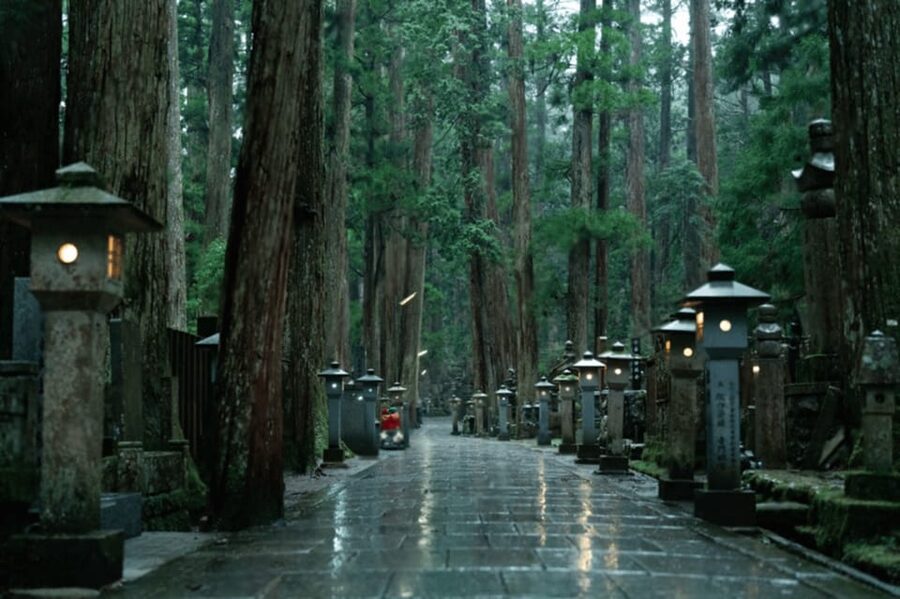
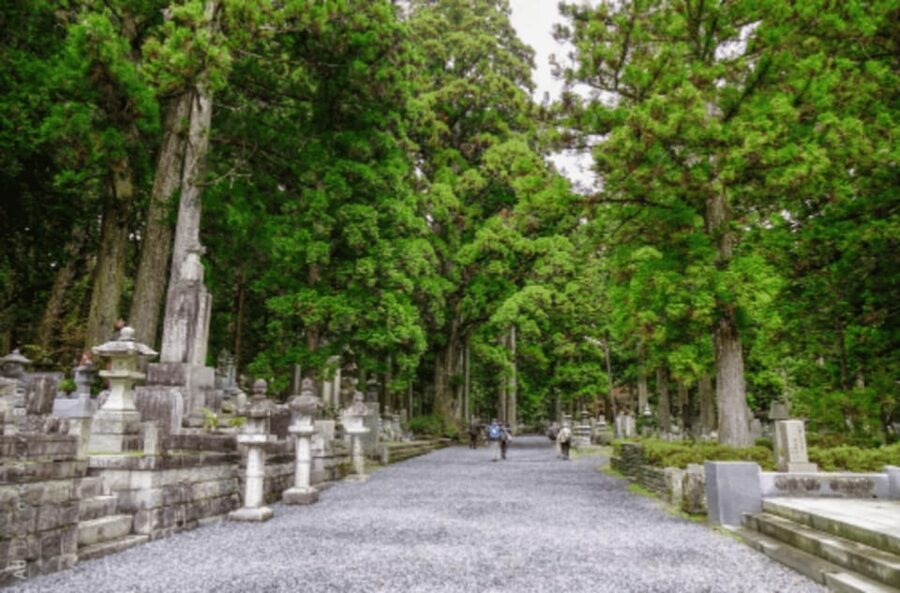
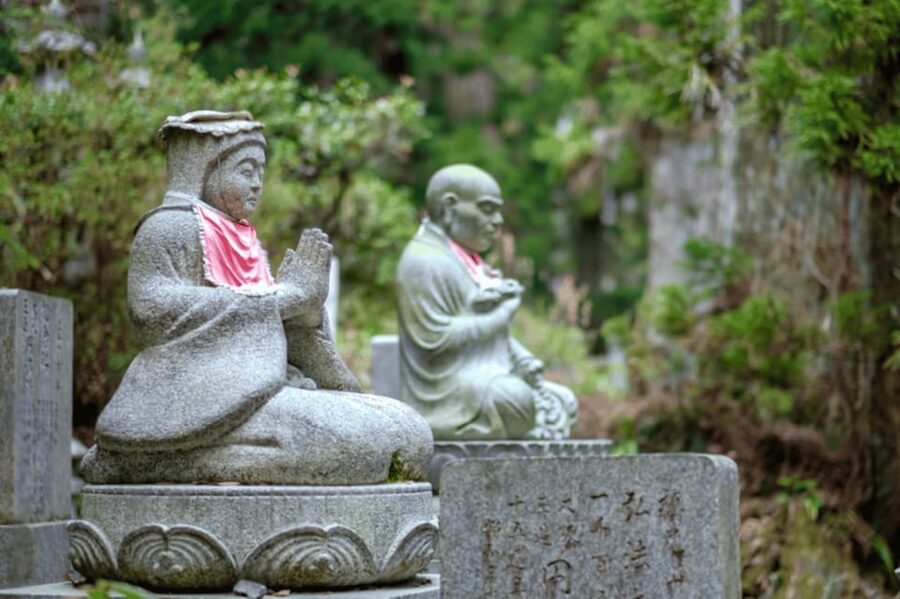
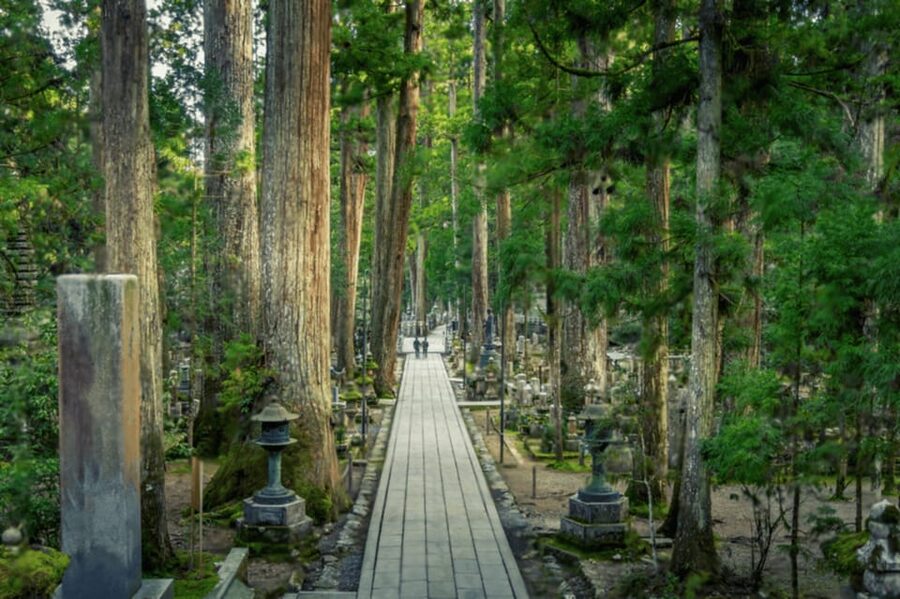
Okunoin Cemetery is likely to be the most memorable stop for many people. It is described as Japan’s largest cemetery, with paths lined by centuries-old stone markers and lanterns. The route leads through a quiet wooded setting and honors monks and historical figures.
The atmosphere changes as you walk. You leave behind the faster pace of a driving tour and enter a place that rewards silence and patience. Lantern-lit paths are especially evocative, though the exact light and mood will depend on the timing of your visit.
This is also where comfortable shoes matter most. The cemetery involves walking, and the day already includes stairs at other stops. If you have mobility limitations, the experience may be difficult. The activity information calls the tour wheelchair accessible in one section, but also says it is not suitable for wheelchair users or people with mobility impairments. That contradiction should be clarified directly before booking.
Do not expect a cemetery visit to feel like a standard sightseeing attraction. It is an active sacred space, so follow your guide’s instructions and avoid flash photography inside temple areas.

Sandanbeki Cave and Wakayama’s rugged coast
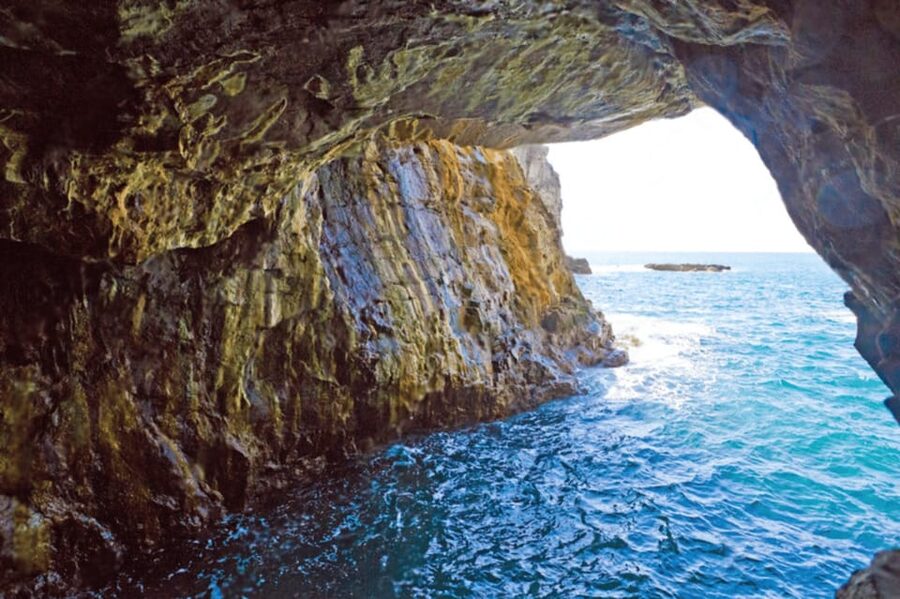
On the route without Nachi Waterfall, the day concludes at Sandanbeki Cave. The cave is linked with a storied pirate hideout and sits below rugged coastal cliffs.
This stop changes the tone again. After the controlled geometry of the castle and temple halls, you get rock, sea air, and a more dramatic natural setting. It is a good choice for anyone who wants a broad Wakayama day rather than a trip focused almost entirely on Mount Koya.
The exact balance of time is important. Wakayama Castle, Mount Koya, Okunoin, and Sandanbeki Cave make for a demanding sequence, so you may not have unlimited time at every site. I would choose this version if you value variety more than a slow, reflective visit to each temple.
Ending at Nachi Waterfall and Nachi Taisha Shrine
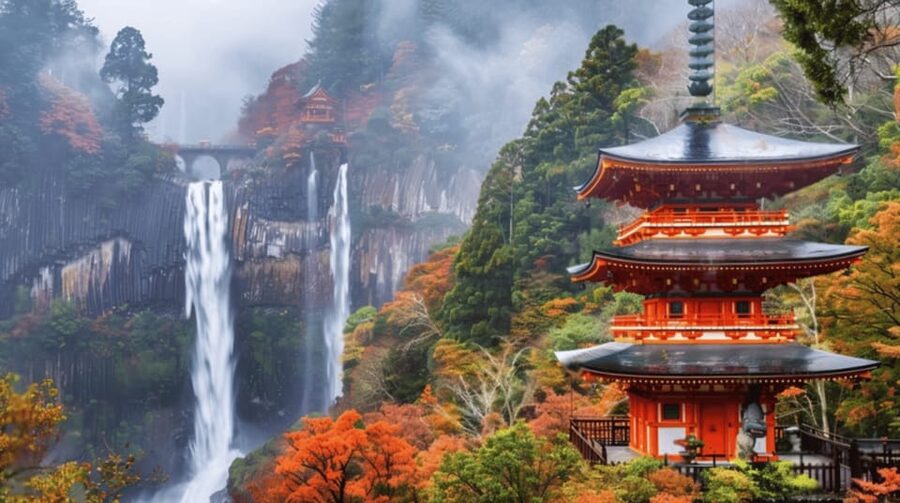
The Nachi route ends with Japan’s tallest single-tier waterfall. Nachi Waterfall drops through dense forest beside the Nachi Taisha Shrine, creating the kind of setting where natural scenery and religious meaning are closely linked.
The approach includes stairs and walking. One group described the effort as a test of perseverance, but also felt the climb was worth it. That is a fair warning: the waterfall is not a drive-up photo stop with no physical demand.
Weather can change the character of the view. In heavy rain, the waterfall may appear especially powerful, as Muhammad Ahmad’s careful hosting helped one group appreciate. At the same time, wet stairs and paths require extra care. Check the forecast, dress for the conditions, and bring water.
Nachi Waterfall is the stronger ending if you want a single dramatic image to anchor the day. Sandanbeki Cave is the better finale if you prefer a coastal setting and want more of Wakayama’s western side.
What the private transport adds
Hotel pickup and drop-off are available from Osaka, Kyoto, or Nara, with return to any of those three areas. Transportation is by coach, and an English-speaking live guide accompanies the group.
The main advantage is convenience. You avoid planning several long connections across the Kansai region, and you can return to your hotel after a tiring day. For a route this spread out, that saves effort.
The tradeoff is the road time. A 12-hour duration does not mean 12 hours on foot at the sights. Some of the day will be spent getting between Osaka, Kyoto, Nara, Wakayama, Mount Koya, and possibly Nachi. If you dislike long drives, a shorter local visit may suit you better.
Driving quality can make or break a day like this. Muhammad Ahmad was praised as an excellent host and driver, while another group singled out a guide’s very confident driving. Faizan was described as flexible and patient, Rana as attentive and helpful with photographs, Tahir as polite and clear about the next stop, and Hamza as a good choice for a family day at Koyasan. Guides can vary, but these names give you useful points of reference if you are able to request a particular person.
Is $910 good value for six people?
The price is $910 for a group of up to six. If six people share the cost, that works out to about $152 per person for 12 hours, including hotel pickup and drop-off, a professional guide, coach transport, tips, and entrance fees for some sites.
That is a reasonable structure for a private-style day covering such a large area. You are paying not only for admission but also for the vehicle, driver, route planning, and the ability to keep the group together without arranging several separate train and bus journeys.
For two or three people, the per-person cost becomes much higher. I would consider it best value for a full group of friends or family members who want a private vehicle and do not want to manage a complicated day independently.
Lunch requires special attention. One part of the activity information says lunch is not included, while another note says lunch is included and that vegetarian options are available. Treat this as an unresolved booking detail and confirm it before departure. Personal expenses are not included, so you should still carry money for snacks, drinks, or market purchases.
Walking, weather, and who should book
You should be comfortable with a moderate amount of walking, stairs, and a long day outside. Comfortable shoes are essential, and water, sunscreen, a hat, and weather-appropriate clothing belong in your day bag.
The tour is not suitable for children under six, pregnant women, or people with mobility impairments according to the supplied restrictions. Because the accessibility details conflict, wheelchair users should not assume the coach, temple paths, castle, cemetery, and waterfall route will be suitable.
I would recommend this for adults, families with older children, and small groups who want a guide and private transport. It is particularly useful if you are staying in Osaka, Kyoto, or Nara and want to reach Mount Koya or Nachi without building the entire day around public transport.
I would be more cautious if you prefer slow temple visits, dislike long drives, or want a fixed schedule with no changes. The flexible format is helpful, but the sheer number of stops means the day will feel busy.
Cancellation and practical booking notes
You can cancel up to 24 hours before departure for a full refund, and the reserve-now, pay-later option keeps your plans flexible. Check available starting times before booking because this is a 12-hour activity and pickup timing affects how much time remains at each stop.
The tour is offered in English. Smoking is not allowed, and flash photography is forbidden in temple interiors. Tell the provider about dietary restrictions in advance, particularly because the lunch information needs clarification.
Should you book this Wakayama day trip?
Book it if you want a broad, guided look at Wakayama and Mount Koya in one ambitious day, especially with five or six people sharing the $910 cost. The strongest reasons are the small group, flexible route, private pickup, and access to places that take serious planning to connect independently.
Choose the Nachi route if the waterfall is your priority, but confirm that it is open and ask exactly how much time will be available there. Choose the Sandanbeki route if you want Wakayama Castle, Mount Koya, Okunoin, and the coast in one sweep.
This is not an easygoing day. It is a long ride with stairs, walking, and several major stops. If that sounds like a fair price for seeing the region without transport headaches, it is a practical choice. If you want one temple, one garden, and plenty of quiet time, book a shorter Mount Koya visit instead.
FAQ
How long is the tour?
The tour lasts 12 hours. Starting times vary, so check availability when choosing your date.
Where can pickup and drop-off take place?
Pickup is available from Osaka, Nara, or Kyoto. Drop-off is also available in Osaka, Nara, or Kyoto.
What are the two route options?
One route visits Wakayama Castle, Mount Koya, Okunoin Cemetery, and Sandanbeki Cave. The other focuses on Mount Koya and ends at Nachi Waterfall, with stops including Kongobuji Temple, the Mount Koya Museum, the Mount Koya market, and Okunoin Cemetery.
Is Nachi Waterfall currently open?
The supplied information states that Nachi Falls was closed for restoration until January 5, 2025. Confirm the current access status before booking if the waterfall is essential to your plans.
Is lunch included?
The information provided is inconsistent. One section says lunch is not included, while another says lunch is included and that vegetarian options are available. Confirm this detail with the provider before departure.
What should I bring?
Bring comfortable shoes, a hat, a camera, sunscreen, and water. Check the weather forecast and dress appropriately.
Is the tour suitable for wheelchair users?
The information conflicts on this point. One section labels the activity wheelchair accessible, while another says it is not suitable for wheelchair users or people with mobility impairments. Contact the provider before booking to confirm whether the selected route can accommodate your needs.
Can I cancel the tour?
Yes. Cancellation up to 24 hours in advance qualifies for a full refund. You can also reserve now and pay later.
More Osaka & Hiroshima Departures in Osaka
More tours in Osaka we've reviewed



Osaka & Hiroshima Departures, compared.
 ★ 4.1Osaka/Kyoto:Kinkakuji,Arashiyama,FushimiInariShrine,NaraParkFrom $66
 ★ 4.5One-Day Tour of Kyoto’s Highlights from Osaka/KyotoFrom $66
 ★ 4.7Osaka/Kyoto: Hiroshima Miyajima Bus Tour & Shinkansen TicketFrom $27712 hours
 ★ 4.4Osaka/Kyoto: Arashiyama, Nara & Fushimi Inari Shrine w/LunchFrom $61
 ★ 4.3From Osaka: Sagano Train Ride and Kyoto Guided Day TourFrom $66
 ★ 4.0Kyoto and Nara Day Trip from OsakaFrom $198