
Reviewed · KYOTO
Kyoto Making Wagyu Sushi experience
Kyoto’s wagyu sushi class turns lunch into a hands-on lesson. You shape the rice, add toppings, make rolled sushi and gunkan rolls, then eat your work with tempura, red miso soup, pickles, and a soft drink. I like the small maximum of 10 people and the chance to learn from Chef Yoshi, who selects fresh ingredients that morning. Families also get a real activity, not just a meal.
I especially like the private-feeling setting for couples and families, plus the clear sequence that lets children take part. The main caution is the meeting point: the building and elevator can be confusing, and the experience is non-refundable if you cancel for personal reasons.
In This Review
- Key points to know before booking
- What you actually do during the 75-minute class
- Why the wagyu ingredient changes the experience
- Learning the small tricks that make sushi look right
- The lunch that follows your sushi lesson
- Why the small group size helps
- Finding Cocotte Alpha in Pontocho
- Is $70 a fair price in Kyoto?
- Allergies, timing, and booking cautions
- Who will enjoy this most?
- Should you book the Kyoto wagyu sushi experience?
- FAQ
- Where does the Kyoto wagyu sushi experience start?
- What time does the activity begin?
- How long does the sushi-making experience last?
- Where does the experience finish?
- What types of sushi do you make?
- Is lunch included?
- Can children participate?
- Should I report food allergies?
- How many people can join?
- Is the booking refundable?
Key points to know before booking
- You make three kinds of sushi: nigiri, maki rolls, and gunkan sushi, with separate seaweed sizes for the different shapes.
- Chef Yoshi prepares fresh ingredients: the class includes special tips for shaping sushi neatly, not just a quick demonstration.
- Lunch is included: your finished sushi comes with chef-made tempura, red miso soup, pickles, and a soft drink.
- The small group limit matters: no more than 10 people are accepted, and some bookings may feel like a private session.
- Children can participate: this is designed as a family-friendly activity, with hands-on steps from washing hands to eating lunch.
- Find the right elevator: Google Maps can bring you to the area, but the visible elevator may not be the one you need.
What you actually do during the 75-minute class
The experience begins at noon inside Cocotte Alpha Premium Wagyu Teppanyaki Kyoto Pontocho, a steak restaurant in Kyoto’s Pontocho area. The full session lasts about one hour and 15 minutes, and it ends at the same place where you started.
The class follows a tidy progression. First, you wash your hands and get ready to handle the rice and toppings. That small opening step is useful because sushi-making is precise work, and the activity treats cleanliness as part of the process rather than an afterthought.
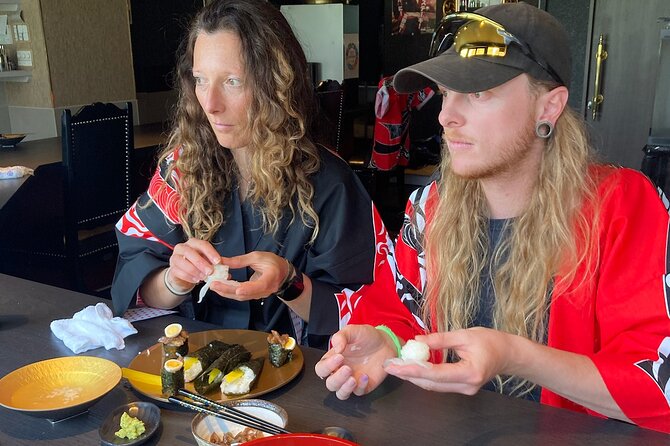
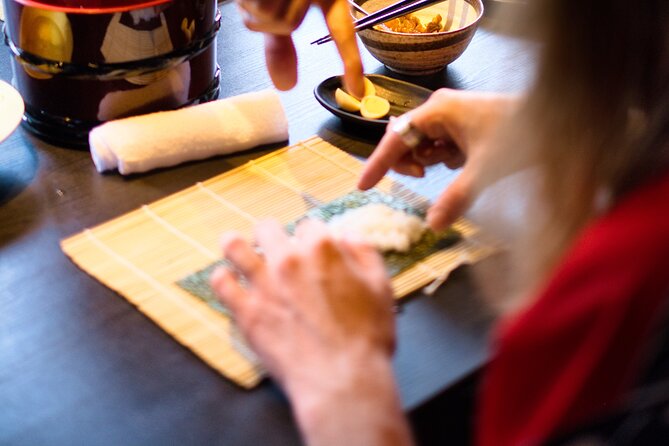
You then learn how to form the rice for nigiri sushi. This is the familiar hand-shaped style: a small portion of seasoned rice with a topping placed over it. The instructions include shaping the rice, adding the topping, and using wasabi if you like it.
The order matters. You are not simply handed a finished plate and asked to copy it. You get a chance to build each piece yourself, which makes the meal more engaging for children and gives adults a better sense of why sushi chefs work with such controlled movements.
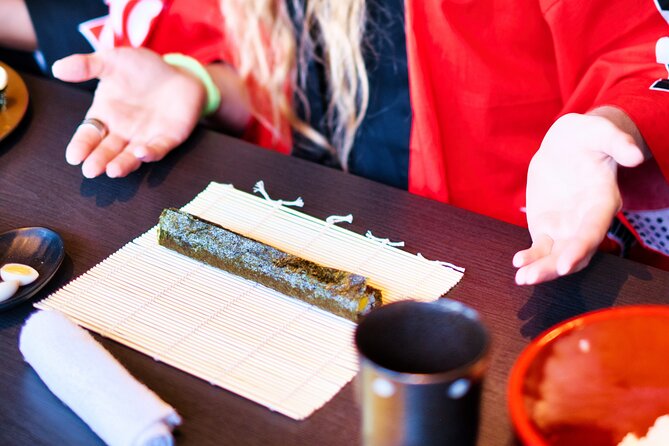
Next comes maki, or rolled sushi. You place the ingredients, roll the sushi, and hand it to the chef to cut. That last step is worth noting. Cutting a roll cleanly can be harder than it looks, so having the chef slice it keeps the finished pieces presentable and prevents a badly cut roll from becoming the highlight of your lunch.
The final style is gunkan sushi, the small oval-shaped form wrapped with a strip of seaweed around the rice. The class points out that the seaweed size changes for each type of sushi. That is a useful detail because it connects the shape of the food to the technique behind it.
Once the pieces are ready, you arrange them and sit down for the meal. The experience uses the Japanese phrase itadakimasu before eating, a simple custom that gives the class a clear finish and adds a little cultural context without turning lunch into a lecture.
If you're still narrowing it down, here are other tours in Kyoto we've reviewed.
Why the wagyu ingredient changes the experience
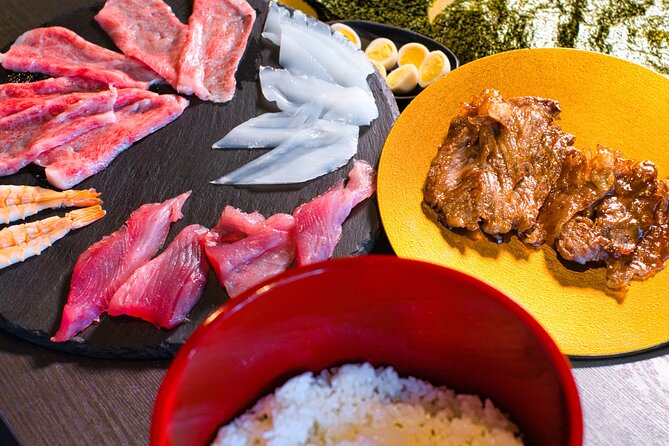
The central draw is the use of Japanese wagyu in sushi at a Kyoto steak restaurant. Wagyu is more often associated with grilled beef, so placing it into a sushi-making class gives the activity a slightly unusual angle.
The experience is not presented as a standard fish-sushi lesson. You still learn the main sushi forms, but the wagyu connection makes it different from a basic market lunch or a generic rolling workshop. If you have already eaten plenty of conventional sushi in Japan, this is a way to try a familiar format with a beef-focused twist.
You should keep your expectations sensible. The supplied details do not specify the exact wagyu cut, the full list of sushi toppings, or how many pieces you make. What is clear is that the class covers the methods, the finished sushi becomes your lunch, and the chef selects fresh ingredients for the session.
That morning selection is one of the more appealing details for food-focused visitors. It suggests the ingredients are chosen for the day rather than treated as fixed props for a scripted class. Still, the exact menu may vary, so do not book this expecting a guaranteed list of particular sushi pieces beyond nigiri, maki, and gunkan.
Learning the small tricks that make sushi look right
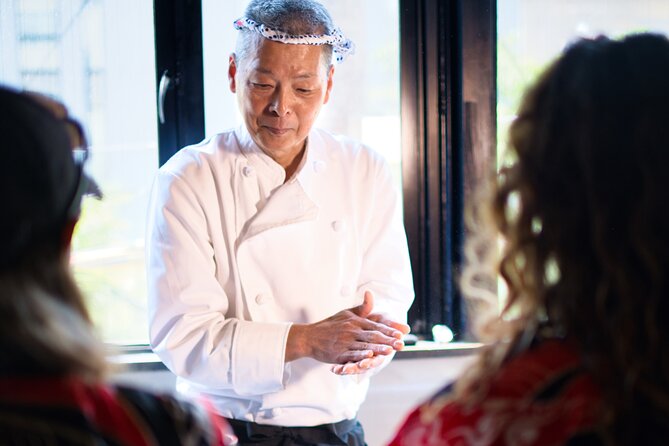
A good sushi class should teach more than where to place the rice. This one promises small tips and techniques for making the pieces look more polished, including methods you might not learn in a casual cooking demonstration.
The value is in the handwork. Sushi rice has to be shaped firmly enough to hold together, but not pressed into a dense lump. Toppings need to sit neatly, and rolls need enough structure to survive cutting. Even a short class can make you more aware of these details.
You also control the wasabi. That is helpful if your group has mixed tastes, especially with children. You can add it to the sushi or leave it out, rather than accepting a fixed amount on every piece.
The chef handles the final cutting of the maki rolls. I see this as a good balance between participation and quality control. You still do the important part, but the chef helps make sure the roll is cut into usable pieces.
The description refers to the instructor as the chef, and one booking specifically identifies Chef Yoshi. His role includes choosing the fresh ingredients that morning and preparing the tempura served at lunch. If having a named chef matters to you, Chef Yoshi is the person associated with this session.
The lunch that follows your sushi lesson
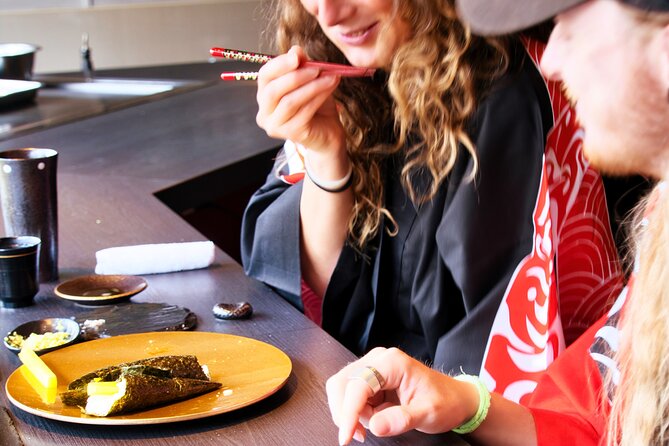
This is not a class where you make a few pieces and then leave hungry. The meal includes the sushi you prepare, tempura made by the chef, red miso soup, pickles, and a soft drink.
That combination adds real value to the $70 price. You are paying for instruction, ingredients, a meal, and a small-group activity in central Kyoto. A simple sushi meal can cost less, but it would not include the teaching or the chance to prepare the food yourself. A private cooking lesson could cost more, though this experience is shorter and more focused.
The tempura is especially important because it gives the meal a cooked element alongside the sushi. The red miso soup and pickles round out the Japanese lunch rather than leaving you with only the pieces you shaped.
I would treat the lunch as a generous finish, not as a high-end tasting menu. The available details do not promise a long course-by-course meal or a wide range of drinks. You receive the listed food and a soft drink, with the main pleasure coming from making the sushi and then eating it.
Why the small group size helps
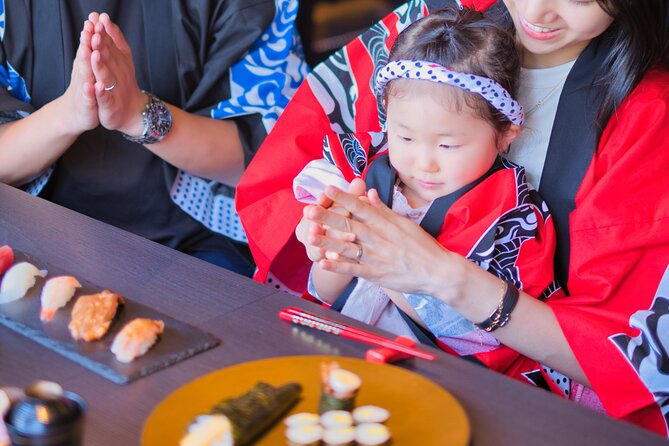
The class accepts a maximum of 10 people. That is small enough to keep the activity manageable, especially when everyone is handling rice, seaweed, toppings, and rolling mats.
A small group also gives you a better chance of following the chef’s movements. Sushi-making depends on hand position and pressure, details that can be easy to miss in a large room. With fewer people, you should have a clearer view and less waiting between steps.
The group size can vary. One couple booked it as a date activity and found the session private rather than crowded. That makes this a good option for a pair looking for an unusual lunch, but you should not assume every booking will be private. The stated limit is 10, not two.
Families are another strong match. Children can take part, and the sequence gives them several jobs: washing hands, shaping rice, adding toppings, rolling sushi, and arranging the finished food. Younger children may need help with pressure and rolling, but the activity is built for participation rather than quiet observation.

Finding Cocotte Alpha in Pontocho
The meeting point is Cocotte Alpha Premium Wagyu Teppanyaki Kyoto Pontocho, at Kyoto Golden Building, 3F, 175 Zaimokucho, Nakagyo Ward, Kyoto 604-8017. The experience starts and ends at this same location.
It is near public transportation, which makes the noon start practical if you are staying in central Kyoto. I would still allow extra time to locate the entrance. The location can be confusing because Google Maps may bring you to the general area without making the correct elevator obvious.
A useful warning is to avoid assuming that the first visible elevator is the right one. One family had trouble identifying which elevator to use, and the advice was specifically not to take the elevator seen from the street. Since the exact alternative is not provided, the safest approach is to arrive early, check the building signs, and ask staff if needed.
This is a small logistical issue, but it matters. Arriving at 11:58 with children, a phone in hand, and no idea which elevator serves the third floor is not the calmest way to begin a cooking class.
Is $70 a fair price in Kyoto?
At $70 per person, this sits above the price of an ordinary casual lunch but below the cost of many longer private cooking lessons. The price makes the most sense if you place value on doing something, not simply eating.
You receive roughly 75 minutes of instruction, several sushi styles, fresh ingredients, chef-prepared tempura, soup, pickles, and a soft drink. The small group limit also gives the session a more personal feel than a large workshop.
For a couple, the experience has the makings of a memorable lunch date. For a family, it can replace a meal that might otherwise be less engaging for children. For solo diners, the value depends on how much you enjoy structured food activities, since the social appeal may be different from a normal restaurant meal.
The price may feel high if your main goal is to sample as much wagyu as possible. The information does not state the quantity of wagyu or the number of sushi pieces, so book for the lesson and the complete lunch rather than assuming an all-you-can-eat feast.
Allergies, timing, and booking cautions
Tell the provider in advance if anyone has an egg or shrimp allergy. That instruction is specific, and it is important because both ingredients can appear in sushi or tempura.
The experience begins at 12:00 p.m. and lasts about 1 hour and 15 minutes. Since it ends back at the meeting point, you can plan another Kyoto activity afterward, but leave some buffer if you have a timed reservation elsewhere.
A mobile ticket is provided, and confirmation arrives at booking. The activity requires good weather, and if poor weather causes cancellation, you are offered another date or a full refund.
The stricter issue is personal cancellation. This experience is non-refundable and cannot be changed for any reason if you cancel or request an amendment. I would only book once your midday Kyoto plans are firm.
Who will enjoy this most?
I would recommend it most strongly to:
- Families with children who want a meal that keeps everyone involved.
- Couples looking for a hands-on lunch date.
- Food-focused visitors who want to work with wagyu and learn several sushi shapes.
- First-time sushi makers who want the chef to guide the basic techniques.
- Visitors who prefer a small class to a large group workshop.
It may be less suitable if you want a long cooking course, a detailed lesson on fish preparation, or a guaranteed menu of specific sushi toppings. The activity teaches assembly and shaping, not every part of professional sushi work.
It is also not the best choice for anyone who may need to cancel. The no-refund policy is firm, apart from cancellation caused by poor weather.
Should you book the Kyoto wagyu sushi experience?
Book it if you want a compact, family-friendly food activity that combines hands-on sushi making with a full Japanese lunch. The mix of nigiri, maki, and gunkan gives you enough variety to feel like you learned several techniques, while the small group limit keeps the session personal.
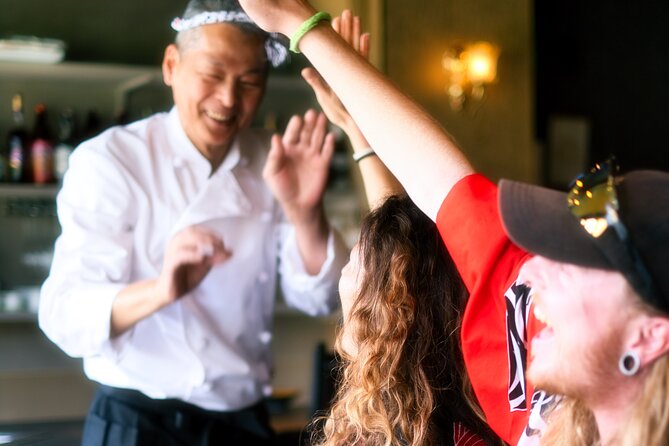
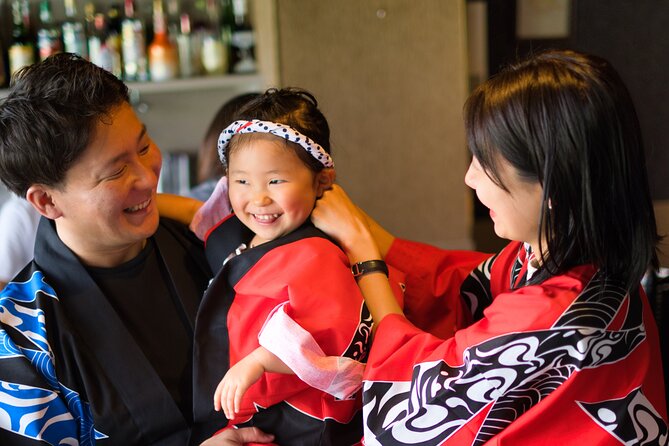
I would especially choose it for a couple or family with a free noon in Kyoto. Chef Yoshi’s fresh ingredient selection, chef-made tempura, and the chance to wear a special happi coat add character beyond a standard restaurant meal.
Before paying, make two checks. Confirm that everyone can manage the listed egg and shrimp issues, and make sure your schedule is stable because the booking cannot be refunded or changed for personal reasons. Also plan extra time to find the correct elevator at Kyoto Golden Building.
For the right visitor, $70 is a reasonable price for a meal plus a short, memorable activity. If you only want the cheapest sushi lunch in Kyoto, choose a restaurant instead. If you want to make the food, learn the basic forms, and eat the results in the same place, this is a worthwhile pick.
FAQ
Where does the Kyoto wagyu sushi experience start?
It starts at Cocotte Alpha Premium Wagyu Teppanyaki Kyoto Pontocho, Kyoto Golden Building, 3F, 175 Zaimokucho, Nakagyo Ward, Kyoto 604-8017, Japan.
What time does the activity begin?
The start time is 12:00 p.m.
How long does the sushi-making experience last?
It lasts approximately 1 hour and 15 minutes.
Where does the experience finish?
It ends back at the same meeting point where the activity begins.
What types of sushi do you make?
You make nigiri sushi, maki sushi, and gunkan sushi. The class also explains that each style uses a different seaweed size.
Is lunch included?
Yes. You eat the sushi you make, along with tempura, red miso soup, pickles, and a soft drink.
Can children participate?
Yes. The experience is suitable for children and can be booked by families.
Should I report food allergies?
Yes. You should notify the provider in advance if anyone has an egg or shrimp allergy.
How many people can join?
The activity has a maximum of 10 participants.
Is the booking refundable?
No. The experience is non-refundable and cannot be changed for personal reasons. If poor weather causes the provider to cancel, you are offered another date or a full refund.
More tours in Kyoto we've reviewed
Kyoto, compared.
 ★ 5.0PERFECT KYOTO 1-Day Bus TourFrom $129
 ★ 4.8Kyoto: Fushimi Inari, Kinkakuji, Bamboo Grove 1 Day Bus TourFrom $122510 minutes - 9 hours
 ★ 4.9Kyoto: Tea Ceremony in a Traditional Tea House in KiyomizuFrom $4945 min
 ★ 4.7Kyoto Geisha Walking Tour: Gion District & Hidden GemsFrom $252 hours
 ★ 4.9Kyoto: Tea Ceremony Ju-An at Jotokuji TempleFrom $291h 10m
 ★ 4.3Kyoto: 45-Minute Tea Ceremony Lesson ExperienceFrom $2245 min