
Reviewed · PRIVATE DRIVERS
Private Kyoto Customizable Day Tour with English Speaking Driver
Kyoto’s great challenge is not finding beautiful sights. It is fitting them together without losing half the day to trains, buses, and wrong turns. This private car tour tackles that problem with a full day on the road, linking Arashiyama, Kinkaku-ji, Kiyomizu-dera, Fushimi Inari, Gion, and Nishiki Market.
I like the door-to-door pickup and the chance to shape the day around your group. I also like that several drivers, including Malik, Ravi, Aka, and Dhanu, have been praised for pacing the day well, taking family photos, and suggesting useful changes. The catch is important: this is not always a traditional walking tour with a guide beside you at every temple. In some cases, you will be dropped near the sight and explore on your own.
In This Review
- Key points to know
- What the private Kyoto day tour actually provides
- Arashiyama Bamboo Grove and western Kyoto
- Kinkaku-ji, Kyoto’s Golden Pavilion
- Nishiki Market, Kyoto’s food street
- Gion and the old streets around Shijo
- Kiyomizu-dera and the Otowa Waterfall
- Fushimi Inari’s thousands of red gates
- How much guiding should you expect?
- Timing six major stops without rushing
- Vehicle comfort and group size
- What the $448.20 price means for your group
- Who should book this Kyoto car tour?
- Should you book it?
- FAQ
- How long does the Kyoto private tour last?
- What time does the tour start?
- How many people can join the private tour?
- Is hotel pickup included?
- Is transportation private?
- Is the driver English-speaking?
- Are temple admission tickets included?
- Is food included?
- Can I start the tour from Osaka or Nara?
- Can I cancel for a full refund?
Key points to know
- Six major Kyoto areas in one day: The route covers Arashiyama, Kinkaku-ji, Nishiki Market, Gion, Kiyomizu-dera, and Fushimi Inari.
- Private vehicle for up to six people: You travel with only your own group in an air-conditioned car or minivan.
- Flexible planning matters: Tell the company your preferred stops early, since some groups found that changes were easier to arrange before the day began.
- Drivers vary in guiding style: Malik, Ravi, Aka, Dhanu, Shan, Shawn, and others have received praise for patience, photos, and planning, but the level of historical explanation may differ.
- Entrance fees are extra: Food and temple or attraction tickets are not included in the listed $448.20 group price.
- Best for a short Kyoto stay: The private car saves time and effort when you have only one full day, though public transport can cost less.
What the private Kyoto day tour actually provides
You get an eight to ten hour private outing beginning around 8:30 a.m. Pickup and drop-off at your hotel are included, along with private transportation, an air-conditioned vehicle, and an English-speaking driver. Your group alone takes part, with space for up to six people.
The biggest benefit is simple: you do not have to work out Kyoto’s transport system while trying to see the city’s far-flung sights. Arashiyama is in western Kyoto. Fushimi Inari is in the south. Kinkaku-ji is northwest of the center. A car links these areas directly.
That convenience has a price. The group rate is $448.20, which works out to about $74.70 each for six people, or $112.05 each for four. For a couple, the cost is much harder to justify. For a family or group of six, especially one with older adults or mobility concerns, the private vehicle can make practical sense.
You should think of the service as a private driver with varying amounts of guiding, not as a fully escorted cultural tour. Some drivers walk with the group, explain sites, suggest food, and help with photos. Other arrangements may leave you to buy your tickets and explore temple grounds independently.
Other private tours in Kyoto
Arashiyama Bamboo Grove and western Kyoto
Allow about two and a half hours for Arashiyama, the longest stop on the route. The district is known for its bamboo grove, traditional sights, and scenic setting along the western edge of Kyoto.
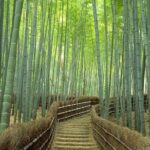
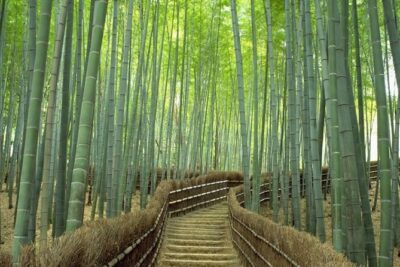
The bamboo walk is the headline attraction. Tall stalks crowd the path and create a cool, enclosed corridor. It is a pretty place, but the main path can feel busy, especially when many groups arrive at once. Your driver can get you close to the district, but the grove itself requires walking.
That distinction matters. A car reduces the long cross-city ride, but it does not remove the walking or the crowds. Wear shoes that can handle uneven paths and expect to spend much of the stop outside the vehicle.
Arashiyama also gives you room to adjust the day. One group asked about the monkey park, and the driver modified the plan to include it. Another group appreciated being offered alternatives when stairs were difficult. These examples show why you should discuss your priorities before departure, especially if your group includes children, older adults, or anyone who cannot walk for long periods.
Kinkaku-ji, Kyoto’s Golden Pavilion
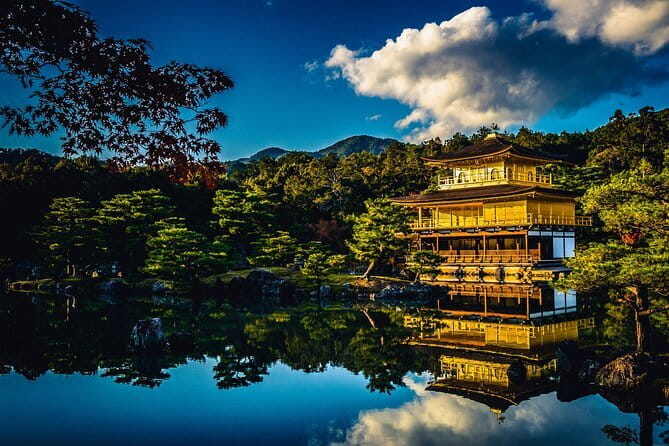
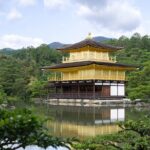
Kinkaku-ji gets about an hour. The gold-covered pavilion reflects in a pond surrounded by carefully arranged grounds, making it one of Kyoto’s most recognizable sights.
The temple began as Ashikaga Yoshimitsu’s retirement villa in 1397 and later became a Zen Buddhist temple. You do not simply walk into the pavilion. The usual experience is a set walking route through the grounds with viewing points across the pond.
Admission is not included, so you should bring money for the entrance ticket. The stop is fairly compact, but the combination of crowds, ticketing, and walking means an hour can pass quickly.
This is a good place to ask your driver for a short explanation before you enter. Several people appreciated drivers who provided background at each stop. Others found themselves touring the grounds alone and looking up information on their phones. The quality of your visit depends partly on how much context your assigned driver provides.
Nishiki Market, Kyoto’s food street
Nishiki Market receives about ninety minutes and offers a change of pace from temples. The narrow, five-block shopping street is lined with more than one hundred shops and restaurants. It is often called Kyoto’s Kitchen.
You can browse prepared foods, local ingredients, sweets, pickles, and small food shops. This is the natural place to buy a snack or pause for lunch, although food is not included in the tour price.
Nishiki is narrow, so it can be difficult for a large group to stay together. You may want to agree on a meeting point and a return time with your driver. If you have a particular food interest, say so early. The drivers praised most warmly for flexibility were willing to suggest local places, including a good udon restaurant, or make an extra stop at a shop.
The market is also one of the easier stops to shorten if your group prefers temples. One group skipped it after falling behind schedule. That can be a sensible choice, but make it deliberately. Otherwise, a late start at Nishiki can squeeze time from Kiyomizu-dera or Fushimi Inari.
Gion and the old streets around Shijo
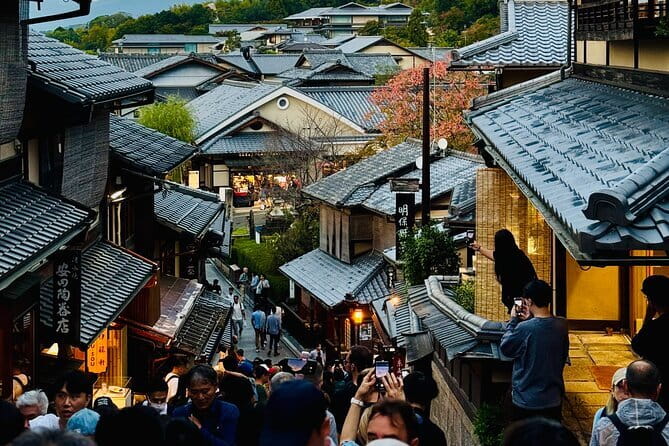
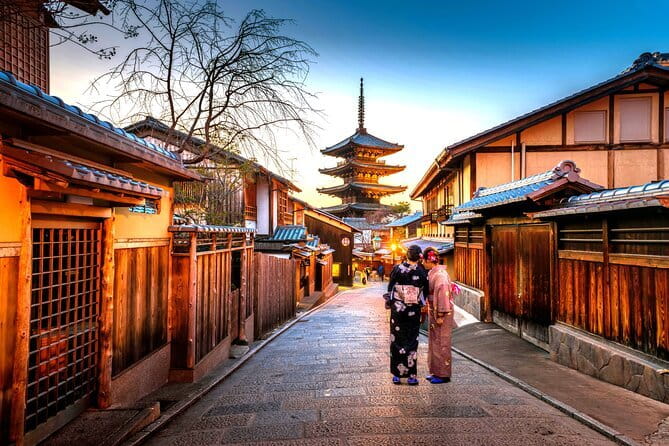
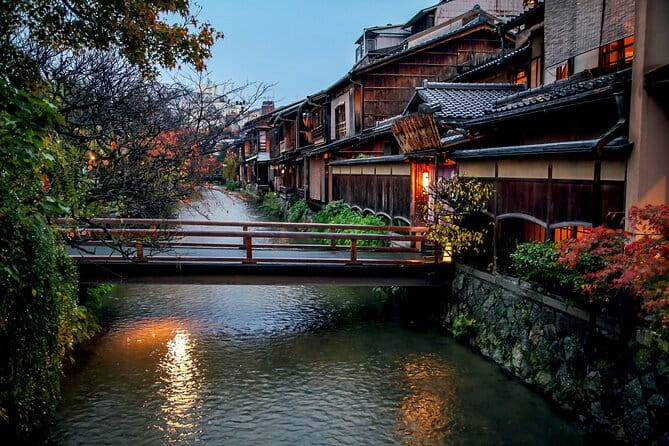
The one-hour Gion stop introduces Kyoto’s best-known geisha district. Gion stretches around Shijo Avenue between Yasaka Shrine and the Kamo River, with teahouses, restaurants, and traditional-looking streets.
This is a walking stop, not a performance. You can stroll through the district, look at the architecture, and continue toward nearby sights. Please keep your conduct respectful. Gion is a living neighborhood, not a stage set, and the presence of teahouses does not mean you should photograph people without permission.
An hour is enough for a taste, but not for a slow exploration of every lane. If Gion matters more to you than shopping, tell the driver before the morning route is fixed. The private format allows that kind of trade-off, at least when the request is made clearly and early.
A few more Kyoto tours and experiences worth a look


Kiyomizu-dera and the Otowa Waterfall
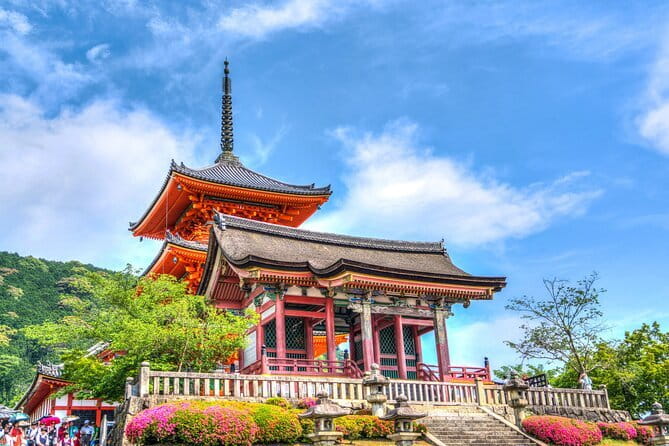
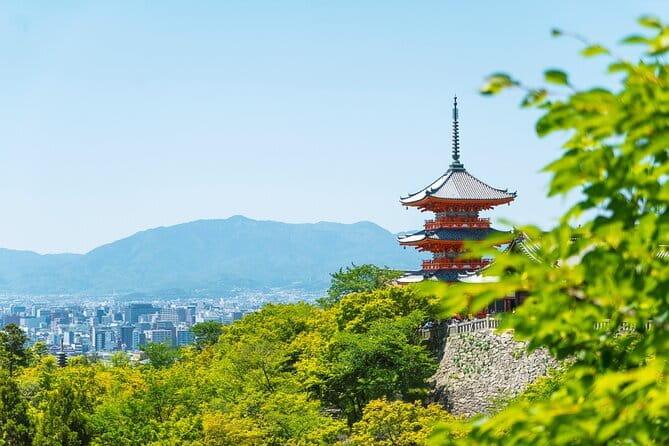
Kiyomizu-dera is allotted another hour. Its name means Pure Water Temple, referring to the waters of the Otowa Waterfall on the wooded hillsides east of central Kyoto.
The temple is famous for its large wooden stage and elevated views over Kyoto. The approach includes a busy uphill shopping street, and the temple grounds involve walking and some slopes. The driver can bring you close, but cannot carry you through the entire complex by car.
If anyone in your group has trouble with stairs, mention it at the start. A driver named Chamara was praised for offering route choices when stairs became an issue. That sort of practical help can make a difference, but you should not assume every driver will handle accessibility in the same way.
The listed timing is enough for a focused visit, not a leisurely tour of every corner. You will get more from the stop if you decide in advance whether you want the main stage, the waterfall, photographs, or a quiet look around the grounds.
Fushimi Inari’s thousands of red gates
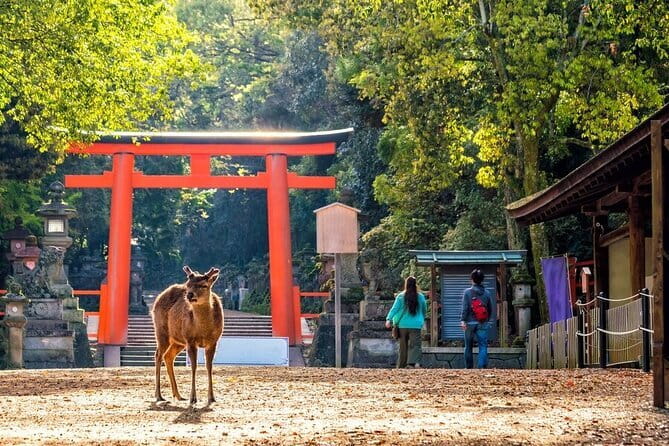
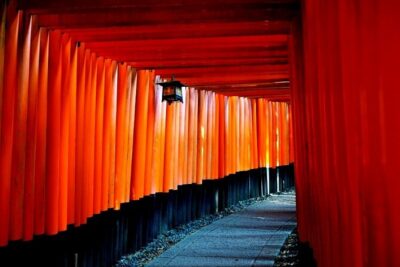
Fushimi Inari Taisha is the final major stop in the listed plan, with about an hour. Founded in 711, the shrine is dedicated to Inari, associated with rice, prosperity, and business.
Its rows of red torii gates climb Mount Inari. The first section is the most accessible and photogenic, while the full mountain route takes much longer than the scheduled hour. Do not expect to walk the entire trail during this day tour.
The shrine is free to enter, but the path can be crowded near the entrance. If you want quieter sections, ask how far your group can reasonably walk before setting a return time. The driver’s job is usually to get you near the shrine and coordinate pickup, not to accompany you all the way up the mountain.
Fushimi Inari can be a strong final stop because it feels different from the polished Golden Pavilion and grand temple halls. It also makes clear why a one-day plan requires choices. You can see the famous gates, but you cannot explore every shrine path at length while also covering five other areas.
How much guiding should you expect?
The English-speaking driver is the most variable part of the experience. Some drivers have been praised for clear explanations, thoughtful suggestions, and walking alongside the group. Malik, Ravi, Aka, and Dhanu received especially warm comments for organizing the day and helping with photographs.
Ravi was noted for adjusting the plan around the Arashiyama monkey park, finding a local udon restaurant, and suggesting good times for each stop. Aka was praised for explaining what to expect before entering temples and shrines. Dhanu was valued for fitting in requested sights and adding a useful stop.
Other accounts describe a more basic service: the driver handles transportation, brings you to ticket booths, and waits while you visit independently. One person compared the experience to having a private Uber for the day. Another expected more historical explanation and found the driver’s local background limited.
That difference is not a minor detail. If you want a formal guide who interprets Buddhist and Shinto traditions inside each site, ask the operator exactly what the driver will do. If you mainly want transportation, route planning, and help with timing, the simpler format may suit you well.
English ability may also vary. The experience promises an English-speaking driver, but one dissatisfied account reported difficulty communicating. The many positive experiences describe good English and easy WhatsApp coordination, yet it is sensible to send your must-see list and mobility needs in writing before the day.
Timing six major stops without rushing
The listed stop times total about seven and a half hours, before driving between districts, hotel pickup, meals, and any traffic delays. That is why an eight to ten hour day can feel full.
A sensible order may change with traffic, weather, opening hours, or your chosen stops. You should not treat every listed sight as equally flexible. Arashiyama and Fushimi Inari both need walking time. Nishiki Market has a fixed rhythm of shops and food stalls. Kinkaku-ji and Kiyomizu-dera require admission, entry lines, and walking through grounds.
Tell the driver your top two or three priorities, rather than simply saying you want everything. If your group has only one day, the car makes the ambitious route possible, but it cannot remove distance, crowds, or closing times. One person missed part of an exhibition after running late, which is a useful warning to watch the clock.
The strongest experiences came when the driver and group agreed on pacing. Malik was praised for keeping a comfortable speed, while other drivers were credited with adapting plans and offering extra stops. You should speak up if you need more time at a temple or want to cut a market visit.
Vehicle comfort and group size
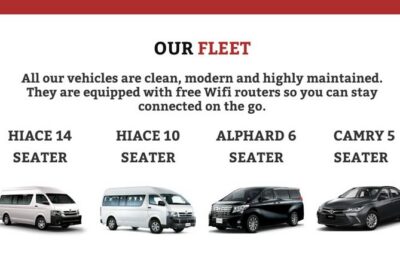
The tour includes an air-conditioned vehicle, a real advantage during Kyoto’s warm or rainy seasons. One family of six adults, including three men over six feet tall, fit comfortably in a large minivan. That suggests the vehicle can work well for a full group, though the exact car may differ.
The information also includes a negative account describing an uncomfortable, unpleasant-smelling vehicle for four people. The operator disputed that description and identified the vehicle used as a clean Honda Odyssey eight-seater. The practical lesson is to confirm the vehicle type if comfort is a major concern, particularly for six adults with luggage or long legs.
Drivers often coordinate pickups and drop-offs by WhatsApp. That can simplify the day, especially when your group separates inside a market or temple complex. It also helps you confirm the exact meeting place, since a driver cannot always stop directly beside a busy tourist entrance.
What the $448.20 price means for your group
The price is $448.20 per group of up to six. It includes hotel pickup and drop-off, private transport, air conditioning, and an English-speaking driver. It does not include food, temple admissions, or special rides and cruises.
For six people, the cost is roughly $74.70 each. For four, it is about $112.05 each. For two, the private car becomes a premium purchase, and you may prefer Kyoto’s trains and buses if saving money matters more than convenience.
The value improves when you have limited time, want to avoid transfers, or need a vehicle for older family members. It also improves when your driver actively helps with route choices, photos, food suggestions, and timing. It weakens if you expect a private historian or if your group is comfortable navigating independently.
Pickup from Osaka or Nara is available for an extra fee. That may be useful if Kyoto is a day trip from another base, but confirm the surcharge before booking. The standard start time is 8:30 a.m., and the full experience lasts approximately eight to ten hours.
Who should book this Kyoto car tour?
I would consider it for a family of four to six with only one full day in Kyoto. It is also a practical choice for a group that wants to combine western, northern, central, eastern, and southern Kyoto without learning several transit routes.
It suits you if you value hotel pickup, air conditioning, flexible pacing, and a driver who can take photos or suggest changes. It may work particularly well for groups with mixed walking abilities, provided you explain those needs before departure.
I would be more cautious if you want detailed temple interpretation, a Japanese cultural specialist, or a slow visit to each place. You should also compare the cost with public transport if you are a couple or a pair of confident walkers.
Free cancellation is available up to 24 hours before the 8:30 a.m. start time. Changes or cancellations within 24 hours are not accepted for a refund.
Should you book it?
Book this tour if your main goal is to see Kyoto’s famous sights efficiently and comfortably in one day. The private vehicle is the key advantage, and the best drivers, including Malik, Ravi, Aka, and Dhanu, can turn a packed route into a well-paced day with useful local help.
Do not book it expecting the same level of guiding from every driver. Before departure, send your priority list, ask how much walking accompaniment and historical explanation are included, confirm the vehicle, and decide which stops can be dropped if time runs short. With those expectations set, the $448.20 group price can be fair for six people and a short stay, but less attractive for a small group seeking a full guided tour.
FAQ
How long does the Kyoto private tour last?
The tour lasts approximately eight to ten hours.
What time does the tour start?
The stated start time is 8:30 a.m.
How many people can join the private tour?
The private vehicle and activity accommodate up to six people in your group.
Is hotel pickup included?
Yes. Pickup and drop-off at your hotel are included.
Is transportation private?
Yes. The experience includes private transportation in an air-conditioned vehicle.
Is the driver English-speaking?
Yes. An English-speaking driver is included, although the amount of explanation and English fluency may vary by driver.
Are temple admission tickets included?
No. Admission tickets are not included. You purchase them directly at the locations when required.
Is food included?
No. Food is not included in the tour price.
Can I start the tour from Osaka or Nara?
Pickup from Osaka and Nara is available for an additional fee.
Can I cancel for a full refund?
Yes, if you cancel at least 24 hours before the experience start time. Cancellations made less than 24 hours before the start are not refunded.
More Private Drivers in Kyoto
More Private Tours in Kyoto
More tours in Kyoto we've reviewed

Private Drivers, compared.
 ★ 4.5Explore Kyoto | Private Tour – Local English Driver(guide option)From $530
 ★ 5.0Kyoto Private 6 hour Tour: English Speaking Driver Only, No GuideFrom $400
 ★ 4.5Kyoto Private Day Tour with English-Speaking Driver from KyotoFrom $482
 ★ 5.0Kyoto Day Trip using Private Car with English Driver (up to 5)From $548
 ★ 5.0Private departure transfer from Kyoto city to Kansai International airportFrom $109
 ★ 4.0Kyoto, Osaka, Nara Private Tour by Car English Driver GuideFrom $660