
Reviewed · PRIVATE
Shamisen Experience in Kyoto 【Private】
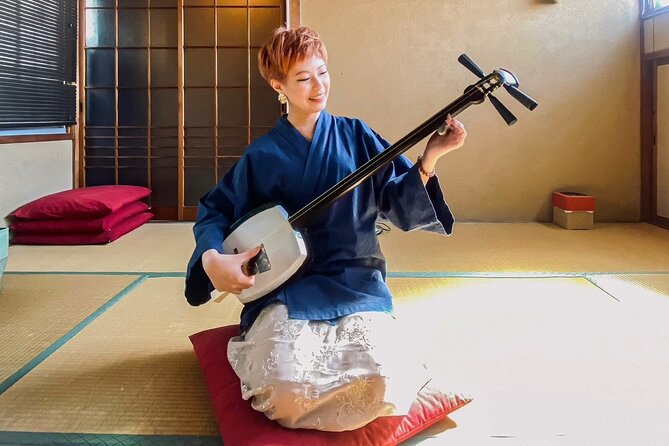
The best part of this Kyoto experience comes at the end: you play alongside Jack, a professional shamisen player, using traditional Japanese scales. Even a complete beginner can move from holding the three-stringed instrument to playing a simple Japanese song in about 90 minutes. The private format means the lesson follows your pace rather than a group schedule.
I like two things right away. First, the lesson is conducted in English, which makes the technical parts far easier to follow. Second, it includes a Japanese tea break and relaxed conversation with Jack, so you get more than a quick photo with an unusual instrument. The main consideration is the price: at $99.10 per person, this is not a budget activity, though private instruction helps explain the cost.
- Private English instruction: You receive Jack’s full attention instead of sharing a class with a crowd.
- A real playing goal: The lesson works toward a traditional Japanese song, not just a brief demonstration.
- Guided jam session: Jack accompanies you while you try melodies with traditional scales.
- Tea and conversation: The break gives you time to ask questions about the instrument and Japanese music.
- Left-handed players welcome: Lefty shamisen are available on request or during the lesson.
- A keepsake included: You receive a souvenir to remember the music lesson.
In This Review
- Why a Shamisen Lesson Beats Another Kyoto Photo Stop
- Meeting Jack in Murasakino
- The First Steps: Posture, Tuning, and Basic Technique
- Japanese Tea and Unhurried Conversation
- Learning a Traditional Japanese Song
- The Jam Session With Traditional Scales
- What the $99.10 Price Really Buys
- Who Will Enjoy This Kyoto Music Experience
- What to Bring and How to Plan the Visit
- The Souvenir and the Memory You Take Home
- Should You Book the Shamisen Experience?
- FAQ
- How long does the shamisen experience last?
- Where does the lesson begin?
- Where does the activity end?
- Is the lesson private?
- Is the lesson taught in English?
- Do I need previous shamisen experience?
- Is Japanese tea included?
- Are left-handed players accommodated?
- Does the experience include a souvenir?
- What is the cancellation policy?
Why a Shamisen Lesson Beats Another Kyoto Photo Stop

Kyoto offers temples, gardens, markets, and plenty of beautiful streets. Those are good reasons to visit, but they can also blur together after several days. A shamisen lesson gives you something different: a skill to practice, a person to meet, and a small piece of Japanese culture you can carry home.
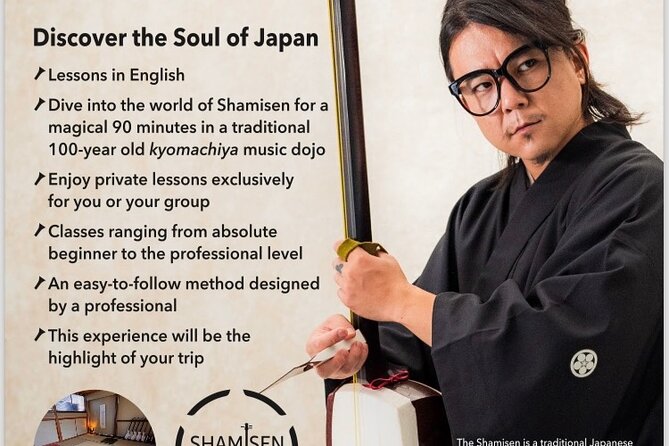
The shamisen is a traditional Japanese instrument with three strings. It is played with a large plectrum, and the sound has a clear, percussive quality. You are not simply listening to a professional play. You are learning how the instrument is held, how the player sits, and how the strings respond.
That physical contact matters. A short demonstration can make the shamisen seem mysterious. A private lesson lets you understand the basic mechanics for yourself. You may not become a musician in one session, but you can leave knowing how to hold the instrument properly and play a traditional melody.
This activity also works well on a rainy Kyoto day. It takes place indoors and lasts about an hour and a half, leaving plenty of time for another part of your sightseeing plan.
Meeting Jack in Murasakino
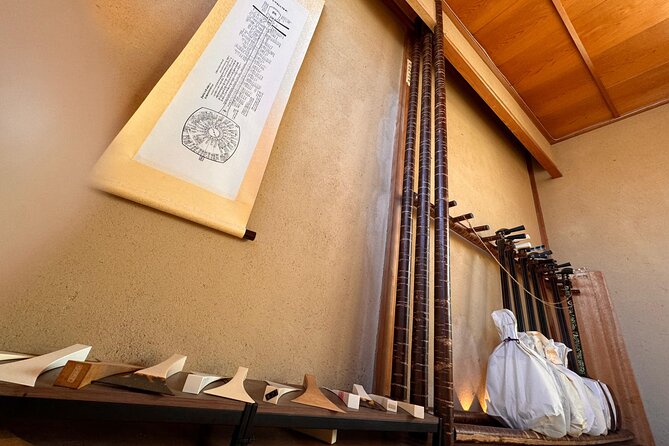
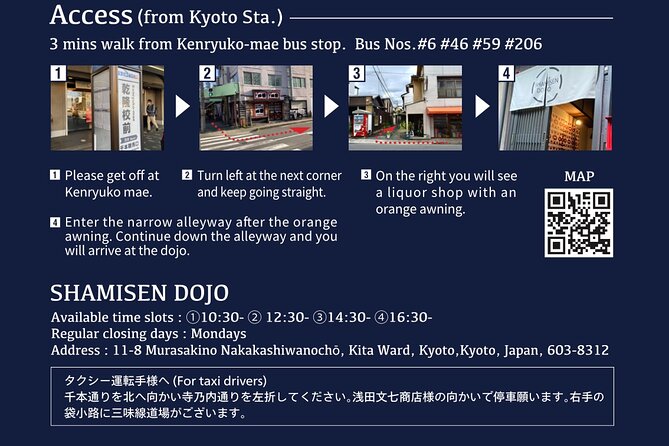
The lesson begins at Murasakino Nakakashiwanocho in Kyoto’s Kita Ward, postal code 603-8312. The activity returns to this same meeting point, so you do not need to arrange a separate ride from the lesson to your next stop.
The area is near public transportation, but the supplied details do not name a particular station or provide a walking time. I would check the exact meeting instructions after booking and allow extra time for finding the facility. Arriving rushed is not ideal when you are about to learn a new instrument.
Jack is both the owner and a professional shamisen player. His English allows him to teach the lesson and hold relaxed conversations during the tea break. That combination is useful. You can ask not only how to play a note, but also about the instrument, traditional music, and the ideas behind the lesson.
The private setup is especially helpful here. You do not have to worry about keeping pace with strangers or feeling self-conscious while you learn the basics. If you already play an instrument, you can ask for more detail. If you have never held a shamisen, Jack can focus on the first steps.
Other private tours in Kyoto


The First Steps: Posture, Tuning, and Basic Technique
The lesson is designed for first-time players. You learn the seating position and posture needed to play properly, then work through the basic way to handle the shamisen. These details may sound minor, but they shape the whole experience.
Posture affects comfort and control. Tuning helps you understand how the three strings relate to one another. The playing technique can feel unfamiliar if your musical background is based on a guitar, piano, or Western notation. A teacher who watches your hands can correct small problems before they become habits.
The lesson also covers how to tune the instrument. That is a particularly useful part for anyone who owns, or plans to buy, a shamisen. One hour is not enough for advanced mastery, but learning the setup gives you a practical starting point for future practice.
Jack adjusts the lesson to your level. Beginners can focus on the essentials without being buried in technical language. Players with prior shamisen experience can ask about more advanced techniques and use the private time to refine what they already know.
One past participant with shamisen experience found that Jack offered more advanced instruction than expected. That detail suggests the lesson is not limited to people who have never played before, though the basic curriculum remains friendly to newcomers.
Japanese Tea and Unhurried Conversation
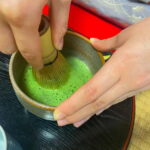
The tea break is a small part of the schedule, but it changes the feel of the activity. You pause with Japanese tea and talk with Jack in a relaxed setting. Instead of rushing from one instruction to the next, you have a natural moment to ask questions.
You might ask how Jack began playing, how the shamisen is used in Japanese music, or what kind of practice a beginner should do next. The available information does not promise a formal cultural lecture, so you should think of this as an informal conversation rather than a museum-style presentation.
I like the tea break because it gives the lesson a human rhythm. You are meeting a working musician in his own setting, not simply receiving a packaged performance. The conversation also gives you a chance to rest your hands and absorb what you have learned.
Tea is included in the price. Water is not specifically listed, so bring your own if you prefer to stay well hydrated throughout the session.
Learning a Traditional Japanese Song
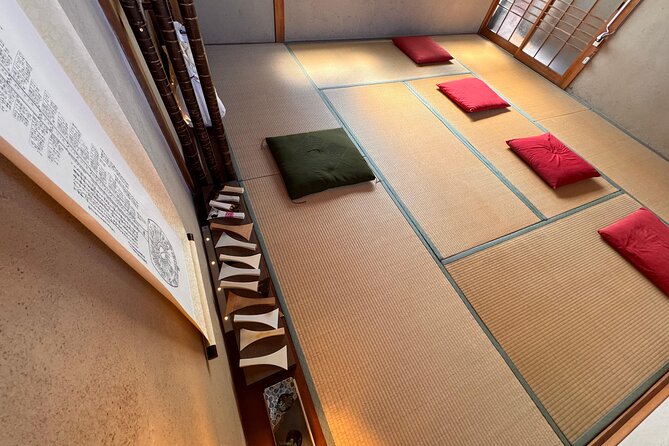
The lesson builds toward a clear target: playing a traditional Japanese song. This makes the 90 minutes feel purposeful. You are not left wondering what you were supposed to learn.
The song provides a simple musical framework for the techniques introduced earlier. You can apply your posture, hand position, and string work to an actual melody. For many people, this will be the moment when the shamisen changes from an interesting object into an instrument they can use.
The lesson is not presented as a full music course. You should expect an introduction rather than a complete education in shamisen playing. Still, learning one song gives you a satisfying result and something concrete to practice later.
English instruction is a major advantage. Musical terms can be difficult enough without a language barrier. Jack’s ability to explain the instrument in English lets you ask for clarification when your hand position or technique feels uncertain.
The pace also depends on you. Some beginners may spend more time on posture and the basic stroke. Others may reach the song more quickly. Since the lesson is private, Jack can give extra attention to whichever part causes trouble.
The Jam Session With Traditional Scales
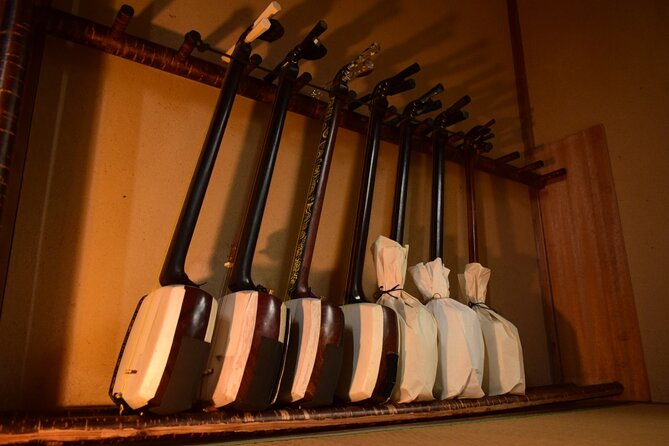
The jam session is the most unusual element of the experience. Jack accompanies you using traditional Japanese scales while encouraging you to play melodies and express yourself through the shamisen.
Do not picture a formal concert where you sit silently and watch. The point is participation. Jack provides musical support while you try the instrument, so the session gives you room to make choices rather than copy every movement mechanically.
This is also where private teaching earns its keep. A group class might need to follow one fixed exercise. Here, Jack can guide you as you experiment. If you have a musical background, you may enjoy trying variations. If you are a beginner, you can keep to the basic pattern and still take part.
The jam session may feel more rewarding than simply completing a song because it lets you hear the shamisen in a musical setting. You get a taste of how traditional scales shape the sound, while Jack helps keep the music moving.
It is worth keeping expectations sensible. You are unlikely to produce a polished performance after one short class. The goal is a first connection with the instrument, plus the confidence to keep exploring.


What the $99.10 Price Really Buys
The listed cost is $99.10 per person. That is a fairly high price for a 90-minute activity, especially if you compare it with a group cultural demonstration or a self-guided museum visit.
The comparison is not quite fair, though. This is a private lesson, not a large class. The price includes one-to-one guidance, tea, a souvenir, and time with a professional player. You are paying for personal instruction and access to an experience that is difficult to reproduce on your own.
For a couple or small family, the value depends on how much you care about music and hands-on culture. If everyone in your party participates, the private format can make the session feel special. If only one person is interested, the cost may be harder to justify.
I would also consider the value of your Kyoto schedule. An hour and a half is long enough to learn something but short enough to fit between other plans. Because the lesson begins and ends at the same place, the time commitment is fairly easy to plan around once you know the transport details.
The activity is booked, on average, 35 days ahead. That does not guarantee every date sells out, but it is a useful sign that you should reserve early if this is important to your itinerary.
Who Will Enjoy This Kyoto Music Experience
This lesson is a strong match for several kinds of visitors:
- First-time players who want a calm introduction to a traditional instrument.
- Musicians who would like hands-on contact with Japanese scales and technique.
- Couples or families seeking a private activity rather than a crowded class.
- Visitors who prefer meeting a local specialist over watching another cultural show.
- People looking for an indoor plan on a rainy day.
- Left-handed players who need an instrument set up for their playing style.
You do not need prior musical experience. The teaching plan is intentionally beginner-friendly, and Jack can explain the basic movements from the start.
People who want a full history of the shamisen may find the session less suitable, since the focus is on playing. Likewise, if you dislike taking part in music or feel uncomfortable trying a new instrument, a performance may suit you better.
The activity is described as suitable for most participants and near public transportation. Specific accessibility details are not provided, so contact the operator if you have mobility or other access needs.
What to Bring and How to Plan the Visit
Your booking confirmation is provided at the time of reservation, and the activity uses a mobile ticket. Keep the ticket easy to access on your phone.
Wear something that allows you to sit comfortably and move your arms. The precise seating arrangement is not specified, so it is best not to assume a particular type of chair or floor setup. The lesson does cover correct seating and posture, which means comfort and positioning are part of the instruction.
Plan to arrive with enough time to locate the meeting point in Murasakino. The exact meeting directions should be checked after booking. Since the session ends where it begins, you can plan a meal or another Kyoto activity afterward without arranging a second pickup point.
Free cancellation is available up to 24 hours before the local start time. Cancellations made inside that window are not refunded, and late changes are not accepted. This is helpful for a flexible itinerary, but mark the cutoff clearly if your Kyoto plans may shift.
The Souvenir and the Memory You Take Home
The souvenir is a modest but welcome touch. It gives you a physical reminder of the lesson after the tea is finished and the instrument has been put away.
The more important keepsake is the ability to play something yourself. Several specific skills can stay with you: basic posture, tuning, correct handling, and the traditional song introduced during the lesson. If you later study shamisen at home, those first corrections from Jack may prove useful.
The session can also change how you listen to Japanese music. After handling the instrument, you may notice the rhythm, attack, and tone more clearly in a performance. That kind of understanding is hard to get from sightseeing alone.
The activity has a 5 out of 5 rating from 82 reviews and a 100 percent recommendation rate. The praise centers on Jack’s patience, friendly manner, clear English, and ability to make the lesson personal. Those points match the structure of the experience: private teaching, conversation, and a guided musical exchange.
Should You Book the Shamisen Experience?
Book it if you want an active cultural experience and are willing to pay for private instruction. The strongest reasons are Jack’s one-to-one teaching, the English-language lesson, the chance to learn a traditional song, and the final jam session with a professional player.
I would especially recommend it to music lovers, curious beginners, and anyone who wants a quieter Kyoto memory than another major sightseeing stop. Left-handed players should also note that suitable shamisen are available.
Skip it if you only want a short demonstration, need the lowest-cost activity, or have no interest in trying an instrument yourself. For everyone else, the 90-minute format offers a focused introduction to Japanese music, with tea, conversation, and a real chance to make the shamisen sound.
FAQ
How long does the shamisen experience last?
The experience lasts approximately 1 hour and 30 minutes.
Where does the lesson begin?
It begins at Murasakino Nakakashiwanocho in Kita Ward, Kyoto, postal code 603-8312, Japan.
Where does the activity end?
The activity ends back at the meeting point.
Is the lesson private?
Yes. Only your group participates in the private activity.
Is the lesson taught in English?
Yes. The lesson is conducted in English.
Do I need previous shamisen experience?
No. The curriculum is designed for beginners, and no previous experience is required.
Is Japanese tea included?
Yes. The lesson includes a Japanese tea break and time for relaxed conversation with Jack.
Are left-handed players accommodated?
Yes. Left-handed shamisen are available.
Does the experience include a souvenir?
Yes. You receive a special gift as a souvenir of the experience.
What is the cancellation policy?
You can cancel up to 24 hours before the local start time for a full refund. Cancellations or changes made less than 24 hours before the start time are not accepted for a refund.
More Private Tours in Kyoto


More tours in Kyoto we've reviewed








Private, compared.
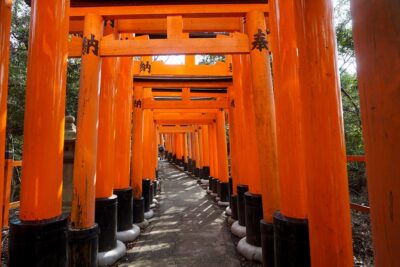 ★ 5.0Fushimi Inari Hidden Hiking Tour (Private Option Available)From $63
 ★ 5.0Private Kyoto Tour with a Local, Highlights & Hidden Gems, PersonalisedFrom $102
 ★ 5.0Kyoto 6hr Private Tour with Government-Licensed GuideFrom $155
 ★ 5.010 Must-see Spots in Kyoto One Day Private Tour (up to 7 people)From $179
 ★ 5.0Kyoto 4hr Private Tour with Government-Licensed GuideFrom $109
 ★ 4.8Kyoto: Private Tour with Local Licensed GuideFrom $1064 - 8 hours