
Reviewed · GUIDED
Kyoto: Private Tour with Local Licensed Guide
Kyoto is too spread out and too full of major sights for a one-size-fits-all tour. This private walking tour lets you choose the places that matter most, then puts a licensed local guide in charge of the route, timing, transit, and cultural explanation. Guides such as Kazuo, Yuka, Michi, and Noriko have helped visitors cover several distant sites in a single day.
I like the personal planning and the practical local help. Your guide can explain how to pray at a shrine, steer you toward a good ramen shop, or adjust the route when crowds and traffic get in the way. I also like the choice of four, six, or eight hours. The main catch is that the price does not include entrance fees, meals, or transportation, and a long day on foot can be tiring.
In This Review
- Key points at a glance
- Why a private guide helps in Kyoto
- Building a four, six, or eight-hour route
- Fushimi Inari and the red torii path
- Kiyomizu-dera, Higashiyama, and Gion
- Kinkaku-ji and Kyoto’s northern temples
- Markets, castles, palaces, and central Kyoto
- Arashiyama and the western route
- What the guide adds beyond a guidebook
- Price, extra costs, and real value
- Who should book this Kyoto tour
- Should you book it?
- FAQ
- How long is the private Kyoto tour?
- How many places can I visit?
- Can I choose the sights?
- Is transportation included?
- Is a private vehicle included?
- Are entrance fees included?
- Where does pickup take place?
- What languages are available?
- Can I cancel the tour?
Key points at a glance
- Choose your Kyoto: Select roughly two or three places for four hours, three or four for six hours, or four to six for eight hours.
- Meet a government-certified guide: English and Japanese guides hold Japan’s Nationally Licensed Tour Guide-Interpreter certification.
- Use local transit with help: Your guide can handle buses, trains, and route changes, but you pay those fares separately in yen.
- Mix famous sights with quieter stops: Pair Fushimi Inari or Kinkaku-ji with places such as Tofuku-ji, Nanzenji, or lesser-visited temples.
- Get useful local advice: Guides can suggest restaurants, shops, photo spots, and ways to avoid the worst crowds.
- Keep the group small: This is a private experience for a maximum of seven passengers, with hotel or station pickup on foot when practical.
Why a private guide helps in Kyoto
Kyoto looks manageable on a map, but its sights are scattered across several districts. Fushimi Inari lies south of central Kyoto, Kinkaku-ji is northwest, Arashiyama is farther west, and Gion and Kiyomizu-dera sit on the eastern side of town. Trying to connect them without a plan can eat up hours.
A private guide gives you a person who can turn that puzzle into a sensible day. Guides described by name in the booking feedback include Kazuo, Rie, Naoki, Haru, Akira, Yuka, Noriko, Michi, and Kiyosh Murakami. The strongest praise goes to guides who planned carefully before meeting, explained local customs clearly, and adjusted the day when a route became slow or crowded.
That flexibility matters. You can ask for the classic sights, quieter temples, food stops, shopping, gardens, or a gentle pace for children and older family members. You can also change your mind during the day. A guide named Noriko was praised for changing the route to avoid traffic and fit in an extra scenic stop, while other guides helped families manage stops, photos, coffee breaks, and meal suggestions.
The tour is not a private car service. You walk between nearby sights and use public transportation or local taxis when the next stop is farther away. That keeps the experience closer to daily Kyoto life, but you need comfortable shoes and some Japanese yen for fares.
Other guided tours in Kyoto
Building a four, six, or eight-hour route
The four-hour option works best when you focus on one part of Kyoto. Two or three nearby stops are realistic, especially if you want time inside the temples rather than a quick photo outside. An eastern Kyoto route might combine Kiyomizu-dera, Higashiyama, and Gion. A southern route could focus on Fushimi Inari, Tofuku-ji, and perhaps Toji if transit allows.
Six hours gives you a useful full day without becoming an endurance test. Three or four stops are the suggested range. You might combine Fushimi Inari, Nijo Castle, and Nishiki Market, or link Kinkaku-ji with Ryoan-ji, Ninna-ji, and another nearby temple.
Eight hours is best for a first visit when you want a broad introduction. Four to six stops are possible, but do not treat that as a promise to collect six major attractions. Kyoto temples can take time, and popular areas may require slow walks through crowds. Ask your guide to rank your priorities instead of trying to check every box.
Send your preferred places after booking. The full choice includes 32 locations, from the well-known to the more specialized:
- Fushimi Inari-taisha Shrine, Kiyomizu-dera, Kinkaku-ji, Ginkaku-ji, Nijo Castle, and Kyoto Imperial Palace
- Gion, Higashiyama, Nishiki Market, Pontocho, and Maruyama Park
- Tofuku-ji, Nanzenji Suirokaku, Toji, Ninna-ji, Ryoan-ji, and Byodoin
- Arashiyama, Togetsukyo Bridge, Bamboo Forest Street, Tenryu-ji, and Okochi Sanso Garden
- Jojakkoji, Nisonin, Gioji, Adashino Nenbutsu-ji, Otagi Nenbutsu-ji, and Daikaku-ji
- Shugakuin Imperial Villa, Katsura Imperial Villa, Kibune River, and Yoshimine-dera
The list is useful because it lets you state your interests clearly. You might want imperial sites, Zen gardens, shrine rituals, bamboo, food, or photography. Tell the guide what you care about, and also say what you do not want. That last point can prevent a day built entirely around crowded headline sights.
Fushimi Inari and the red torii path
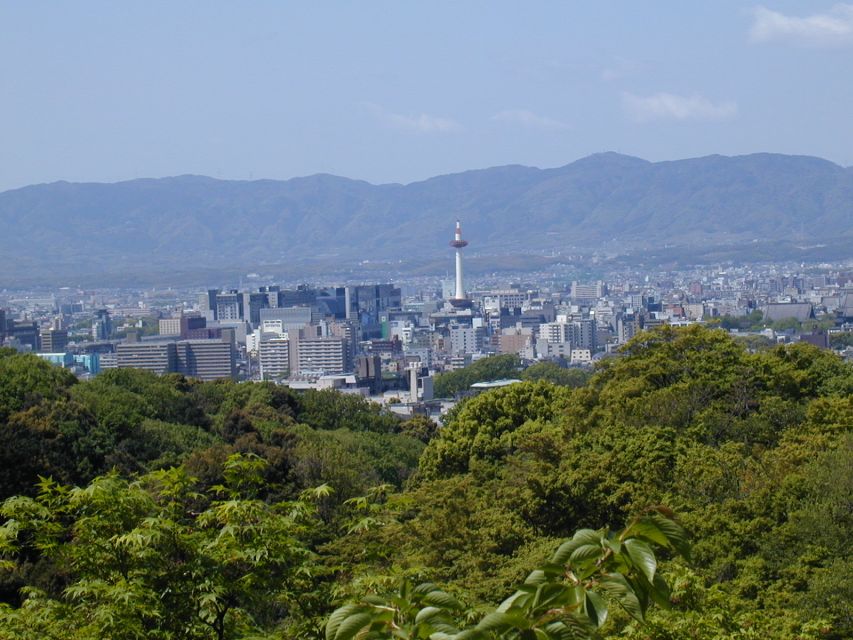
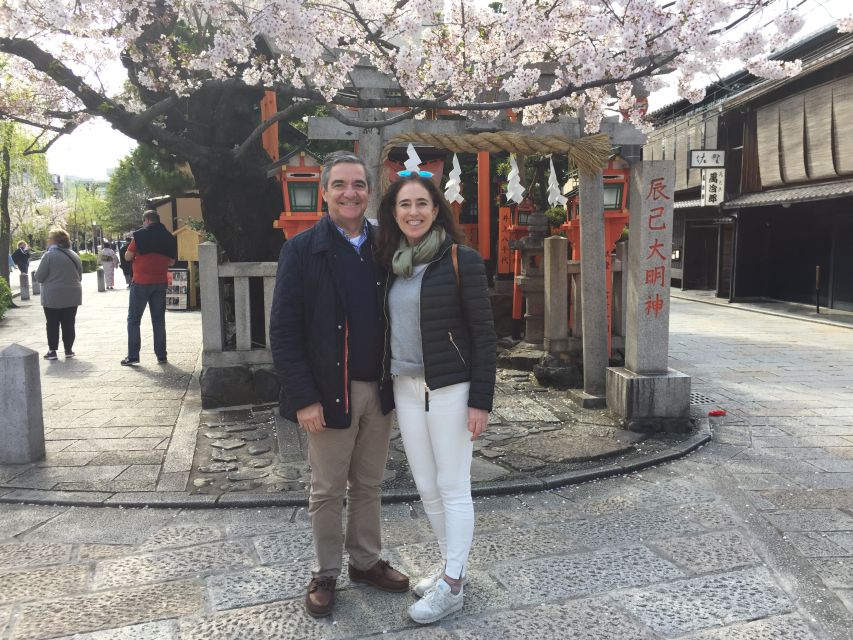
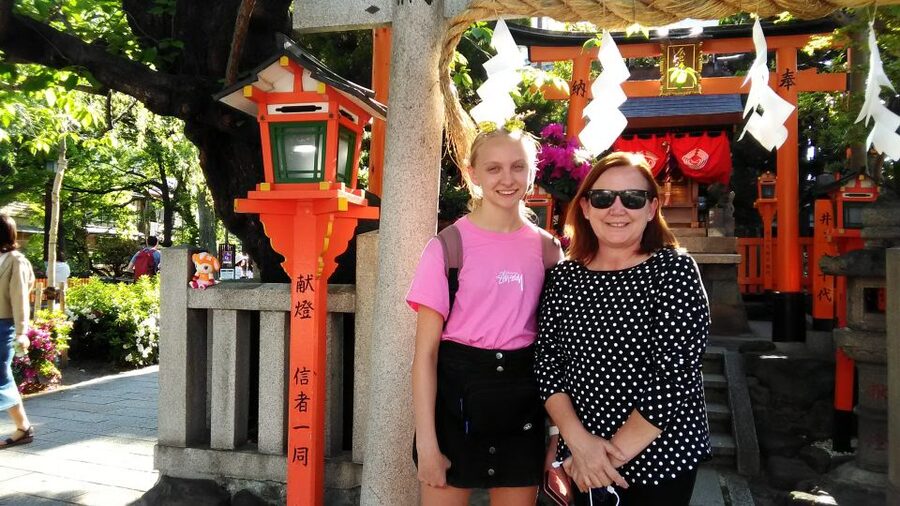
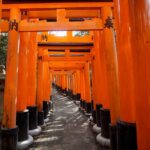
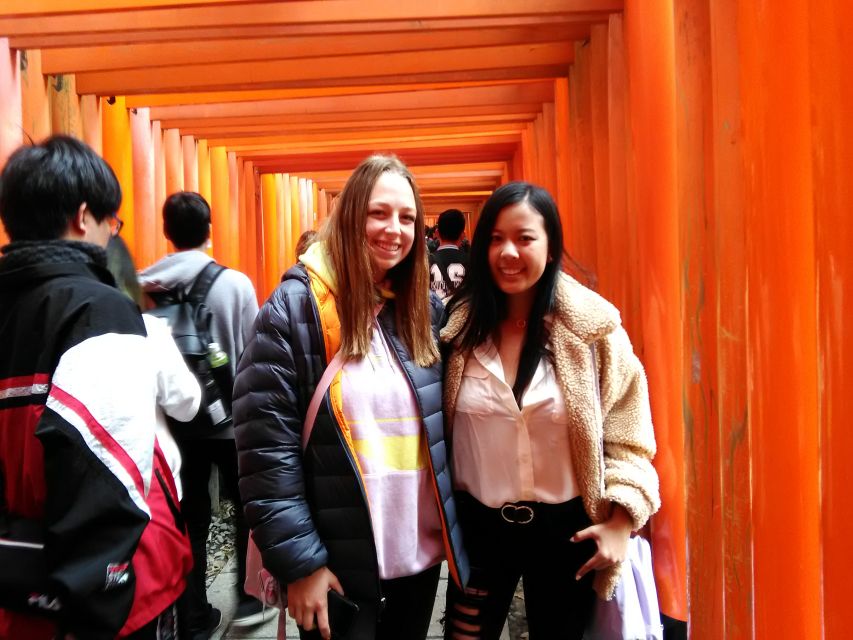
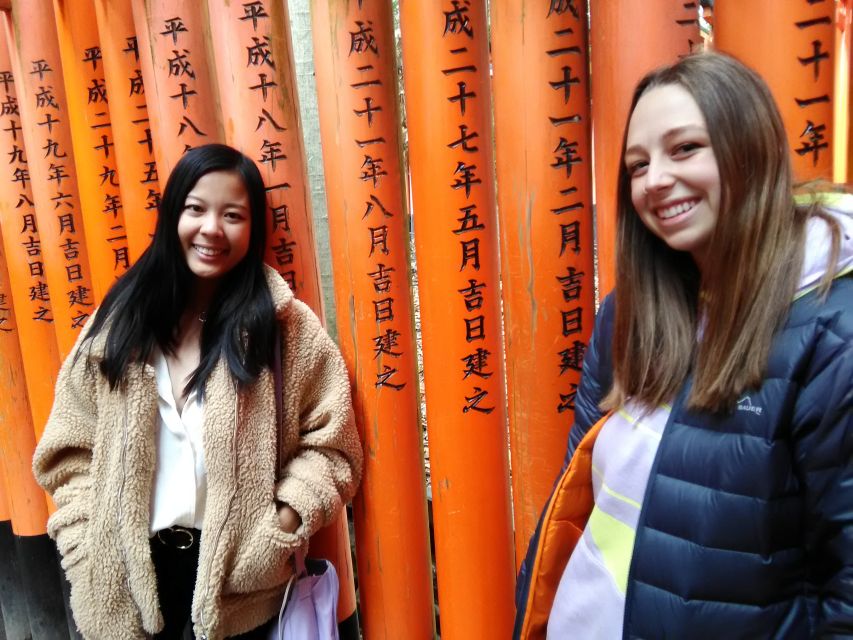
Fushimi Inari is one of Kyoto’s most recognizable sights, with thousands of vermilion torii gates climbing the wooded slopes behind the shrine. The gates form a symbolic passage from the everyday world toward the realm of the gods. Even if you know the photographs, the scale of the corridor is striking in person.
A guide adds meaning to what can otherwise become a long walk and a photo hunt. You can learn how to behave at the shrine, how to pray, and how fortunes work. Michi was specifically praised for explaining shrine customs and helping visitors understand the ritual side of the visit.
The practical warning is crowds. The lower section can become very busy, especially later in the morning. If Fushimi Inari is a priority, ask for an early start. One itinerary reached the shrine at 9:30 in the morning and still found it packed. Your guide may help you spend more time on quieter sections or shift the order of the day.
Kiyomizu-dera, Higashiyama, and Gion
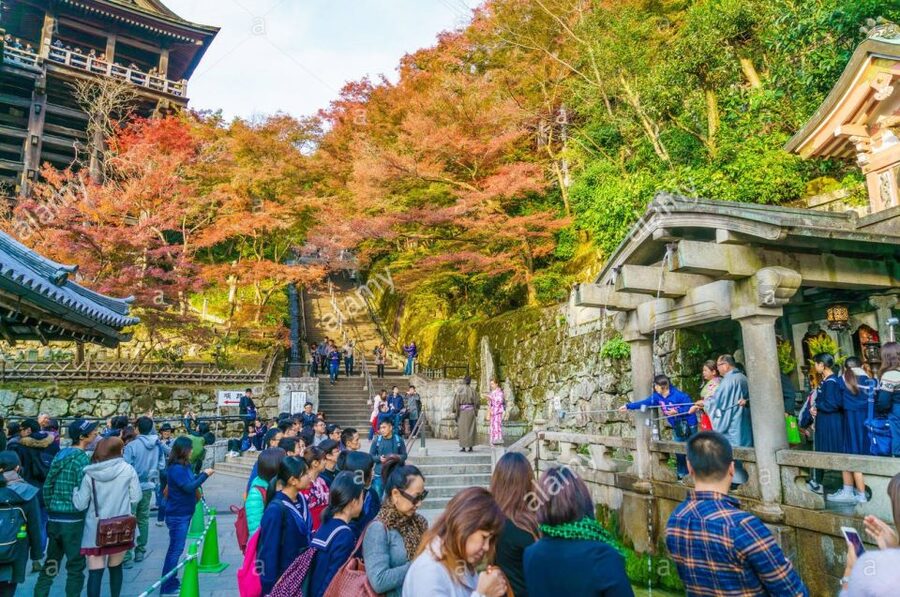
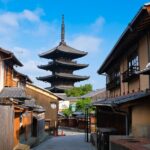
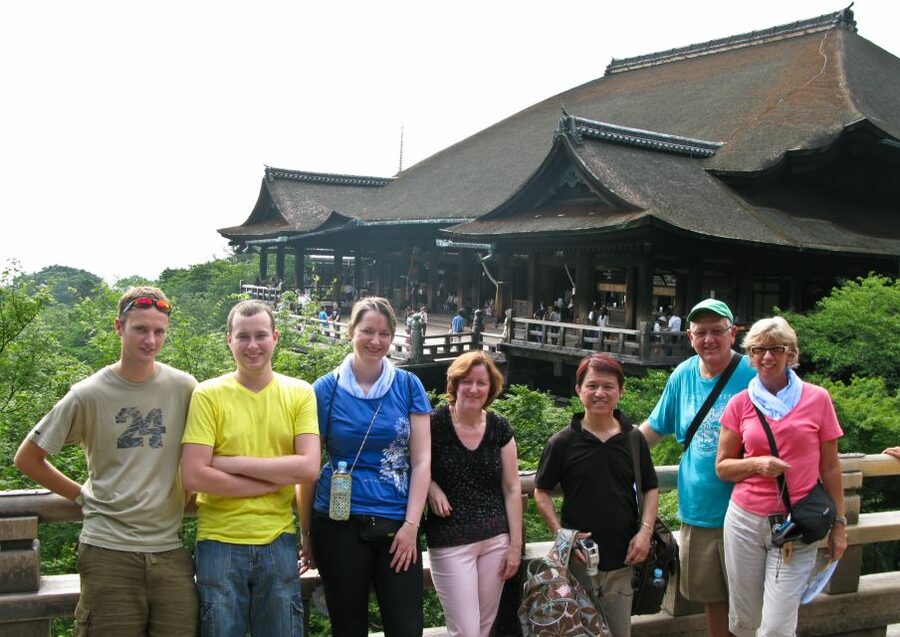
Kiyomizu-dera is a strong choice for a first tour. Its large wooden veranda gives you a broad view over Kyoto, while the temple grounds and approach road offer plenty to explain. The walk downhill toward Gion passes through Higashiyama, where traditional-looking streets hold souvenir shops, snack stops, and small stores.
This is one of the easiest areas to combine on foot. You can take your time with the temple, pause for photos, browse shops, and continue toward Gion without constantly boarding another bus. The tradeoff is that this is also one of Kyoto’s busiest sightseeing zones. A guide can help you understand what you are seeing, but cannot make peak crowds vanish.
Gion gives the route a different mood. You might walk through historic streets, stop for a snack, or ask your guide for a dinner recommendation. One guide helped arrange a sushi meal at the end of the day, while another pointed a visitor toward a particularly good ramen lunch. Food is not included, but the advice can be valuable when menus and restaurant choices feel unfamiliar.
Kinkaku-ji and Kyoto’s northern temples
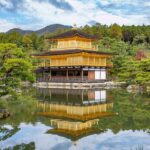
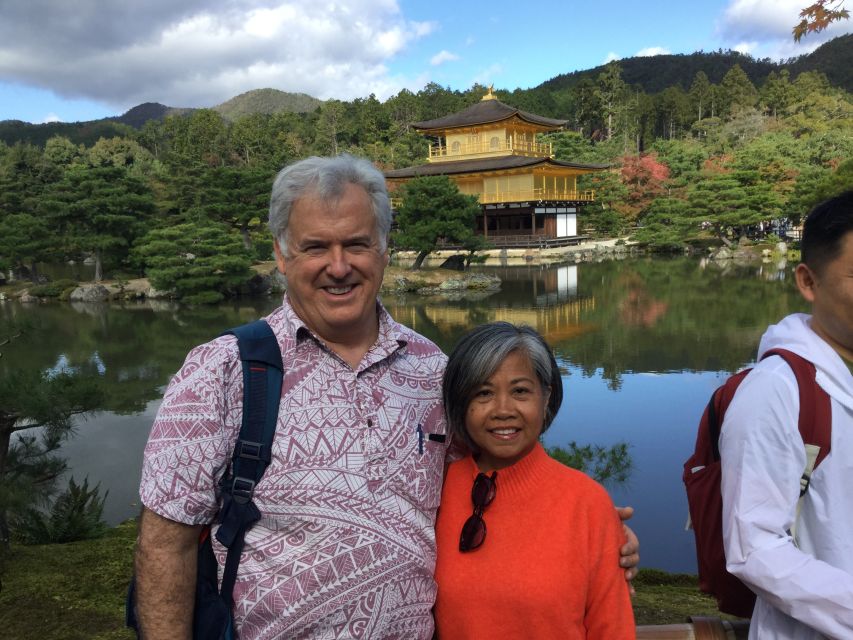
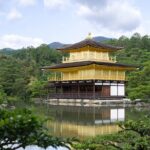
Kinkaku-ji, the Golden Pavilion, is a short, dramatic visit. Its gold-covered reliquary hall reflects in the pond, with hills behind it. The building is bold rather than subtle, and the surrounding garden gives you a chance to slow down after the first view.
You should know that Kinkaku-ji is generally a viewing route rather than a place for long, independent wandering inside the main building. Your guide can explain its religious and historical setting, then help you decide how much time to give the garden.
The northern temple group works well for a six or eight-hour tour. Ryoan-ji offers its famous rock garden, while Ninna-ji brings a different temple setting and broader grounds. Pairing these with Kinkaku-ji keeps the day focused geographically, though several temple visits can begin to feel similar if you are not especially interested in architecture or religion.
Other private tours in Kyoto
Markets, castles, palaces, and central Kyoto
Nishiki Market is a good change of pace after temples. You can look at food stalls, local ingredients, small gifts, and shops packed into a narrow central passage. It is a place for tasting and browsing, but it can be crowded enough to slow your progress. Do not plan it as a quick shortcut across downtown.
Nijo Castle gives you a more political view of Kyoto. Instead of focusing only on Buddhism and Shinto, you can learn about the city’s rulers and court life. The Kyoto Imperial Palace offers another angle on imperial Kyoto, while Toji provides a major temple stop closer to Kyoto Station.
Pontocho and Gion are better suited to an evening feel, restaurant advice, and traditional streets than to a long list of formal sights. Maruyama Park can fit naturally with eastern Kyoto stops. Your guide can help you decide if a market, castle, palace, or neighborhood adds the balance you want.
Arashiyama and the western route
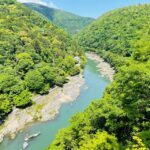
Arashiyama can fill a day by itself. Togetsukyo Bridge, Bamboo Forest Street, Tenryu-ji, and Okochi Sanso Garden give you a mix of river scenery, temple grounds, garden views, and the famous bamboo walk. Jojakkoji, Nisonin, Gioji, Adashino Nenbutsu-ji, and Otagi Nenbutsu-ji offer additional temple choices in the same broad district.
The important planning point is distance. Arashiyama does not pair casually with Fushimi Inari, Kinkaku-ji, and Kiyomizu-dera in a short tour. An eight-hour day may connect several western Kyoto sights, but you should ask your guide to set a realistic order and account for transit.
Bamboo Forest Street is the headline stop, but it is not the only reason to visit Arashiyama. Tenryu-ji and the gardens can provide a calmer, more layered visit. If you want the famous bridge and bamboo, say so. If you prefer less time in packed photo corridors, ask about the quieter temple choices.
What the guide adds beyond a guidebook
The certification matters because these guides hold Japan’s government-issued Nationally Licensed Tour Guide-Interpreter qualification. The qualification requires strong knowledge of Japanese culture and history, and the experience is offered in English or Japanese.
In practice, the most useful guide is not simply someone who recites dates. You want someone who can answer questions, explain customs, read the pace of your group, and make Kyoto usable. Guides were praised for showing the correct way to pray, writing Japanese for visitors, carrying handmade reference material, explaining modern Japanese life, and helping with train connections after the tour.
English ability can vary by person, but the available feedback repeatedly describes clear communication. You can improve the odds of a good fit by sending specific interests before the tour. Mention mobility limits, children, senior family members, photography, food, shopping, and your preferred amount of walking.
Pickup is on foot from your accommodation if it is within a reasonable distance. You can also request a meeting at a train station. The guide waits in the hotel lobby or station about ten minutes before the agreed time, according to the booking details.
Price, extra costs, and real value
The listed price is $106 per person. For a private group, that can be fair value if you use the guide well, especially when several people share the cost and you want a tightly planned day. The value is not just the narration. It is the time saved choosing routes, finding the right bus or train, handling transfers, and deciding which sights fit together.
You should budget extra for every admission fee, food and drink, and public or private transportation used during the tour. Keep Japanese yen available for transit. Exact transportation costs can be discussed with the guide after booking.
A private vehicle is not included. If you want one, it must be arranged directly and booked at least five days ahead. The maximum group size is seven, so a larger party cannot use this exact arrangement without checking another option.
The tour takes place rain or shine. Kyoto’s weather can change the comfort of a walking day, so bring suitable shoes and clothing. The activity is wheelchair accessible, but you should discuss the exact route and transit needs before confirming, since many historic sites have uneven paths, steps, or crowded approaches.
Who should book this Kyoto tour
I would recommend it most strongly for first-time visitors with limited time, families, and anyone who wants cultural context instead of simply collecting photographs. It also suits people who dislike fixed group schedules and want to choose between food, shopping, temples, gardens, and major landmarks.
It is a good fit for visitors staying in Kyoto for only a day or two. A careful guide can help you see four or five well-chosen places that would be difficult to connect alone. It is also useful for repeat visitors who want less familiar temples or a route built around a specific interest.
You may prefer an independent day if you enjoy wandering, already understand Kyoto’s transit system, or want to spend several hours at one temple. The tour can be personalized, but it remains a walking day with extra costs. Do not book it expecting a chauffeur, a meal package, or unlimited sightseeing.
Cancellation is free up to 24 hours before the start, and you can reserve now and pay later. The booking is not final until the guide contacts you, usually within seven days. The provider contacts you to confirm the details, and you should use that exchange to shape the day.
Should you book it?
Book this tour if you want Kyoto to make sense quickly and you are willing to walk, use local transit, and plan your priorities in advance. The strongest reasons are the private format, licensed local guides, route flexibility, and practical help with food, customs, and transportation.
Choose the six-hour option for the best balance of coverage and stamina. Choose four hours for one focused district, or eight hours if this is your main Kyoto sightseeing day and you accept a full schedule. Send a short priority list before you arrive, ask for an early start at Fushimi Inari, and leave room for a meal or coffee break.
At $106 per person before admissions and transit, it is not the cheapest way to see Kyoto. But for a small private group that wants expert planning and a personal pace, it can be a very sensible use of one precious day.
FAQ
How long is the private Kyoto tour?
You can choose a tour lasting four, six, or eight hours. Starting times depend on availability.
How many places can I visit?
The suggested range is two to three places in four hours, three to four places in six hours, and four to six places in eight hours. The actual number depends on distance, traffic, crowds, and how much time you spend at each stop.
Can I choose the sights?
Yes. You should tell your guide after booking which locations you want to visit. The choices include Fushimi Inari, Kiyomizu-dera, Gion, Nishiki Market, Kinkaku-ji, Arashiyama, Nijo Castle, and many other temples, gardens, neighborhoods, and bridges.
Is transportation included?
No. This is a walking tour, and public transportation or local taxis may be used between distant sites. Transportation costs are paid separately, so keep Japanese yen with you.
Is a private vehicle included?
No. A private vehicle is not part of the standard tour. You can contact the provider to arrange one, but private vehicles must be booked at least five days in advance.
Are entrance fees included?
No. You pay entrance fees separately, along with food, drinks, and transportation.
Where does pickup take place?
Your guide can meet you at your accommodation on foot if it is within a reasonable distance. You can also request pickup at a train station. The guide waits in the hotel lobby or station ten minutes before the scheduled time.
What languages are available?
The tour is available with a live guide in English or Japanese. Guides hold Japan’s Nationally Licensed Tour Guide-Interpreter certification.
Can I cancel the tour?
Yes. You can cancel up to 24 hours before the start time for a full refund. The activity runs rain or shine, and the booking is not confirmed until the guide contacts you.
More Private Tours in Kyoto
More Guided Tours in Kyoto

More tours in Kyoto we've reviewed


Guided, compared.
 ★ 5.0Kyoto Early Morning Tour with English-Speaking GuideFrom $68
 ★ 5.0Kyoto 6hr Private Tour with Government-Licensed GuideFrom $155
★ 4.9Kyoto: Early Morning Tour with English-Speaking GuideFrom $1015h 30m
★ 5.0Kyoto 6hr Private Tour with Government-Licensed GuideFrom $155
★ 4.9Kyoto: Early Morning Tour with English-Speaking GuideFrom $1015h 30m
 ★ 4.7Kyoto: Nijo-jo Castle and Ninomaru Palace Guided TourFrom $161 hour
 ★ 4.9Kyoto: Izakaya Bars Guided Walking TourFrom $253 hours
 ★ 5.0Kyoto Gion Night Walk & Geisha District Guided TourFrom $18