
Reviewed · KYOTO
Shamisen Discovery in Kyoto 【Group】
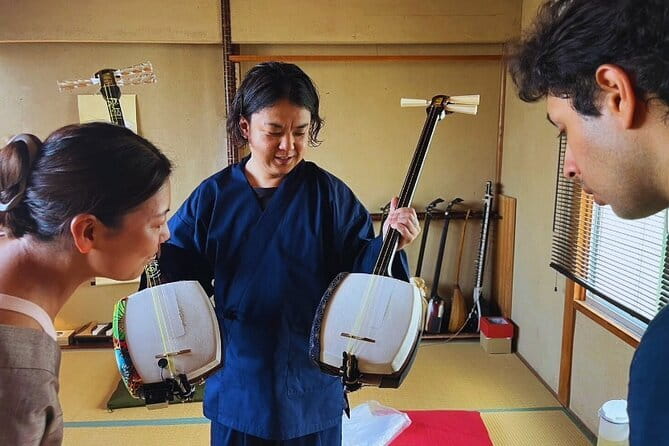
The most appealing part of this Kyoto activity is that you do not just watch Japanese music being performed. You hold a real shamisen, learn how to use its large bachi pick, and make your own sounds within an hour. Instructor Jack brings more than 20 years of experience and keeps the class small, with no more than five people.
I like the hands-on jam session, where Jack accompanies you while you create melodies, and I like the relaxed extras: a photo session, coffee or green tea, and instruments for left-handed players. The main drawback is the short one-hour format. You will get a lively introduction, not a full course in shamisen playing, and the meeting point in northern Kyoto requires you to arrange your own transport.
In This Review
- Key points to know before booking
- Why a shamisen lesson belongs in your Kyoto plans
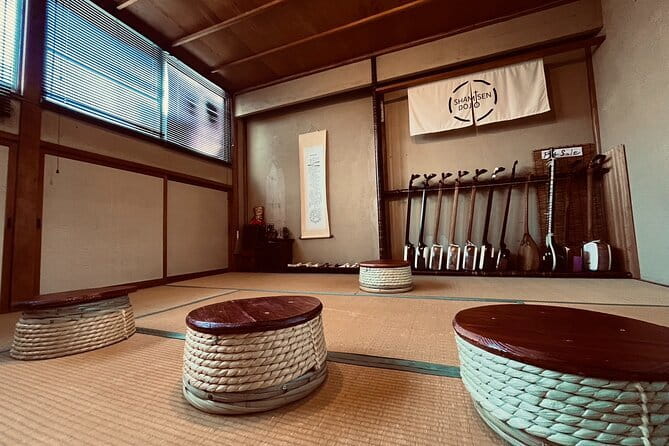
- Arriving at the Shamisen Dojo in northern Kyoto
- The first minutes: shamisen types, history, and proper form
- Holding the bachi and finding your first sounds
- Learning one scale instead of chasing too much
- The photo session and a welcome cup of tea
- The closing jam with Jack
- What the $65.89 price really buys you
- Who will get the most from this one-hour class
- Practical planning for a smoother visit
- Should you book the Shamisen Discovery in Kyoto?
- FAQ
- How long does the Shamisen Discovery experience last?
- Where does the activity begin and end?
- How many people can join the group?
- Is the shamisen rental included?
- Is anything to drink included?
- Are left-handed participants able to play?
- What is the cancellation policy?
Key points to know before booking
- You play a real shamisen: The lesson covers posture, the bachi, basic technique, and one Japanese scale.
- The group has a five-person limit: That gives you useful time with Jack instead of watching from the back of a large class.
- The final jam is the payoff: Jack provides accompaniment while you make melodies with the instrument’s five signature sounds.
- Tea and photos are included: You can take home a picture holding the shamisen and enjoy coffee or green tea during the visit.
- Left-handed players are covered: Lefty shamisen are available, so you do not need to reverse the instrument awkwardly.
- The price is $65.89 per person: For a one-hour private-feeling lesson, it is fair value if you want active cultural participation rather than another sightseeing stop.
Why a shamisen lesson belongs in your Kyoto plans
Kyoto offers temples, gardens, tea ceremonies, and plenty of chances to admire traditional arts from a respectful distance. This class gives you a different role. You become part of the sound, even if your first attempts are rough.
The shamisen is a three-stringed Japanese instrument with a distinctive tone. Its sound can be bright, sharp, and rhythmic, and the large bachi gives each note a physical snap. You do not need to arrive as a musician. The lesson is built for beginners, and the class starts with basic information before asking you to play.
That order matters. You first learn what the instrument is and why it matters, then you get a practical sense of how it works. By the time you begin the guided exercises, the shamisen feels less like an untouchable museum object and more like an instrument you can try to control.
I especially like this approach for people who have already spent several days visiting shrines and temples. A one-hour music lesson breaks up the usual sightseeing rhythm without taking half a day from Kyoto’s major sights.
If you're still narrowing it down, here are other tours in Kyoto we've reviewed.

Arriving at the Shamisen Dojo in northern Kyoto
The meeting point is in Murasakino Nakakashiwanocho, in Kita Ward, at postal code 603-8312. The activity begins and ends at this same location. It is near public transportation, but private transportation is not included, so you need to plan your route before setting out.
This is not a central Kyoto station activity that you can casually fit between two nearby attractions. Give yourself time to reach the neighborhood, especially if you are coming from southern Kyoto or trying to connect it with a busy day of sightseeing.
The location does pair naturally with northern Kyoto plans. One useful combination is a morning visit to Kinkaku-ji, the Golden Pavilion, followed by the shamisen lesson. Do not pack the schedule too tightly. Temple visits can take longer than expected, and arriving calm is better than rushing in while checking your phone for directions.
Because you receive a mobile ticket and booking confirmation at the time of purchase, the practical side is simple. Still, check the meeting details before leaving your hotel. The class ends where it starts, which makes it easy to continue with lunch or another sight in the same general part of the city.
The first minutes: shamisen types, history, and proper form
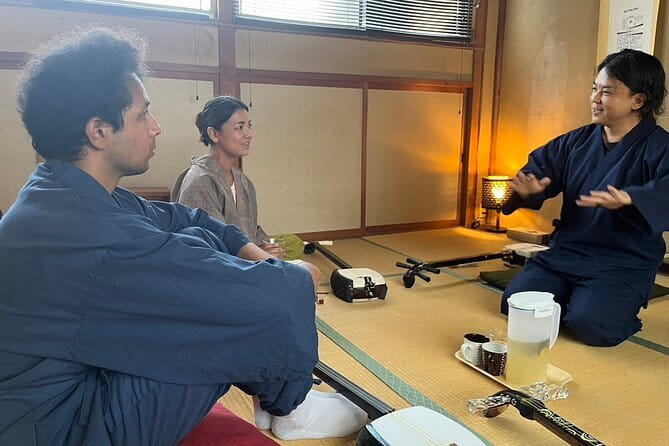
Jack begins with an introduction to the shamisen. You learn basic facts about its types and history, then move into the physical basics of holding the instrument. This opening is useful because the shamisen does not feel like a standard guitar or banjo.
The left hand supports and changes the strings, while the right hand works the bachi. Posture affects both comfort and sound. A short explanation at the start helps you avoid treating the instrument like a familiar Western string instrument.
The lesson also gives Jack a chance to see how you learn. People with musical training may move quickly through the first steps, while complete beginners may need more time with the grip and rhythm. Past sessions have included people who already play instruments, as well as first-time string players, and Jack adjusts his teaching to the person in front of him.
That personal attention is one of the strongest reasons to choose the small-group version. With a maximum of five participants, you can ask for help and receive corrections without waiting through a long line of other people.
Holding the bachi and finding your first sounds
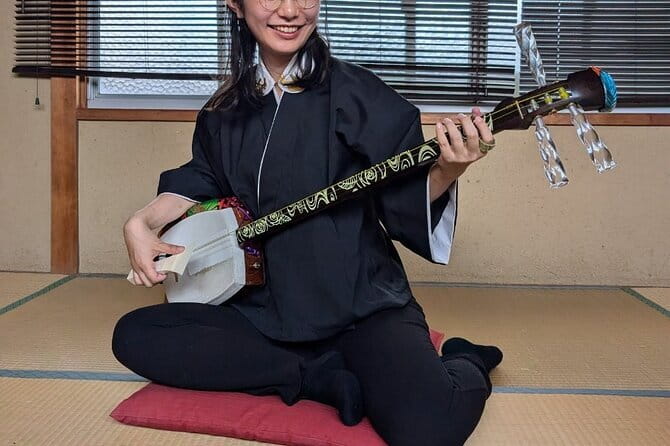
After the introduction, Jack teaches basic playing technique. You learn how to hold the shamisen and bachi, how to strike the strings, and how to produce the instrument’s main sounds.
Do not expect polished music right away. The shamisen has its own feel, and the large pick can seem unfamiliar. The point of this part is not to make you perform at a concert level. It is to help you produce a deliberate sound and understand how small changes in hand position affect the result.
That makes the class suitable for people who are curious about traditional Japanese music but nervous about having no musical background. You are not expected to sight-read or arrive with practice. The instruction begins at the ground level.
People with musical experience can still get something from it. The session introduces scales and techniques that are different from the patterns many Western musicians know. One hour will not cover every style of shamisen music, but it can show you how another musical system is organized.
Learning one scale instead of chasing too much
The course introduces one shamisen scale. That may sound modest, but it is a sensible choice for a short beginner class. Trying to cover many scales, advanced techniques, and a complete song in 60 minutes would leave you with a blur of information.
One scale gives you a usable framework. You can repeat notes, test simple patterns, and begin to hear how Japanese musical phrasing differs from the tunes you may know from home. Some participants with music backgrounds have managed to play through a song by the end of the hour, but your result will depend on your starting point and how quickly the technique feels natural.
Jack’s teaching style appears to favor progress without pressure. He explains, demonstrates, and lets you try. That is important with an instrument that can sound quite different from what your hands expect.
If your main goal is a serious technical study, this is only the first step. If your goal is to understand the basic shape of shamisen playing and leave with a memorable skill, the scale lesson fits the time well.

The photo session and a welcome cup of tea
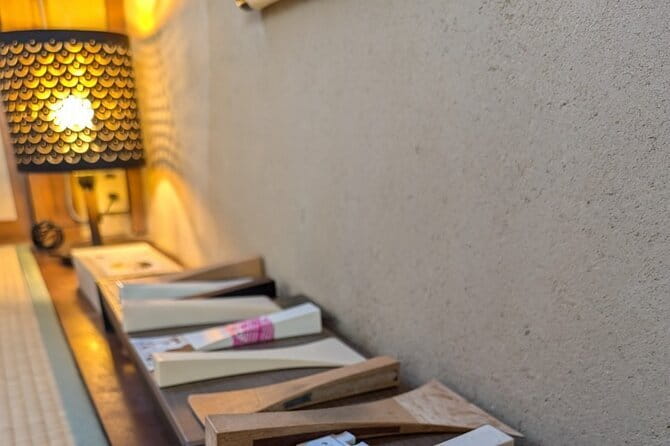
The photo session is a small feature, but it adds value. You can choose a shamisen, hold it properly, and have Jack take pictures of you playing. That gives you a concrete reminder of the class and a better image than a quick snapshot taken while you are still figuring out where to put your hands.
Coffee, tea, or green tea is also included. It is a simple touch, not a full meal or formal tea ceremony. Think of it as a short pause during the lesson and a chance to chat with the instructor.
These extras help the session feel social rather than strictly instructional. They are also useful if you are attending with a friend, sibling, partner, or older child. One participant attended with a 17-year-old son, and the activity suited them as a shared parent-child outing. People attending in pairs can take turns listening, playing, and encouraging each other.
The closing jam with Jack
The free playing time and jam session are the most distinctive parts of the class. Jack accompanies you while you freely create melodies using the five signature sounds of Japan. This is where the lesson shifts from practice to participation.
You may not know exactly what to play. That is fine. The structure gives you a musical base while allowing room for mistakes, experiments, and small successes. Instead of trying to reproduce a long piece perfectly, you respond to Jack’s accompaniment and discover what the shamisen can do.
This final section also explains why the class can feel rewarding even for someone without a music background. You are not simply repeating a movement in isolation. You hear how your sound fits with another player.
The jam is also a good reason to bring a friend. You can share the nervous first attempts and enjoy the final session together. Solo participants are welcome, but pairs and small groups may find the social side especially satisfying.
Jack’s own musicianship is part of the appeal. He plays for you during the lesson, giving you a clearer sense of the instrument’s range than a basic demonstration alone. The gap between a beginner’s first notes and a skilled player’s sound may be obvious, but that contrast makes the lesson more interesting rather than discouraging.
What the $65.89 price really buys you
At $65.89 per person, this is not the cheapest one-hour activity in Kyoto. You are paying for more than an introduction from a distance, though. The fee includes the shamisen rental, instruction, photo session, and coffee or tea.
The five-person maximum is the key value point. A large group class could offer the same general facts, but you would get less time with the instructor and fewer chances to play directly. Here, the format is close to a private lesson while keeping the price below what a fully private session might cost.
I would consider it good value if you want to take part in a Japanese art form and have a clear memory of doing it yourself. It is less compelling if you only want a brief performance or a broad lecture on Japanese music. In that case, a concert or cultural show may suit you better.
There is also an interesting possibility for people who become especially enthusiastic. One participant purchased a shamisen and received free online lessons with it. That option is not part of the standard course, so do not book assuming you will buy an instrument or receive follow-up lessons. But the class can serve as a useful first test if you are considering a longer connection with shamisen music.
Who will get the most from this one-hour class
I would recommend the experience to:
- First-time players who want a practical introduction
- Music lovers curious about Japanese scales and instruments
- Families with older children or teenagers
- Couples and friends looking for a shared activity
- People who prefer small, personal classes to large tours
- Left-handed players who often struggle with borrowed instruments
You do not need to read music or have prior string experience. Several lesson formats are designed around beginners, and Jack can adapt the pace to your level.
The one-hour limit favors people who want a focused activity. If you are hoping to study regional shamisen styles, perform a long piece, or receive advanced technique training, you will need more time than this class allows. One past participant was already interested in extending the lesson to 90 minutes, which gives you a sense of how quickly the session can pass for serious music fans.
Practical planning for a smoother visit
Book ahead if the date matters to you. This activity is booked about 25 days in advance on average, which suggests that last-minute spaces may not always be available.
Wear something that lets you sit and hold the instrument comfortably. The supplied information does not specify a dress code, so you do not need to plan around special clothing. The important thing is arriving ready to pay attention and try something unfamiliar.
If you are left-handed, request or confirm the lefty shamisen option when arranging your visit. The activity specifically provides instruments for left-handed players, so you should not need to force yourself into an uncomfortable setup.
Plan your transport to and from Murasakino Nakakashiwanocho. Since private transportation is not included and the class ends at the meeting point, build the activity into a route rather than treating it as a stop beside Kyoto Station.
The cancellation terms are forgiving if your plans change early. You can cancel for a full refund up to 24 hours before the start time. Cancellations or changes made inside that window are not accepted for a refund.
Should you book the Shamisen Discovery in Kyoto?
Book it if you want Kyoto to be more than a parade of sights. The class gives you a real instrument, direct instruction from Jack, a few useful musical tools, and a closing jam that turns a lesson into a shared event.
I would choose it for a couple, family, or small group that values participation and personal contact. It is also a strong pick for musicians who want to hear and try a Japanese instrument rather than simply read about one.
Skip it if your schedule is already packed, the northern Kyoto meeting point is inconvenient, or you want advanced training in shamisen technique. The one-hour course is an introduction, not a conservatory class.
For most curious visitors, the $65.89 fee is justified by the small group, included rental, tea, photos, and genuine time with the instrument. You leave with more than a picture of Kyoto. You leave having made its music yourself.
FAQ
How long does the Shamisen Discovery experience last?
The course lasts approximately 60 minutes.
Where does the activity begin and end?
It begins at Murasakino Nakakashiwanocho in Kita Ward, Kyoto, postal code 603-8312, and ends back at the same meeting point.
How many people can join the group?
The activity has a maximum of five participants.
Is the shamisen rental included?
Yes. Shamisen rental is included in the course price.
Is anything to drink included?
Yes. Coffee, tea, and green tea are included.
Are left-handed participants able to play?
Yes. Left-handed shamisen are available.
What is the cancellation policy?
You can cancel up to 24 hours before the start time for a full refund. Cancellations or changes made less than 24 hours before the start time are not accepted for a refund.
More tours in Kyoto we've reviewed




Kyoto, compared.
 ★ 5.0PERFECT KYOTO 1-Day Bus TourFrom $129
 ★ 4.8Kyoto: Fushimi Inari, Kinkakuji, Bamboo Grove 1 Day Bus TourFrom $122510 minutes - 9 hours
 ★ 4.9Kyoto: Tea Ceremony in a Traditional Tea House in KiyomizuFrom $4945 min
 ★ 4.7Kyoto Geisha Walking Tour: Gion District & Hidden GemsFrom $252 hours
 ★ 4.9Kyoto: Tea Ceremony Ju-An at Jotokuji TempleFrom $291h 10m
 ★ 4.3Kyoto: 45-Minute Tea Ceremony Lesson ExperienceFrom $2245 min