
Reviewed · NIGHT WALKS & GHOST TOURS
Experience Japan’s Traditional Culture Night Tour in Kyoto
Kyoto’s traditional culture comes together after dark, when this four-hour outing pairs Gion Corner’s stage arts with a candlelit tea ceremony and vegetarian dinner at a historic ryokan. You’ll see more than one polished performance: the evening shows how dance, music, theater, tea, and food fit into Kyoto’s old cultural life.
I like the mix of short performances and a slow walk through Hanamikoji Street. I also like the private tea setting at Gion Yoshi-Ima, where dinner includes rice, miso soup, seasonal vegetables, tofu, yuba, and namafu wheat gluten. The main drawback is the meeting arrangement: the tour begins away from Gion, and the transfer and waiting time take up part of your four-hour evening.
In This Review
- Key points to know before booking
- Why this Kyoto evening feels different
- Gion Corner: seven traditional arts in about 50 minutes
- Walking Hanamikoji Street toward Gion Shimbashi
- A candlelit tea ceremony at Gion Yoshi-Ima
- What the Zen-style vegetarian dinner includes
- Timing, transport, and the real four-hour schedule
- Seasonal differences you should take seriously
- Who will get the most from this evening
- Is $175.60 a fair price?
- Should you book it?
- FAQ
- How long does the tour last?
- Where does the tour start?
- Where does the tour end?
- What performances are included at Gion Corner?
- Is the dinner vegetarian?
- Are drinks included with dinner?
- Can young children join the tour?
Key points to know before booking
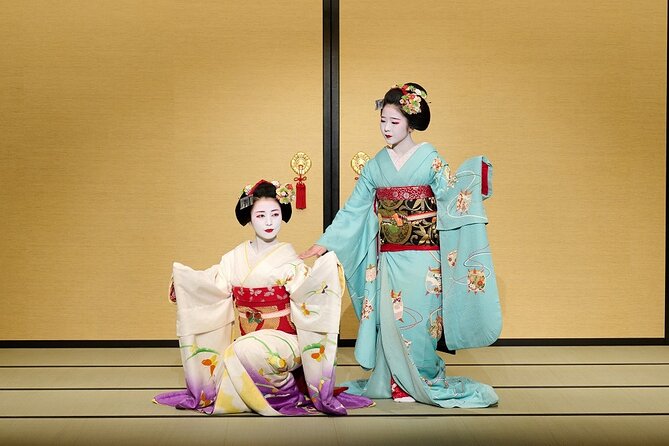
- Gion Corner in one sitting: See Kyoto dance, tea ceremony, flower arrangement, koto music, bugaku, and kyogen, with bunraku or noh included during the regular season.
- Season changes the program: From December 1 through March 14, the winter performance omits bunraku and noh but includes a commemorative photo opportunity with a maiko.
- Lantern-lit Gion walk: Follow Hanamikoji-dori to Gion Shimbashi, an Important Preservation District for Groups of Traditional Buildings.
- Candlelit tea ceremony: Take part in a private evening tea setting at Kurenaitei, the tea ceremony room at Gion Yoshi-Ima.
- Vegetarian Kyoto dinner: Enjoy Buddhist-style cooking, though bonito stock is used in the tempura dipping sauce.
- Small group size: The tour accepts a maximum of 24 people and ends at Gion Yoshi-Ima, well placed for an evening walk in central Gion.
Why this Kyoto evening feels different
Many cultural programs ask you to focus on one art form. This one gives you a sampler of Kyoto’s traditional arts, then places them in a setting where tea, architecture, streets, and food all matter. That makes it useful if you want a broad introduction instead of a long lecture or a single formal performance.
The order works well. You begin with staged arts at Gion Corner, walk through old Gion while the evening lights come on, and finish with tea and dinner. The pace changes from seated theater to street walking to a quiet meal, so the night does not feel like four hours in one room.
I would think of this as a cultural orientation with dinner, not a fully private exploration of Gion. The group can include up to 24 people, and the Gion Corner performance is a public program rather than a show arranged only for your party. Still, the later tea ceremony setting gives the evening a more personal finish.
Your English-speaking guide is licensed by Japan’s National Government. That matters here because the arts can be hard to read at first glance. A guide can explain what you are seeing, point out differences between dance, theater, and court music, and help connect the meal to Buddhist food traditions.
A few more Kyoto tours and experiences worth a look
Gion Corner: seven traditional arts in about 50 minutes
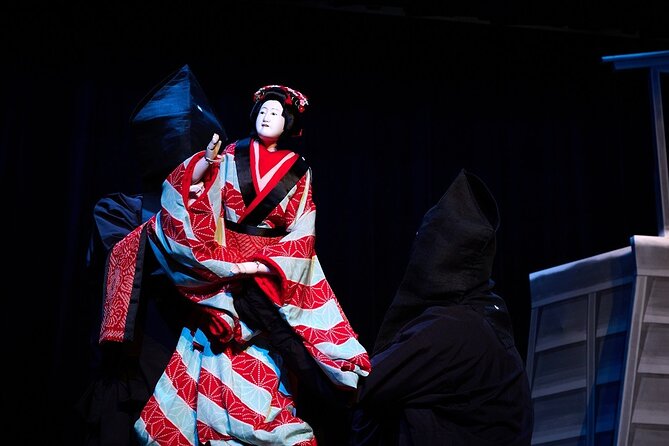
Gion Corner is the most concentrated part of the evening. In about 50 minutes, you can see several forms of Japanese performance and craft presented for an international audience. Admission is included, so you do not need to arrange a separate ticket.
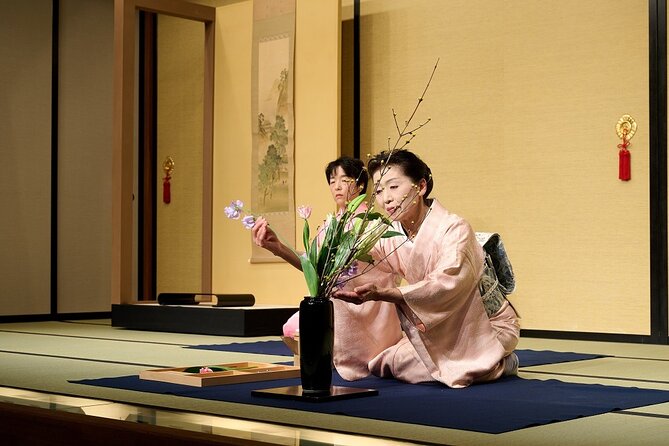
The regular program, offered from March 15 through November 30, includes a traditional Kyoto dance, tea ceremony, flower arrangement, koto music, bugaku, kyogen, and either bunraku or noh. Bunraku is Japanese puppet theater. Noh is a spare, stylized form of drama with music and movement. The final choice depends on the season, and the content can change.
That range is the point. Kyoto dance gives you a glimpse of the refined movement associated with the city’s entertainment districts. Koto music brings the sound of the Japanese zither into the program. Bugaku presents court dance and music, while kyogen supplies traditional comic theater. The contrast between solemn ceremony and comedy helps you see that old Japanese culture was not one single serious style.
From December 1 through March 14, the winter program includes Kyoto dance, tea ceremony, flower arrangement, koto music, bugaku, and kyogen. Bunraku and noh are not part of that winter schedule. In their place, you may have the chance to take a commemorative photo with a maiko, though the content remains subject to change.
I like the short format because you can sample several arts without committing an entire night to one unfamiliar performance. The tradeoff is depth. You will get an introduction, not a full-length tea ceremony lesson, theater production, or music concert. Listen closely to the guide and use the program as a starting point for deciding what you might want to explore later.
Walking Hanamikoji Street toward Gion Shimbashi
After Gion Corner, you walk for about 30 minutes along Hanamikoji-dori Street toward Gion Shimbashi. This is a short distance, but it gives the evening some breathing room after the seated performance.
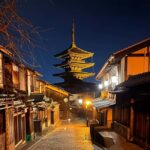
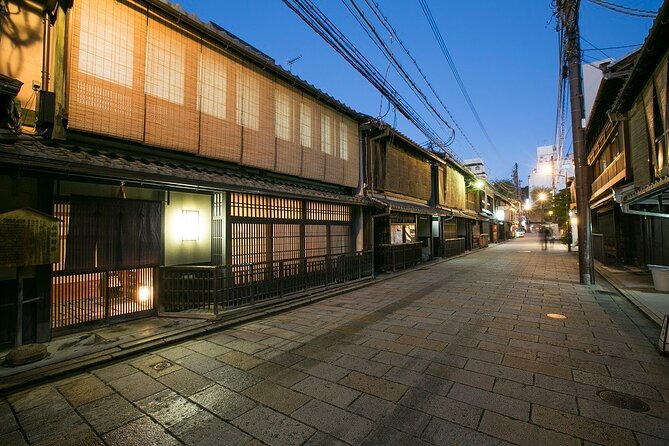
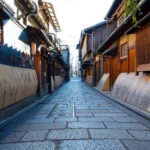
Hanamikoji is lined with traditional teahouses and restaurants. The old buildings and paper lanterns create the atmosphere people usually hope to find in Gion, but the walk is more than a photo stop. It places the performing arts in their neighborhood setting and helps explain why Gion remains so strongly linked with tea houses, geisha culture, and formal hospitality.
The route continues into Gion Shimbashi, an Important Preservation District for Groups of Traditional Buildings. That official designation signals what you are looking at: a protected collection of historic structures rather than a modern shopping street dressed up for tourists.
I would keep your expectations sensible. The walk lasts only around half an hour, so it is not a detailed architectural tour of every lane. You should also respect the character of the area. Follow your guide, keep voices low, and avoid treating private entrances or working teahouses as photo props.
The timing is one of the better features. The lantern-lit streets provide a visual bridge between the theater and the ryokan dinner. If you enjoy atmosphere more than a checklist of sights, this section may be one of the most pleasant parts of the night.
A candlelit tea ceremony at Gion Yoshi-Ima
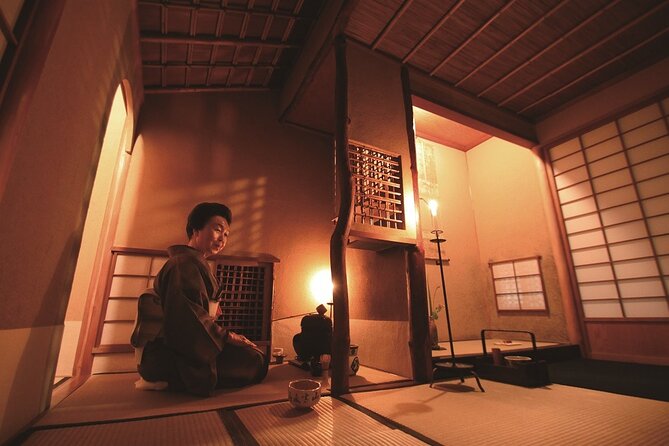
The final main stop is Ryokan Yoshi-Ima, also known as Gion Yoshi-Ima, at 229 Nishinocho in Higashiyama Ward. The tea ceremony takes place in Kurenaitei, a tea ceremony room within the ryokan, and is described as a private evening setting with candlelight.
That setting changes the mood. At Gion Corner, you watch a sequence of arts on a stage. At Yoshi-Ima, the focus narrows to tea, quiet surroundings, and the formal rhythm of Japanese hospitality. The candlelight should not be mistaken for a theatrical trick. It is part of what makes the ceremony feel separate from the busy city outside.
If you have never attended a tea ceremony, pay attention to the small actions: how the room is arranged, how utensils are handled, and how the act of serving tea becomes a form of courtesy. The value is not simply the drink. It is the care given to order, space, timing, and the person receiving the tea.
This is also where the tour’s structure pays off. The guide can help you understand details that might otherwise seem mysterious, while the meal gives you time to settle into the setting. You are not rushed from one photo stop to another.
The tour ends at Yoshi-Ima after dinner. That is practical because the ryokan is in central Gion, making it easy to continue with an evening walk in the district. You will need to arrange your own plans after the tour, but you are not dropped at an isolated meeting point far from Kyoto’s center.
What the Zen-style vegetarian dinner includes
Dinner is served in a Buddhist vegetarian style. The meal is simple and balanced, rather than a large spread built around rich sauces or meat. You can expect rice and miso soup, along with tempura made from tofu, namafu wheat gluten, yuba tofu skin, and seasonal vegetables such as eggplant, lotus root, ginger, and shiitake mushrooms.
This is a useful introduction to Buddhist food traditions because the ingredients are central to the meal. Tofu and yuba show how soy products can provide texture and substance. Namafu, made from wheat gluten, is another traditional ingredient that many visitors may not encounter in an ordinary restaurant meal.
Vegetarians are welcome, but there is one important detail. Bonito stock is used in the tempura dipping sauce. If you avoid fish, salt can be used instead of the sauce. I would make that choice clear before eating rather than assume every part of the meal is strictly vegan or free of fish products.
The operator does not accept requests for Muslim-friendly meals, Indian thali meals, or allergy-friendly meals. That makes this tour a better fit for people comfortable with the stated Buddhist vegetarian menu than for anyone who needs extensive dietary adjustments.
Drinks with dinner cost extra. At $175.60 per person, that price covers admission, the meal, and the licensed English guide, but you should budget separately if you want beer, sake, tea beyond what is included, or another paid drink. The price is easier to justify if you value the combination of performance tickets, interpretation, a special tea setting, and dinner. It is less attractive if you mainly want to walk through Gion or eat a vegetarian meal, both of which can be arranged separately.
Other evening experiences in Kyoto



Timing, transport, and the real four-hour schedule
The tour starts at 5:05 p.m. at Good Nature Hotel Kyoto, at 2 Chome-318-6 Inaricho in Shimogyo Ward. The starting point is near public transportation, but it is not at Gion Corner. That distinction matters.
Part of the evening is used for travel to the first performance and for waiting around the Gion Corner program. The listed stop times add up to about two hours and 50 minutes, while the total tour lasts about four hours. The remaining time covers transport and waiting.
An earlier version of the arrangement used a taxi transfer from the starting hotel toward the venue during rush hour. That could make the opening feel less relaxed, especially if traffic is heavy. The operator indicated that tours beginning in December 2024 would change the transfer from taxi to walking. Because arrangements can change, check the current meeting instructions after booking and allow enough time to reach the hotel.
I would not book this on an evening when you have a train to catch or a fixed dinner reservation afterward. The start time and performance schedule leave little room for delay. The end is at Gion Yoshi-Ima, not back at the first hotel, so plan your evening from Gion rather than assuming a return transfer.
The total group can be as large as 24 people. That is small enough for a guide to provide useful context, but it is not a private tour. At Gion Corner, your party will also be sharing the performance space with other ticket holders.
Seasonal differences you should take seriously
The calendar changes what you see. From March 15 to November 30, the regular program includes either bunraku or noh in addition to the other traditional arts. From December 1 to March 14, the winter performance drops those two options and includes the maiko photo opportunity instead.
Neither schedule is automatically better. If bunraku or noh is the reason you are booking, choose dates in the regular performance period and remember that the exact form depends on the season. If you like the idea of a commemorative photo with a maiko, the winter program may appeal more.
The program can change, so treat the seasonal outline as a guide rather than a guarantee of every item. Your licensed guide remains important because the performance sequence may move quickly and the cultural context is not always obvious to first-time visitors.
Who will get the most from this evening
I would recommend this tour to you if you want a structured first look at Kyoto’s traditional culture and prefer an evening that includes food. It suits couples, solo visitors, and families with older children who can manage a formal performance, a half-hour walk, and a quiet dinner.
It is especially useful early in a Kyoto stay. The evening introduces Gion, gives you a basic vocabulary for Japanese arts, and ends in a central part of town where you can continue exploring. The experience is also a good choice if you are uneasy about entering a traditional tea setting without guidance.
Children under seven cannot participate. Anyone under 18 needs written parental permission, and anyone under 15, or not yet enrolled in middle school, must be accompanied by a parent or guardian.
I would look elsewhere if you want a flexible night, a long private walk, a fully customizable menu, or an in-depth study of one art. The fixed schedule and set dinner are part of the convenience, but they also limit personal choice.
Is $175.60 a fair price?
The price is not cheap for four hours, but it covers several items that would cost money and planning on their own. You receive Gion Corner admission, dinner, and the services of a licensed English guide. You also get the tea ceremony setting at Yoshi-Ima and a route through two of Gion’s best-known historic areas.
The value depends on how much you want interpretation. If you are content to watch a performance without explanations, you may find the cost high. If you want someone to connect the dance, tea, music, food, and neighborhood into one evening, the package makes more sense.
I also like that the final stop is not only a restaurant. The tea room and candlelit setting give the dinner a cultural purpose. You are paying for context and setting as much as for the food itself.
Book at least several weeks ahead if you need a specific date. This experience is booked an average of 42 days in advance, and confirmation arrives within 48 hours, subject to availability. Free cancellation is available until 24 hours before the start time. After that, the cost is not refunded and changes are not accepted.
Should you book it?
Book this tour if you want an easy, well-organized introduction to Kyoto’s traditional arts, followed by a candlelit tea ceremony and Buddhist vegetarian dinner. The strongest reasons are the broad Gion Corner program, the atmospheric Hanamikoji walk, and the unusual finish at Gion Yoshi-Ima.
Skip it if the fixed menu, shared group setting, or off-site meeting point will bother you. Also check the season before paying, especially if you care about seeing bunraku or noh. For the right visitor, this is a practical way to experience several sides of old Kyoto in one evening, without having to arrange each piece separately.
FAQ
How long does the tour last?
The total duration is approximately four hours. The main listed stops take about 50 minutes at Gion Corner, 30 minutes walking through Gion, and one hour 30 minutes at Ryokan Yoshi-Ima. The rest of the time is used for travel and waiting for the Gion Corner performance.
Where does the tour start?
The meeting point is Good Nature Hotel Kyoto, at 2 Chome-318-6 Inaricho, Shimogyo Ward, Kyoto. The start time is 5:05 p.m.
Where does the tour end?
The tour ends after dinner at Gion Yoshi-Ima, at 229 Nishinocho, Higashiyama Ward, Kyoto. The ryokan is in central Gion, which is convenient for continuing an evening walk.
What performances are included at Gion Corner?
From March 15 through November 30, the program includes Kyoto dance, tea ceremony, flower arrangement, koto music, bugaku, kyogen, and either bunraku or noh. From December 1 through March 14, the winter program includes Kyoto dance, tea ceremony, flower arrangement, koto music, bugaku, and kyogen, with a possible commemorative photo with a maiko. The content can change.
Is the dinner vegetarian?
Yes. The dinner is Buddhist-style vegetarian cuisine and includes items such as rice, miso soup, tofu, yuba, namafu, seasonal vegetables, and tempura. Bonito stock is used in the tempura dipping sauce, but salt can be used instead.
Are drinks included with dinner?
No. Drink charges are not included in the tour price.
Can young children join the tour?
Children under seven cannot participate. Participants under 18 need written parental permission. Anyone under 15, or not yet enrolled in middle school, must be accompanied by a parent or guardian.
More Evening Experiences in Kyoto
More Night Walks & Ghost Tours in Kyoto
More tours in Kyoto we've reviewed

Night Walks & Ghost Tours, compared.
 ★ 4.5Night Walk in Gion: Kyoto’s Geisha DistrictFrom $211h 40m
 ★ 5.0Kyoto Night Foodie Tour in Gion (9+ dishes + 6 Sake tastings)From $163
 ★ 4.9Kyoto: Gion Magical Night Walking Tour with Geisha InsightsFrom $34
 ★ 5.0Kyoto Gion Night Walk & Geisha District Guided TourFrom $18
 ★ 5.0Kyoto Ghost Tour: Dark Tales, Urban Legends, Bamboo Forest NightFrom $43
 ★ 5.0Kyoto Bar Hopping Night TourFrom $105