
Reviewed · GION & GEISHA WALKS
Kyoto: Gion Magical Night Walking Tour with Geisha Insights
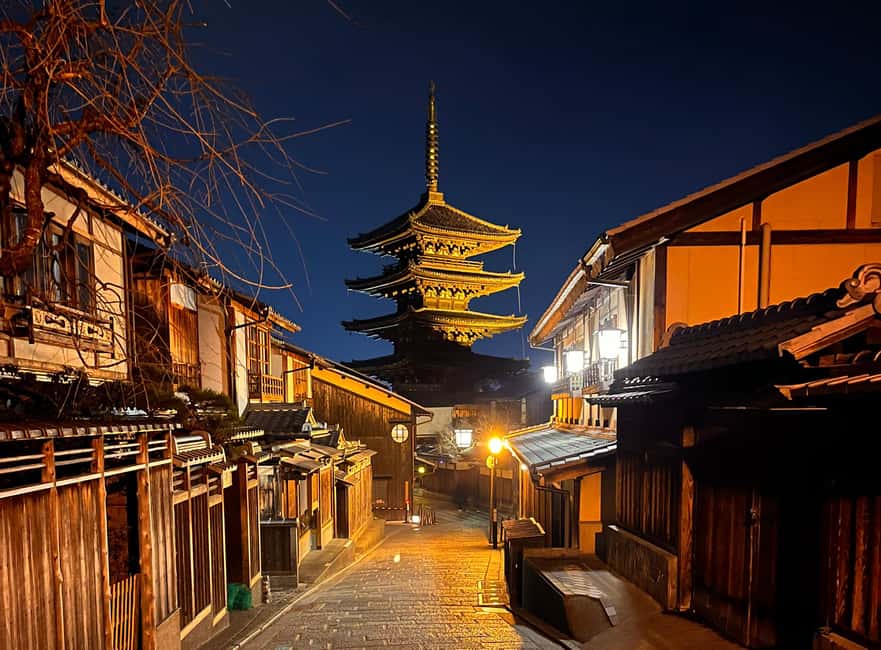
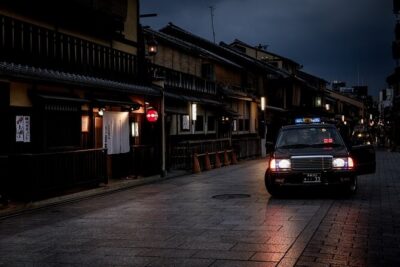
Kyoto’s Gion district changes after sunset. Lanterns glow, wooden townhouses look more theatrical, and the daytime crowds thin out. This small-group night walk begins at Minamiza Theatre and links Gion’s geisha streets with shrines, a pagoda, and lesser-seen lanes.
I like the group limit of 10, which gives you room to ask about geiko customs and local etiquette. I also like the guides’ practical touch: Pam, Shino, Sho, Hina, and others have been praised for clear storytelling, good pacing, and taking photos when you want them. The main drawback is the route’s stairs, so it is not suitable for wheelchairs, baby carriages, or people with limited mobility.
In This Review
- Key points at a glance
- Why Gion works better after sunset
- Meeting your guide at Minamiza Theatre
- Hanamikoji and the working geisha district
- Matchmaking shrine and the glowing pagoda
- Quiet lanes and the final thousand-year-old shrine
- What the small group changes
- Choosing between 6pm and a later departure
- The guides are part of the experience
- Summer comfort, photos, and practical limits
- Who should book this Gion walk?
- Should you book it?
- FAQ
- Where does the Gion night walking tour start?
- Is the listed time the meeting time?
- How large is the tour group?
- Will I definitely see a geiko or maiko?
- Is the tour suitable for wheelchair users or baby carriages?
- What is included in the price?
Key points at a glance
- Gion after dark: See Hanamikoji and nearby traditional streets under lantern light, usually with less heat and fewer people than during the day.
- Small groups up to 10: The limited size makes it easier to hear the guide and ask direct questions.
- Geiko and maiko explained: Learn the difference between fully trained geiko and apprentices, along with customs, work, clothing, and local rules.
- Shrines and a lit pagoda: The route adds cultural sights beyond the geisha district, including a matchmaking shrine and a pagoda that glows at night.
- Photography included: Your guide can take pictures at scenic stops if you would like.
- Two useful evening times: The 6pm departure works well for families and dinner plans, while a later start offers cooler air and quieter streets.
Why Gion works better after sunset
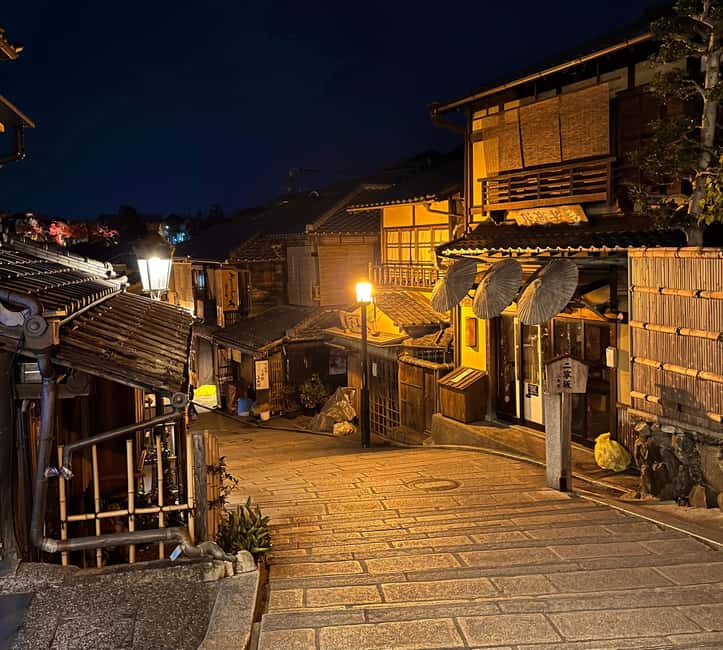
Gion is often treated as a daytime photo stop, but evening is when its mood really comes through. The wooden facades along Hanamikoji take on a softer look beneath the lamps, and narrow lanes feel more intimate once the strong summer sun is gone.
That timing matters in Kyoto. Summer afternoons can be hot and glaring, especially when you are walking on stone streets. The later departures offer a practical escape from the heat, while the 6pm tour gives families and early diners a gentler schedule.
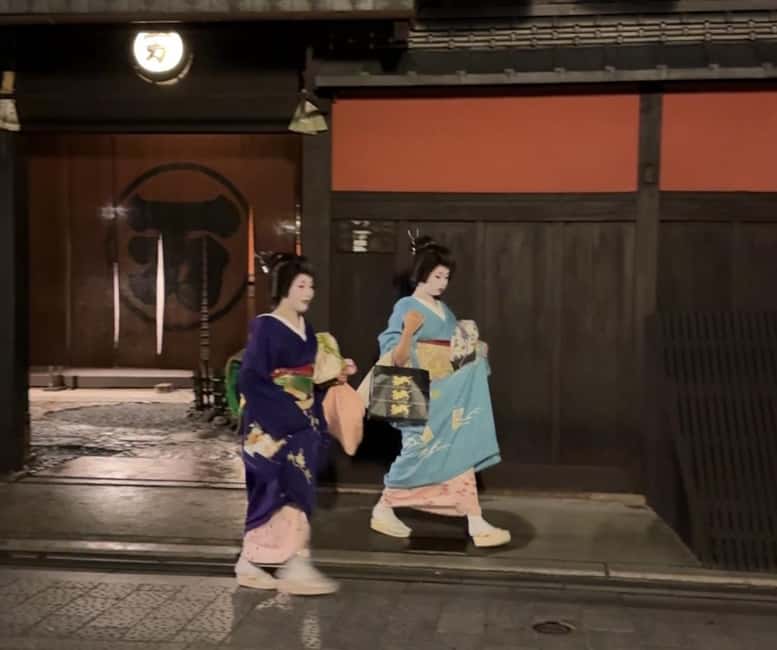
You should keep your expectations sensible. This is a walking tour through a working neighborhood, not a staged geisha performance. You may see a geiko or maiko heading to or from a tea house, but there is no guarantee. The sightings described by guests include single maiko, several maiko, and even a geiko, yet luck and timing decide what happens.
The important thing is how you behave if you see one. Watch from a respectful distance, listen to your guide, and do not treat anyone on the street as a photo prop. The tour’s value is not dependent on a sighting. It gives you context for what you are seeing, which is far more useful than simply spotting a person in elaborate dress.
A few more Kyoto tours and experiences worth a look

Meeting your guide at Minamiza Theatre
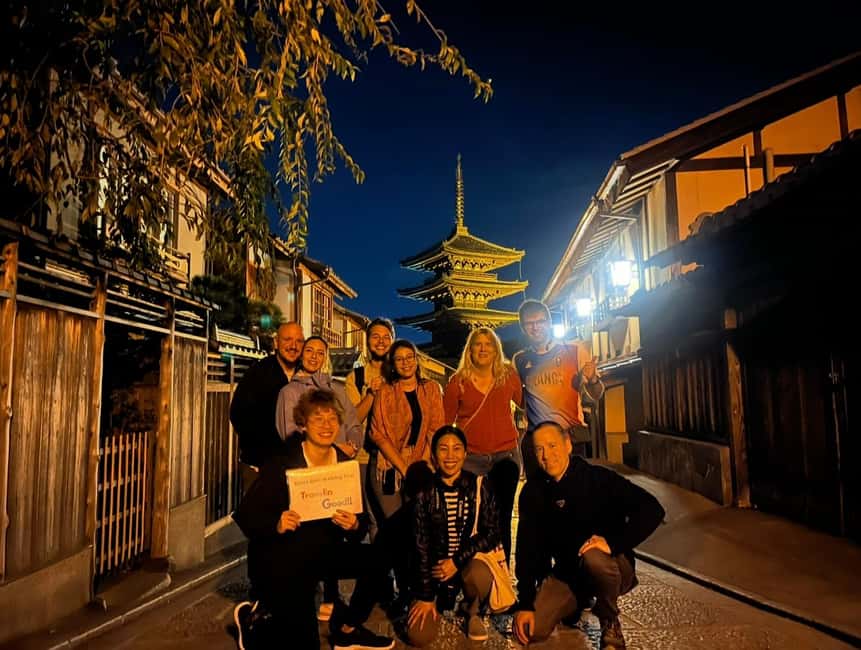
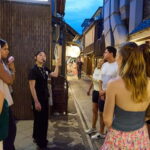
The meeting point is in front of the Minamiza Theatre, on the front side of the building. Look for a guide holding a TravelinGood sign. The listed time is the departure time, not a separate check-in time, so arrive at least five minutes early.
This is one place where a little planning helps. If you are coming by bus or taxi, traffic can slow you down, so allow extra time. Missing the departure is especially inconvenient because the ticket is valid only for the booked date and time. You cannot simply join a different departure without confirmation.
The tour ends back at the same meeting point. That makes it easier to pair with dinner in Gion or a short walk along the Kamo River afterward. It also means you do not need to work out a return route from an unfamiliar part of Kyoto.
Hanamikoji and the working geisha district

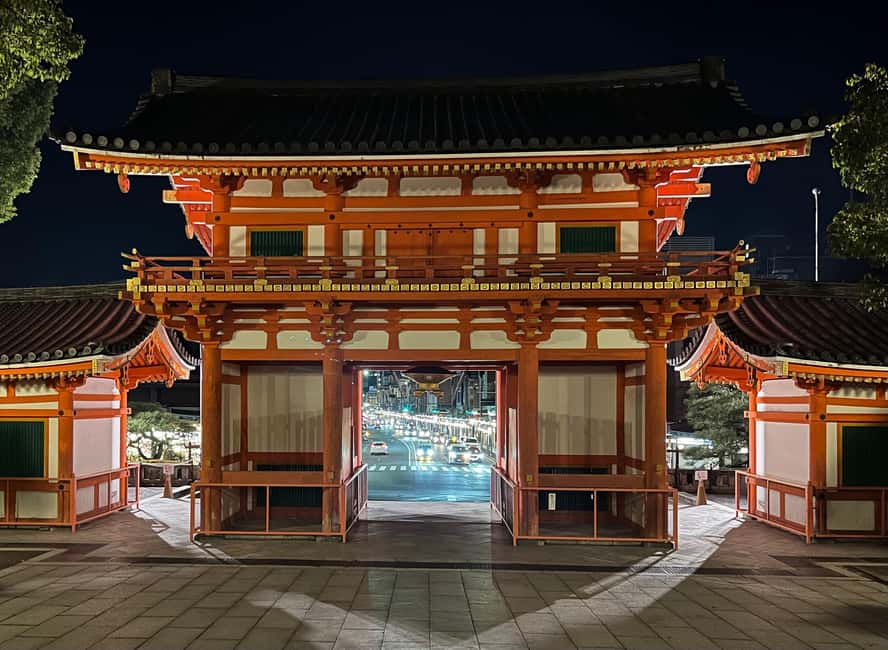
From Minamiza, the group heads toward Hanamikoji, one of Gion’s best-known streets. Traditional wooden buildings line the route, and the street gives you a strong first look at Kyoto’s old entertainment quarter.
Your guide explains the terms and traditions that are easy to confuse. In Kyoto, geiko is the local word for a fully trained geisha, while maiko refers to an apprentice. Clothing, hairstyle, age, training, and stage of work all help distinguish them, though it can be hard to take in those details during a quick street sighting.
This is where the guide makes the biggest difference. Several guides, including Shino, Pam, Sho, Karen, Hina, and Manabi, have been praised for being friendly, patient, and able to answer questions in English. Some guides use extra photographs or short videos to explain the differences between geiko and maiko, their training, and their daily lives.
You will also hear about the rules surrounding Gion. The point is not to turn local customs into a novelty act. It is to help you understand why some streets feel quiet, why certain doors and alleys are private, and why respectful conduct matters.
The route can be especially helpful if you are new to Kyoto. Guides point out photo spots and explain what you are looking at instead of sending you down a famous street with no context. Several guides have also been praised for taking their time while people photographed the buildings and shrines.
Matchmaking shrine and the glowing pagoda
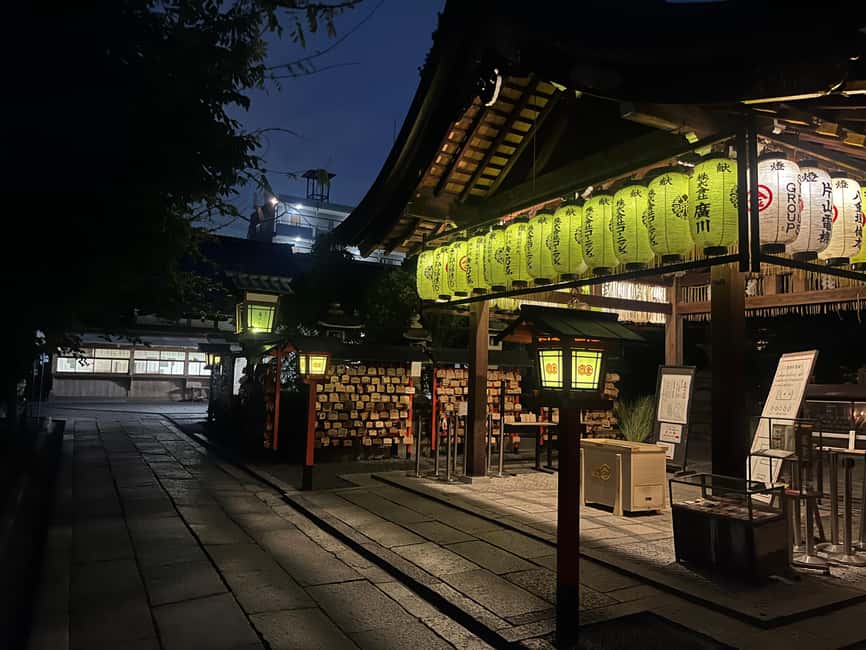
The walk does not stop with Hanamikoji. You continue to a shrine associated with matchmaking, then on to a Buddhist pagoda that is illuminated at night.
The matchmaking shrine adds a small personal ritual to the evening. You can make a wish there, and families with older children or teenagers may find it a fun pause between history lessons. It is also a reminder that Kyoto’s religious sites are still part of everyday life, not just monuments for visitors.
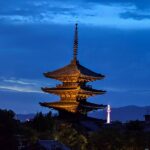
The pagoda is one of the route’s strongest visual stops. At night, its lighting gives the structure a different character from a daytime temple visit. Your guide can take your picture there if you want, which is useful for couples, families, or anyone traveling without a companion who can take a good shot.
The walk includes shrines and temple areas, but do not expect a long formal temple tour. The emphasis is on seeing several places in relation to the streets around them. You get a sense of how old religious sites, traditional homes, tea houses, and modern Kyoto fit together.
Quiet lanes and the final thousand-year-old shrine
After the main sights, the guide leads you through smaller paths and less obvious corners of Gion and Higashiyama. This is where the limited group size pays off. Ten people can move through narrow spaces with less fuss than a large crowd, and you can stop without blocking the entire lane.
The exact feel of this part depends on the pace and the guide assigned to your departure. Some guides focus more on local history, while others spend extra time on geisha customs, photography, or questions from children. The common thread is a slower look at streets you might otherwise pass without noticing.
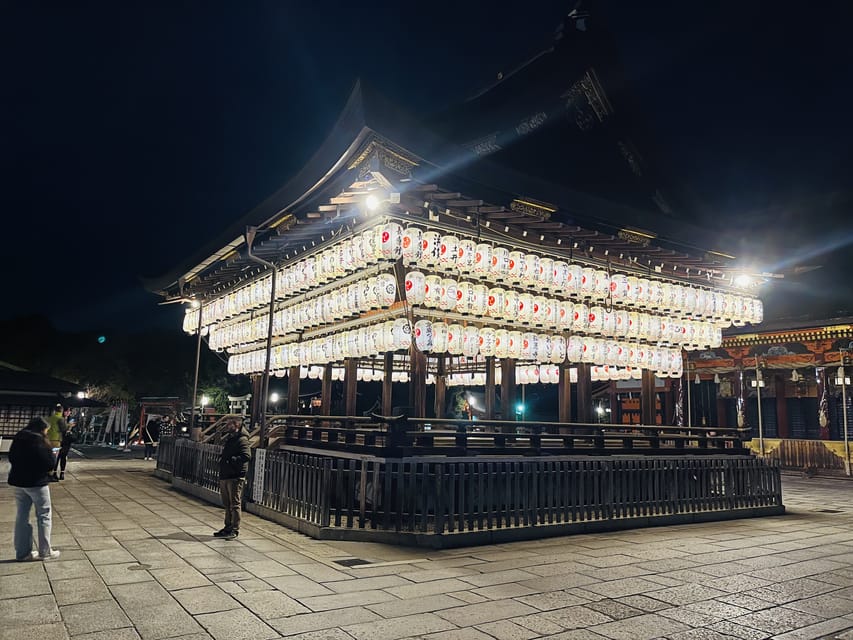
The final stop is a shrine more than 1,000 years old. That gives the tour a strong finish, moving from the visible glamour of Gion toward Kyoto’s older religious traditions. You leave with a wider picture of the neighborhood, rather than thinking of it only as a place to spot geisha.
Keep in mind that this is still a walking route with stairs. Wear comfortable shoes and expect uneven surfaces. The activity is not suitable for wheelchair users, baby carriages, or people with mobility impairments.
A few more Kyoto tours and experiences worth a look


What the small group changes
A maximum of 10 people is more than a marketing detail. On a street walk, it affects how much attention you receive and how easy it is to hear explanations.
With a small group, you can ask why a maiko wears a certain style of hair, how geiko and maiko differ, or what a shrine feature means without waiting for a long line of people to finish speaking. Guides such as Pam and Shino have been singled out for engaging the whole group, while families have found guides patient with younger participants.
The group size also helps in the narrow lanes. You are less likely to feel as if you are part of a noisy procession, and the guide can adjust the pace when someone wants a photo or needs a moment to look around.
There is a tradeoff. A small departure can feel personal, but it also means the tour cannot absorb late arrivals or guests who turn up for another time. Check your booking carefully and be at the meeting point before departure.
Choosing between 6pm and a later departure
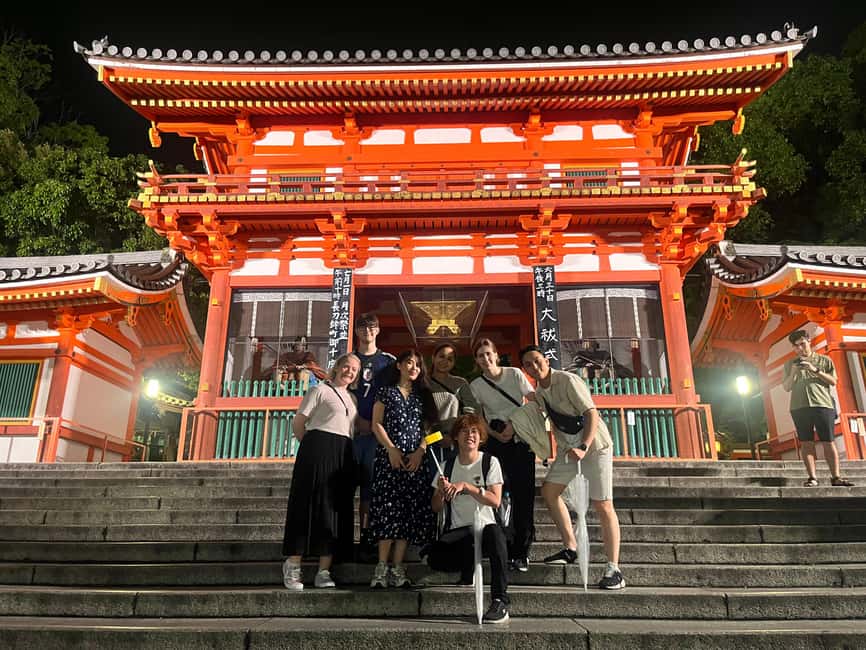
The new 6pm departure is aimed at people who want an early evening outing. It begins before sunset, so you can expect part of the walk to take place in daylight. That is useful if you have dinner reservations afterward or are traveling with young children.
Families have used the tour successfully with children as young as four. Children under six do not need to buy a ticket, but the stairs and walking still matter. A young child who tires easily may find the later part of the route demanding.
The 9pm departure is a better fit if you want cooler air and a quieter mood. It can also suit adults who have spent the day sightseeing and want to avoid the busiest part of the evening. The tradeoff is simple: less daylight and a later finish.
The listed tour price is $34 per person. For that fee, you get an English-speaking guide, a small group, and photography help. I consider that fair value if you want cultural explanation rather than only a guided stroll. It is less compelling if you already know Gion well and prefer to wander without a schedule.
The guides are part of the experience
The guide quality matters here because the streets themselves are free to visit. You are paying for interpretation, pacing, and access to details you might miss alone.
Names that appear repeatedly in the praise for this experience include Shino, Pam, Sho, Hina, Karen, Manabi, Riki, Taka, and Hina. The strongest patterns are clear English, warmth, useful explanations, and a willingness to answer questions. Pam has been praised for storytelling and taking good photographs. Shino is noted for patience and cultural explanations. Sho is described as friendly and well informed about Gion. Hina has handled rain with energy and a cheerful attitude.
You cannot choose a specific guide unless the booking system says you can, so treat these names as examples of the guide pool rather than a promise. The experience is conducted in English, and the guide assigned to you may shape how much time goes to history, geisha culture, temples, or pictures.
That variety is not necessarily a weakness. A good guide can adjust the evening to the group. If you are curious, ask questions early. Small groups make this easy, and direct conversation is where the tour becomes more than a standard route.
Summer comfort, photos, and practical limits
The evening schedule is the tour’s most useful feature in hot weather. You avoid the worst of the afternoon sunlight, and the lanterns provide a more atmospheric setting for the traditional streets.
Rain does not automatically ruin the outing. One guide continued with a positive, energetic approach during wet weather, but you should still dress for conditions and protect your phone or camera. The route includes outdoor walking, so weather can affect comfort.
Photography is included as a service, not as a private photo shoot. Your guide can take pictures at the pagoda and other scenic places, which is handy if you are traveling alone or want a group photo. You will still want to bring your own phone or camera.
The tour is not accessible for wheelchairs or baby carriages because of stairs along the route. It is also listed as unsuitable for people with a cold. If you have a health concern or mobility issue, contact the provider before booking rather than assuming the route can be changed.
You can reserve now and pay later, and cancellation is allowed up to 24 hours before the tour for a full refund. Those terms help if your Kyoto schedule is still shifting, but they do not change the fixed departure rule. Your ticket is tied to the date and time you book.
Who should book this Gion walk?
I would recommend this experience to a first-time Kyoto visitor who wants a quick cultural orientation. It gives you the layout of Gion, a useful introduction to geiko and maiko culture, several religious sights, and a chance to return later with more confidence.
It also fits families with older children and teenagers, especially at 6pm. The mix of stories, wishes at shrines, lantern-lit streets, and photo stops keeps the walk varied. The early time is kinder to young children than a 9pm departure.
Couples and solo visitors will appreciate the evening atmosphere and photography help. The tour is also a good choice in August, when a night walk is far more comfortable than a midday outing.
I would skip it if your main goal is guaranteed contact with a geisha or maiko. Sightings are possible, sometimes memorable, but never promised. I would also skip it if you dislike walking, stairs, or group timing.
Should you book it?
Book this $34 tour if you want Gion explained by a friendly English-speaking guide, not just photographed. The best reasons are the small group, cooler evening timing, practical geisha insights, and combination of Hanamikoji, shrines, a lit pagoda, and older lanes.
Choose the 6pm start for families and dinner plans. Choose a later departure for cooler temperatures and a calmer atmosphere. Arrive early at Minamiza Theatre, wear comfortable shoes, and keep your expectations respectful and realistic.
This is a strong-value introduction to Gion. It does not promise a performance or a private encounter, but it can help you see the district with better manners, sharper context, and a much fuller sense of what makes Kyoto after dark so special.
FAQ
Where does the Gion night walking tour start?
Meet in front of the Minamiza Theatre, on the front side of the building. The guide will hold a TravelinGood sign.
Is the listed time the meeting time?
No. The listed time is when the group leaves the meeting point. Arrive at least five minutes before the scheduled start.
How large is the tour group?
The tour is limited to a small group of up to 10 people.
Will I definitely see a geiko or maiko?
No. You may see a geiko or maiko, but sightings depend on timing and chance and are not guaranteed.
Is the tour suitable for wheelchair users or baby carriages?
No. Stairs along the route make the tour unsuitable for wheelchair users, baby carriages, and people with limited mobility.
What is included in the price?
The $34 price includes an English-speaking guide and photography service. Children under six do not need to purchase tickets.
More Walking Tours in Kyoto
More Night Walks & Ghost Tours in Kyoto
More Gion & Geisha Walks in Kyoto
More tours in Kyoto we've reviewed




Gion & Geisha Walks, compared.
 ★ 4.7Kyoto Geisha Walking Tour: Gion District & Hidden GemsFrom $252 hours
 ★ 4.7Kyoto: Gion Geisha District Walking Tour – Stories of GeishaFrom $202 hours
 ★ 4.9Best of Kyoto: Gion, Geisha, Pagodas & CobblestonesFrom $242 hours
 ★ 4.5Night Walk in Gion: Kyoto’s Geisha DistrictFrom $211h 40m
 ★ 5.0Kyoto Night Foodie Tour in Gion (9+ dishes + 6 Sake tastings)From $163
 ★ 5.0Kyoto Gion Geisha District Walking Tour – The Stories of GeishaFrom $25