
Reviewed · GION & GEISHA WALKS
Kyoto Night Foodie Tour in Gion (9+ dishes + 6 Sake tastings)
Kyoto’s best food moments often happen behind an unmarked door, down a narrow lane, or at a counter where the menu makes little sense in English. This 3.5-hour Gion and Pontocho food tour takes away the guesswork, pairing a guided evening walk with more than nine dishes and six sake tastings.
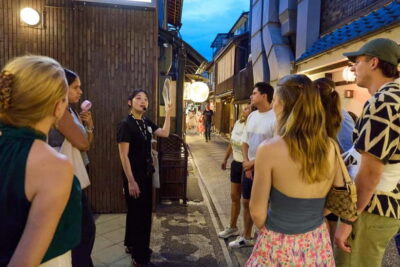
I like two things here. First, the food is meant to make up a full dinner, not just a parade of tiny nibbles. Second, a group capped at seven people gives guides such as Jimmy, Emma, Rika, and Yuki room to explain the food and steer you through Kyoto’s old entertainment districts.
The main caution is value. At $163.49 per person, you are paying for access, guidance, and the social ease of a planned evening. Some people found the portions or restaurant quality less impressive than expected, and the pace between stops can feel rushed.
In This Review
- Key points at a glance
- Why this Kyoto food tour works best at night
- Gion Shirakawa and the first Kyoto meal
- Pontocho brings a different kind of Kyoto evening
- Kawaramachidori and the sake finish
- The guides shape the whole evening
- What the $163.49 price really covers
- Who should book this experience
- Small details that make the evening better
- Should you book the Gion night food tour?
- FAQ
- How long does the Kyoto Night Foodie Tour last?
- How many people can join the tour?
- How much food and sake are included?
- Where does the tour go?
- Can the tour accommodate allergies or dietary restrictions?
- Can I cancel for a full refund?
Key points at a glance
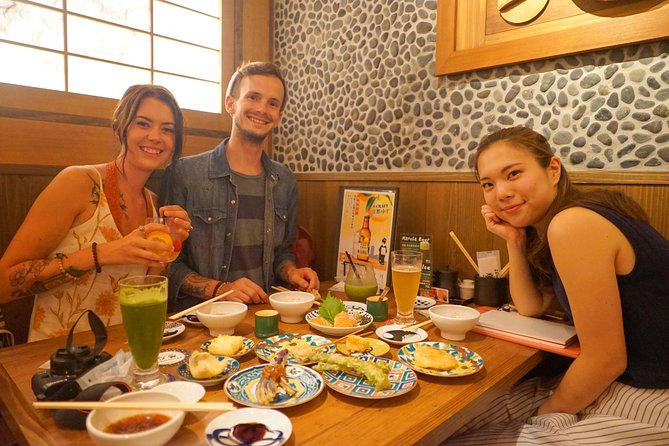
- Nine-plus dishes form a full evening meal, with Kyoto specialties such as obanzai, small vegetable-based plates.
- Six sake tastings are included, with the final tasting held at a standing bar near Kawaramachidori.
- Gion Shirakawa, Pontocho, and the Kamo River provide the setting, so the evening is part food tour and part neighborhood walk.
- The group is limited to seven people, useful for conversation, restaurant seating, and questions.
- Guide quality matters here, and names praised for warmth and local insight include Jimmy, Emma, Rika, Shun, Shiori, Yuma, and Yuki.
- Dietary requests must be made by the day before, and allergy-free meals cannot be guaranteed.
Why this Kyoto food tour works best at night
Gion and Pontocho are not simply restaurant zones. They are districts shaped by geisha culture, traditional architecture, nightlife, and the narrow spaces between the Kamo River and Kiyamachi Street.
That setting gives the tour more purpose than a restaurant crawl. You are not only eating. You are learning how Kyoto’s evening districts work, then using that knowledge to find places you would be unlikely to choose on your own.
The meeting point is the Statue of Izumo-no-Okuni near Kawabatacho in Higashiyama Ward. The tour returns there at the end, which is convenient if you want a fixed starting and finishing point rather than navigating to several unrelated venues.
The route includes Gion Shirakawa, Pontocho, Kawaramachidori, and a walk near the Kamo River. These are central parts of Kyoto, close to public transportation, but you should still expect plenty of walking on narrow streets and through busy evening areas.
The tour lasts about three and a half hours. That is long enough for a proper night out, but short enough to fit around other Kyoto plans. I would schedule it early in your stay. A good guide can point you toward dishes, drinks, and neighborhoods to try later.
A few more Kyoto tours and experiences worth a look

Gion Shirakawa and the first Kyoto meal
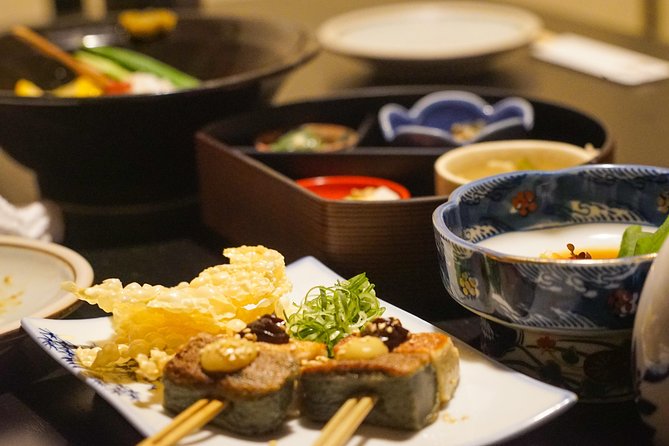
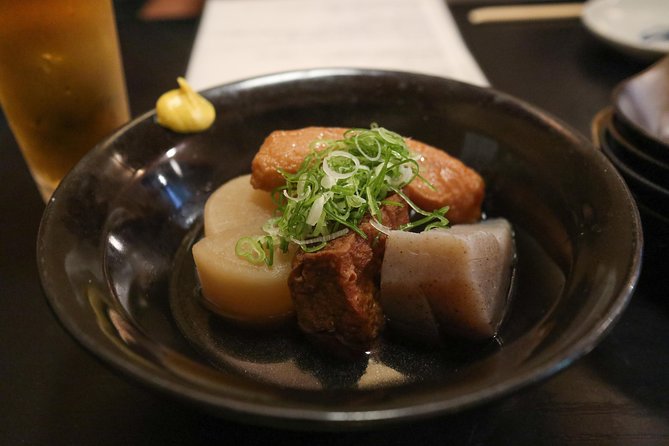
The first food stop is in Gion, around the Gion Shirakawa area. Here you stop at a traditional restaurant serving local Kyoto food, including obanzai.
Obanzai is a useful introduction to Kyoto cooking because it is centered on vegetables and home-style side dishes rather than one oversized main course. You may encounter several small preparations at once, each with its own texture and seasoning. This style also lets you sample foods you might not order from an unfamiliar menu.
That is one of the strongest reasons to take this tour. You do not need to spend your first night in Kyoto pointing at pictures, guessing at ingredients, or worrying that you have ordered three versions of the same thing. Your guide can explain what arrives and how it fits into local food culture.
The first stop is planned for about an hour. That should give you time to eat and ask questions, though the exact rhythm depends on the restaurant and the evening crowd. One important practical detail comes from the mixed experiences with service: busy restaurants have occasionally missed drink orders or brought incorrect dishes.
This is not a reason to avoid the tour, but it is a reason to keep your expectations realistic. The evening is social and guided, not a private tasting menu with perfectly timed courses.
Pontocho brings a different kind of Kyoto evening
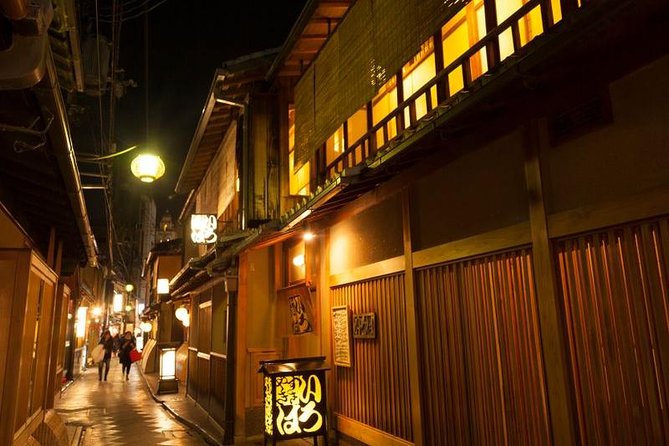
The second stop moves to Pontocho District, a narrow entertainment area between the Kamo River and Kiyamachi Street. Pontocho has a different feel from the quieter lanes around Gion Shirakawa, with restaurants, bars, and nightlife packed into a slender strip.
You will try another Kyoto local cuisine here. The exact dishes can vary, and the tour’s food selection is designed to change with the restaurants being used. Some groups have found the second stop generous, including an all-you-can-eat element, while others felt the amount of food across the evening was not enough for the price.
That difference is worth noting if you have a large appetite. The tour advertises nine or more dishes and describes the tastings as a full dinner, but you should not treat it as an unlimited feast at every venue. If you are accustomed to large portions, consider having a light snack earlier in the day rather than arriving ravenous and expecting a banquet.
Pontocho is valuable even when the food is not your favorite part. Your guide provides a reason to enter venues you might pass by, and the small group helps the evening feel less awkward than walking into a compact bar without knowing the customs.
The district is also a good place to ask about Kyoto’s geiko and maiko traditions, architecture, and nightlife etiquette. Guides including J, Shun, and Yuki have been praised for explaining the area and offering useful ideas for the rest of a Kyoto visit.
One drawback is timing. The tour moves between reservations, and one account described an initial walk used to fill time before a restaurant booking. The guide’s neighborhood explanation may be worthwhile, but you may prefer to know the schedule clearly from the start. If you are particular about pacing, ask your guide when the next seating begins.
Kawaramachidori and the sake finish
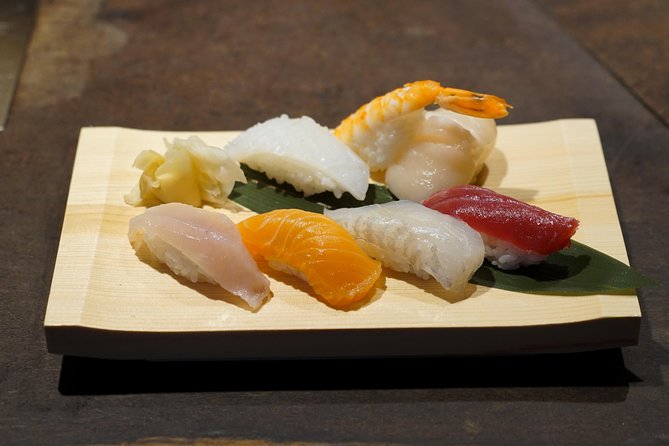
The final stop is a standing bar around Kawaramachidori, where you taste Japanese sake. Soft drinks are also available, so you do not need to drink alcohol to take part in the final stop.
The title promises six sake tastings, while the general description also refers to trying three different types of local sake. The safest expectation is a guided sampling of several sake styles rather than a formal class with a detailed tasting sheet.
This part works well after food because you can compare the drinks with what you have already eaten. Your guide can explain basic differences and help you decide what you like. Several guides have also been praised for explaining cocktails, plum wine, and other drinks, so the evening is not limited to sake alone.
The standing-bar setting is casual and distinctly different from a seated restaurant. It may not suit anyone who wants a quiet, polished finish. You should also expect to remain on your feet during parts of the tour, which matters if you have mobility concerns.
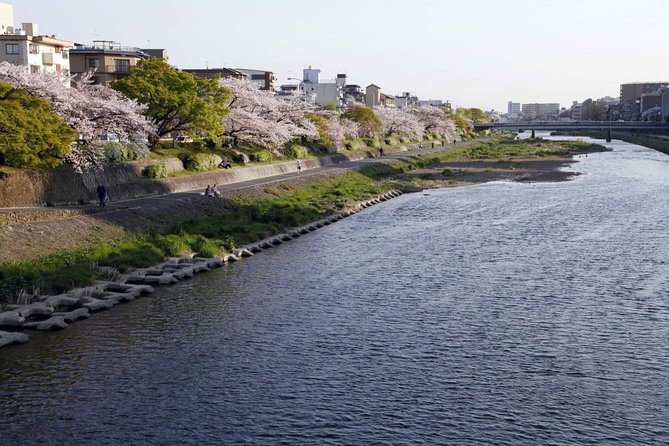
The Kamo River is part of the route and provides a useful sense of place. The river runs north to south through Kyoto for about 27 kilometers, and the walk near it connects the restaurant districts to the city’s wider geography. This is not a river cruise or a scenic viewpoint tour, but the river helps break up the indoor stops.
The guides shape the whole evening
A food tour like this lives or dies by the guide. The planned stops matter, but the guide determines how much you learn, how comfortable the group feels, and how smoothly the night moves.
The strongest guide comments have been tied to specific people. Jimmy is praised for humor, local suggestions, and finding places that would be difficult to locate alone. Emma is noted for explaining Japanese food, cocktails, sake, and Kyoto. Rika has been appreciated for her easy conversation and clear explanations of both food and the districts.
Yuki has been praised for making the evening feel simple and relaxed, including a cozy outdoor meal with a heated table during cool weather. Shun and Shiori are also noted for food and cultural explanations. These names may not be your assigned guides, but they show what the experience depends on: an outgoing local host who can make a meal feel like a shared evening rather than a series of transactions.
English ability has been praised in individual guide experiences, including Miyabi. Still, guide style varies. One person found the conversation too political, while another felt the guide was polite but did not communicate the timing well.
That is a fair reminder that personal chemistry matters. You may get a funny storyteller, a serious food expert, or a guide whose greatest strength is practical advice for the rest of your trip.
Other sake brewery and tasting tours in Kyoto


What the $163.49 price really covers
At $163.49 per person, this is not a bargain dinner. You are paying for food, sake, reservations, local guidance, translation help, and the convenience of moving through three areas without planning each stop yourself.
The price makes more sense if you are nervous about ordering in small restaurants or if you want one organized evening early in your Kyoto visit. It can also be useful for families and larger parties. A group of six may have trouble finding seats together at small local venues, while a planned tour handles that problem.
The price makes less sense if your main goal is to eat as much as possible. Kyoto has many restaurants, and an independent dinner plus a few drinks could cost less, especially if you already know where you want to go. Some people also felt the food quality did not match the cost, particularly at later stops.
I would judge the value by your priorities. If you value local context, access to unfamiliar places, and a friendly evening with a small group, the cost may be reasonable. If you want premium ingredients, lavish portions, or a carefully staged tasting menu, this is probably not the right fit.
The 4.8 rating and 96 percent recommendation figure suggest that the experience works very well for most people, but the lower scores are useful. They point to the same risks: variable food quality, rushed movement, unclear timing, and expectations set too high by the phrase foodie tour.
Who should book this experience
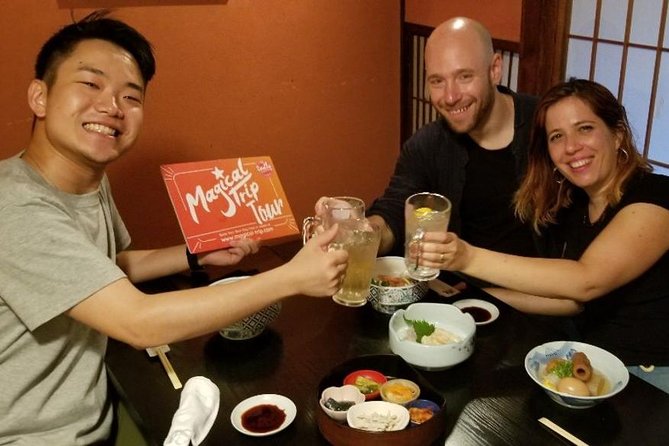
I would recommend this tour to first-time Kyoto visitors who want a gentle introduction to local food and nightlife. It suits people who enjoy trying unfamiliar dishes but do not want to decode every menu themselves.
It is also a good match for families with older children and adults. One particularly broad group included ages 14 to 85, which suggests the social format can work across generations, provided everyone is comfortable walking and standing.
Solo visitors and couples can benefit from the group format, too. The small size gives you a chance to meet other people without the crowd feeling unwieldy. The guide often eats with the group, which can make the evening feel more natural.
You may want to skip it if you have strict allergies, significant dietary restrictions, or serious mobility issues. The food is prepared in kitchens that the tour company does not control, allergy-free meals cannot be guaranteed, and substitutions may not be possible at every stop. Requests must be submitted by the day before, not on the day itself.
Kyoto summers are hot and humid. Bring water and wear a hat, particularly because the tour includes walking outdoors in the evening. Comfortable shoes are a practical choice year-round.
Small details that make the evening better
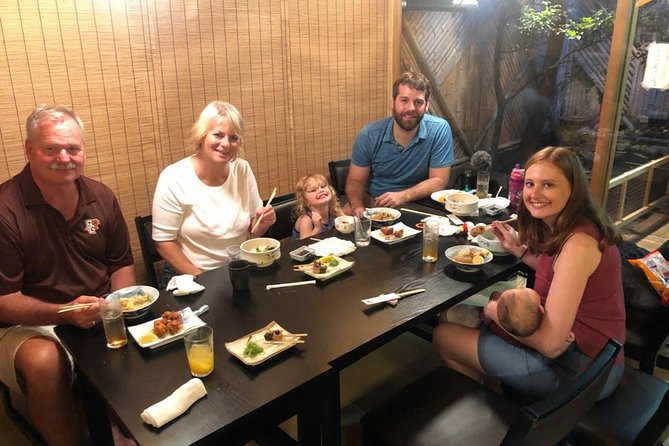
Arrive at the Statue of Izumo-no-Okuni with enough time to identify the guide and the MagicalTrip sign. The monument can be shared by several tours, so do not assume every nearby guide is connected to your booking.
Go with an open mind about the dishes. The most useful part of the menu may be the food you would never have ordered yourself, such as unfamiliar vegetable plates or local preparations that do not resemble standard restaurant fare at home.
If plum wine with soda is offered, it is worth trying. That specific drink suggestion has come up as a memorable part of the evening, and it gives you something beyond beer or sake to compare.
Do not plan a second full dinner afterward. The tour is designed to provide enough food for a meal, though very hungry diners may find the portions modest. A late dessert stop or a casual drink afterward is more sensible than another large restaurant reservation.
Finally, treat the walking portions as part of the experience. The route through Gion, Pontocho, Kawaramachidori, and the Kamo River is not dead time. It is how the food stops fit into the history and layout of Kyoto’s nightlife districts.
Should you book the Gion night food tour?
Book it if you want a guided introduction to Kyoto cooking, sake, and evening neighborhoods, especially during your first few nights in the city. The small group, nine-plus dishes, several sake samples, and access to compact local venues give you a useful start.
I would be more cautious if you are paying mainly for food quantity or high-end dining. The $163.49 cost is significant, and the experience can vary with the guide, restaurant service, and group pace.
For many people, the best reason to choose it is not one perfect dish. It is the combination of a local guide, unfamiliar foods, Gion and Pontocho after dark, and an evening that removes the stress of choosing where to go. Free cancellation is available up to 24 hours before the start time, so you have a little flexibility when making the booking.
FAQ
How long does the Kyoto Night Foodie Tour last?
The tour lasts approximately 3 hours and 30 minutes, and it ends back at the Statue of Izumo-no-Okuni meeting point.
How many people can join the tour?
The tour has a maximum of seven travelers, creating a small-group setting for walking, dining, and questions.
How much food and sake are included?
The experience includes more than nine dishes intended to make up a full dinner, along with six sake tastings. The description also refers to three types of local sake, so the exact tasting format may vary.
Where does the tour go?
The route includes the Gion Shirakawa area, Gion, Pontocho District, Kawaramachidori, and the Kamo River area.
Can the tour accommodate allergies or dietary restrictions?
Allergy-free food cannot be guaranteed, and substitutions may not be possible at every stop. You must submit dietary requests by the day before the tour. Requests made on the day are not accepted.
Can I cancel for a full refund?
Yes. You can cancel at least 24 hours before the experience start time for a full refund. Cancellations or changes made less than 24 hours in advance are not accepted for a refund.
More Kyoto Food Tours in Kyoto
More Sake Brewery Tours in Kyoto
More Gion & Geisha Walks in Kyoto
More tours in Kyoto we've reviewed


Gion & Geisha Walks, compared.
 ★ 4.7Kyoto Geisha Walking Tour: Gion District & Hidden GemsFrom $252 hours
 ★ 4.7Kyoto: Gion Geisha District Walking Tour – Stories of GeishaFrom $202 hours
 ★ 4.9Best of Kyoto: Gion, Geisha, Pagodas & CobblestonesFrom $242 hours
 ★ 4.5Night Walk in Gion: Kyoto’s Geisha DistrictFrom $211h 40m
 ★ 5.0Kyoto Gion Geisha District Walking Tour – The Stories of GeishaFrom $25
 ★ 4.9Kyoto: Gion Magical Night Walking Tour with Geisha InsightsFrom $34