
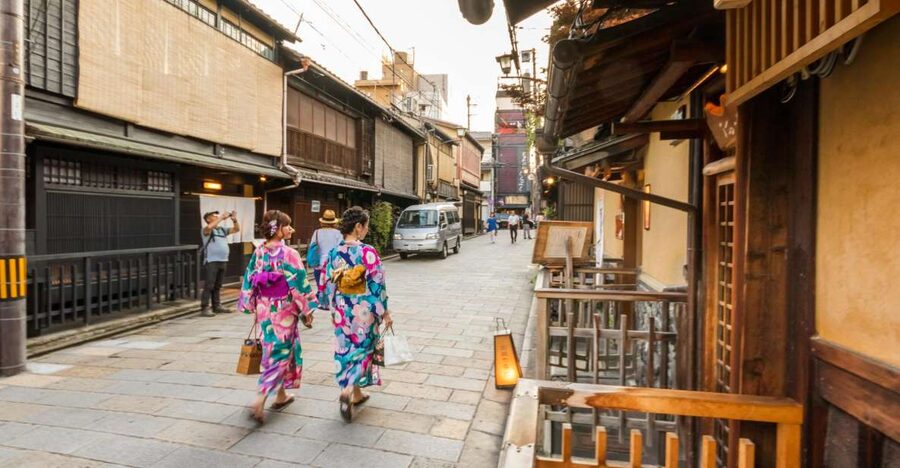
Reviewed · GION & GEISHA WALKS
Night Walk in Gion: Kyoto’s Geisha District
Gion changes character after dark. Lanterns glow, narrow lanes grow quiet, and you may catch sight of a geiko or maiko heading to an evening appointment. This 100-minute walk explains what you are seeing without turning the district into a stage show.
I like the local English-speaking guides, especially guides such as Mia, Mie, Chako, and Mai, who bring personal detail, humor, photos, and clear etiquette advice. I also like the gentle pace and the chance to connect Gion’s streets with the real work, training, clothing, and rules of geiko life. The main consideration is simple: seeing a geiko or maiko is never guaranteed, and respectful observation matters more than getting a photograph.
In This Review
- Key points to know
- What nighttime Gion reveals
- The walk from Gion Shijo Station
- Learning the difference between geiko and maiko
- The stream, lanes, and film-famous scenery
- The chance to see a geiko or maiko
- Why the guide makes the difference
- Is $21 a good value?
- Timing your evening in Gion
- Who should book this walk?
- Should you book the Night Walk in Gion?
- FAQ
- Where does the Night Walk in Gion begin?
- How long does the tour last?
- What language is the tour offered in?
- Is seeing a geiko or maiko guaranteed?
- Can I record video during the tour?
- Is transportation or hotel pickup included?
- Can I cancel the booking for a refund?
Key points to know
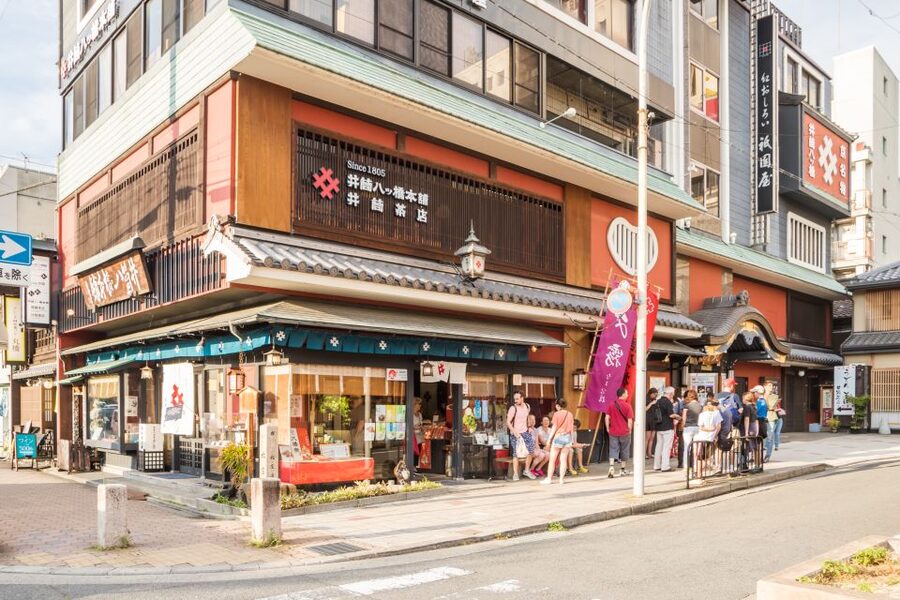
- The meeting point is easy to find: Start in front of Gion Omoide Museum, connected to the Izutsu Yatsuhashi pastry shop near Gion Shijo Station.
- The walk lasts 100 minutes: You explore nighttime Gion on foot with a licensed English-speaking guide.
- The subject goes beyond costumes: Learn about training, hairstyles, kimono, tea-house customs, daily life, and the difference between geiko and maiko.
- Sightings are possible but not promised: The timing often overlaps with evening appointments, yet the tour remains worthwhile if the streets are quiet.
- Respect is part of the lesson: Guides explain how to greet, bow, observe quietly, and avoid intruding.
- The price is modest: At $21 per person, the tour offers a useful introduction for anyone who wants context before exploring Gion alone.
What nighttime Gion reveals
Gion is often presented as Kyoto’s geisha district, but that phrase can flatten a very specific culture into a tourist label. The people you may see are called geiko in Kyoto, while maiko are apprentices training toward that profession. The evening walk helps you understand the difference and shows how the district still functions as a working neighborhood.
The tour begins near Gion Shijo Station, in front of Gion Omoide Museum and the Izutsu Yatsuhashi pastry shop. That is a practical meeting point because it puts you close to the classic streets of Gion without requiring hotel transport or a complicated transfer.
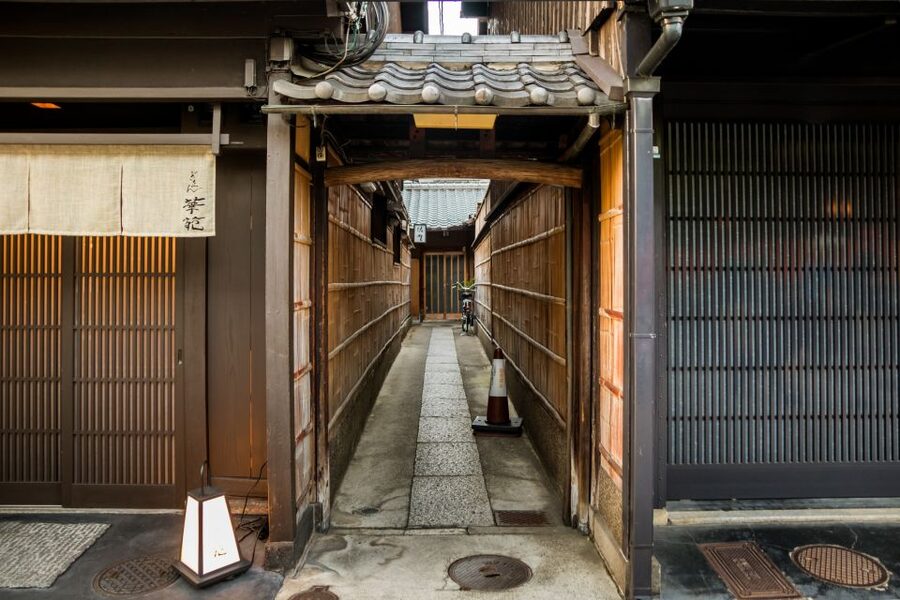
From there, you walk through lanes associated with geiko and maiko life. The route includes scenic streets beside a stream, along with locations that may look familiar from Memoirs of a Geisha. The film connection may attract you here, but the guide’s explanation is more useful than the movie image alone. You get a clearer idea of how Gion works today and why the district asks visitors to behave carefully.
A few more Kyoto tours and experiences worth a look

The walk from Gion Shijo Station
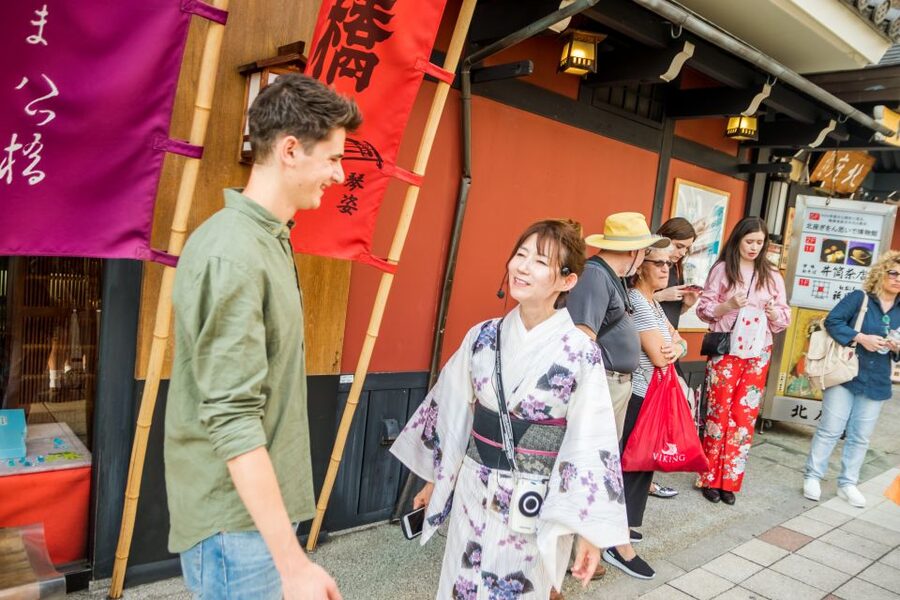
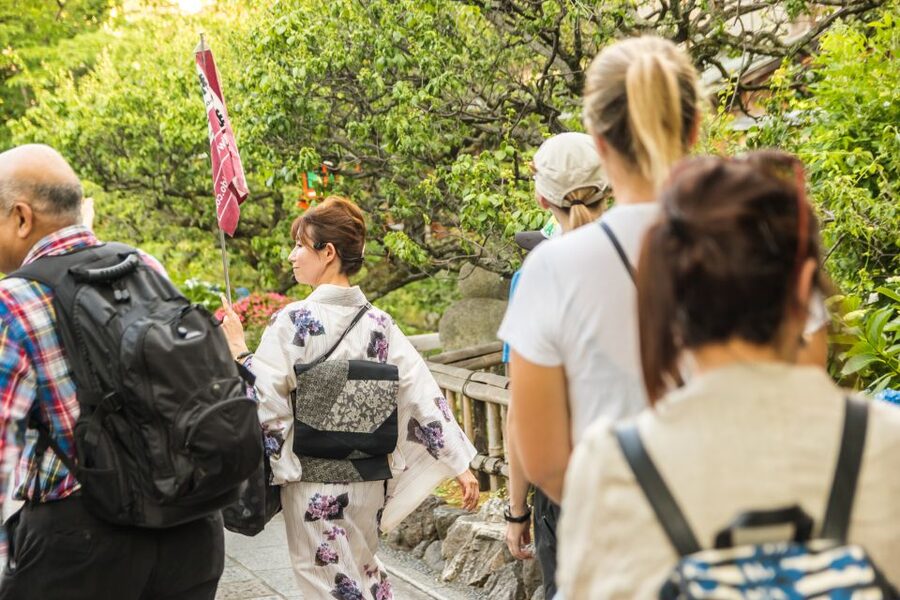
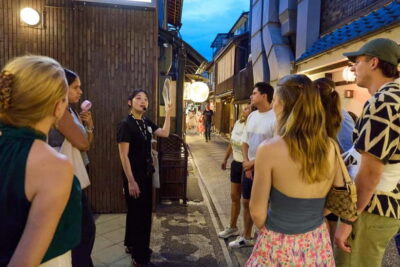
The first part of the tour is about getting oriented. Your guide leads you away from the meeting point and into Gion’s traditional streets, explaining what you are looking at instead of simply pointing out pretty buildings.
This matters because Gion can seem mysterious if you walk through it without context. A closed-looking entrance may be a private boarding house or a tea house. A woman in formal dress may be heading to work, not posing for visitors. The guide helps separate a tea house from an ordinary teahouse, a distinction one guide used to make the area easier to understand.
Expect the group to keep moving at a steady walking pace. The tour is not a performance with a fixed indoor presentation. Its value comes from listening while you walk, stopping for explanations, and seeing the district in its evening setting.
The route is scenic, but you should wear comfortable shoes. The activity is not suitable for people with mobility impairments, and there is no hotel pickup or transportation between stops. You meet at the starting point and finish the walk on foot.
Learning the difference between geiko and maiko
The strongest part of the experience is the cultural explanation. Guides cover the history of geiko and maiko, their training, daily schedules, clothing, hairstyles, and the rules that shape their work.
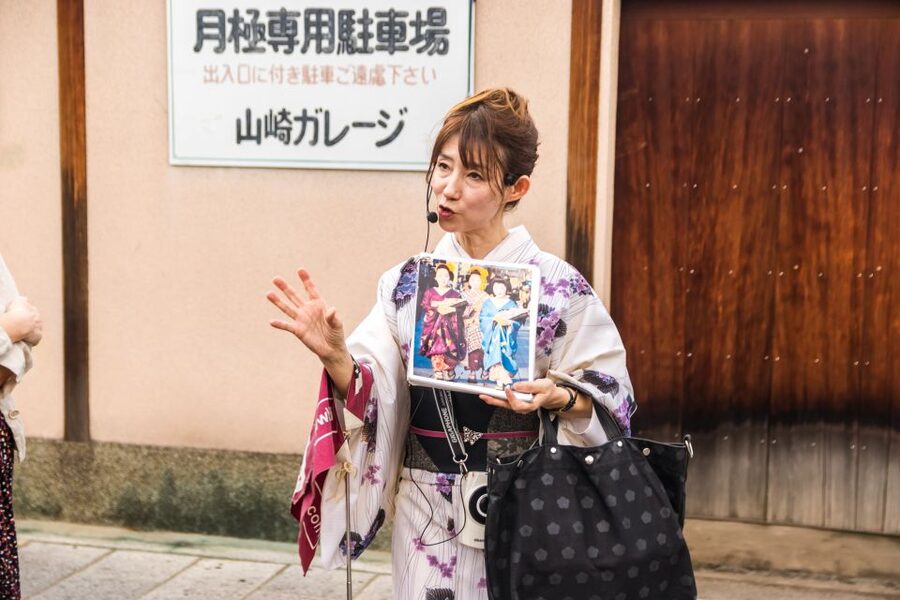
You learn to notice details that are easy to miss. Kimono styles, hair arrangements, and accessories can help distinguish a maiko from a geiko. The guide also explains the stages of training and the role of tea-house appointments, giving you a way to see these women as working professionals rather than costume figures.
Several guides have used photographs and visual charts during the walk. Mie, in particular, has been praised for carrying a thick file of photos and using it to explain details that are hard to show in a dark street. Another guide, Tako, used helpful charts to make the history and context easier to follow.
That kind of preparation is valuable because English-language information about Gion can be vague or romanticized. A good guide gives you the right vocabulary and explains the living culture behind the clothing.
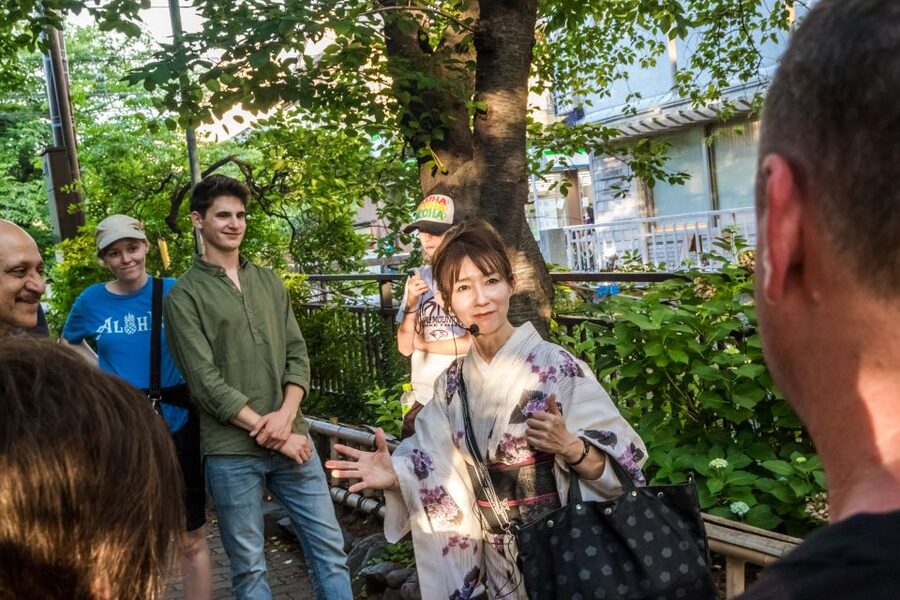
You will also hear about rules of conduct. Guides have explained how to bow, greet quietly, keep a respectful distance, and avoid blocking someone on the way to an appointment. This is not a minor extra. Gion has faced problems with visitors chasing, touching, or photographing geiko and maiko, so the tour’s best lesson may be how to look without interfering.
The stream, lanes, and film-famous scenery
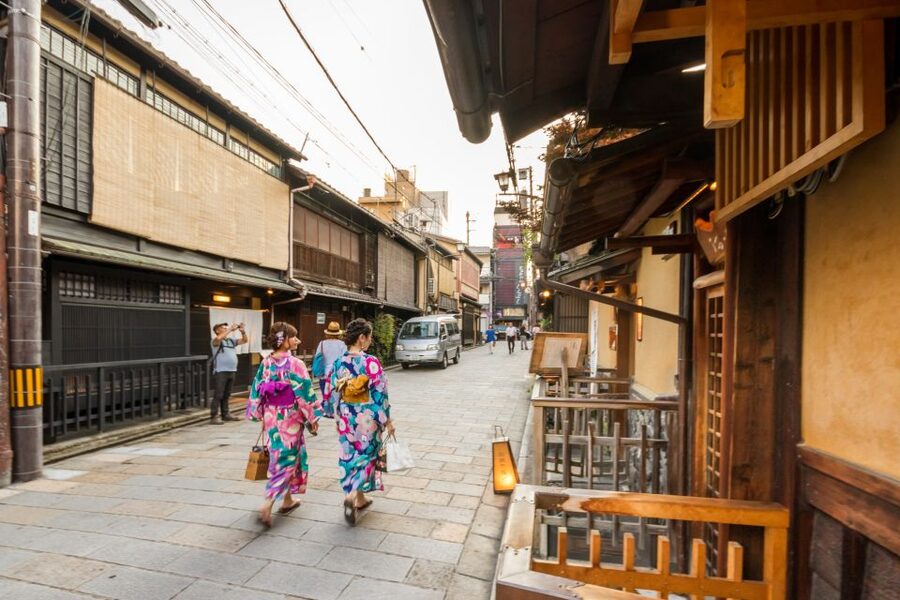
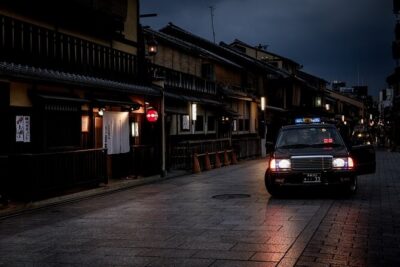
The walk beside the stream is one of the prettiest parts of the route. At night, the water and traditional streets create the atmospheric Kyoto scene many people hope to find.
The area was featured in Memoirs of a Geisha, which gives the route an obvious appeal for film fans. Still, I would treat the movie connection as a starting point, not the main reason to book. The real interest is seeing how the streets relate to present-day tea-house culture and evening work.
The guide may point out quieter or less crowded parts of the district. One group was taken to a less crowded area and saw several geiko and maiko there. Another group appreciated the picturesque locations away from larger tour groups.
That quieter route can make a major difference. Gion is compact, and popular lanes can feel crowded, especially at busy times. A smaller group is easier to keep together and less likely to fill the street. One family noted that the walk worked well with three children and a pram, though the official information says the activity is not suitable for people with mobility impairments. I would ask about your exact needs before booking if anyone in your party has difficulty walking.
The chance to see a geiko or maiko
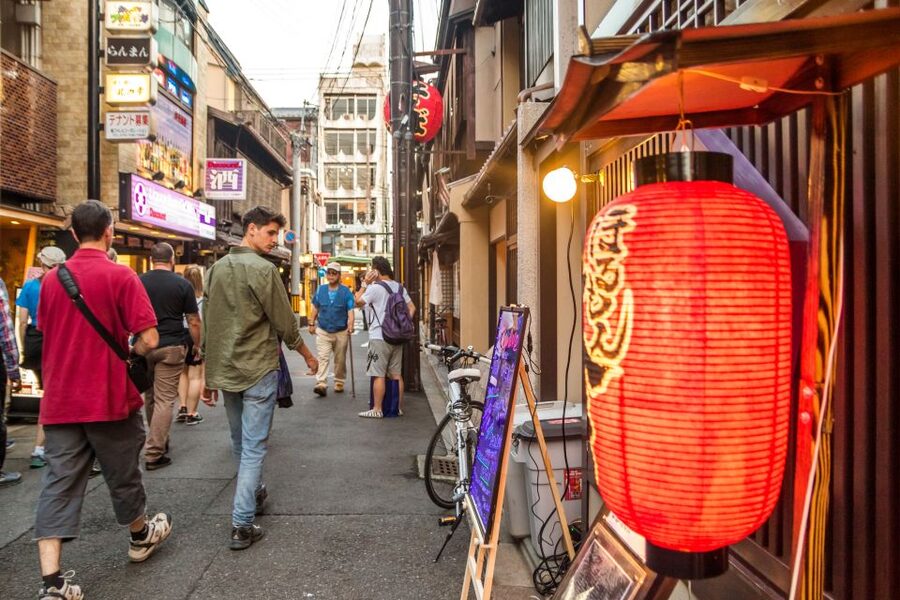
This is the question most people bring to the tour: Will you actually see one?
You might. The walk takes place at night, when geiko and maiko may be traveling to tea-house appointments. Groups have sometimes seen several in one evening, including reports of four maiko and one geiko, six maiko and one geiko, or more than eight in particularly fortunate cases.
But sightings are not guaranteed, and the tour should not be judged only by the number you see. Some evenings produce no close encounter. The guide still gives you the history and etiquette that make the streets meaningful.
If you do see someone, do not treat the moment like a celebrity sighting. Your guide may ask you to stop, stay quiet, and keep back. Video recording is not allowed, and guides may discourage photographs during encounters. One group saw a maiko briefly speak with its guide, but that was an unusual, respectful interaction rather than something to expect.
This is where the tour’s tone matters. A guide such as Mia or Mie can add useful personal context, including recognition of local geiko and maiko, but that should never mean the group gets special access. You remain on the street, observing from an appropriate distance.
The best souvenir is a better understanding of what you saw. If your main goal is a close-up portrait, this is not the right activity.
A few more Kyoto tours and experiences worth a look




Why the guide makes the difference
The route itself is attractive, but you could walk through Gion independently. You cannot easily reproduce the guide’s explanations, timing, and local perspective on your own.
Mia has been praised for warmth, humor, detailed explanations, and a strong sense of respect for the geiko and maiko community. Mie is noted for clear English, personal anecdotes, visual material, and even useful Japanese slang. Chako has been described as patient, inclusive, and passionate about Gion. Mai has kept children interested with humor throughout the walk.
The guides vary, so the exact personality depends on the date. That is normal for a walking tour. The consistent benefit is having an English-speaking professional explain the district as you move through it.
A good guide also helps when the group gets separated at a crossing or when rain makes the evening harder. One guide kept track of a large group in wet weather and still made the tour engaging. Bring suitable clothing for the forecast, since the activity continues outdoors.
Is $21 a good value?
At $21 per person, this is an easy activity to justify if you want an introduction to Gion and geiko culture. The price includes a professional English-speaking guide and 100 minutes of walking and explanation.
You are not paying for a guaranteed sighting, a meal, entry to a tea house, or a private meeting. None of those are included, and transportation to or from attractions is also not included. You are paying for access to interpretation and local context in a district where independent sightseeing can leave you with more questions than answers.
I see the best value for first-time visitors to Kyoto. If you plan to wander through Gion anyway, the tour gives that walk a useful frame. It can also be a good choice for families, since several guides use humor and visual aids to keep the subject approachable.
The value is lower for someone who already knows a great deal about Kyoto’s geiko system or wants an intimate, private experience. This is a public walking tour, not a formal cultural presentation or exclusive tea-house visit.
Timing your evening in Gion
The exact starting time depends on availability, but evening is the key feature. The district looks different after the daytime crowds thin out, and the timing may overlap with geiko and maiko leaving their boarding houses for appointments.
Some groups have started around 5:30 p.m., which can be pleasant in warmer months because it avoids the heat of the day. In other seasons, the walk may take place in darkness from the beginning. Check the available start times when booking and plan to arrive at the meeting point early.
You should also allow time to find Gion Omoide Museum and the connected pastry shop. The guide does not provide hotel pickup, so you are responsible for reaching the meeting point near Gion Shijo Station.
Because the walk lasts 100 minutes, you can fit it around dinner or another evening plan. I would avoid scheduling something that requires you to rush across Kyoto immediately afterward. Gion’s lanes, crossings, and group pace make a little breathing room useful.
Who should book this walk?
I would recommend it to you if you:
- Want to understand geiko and maiko culture rather than simply photograph traditional clothing
- Prefer a guided introduction before exploring Gion alone
- Appreciate local stories, visual explanations, and practical etiquette
- Are interested in Kyoto’s streets after dark
- Are visiting with children who respond well to humor and short explanations
- Want a reasonably priced activity with free cancellation up to 24 hours in advance
I would be cautious if you have mobility limitations, dislike outdoor walking, or expect guaranteed contact with geiko and maiko. The official information specifically says the activity is not suitable for people with mobility impairments.
You should also think about your attitude toward photography. Video is prohibited, and encounters need to remain respectful. If you can accept watching quietly rather than trying to capture every moment, you will get more from the experience.
Should you book the Night Walk in Gion?
Yes, if you want a well-priced introduction to one of Kyoto’s most closely guarded traditions. The strongest reasons to book are the guides, the clear etiquette advice, the nighttime setting, and the useful explanation of geiko and maiko life.
Book it for the cultural context first and the sightings second. You may see several geiko or maiko, or none at all. Either way, you will leave better prepared to walk through Gion with curiosity, restraint, and a clearer sense of what those lantern-lit streets really represent.
FAQ
Where does the Night Walk in Gion begin?
The meeting point is in front of Gion Omoide Museum, connected to the Izutsu Yatsuhashi pastry shop near Gion Shijo Station. The coordinates are 35.0044519, 135.7723814.
How long does the tour last?
The walking tour lasts 100 minutes. The activity information also describes it as a 2-hour guided walk, so you should allow roughly two hours for the scheduled experience.
What language is the tour offered in?
The tour is conducted in English by a live, licensed English-speaking guide.
Is seeing a geiko or maiko guaranteed?
No. You may encounter geiko or maiko walking to evening appointments, but sightings are not guaranteed.
Can I record video during the tour?
No. Video recording is not allowed.
Is transportation or hotel pickup included?
No. Transportation to and from attractions and hotel pickup or drop-off are not included. You must reach the meeting point yourself.
Can I cancel the booking for a refund?
Yes. You can cancel up to 24 hours in advance for a full refund. You can also reserve the activity and pay later, allowing more flexibility with your plans.
More Walking Tours in Kyoto



More Night Walks & Ghost Tours in Kyoto
More Gion & Geisha Walks in Kyoto
More tours in Kyoto we've reviewed





Gion & Geisha Walks, compared.
 ★ 4.7Kyoto Geisha Walking Tour: Gion District & Hidden GemsFrom $252 hours
 ★ 4.7Kyoto: Gion Geisha District Walking Tour – Stories of GeishaFrom $202 hours
 ★ 4.9Best of Kyoto: Gion, Geisha, Pagodas & CobblestonesFrom $242 hours
 ★ 5.0Kyoto Night Foodie Tour in Gion (9+ dishes + 6 Sake tastings)From $163
 ★ 5.0Kyoto Gion Geisha District Walking Tour – The Stories of GeishaFrom $25
 ★ 4.9Kyoto: Gion Magical Night Walking Tour with Geisha InsightsFrom $34