
Reviewed · HISTORICAL TOURS
Kyoto: Historic Higashiyama Walking Tour
Fushimi Inari’s endless vermilion torii gates make a memorable start to this four-hour Kyoto walk, but the real strength is the route that follows. You move from Shinto shrine to Buddhist temple, then through Gion’s traditional entertainment quarter and Higashiyama’s old lanes. I especially like the included admission to Kodaiji and Kiyomizu-dera, and the short train ride that saves your feet between Fushimi Inari and Gion.
The small group, limited to 10 people, gives the guide room to answer questions and adjust the pace. Damien, Ferdinand, Lito, and Hugo have each led highly praised tours, with particular attention to Japanese customs and local stories. The trade-off is simple: there are hills, steps, and plenty of walking, so this is not a good choice if you have limited mobility or dislike being on your feet.
In This Review
- Key points to know before booking
- Why this route works so well in Kyoto
- Meeting at JR Inari Station
- Fushimi Inari and the Senbon Torii
- The short train ride to Gion
- Gion, Kyoto’s traditional entertainment quarter
- Kodaiji’s gardens and bamboo grove
- Sannenzaka and the old Higashiyama lanes
- Kiyomizu-dera and the Otowa Waterfall
- What the guides add
- Walking effort, weather, and group size
- Who should book this Kyoto walk
- Should you book it?
- FAQ
- Where does the tour meet?
- Can I use the Keihan train line to reach the meeting point?
- How long does the tour last?
- Which places are included in the route?
- Are temple admission fees included?
- Is the train ride included?
- Is food included?
- What languages are available?
- Is the tour suitable for people with mobility impairments?
Key points to know before booking
- Fushimi Inari comes first: Walk beneath the famous Senbon Torii and learn how this major Shinto shrine fits into Japanese religious life.
- The route links Kyoto’s big sights: You see Fushimi Inari, Gion, Kodaiji, Sannenzaka, and Kiyomizu-dera in one well-packed morning or afternoon.
- Kodaiji admission is included: Its gardens and bamboo grove offer a calmer pause after the crowds around Fushimi Inari.
- The group stays small: With no more than 10 participants, it is easier to ask about rituals, temples, food, and daily life.
- The tour ends at Kiyomizu-dera: You can continue exploring Higashiyama on your own after the guided portion finishes.
- Comfortable shoes matter: The walking is not described as exceptionally steep, but the route includes uphill sections, temple steps, and uneven old streets.
Why this route works so well in Kyoto
Kyoto can feel scattered on a first visit. Its major temples and shrines sit across different districts, and the most atmospheric streets are often tucked between famous stops. This tour gives you a clear path through the southern and eastern parts of the city without asking you to solve the transport puzzle yourself.
Higashiyama means East Mountain, referring to the mountain range along Kyoto’s eastern edge. The tour stays around the foothills, where shrines, temples, old merchant streets, tea houses, and traditional entertainment districts sit close together.
I like the cultural range here. Fushimi Inari introduces Shinto worship and its thousands of torii gates. Kodaiji shows you a Buddhist temple garden and bamboo grove. Gion adds the social side of old Kyoto, while Kiyomizu-dera brings together religious practice, city views, souvenirs, snacks, and one of Kyoto’s most famous temple settings.
At $106 per person, this is not a cheap sightseeing walk. Its value depends on what you want from a guide. You are paying for four hours, a small group, a train ticket between two districts, and entry to Kodaiji and Kiyomizu-dera. If you would otherwise visit these places on your own and already understand Kyoto’s customs, the price may feel high. If you want one person to explain what you are seeing and connect the stops, it is easier to justify.
Other walking tours we've reviewed in Kyoto
Meeting at JR Inari Station
The tour begins just outside the fare gates of JR Inari Station. That detail matters, since Inari is also served by the Keihan line, and the station names can cause confusion. Check your route before leaving your hotel and make sure you are heading to the JR station entrance used as the meeting point.
You do not need to arrive at Fushimi Inari’s main shrine entrance first. Meet the guide at the station, then begin the walk together. If you are coming from another part of Kyoto, the Keihan line may also be useful, but you need to walk a few minutes to the JR station.
This is a practical meeting point because Fushimi Inari sits right beside the station. You avoid wasting time crossing the district, and the guide can get the group moving before the main shrine grounds become even busier.
Fushimi Inari and the Senbon Torii
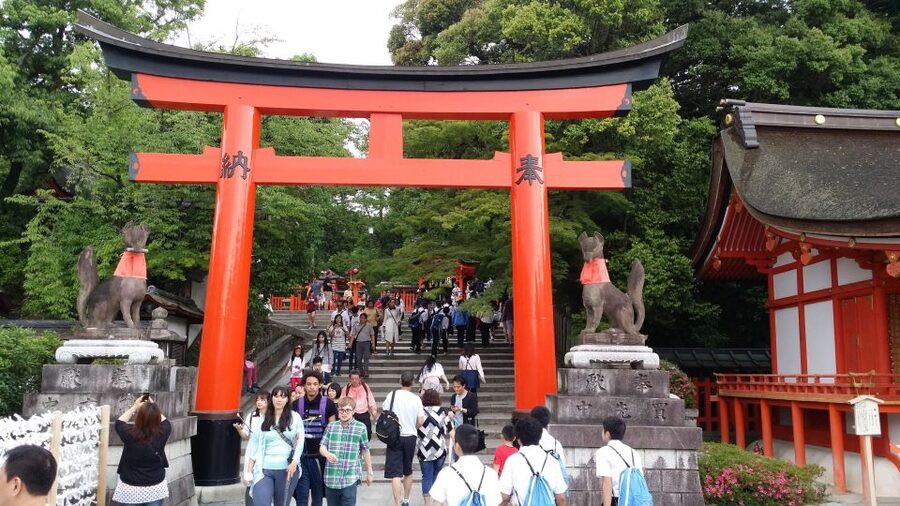
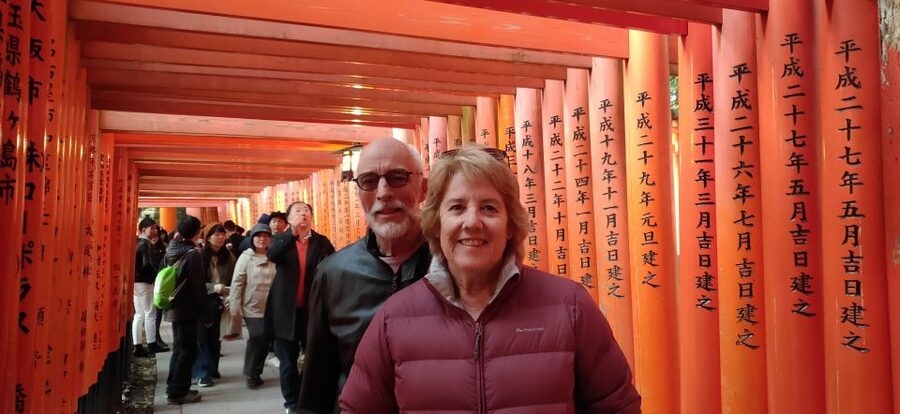
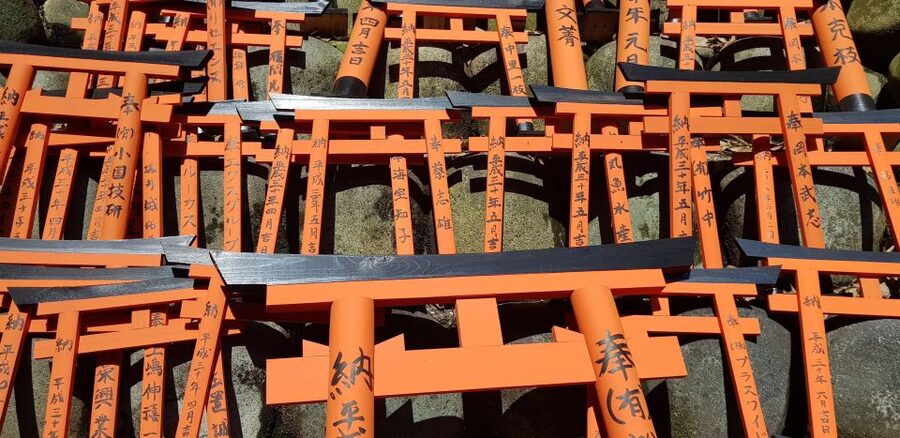
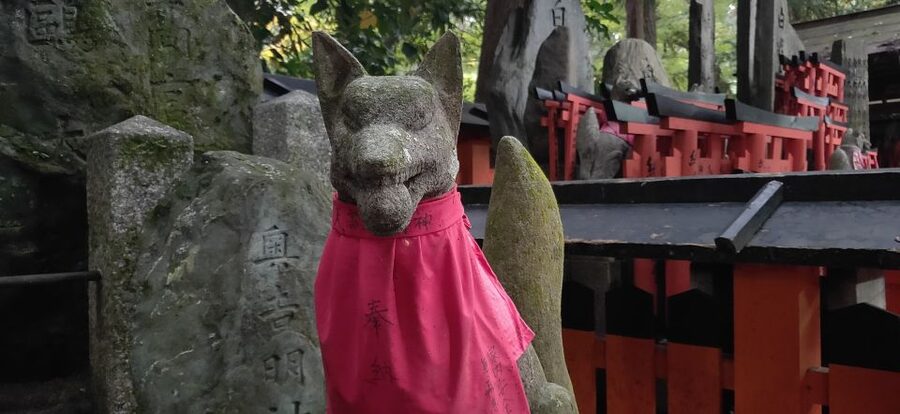
Fushimi Inari Taisha is the dramatic opening act. The shrine is dedicated to Inari, a Shinto deity associated with rice, agriculture, business, and prosperity. You begin walking through the famous vermilion torii gates, which form long covered passages up the lower slopes of the mountain.
The gates are called Senbon Torii, or thousands of torii. Each one was donated by an individual or business, a detail that helps explain why the path keeps going and going. Your guide can give this sight more meaning than a quick photo stop. Instead of seeing only a striking orange tunnel, you learn how donations and shrine worship connect to Japanese life.
The scheduled guided visit lasts about an hour, followed by a guided portion at the Senbon Torii. The wording of the schedule suggests that the tour focuses on the lower shrine area and the main gate paths rather than a long climb deep into the mountain. That is good news for a four-hour route, since a full hike through the Inari trail would leave little time for Gion, Kodaiji, and Kiyomizu-dera.
Bring water and wear shoes with a firm sole. The walking here includes slopes and steps, and the stone paths may feel tiring even if the climb is not extreme. The guide can also help you understand where the shrine experience changes from crowded photo stop to quieter religious site.
One useful point from the tour feedback is that guides sometimes show participants small shrines away from the main path. Damien was praised for explaining Japanese history, customs, and culture, while Barbara specifically appreciated seeing minor shrines that she might have missed alone. This is the kind of added value that can make a familiar sight feel less predictable.
The short train ride to Gion
After Fushimi Inari, you take a short train ride from Fushimi Inari to Gion. The train ticket is included, so you do not need to handle another payment during the tour.
This transfer is more than a practical shortcut. It breaks the experience into two different parts and saves energy for the long walk through Higashiyama. Four hours is a compact schedule, and using the train keeps the tour focused on places worth seeing rather than on city streets between them.
You still need to walk to and from the station, and you should stay close to the group during the transfer. The tour is designed to keep moving, not to provide a long rest period.
Gion, Kyoto’s traditional entertainment quarter
Gion is one of Kyoto’s best-known districts, but it is easy to misunderstand. It is not simply a display of old buildings. It remains part of modern Kyoto life and is known for evening entertainment and traditional arts associated with geisha culture.
The guided visit lasts about 30 minutes. That is enough for an introduction to the district’s streets and stories, but not enough for an extended evening outing or a detailed tour of every lane. You will get the setting and context, then continue toward Higashiyama.
This short stop is useful because a guide can explain the difference between a working entertainment district and a theme park version of old Kyoto. You should be respectful here. Keep your voice down, avoid blocking narrow lanes, and do not treat people working in the area as photo props.
The route through Gion also helps connect the city’s past with its present. The district is historic, but it is not frozen in time. That point came through strongly in the tour feedback, with guides praised for discussing Japan beyond temples and for answering questions about daily customs and culture.
Other historical tours in Kyoto
Kodaiji’s gardens and bamboo grove
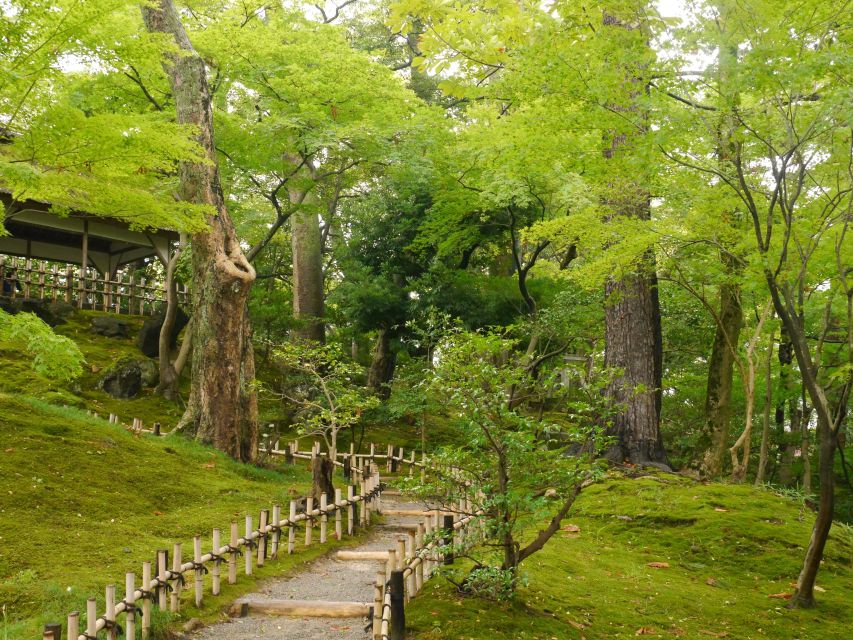
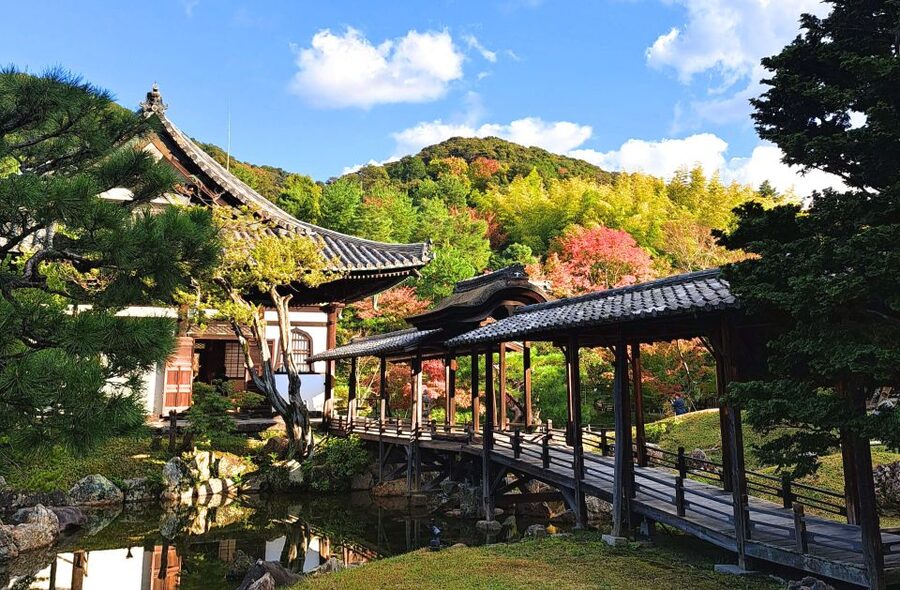
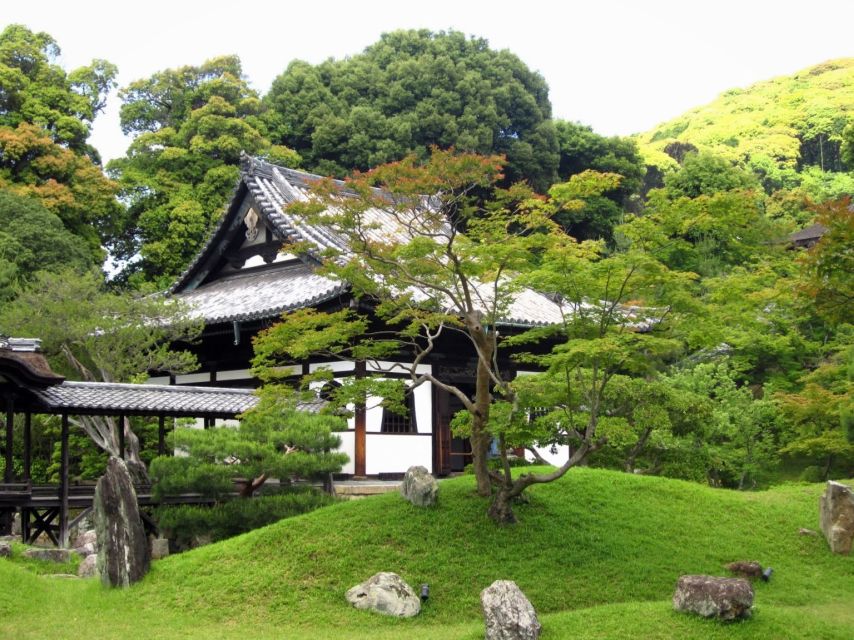
Kodaiji offers a change of mood. Founded in the early 17th century, the temple complex is known for its gardens, quiet spaces, and bamboo grove. Admission is included, which helps the price feel more reasonable.
After the movement and noise of Fushimi Inari and Gion, Kodaiji gives you time to slow down. The garden setting is the main attraction here. You can expect the guide to point out features of the temple grounds and explain the Buddhist setting rather than simply ushering you from one photo point to the next.
The guided portion lasts about 40 minutes. That is a generous slice of the tour, and rightly so. Kodaiji is not just a quick stop between two headline sights. Its calm atmosphere gives the itinerary balance.
The bamboo grove is smaller than the famous Arashiyama grove, so do not book this tour expecting a substitute for Arashiyama. Its appeal is that it forms part of a temple visit and is paired with gardens and history. You get a quieter experience without adding another district to your day.
This is also one of the places where a small group helps. A guide can explain temple behavior, the meaning of a garden arrangement, or the reason for a particular ritual without needing to shout over a large crowd. The tour’s strongest guides, including Ferdinand and Lito, were praised for making temple stories understandable and for keeping families engaged.
Sannenzaka and the old Higashiyama lanes
From Kodaiji, the route winds through Higashiyama toward Kiyomizu-dera. Sannenzaka is the kind of street where the walk itself becomes part of the sightseeing. Traditional-looking buildings line the lane, and you can stop for snacks, small gifts, or souvenirs along the way.
Do not expect a quiet backstreet at every moment. Sannenzaka is a popular part of Kyoto, and narrow lanes can feel crowded. Still, moving on foot with a guide gives you a better sense of how the district fits together than visiting Kiyomizu-dera alone and leaving by the nearest bus.
The old streets also bring practical concerns. Some surfaces are uneven, and the route rises toward the temple. Large bags are not allowed on the activity, so travel light. A small day bag is more sensible than a suitcase or bulky backpack.
The guide may point out less obvious shrines and explain local customs along the way. That matters because Higashiyama can otherwise become a sequence of attractive buildings with little context. You will have time to notice details, but food and drinks are not included, so budget separately for anything you buy.
Kiyomizu-dera and the Otowa Waterfall
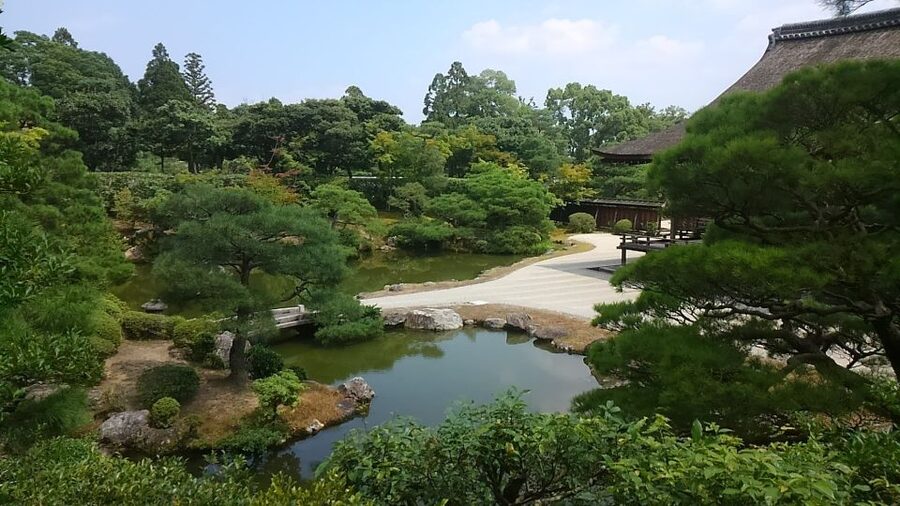
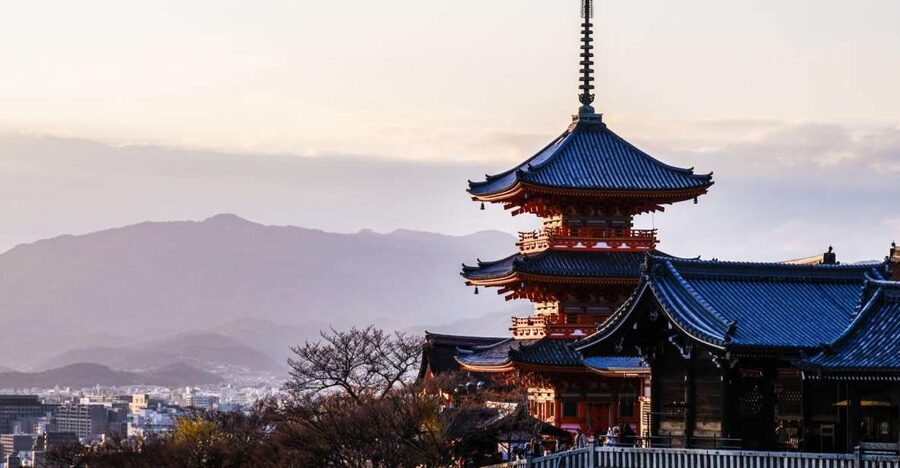
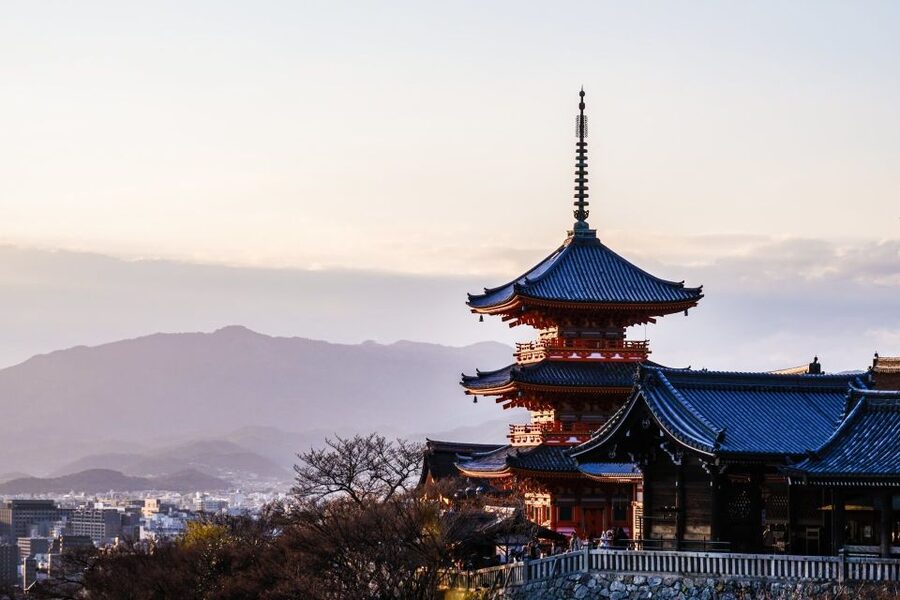
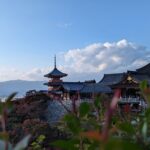
Kiyomizu-dera is the final major stop, and admission is included. The temple is famous for its wooden stage and broad views across Kyoto, although the tour information specifically highlights the city view and the Otowa Waterfall.
The name Kiyomizu means clear water. Water flows from the mountain into three streams at the Otowa Waterfall. Tradition says the streams bring health, wealth, or happiness. You choose one stream, since drinking from all three is associated with greed and no wish being granted.
This small ritual is a good example of why a guide can help. Without context, the waterfall may look like a simple place to line up with a cup. With an explanation, it becomes part of the temple’s living customs. You can decide which wish matters most and take part if you wish.
The guided visit lasts about 30 minutes. That gives you an introduction to the temple and its key features, but not unlimited time to inspect every hall or shop. The tour ends after the group visits Kiyomizu-dera, leaving you free to stay in the area and continue at your own pace.
That ending is well chosen. Kiyomizu-dera and the surrounding Higashiyama streets can fill the rest of an afternoon. You might browse for souvenirs, find a snack, or revisit a spot you passed too quickly with the group.
What the guides add
The guide can make or break a route with this many famous sights. The strongest feedback centers on clear explanations, flexibility, and personal attention.
Damien was praised for his grasp of Japanese history, customs, and culture, as well as for making the four-hour route feel informative. Ferdinand was described as dynamic and friendly, with the ability to answer questions about Kyoto, temples, religion, and Japan more broadly. Lito was especially good at engaging children and sharing useful suggestions for places to eat.
Hugo received praise for meeting a late-arriving group kindly and adapting to its needs and interests. That flexibility is valuable on a walking tour, particularly when heat, humidity, or tired legs affect the group.
The languages offered are English, French, Spanish, and Hebrew. The exact guide depends on the departure, so you should not assume a particular person will lead your tour. Still, the repeated strengths are clear: explanations that go beyond dates, answers to questions, and a willingness to adjust when conditions require it.
Walking effort, weather, and group size
The tour includes uphill walking but is not described as exceptionally steep or demanding. That does not mean it is effortless. Fushimi Inari has slopes and steps, Kodaiji and Kiyomizu-dera involve temple grounds and stairs, and the route through Sannenzaka rises toward the final stop.
Comfortable shoes are essential. I would also avoid bringing anything you cannot carry easily for four hours. Large bags and luggage are not allowed, and a heavy load will make the hills feel longer.
Hot, humid weather can change the experience. One guide adjusted the route when a participant became tired in the heat, which shows why the small group format can matter. Even so, you should book only if you are comfortable walking for most of the activity.
A maximum of 10 participants is a useful middle ground. You get the energy of a group without the distance and noise of a large coach tour. If the booking is lightly filled, you might find yourself in a much smaller group. One booking reportedly had only two participants, but you should treat that as a possibility rather than a guarantee.
Who should book this Kyoto walk
I would recommend this tour to a first-time Kyoto visitor who wants a guided introduction to the city’s southern and eastern sights. It works particularly well if you want temples, Shinto practice, old streets, and Gion in one outing rather than separate visits.
Families can also benefit from the guide’s stories and explanations. Lito’s ability to involve children suggests that the route can work well for mixed ages, though younger children still need to manage the walking and steps.
The tour is less suitable if you prefer a slow, independent visit with long pauses at each temple. The schedule covers a lot in four hours, so you will see the main points but may not have much time to linger before the group moves on.
It is also not suitable for people with mobility impairments. The route includes hills and steps, and there is no stated accessibility arrangement. If you have concerns about walking, contact the provider before booking rather than assuming the route can be changed.
Free cancellation up to 24 hours before the start and the reserve-now, pay-later option make planning easier. They do not change the physical demands of the tour, but they reduce some of the financial risk when your Kyoto schedule is still taking shape.
Should you book it?
Book this tour if you want an efficient, story-filled introduction to Higashiyama and prefer having a guide explain what you are seeing. The included temple admissions, train fare, small group, and final free time at Kiyomizu-dera give the route solid practical value, even at $106.
Skip it if you already know these districts well, want to hike much farther up Fushimi Inari, or prefer complete control over your pace. For most first visits, though, this is a smart way to connect Kyoto’s major sights with the customs and local detail that are easy to miss on your own.
FAQ
Where does the tour meet?
It meets just outside the fare gates of JR Inari Station.
Can I use the Keihan train line to reach the meeting point?
Yes. Depending on where you are staying, the Keihan line may be useful, but you need to walk a few minutes to the JR Inari Station meeting point.
How long does the tour last?
The tour lasts four hours.
Which places are included in the route?
The route includes Fushimi Inari Taisha, the Senbon Torii, Gion, Kodaiji Temple, Sannenzaka and other Higashiyama streets, and Kiyomizu-dera.
Are temple admission fees included?
Admission to Kodaiji and Kiyomizu-dera is included.
Is the train ride included?
Yes. The train ticket from Fushimi Inari to Gion is included.
Is food included?
No. Food and drinks are not included.
What languages are available?
The tour is offered in English, French, Spanish, and Hebrew.
Is the tour suitable for people with mobility impairments?
No. The activity includes uphill walking, steps, and extended walking, and it is not suitable for people with mobility impairments.
More Historical Tours in Kyoto
More Walking Tours in Kyoto


More tours in Kyoto we've reviewed





Historical Tours, compared.
 ★ 5.0World Heritage Kyoto & Nara Uji Authentic Matcha ExperienceFrom $129
 ★ 5.0Kyoto Gion Historical Walking TourFrom $40
 ★ 5.0Historical Kyoto E-Bike TourFrom $99
 ★ 4.9Kyoto: Private 2.5 Hour Historical Walking TourFrom $802 hours
 ★ 4.8From Kyoto: Nara History Guided Half Day Bus Tour with LunchFrom $776 hours
 ★ 4.6Uji: UNESCO Heritage & Tea Ceremony Walking TourFrom $663 hours