
Reviewed · FUSHIMI INARI TOURS
Kyoto Early Bird English Tour: Fushimi-Inari and Arashiyama
Kyoto’s famous sights are best seen before breakfast, and this tour makes that early start useful. You visit Fushimi Inari and the Arashiyama bamboo forest before the main daytime rush, then add Tenryu-ji Temple and Togetsu-kyo Bridge. The small group, capped at eight people, keeps the morning personal and easier to manage.
I like two things here: the guide handles the train connections, and the itinerary packs several major sights into four to five hours. Guides such as Vincent, Caleb, Hiro, Eri, Haruka, Cade, and Jem have been praised for clear English, cultural context, good photo spots, and a friendly manner. The main drawback is value: the $96.83 price does not include the ¥390 transportation fee, and the information about Tenryu-ji admission is inconsistent.
In This Review
- Key points
- Why an early start matters in Kyoto
- Fushimi Inari, where the torii gates lead uphill
- Arashiyama Bamboo Forest before the daytime crush
- Tenryu-ji Temple and its Zen garden
- Togetsukyo Bridge and the end of the morning
- What the guides add to the experience
- The small group and the public transportation tradeoff
- Is $96.83 a fair price?
- Who should book this Kyoto morning tour?
- Should you book it?
- FAQ
- How long does the tour last?
- Where does the tour begin?
- Where does the tour end?
- How large is the group?
- Is the tour conducted in English?
- Which places are included in the route?
- Is transportation included?
- Is Tenryu-ji admission included?
- Can I cancel for a refund?
Key points
- The 7 a.m. start is the main attraction: You can reach Kyoto’s most photographed places before the heaviest crowds and summer heat.
- Fushimi Inari gets 90 minutes: You have time to walk beneath the torii gates instead of making only a quick photo stop.
- Arashiyama is more than bamboo: The morning includes the Bamboo Forest Street, Tenryu-ji Temple, and Togetsu-kyo Bridge.
- The group stays small: A maximum of eight people makes it easier to ask questions, keep up, and get help with Kyoto’s trains.
- The tour is guided by public transportation: That adds practical city orientation, but your ¥390 transport fee is separate.
- The pace favors highlights over lingering: You see a lot in one morning, but anyone wanting a long Mount Inari hike or extensive Arashiyama shopping will need extra time later.
Why an early start matters in Kyoto
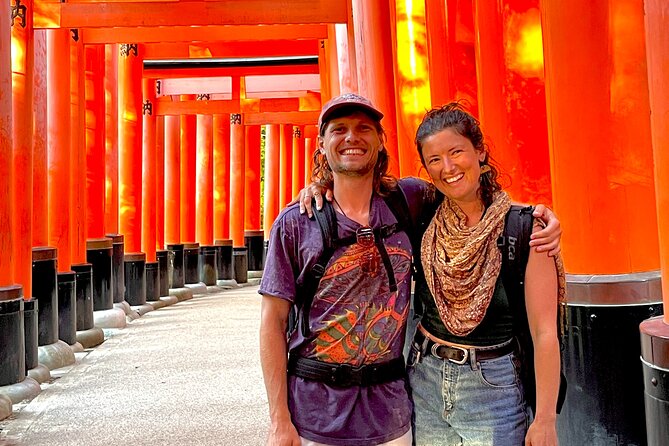
Fushimi Inari and Arashiyama are not obscure corners of Kyoto. They are two of the city’s most photographed stops, and their narrow paths can feel very different once the day gets going. This tour’s early timing is designed to give you quieter lanes, cleaner photographs, and a cooler walk.
The timing also helps during hot weather. One guide, Haruka, was specifically praised for helping the group beat both the crowds and the heat. During cherry blossom season, when Kyoto can become especially busy, getting out early matters even more.
You should still expect other people. Early does not mean empty, especially at Fushimi Inari’s lower gates or along the most famous stretch of bamboo. But leaving as the crowds begin to arrive gives you a real advantage. You get the atmosphere without spending the whole morning edging through packed paths.
The start is near the 7-Eleven Heart-In at Kyoto Station’s Central Entrance. That location is practical if you are staying near the station, but you need to arrive ready for an early meeting. The tour ends back at the same meeting point, which makes the rest of your day easy to plan.
A few more Kyoto tours and experiences worth a look

Fushimi Inari, where the torii gates lead uphill
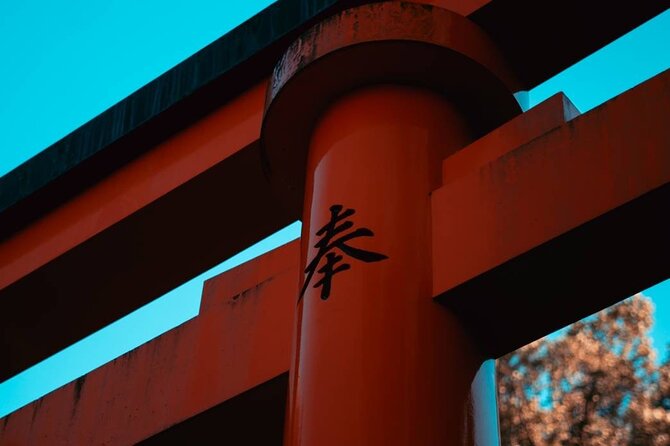
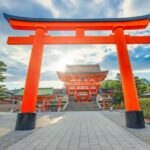
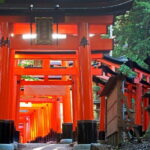
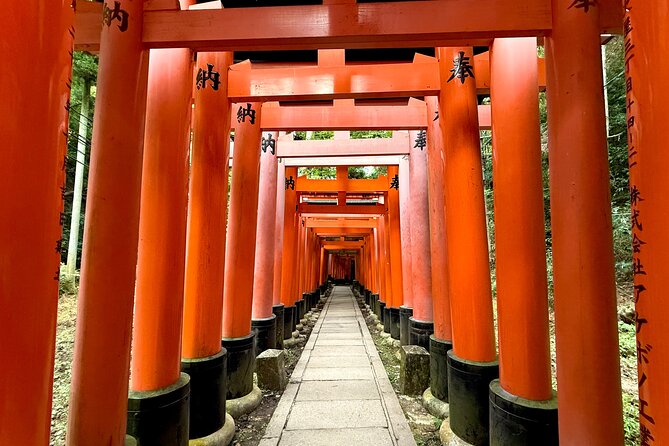
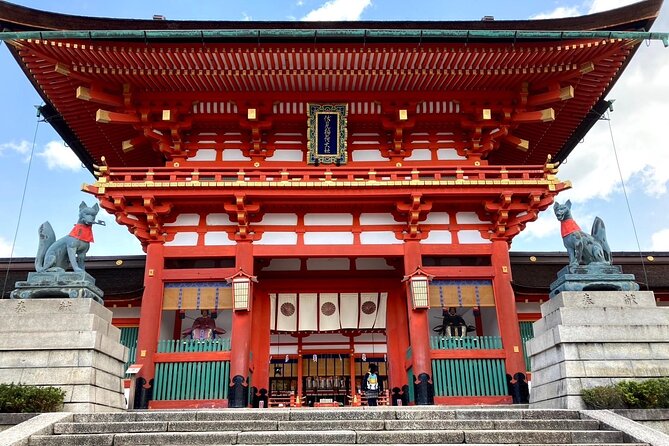
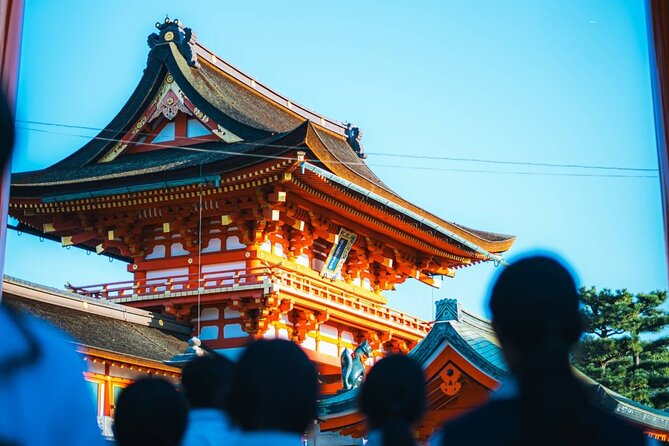
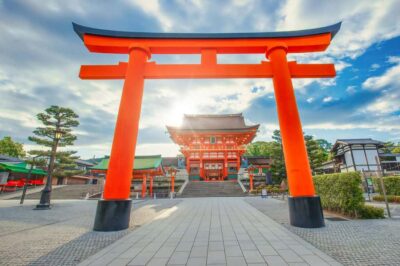
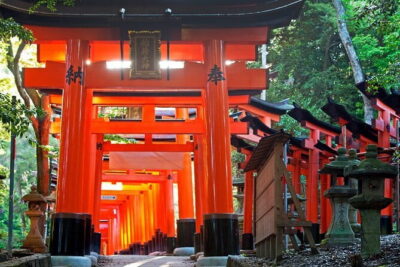
The first stop is Fushimi Inari-taisha Shrine, with about 90 minutes allotted. The shrine is famous for its thousands of orange-red torii gates, which form long corridors up Mount Inari.
The lower section is the most accessible and the most photographed. Your guide can give the gates meaning beyond their color and pattern, explaining the shrine’s role and the symbolism you are seeing. Guides such as Caleb and Hiro have been praised for making the cultural and historical details understandable rather than turning the visit into a string of dates and names.
The route leads uphill, so this is not a flat sightseeing stop. You do not need to treat the visit as a full mountain hike, but you should expect steps and an uneven walk. The 90-minute window gives you a useful taste of the shrine grounds and time for photographs. It does not provide unlimited time to climb to every upper section.
That distinction matters. If your main goal is to hike as far up Mount Inari as possible, a self-guided return visit will suit you better. If you want a well-explained introduction, good photo opportunities, and an efficient first look, the allotted time works well.
Your guide can also help you avoid stopping only at the first dramatic gate tunnel. A little patience often brings better photographs farther along the path, where the flow of people may thin. Several guides have been praised for knowing strong photo locations and for taking pictures for solo visitors and families.
Arashiyama Bamboo Forest before the daytime crush
After Fushimi Inari, the tour uses Kyoto’s public transportation to reach Arashiyama. The train ride is not just a transfer. It gives you a practical introduction to moving around Kyoto, and the guide keeps the group together through the system.
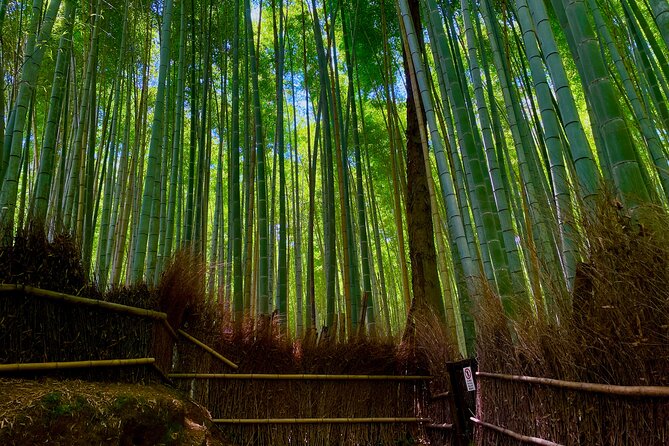
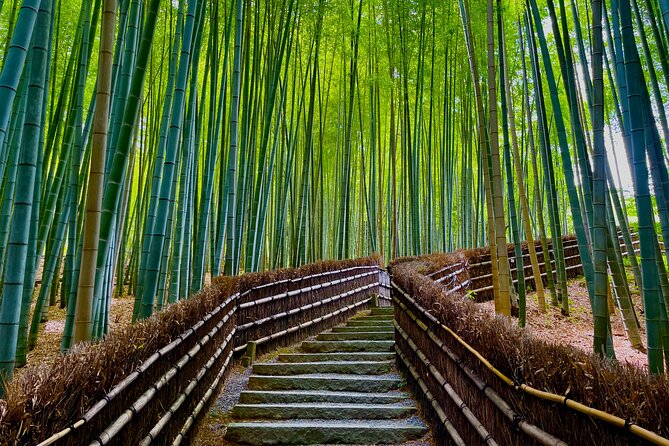
The Bamboo Forest Street receives about one hour. Tall bamboo rises on both sides of the path, creating the cool, hushed setting that appears in so many Kyoto photographs. The famous lane is relatively short, so the value of arriving early is clear: you have a better chance of enjoying the setting instead of photographing a wall of people.
A guide adds context and keeps the stop moving at a sensible pace. Reviews of guides including Vincent, Caleb, Hiro, and Cade repeatedly praise their balance of information, photographs, and time to look around. That is useful here because the bamboo path can become a place where you take one picture, realize the scene looks similar farther ahead, and lose track of time.
One hour is enough for the central bamboo walk and photographs. It is not enough for every corner of Arashiyama. You will not have a leisurely morning for shopping, cafés, or every nearby temple. One past participant revisited the sights afterward to allow more time for hiking and shopping, which is a sensible plan if Arashiyama is a major priority.
Tenryu-ji Temple and its Zen garden
The next stop is Tenryu-ji Temple, a UNESCO World Heritage site in Arashiyama. The schedule allows about one hour, giving you time to see the temple setting and its celebrated Zen garden.
Tenryu-ji is a good counterpoint to the bamboo forest. The bamboo path is narrow and highly photographic, while the temple grounds offer a more open, composed setting with views toward the surrounding mountains. Your guide can connect the temple to Zen practice, Kyoto’s religious culture, and the design of the garden.
The temple is also where you need to check the fine print carefully. One part of the booking information lists the Tenryu-ji admission fee as included, while the individual stop description says admission is not included. Because those details conflict, confirm the current arrangement before booking or at the start of the tour. Do not assume the $96.83 price covers every entrance fee.
The early schedule may also affect what you can do inside. One person arrived before the temple’s stamp service was operating and had to return later to collect a personal stamp. If temple stamps are important to you, ask your guide about opening times and plan a separate return visit.
That is a small point, but it shows the tradeoff of early sightseeing. You gain quiet paths and cooler temperatures, yet some temple services may not be running at the same hour. The grounds can still be worthwhile even if a particular counter is closed.
Togetsukyo Bridge and the end of the morning
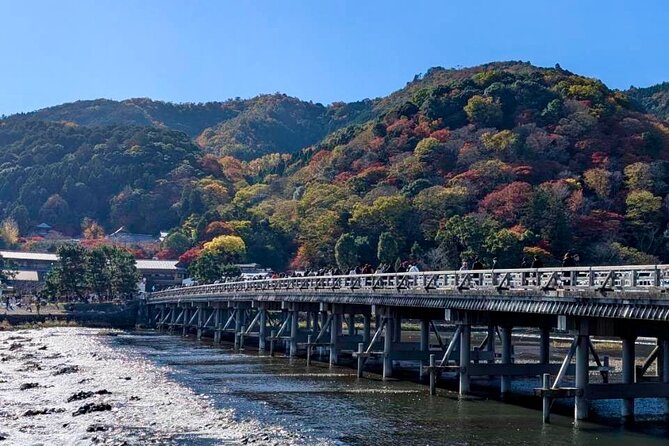
Togetsukyo Bridge receives about 15 minutes. The name means Moon Crossing Bridge, and the bridge spans the Katsura River in the Arashiyama district. The current structure dates from 1934, though the bridge has much older roots reaching back to the Heian period.
This is a short scenic stop rather than a full visit. You have time to take in the river, bridge, and mountain backdrop, then photograph the classic Arashiyama view. The stop works well at the end because it gives the morning a broad outdoor finish after the enclosed bamboo paths and temple garden.
Fifteen minutes is not enough for a long riverside walk, a boat ride, or a slow café break. Think of it as a viewpoint and orientation stop. If the bridge scene catches your interest, you can return after the tour, since the activity ends back at Kyoto Station.
A few more Kyoto tours and experiences worth a look
What the guides add to the experience
The strongest reason to book a guided version of this route is not access. Fushimi Inari, the bamboo forest, Tenryu-ji, and Togetsukyo Bridge are all public sights that you can visit independently.
The guide earns the fee by reducing friction. You do not have to work out the train route between two separate areas, watch the clock at each stop, or read every explanation on your own. You also have someone to answer questions about Japanese culture and Kyoto’s past.
The guide names associated with this experience include Vincent, Caleb, Hiro, Eri, Haruka, Cade, Jem, and others. The praise is especially strong for Vincent’s navigation help, balanced explanations, and thoughtful photographs. Caleb is noted for clear English, humor, and wide-ranging discussion of Japanese culture, history, and politics. Hiro is praised for enthusiasm, good photo locations, and attention to families. Eri is described as fun and informative, while Cade is praised for keeping the group on schedule without rushing photographs.
That does not mean every departure will feel identical. Guides have their own personalities and strengths. But the pattern is clear: this is intended to be an interactive walking and transit tour, not a silent ride between photo stops.
Families can fit the tour well. Jem was praised for keeping a six-year-old engaged during a five-hour morning, and Hiro received praise for accommodating a baby. Still, Fushimi Inari includes uphill walking, and the early start can be demanding for young children. If you are traveling with a stroller, confirm how it will work on the route before you commit.
The small group and the public transportation tradeoff
The maximum group size is eight travelers, although some departures may be smaller. That is a useful size for Kyoto. You can hear the guide, ask questions, and move through stations without the unwieldiness of a large coach group.
A small party also helps with photographs. The guide can pause without holding up dozens of people, and it is easier to ask for a picture or a change in pace. Solo visitors may especially value this, since guides have been praised for taking intentional photos.
The transportation arrangement needs a clear-eyed look. The tour uses public transit, and the listed transportation fee is ¥390 per person. That fee is not included in the advertised price, so budget for it separately. Hotel pickup and drop-off are also not provided.
This is not a weakness for everyone. I like the fact that you learn how Kyoto’s trains fit together, and public transit gets you into the city rather than keeping you inside a vehicle. But if you are comparing this tour with one that includes transport, add the ¥390 before judging the price.
Is $96.83 a fair price?
At $96.83 per person, this is a premium over visiting the sights on your own. The admission situation at Tenryu-ji must be confirmed, and the ¥390 transport charge is extra. Food and drinks are also on you.
The price can make sense if you have only one morning in Kyoto, feel unsure about navigating trains, or want an English-speaking guide to explain the places you are seeing. The itinerary covers two major districts and four notable stops in four to five hours. That is a lot of sightseeing before lunch.
The value is less convincing if you are comfortable with Kyoto’s transit system and prefer to set your own pace. You can spend longer on Mount Inari, wait for quieter bamboo photographs, browse Arashiyama shops, or return to Tenryu-ji for its stamp service without watching a group schedule.
I would view this as a time-saving and orientation service rather than an admission bundle. You are paying for a small group, early access to the route, local explanation, transit guidance, and help with photographs. For a first Kyoto visit or a single free day, those practical benefits can justify the cost. For a repeat visit or a tight budget, self-guiding is a strong alternative.
Who should book this Kyoto morning tour?
I would choose this experience if you want to see Kyoto’s headline sights efficiently and prefer not to solve the transport plan yourself. It suits first-time visitors, solo visitors who want company, families looking for a manageable introduction, and anyone who values clear English explanations.
It is also a good match for photographers who care about timing. The guide can point out useful angles, and the early start gives you better odds of taking recognizable photographs without a dense crowd behind you.
You may want another option if you dislike early mornings, need a fully private experience, or want several hours at one site. The tour moves on after set blocks of time, and Fushimi Inari’s mountain path deserves a separate outing if hiking is your main aim.
Pack water, wear shoes suited to steps and walking, and check the weather. Rain can reduce crowds, but you will be more comfortable if you dress for it. Kyoto’s summer heat is another reason to appreciate the morning schedule.
Should you book it?
Book this tour if time, navigation, and crowd avoidance matter more to you than maximum independence. Its best features are the early departure, small group, useful train guidance, and guides who bring personality and cultural context to a demanding morning.
Skip it if you are comfortable planning Kyoto on your own or want to linger at each stop. Before paying, confirm the Tenryu-ji admission detail and remember the separate ¥390 transport fee. The free-cancellation policy allows a full refund when you cancel at least 24 hours before the start time, but late cancellations and late changes are not accepted.
FAQ
How long does the tour last?
The tour lasts approximately four to five hours.
Where does the tour begin?
It begins at the 7-Eleven Heart-In near the Central Entrance of JR Kyoto Station, at Higashishiokojicho, Shimogyo Ward, Kyoto.
Where does the tour end?
The activity ends back at the meeting point near Kyoto Station.
How large is the group?
The maximum group size is eight travelers.
Is the tour conducted in English?
Yes. An English-speaking guide leads the experience.
Which places are included in the route?
The route includes Fushimi Inari-taisha Shrine, Arashiyama Bamboo Forest, Tenryu-ji Temple, and Togetsukyo Bridge.
Is transportation included?
No. The listed transportation fee is ¥390 per person. Hotel pickup and drop-off are also not included.
Is Tenryu-ji admission included?
The booking details give conflicting information. One section lists the admission fee as included, while the Tenryu-ji stop details say admission is not included. Confirm this point before booking.
Can I cancel for a refund?
Yes. You can cancel at least 24 hours before the local start time for a full refund. Cancellations and changes made less than 24 hours before the start time are not accepted.
More Arashiyama & Bamboo Tours in Kyoto
More Fushimi Inari Tours in Kyoto
More tours in Kyoto we've reviewed










Fushimi Inari Tours, compared.
 ★ 4.8Kyoto: Fushimi Inari, Kinkakuji, Bamboo Grove 1 Day Bus TourFrom $122510 minutes - 9 hours
 ★ 5.0Fushimi Inari Hidden Hiking Tour (Private Option Available)From $63
 ★ 4.7Kyoto/Osaka: Nara, Fushimi Inari Taisha, Arashiyama Bus TourFrom $529 - 10 hours
 ★ 4.4Osaka/Kyoto: Arashiyama, Nara & Fushimi Inari Shrine w/LunchFrom $61
 ★ 5.0Kyoto: Nijo, Kinkaku-ji, Arashiyama, Kiyomizu & Fushimi InariFrom $51
 ★ 5.0Kyoto Fushimi-Inari Night Walking TourFrom $43