
Reviewed · GION & GEISHA WALKS
Kyoto: Gion Walking Tour
Gion is not just Kyoto’s famous geisha quarter. This two-hour walk links three hanamachi, or traditional entertainment districts, with old bridges, shrines, preserved streets, and small architectural details that are easy to miss. I like that the route gives you a wider view of Kyoto instead of simply steering you down one postcard-famous lane.
I especially like the six-person limit, which keeps the walk personal, and the guides’ willingness to answer almost any question about Japan. Guides such as Jose and Saskia also bring their own lives in Japan into the conversation, making the tour feel less like a lecture and more like a well-informed walk with a friend.
The main consideration is that Hanamikoji-dori is not included, despite being one of Gion’s best-known streets. You also cannot count on seeing a Maiko or Geiko. This is a history and culture walk first, not a guaranteed geisha-spotting outing.
In This Review
- Key points at a glance
- Why this Gion walk feels different
- Meeting at the Disney Store in central Kyoto
- Pontocho Alley and the Kamogawa River
- Sanjo Ohashi, Yamato Dori, and the move into Gion-Kobu
- Tatsumi Shrine and Tatsumi Bridge
- Gion-Higashi and the quieter side of the district
- Yasaka Shrine and the origin of Gion
- What you may learn about Maiko and Geiko
- The guides and the value of a six-person group
- Is $35 a good value for two hours?
- Timing, seasons, and the best fit
- Practical details before you go
- Should you book the Gion Walking Tour?
- FAQ
- How long is the Gion Walking Tour?
- How far do you walk?
- How many people can join the tour?
- Which areas are included?
- Is Hanamikoji-dori included?
- Will I see a Maiko or Geiko?
- Which languages are available?
- Where is the meeting point?
- What should I bring?
Key points at a glance
- Three hanamachi in two hours: See Pontocho, Gion-Kobu, and Gion-Higashi on a route of about 3.3 kilometers.
- A genuinely small group: The maximum is six participants, so you can hear the guide and ask questions without shouting across a crowd.
- More than geisha lore: Learn about Kyoto’s development, traditional Machiya houses, shrine customs, festivals, and daily life in Japan.
- Strong, personal guiding: Jose and Saskia are praised for their energy, clear explanations, photographs, maps, and thoughtful answers.
- Yasaka Shrine connection: Visit the former Gion Shrine, the source of the district’s name, if time allows.
- Seasonal route changes: During the late-March to early-April cherry blossom period, the walk shifts to include better blossom views.
Why this Gion walk feels different
Many first visits to Gion amount to a stroll down a busy street, a few photographs, and a hopeful glance at passing women in kimono. You can certainly do that on your own, but the area makes much more sense when someone explains what you are seeing.
This tour treats Gion as a network of districts with separate identities. You move through Pontocho, Gion-Kobu, and Gion-Higashi, learning how the hanamachi function, how Maiko and Geiko train and work, and how the area developed over more than a thousand years.
I like this approach because it replaces vague geisha stereotypes with useful context. You learn that the women you may see are part of a formal professional culture with its own stages, houses, training, dress, music, and routines. The guide also explains the difference between Maiko and Geiko, terms that are often blurred in casual tourism.
The walk also keeps one foot in ordinary Kyoto. You hear about modern life in Japan, local customs, food suggestions, and the ways the city has changed. Jose is noted for using an iPad with maps, old photographs, and other visual material, while Saskia is praised for making the tour especially accessible to Dutch speakers. Languages offered include English, Spanish, Dutch, and French.
A few more Kyoto tours and experiences worth a look
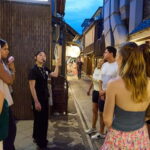

Meeting at the Disney Store in central Kyoto
The meeting point is in front of the Disney Store at Kyoto Shijo-Kawaramachi. The guide sits waiting and holds an iPad displaying the Get Your Guide image and the tour title with its scheduled time.
This is a practical meeting place in downtown Kyoto, but allow enough time to find the store in the busy Shijo-Kawaramachi area. Look for the guide rather than assuming the whole group will gather in an obvious tour cluster.
The experience lasts two hours and covers around 3.3 kilometers, or roughly two miles. That is a manageable distance for most people who are comfortable walking, but it is still a city walk over streets and bridges. Wear comfortable shoes and bring water. A sun hat, sunscreen, and umbrella are sensible additions because much of the experience takes place outdoors.
You can reserve now and pay later, and cancellation is free up to 24 hours before the start time. Those policies are useful if your Kyoto plans are still shifting, especially during a packed Japan itinerary.
Pontocho Alley and the Kamogawa River
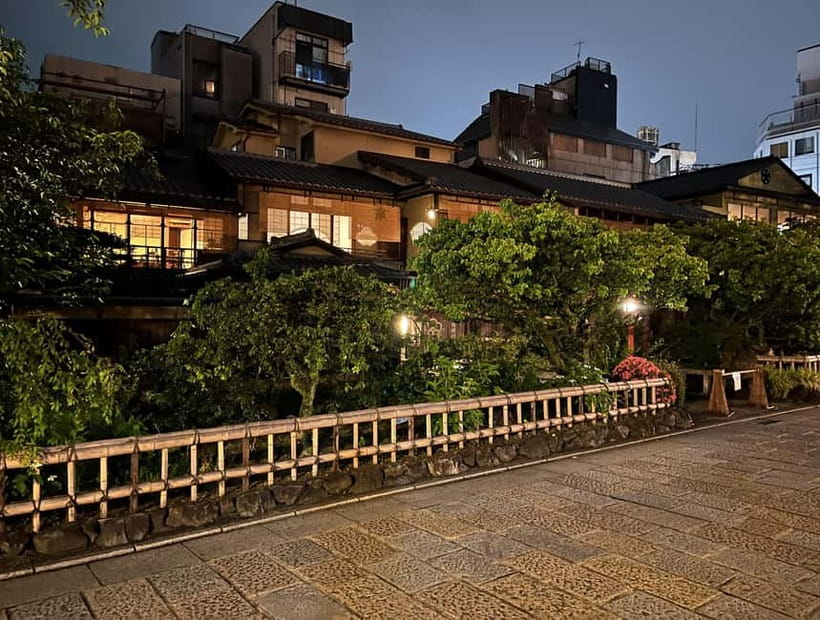
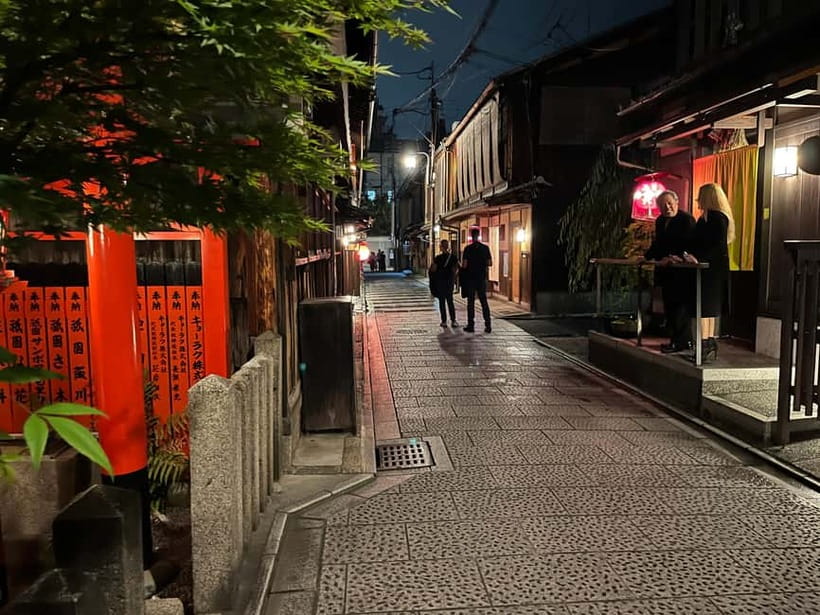
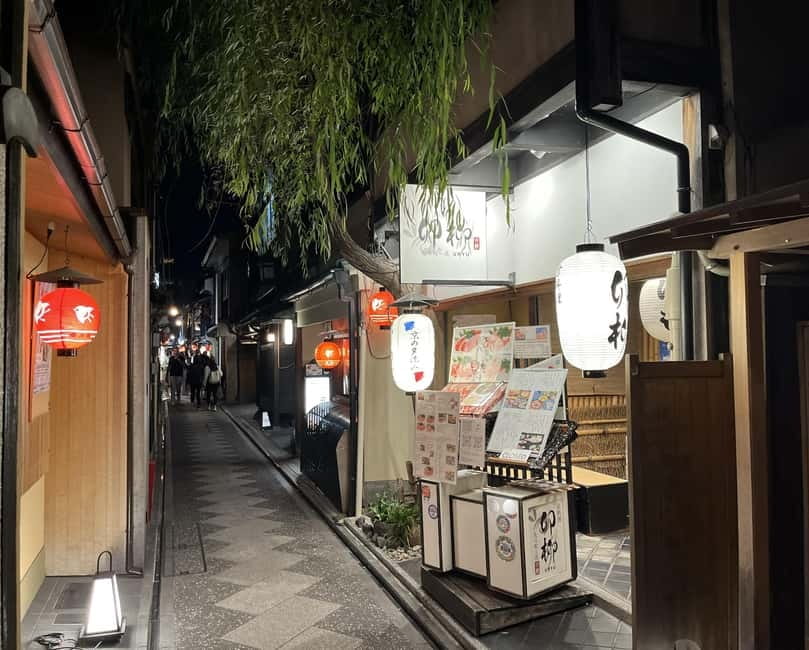
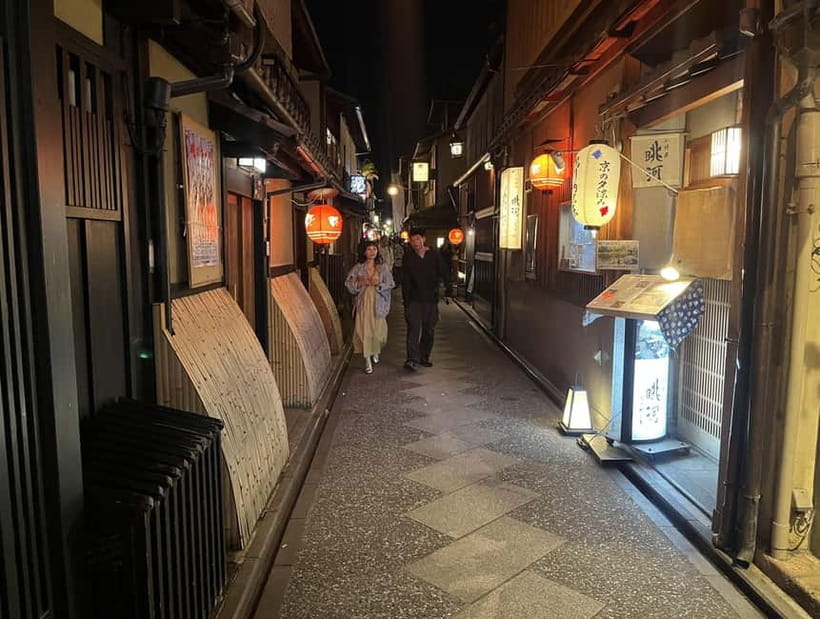
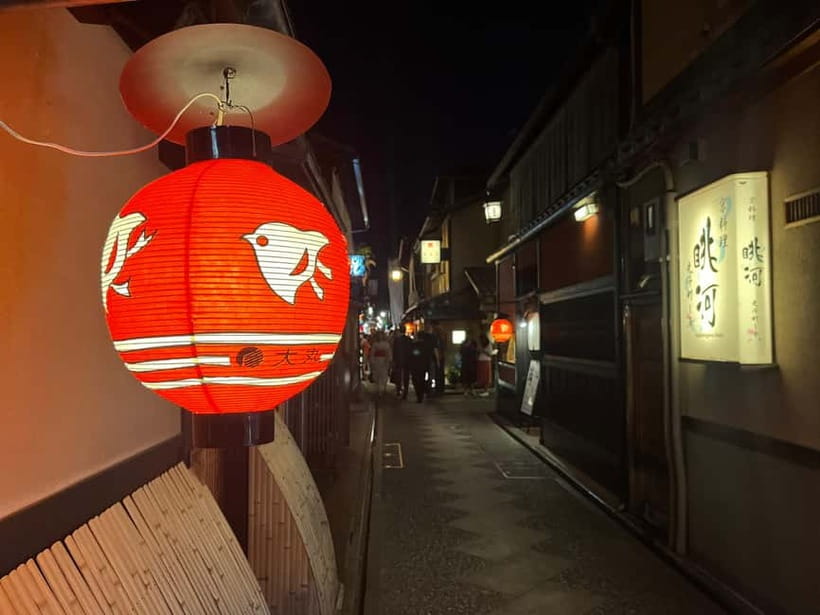
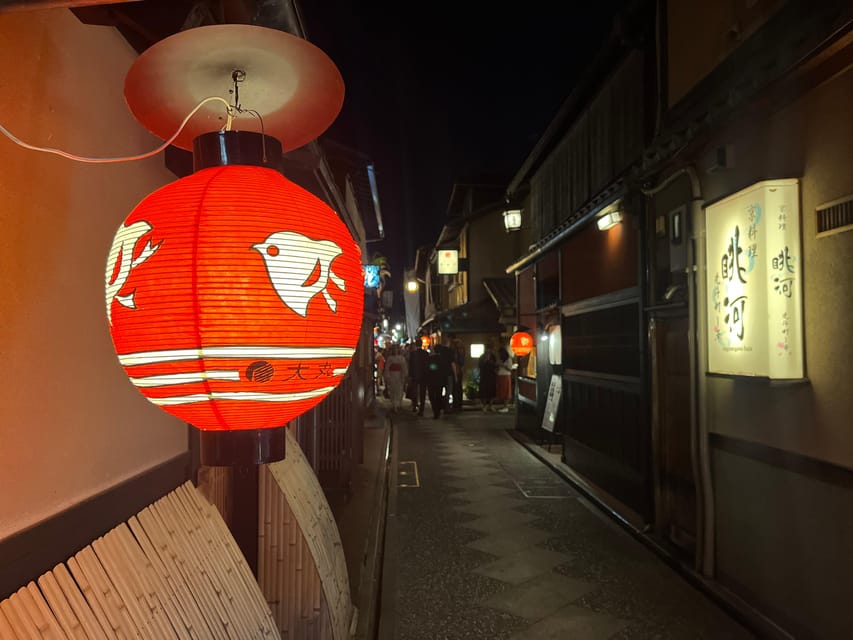
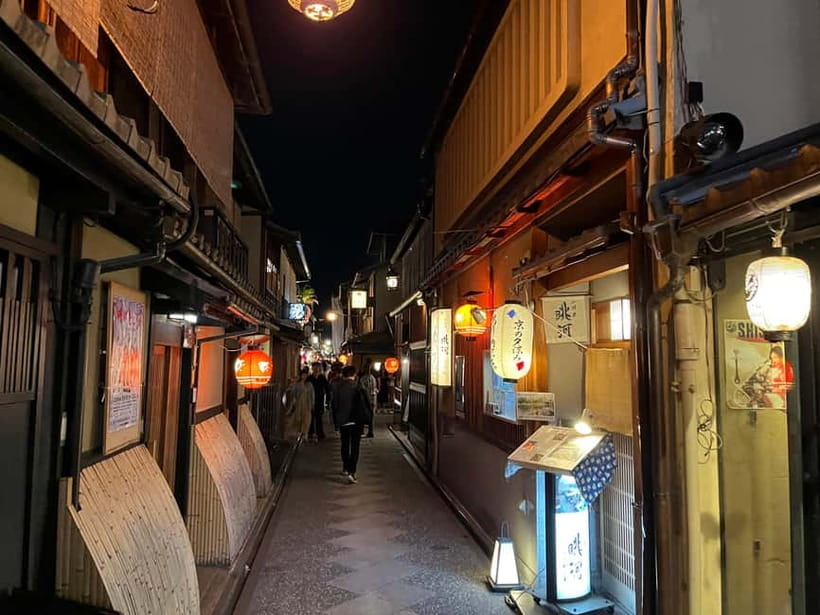
The walk begins in Pontocho Alley, one of Kyoto’s best-known traditional entertainment areas. From here, the route includes Pontocho Kaburenjo, the theater associated with the district’s performing arts, before reaching the Kamogawa River.
This opening section gives you an immediate lesson in how Kyoto’s entertainment districts work. The narrow alley is visually striking, but its real interest lies in the relationship between theaters, restaurants, traditional houses, and the riverfront setting.
The route also includes the Yagi-san and Kita-san statues, then continues to Sanjo Ohashi. Small stops like these are where the tour earns its keep. On your own, you might walk past a statue or bridge without knowing its place in the city’s story. The guide pauses often, explains each point in short sections, and uses photographs or maps when they help.
The frequent stops are a plus for anyone who likes detail. They also mean the walk is not a fast march from one landmark to another. If you prefer covering ground quickly, the stop-and-explain format may feel slower. For most visitors, though, the pace makes it easier to follow and gives you time to ask questions.
Sanjo Ohashi, Yamato Dori, and the move into Gion-Kobu
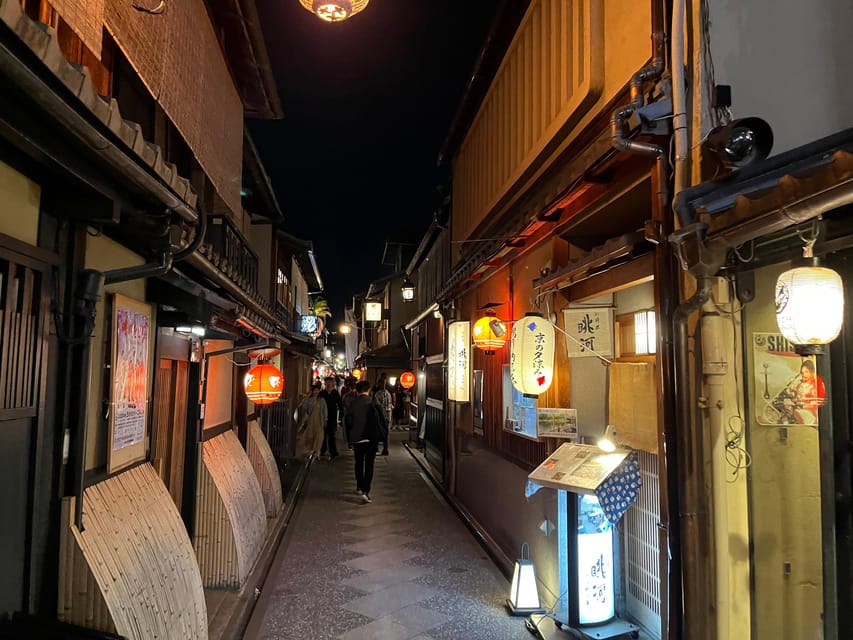
After Sanjo Ohashi, the route follows Yamato Dori toward Gion-Kobu. The bridge and the streets leading away from it help show how Kyoto’s major routes connect its older quarters.
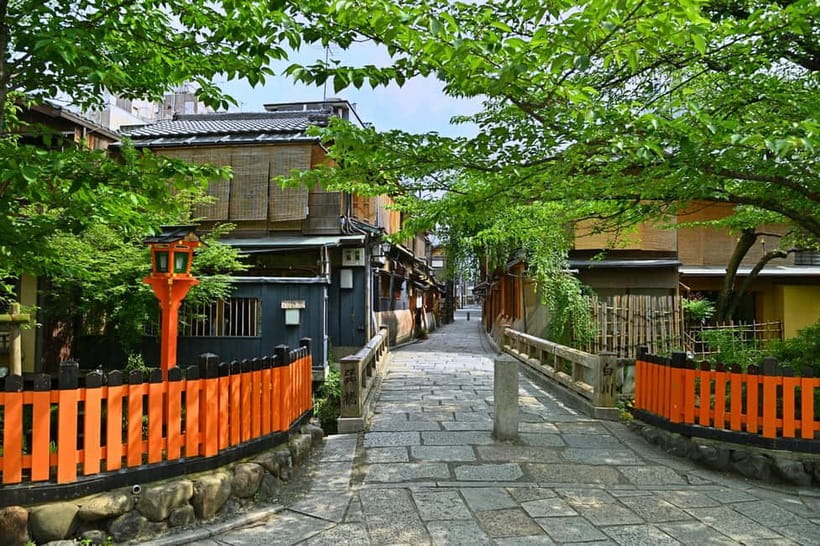
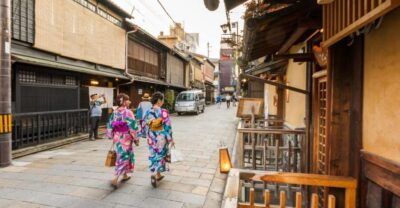
Gion-Kobu is the largest and best-known of Kyoto’s hanamachi. The walk includes Gion-Shinbashi Dori and Gion Shirakawa, where preserved wooden buildings and the waterway create some of the most attractive scenes of the day.
This is the part of the walk where architecture becomes central. Traditional Machiya houses are not simply pretty wooden facades. Their narrow fronts, deep plots, entrances, signs, and carefully maintained details reflect older patterns of urban life and commerce. The guide points out features you could easily overlook, then links them to the work and domestic lives of the people who use these buildings.
Gion Shirakawa is a popular photography area, so expect a more scenic and recognizable side of Gion here. The benefit of a small group is clear in busy spots. Everyone can gather close enough to hear and see the guide’s iPad, and there is less waiting for a large group to catch up.
The tour does not include Hanamikoji-dori. That is important to know before booking. If Hanamikoji is your main reason for visiting Gion, you will need to see it separately. This route instead favors Gion-Shinbashi, Gion Shirakawa, and less obvious details in the surrounding preserved neighborhood.
Tatsumi Shrine and Tatsumi Bridge
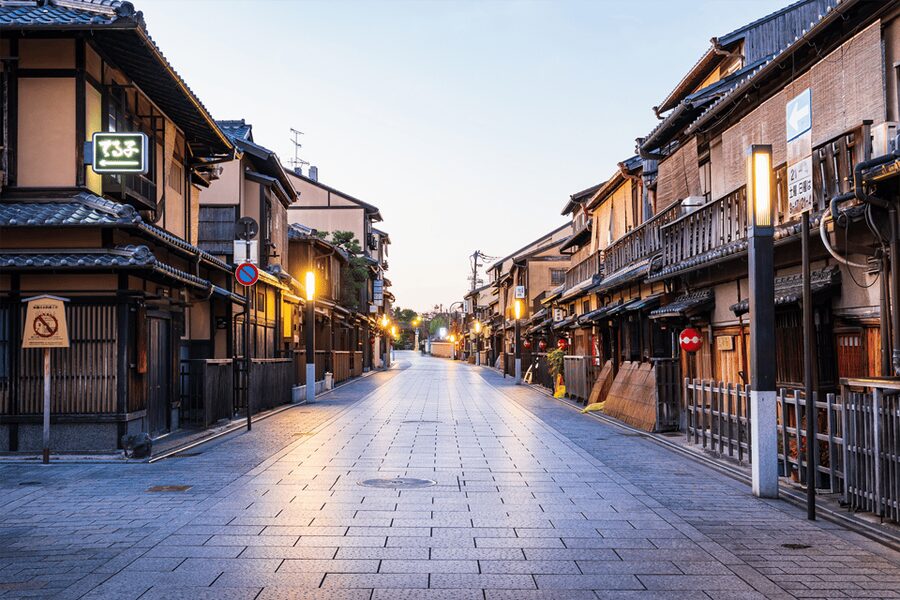
The next stops are Tatsumi Shrine and Tatsumi Bridge. These smaller points are part of what makes the walk more than a standard sightseeing circuit.
Tatsumi Shrine provides a chance to see how local religious sites fit into the entertainment district. Tatsumi Bridge adds another picturesque view, but the guide’s explanation is more valuable than the photograph alone. You get help understanding how shrines, streets, waterways, and traditional neighborhoods sit together within Gion.
I would pay attention here rather than rushing toward the next famous landmark. Several people who have taken the walk found that they had previously passed through Gion without seeing what was right in front of them. That is the central strength of this experience: it teaches you how to look at the district.
The guides also encourage questions throughout the walk. You can ask about Maiko and Geiko, Japanese customs, food, neighborhoods, history, or things you have noticed elsewhere in Japan. That open format works particularly well early in a Kyoto visit, when you still have practical questions that can shape the rest of your stay.
Other walking tours we've reviewed in Kyoto



Gion-Higashi and the quieter side of the district
The route continues into Gion-Higashi, one of Kyoto’s five hanamachi. Compared with the best-known corners of Gion-Kobu, this section can feel less familiar to first-time visitors.
That makes it a useful comparison. Instead of treating Gion as one uniform place, the guide shows you that each hanamachi has its own setting and identity. You learn how the entertainment districts relate to one another and how the broader Gion area has changed while retaining traditional forms.
The walking route is not designed as a shopping trip or food tour. No amenities are provided, and there is no meal or drink included. That keeps the price low, but you should bring your own water and plan a separate stop if you want coffee, lunch, or a snack afterward.
The tour can be especially rewarding if you have already walked through Gion and felt that you were missing the point. You do not need prior knowledge. The guide builds from visible details, then adds the cultural and historical background that makes them meaningful.
Yasaka Shrine and the origin of Gion
If time allows, the walk includes Yasaka Shrine, formerly known as Gion Shrine. This is not just another shrine added to the route for decoration. The district’s name comes from its connection with the shrine, and the site has links to the Gion Festival.
The Gion Festival is one of Japan’s three most important and famous festivals, with origins in this area more than 1,100 years ago. The tour may include an explanation of that connection, depending on the pace and available time.
Because this stop is conditional, you should not treat it as a guaranteed full shrine visit on every departure. The walking route includes many explanation points, and the guide has to keep the two-hour schedule. Still, Yasaka Shrine gives the tour a strong final layer by connecting everyday streets and entertainment districts to Kyoto’s religious life and major annual traditions.
Some departures may also take you to shrines associated with beauty and love. The exact emphasis can vary with the guide and timing, but Yasaka is the major named shrine on the route.
What you may learn about Maiko and Geiko
The tour offers an introduction to Maiko and Geiko life, including their work, training, customs, activities, and daily routines. This is useful because popular images often reduce the subject to clothing and makeup.
A Maiko is a young apprentice, while a Geiko is an established professional in Kyoto’s traditional arts. The guide explains the culture in relation to the neighborhood itself, rather than treating it as an isolated performance for tourists.
You may see a Maiko or Geiko during the walk, but no sighting is promised. That honesty matters. The best reason to book is the explanation of the district, not the chance of a photograph.
If you do see one, the guide can help you understand what you are looking at. Just remember that Gion is a working neighborhood. A respectful distance and quiet observation are part of responsible sightseeing.
The guides and the value of a six-person group
The strongest feature of this experience is the guiding style. Jose is repeatedly praised for his energy, humor, visual material, and ability to connect Kyoto’s past with modern life. Saskia is described as warm, well prepared, and especially effective at answering questions in a conversational way.
The guides are foreign residents of Japan rather than native-born Kyoto locals, according to the supplied experience details and comments. That can be an advantage for English-speaking visitors because they understand the questions an international visitor is likely to ask and can explain unfamiliar customs in clear language. They also draw on their own lives in Japan.
This does not mean the tour is only for beginners. People who already know something about Kyoto can ask more specific questions and often get more from the flexible format. The guides have been praised for adapting the walk to personal interests instead of delivering exactly the same speech to everyone.
Six people is a useful maximum. You can hear easily, see images on the iPad, and speak directly with the guide. If only two people book, the experience may feel close to a private tour. That personal attention is a major reason the $35 price feels fair.
Is $35 a good value for two hours?
At $35 per person, this is not the cheapest way to walk through Gion. You can explore the streets at no cost, and many visitors do exactly that.
The value comes from the structure and interpretation. In two hours, you cover three hanamachi, several bridges and shrines, preserved neighborhoods, and a large amount of cultural context. You also get a guide who can answer questions about the rest of your Japan trip.
For a family, the small group can be worth more than a large, cheaper tour where you spend the day trying to hear the speaker. It also suits couples and solo visitors who want company without committing to a full-day excursion.
The price does not include drinks, food, transport, entrance fees, or other amenities. Since the route is outdoors and the distance is fixed, bring what you need and regard the fee as payment for guiding and interpretation rather than a package of extras.
Timing, seasons, and the best fit
The tour is offered at different starting times, with 9:45 and 12:30 departures able to include a free visit to the Gion Gallery if you want to extend the experience. That extension is optional, so ask about it when booking or meeting your guide.
Late March through early April brings cherry blossoms, and the route changes slightly to show blossom areas around Gion. This can improve the scenery, but spring conditions are variable, and the tour is still best understood as a cultural walk rather than a dedicated blossom tour.
I would book this for:
- First-time Kyoto visitors who want context before exploring on their own
- Families who prefer a short, manageable walk
- Curious visitors with lots of questions about Japan
- Anyone interested in Maiko, Geiko, traditional architecture, or Kyoto’s past
- Dutch, French, Spanish, or English speakers who want a small guided group
I would look elsewhere if you want a food tasting, a formal tea ceremony, entry into private geisha establishments, a guaranteed Maiko sighting, or a tour centered on Hanamikoji-dori.
Practical details before you go
Meet in front of the Disney Store at Kyoto Shijo-Kawaramachi and look for the guide holding the tour iPad. Bring comfortable shoes, water, sunscreen, a hat, and an umbrella.
The route covers about two miles in two hours. Keep your schedule slightly flexible if you want the optional Gion Gallery visit on the 9:45 or 12:30 departure.
The tour accepts up to six participants and offers free cancellation up to 24 hours in advance. Check the available starting time when booking, since the exact departure options can change.
Should you book the Gion Walking Tour?
I would book it if you want to understand Gion rather than simply photograph it. The combination of three hanamachi, Yasaka Shrine, traditional streets, visual aids, and open questions gives you a useful framework for the rest of your Kyoto visit.
The main limits are clear: Hanamikoji-dori is excluded, Maiko and Geiko sightings are never guaranteed, and there are no included refreshments or attractions with indoor admission. For $35, though, the small group and personal guiding make this a strong value, especially when Jose, Saskia, or another guide can tailor the conversation to your interests.
Book it early in your Kyoto stay if possible. You will spend the rest of your time in Gion noticing details you might otherwise walk past.
FAQ
How long is the Gion Walking Tour?
The tour lasts two hours.
How far do you walk?
The route covers approximately 3.3 kilometers, or about two miles.
How many people can join the tour?
The tour is limited to six participants.
Which areas are included?
The route visits Pontocho, Gion-Kobu, and Gion-Higashi, along with several streets, bridges, shrines, and historic points.
Is Hanamikoji-dori included?
No. Hanamikoji-dori is not part of the itinerary.
Will I see a Maiko or Geiko?
A Maiko or Geiko sighting cannot be guaranteed.
Which languages are available?
The tour is offered in English, Spanish, Dutch, and French.
Where is the meeting point?
Meet in front of the Disney Store at Kyoto Shijo-Kawaramachi. The guide will be seated and holding an iPad showing the Get Your Guide image and the tour title with its scheduled time.
What should I bring?
Bring comfortable shoes, water, sunscreen, a sun hat, and an umbrella. No amenities are provided as part of the tour.
More Walking Tours in Kyoto
More Gion & Geisha Walks in Kyoto
More tours in Kyoto we've reviewed





Gion & Geisha Walks, compared.
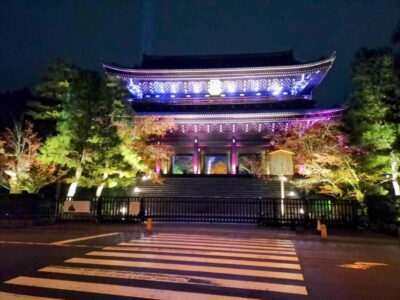 ★ 4.7Kyoto Geisha Walking Tour: Gion District & Hidden GemsFrom $252 hours
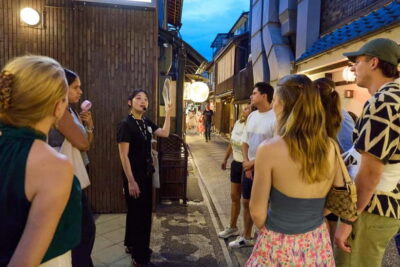 ★ 4.7Kyoto: Gion Geisha District Walking Tour – Stories of GeishaFrom $202 hours
 ★ 4.9Best of Kyoto: Gion, Geisha, Pagodas & CobblestonesFrom $242 hours
 ★ 4.5Night Walk in Gion: Kyoto’s Geisha DistrictFrom $211h 40m
 ★ 5.0Kyoto Night Foodie Tour in Gion (9+ dishes + 6 Sake tastings)From $163
 ★ 5.0Kyoto Gion Geisha District Walking Tour – The Stories of GeishaFrom $25