
Reviewed · KYOTO FOOD TOURS
Kyoto Food Tour of 10 Tastings with Wagyu, Mochi & More Surprises
Kyoto’s best food lesson may be the walk itself. This small-group tasting tour links Karasuma, Nishiki Market, the Kamo River, Pontocho, and Gion while serving up ten Japanese bites, from katsudon and wagyu sushi to yuba tofu and matcha.
I like the compact group size, capped at ten, and the generous mix of food and drinks. You get a glass of draft beer, Kyoto sake, tea, seasonal daifuku mochi, and a secret dish, not just a few samples. The main concern is value: at $142, you are paying for the guide, route, and coordination as much as the food, and some guides may speak softly or offer less culinary detail than you expect.
In This Review
- Key points to know before booking
- A food walk with Kyoto as the dining room
- Meeting beneath the orange umbrella
- First plate: Kyoto-style katsudon
- Ninety minutes inside Nishiki Market
- A walk beside the Kamo River and through Pontocho
- Okonomiyaki in a small Gion restaurant
- Wagyu sushi and the tour’s signature surprises
- Matcha and the final tea tasting
- How much food do you really get for $142?
- Who will enjoy this Kyoto food walk?
- Walking, weather, and practical planning
- Should you book the Karasuma to Gion food tour?
- FAQ
- Where does the Kyoto food tour begin?
- Where does the tour finish?
- How long does the tour last?
- How many people can join the group?
- What foods and drinks are included?
- Can dietary requirements be accommodated?
Key points to know before booking
- Ten tastings connect Karasuma and Gion: The route gives you a broad look at Kyoto food while also showing major central districts.
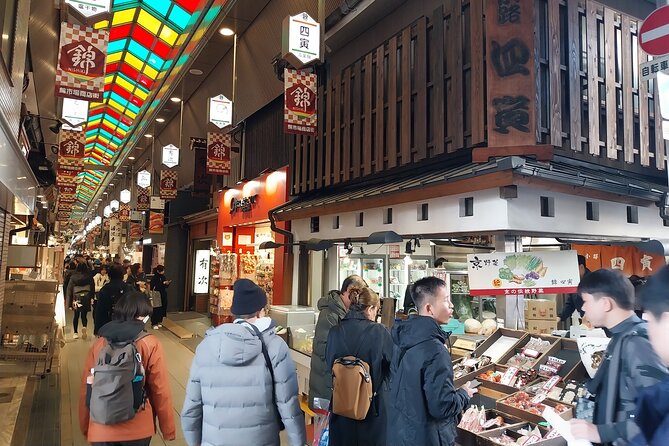
- Nishiki Market gets the most time: Expect about 90 minutes for yuba tofu, sake, handmade fish cakes, and local food traditions.
- The menu mixes substantial dishes and small bites: Katsudon, okonomiyaki, and wagyu sushi are balanced by mochi, tea, and market samples.
- The group is limited to ten people: That is a useful size for a walking tour, though the experience still depends on your guide’s voice and English.
- Comfortable shoes matter: The tour lasts about three and a half hours and moves on foot from Karasuma to Gion.
- Dietary needs require advance notice: Tell the operator before the tour so the stops can be adjusted as well as possible.
A food walk with Kyoto as the dining room
This is not a sit-down meal with a few restaurant courses. It is a moving introduction to Kyoto food, with dishes served in restaurants, market stalls, and tea shops along a route through the city.
That format works well in Kyoto because food here is tied closely to place. Yuba tofu reflects Kyoto’s long connection with Buddhist cuisine and soy products. Nishiki Market gives you a look at small food makers and fish cake producers. The final stretch toward Gion adds old streets, the Kamo River, Pontocho, and Yasaka Shrine to the menu.
You should arrive ready to eat at several stops rather than expecting one large lunch. The portions are designed as tastings, but the tour includes enough hearty food that you may finish quite satisfied.
The tour is priced at $142 per person and takes about three hours and thirty minutes. That is not a cheap way to buy ten snacks. The fairer question is what you value: a self-guided market visit costs much less, but it will not give you a planned route, introductions to each dish, or a guide handling the timing and ordering.
A few more Kyoto tours and experiences worth a look

Meeting beneath the orange umbrella
The meeting point is in front of the Starbucks across from Exit 5 of Karasuma Oike Subway Station. Look for the guide with an orange umbrella. This is a practical starting point because Karasuma Oike is easy to reach by subway and the landmark is simple to spot.
The guide begins with an introduction to the route and the food ahead. Guides named Yuma and Tomoro have received especially warm praise for being friendly and pleasant company. That personal touch matters on a food walk, where the guide’s manner can shape the whole afternoon.
Communication is the point to watch. Some participants have found a guide too quiet or felt that the English explanations lacked detail. If you want a serious food lecture, ask questions early and stay close to the guide. The small group should make that easier, but a soft voice can still get lost on a market street.
First plate: Kyoto-style katsudon
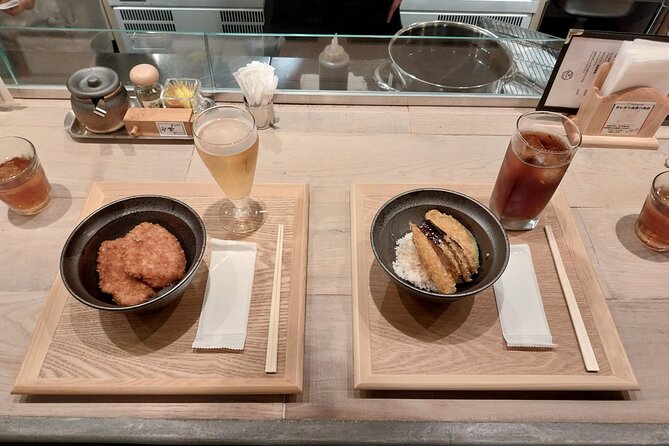
The first food stop is Kyoto Tonkatsu Katsuda in the Shijo Kawaramachi area. You begin with katsudon, a Japanese comfort dish built around pork cutlet and rice, with a local flavoring twist.
Starting with a proper dish instead of a single market nibble is smart. It gives you an immediate sense of the tour’s rhythm: eat, walk, learn, and eat again. The pork cutlet also gives you something filling before the market section.
This stop may feel less distinctive to you than the later Kyoto specialties. Katsudon is widely known across Japan, so its value lies in the local preparation and context. If your priority is rare regional food, keep that in mind. If you like familiar dishes with a Kyoto variation, it is a comfortable opening.
Allow about thirty minutes here. Since the tour has several later tastings, do not assume every stop is meant to be a full restaurant meal.
Ninety minutes inside Nishiki Market
Nishiki Market is the heart of the tour. The market street runs for about 400 meters, and the group spends roughly an hour and a half exploring it. That is enough time to do more than rush from one sample to the next.
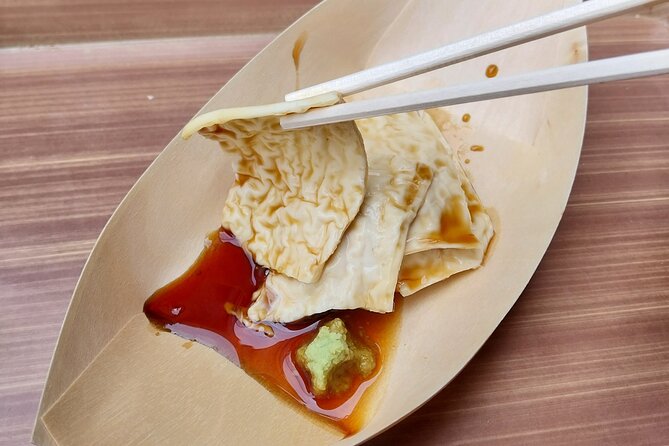
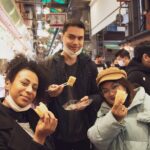
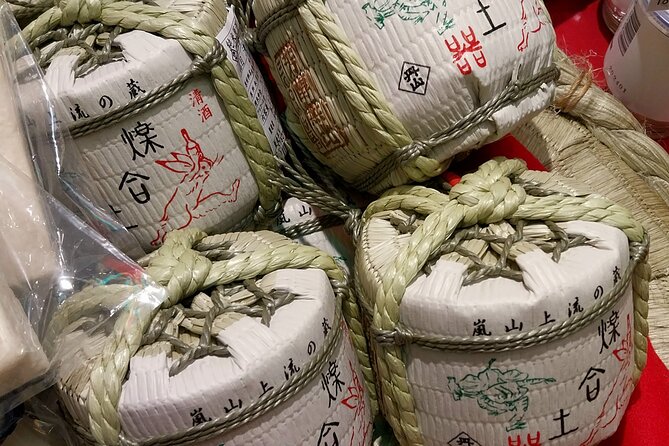
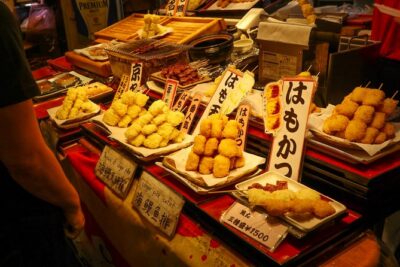
Your guide explains local artisans and their trades as you move through the covered market. You can expect tastings of Kyoto yuba tofu, local sake, and freshly made fish cakes in several flavors. These foods show different sides of Kyoto cooking: delicate soy preparation, regional drinks, and hands-on seafood production.
Yuba is one of the most important tastes here. It is made from the thin skin that forms on heated soy milk, and Kyoto is particularly associated with it. The preparation is subtle rather than loud, so take time with it. This is a dish you may appreciate more after hearing why it matters than after judging it as a quick snack.
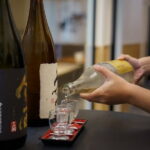
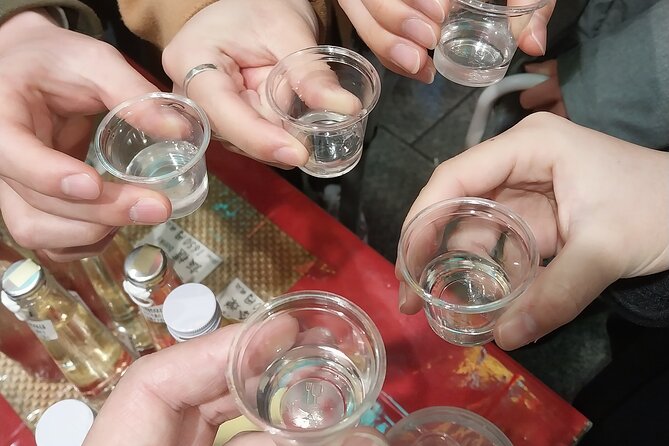
The fish cakes offer a different experience. They are handmade and flavored in more than one way, giving you a chance to compare textures and seasonings. The sake tasting adds another local note, and a glass of draft beer is also included during the tour.
Nishiki Market is not a quiet classroom. You will be walking through an active food street, stopping near shops and stalls. Keep your group in sight and expect the pace to vary as the guide points out products and arranges each sample.
Some of the food here is fried or prepared as street food. That is part of the market experience, but it can disappoint you if you are hoping for a menu built mostly around fresh vegetables, sashimi, or refined restaurant dishes. The route includes variety, but it does not promise a light or health-focused tasting.
A walk beside the Kamo River and through Pontocho
After Nishiki Market, the route turns toward Gion. You walk through central Kyoto and see views of Pontocho and the Kamo River before reaching the Gion district.
This section gives the meal some breathing room. Three and a half hours of continuous eating would be too much, and the walking helps you reset between dishes. It also places the food in the city rather than treating it as a series of unrelated restaurant visits.
Pontocho is one of Kyoto’s best-known old dining lanes, while the Kamo River provides a wide open break from the narrow streets. The route finishes near the entrance to Minami Gion, close to Yasaka Shrine and Gion Shijo Station on the Keihan Line.
I like this ending for practical reasons. You are not left in an obscure neighborhood after the final bite. You can continue into Gion, visit Yasaka Shrine, or reach the subway within a few minutes.
A few more Kyoto tours and experiences worth a look
Okonomiyaki in a small Gion restaurant
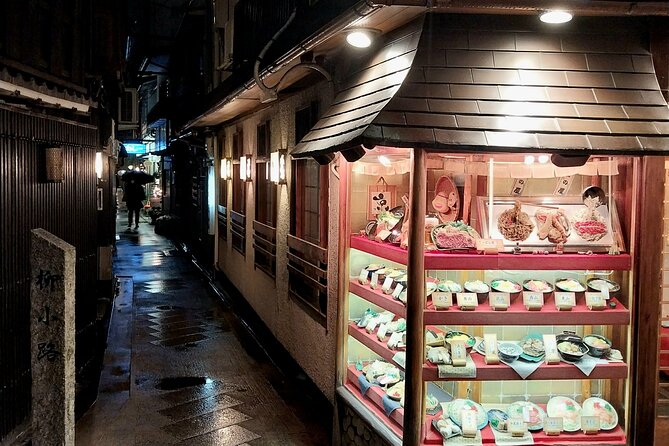
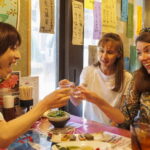
The next substantial stop is a Kyoto-style okonomiyaki in a quaint restaurant in Gion. Okonomiyaki is a savory Japanese pancake, usually cooked with a mixture of batter and other ingredients. Here, the point is the Kyoto preparation rather than a generic version of the dish.
This is another hearty course, following the katsudon earlier in the walk. If you have a small appetite, pace yourself at the market because the later food is not limited to sweets and tea.
The restaurant break also gives you a chance to sit down. That matters after the long Nishiki Market section and the walk toward Gion. The setting should feel more relaxed than the market, though the exact restaurant and menu can change with availability.
The food quality is not guaranteed to match the price for every palate. A few participants have found the dishes merely average and felt they could have bought similar street food for less. I would book this tour for the route and guidance as well as the food, not as a bargain meal.
Wagyu sushi and the tour’s signature surprises
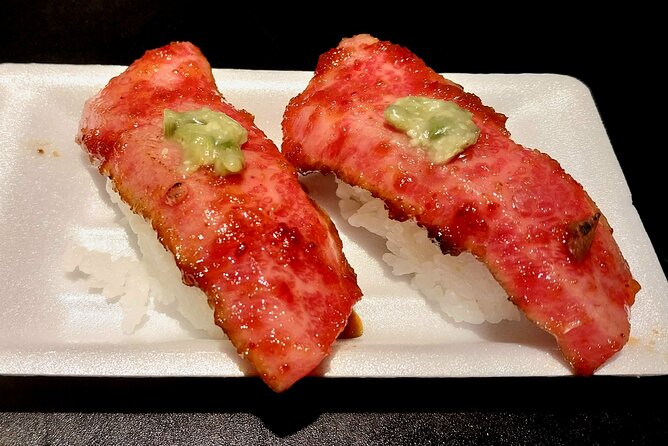
Wagyu sushi is one of the headline tastings. The beef is seared and served over sushi rice, giving you a rich bite with a familiar Japanese base.
This is the kind of sample that helps justify part of the price, especially if you have not tried wagyu in sushi form. Still, one tasting is a taste, not a full wagyu dinner. Think of it as a chance to try a high-profile Japanese ingredient within a wider food route.
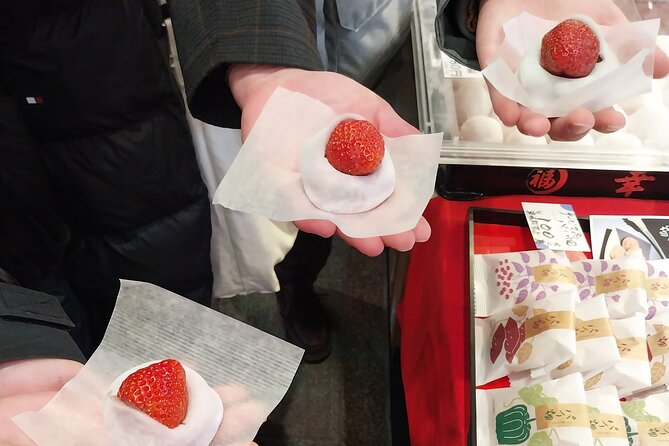
The menu also includes a seasonal daifuku mochi with fruit filling. Mochi has a soft, chewy texture, and the fruit center gives the sweet a fresh contrast. Because the filling depends on the season, the exact flavor can change.
There is also one delicious secret dish. The operator does not specify it in advance, so you should treat it as an extra surprise rather than plan your expectations around a particular food.
The menu is subject to change because of weather, availability, and conditions at the individual stops. That flexibility is normal for a market-based tour, but it means the exact ten tastings are not fixed in stone.
Matcha and the final tea tasting
The final stop focuses on Japanese tea. Kyoto is closely linked with tea ceremony, and the tour visits a well-known matcha venue. Depending on the season and availability, you receive hot or cold tea from a selection.
This is a good way to finish. After fried foods, pork, beef, savory pancakes, and market samples, tea and mochi provide a gentler last course. The temperature option also helps match the season.
Do not confuse this with a formal tea ceremony. The provided details describe a tea tasting at a renowned matcha venue, not a full ceremony with extended etiquette instruction. If you want a dedicated tea ritual, you will need a separate booking.
The tour ends in Gion, near Gion Shijo Station and a short walk from Yasaka Shrine. You can use the location as a springboard for more sightseeing, but the tour itself finishes after the tea stop.
How much food do you really get for $142?
At $142, the price sits well above the cost of buying individual market snacks. You may reasonably feel that the food alone does not equal the admission price, especially if you already know Kyoto and can order Japanese dishes without help.
The value improves if you are new to Kyoto, short on time, or unsure where to eat. You receive a planned three-and-a-half-hour route, ten tastings, drinks, a guide, and a practical introduction to several districts. You also avoid spending part of your day researching which market stalls and restaurants are worth your time.
The included items cover a broad range:
- Katsudon with a Kyoto-style twist
- Kyoto yuba tofu
- Wagyu sushi
- Fresh handmade fish cakes
- Okonomiyaki
- Daifuku mochi with seasonal fruit
- A secret dish
- Draft beer
- Kyoto sake tasting
- Hot or cold Japanese tea
That is a strong spread on paper. The weak point is that several dishes may be small, fried, or familiar. You are paying for access and interpretation, so the guide’s performance matters. Guides such as Yuma and Tomoro have been praised for their friendly approach, but you should be prepared for differences in voice, English fluency, and food knowledge.
Who will enjoy this Kyoto food walk?
I would recommend it most to a first-time Kyoto visitor who wants food and sightseeing in the same afternoon. The route gives you useful orientation from Karasuma to Gion, and the market section is long enough to make the visit feel worthwhile.
It also suits people who like trying many small portions rather than choosing one restaurant. You can sample dishes you might not order on your own, including yuba tofu, wagyu sushi, regional fish cakes, and seasonal mochi.
The tour is less suitable if you want:
- A quiet, seated culinary class
- A formal tea ceremony
- Mostly raw, fresh, or vegetable-based foods
- A low-cost way to eat at Nishiki Market
- A specialist guide with extensive culinary training guaranteed
The group maximum of ten is a real advantage. You will not be in a huge crowd, and you should have a better chance to hear explanations and ask questions. Still, stay near the guide and speak up if you want more detail.
Walking, weather, and practical planning
Wear comfortable shoes. The tour covers a fair amount of ground and includes the full walk from Karasuma toward Gion. This is not a good choice for a day when you want to minimize walking.
The tour requires good weather. If poor weather cancels it, you can receive a full refund or move to another date. The same choice applies if the minimum number of participants is not reached.
Dietary requirements must be sent in advance. The operator will try to accommodate them, but the route includes fixed restaurants and market vendors, so last-minute changes may be difficult. Do not wait until the meeting point to explain an allergy or major restriction.
You can cancel for a full refund up to 24 hours before the start time. Inside that window, changes and refunds are not accepted.
Should you book the Karasuma to Gion food tour?
Book it if you want a guided introduction to Kyoto food that also shows you Nishiki Market, Pontocho, the Kamo River, and Gion. The food range is broad, the group is small, and the ending near Yasaka Shrine makes the afternoon easy to extend.
Skip it if your main goal is maximum food value for your money. You can spend less by buying individual items, and the experience may include more fried or familiar food than you expect. You should also accept that guide quality can vary, especially in spoken volume and the amount of culinary background provided.
For most first-time visitors, the best reason to choose this tour is not simply the wagyu sushi or the mochi. It is the way the route connects Kyoto’s food stalls, restaurants, tea culture, and old streets in one manageable outing. Go hungry, wear good shoes, and treat the $142 as payment for a guided introduction rather than a cheap lunch.
FAQ
Where does the Kyoto food tour begin?
The tour begins in front of the Starbucks across from Exit 5 of Karasuma Oike Subway Station, at the Kyoto Sanjo Karasuma Building in Nakagyo Ward.
Where does the tour finish?
It ends at the entrance to the Minami Gion district. Gion Shijo Station on the Keihan Line is a few minutes away, and Yasaka Shrine is nearby.
How long does the tour last?
The tour lasts approximately three hours and thirty minutes.
How many people can join the group?
The group has a maximum of ten participants.
What foods and drinks are included?
The tastings include yuba tofu, katsudon, okonomiyaki, wagyu sushi, handmade fish cakes, daifuku mochi with seasonal fruit, and a secret dish. Drinks include draft beer, Kyoto sake, and hot or cold Japanese tea.
Can dietary requirements be accommodated?
You should contact the operator in advance with your dietary requirements. The menu and route may change according to availability, weather, and other conditions.
More Food Experiences in Kyoto
More Kyoto Food Tours in Kyoto
More tours in Kyoto we've reviewed










Kyoto Food Tours, compared.
 ★ 5.0Kyoto Night Foodie Tour in Gion (9+ dishes + 6 Sake tastings)From $163
 ★ 5.0Nishiki Market Brunch Walking Tour (7 Tastings + Brunch)From $68
 ★ 5.03-Hour Kyoto Insider Sake Brewery Tour with Tastings & PairingsFrom $84
 ★ 4.6Kyoto Night All-Inclusive Eats and Streets, Gion and BeyondFrom $101
 ★ 4.5Kyoto Nighttime All-Inclusive Eats and Streets, Gion and BeyondFrom $119
 ★ 5.0Kyoto Foodie Night TourFrom $102