
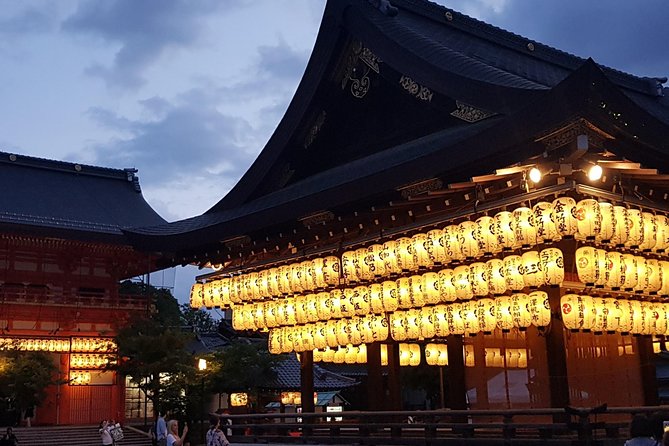
Reviewed · GION & GEISHA WALKS
Kyoto Nighttime All-Inclusive Eats and Streets, Gion and Beyond
Kyoto’s nighttime story is not only about temples lit against the dark. It is also about geiko, maiko, hostess clubs, standing bars, and narrow lanes where old customs and modern nightlife share the same few blocks. This three-hour walk gives you a guide to that less obvious side of the city, then takes you into two small restaurants for regional dishes and drinks.
I like the mix of cultural explanation and actual eating, rather than a night spent only listening or only ordering food. I also like the small group limit of six, the two included drinks, and the care shown with vegetarian, pescetarian, and gluten-free needs. The main caution is that restaurant quality and atmosphere can vary, and some walking is involved. One stop may allow smoking, an important consideration if you are sensitive to smoke.
In This Review
- Kyoto after dark, at a glance
- Starting beneath the Minamiza Theater at 6:30 pm
- Gion’s geiko world, explained without the usual clichés
- Shrines, temples, and the quiet edges of the walk
- The first restaurant around 7:30 pm
- Pontocho and Kiyamachi after the first drink
- The second restaurant around 9 pm
- What $119 buys you in Kyoto
- Who will enjoy this night walk
- Should you book Kyoto Nighttime All-Inclusive Eats and Streets?
- FAQ
- Where does the Kyoto nighttime food tour start?
- Where does the tour end?
- How long does the experience last?
- How many people can join the tour?
- Are drinks included?
- Can I purchase more drinks?
- Is food included?
- Can vegetarians join?
- What is the minimum age?
- Can I cancel for a refund?
Kyoto after dark, at a glance
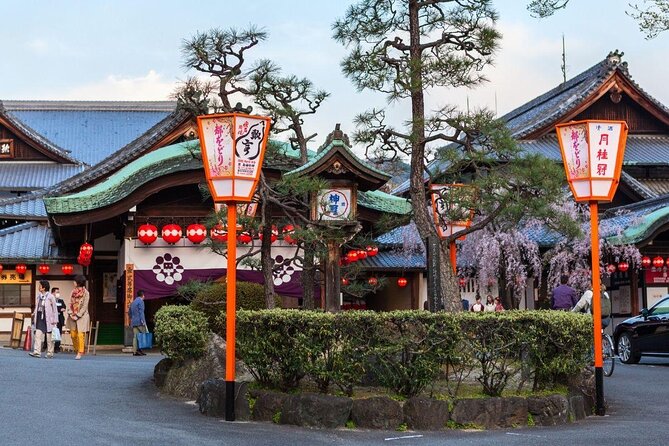
- Gion begins the evening: Learn why Kyoto uses the term geiko, how maiko fit into the tradition, and how the district’s evening entertainment has changed.
- Two local food stops: Try several regional dishes at small bars or restaurants, with one alcoholic or non-alcoholic drink at each.
- A walk across the Kamogawa River: Continue through Pontocho, Kiyamachi, and the Kawaramachi area, moving from old lanes to younger nightlife streets.
- Guides who shape the evening: Hugo, Laura, Jamie, Joshua, Brian, Rin, Maya, and others have led tours with different personalities and local perspectives.
- Small groups help: The usual maximum is six people, though a same-reservation group can reach eight.
- A practical first-night choice: The walk helps you get oriented in central Kyoto while giving you restaurant ideas for the rest of your stay.
Starting beneath the Minamiza Theater at 6:30 pm
The meeting point is the Minamiza Theater, beside Gion Shijo Station on the east side of the Kamogawa River. This is a sensible starting place. You are right at the edge of Gion, close to public transportation, and the theater itself is one of the area’s major landmarks.
It is also a busy meeting area. Several tours may gather nearby, so arrive early and confirm the guide’s name or identifying details. The meeting instructions place the start at the theater’s second-floor west lobby, which is worth checking before you set out.
The 6:30 pm start gives you a full evening without pushing too late. You begin with the walking portion, eat at about 7:30, continue through the central nightlife districts, and finish with a second restaurant at about 9 pm. The tour ends near Kyoto-Kawaramachi Station around 9:30 pm.
That timing works well after a day of temples and gardens. You can rest first, then see Kyoto shift into its evening rhythm. The drawback is that the tour begins after sunset has started or is close to starting, so this is not the best choice if your main goal is daytime photography of Gion. One person specifically wished for an earlier start to see the transition from daylight to night.
A few more Kyoto tours and experiences worth a look

Gion’s geiko world, explained without the usual clichés
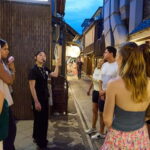
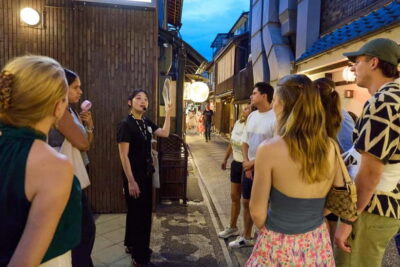
The first hour is an educational walk through Gion. Your guide explains the geiko tradition, including why Kyoto uses geiko rather than the more widely known word geisha. You also learn about maiko, the younger performers in training, and the places associated with evening entertainment.
This matters because Gion can be easy to misread. A quick stroll may show you pretty wooden facades, closed doors, and perhaps a geiko or maiko moving between appointments. A good guide gives those scenes context without turning the neighborhood into a stage set.
The tour also explains the shift from traditional geiko entertainment to modern hostess clubs. That comparison is the unusual heart of this experience. You are not only hearing about old Kyoto. You are looking at how nightlife adapts, who works in it, and how different forms of evening hospitality fit into the city today.
The subject is suitable for participants aged 13 and up, but it is not a children’s attraction in the usual sense. The discussion concerns adult nightlife and entertainment, even though the tour does not enter an unsuitable venue.
Past guides have made this section especially personal. Laura has explained geiko, maiko, shrines, and temples in clear English, while Hugo has mixed neighborhood detail with humor. Other guides, including Joshua, Jamie, Brian, Rin, and Maya, have been praised for giving practical explanations and answering questions. Your assigned guide will determine the exact tone, but the experience depends heavily on this human element.
Shrines, temples, and the quiet edges of the walk
The walk may include a Shinto shrine and Buddhist sites, depending on the route and guide. That creates a useful contrast with the nightlife material. You may pause at a shrine and learn how it differs from a Buddhist temple, then continue only a few streets later into restaurant and entertainment areas.
I like this change of pace. Kyoto’s evening character is not just neon, signs, and food. It also includes quiet religious spaces, old lanes, and the careful way the city protects traditional streets.
Do not expect a formal temple tour or a long architectural lecture. The focus is the connection between place, custom, and nighttime life. The guide uses the streets as a classroom, and the walking itself is part of the experience.
Wear comfortable shoes. The route takes you through several districts and includes enough walking that one person described it as a lot. You may also spend time standing at bars or moving between compact restaurants, so this is not ideal for anyone who wants a seated evening with very little time on foot.
The first restaurant around 7:30 pm
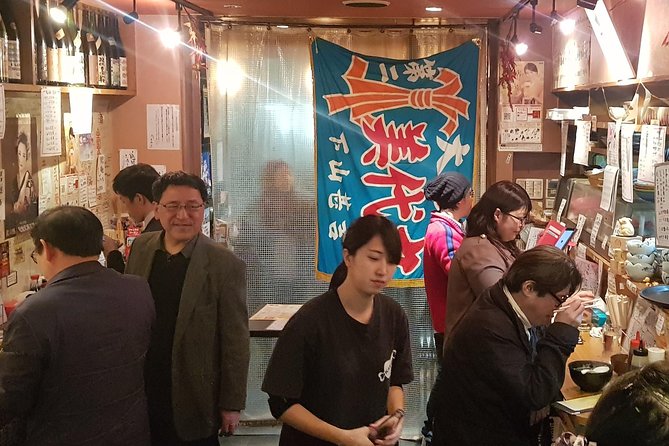
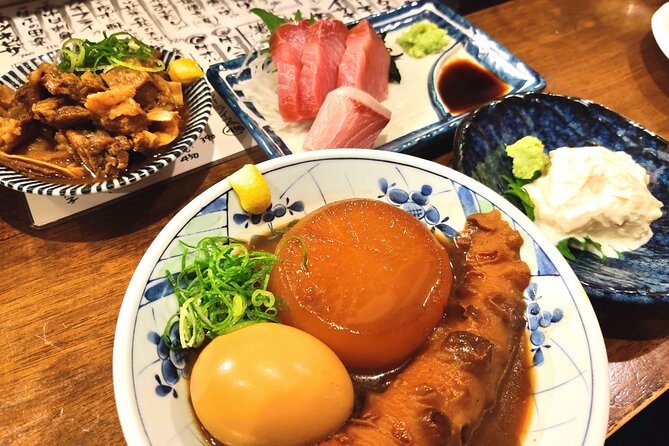
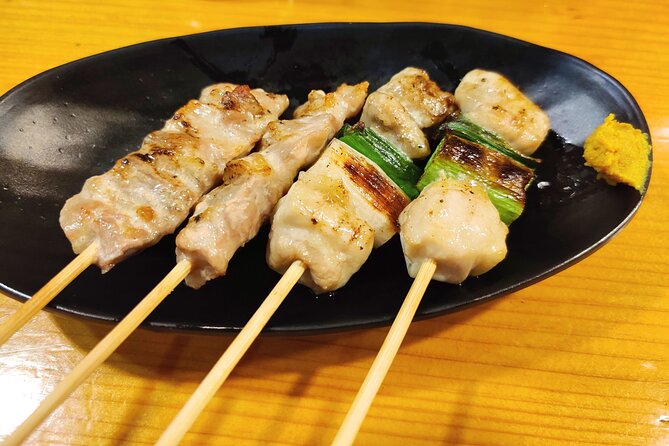
After about an hour of walking, the food portion begins at a small local bar or restaurant. The format is closer to an izakaya experience than a single plated dinner. You try several regional dishes, often in small portions, and receive your first included drink.
Your choices include beer, sake, shochu, or a non-alcoholic drink. The exact food depends on the restaurant, the evening, and dietary needs. Vegetarian diners are explicitly accommodated, and the tour has also handled pescetarian, gluten-free, and other requests well when provided in advance.
This is a good setup if you want variety. You can sample several things without committing to a large serving of one unfamiliar dish. The amount has generally been described as enough to satisfy without leaving people uncomfortably full, though appetites differ.
Some tours use a standing bar or standing restaurant for this stop. That gives you a local, informal atmosphere and lets you move through the meal at a good pace. It also means limited seating and less personal space. If you need a more relaxed meal, mention that when booking or contact the operator about your needs.
The food is one of the tour’s strongest points, but it is not perfectly predictable. Most accounts describe tasty, plentiful dishes and restaurants they would not have found alone. A few had a poor first stop, including one complaint about food quality and another about an unpleasantly smoky room. The operator has acknowledged that small local establishments can differ and that smoking remains common in some Japanese restaurants.
Pontocho and Kiyamachi after the first drink
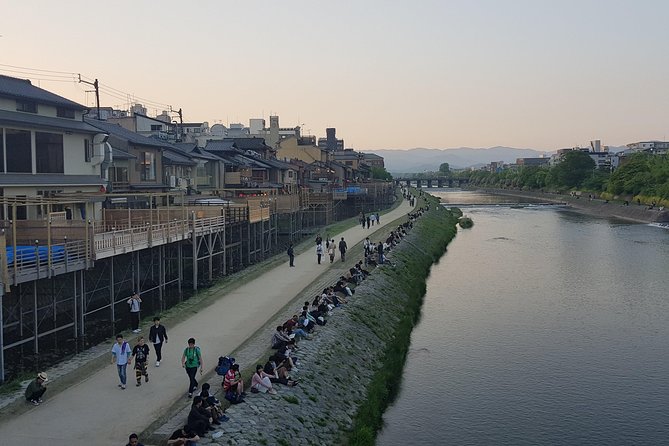
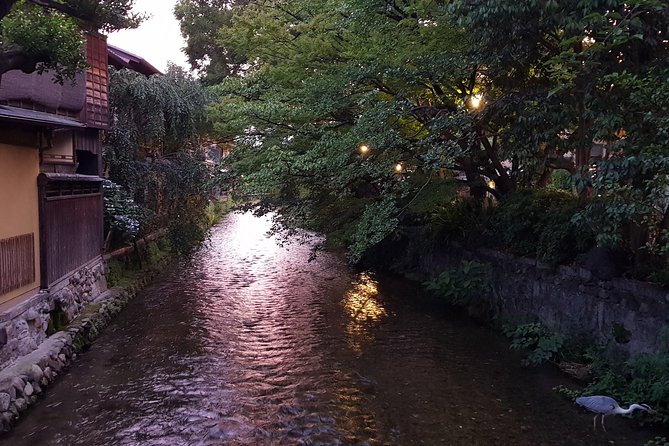
After the first meal, you cross toward the west side of the Kamogawa River and walk through Pontocho, Kiyamachi, and the Kawaramachi Street area. This section shows Kyoto in layers.
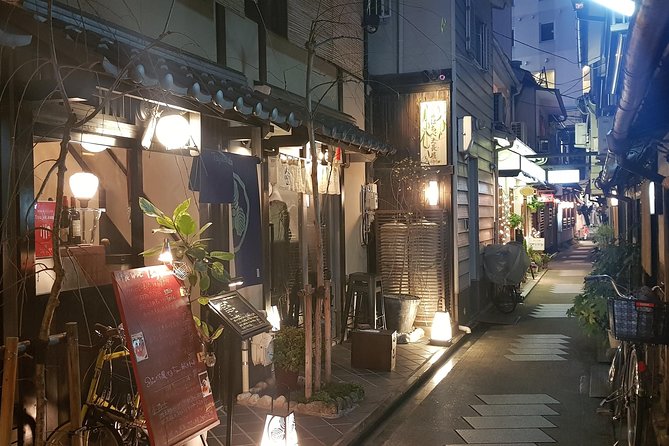
Pontocho is known for its narrow old lane and traditional facades. It is the kind of street where you should slow down and look at the details rather than simply search for a famous landmark. Your guide can explain how the area preserves its older character and how restaurants use the lane.
A few streets away, Kiyamachi and Kawaramachi show a younger side of the city. The contrast is useful: Kyoto protects its old districts, but it is not frozen in the past. Bars, restaurants, and newer entertainment venues share the same central area.
The route also helps with orientation. If you do not read Japanese or feel unsure about finding small restaurants, having someone lead you through these streets can remove much of the evening’s guesswork. Several guides have also offered suggestions for places to eat or visit later in the trip.
Photography is not the tour’s strongest feature. Night streets can be atmospheric, but low light and crowds make sharp photos harder. If you want postcard views of Gion, visit in daylight as well. Treat this walk as a way to understand the area, not as a dedicated photo tour.
A few more Kyoto tours and experiences worth a look




The second restaurant around 9 pm
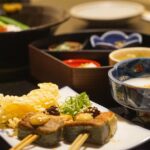
The evening ends with a second thoroughly selected food stop and another included alcoholic or non-alcoholic drink. This restaurant is intended to add different dishes and a different setting rather than repeat the first meal.
You might receive several small bites, a more substantial main course, or dishes such as wagyu when arranged in advance. One group chose wagyu and learned that the restaurant made special sourcing arrangements for a same-day request. That suggests flexibility, but it does not mean wagyu is guaranteed as part of every booking.
The second stop has often been the stronger social part of the evening, with a friendly owner and good food. Still, seating may not always be arranged around one shared table. One group found that sitting at a bar made conversation harder, especially within a larger party.
This is where expectations matter. You are paying for a guided food walk with two restaurant visits, not a fixed tasting menu at two named establishments. The stops can change, and the guide may adapt the meal to dietary restrictions, group tastes, and restaurant availability.
What $119 buys you in Kyoto
At $119 per person, the tour is not a bargain meal. You are paying for dinner, two drinks, a three-hour route, translation and ordering help, and the guide’s local access to small places. The value improves if you are new to Kyoto, unsure about Japanese menus, or eager to eat in places you might skip on your own.
Two drinks are included, one at each restaurant. Additional drinks cost extra and are paid directly to the restaurants. The included drinks can be alcoholic or non-alcoholic, and Japan’s legal drinking age is 20.
For a private tour, the price would feel different, but this is a small shared group experience. The standard maximum is six people. Groups of up to eight are accepted when everyone is part of the same reservation, which can work well for families or friends but may make restaurant conversation less easy.
The price is less compelling if you already know Kyoto’s central districts, speak Japanese comfortably, and prefer choosing your own restaurants. It is more useful as an introduction, especially on your first night. You get a quick cultural briefing, a walk through four central areas, and two meals without having to research tiny establishments in advance.
The tour has a 4.6 rating from 464 reviews, with 90 percent recommending it. Those numbers suggest a strong experience overall, but the uneven food and smoking complaints are worth keeping in mind. The guide remains a major part of the value. Names such as Laura, Hugo, Jamie, Joshua, Maya, and Brian appear repeatedly in positive accounts because they explain clearly, keep the group moving, and adjust when needed.
Who will enjoy this night walk
I would choose this experience for you if you:
- Are visiting Kyoto for the first time
- Want context for Gion beyond pretty streets
- Like trying several dishes instead of ordering one large meal
- Prefer a small group and an English-speaking guide
- Need help with Japanese menus or local restaurant customs
- Want an easy introduction to Pontocho, Kiyamachi, and Kawaramachi
- Have vegetarian, pescetarian, or gluten-free needs you can state ahead of time
I would think twice if you dislike walking, standing to eat, smoky rooms, or uncertain restaurant selections. It is also not the right choice if you mainly want geiko sightings. Seeing one is a matter of timing, not a promise, and respectful behavior is essential.
The tour requires good weather. If poor weather causes cancellation, you are offered another date or a full refund. You can cancel for a full refund up to 24 hours before the 6:30 pm start, but late changes are not accepted.
Should you book Kyoto Nighttime All-Inclusive Eats and Streets?
Book it if you want a guided first look at Kyoto’s evening culture, with real food along the way. I especially like it for the first or second night of a stay, when the orientation, restaurant suggestions, and explanations of geiko life can shape the rest of your visit.
Go in expecting a flexible local food walk, not a polished fine-dining event. The best evenings combine a lively guide such as Laura, Hugo, Jamie, or Joshua with two good small restaurants and a friendly group. If you bring comfortable shoes, share dietary needs early, and accept that the exact stops can change, the $119 price can be fair for the access and guidance it provides.
FAQ
Where does the Kyoto nighttime food tour start?
It starts at the Minamiza Theater, near Gion Shijo Station, at 6:30 pm. The meeting instructions specify the second-floor west lobby.
Where does the tour end?
The tour ends near Kyoto-Kawaramachi Station at about 9:30 pm.
How long does the experience last?
The experience lasts approximately three hours, from 6:30 pm to 9:30 pm.
How many people can join the tour?
The normal maximum is six participants. Groups of up to eight can join when the entire group is covered by one reservation.
Are drinks included?
Yes. Two alcoholic or non-alcoholic beverages are included, with one drink served at each restaurant.
Can I purchase more drinks?
Yes. Drinks beyond the two included beverages can be bought directly from the restaurants.
Is food included?
Yes. Dinner and regional dishes at two restaurant stops are included.
Can vegetarians join?
Yes. Vegetarians are happily accommodated. Pescetarian and gluten-free needs have also been handled, so provide your dietary information when booking.
What is the minimum age?
All participants must be at least 13 years old. The minimum drinking age in Japan is 20.
Can I cancel for a refund?
You can cancel at least 24 hours before the start time for a full refund. Cancellations or changes made less than 24 hours before the tour are not accepted, and poor-weather cancellations offer a different date or full refund.
More Kyoto Food Tours in Kyoto
More Gion & Geisha Walks in Kyoto
More tours in Kyoto we've reviewed


Gion & Geisha Walks, compared.
 ★ 4.7Kyoto Geisha Walking Tour: Gion District & Hidden GemsFrom $252 hours
 ★ 4.7Kyoto: Gion Geisha District Walking Tour – Stories of GeishaFrom $202 hours
 ★ 4.9Best of Kyoto: Gion, Geisha, Pagodas & CobblestonesFrom $242 hours
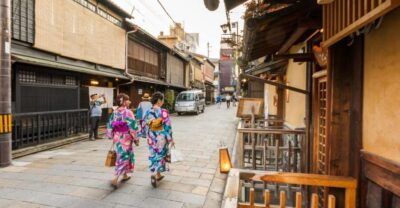 ★ 4.5Night Walk in Gion: Kyoto’s Geisha DistrictFrom $211h 40m
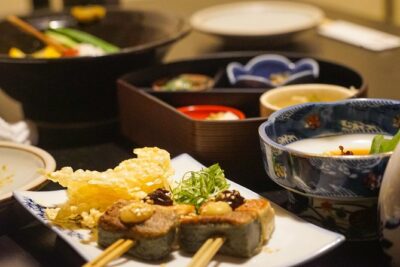 ★ 5.0Kyoto Night Foodie Tour in Gion (9+ dishes + 6 Sake tastings)From $163
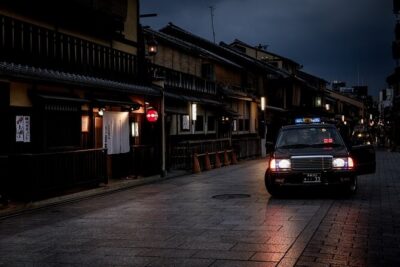 ★ 5.0Kyoto Gion Geisha District Walking Tour – The Stories of GeishaFrom $25