
Reviewed · WORKSHOPS
Itajime Shibori Scarf Class
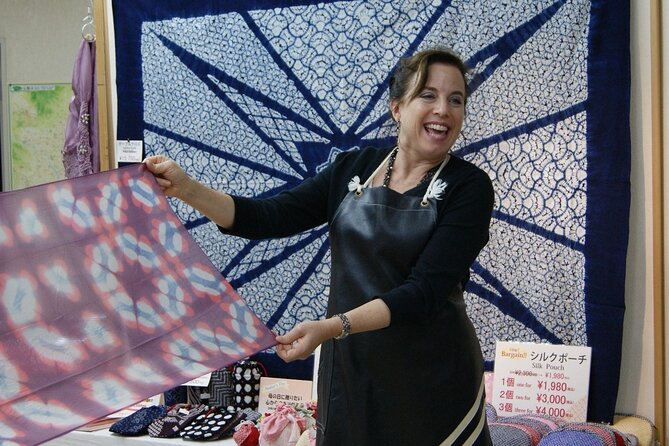
Kyoto’s shibori scarf class turns an old Japanese dyeing method into a hands-on souvenir you can actually use. You fold fabric, apply traditional tools, add color, and wait for the final reveal. The result is never quite predictable, which is part of the fun.
I like the small class size, capped at 10, because the process benefits from patient instruction. I also like that your workshop includes the Kyoto Shibori Museum, where you can see finished works and learn how much time and skill go into this craft. The main consideration is finding the classroom, which is on the second floor and can be poorly marked from the street.
In This Review
- Key points to know before booking
- What makes itajime shibori different
- Starting at the Kyoto Shibori Museum
- Choosing fabric, colors, and a pattern
- The hands-on scarf-making process
- Visiting the museum while the scarf dries
- Why the $43.60 price can be good value
- Who will enjoy this class most
- Timing, access, and useful planning tips
- Small details that make it memorable
- Should you book the Kyoto shibori class?
- FAQ
- Where does the itajime shibori scarf class take place?
- How long does the experience last?
- What is included in the visit?
- Can I take the scarf home?
- What is the minimum age?
- Do children pay the same price?
- How many people can join the class?
- Is the museum near public transportation?
- Is parking available?
- Can I cancel for a full refund?
Key points to know before booking
- Make your own scarf: You select Japanese fabric, colors, and a pattern before creating the design.
- See the finished craft: The museum’s upper-floor exhibition includes detailed shibori works and a film about the process.
- Expect personal instruction: Staff members guide you carefully, with June and Kenji singled out for their patient, welcoming approach.
- Good for families: Children from age 6 can participate, and adult pricing applies to all ages.
- Allow up to an hour: The class lasts roughly 30 to 60 minutes, with time to look around while the scarf dries.
- Easy to pair with sightseeing: The museum is near public transportation and about a two-minute walk from Nijo Castle, according to the provided experience details.
What makes itajime shibori different

Shibori is a Japanese method of shaping cloth before dyeing it. Instead of simply brushing color onto a blank scarf, you fold, clamp, bind, or otherwise restrict sections of fabric. The covered areas resist the dye, creating patterns when the cloth is opened.
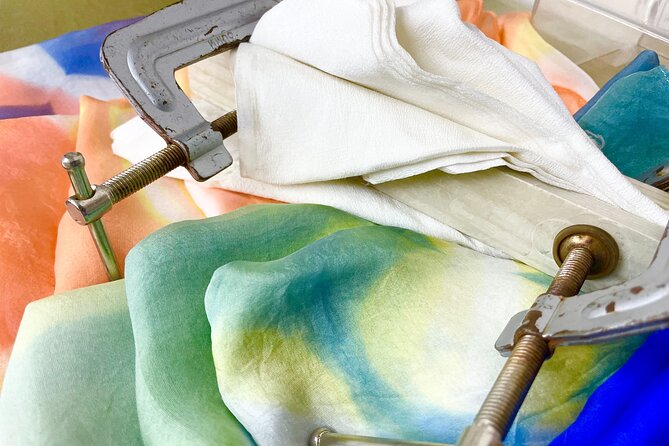
This class focuses on itajime shibori, a folding and clamping technique. The fabric is arranged with care, then traditional tools help keep parts of it from absorbing the dye. When the folds come apart, you see the pattern that was hidden inside.
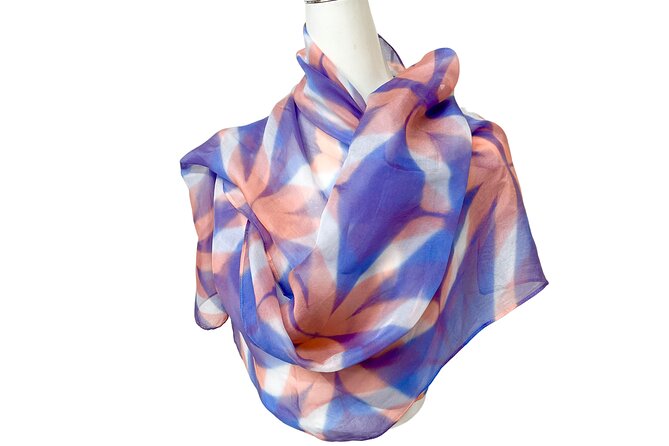
That reveal gives the class its little moment of theater. You make choices at the beginning, but the finished scarf still contains surprises. A small change in folding or color placement can produce a different design, so you do not need to be an experienced artist to enjoy it.
I find this more satisfying than buying a scarf from a shop because you understand something about how it was made. You also leave with a useful reminder of Kyoto rather than a mass-produced trinket.
A few more Kyoto tours and experiences worth a look


Starting at the Kyoto Shibori Museum
The activity takes place at the Kyoto Shibori Museum, where the craft lesson and museum visit work together. The museum presents shibori as both a practical textile technique and a serious art form. You begin with the making, then have a chance to see the finished standard of the craft upstairs.
The experience information gives the visit a duration of about 30 minutes to one hour. That is a short commitment by Kyoto standards, making it easy to fit between larger sights. Still, I would avoid scheduling it too tightly. The class itself may be brief, but you will get more from the visit if you allow time for the exhibition and for your scarf to dry.
The building can be easy to miss. One person specifically found the classroom difficult to locate because the second-floor space was not well marked from the street. Look carefully for the museum entrance, and do not assume the workshop is at street level.
The museum is near public transportation. Two car parking spaces and bicycle parking spaces are available, though the limited number means you should not plan around guaranteed parking.
Choosing fabric, colors, and a pattern
The creative work begins with choices. You select from Japanese fabrics, then decide how you want the scarf to look. The available details do not specify a fixed menu of colors or patterns, so the exact selection may vary, but the activity clearly gives you room to make the design your own.
This is where a patient instructor matters. You do not need to know the technical terms before arriving. Staff members explain what to do and why, then help you prepare the fabric for dyeing.
The class has received praise for clear directions and close attention. June is specifically described as patient and kind, while Kenji and his staff are praised for making the process welcoming and personal. One solo participant received individual attention, and a family with children found the instruction easy to follow.
The small maximum of 10 people should help keep the lesson manageable. It is not a large production line with everyone rushing through identical steps. The experience can feel more like a short craft lesson, though the amount of one-to-one help may depend on how many people are booked at your time.
The hands-on scarf-making process
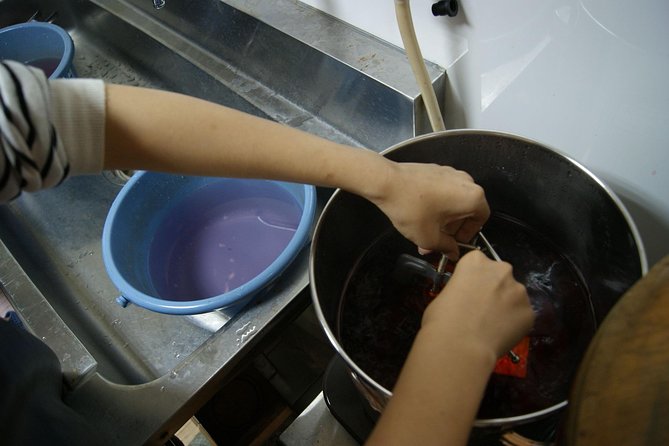
Once your fabric and design are chosen, the instructor walks you through the folding and dyeing process. The central idea is simple: parts of the cloth are protected while other parts take in the color. The pattern appears only after the fabric is opened.
This makes the class active from start to finish. You are not simply watching a demonstration. You handle the material, follow the instructions, and make decisions that affect the finished scarf.
Several people have found the activity relaxing, and that makes sense. The work is careful rather than strenuous. Folding cloth, setting the pattern, and waiting for color to develop gives you a quiet break from Kyoto’s crowded temple routes and busy shopping streets.
The final opening of the scarf is the highlight. You may have a general idea of the pattern, but the exact result is not visible until the fabric is unfolded. That grand reveal is especially appealing for children and teenagers, who may not expect a traditional textile class to be this entertaining.
The finished scarf is yours to take home. Some participants also made more than one scarf, though the standard experience is presented as a scarf-making class and you should not assume additional pieces are included.
Visiting the museum while the scarf dries
The museum visit adds real value to the class. While your scarf dries, you can look at the exhibition on the second floor and learn more about shibori techniques, kimono fabrics, and the work behind the designs.
The display includes elaborate shibori pieces that show how far the craft can go beyond a simple workshop project. The contrast is useful: you first make a modest scarf with guidance, then see what skilled makers can produce with years of practice.
A film explains the shibori process and the construction of textile works. This gives you a better sense of the craft’s long history in Japan without turning the class into a long lecture.
The museum also helps you understand the labor behind kimono fabric. Shibori can involve intricate preparation and repeated handwork, so even a basic scarf gives you a small connection to a much larger textile tradition.
Some visitors have spent extra time looking at the exhibition, and I would recommend doing so. If you rush out as soon as the scarf is ready, you miss half of what makes this experience worthwhile.




Why the $43.60 price can be good value
At $43.60 per person, this is not the cheapest short activity in Kyoto. The class lasts approximately 30 to 60 minutes, so the price is not based on a full day of guiding or a long sightseeing route.
The value comes from the combination of instruction, materials, museum entry, and a handmade souvenir. You are paying for an activity rather than just admission. The scarf also has a personal story attached to it, since you helped create the pattern.
I consider the price fair for visitors who want a cultural activity with a physical result. It is particularly good value for families, couples, and anyone who enjoys crafts. If you are only interested in major temples and scenic viewpoints, you may find the short duration less compelling.
The museum visit strengthens the deal. You can see the craft’s artistic side, watch the process explained on film, and examine works that would be difficult to understand from a finished scarf alone.
Who will enjoy this class most

This is a strong choice for families with children age 6 and older. Adult pricing applies to all ages, so the total cost can add up for a large family, but the activity gives children something active to do and a souvenir they made themselves.
Teenagers may also enjoy it more than expected. The process is tactile, the class is not too long, and the final pattern appears quickly enough to keep interest.
I would also recommend it to solo visitors. A small class and personal instruction can make a solo booking feel comfortable rather than awkward. One participant made three scarves and used the calm setting as a pleasant way to begin a final day in Japan.
Craft lovers will get the most from the museum display and the explanation of traditional techniques. You do not need artistic confidence, though. The instructions guide you through the important steps, and an imperfect pattern is still part of the charm.
This may be less suitable if you want a long, detailed workshop or a full museum tour with extensive historical interpretation. The format is compact and practical.
Timing, access, and useful planning tips
The class is offered as a 30- to 60-minute experience, but you should leave some flexibility around it. The scarf needs time to dry, and the museum is worth seeing while you wait.
The location is near public transportation. It is also close to Nijo Castle, with the museum described as about a two-minute walk away. Pairing the class with the castle can make good use of your time, though you should avoid rushing from one timed booking to the next.
The minimum age is 6. Most people can participate, but the supplied details do not give a full accessibility description, so contact the provider if you have specific mobility or participation needs.
A mobile ticket is available, and confirmation is provided at booking. The maximum group size is 10, which keeps the activity relatively intimate.
Free cancellation is available up to 24 hours before the start time for a full refund. Canceling or changing the booking within 24 hours is not accepted for a refund, and cut-off times use Kyoto local time.
Small details that make it memorable
The staff’s personal approach is one of the strongest parts of the experience. The class is not presented as a cold demonstration. Instructors answer questions, help with the steps, and add finishing touches before the scarf is packaged.
One family received a certificate for a child, which shows the staff may make an extra effort to mark the occasion. You should not assume every booking includes a certificate, but the detail suggests a warm approach to children and families.
The museum’s owners and staff also connect the activity to their own family connection with shibori. One account describes a family tradition reaching back to a grandfather who was a shibori master. That personal link gives the lesson more weight than a generic craft session.
A small shop area may also offer shibori items such as purses. Purchases are not part of the class price, but the museum can help you see how the technique appears in finished goods.
The experience has received an overall rating of 5 from 84 reviews, with 100 percent recommending it. Ratings alone do not tell you everything, but here they match the specific strengths: friendly staff, clear instruction, enjoyable hands-on work, and a museum visit that adds context.
Should you book the Kyoto shibori class?
Book it if you want a short, personal cultural activity and a souvenir with your own fingerprints on it. The combination of scarf-making and museum viewing gives you both participation and background, while the small group size should keep the instruction friendly.
I would especially choose it for a family, a crafty couple, or a solo visitor looking for a calm hour near Nijo Castle. The class is also a smart rainy-day option because the main activity takes place indoors.
Think twice if you want a long workshop, guaranteed one-to-one teaching, or a large selection of confirmed design options listed in advance. The street entrance can be hard to spot, and the price may feel high if you only stay for the shortest version of the class.
For most visitors, though, this is a practical Kyoto experience with a clear payoff: you learn an old textile technique, see fine museum pieces, and carry home a scarf that no factory made for you.
FAQ
Where does the itajime shibori scarf class take place?
The class takes place at the Kyoto Shibori Museum in Kyoto, Japan.
How long does the experience last?
The class and museum visit take approximately 30 minutes to one hour.
What is included in the visit?
You receive instruction in making a shibori scarf, use Japanese fabrics and traditional tools, and have admission to the Kyoto Shibori Museum.
Can I take the scarf home?
Yes. The handmade scarf is a memento you can take home after the activity.
What is the minimum age?
The minimum age is 6 years old.
Do children pay the same price?
Yes. Adult pricing applies to all ages.
How many people can join the class?
The activity has a maximum of 10 participants.
Is the museum near public transportation?
Yes. The museum is located near public transportation.
Is parking available?
Two car parking spaces and bicycle parking spaces are available.
Can I cancel for a full refund?
Yes. You can cancel at least 24 hours before the experience start time for a full refund. Cancellations or changes made within 24 hours are not refunded.
More Workshops & Classes in Kyoto


More tours in Kyoto we've reviewed








Workshops, compared.
 ★ 4.3Kyoto: 45-Minute Tea Ceremony Lesson ExperienceFrom $2245 min
 ★ 5.0Ramen Cooking Class at Ramen Factory in KyotoFrom $131
 ★ 4.9Kyoto: Ramen Cooking Class at a Ramen Factory with SouvenirFrom $1271h 30m
 ★ 4.9Kyoto: Samurai Class, Become a Samurai WarriorFrom $70
 ★ 5.0Ninja 1-hour Hands-on Lesson by Japanese master in Kyoto -EntryFrom $80
 ★ 5.0Kyoto: Ramen, Gyoza, and Onigiri Cooking ClassFrom $901h 30m