
Reviewed · NISHIKI MARKET TOURS
Kyoto Nishiki Market Food and Culture Walking Tour
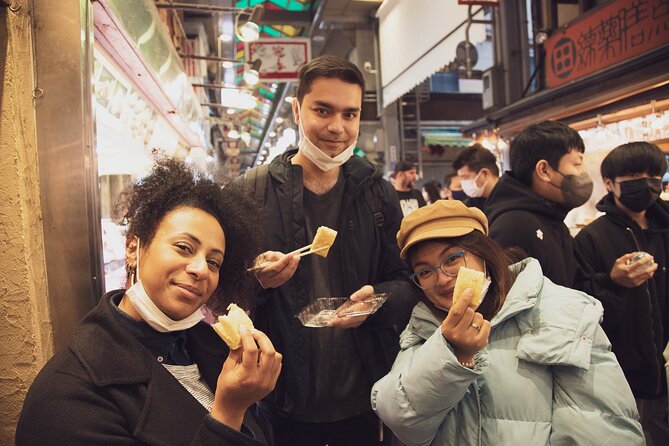
Kyoto’s Nishiki Market is easy to enter and surprisingly easy to misunderstand. The narrow, 400-year-old food street is packed with unusual snacks, pickles, sweets, seafood, seasonings, and shops selling things you may not recognize. This tour gives you a local guide to explain what you are seeing and help you taste without guessing. I especially like the small six-person limit and the way the experience adds Nishiki Tenmangu Shrine, Teramachi, and nearby arcades to the food stops.
I also like that the tastings are intended to replace a meal, and that guides such as Miku, Takuma, Toshi, Annie, and Atsu have been praised for explaining Japanese customs as well as food. The main caution is value: the number of tastings can vary, and some outings have included only a few paid food samples. At $80.92 per person, you are paying for guidance and cultural context, not simply a plate of market snacks.
In This Review
- The quick facts that matter
- Why Nishiki Market works best with a guide
- What happens during the 1-hour-40-minute market visit
- Food lessons that make the market easier to read
- Nishiki Tenmangu adds a useful cultural pause
- Shinkyogoku and Teramachi show modern Kyoto
- A small Buddhist temple in an ordinary corner
- The guides make or break the three hours
- Is $80.92 a fair price?
- Who should book this Nishiki Market walk?
- My call: book it for context, not just consumption
- FAQ
- How long does the Kyoto Nishiki Market Food and Culture Walking Tour last?
- How many people can join the tour?
- Is enough food included to replace a meal?
- Can the tour accommodate vegetarian, halal, kosher, gluten-free, or allergy-related diets?
- Does the tour operate in bad weather?
- What is the cancellation policy?
The quick facts that matter
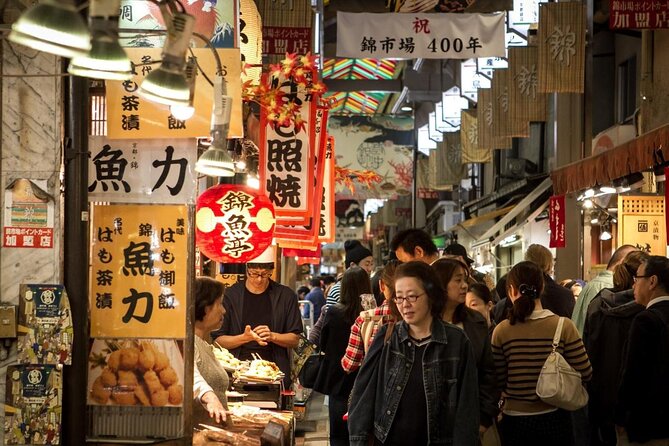
- Nishiki Market takes up most of the walk: You spend about 1 hour and 40 minutes among roughly 130 shops along a narrow, five-block street.
- The group is capped at six people: That makes it easier to ask questions, stop at shops, and hear your guide in crowded areas.
- Food and culture share equal billing: The route includes Shinto and Buddhist sites, shopping streets, and explanations of Japanese customs.
- The samples may fill you up: Food can include items such as yuba, soy doughnuts, pickles, omelette, gyoza, fruit, minced-meat sandwiches, and eel tempura, though the exact selection can change.
- You need to arrive at the correct meeting point: Confusion over start and end locations has caused trouble, so check the booking details carefully and contact Japan Wonder Travel before setting out.
- Dietary restrictions are a serious limitation: Vegetarian, halal, kosher, gluten-free, and allergy-related requests cannot be accommodated.
Why Nishiki Market works best with a guide
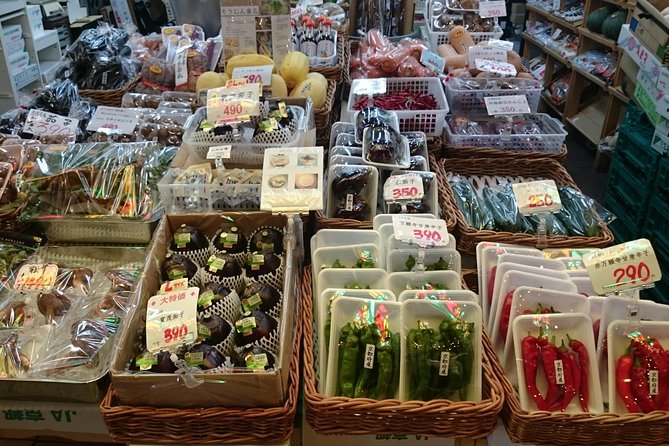
Nishiki Market is called Kyoto’s Kitchen for good reason. It is not one grand indoor hall with tidy food counters. It is a long, narrow shopping street where old food businesses, snack sellers, souvenir shops, and everyday Kyoto commerce share the same passage.
You can walk through on your own for free. That is the important comparison. The market itself does not require an admission ticket, and you can buy individual snacks as you go. The paid tour earns its keep by helping you decide what to try, explaining unfamiliar ingredients, and connecting the market to Kyoto’s religious and commercial life.
I find that useful in a place where choice can become tiring. A guide can point out local foods you might pass by, explain how something is eaten, and help you avoid spending money on random items simply because they look attractive. Guides have also helped with shopping decisions, including Japanese seasonings, drink concentrates, and matcha salt to take home.
The tone of the experience depends heavily on the guide. Names praised for clear English, warmth, and flexibility include Keiko, Takuma, Annie, Toshi, Miku, Naoko, Atsu, Saeko, Yasuko, Yoko, Chizuko, Eric, Nagi, Taisei, Taka, and Akiko. That long list tells you something useful: the company uses several guides, so your experience may differ from someone else’s. The best guides appear to adjust the route to your interests rather than march through it mechanically.
A few more Kyoto tours and experiences worth a look
What happens during the 1-hour-40-minute market visit
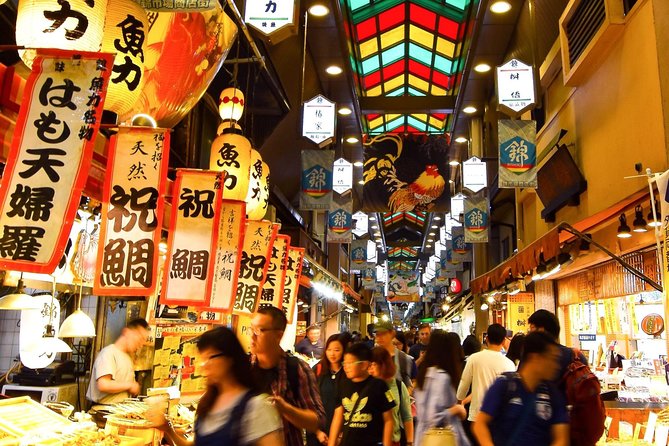
The market portion is the heart of the tour. You spend about 100 minutes taking in the smells, colors, sounds, and close quarters of Nishiki’s main street. It is a free public shopping district, but the guide’s explanations give the walk more shape than a solo wander.
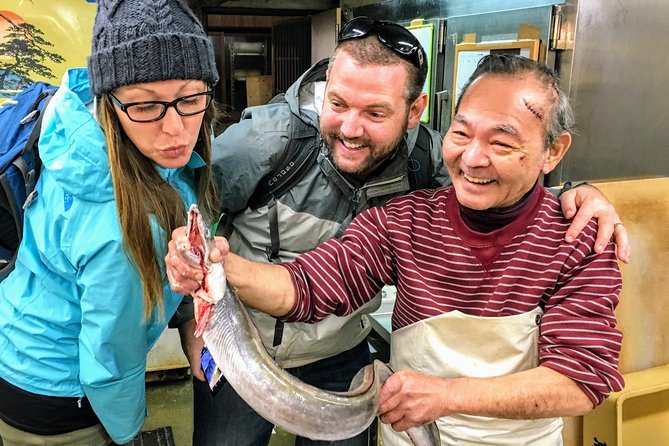
You might stop for items such as yuba, soy doughnuts, pickled cucumber, omelette, gyoza, fruit, wheat starch sweets, honey yuzu lemonade, minced-meat sandwiches, Kobe-style meat pies, or conger eel tempura. One particularly filling combination described by participants included yuba, pickles, omelette, gyoza, fruit, a minced-meat sandwich, and eel tempura.
Do not treat that list as a guaranteed menu. The food depends on the day, shop availability, group preferences, and your guide’s choices. Some outings have included a broad range of bites from five shops, while others have offered three market items plus three dishes at a sit-down restaurant. That difference is central to the value question.
The tour description says the food is enough to take the place of a meal, and several accounts describe leaving full. Still, if you are expecting a sample at nearly every stall, you may feel shortchanged. One account found only three food stops in three hours, while another praised the number of bites and free samples available along the route.
The best approach is to see the meal as a guided introduction, not an all-you-can-eat crawl. Your guide may also show you free samples offered by shops, but you should budget extra money if you want to buy more snacks, drinks, or packaged foods.
Food lessons that make the market easier to read
The most useful part of the food stops is often the explanation around the bite. A good guide can tell you what an ingredient is, how it fits into Japanese cooking, and why a Kyoto shop may sell it. You also get a chance to ask basic questions without holding up a busy counter.
Several guides have used food to explain Japanese language and daily customs. Takuma, for example, has been praised for explaining Japanese culture and language during the tastings. Toshi has connected local food with childhood memories and local expressions, including okini, a Kyoto-area way of saying thank you.
That personal connection is worth more than a long lecture. You may learn what local people actually buy, how a food is prepared, or which item makes a sensible souvenir. Chizuko, for example, helped direct a food-focused visitor toward seasonings and drink concentrates that would have been difficult to find independently.
I would come hungry, but not ravenous. The route includes plenty of walking and standing, and you may want room to try several unfamiliar foods. If you have a strong dislike of seafood, pickled foods, or unusual textures, tell the guide what you prefer at the start. The company cannot handle formal dietary restrictions, but guides have sometimes adjusted tastings around personal interests.
Nishiki Tenmangu adds a useful cultural pause
After the market, the route visits Nishiki Tenmangu, a small Shinto shrine. The stop lasts about 15 minutes, so this is not a major shrine visit or a substitute for Kyoto’s larger temple and shrine sites.
What you get is practical instruction. Your guide explains the objects commonly found at a shrine and shows you the basic way to pray. If you have never known what to do at a Japanese shrine, this short stop can make later visits less awkward.
I like the change of pace here. Nishiki is about buying and eating, while the shrine shows how religious practice sits close to ordinary commercial life. You are not being taken to a distant sightseeing site. The shrine is part of the neighborhood you are already walking through.
Keep your expectations in check. Fifteen minutes is enough for an introduction, not a detailed study of Shinto. The value comes from learning the basics and seeing a local place of worship in the middle of a busy downtown district.
Shinkyogoku and Teramachi show modern Kyoto
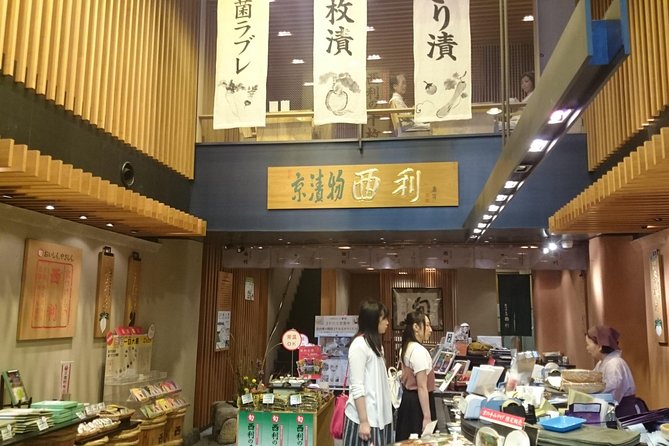
The next part moves through Shinkyogoku Shopping District, a pedestrian arcade that mixes traditional Kyoto tastes with modern shops. The planned stop is about 20 minutes, though the pace may vary depending on the group and shopping interest.
This is a useful contrast with Nishiki. The market feels tied to food and established specialty shops, while Shinkyogoku gives you a look at a more commercial shopping street used by local people and visitors alike. You can browse without dealing with car traffic, but the arcade can still feel crowded.
Teramachi-dori follows for about 15 minutes. Shops range from long-established businesses to newer stores, giving you another look at downtown Kyoto beyond major monuments. Guides can help you understand what is worth buying and where to pause if you are looking for food products or small gifts.
Shopping time is not the same as a dedicated shopping tour. You should have opportunities to browse, but the experience remains a guided walk with cultural and food stops. If you want to spend an hour comparing souvenirs, this tour may feel too structured.
Other walking tours we've reviewed in Kyoto
A small Buddhist temple in an ordinary corner
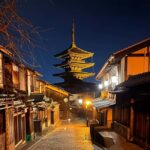
Takoyakushido Eifukuji Temple is a small Buddhist temple located beside the shopping streets. The planned visit lasts about 10 minutes.
The stop’s strength is its ordinary setting. Kyoto has temples throughout the city, not only in large compounds with famous gardens. Seeing a small temple close to shops helps you understand how religious places fit into daily neighborhoods.
Again, this is a brief introduction. You will not receive the scale or quiet of a major temple visit, and you should not book the tour expecting an extended spiritual or architectural tour. I see this stop as a welcome reminder that Kyoto’s religious life is woven into normal streets, not separated from them.
The guides make or break the three hours
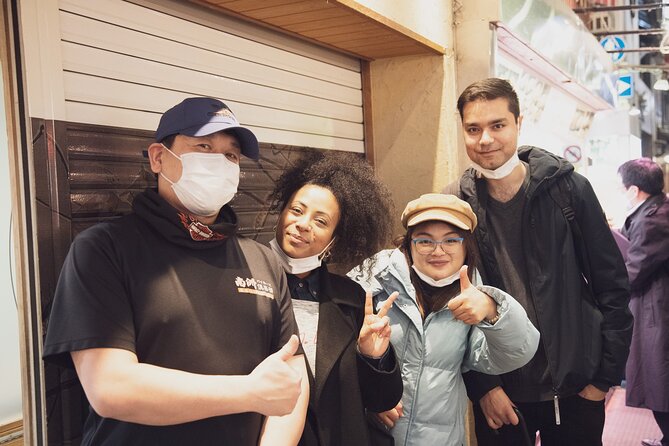
The most consistently praised part of this experience is the guide. People have singled out guides for friendly English, cultural explanations, patience, and a willingness to adapt. That matters in Nishiki, where a guide needs to manage food choices, foot traffic, shopping questions, and the timing of several short stops.
Atsu has been praised for handling a multigenerational group and keeping the pace comfortable. Saeko has adjusted tastings to match food preferences and recommended places to try or skip. Akiko has welcomed questions about the market’s past and Kyoto’s development.
Other strong examples include Annie, who helped with finding matcha salt; Miku, whose enthusiasm added warmth to the visit; and Taisei, who balanced walking with seated breaks. One solo participant effectively received a private tour when no one else joined that departure, though you should not count on having the guide to yourself.
The maximum group size is six. That is small enough for a conversational feel and much more manageable than a large food tour in a narrow market. If you are traveling with family, the size also makes it easier for a guide to include different ages and interests.
The tour runs rain or shine, except when poor weather leads to cancellation and a choice of another date or a full refund. Nishiki can be crowded, and anyone bringing a stroller should notify the operator in advance. Public transportation is nearby, but hotel pickup, drop-off, and transportation between sights are not included.
Is $80.92 a fair price?
At $80.92, this is not the cheapest way to eat in Nishiki Market. You can enter for free and buy several snacks yourself for far less. If you are comfortable reading menus, asking questions, and navigating crowds, the self-guided option may give you more food per dollar.
The tour makes a stronger case if you value interpretation and confidence. You are paying for a small group, a local escort, cultural instruction, help choosing foods, and a planned route that combines the market with nearby religious and shopping sites. For a first day in Kyoto, that can save time and prevent you from wandering past the foods you actually wanted to try.
Food quantity is the weak point. Some outings have provided enough samples to leave people very full, while others have felt light for the price. The description promises meal-sized tastings, but the exact number and type are not fixed. I would book it for guidance and access to local context, then regard the included food as an important bonus rather than the sole reason to pay.
Group discounts may improve the cost for larger parties. Mobile tickets are available, and confirmation is provided at booking. Cancel at least 24 hours before the local start time for a full refund. Cancellations or changes inside that window are not accepted for a refund.
Who should book this Nishiki Market walk?
This tour fits you best if you are visiting Kyoto for the first time, want help choosing unfamiliar foods, or prefer a planned introduction to a crowded market. It also suits solo visitors, families, and multigenerational groups who want someone to explain customs without turning the day into a formal lecture.
It is a good choice for anyone who likes small portions of many foods, local shopping, and short cultural stops. The combination of walking and sitting has also worked well for someone with back problems, though the market itself remains crowded and requires movement on foot.
I would skip it if you have strict dietary needs. The operator cannot accommodate vegetarian, halal, kosher, gluten-free, or allergy-related requests, and severe restrictions may make it impossible to arrange food.
I would also skip it if your main goal is maximum food for minimum cost. A self-guided walk lets you spend your money directly on the stalls you choose. The paid experience makes most sense when you want a guide’s judgment, cultural explanations, and help making sense of Kyoto’s food traditions.
My call: book it for context, not just consumption
I would book this tour early in a Kyoto visit, especially if Nishiki Market feels intimidating or you have only a short time downtown. A guide can show you how to approach the market, explain shrine etiquette, and point you toward foods and souvenirs you might miss alone.
Go in expecting a generous introduction to Kyoto’s food culture, not a guaranteed parade of tastings. Confirm the meeting point before leaving, tell the guide about ordinary preferences, and bring extra money for purchases. If those terms suit you, the small group and strong guide roster make this a practical first look at Nishiki Market.
FAQ
How long does the Kyoto Nishiki Market Food and Culture Walking Tour last?
The experience lasts approximately three hours. The planned stops include about 1 hour and 40 minutes at Nishiki Market, followed by visits to Nishiki Tenmangu, Shinkyogoku Shopping District, Takoyakushido Eifukuji Temple, and Teramachi-dori Street.
How many people can join the tour?
The tour has a maximum of six travelers, creating a small-group experience with more opportunity to speak with the guide.
Is enough food included to replace a meal?
The tour includes enough food samples to fill you up in place of a meal. The exact foods and number of tastings can vary, and extra food, drinks, and personal purchases are not included.
Can the tour accommodate vegetarian, halal, kosher, gluten-free, or allergy-related diets?
No. The operator states that dietary restrictions, including vegetarian, halal, kosher, gluten-free, and allergy-related requests, cannot be accommodated.
Does the tour operate in bad weather?
The tour takes place rain or shine. If poor weather causes the experience to be canceled, you will be offered another date or a full refund.
What is the cancellation policy?
You can cancel at least 24 hours before the start time for a full refund. Cancellations or changes made less than 24 hours before the local start time are not accepted for a refund.
More Food Experiences in Kyoto
More Walking Tours in Kyoto
More Nishiki Market Tours in Kyoto
More tours in Kyoto we've reviewed










Nishiki Market Tours, compared.
 ★ 5.0Nishiki Market Brunch Walking Tour (7 Tastings + Brunch)From $68
 ★ 5.0Kimono Tea Ceremony at Kyoto Maikoya, NISHIKIFrom $65
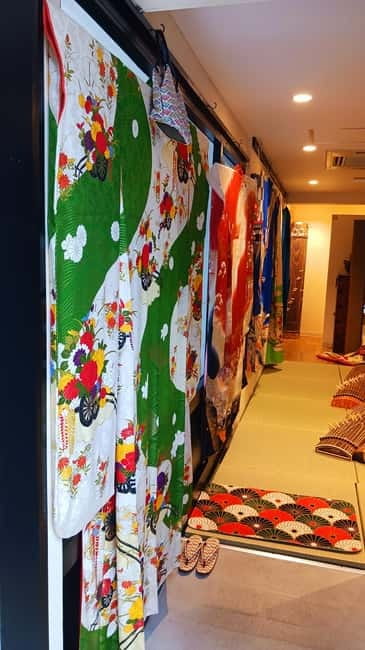 ★ 4.8Kyoto: Nishiki Market Tea Ceremony with Koto PerformanceFrom $561 hour
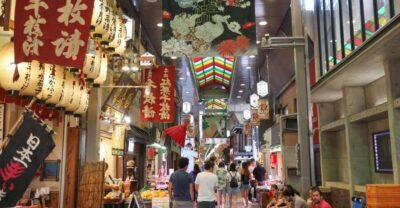 ★ 4.8Kyoto: Nishiki Market Brunch Walking Tour-7 Tastings+BrunchFrom $663 hours
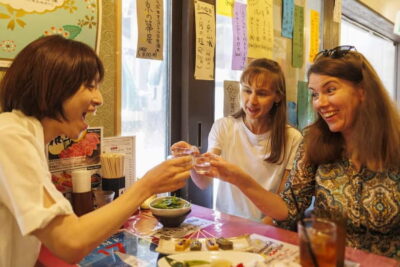 ★ 4.7Kyoto: Local Food Tasting Tour at the Nishiki MarketFrom $783 hours - 270 minutes
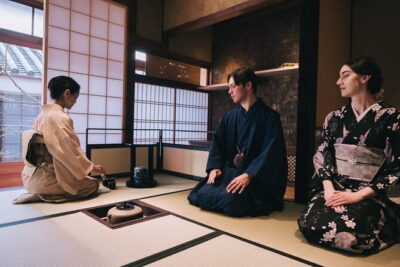 ★ 5.0Kimono Tea Ceremony Experience at Kyoto Oritzuruya, NishikiFrom $50