
Reviewed · GION & GEISHA WALKS
Kyoto: Gion & Geisha district evening tour
Kyoto’s geisha districts are best understood after sunset, when wooden teahouses, narrow lanes, and old stone streets take on a quieter mood. This 2.5-hour evening walk links Gion Shirakawa, Hanamikoji, Miyagawacho, Ninenzaka, and Yasaka Shrine, with a guide explaining the customs behind the scenery.
I like the route’s two strongest features: the focus on geisha and maiko culture, rather than simple sightseeing, and the visit to Miyagawacho, a less familiar district than central Gion. I also like the stop at Yasui Konpiragu Shrine, where local belief connects the shrine with relationships.
The main caution is price. At $140 per person, this is a costly walking tour, especially since food and drinks are not included and you may not see a geiko or maiko. You are paying for a private guide and context, not guaranteed sightings or admission to a performance.
In This Review
- Key points before you book
- Why an evening walk suits Kyoto’s geisha districts
- Meeting by the Izumo-no-Okuni statue
- Gion Shirakawa and the world of geiko and maiko
- Hanamikoji Street and Kyoto’s traditional entertainment culture
- Miyagawacho, a quieter geisha district
- Yasui Konpiragu Shrine and its connection with relationships
- Ninenzaka, Yasaka Pagoda, and Ishibe Alley
- Finishing at Yasaka Shrine
- Is $140 a fair price?
- Who will get the most from this Kyoto evening tour?
- Should you book the Gion and Geisha District Evening Tour?
- FAQ
- How long does the Gion and Geisha District evening tour last?
- Where does the tour begin?
- Where does the tour end?
- Which areas does the tour visit?
- Is this a private tour?
- What languages are available?
- Are food and drinks included?
- Can I take photographs during the walk?
- What should I wear?
- Can I cancel the booking?
Key points before you book
- The route covers several historic districts: You walk through Gion Shirakawa, Hanamikoji, Miyagawacho, Ninenzaka, and Ishibe Alley.
- Geisha culture is the main subject: Your guide explains the world of geiko and maiko, along with the role of the traditional teahouses.
- Miyagawacho adds a quieter side of Kyoto: This lesser-known geisha district helps balance the better-known streets of Gion.
- Yasui Konpiragu Shrine brings a local belief into the walk: The shrine is associated with relationships and personal ties.
- The tour is offered as a private group: English and Japanese guiding are available.
- You need comfortable shoes and good manners: The route involves substantial walking, and photography may be restricted in some places.
Why an evening walk suits Kyoto’s geisha districts
Gion is not a museum set. It is a working cultural district, with teahouses, restaurants, shrines, residences, and narrow lanes sharing the same streets. An evening tour gives you a chance to see the area at the time when its traditional entertainment world is most active, although no appearance by a geiko or maiko is promised.
Your guide provides the missing context. Without explanation, Hanamikoji can look like a pretty street lined with old buildings. With a guide, you can better understand why the area is associated with geiko, maiko, private teahouses, and carefully maintained customs.
The tour uses both Japanese and English guides. No individual guide names are provided, so you should not book expecting a particular person. The quality of the experience will depend in part on how clearly your guide explains the district and answers questions.
This is a walking experience, not a stage show. You will not be given food or drinks, and the schedule does not include a geisha performance. That makes the tour most useful for people who want background and place-based stories rather than a packaged entertainment evening.
A few more Kyoto tours and experiences worth a look


Meeting by the Izumo-no-Okuni statue
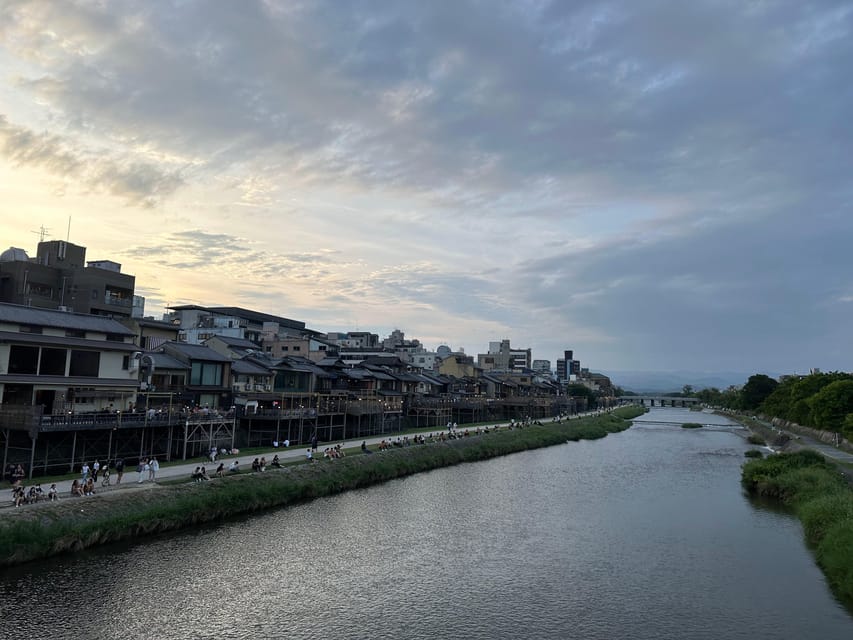
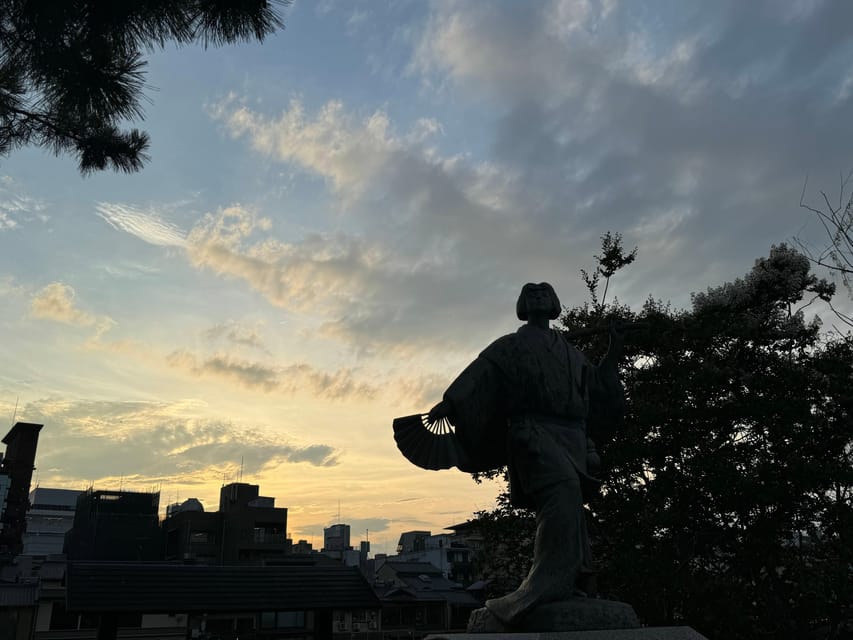
The walk begins in front of the Statue of Izumo-no-Okuni at Shijo Ohashi. Your guide will hold a yellow sign with the DeepExperience logo, which should make the meeting point easier to identify in the evening.
Beginning here gives the route a logical start near the Kamo River and the traditional entertainment districts. It also gives you a clear landmark rather than an obscure shop entrance or hotel lobby.
Arrive ready to walk. The information says there will be a lot of walking, and the route includes several districts rather than one compact sightseeing area. Comfortable shoes matter more than smart footwear, even if you plan to continue to dinner afterward.
The meeting information says the activity ends back at the meeting point, while the route description places the final stop at Yasaka Shrine. Since those points are not the same, confirm the exact ending arrangement when you book. This is a small but useful detail if you have a dinner reservation or late train to catch.
Gion Shirakawa and the world of geiko and maiko
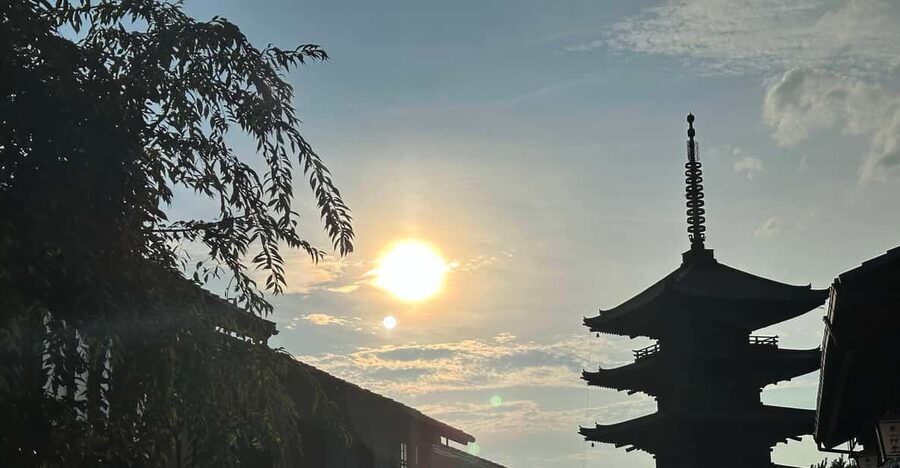
Gion Shirakawa is one of the most atmospheric parts of the walk. Traditional teahouses and older streets give the area a refined look, especially in the evening. Your guide spends about 15 minutes here, introducing the district and explaining the world of geiko and maiko.
In Kyoto, geiko is the local term for a professional geisha, while maiko are apprentice performers. The distinction matters, since these roles involve different stages of training and presentation. A good explanation helps you see people and places as part of a living profession, not as costumes arranged for tourists.
You might see a geiko or maiko passing between appointments, but you might not. One person who took the tour saw no geisha at all, despite visiting the district. That is not a flaw in the neighborhood, but it is a reason to keep your expectations realistic.
The most important rule here is simple: respect privacy. Do not block a lane, follow anyone, touch clothing, or take photographs where signs or guides prohibit them. Kyoto has introduced strict expectations around geisha district behavior, and this tour specifically warns that photography may not be allowed in certain areas.
Hanamikoji Street and Kyoto’s traditional entertainment culture
Hanamikoji Street is often treated as the center of Gion’s geisha world. Its traditional buildings and narrow lanes make it one of Kyoto’s most recognizable walks, but the visual appeal is only half the story.
The guide’s role here is to explain what you are seeing and what you are not seeing. Many teahouses are private, and their closed doors do not mean the district is inactive. The separation between public street life and private entertainment is part of how this culture operates.
The planned stop lasts about 15 minutes. That is enough for an introduction and a short walk, but not enough for a long historical lecture at every corner. If you want to understand a particular term or custom, ask while you are here. A private group should make questions easier than they would be in a large tour.
Hanamikoji can feel more crowded than Miyagawacho, so the change between the two districts is useful. You begin with Kyoto’s famous geisha streets, then move toward a quieter area where the atmosphere is less familiar and the route feels less like a checklist.
Miyagawacho, a quieter geisha district
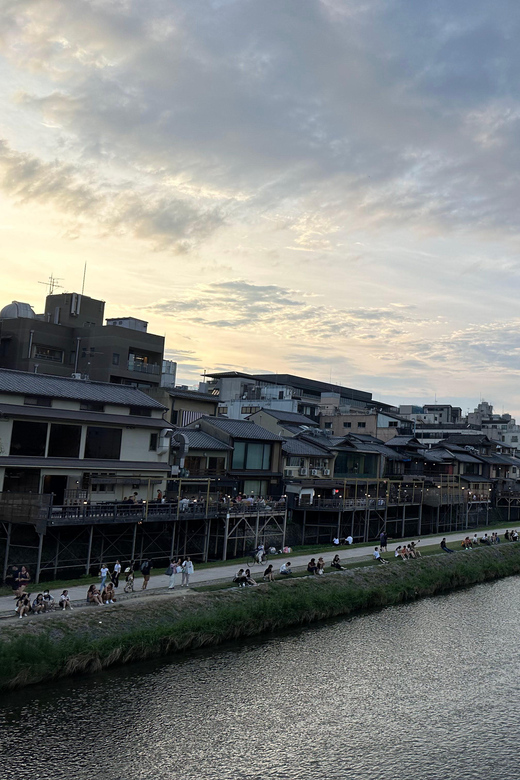
Miyagawacho is one of the best reasons to choose this route. It is another geisha district, but it is less widely known than Gion. The walk along Miyagawasuji offers a different view of Kyoto’s preserved traditional culture without relying only on the city’s most photographed streets.
The tour allows about 15 minutes here. That is brief, but it gives you enough time to compare the district with Gion and Hanamikoji. I like this part of the route because it widens your understanding of Kyoto. The geisha world is not one single street, and Miyagawacho makes that clear.
Do not expect a performance or a guaranteed meeting with a geiko or maiko. The value is in the setting and the guide’s explanation. If you prefer a calm walk through older streets and want something beyond Kyoto’s headline sights, this stop should matter to you.
The district also reinforces the need for quiet behavior. These are working neighborhoods, not open-air theaters. Keep your camera ready only where photography is permitted, and let the guide explain local boundaries.
Other evening experiences in Kyoto

Yasui Konpiragu Shrine and its connection with relationships
The unnamed shrine stop in the route is Yasui Konpiragu Shrine. The shrine has a special connection with relationships, making it one of the more distinctive pauses on the walk.
Visitors come here with personal hopes tied to relationships and bonds. The tour does not present the shrine only as an architectural stop. Instead, it connects the place with a belief that remains meaningful to people who visit.
The stop lasts about 15 minutes. That gives you time to look around and hear the basic story, but you should not expect an extended religious ceremony or a formal ritual to be included. The schedule lists a visit, not a ceremony or paid activity.
This stop also adds variety. After streets linked with professional entertainment, you encounter a shrine tied to private wishes and everyday human concerns. It is a good reminder that Kyoto’s traditional districts are not just about buildings and photographs.
Ninenzaka, Yasaka Pagoda, and Ishibe Alley
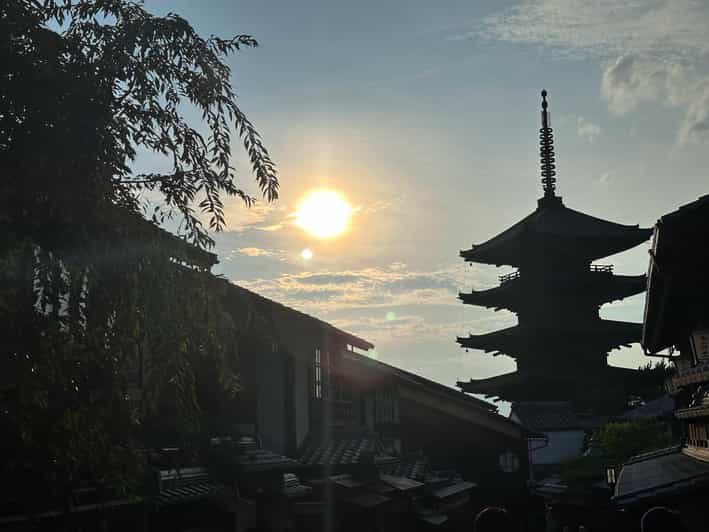
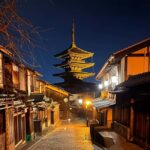
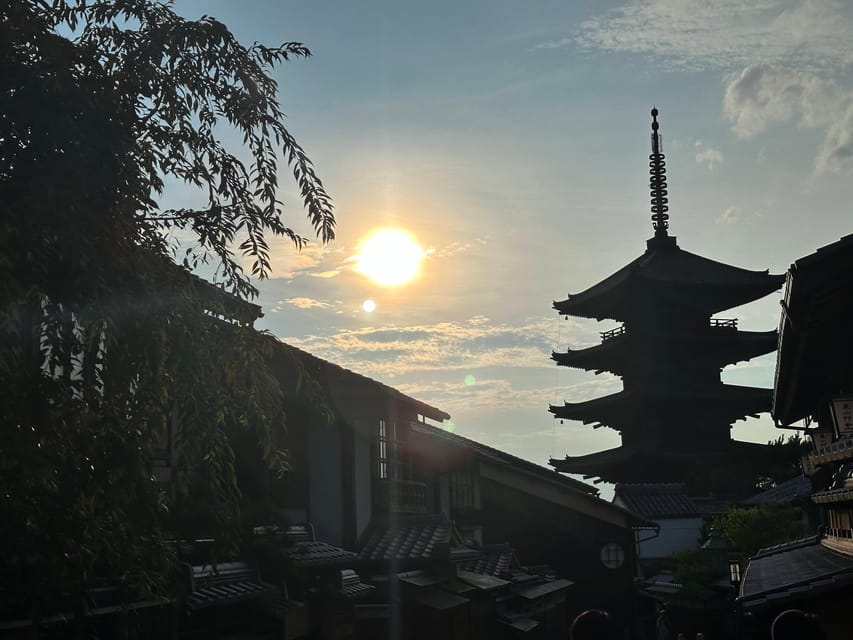
The latter part of the route shifts toward some of Kyoto’s most scenic old streets. You walk past Yasaka Pagoda, continue through Ninenzaka, and pass Ishibe Alley before reaching Yasaka Shrine.
Ninenzaka is known for its traditional streetscape and gentle slopes. It is attractive, but the walking surface and incline make sturdy shoes a sensible choice. In the evening, the light can make the old buildings especially appealing, though you should stay alert on uneven sections and keep with the group.
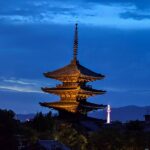
Yasaka Pagoda gives this stretch a strong visual marker. The route description calls for a scenic walk past the pagoda rather than an interior visit, so plan to view it from the street. Ishibe Alley adds another narrow, old-style passage to the walk and helps connect the geisha districts with Kyoto’s wider historic center.
This section is less tightly focused on geisha culture. That can be a benefit if you want a broader Kyoto walk, but it may feel like the subject is shifting during the final part of the tour. You get old lanes, shrine scenery, and city history rather than one continuous look at the entertainment districts.
Finishing at Yasaka Shrine
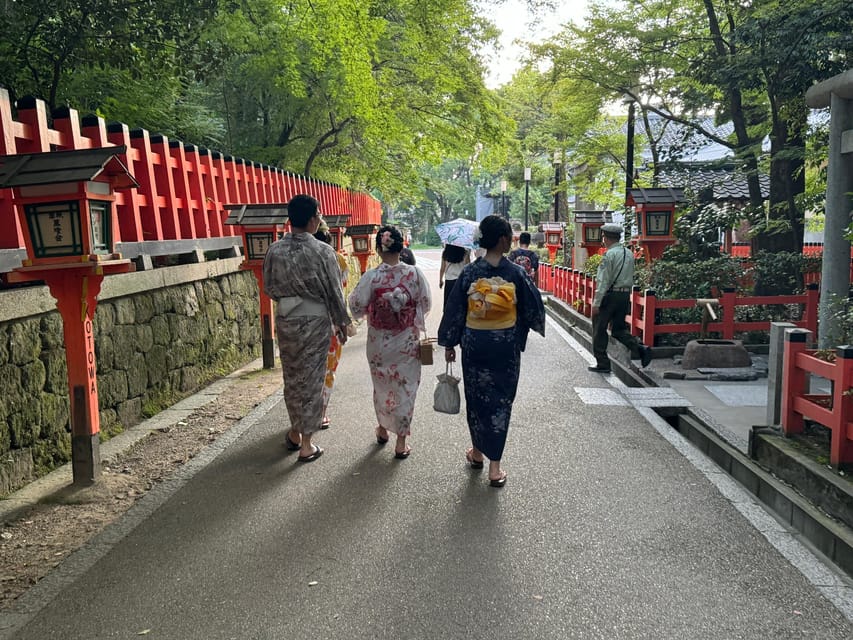
Yasaka Shrine is the stated final destination. It is an important cultural site and gives the route a fitting end, since the shrine is closely tied to Kyoto’s traditional city center.
A guided stop here can help place the earlier districts within a larger picture of Kyoto. The route has taken you from the Kamo River and Gion streets through smaller entertainment quarters, then toward well-known historic lanes and a major shrine.
The listed schedule allows about 15 minutes for the guided portion at Yasaka Shrine. That is enough for an introduction and a look around, but not a full shrine tour. If the actual activity ends here, you can use the location as a useful starting point for dinner or your next evening plan. Again, confirm the ending point because the meeting details also say the activity ends back at the original meeting point.
Is $140 a fair price?
The cost is $140 per person. That is high for a 2.5-hour walking tour, particularly because meals, drinks, admission fees, and a guaranteed geisha sighting are not included.
The price makes more sense if you value a private group and want a guide to explain the customs and stories as you walk. A private format can give you more room to ask questions and avoid the feel of a large group moving from one photo stop to the next.
The price makes less sense if you are comfortable exploring Gion on your own. The streets are accessible without a ticket, and you could pair a self-guided walk with a meal for less money. One disappointed participant felt the tour was expensive for what it delivered, especially after not seeing any geisha.
The strongest case for booking is the guide’s interpretation. Two published comments praised the stories and the way the guide explained the city’s history, while the overall rating is 3.7 from three ratings. That is a small sample, but it points to the tour’s central strength and its central risk: the experience depends heavily on the guide.
Who will get the most from this Kyoto evening tour?
I would choose this tour if you are visiting Kyoto for the first time and want a clear introduction to Gion without treating the district like a photo backdrop. It also suits you if you are curious about geiko and maiko customs but do not want to arrange a formal cultural performance.
The route is a good match for:
- First-time Kyoto visitors who want guidance through several old districts
- Couples interested in the relationship traditions associated with Yasui Konpiragu Shrine
- People who prefer a private group to a large scheduled tour
- History-minded visitors who enjoy stories about place and custom
- Visitors who want to compare Gion with the quieter Miyagawacho
I would hesitate if your main goal is to see a geisha. No sighting is promised, and one participant saw none. I would also hesitate if $140 feels too steep for a walk without food, drinks, or a performance.
Plan for respectful behavior, comfortable shoes, and a flexible attitude. The best outcome is not a staged encounter. It is a clearer understanding of why these streets look the way they do and how Kyoto protects the privacy of the people who work there.
Should you book the Gion and Geisha District Evening Tour?
Book it if you want a private, guide-led introduction to Gion, Hanamikoji, Miyagawacho, and Kyoto’s evening streets, and you are willing to pay for explanation rather than entertainment. The guide’s stories are the main value, and the route includes more than the usual Gion circuit.
Skip it if you mainly want a cheap stroll, a meal, or a guaranteed geisha sighting. You can walk much of the area independently, and the $140 price will feel hard to justify without a strong guide.
If you decide to go, wear walking shoes, protect the privacy of geiko and maiko, and confirm the final meeting point. You can cancel up to 24 hours ahead for a full refund, and the reserve-now, pay-later option keeps your plans flexible.
FAQ
How long does the Gion and Geisha District evening tour last?
The tour lasts 2.5 hours. Starting times vary, so check availability when booking.
Where does the tour begin?
Meet your guide in front of the Statue of Izumo-no-Okuni at Shijo Ohashi. The guide will hold a yellow sign with the DeepExperience logo.
Where does the tour end?
The route description concludes at Yasaka Shrine, while the meeting information says the activity ends back at the meeting point. Confirm the exact ending location before booking.
Which areas does the tour visit?
The walk includes Gion Shirakawa, Hanamikoji Street, Miyagawacho, Yasui Konpiragu Shrine, Ninenzaka, Yasaka Pagoda, Ishibe Alley, and Yasaka Shrine.
Is this a private tour?
Yes. The activity is offered as a private group experience.
What languages are available?
Live guiding is available in English and Japanese.
Are food and drinks included?
No. Food and beverages are not included in the tour price.
Can I take photographs during the walk?
Photography may not be allowed in certain areas. Follow your guide’s instructions and respect the privacy of geiko and maiko.
What should I wear?
Wear comfortable shoes. The route involves a lot of walking through Kyoto’s historic districts.
Can I cancel the booking?
You can cancel up to 24 hours in advance for a full refund. A reserve-now, pay-later option is also available.
More Evening Experiences in Kyoto
More Gion & Geisha Walks in Kyoto
More tours in Kyoto we've reviewed











Gion & Geisha Walks, compared.
 ★ 4.7Kyoto Geisha Walking Tour: Gion District & Hidden GemsFrom $252 hours
 ★ 4.7Kyoto: Gion Geisha District Walking Tour – Stories of GeishaFrom $202 hours
 ★ 4.9Best of Kyoto: Gion, Geisha, Pagodas & CobblestonesFrom $242 hours
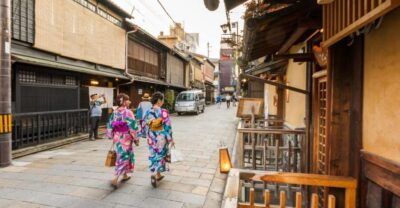 ★ 4.5Night Walk in Gion: Kyoto’s Geisha DistrictFrom $211h 40m
 ★ 5.0Kyoto Night Foodie Tour in Gion (9+ dishes + 6 Sake tastings)From $163
 ★ 5.0Kyoto Gion Geisha District Walking Tour – The Stories of GeishaFrom $25