
Reviewed · GION & GEISHA WALKS
Kyoto Gion Geisha District Walking Tour – The Stories of Geisha
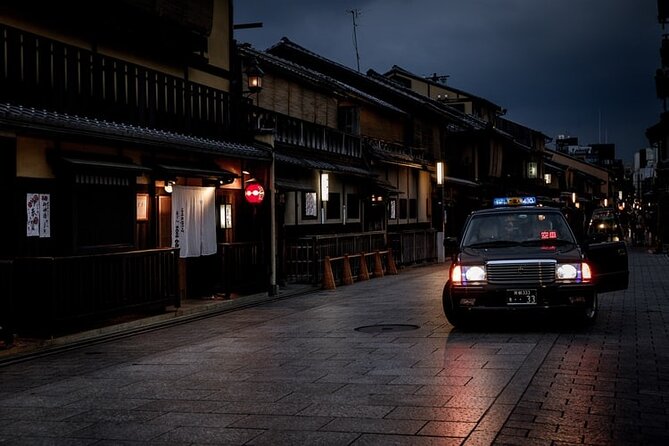
Gion changes character after sunset. The daytime crowds thin, lanterns come on, and the narrow streets give you a better feel for the district’s traditional entertainment world. This two-hour walk explains the difference between geiko and maiko, points out places you could easily miss, and may pass near them as they head to evening appointments.
I like the small maximum group of 15, which makes it easier to hear the guide and ask questions. I also like the price: at $25, you get a focused introduction to Gion, Kyoto’s theater traditions, and geisha culture without paying for a meal or performance. The main drawback is that the route is short on formal attractions, so much of the value comes from the guide’s explanations rather than admissions or hands-on activities. Winter visitors should also bring a warm coat.
In This Review
- Key points about the Gion evening walk
- Why Gion works best after dark
- Starting at Ben’s Cookies Kyoto Shijo
- Izumo-no-Okuni and the roots of Japanese theater
- Minamiza and Kyoto’s kabuki tradition
- Tatsumi Bridge and the Gion Shinbashi lanes
- Hanamikoji Street and the visible side of Gion
- Gion Corner and the arts behind the image
- Yasaka Shrine, the final stop
- What the guide adds for $25
- The limits of a short walking route
- Who should take this Gion tour
- Practical booking advice
- Should you book the Stories of Geisha walk?
- FAQ
- How long is the Kyoto Gion Geisha District Walking Tour?
- How much does the tour cost?
- What is the maximum group size?
- Where does the tour start?
- Where does the tour end?
- Are entrance fees included?
- Can I cancel for a full refund?
Key points about the Gion evening walk
- After-dark timing: See Gion when the largest daytime crowds have eased and traditional lanterns give the streets a different mood.
- Small group size: Groups are limited to 15 people, a useful size for street-side explanations and questions.
- Cultural focus: Learn about geiko, maiko, Kyoto’s entertainment districts, and the customs behind the flower towns.
- Historic route: The walk links the Izumo-no-Okuni Statue, Minamiza, Tatsumi Bridge, Hanamikoji Street, Gion Corner, and Yasaka Shrine.
- Strong guide element: Guides including Ben, Shin, Deborah, Melanie, Kenji, Nami, and others bring different knowledge and personal styles.
- Simple logistics: Meet at Ben’s Cookies Kyoto Shijo and finish at Yasaka Shrine, with mobile tickets and no extra admission fees.
Why Gion works best after dark
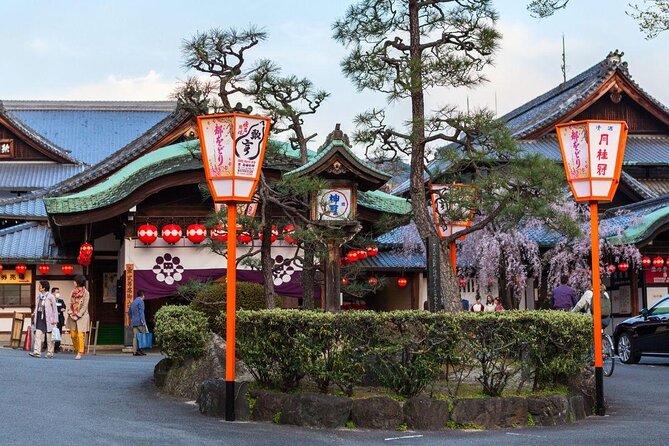
Gion is one of Kyoto’s most photographed districts, yet daytime visits can feel crowded and hurried. Large groups fill the lanes around Hanamikoji Street, and it is easy to see only the polished surface: wooden facades, tiled roofs, paper lanterns, and people hoping to spot a maiko.
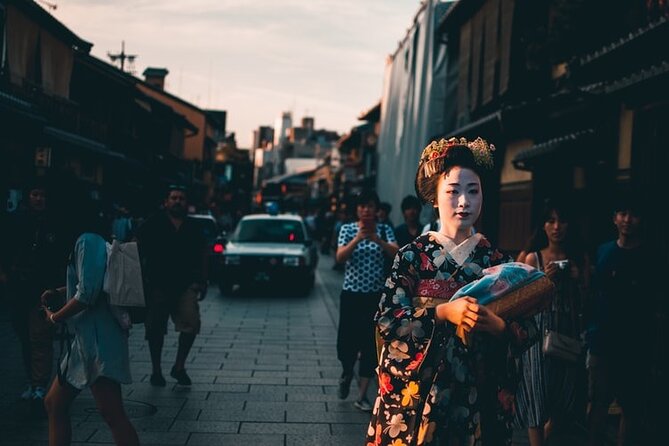
This walk begins in the evening, when the district’s working rhythm becomes easier to notice. Geiko and maiko may be making their way to appointments, though sightings are never guaranteed and should never be treated as the point of the tour. The better reason to come at this hour is the atmosphere and the chance to understand what happens behind the closed doors of the tea houses.
I especially like that the tour treats Gion as a living neighborhood rather than a stage set. The guide explains how the district operates, points out buildings that look ordinary from the street, and helps you read details that a guidebook may pass over. Several guides, including Ben, Deborah, Shin, and Kenji, are praised for making the subject clear and answering questions in a friendly way.
The route is also practical for a first evening in Kyoto. It gives you a basic map of Gion and ends at Yasaka Shrine, where you can continue exploring on your own. If you schedule it early in your stay, the walk can help you decide where to return for dinner or a later stroll.
A few more Kyoto tours and experiences worth a look
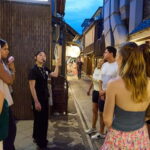

Starting at Ben’s Cookies Kyoto Shijo
The meeting point is Ben’s Cookies Kyoto Shijo at 89 Shinchō in Shimogyo Ward. The location is near public transportation, which makes it reasonably convenient for reaching the start of the tour, though you should allow time to find the exact shop and gather before the stated start time.
The tour uses a mobile ticket, so you do not need to print anything. Confirmation is provided when you book. All fees and taxes are included, while bottled water is not, so carry your own drink if you want one during the walk.
This is a walking tour, not a bus excursion. The route lasts about two hours and includes several stops of roughly ten minutes each. You will spend much of the time standing outdoors while the guide talks, so comfortable shoes matter more than dressing up.
The group limit of 15 is one of the most useful details here. A smaller group means you can usually stay close enough to hear explanations in narrow lanes, and you have a better chance of asking about subjects that interest you. It is not a private tour, but it should feel more personal than a large city walk.
Izumo-no-Okuni and the roots of Japanese theater
The first listed stop is the statue of Izumo-no-Okuni, a bronze monument honoring the figure associated with the founding of kabuki theater. Her connection to performance makes this a smart opening for a tour about Gion’s entertainment culture.
The stop helps place geisha culture in a wider setting. The evening is not only about costumes or the possibility of seeing a maiko. It is also about music, dance, theater, trained performance, and the long relationship between Kyoto’s pleasure districts and the arts.
You should expect a short explanation rather than a museum visit. Admission is free, and the statue itself does not require much time. Its value comes from the context your guide adds, particularly the connection between traditional entertainment and the streets you are about to walk.
Minamiza and Kyoto’s kabuki tradition
Minamiza, the historic kabuki theater in Gion, is another important landmark along the route. Kabuki is known for elaborate costumes, dramatic storytelling, and stylized performance, and the theater gives you a visible link to the stage traditions that shaped Kyoto’s entertainment districts.
The tour does not include a kabuki performance or theater admission. That is worth knowing before you book. You will learn about the building and its cultural role from outside or nearby, then continue on foot.
Still, this stop adds useful depth. It shows that Gion’s identity is not limited to geisha houses. Theater, dance, music, restaurants, tea houses, and seasonal customs all form part of the same cultural world. Guides who explain these links well can turn a quick look at a historic facade into a clearer picture of how Kyoto’s entertainment districts developed.
Tatsumi Bridge and the Gion Shinbashi lanes
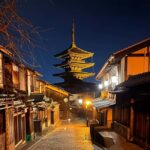
Tatsumi Bridge is one of the prettiest points on the walk. It sits in the Gion Shinbashi area, known for traditional streets, tea houses, and carefully preserved architecture. The setting is especially appealing after dark, when the narrow lanes and lantern light create a quieter mood.
This is a good place to slow down and take photographs, but remember that Gion is also a working neighborhood. Keep voices low, avoid blocking entrances, and ask before photographing people. A geiko or maiko is not a public prop, and respectful behavior matters more than getting a close picture.
The guide’s role becomes particularly useful here. Some buildings may look plain or closed to you, yet they can carry meaning within the district’s history and present-day customs. Sakuri, one of the guides, is praised for pointing out nondescript buildings and explaining why they matter to geisha culture. That kind of detail is the main reason to take the walk instead of wandering alone.
Other walking tours we've reviewed in Kyoto

Hanamikoji Street and the visible side of Gion
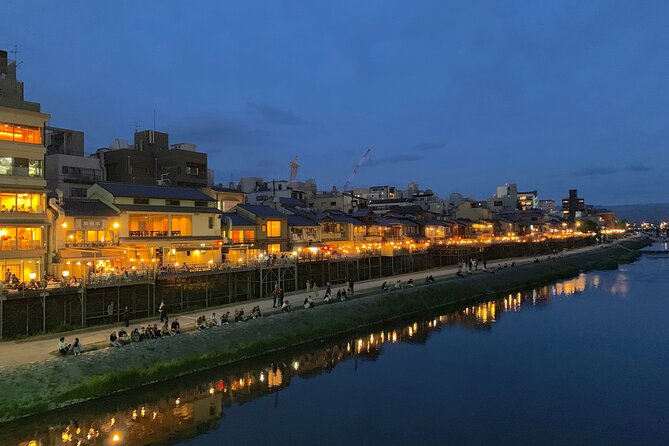
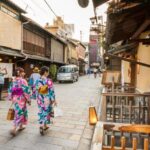
Hanamikoji Street is Gion’s best-known thoroughfare, lined with traditional machiya houses, restaurants, and teahouses. It is also the part of the district most likely to feel crowded, even in the evening, so your guide’s timing and commentary help you look beyond the obvious photo stops.
The wooden facades are attractive, but the street can give a misleading impression if you do not understand what you are seeing. Some establishments are private or reserved for specific clientele. The guide can explain the difference between a restaurant, a tea house, and the spaces where geiko and maiko perform their arts.
This is also where the tour can correct common misunderstandings. Geiko and maiko are trained entertainers, not simply people dressed in old-fashioned clothing for tourists. You learn about their work, training, appearance, and place in Japanese culture, as well as how the terms used in Kyoto differ from the more familiar word geisha.
The itinerary allows about ten minutes at the stop, so do not expect a long architectural tour of every lane. If you want extensive photography time, plan to return on your own after the guided walk. The short stop works well for orientation, but it may feel brief if architecture is your main interest.
Gion Corner and the arts behind the image
Gion Corner is a cultural center and performance venue that presents several traditional Japanese arts in a condensed format. The tour includes it as part of the district’s cultural picture, but the walking experience does not include a performance ticket.
That distinction matters. If you want to watch dance, music, tea ceremony, or other staged arts, you would need to arrange a separate visit. The walking tour gives you background and an exterior or neighborhood connection, not a full cultural show.
I find this stop useful because it reinforces a central point: Gion’s traditions are performed arts with years of study behind them. The guide can explain how entertainment in Kyoto connects to music, movement, conversation, and hospitality. It also helps you decide if a separate performance would suit your schedule.
Yasaka Shrine, the final stop
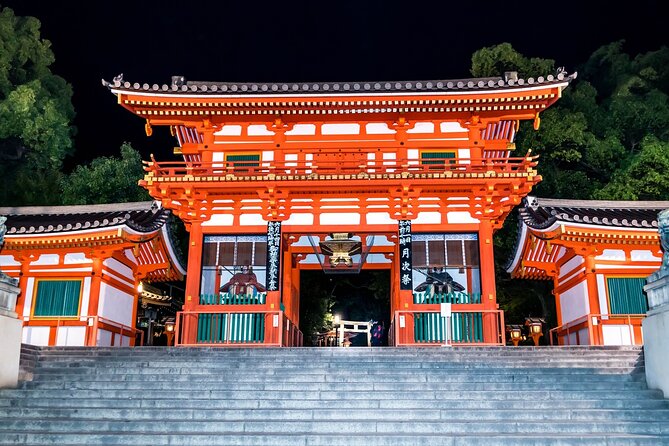
The walk ends at Yasaka Shrine, also called Yasaka Jinja or Gion Shrine, at 625 Gionmachi Kitagawa. This major Shinto shrine sits at the eastern edge of the Gion area and provides a natural finish to the route.
The shrine is free to visit, and ending here gives you a useful choice. You can continue into the surrounding streets, make your way toward other Kyoto sights, or simply pause after the walk. Since the tour finishes rather than returns to the starting point, check your onward route before you set out.
Yasaka Shrine also helps connect Gion’s entertainment culture with Kyoto’s religious traditions. The city’s historic districts were not isolated zones. Shrines, festivals, theaters, businesses, and residential streets have long existed close together, and the final stop gives the tour a broader sense of place.
What the guide adds for $25
At $25 per person, this tour is priced as an affordable orientation walk rather than a premium private experience. You do not pay for entry to a show, meal, or attraction. You pay for a guide who can explain what you are looking at and why it matters.
That can be good value in Gion, where much of the appeal is in details that are easy to miss. A guide can explain the evolution of geiko and maiko culture, the meaning of the flower towns, and the connection between entertainment, theater, and Kyoto’s old streets.
The strongest guide experiences come from clear teaching and an open attitude toward questions. Ben is described as good at explaining hidden codes of the flower towns, while Deborah brings strong subject knowledge and enthusiasm. Shin, Nami, Melanie, Kenji, Joy, Manny, Tommy, Adrian, and others are also associated with friendly and engaging walks.
Because guides vary, the exact tone will not be identical each time. One may focus more on social history, another on buildings and local stories. That is normal for a walking tour, and the consistently positive guide feedback suggests that the human element is central to the experience.
The limits of a short walking route
The two-hour length is a strength if you want a manageable evening activity. You can learn the basics without giving up an entire night, and the tour fits neatly before or after dinner.
The tradeoff is that the route cannot cover every corner of Gion. One rating specifically suggests that the itinerary could use more content, and that is a fair point. The stops are short, and the tour does not include a performance, tea ceremony, meal, or entry to a private tea house.
You should book it for explanation and atmosphere, not guaranteed encounters. The chance of seeing geiko or maiko adds excitement, but the respectful purpose is learning about their work and the neighborhood where they operate.
The walk can also be cold. A winter outing received praise for its facts and guide despite very low temperatures, but the advice is simple: bring a warm coat. You may cover a fair amount of ground, and standing outdoors while listening can make a chilly night feel longer.
Who should take this Gion tour
I would recommend it most strongly to first-time visitors who want a clear introduction to Gion before exploring alone. Families can also make good use of it, including groups with teenagers and young adults, since the subject combines history, performance, fashion, work, and daily life.
It suits you if you prefer a short guided walk to a formal museum or staged attraction. The tour is also helpful if you have already booked a separate geisha performance and want background beforehand. You will arrive with a better understanding of what you are seeing.
It is less suitable if you want guaranteed access to a geisha, a private conversation, or an elaborate show. It may also disappoint if you prefer long stops inside buildings rather than street-level interpretation.
Most people can participate, and service animals are allowed. The provider states that the experience needs good weather. If poor weather causes cancellation, you are offered another date or a full refund.
Practical booking advice
Book early if your Kyoto dates are fixed, since the tour has been drawing bookings and the group is limited to 15. The free cancellation policy is helpful: cancel at least 24 hours before the local start time for a full refund. Cancellations or changes made within 24 hours are not refunded or accepted.
Wear shoes suited to walking and clothing suitable for the forecast. Bring water, since bottled water is not included, and keep your phone charged for the mobile ticket and any photographs.
The route starts at Ben’s Cookies Kyoto Shijo and ends at Yasaka Shrine. That one-way format is convenient if you plan to continue sightseeing in eastern Gion, but it means you should not expect to finish back at the starting point.
Should you book the Stories of Geisha walk?
Book this tour if you want an affordable, after-dark introduction to Gion with a small group and a guide who can explain the customs behind the streets. The strongest reasons to choose it are the evening timing, the clear focus on geiko and maiko culture, and the guide-led details that are hard to find by simply walking Hanamikoji Street alone.
Skip it if your main goal is a performance, meal, or guaranteed geisha sighting. For most first visits, though, the two-hour route offers a useful way to get your bearings, understand the district’s traditions, and see Gion with more respect and curiosity.
FAQ
How long is the Kyoto Gion Geisha District Walking Tour?
The tour lasts approximately two hours.
How much does the tour cost?
The listed price is $25 per person.
What is the maximum group size?
The tour allows a maximum of 15 travelers.
Where does the tour start?
The meeting point is Ben’s Cookies Kyoto Shijo, 89 Shinchō, Shimogyo Ward, Kyoto, 600-8001, Japan.
Where does the tour end?
The walk ends at Yasaka Shrine, 625 Gionmachi Kitagawa, Higashiyama Ward, Kyoto, 605-0073, Japan.
Are entrance fees included?
All fees and taxes are included. The listed stops are free admission, but the tour does not include a separate kabuki or Gion Corner performance.
Can I cancel for a full refund?
Yes. You must cancel at least 24 hours before the experience start time for a full refund. Cancellations or changes made less than 24 hours before the start time are not refunded or accepted. If poor weather causes the tour to be canceled, you are offered another date or a full refund.
More Walking Tours in Kyoto
More Gion & Geisha Walks in Kyoto
More tours in Kyoto we've reviewed




Gion & Geisha Walks, compared.
 ★ 4.7Kyoto Geisha Walking Tour: Gion District & Hidden GemsFrom $252 hours
 ★ 4.7Kyoto: Gion Geisha District Walking Tour – Stories of GeishaFrom $202 hours
 ★ 4.9Best of Kyoto: Gion, Geisha, Pagodas & CobblestonesFrom $242 hours
 ★ 4.5Night Walk in Gion: Kyoto’s Geisha DistrictFrom $211h 40m
 ★ 5.0Kyoto Night Foodie Tour in Gion (9+ dishes + 6 Sake tastings)From $163
 ★ 4.9Kyoto: Gion Magical Night Walking Tour with Geisha InsightsFrom $34