Reviewed · 1-HOUR EXPERIENCES
Kyoto: Hands-on Takoyaki and Okonomiyaki Cooking (1 Hour)
Kyoto has plenty of grand temples, but sometimes the best cultural break is a hot plate and a bowl of batter. In this one-hour cooking class, you make two Kansai favorites yourself: savory okonomiyaki and round, crisp-edged takoyaki. You get friendly help rather than a long lecture, so even a first-time cook can join in.
I like the small group size, capped at six, because it leaves room for questions and personal help. I also like the practical menu: both dishes use related methods and ingredients, yet each shows a different side of everyday Japanese cooking. The class includes food, an apron, and cooking tools, which makes the $56 price easier to understand.
The main consideration is the short time. One hour is enough for a pleasant meal and a basic introduction, but not for a slow, detailed cooking course. One earlier session also felt poorly prepared, though the December 2025 update says experienced instructors now lead or supervise every class and the class flow has been refined.
In This Review
- Key points at a glance
- Making two famous Kansai foods
- What happens during the one-hour class
- Okonomiyaki: a flexible first dish
- Takoyaki: the playful part of the lesson
- A friendly format for beginners
- Eating what you have made
- Dietary requests need to be made early
- Reaching the third-floor meeting point
- Is $56 a fair price?
- Who should book this activity?
- Booking details worth knowing
- My call: book it for participation, not just dinner
- FAQ
- How long does the cooking experience last?
- What dishes will I make?
- Is the food included?
- Are aprons and cooking tools provided?
- Can I request gluten-free ingredients?
- Can vegan or halal-friendly ingredients be arranged?
- Can the class accommodate food allergies?
- How many people can join?
- Which languages are available?
- How do I reach the meeting point?
- Is transportation included?
- Can I cancel for a full refund?
- Can I reserve without paying immediately?
Key points at a glance
- Two Kansai staples in one hour: Prepare both okonomiyaki and takoyaki, then sit down and eat what you made.
- A true small-group class: The limit is six people, with some sessions operating as private or nearly private lessons.
- Dietary needs can be handled: Gluten-free, vegan, halal-friendly, and allergy-conscious ingredients are available if you ask when booking.
- Convenient central Kyoto setting: Walk about 10 minutes from Shijo or Karasuma Station, or about 15 minutes from Nishiki Market.
- English and Japanese instruction: The format is hands-on, with the instructor helping as you cook rather than speaking for the whole hour.
- A useful short activity: It fits neatly between sightseeing stops and includes enough food for lunch or dinner.
Making two famous Kansai foods
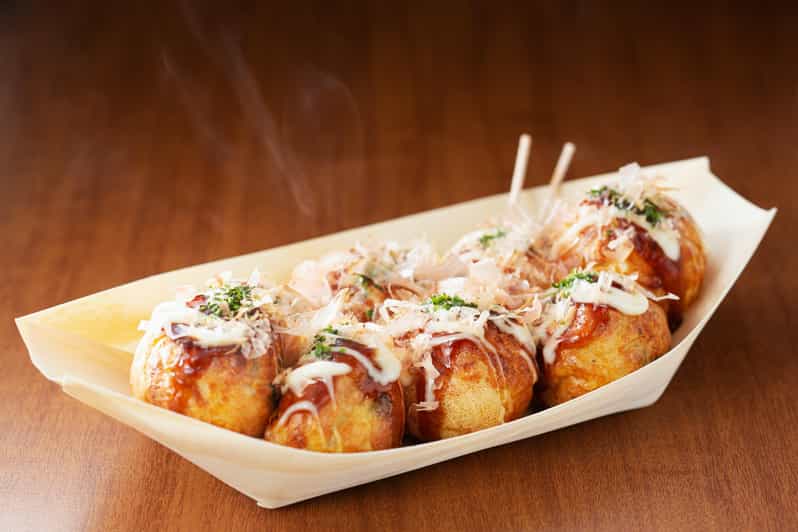
This experience centers on two dishes that are strongly linked with casual Japanese eating: okonomiyaki and takoyaki. Both are cooked on a hot surface, both are easy to recognize once you have seen them, and both reward a bit of practice.
Okonomiyaki is a savory pancake made to suit your taste. Its name is often explained through the idea of cooking what you like, and it has been part of Japanese food culture since the Taisho era, from 1912 to 1926. Takoyaki came later, during the Showa era from 1926 to 1989. These are not ceremonial foods or restaurant-showpiece dishes. They are everyday comfort foods, especially familiar in the Kansai region.
That makes the class useful for you if you want more than a photograph of a Japanese meal. You get a sense of how common food is prepared, handled, and enjoyed at home or in casual settings. The aim is not to turn you into a professional cook. It is to let you make something with your own hands and understand the basic character of two much-loved dishes.
A few more Kyoto tours and experiences worth a look

What happens during the one-hour class
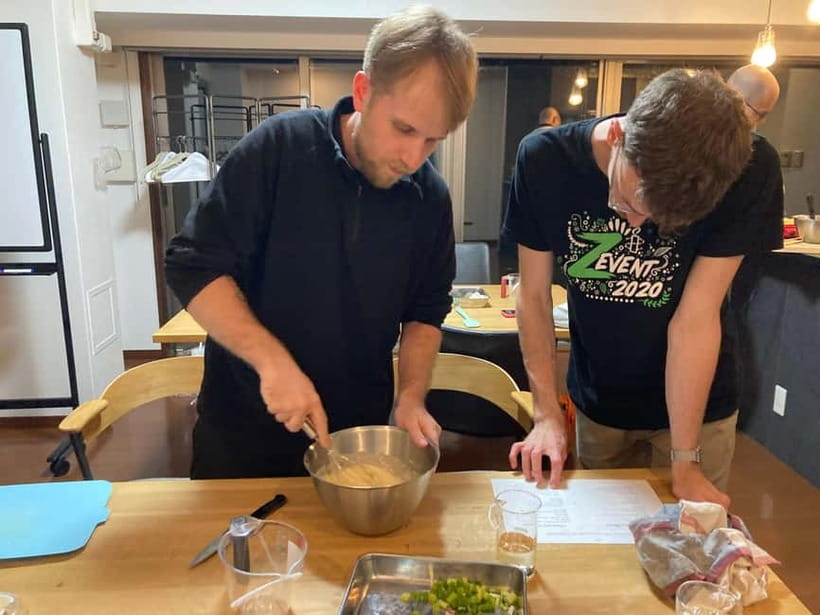
The class is built around action. You prepare and cook the dishes at your own pace while the instructor gives guidance, answers questions, and shares tips when needed. This is a good format if you do not enjoy sitting through a long explanation before touching an ingredient.
The available information does not set out a minute-by-minute schedule, so you should expect a compact flow rather than a formal multi-course lesson. You will work on the ingredients and cooking process, move between okonomiyaki and takoyaki, and then eat the finished food in the same casual setting.
That short format has a clear benefit. You can fit the activity into a busy Kyoto day without giving up half a morning or afternoon. It also keeps the focus on the fun parts: mixing, shaping, turning, cooking, and eating.
The tradeoff is depth. You are unlikely to get a long discussion of regional variations, ingredient sourcing, or advanced knife work in 60 minutes. If your main goal is to master Japanese cooking techniques, look for a longer school. If you want a friendly first taste of cooking in Japan, this format is more suitable.
Okonomiyaki: a flexible first dish
Okonomiyaki gives you a relatively forgiving way to begin. You work with a savory mixture and cook it on a hot surface, with the instructor nearby to help you understand the process.
The dish is valuable as a first step because it introduces the logic of Japanese comfort cooking without making you prepare a complicated menu. You learn how a few familiar ingredients can become a filling meal, and you get to eat the result instead of watching someone else cook it.
Do not expect a polished restaurant presentation every time. Your pancake may be a little uneven, and that is part of the point. The appeal here is participation. You are making lunch or dinner, not auditioning for a cooking show.
One particularly good feature is that okonomiyaki and takoyaki share enough ingredients and cooking ideas to fit together in a short class. You can notice the differences between a larger pancake and small round portions without starting two unrelated recipes from scratch.
Takoyaki: the playful part of the lesson
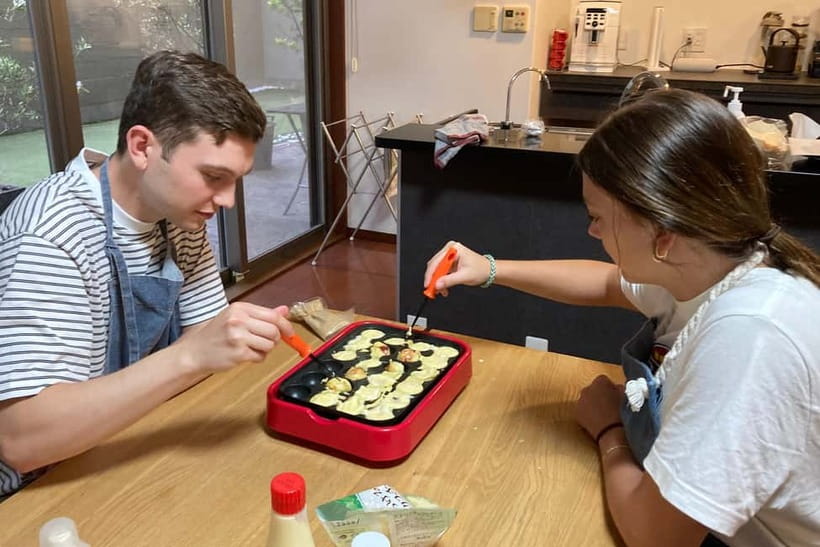
Takoyaki brings a different kind of cooking challenge. The food is cooked in small round spaces, so shaping and turning matter more than they do with a single pancake.
This is likely to be the most playful part of the class. You need to pay attention to the cooking process and respond as the pieces take shape. The instructor can step in with advice, which matters in a one-hour session where you do not have much time to work out every technique alone.
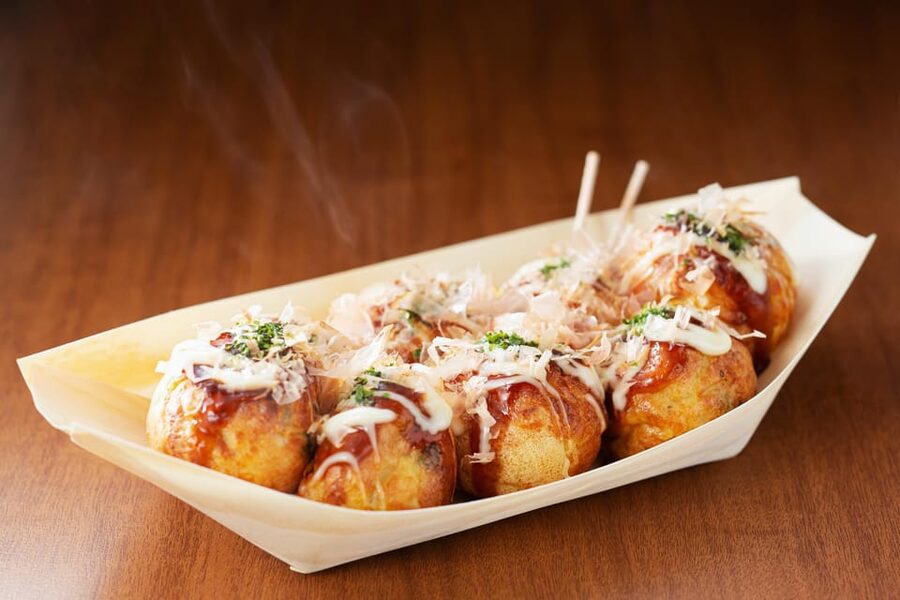
Takoyaki also gives you a useful glimpse of a food that many people first encounter at a street stall or casual restaurant. Preparing it yourself helps explain why the dish has such a distinct form and texture. You are not just eating a ball-shaped snack. You are seeing how the shape comes from the cooking method.
The class description does not promise a set list of fillings or toppings, so do not book expecting a particular ingredient beyond the dishes named. If you need to avoid certain foods, tell the provider at booking so the ingredients can be adjusted.
A friendly format for beginners
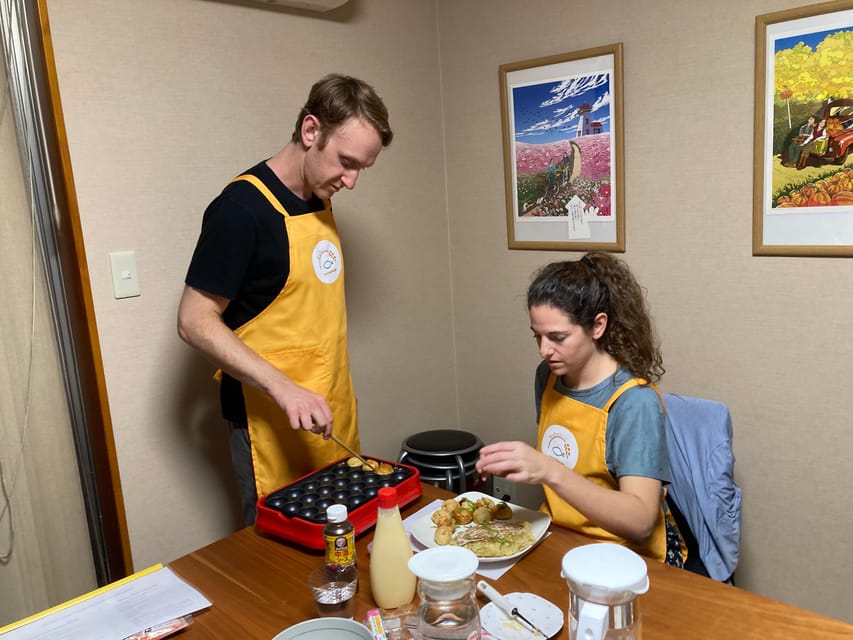
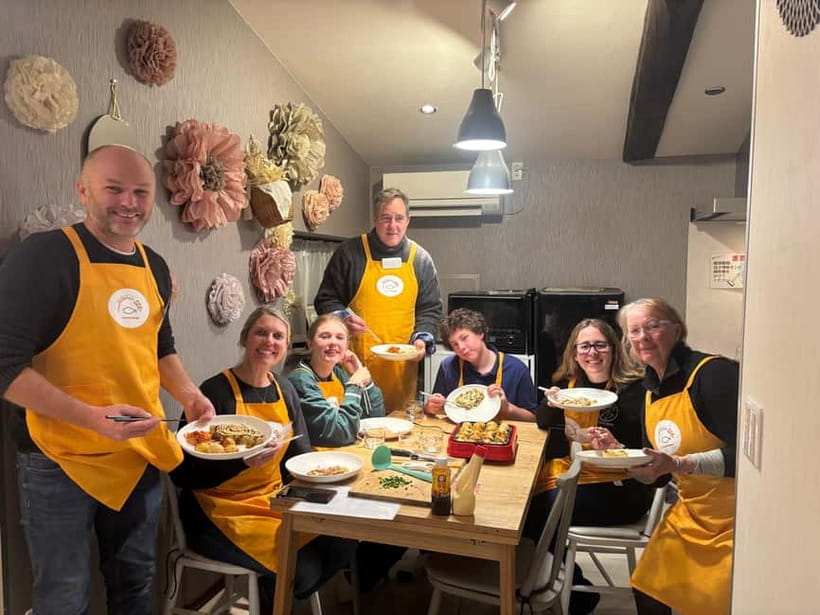
The class is designed for first-time visitors to Japan and people who do not have much cooking experience. That matters because the atmosphere is meant to be casual and practical. You can ask questions as they come up instead of trying to follow a dense demonstration from the back of a large room.
Instruction is available in English and Japanese. The small group limit of six should make it easier to get attention when you need help, especially during the parts of the cooking process that require timing or handling.
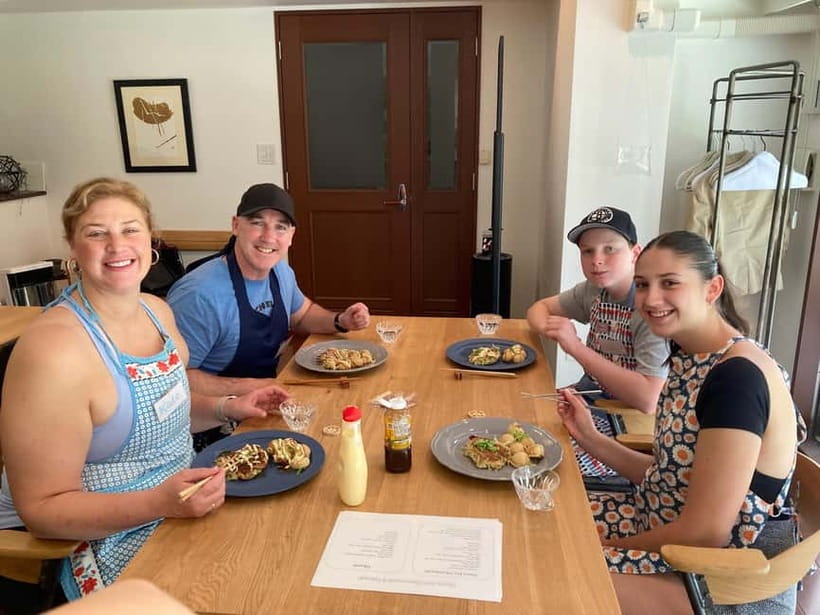
Past sessions have included very small groups. A two-person booking, for example, allowed close interaction with the hosts and plenty of conversation about Japanese food culture. Another couple described the class as a private lesson and appreciated being able to ask questions about Japan while cooking.
An earlier session had real shortcomings: the host arrived late, preparation was not complete, and the instructor referred to notes for the recipe. That kind of start can take the shine off a short experience, since there is little spare time in a 60-minute class. The important current detail is the December 2025 change: experienced instructors now lead or supervise all classes, and the flow has been revised to keep the activity comfortable and organized.
I would still arrive ready for a relaxed home-style class, not a highly staged culinary production. That is part of its appeal, but it also means the experience may feel informal.
A few more Kyoto tours and experiences worth a look


Eating what you have made
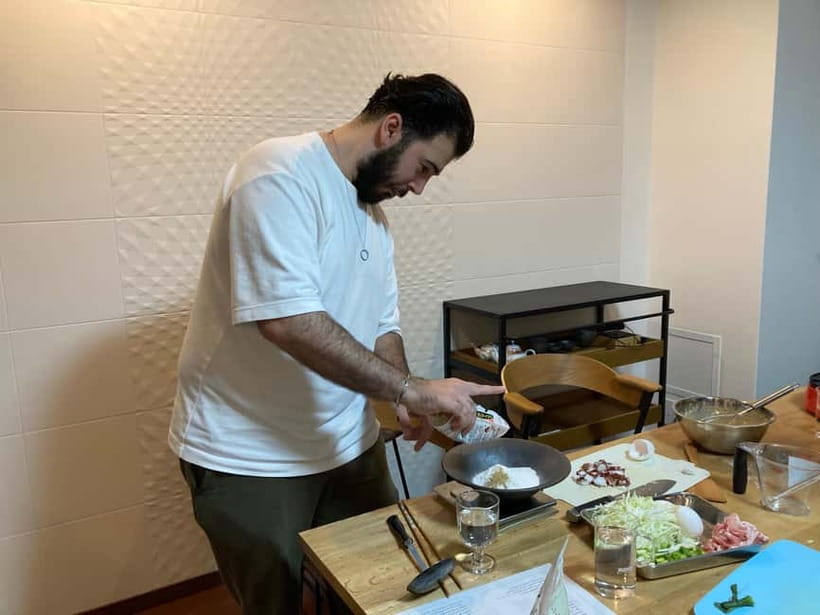
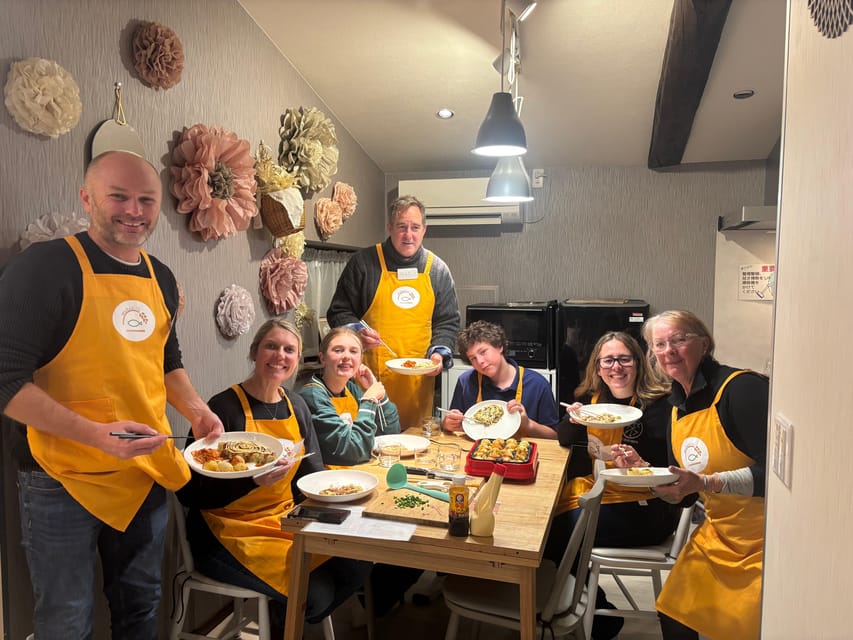
After cooking, you sit down and enjoy both dishes in a relaxed, casual atmosphere. The food is included as lunch or dinner, so the class can serve as a light meal rather than an extra activity that leaves you searching for food afterward.
This finish is important. You get a clear reward for the work, and you can compare the two dishes while they are fresh. You also have a natural chance to talk with the instructor and ask about what you have just prepared.
The food may be simple, but that suits the purpose. You are learning about familiar Japanese comfort food, not sampling a luxury tasting menu. I would schedule this around your appetite: it is practical as a small lunch or dinner, though the exact portion size is not specified.
If you are planning a visit to Nishiki Market, the class is especially easy to pair with that area. The location is about a 15-minute walk from the market, so you can browse food stalls before or after cooking. Just keep the one-hour class time in mind when planning the rest of your day.
Dietary requests need to be made early
The provider can prepare gluten-free, vegan, halal-friendly, and allergy-conscious ingredients. This is a meaningful advantage for a cooking class based on batter and shared food traditions, where standard ingredients may not fit every diet.
You must state your needs when booking. Do not wait until you arrive, since the ingredients need to be adjusted in advance.
The information confirms that these options are available, but it does not list the exact substitutions or describe procedures for avoiding cross-contact. If you have a serious allergy, give clear details at booking and confirm the arrangement before the class begins.
For everyone else, the dietary flexibility makes this easier to recommend to mixed groups. One person can request a special preparation while others take the standard version, subject to what the provider can arrange.
Reaching the third-floor meeting point
The class is within about a 10-minute walk of both Shijo Station and Karasuma Station. From JR Kyoto Station, allow about 15 minutes by train or bus, followed by a short walk. The central location makes it a practical choice before or after shopping and sightseeing.
At the meeting point, take the elevator to the third floor and press the doorbell for 302. This is the sort of detail you should save in your phone before leaving your hotel. The class takes place in a specific unit rather than at a large attraction entrance, so you will want the apartment number in front of you.
Round-trip transportation is not included. You arrange your own way to the location, but the central setting means you do not need a special transfer or a full day of travel around Kyoto.
Is $56 a fair price?
At $56 per person, this is not the cheapest way to eat okonomiyaki and takoyaki in Kyoto. You can find prepared versions at casual restaurants for less. The price makes more sense if you value the hands-on lesson, the small group, the included meal, and the chance to ask questions in English or Japanese.
You also receive apron and utensil rental, so you do not need to bring anything for the cooking itself. Since the experience lasts only an hour, you are paying for a focused activity, not a long culinary workshop.
Value depends on what you want from the meal. If you simply want to taste the dishes, spend your money at a restaurant. If you want to learn the basic process, cook alongside an instructor, and leave with a food memory you can repeat at home, the cost is easier to justify.
The current score of 4.7 from 25 ratings suggests a generally strong experience, but the individual experiences have not all been identical. Most of the praise focuses on friendly personal attention, enjoyable cooking, and the chance to learn local versions of familiar dishes. Keep the earlier preparation problem in mind, while also noting the newer instructor supervision update.
Who should book this activity?
I would recommend it most to:
- First-time visitors who want a simple introduction to Japanese food culture
- Couples or families looking for a short indoor activity
- People who learn best by doing rather than watching
- Small groups who want time for questions
- Diners with gluten-free, vegan, halal-friendly, or allergy needs, provided they request changes in advance
- Anyone planning to visit Nishiki Market or the Shijo and Karasuma area
It is less suitable if you want a long professional cooking course, a highly detailed food history lesson, or a formal restaurant meal. It is also not the best choice if your schedule is so tight that a late start would cause problems, although the updated supervision is meant to improve timing and organization.
The class can work well for a mixed-age group, but the supplied information does not specify a minimum age or child policy. If you are booking for children, confirm that point first.
Booking details worth knowing
The experience is limited to six participants, and the instructor may be English-speaking, Japanese-speaking, or able to work across both languages. The listed provider is the Japan Association of Washoku Lifestylists.
You can reserve now and pay later, which helps if your Kyoto plans are still moving around. Free cancellation is available up to 24 hours before the activity for a full refund.
Starting times vary, so check availability for your date. Since the class lasts one hour, leave enough time to find the third-floor meeting point and do not schedule a distant attraction immediately afterward.
My call: book it for participation, not just dinner
Book this class if you want to make two well-known Japanese comfort foods, eat what you cook, and keep the activity short. The small group, central location, dietary flexibility, and personal instruction give it real practical value.
I would skip it if you only want the cheapest meal or expect a polished, advanced culinary school. The earlier report of a late start and unfinished preparation is worth noting, though the December 2025 move to experienced instructors leading or supervising every class addresses the biggest concern.
For most visitors, this is a good one-hour addition to a Kyoto itinerary. You leave with a fuller understanding of okonomiyaki and takoyaki, plus recipes and techniques you may be able to try again at home.
FAQ
How long does the cooking experience last?
The class lasts one hour.
What dishes will I make?
You will prepare and cook okonomiyaki and takoyaki.
Is the food included?
Yes. The experience cost includes the ingredients and the resulting lunch or dinner.
Are aprons and cooking tools provided?
Yes. Aprons and cooking utensils are available as part of the experience.
Can I request gluten-free ingredients?
Yes. Gluten-free ingredients are available if you request them when booking.
Can vegan or halal-friendly ingredients be arranged?
Yes. Vegan and halal-friendly options are available when requested at the time of booking.
Can the class accommodate food allergies?
Yes. Allergy-conscious ingredient adjustments are available, but you need to provide the details when booking.
How many people can join?
The class is limited to six participants.
Which languages are available?
Instruction is available in English and Japanese.
How do I reach the meeting point?
The location is about a 10-minute walk from Shijo Station or Karasuma Station. From JR Kyoto Station, it takes about 15 minutes by train or bus followed by a short walk. At the building, take the elevator to the third floor and press the doorbell for 302.
Is transportation included?
No. You arrange your own transportation to and from the location.
Can I cancel for a full refund?
Yes. You can cancel up to 24 hours in advance for a full refund.
Can I reserve without paying immediately?
Yes. The reserve-now, pay-later option lets you book without paying at the time of reservation.