
Reviewed · GOLDEN PAVILION & TEMPLE TOURS
Kyoto: Ginkakuji, Silver Pavilion Guided Tour in 1 Hour
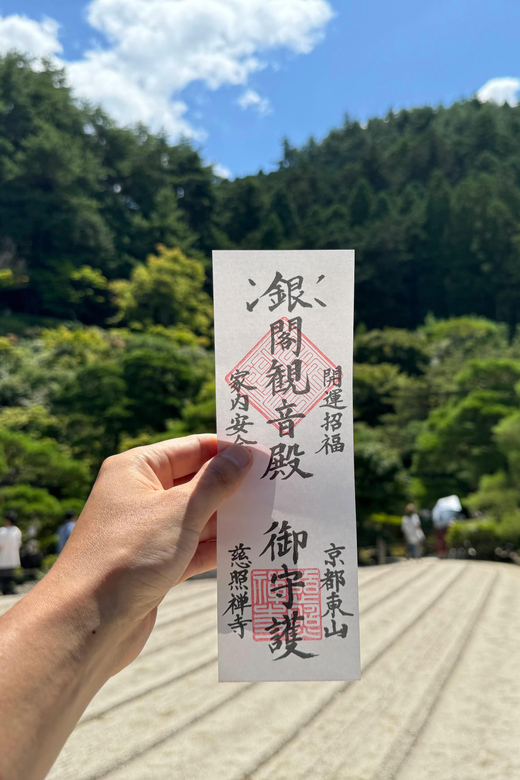
Ginkakuji is less about glitter than restraint. Its Kannon-den hall, pale wooden lines, and carefully placed sand garden show how much beauty Kyoto can create with very little decoration. I like the private format, and I like that the tour finishes at the Philosopher’s Path instead of sending you straight back to the gate.
The drawback is the short length. One hour goes quickly, so you get a focused look rather than a long, unhurried visit. At $51 per person, the price makes the most sense if you value a live guide and want clear context without booking a larger group tour.
In This Review
- Key points to know before you book
- Why Ginkakuji works so well in one focused hour
- Meeting at the gate with the yellow sign
- Entering Ginkakuji and finding the Kannon-den hall
- Reading the sand garden without rushing past it
- Walking through the planted temple grounds
- Climbing to the terrace for a wider view
- Finishing at the Philosopher’s Path
- What the private format adds at $51
- Who will get the most from this tour
- Practical tips for making the hour count
- Should you book the Ginkakuji one-hour tour?
- FAQ
- How long does the Ginkakuji guided tour last?
- What is the price of the tour?
- What does the tour include?
- Where does the tour begin?
- How will I recognize the guide?
- Where does the tour finish?
- Can I walk along the Philosopher’s Path after the tour?
- Which languages are available?
- Is this a private tour?
- Can I cancel for a full refund?
Key points to know before you book
- The tour starts at the temple gate: Meet your guide in front of the main gate, looking for a yellow DeepExperience sign.
- The Kannon-den hall is the visual anchor: Its quiet Zen design gives the visit its character.
- The sand garden rewards a slow look: Its simple form is one of the temple’s most memorable details.
- A high terrace adds a change of view: You can look back across the temple grounds and surrounding area.
- The walk ends at the Philosopher’s Path: You have time afterward for your own stroll and photos.
- The format is private and bilingual: Tours are offered in English or Japanese, with recent guides including Hiro, Yoshi, and Teppei.
Why Ginkakuji works so well in one focused hour
Kyoto has temples that ask for half a day. Ginkakuji does not have to be one of them. The grounds give you several strong sights in a compact route: the temple gate, the Kannon-den hall, the sand garden, the planted paths, and a terrace with views from above.
That makes this a useful tour for you if your Kyoto schedule is tight. A guide can help you see the design logic behind the grounds instead of leaving you to wonder which details matter. You still get time to look around on your own, but the visit has a clear shape.
The experience is also private. That matters more here than it might at a major museum. Ginkakuji’s appeal comes from small details and quiet spaces, so a guide who can answer your questions without the pace of a large group is a real benefit.
Still, you should set your expectations correctly. This is not a full eastern Kyoto day tour. It does not include Kinkakuji, transportation between sights, or a long visit to the Philosopher’s Path. It gives you one polished hour at Ginkakuji, followed by a convenient stopping point for your own plans.
A few more Kyoto tours and experiences worth a look

Meeting at the gate with the yellow sign
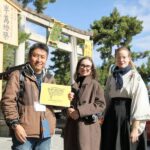
The starting point is the temple’s main gate, listed as 総門. Meet your guide in front of the gate and look for a yellow sign bearing the DeepExperience logo.
This simple meeting plan is useful because you do not have to search inside the grounds. Arriving at the gate with a few minutes to spare will make the start calmer, especially if you are still getting your bearings in this part of Kyoto.
The guide speaks English or Japanese, depending on the language you choose when booking. Recent tours have been led by Hiro, Yoshi, and Teppei. Hiro was praised for his friendly manner and for adding useful detail to the visit. Yoshi adjusted his explanations for a guest who had also visited Kinkakuji on the same day, making the two temple visits feel connected rather than repetitive. Teppei was especially responsive to questions and communicated clearly in English.
Your guide is assigned by the operator, so you should not assume that one of those three will lead your tour. Still, those names give you a useful picture of the service: a personal guide, room for questions, and explanations shaped around your day.
Entering Ginkakuji and finding the Kannon-den hall
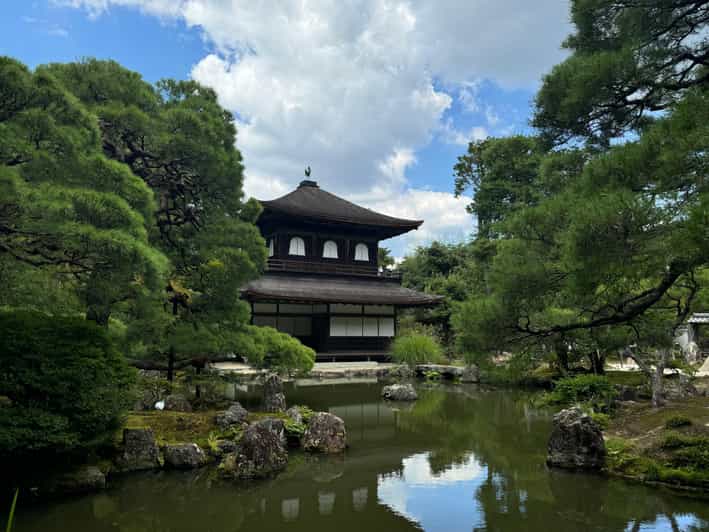
Once you enter, the tour turns toward Ginkakuji’s main architectural focus, the Kannon-den hall. The name Silver Pavilion can create a false picture. You should not arrive expecting a bright silver building like the famous Golden Pavilion across town.
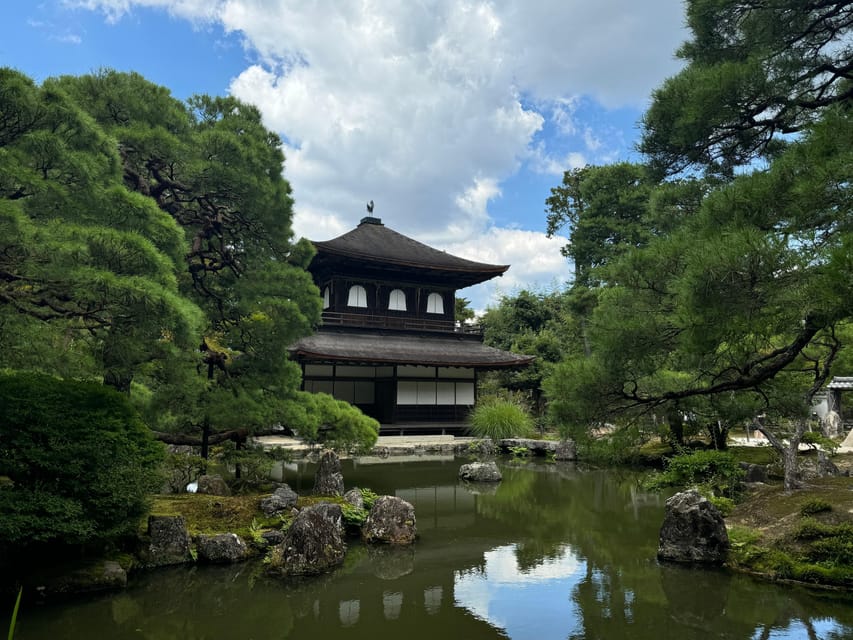
Instead, the pleasure comes from the hall’s quiet proportions and Zen design. The building sits within gardens that soften its lines, so you see architecture and nature together rather than as separate attractions. Your guide can help explain what to notice, from the restrained appearance of the hall to the way the surrounding grounds frame it.
This is where a one-hour guide earns its keep. You can take in the hall in a few minutes, but understanding why its simplicity matters takes longer. A good explanation turns a quick photograph into a more meaningful look at the site.
I also like the fact that the tour does not treat the pavilion as the only thing worth seeing. The hall is important, but Ginkakuji’s character comes from the full setting. The paths, planted areas, sand court, and changing viewpoints all shape the visit.
Do not expect to walk through every interior space. The information provided centers on the temple grounds, the Kannon-den hall, the gardens, and the views. The experience is best understood as a guided walk through an outdoor temple setting.
Reading the sand garden without rushing past it
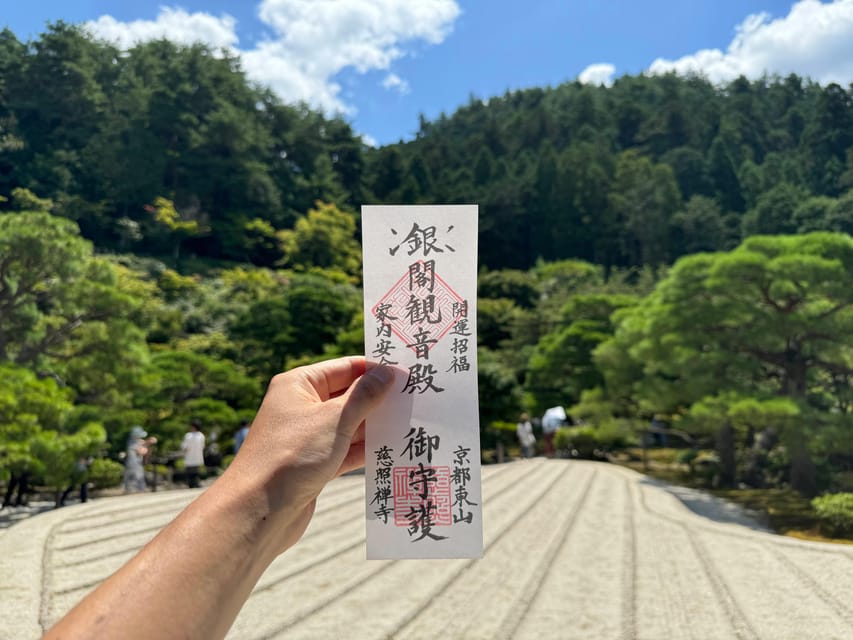
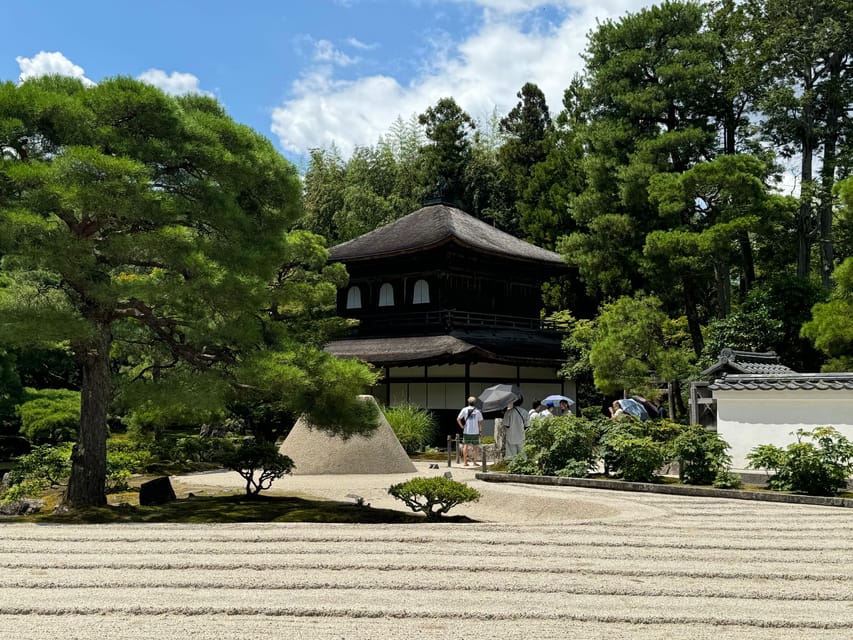
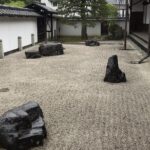
The sand garden is one of the most distinctive parts of Ginkakuji. Its pale surface and carefully arranged forms create a sharp contrast with the softer greens around it.
At first glance, you might think the garden is almost empty. That is the point of its design. With fewer elements competing for attention, your eye begins to notice shape, spacing, texture, and the effect of light across the sand.
Your guide can give this area useful context, but you still need to look for yourself. I would pause here instead of treating it as a quick photo stop. Ask your guide what the design is meant to express, how the sand relates to the rest of the temple grounds, and which details are easiest to miss.
The garden also shows why a private format can be helpful. If you want to spend an extra minute looking closely, you can ask a question or linger without trying to keep up with a large group. The tour remains short, but it does not have to feel rushed at every stop.
One practical point: the sand garden is visually quiet. If you prefer dramatic buildings, bright colors, or long historical storytelling, this may feel understated. If you enjoy order, space, and careful design, it is likely to be one of the strongest parts of the visit.
Walking through the planted temple grounds
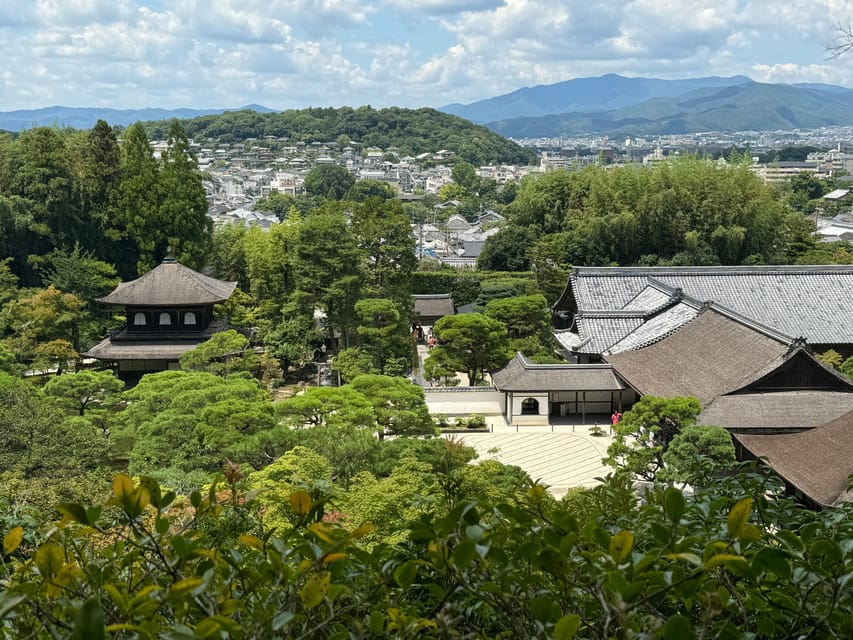
The gardens connect the main sights and give the tour its calm pace. The paths pass through meticulously maintained planting, with the temple buildings appearing and disappearing among the greenery.
This setting matters because Ginkakuji is not simply a building placed in an open courtyard. The gardens control how you see the architecture. One turn may give you a close view of the Kannon-den hall, while another opens a broader view across the grounds.
I like this part of the tour because it slows the visit down without adding a lot of time. You are walking, but you are also looking at how the route has been arranged. The result feels more considered than a straight line from entrance to pavilion and back again.
The exact amount of time spent at each spot depends on your guide and questions. With only one hour, you may need to keep moving. If you want lengthy explanations at every stop, this tour may feel too compact. If you want a clear introduction followed by your own time to explore, the length works better.
The garden route also gives you a break from Kyoto’s denser streets. The tour information does not promise a specific seasonal display, so I would not book it for one particular flower or color. Go for the overall design, the changing views, and the calm setting.
Other guided tours in Kyoto

Climbing to the terrace for a wider view
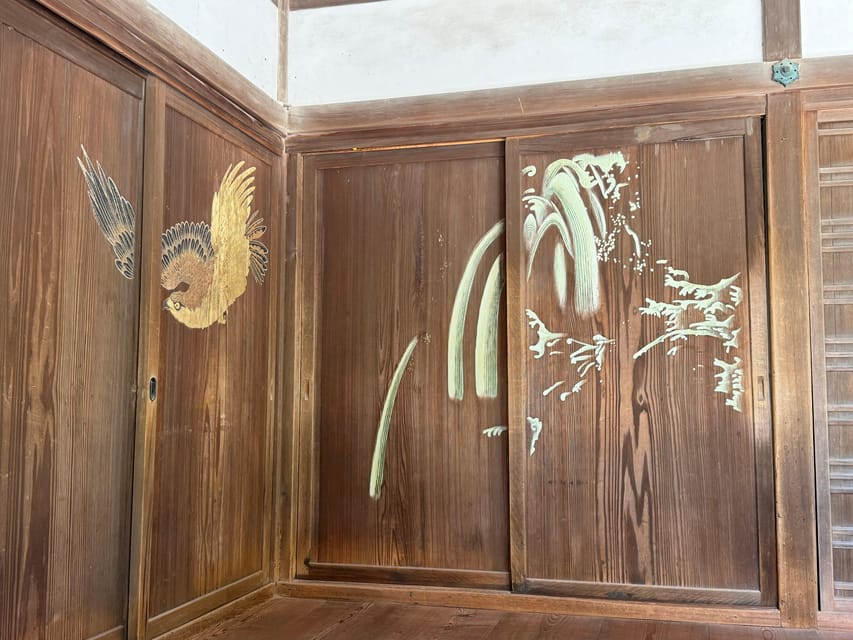
The route includes a temple terrace at a higher point in the grounds. From here, you get a broader view than you do near the Kannon-den hall.
That change in height helps you understand the site as a whole. Instead of looking only at one building or one garden feature, you can take in the arrangement of the grounds and the surrounding area. It is a good place to pause and let the visit come together.
The terrace is also a useful contrast to the close-up details. Ginkakuji asks you to notice small things in the sand garden and architecture, then gives you a wider view from above. That rhythm makes the one-hour route feel varied.
You should remember that this is a walking tour through temple grounds. The information confirms a walk and a terrace viewpoint, but it does not provide detailed accessibility information or describe the amount of climbing. If stairs or slopes are a concern for you, ask the operator before booking.
For most visitors, the terrace will be a short stop rather than a long viewing session. Use it for the broad scene, then let your guide lead you onward toward the end of the route.
Finishing at the Philosopher’s Path
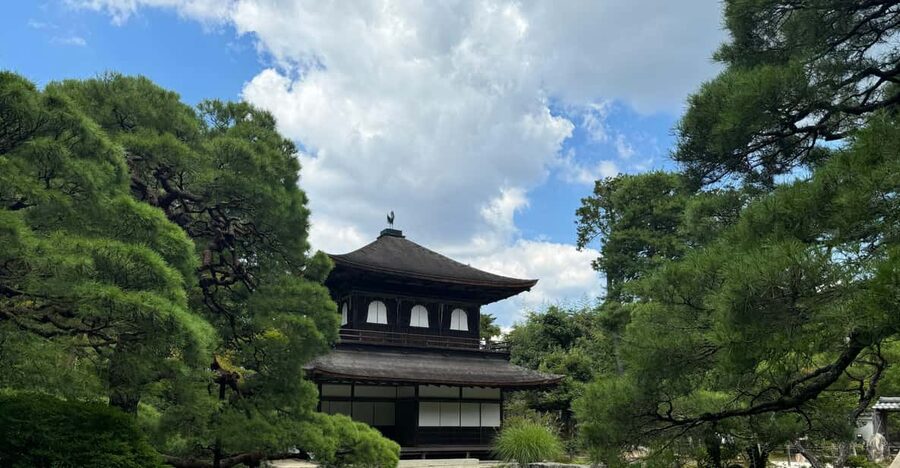
The tour concludes at Tetsugaku No Michi, better known as the Philosopher’s Path. This is one of the smartest features of the experience.
You are not simply returned to the entrance after seeing the main sights. Instead, the tour places you beside a pleasant walkway where you can continue at your own pace. The official tour ends there, but your visit to the area does not have to end with the guide.
You can stroll along the path, take photos, or use the stopping point to plan the next part of your day. The information provided does not specify how far the guided portion continues along the path, so think of the path as your own time after the temple tour rather than a second guided walk.
This finish also helps you build a longer eastern Kyoto outing. You could pair the tour with another nearby plan, but the activity itself includes only Ginkakuji entry and the guide. You will need to arrange any later sightseeing, food, or transport separately.
I prefer this kind of ending to a hard stop at the gate. The path gives you room to absorb what you have seen. It also means you can leave the guide when the formal hour is over without feeling that you have missed the chance to enjoy the neighborhood on foot.
What the private format adds at $51
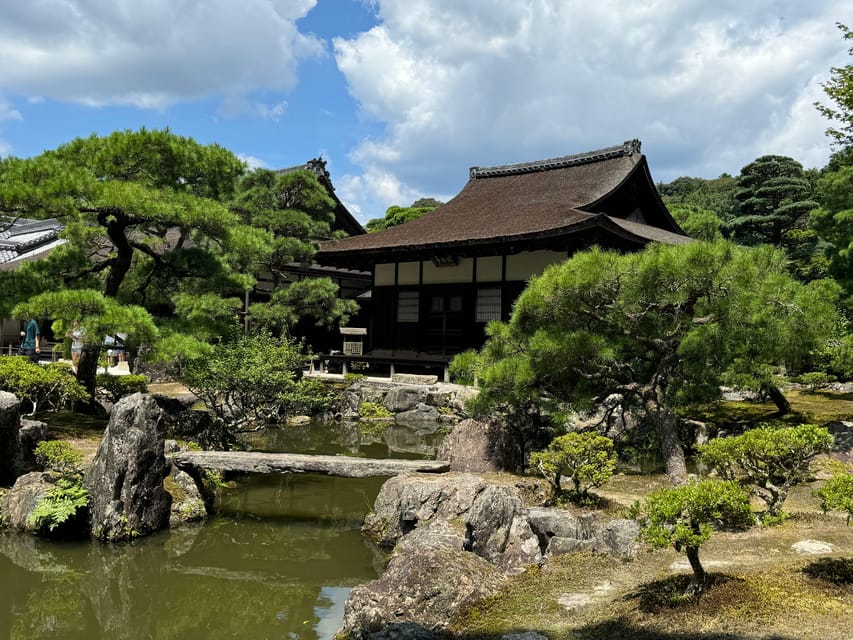
The price is $51 per person. Entry to Ginkakuji and a guide are included, and the group is private.
That is a fair value if you want interpretation, personal attention, and a tidy one-hour visit. The strongest part of the price is not the admission alone. It is the chance to ask questions in English or Japanese and have the guide adjust the conversation to your interests.
Yoshi’s handling of a guest who had already visited Kinkakuji shows why that flexibility can matter. If you have seen another major Kyoto temple, tell your guide. You may get comparisons that make the second visit more useful instead of hearing the same basic explanation again.
The value is less clear if you mainly want to walk through the grounds silently. You can visit a temple without a guide, and this tour does not include a full day of sightseeing or transportation. Paying $51 per person for one hour may feel high if you are comfortable reading signs and forming your own route.
The private group makes the cost easier to justify for couples, families, or small parties who want a shared guide. It is also a good match for a first Kyoto visit when you want cultural context but do not want to give half a day to a large organized tour.
You can reserve now and pay later, which keeps your plans flexible. Cancellation is free up to 24 hours before the activity for a full refund. Those terms are useful if your Kyoto schedule is still shifting.
Who will get the most from this tour
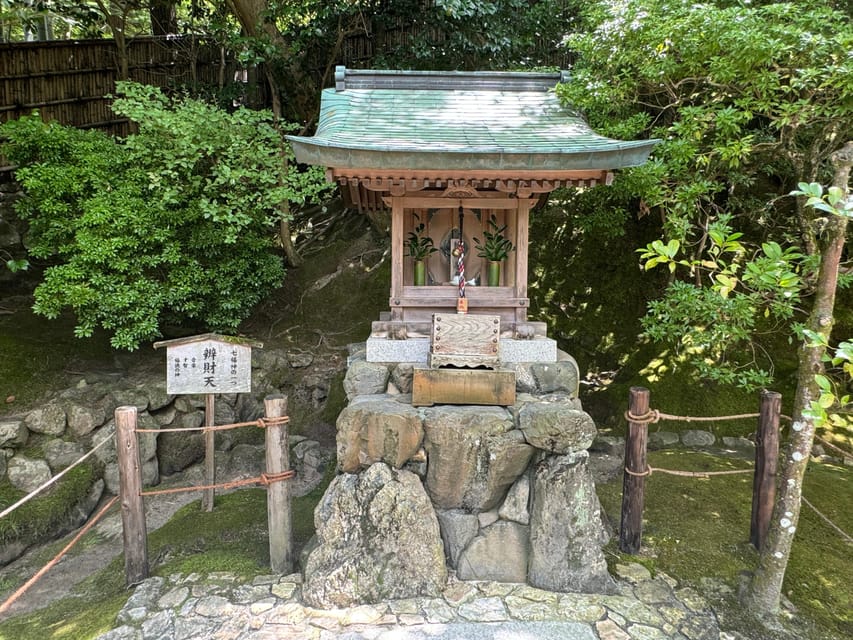
I would choose this tour for you if you want a short, guided introduction to one of Kyoto’s most refined temple settings. It fits well between other plans because the formal visit lasts one hour and ends at a useful walking route.
It is especially suitable for:
- First-time visitors who want help noticing the meaning behind Zen design.
- Couples or families who prefer a private group.
- People who enjoy gardens, architecture, and quiet views more than fast sightseeing.
- English-speaking visitors who want a live guide and time for questions.
- Visitors planning to walk the Philosopher’s Path afterward.
I would be more cautious if you want a long historical lecture, a broad Kyoto tour, or several temple visits in one booking. The experience is focused by design. Its strength is clarity, not quantity.
You should also avoid expecting a silver-covered pavilion. Ginkakuji’s name can set up the wrong image. The appeal lies in the pale hall, the sand garden, the planted grounds, and the way the site uses restraint.
Practical tips for making the hour count
Arrive at the main gate with enough time to find the yellow DeepExperience sign. The meeting point is outside the gate, so do not assume your guide will come looking for you inside.
Think about what you want from the visit before it begins. If you care most about Zen architecture, ask about the Kannon-den hall. If gardens interest you, spend more time on the sand court and planting. If you want views, make sure you do not rush through the terrace stop.
Tell your guide if you have already visited Kinkakuji or another major Kyoto temple. Yoshi’s approach shows that the tour can be shaped around what you have already seen, which may help prevent repeated explanations.
Keep the Philosopher’s Path in your plan after the official tour ends. The tour gives you a convenient finish there, but your own walk is not part of the guided hour. Allow extra time if you want to enjoy it without watching the clock.
English and Japanese are available, and recent guides Hiro, Yoshi, and Teppei received especially strong praise for friendliness, clear communication, and careful answers. Since the assigned guide can vary, book the language that best suits your needs and bring your questions.
Should you book the Ginkakuji one-hour tour?
Book it if you want a private, focused visit with enough explanation to make the temple’s quiet details matter. The Kannon-den hall, sand garden, terrace, and planted grounds fit together well in an hour, and ending at the Philosopher’s Path gives you a useful next step.
Skip it if you want a cheap admission-only visit or a longer temple tour with several stops. At $51 per person, the value rests on the guide, the private format, and the time saved planning your own visit.
For a first visit to Ginkakuji, I think the tour makes a sensible choice. You get a clear route, a live English or Japanese guide, entry included, and the freedom to continue along the Philosopher’s Path once the formal hour is over.
FAQ
How long does the Ginkakuji guided tour last?
The guided visit lasts one hour.
What is the price of the tour?
The price is $51 per person.
What does the tour include?
The tour includes a guide and entry to Ginkakuji Temple.
Where does the tour begin?
Meet your guide in front of the main temple gate, listed as 総門.
How will I recognize the guide?
The guide will be holding a yellow sign with the DeepExperience logo.
Where does the tour finish?
The guided tour finishes at Tetsugaku No Michi, also called the Philosopher’s Path.
Can I walk along the Philosopher’s Path after the tour?
Yes. The tour finishes at the path, giving you the chance to stroll and explore on your own afterward.
Which languages are available?
The tour is available with a live guide in English or Japanese.
Is this a private tour?
Yes. It is offered as a private group experience.
Can I cancel for a full refund?
Yes. You can cancel up to 24 hours in advance for a full refund.
More 1-Hour Experiences in Kyoto


More Guided Tours in Kyoto
More Golden Pavilion & Temple Tours in Kyoto

More tours in Kyoto we've reviewed




Golden Pavilion & Temple Tours, compared.
 ★ 4.8Kyoto: Fushimi Inari, Kinkakuji, Bamboo Grove 1 Day Bus TourFrom $122510 minutes - 9 hours
 ★ 4.9Kyoto: Tea Ceremony in a Traditional Tea House in KiyomizuFrom $4945 min
 ★ 4.9Kyoto: Tea Ceremony Ju-An at Jotokuji TempleFrom $291h 10m
 ★ 4.1Osaka/Kyoto:Kinkakuji,Arashiyama,FushimiInariShrine,NaraParkFrom $66
 ★ 4.8Arashiyama Bamboo, Temple, Monkeys, or Secret Sake BreweryFrom $875 hours - 330 minutes
 ★ 5.0Kyoto: Nijo, Kinkaku-ji, Arashiyama, Kiyomizu & Fushimi InariFrom $51