
Reviewed · NIJO CASTLE TOURS
Kyoto: Imperial Palace & Nijo Castle Guided Walking Tour
Kyoto’s political story becomes much clearer when you visit Nijo Castle and the Kyoto Imperial Palace together. One belonged to the shogun, the military ruler who controlled Japan for much of the Edo period. The other was home to the emperor. Seeing both in one morning or afternoon gives you a useful lesson in how power worked in old Japan.
I like the small group limit of nine and the choice of several starting times. I also like the practical route: you begin at Nijojo-Mae Station and finish near Imadegawa Station, so you do not need to backtrack across town. The main consideration is that this is a walking tour with plenty of time outdoors, and the Imperial Palace visit is focused on the grounds rather than an interior tour.
- Two very different seats of power: Compare the shogun’s Nijo Castle with the emperor’s Kyoto residence.
- Ninomaru Palace included: Admission covers Nijo Castle, the Ninomaru-goten Palace, and the Painting Gallery.
- Small groups of up to nine: Guides such as Jasmine, Raphael, Vincent, Taku, and Cecilia have been praised for clear explanations and thoughtful pacing.
- A useful three-hour route: Spend about an hour at each main site, with walking and travel between them.
- Flexible booking: Several start times, same-day reservations, and pay-later booking suit changing Kyoto plans.
- Prepare for the walk: Wear comfortable shoes, carry water and cash, and dress modestly for the palace grounds.
In This Review
- Why These Two Kyoto Sights Belong Together
- Starting at Nijojo-Mae Station
- Nijo Castle and the Shogun’s World
- Walking Toward the Imperial Palace
- Kyoto Imperial Palace and the Former Imperial Residence
- What the Guides Add
- Pace, Weather, and Physical Demands
- Languages, Timing, and Booking Flexibility
- Who Will Get the Most From This Tour
- FAQ
- How long does the Kyoto Imperial Palace and Nijo Castle tour last?
- Where does the tour begin?
- Where does the tour finish?
- What languages are available?
- How many people are in the group?
- Is admission to Nijo Castle included?
- Does the tour include hotel pickup?
- Are food and drinks included?
- Can I cancel the tour for a refund?
- Is the tour suitable for people with mobility or health concerns?
- Should You Book This Kyoto Walking Tour?
Why These Two Kyoto Sights Belong Together
Nijo Castle and the Imperial Palace tell two sides of Japan’s old government. At Nijo, you see the world of the Tokugawa shoguns, military leaders who held practical control over Japan. At the palace, you visit the former Kyoto residence of the imperial family, who lived here while Kyoto served as Japan’s capital for more than a thousand years.
I find that contrast more useful than visiting either sight in isolation. Nijo Castle can feel like a beautiful collection of halls and gardens if you do not know who used them and why. The Imperial Palace can seem quiet and formal without the political background. A good guide links the buildings to the people, ceremonies, and social order behind them.
The tour costs $49 per person. That is not the cheapest way to enter these sites, but it includes the Nijo Castle admission and a live guide in a small group. I think the price makes sense if you want historical context and have only a limited amount of time in Kyoto. If you enjoy reading every sign and moving at your own pace, you may prefer independent visits.
The advertised duration is three hours, even though the two main visits are described as about one hour each. The extra time is important. It allows for the walk between the sites and the transfer toward the finishing point. Think of this as a compact half-day outing, not a two-hour dash.
Starting at Nijojo-Mae Station
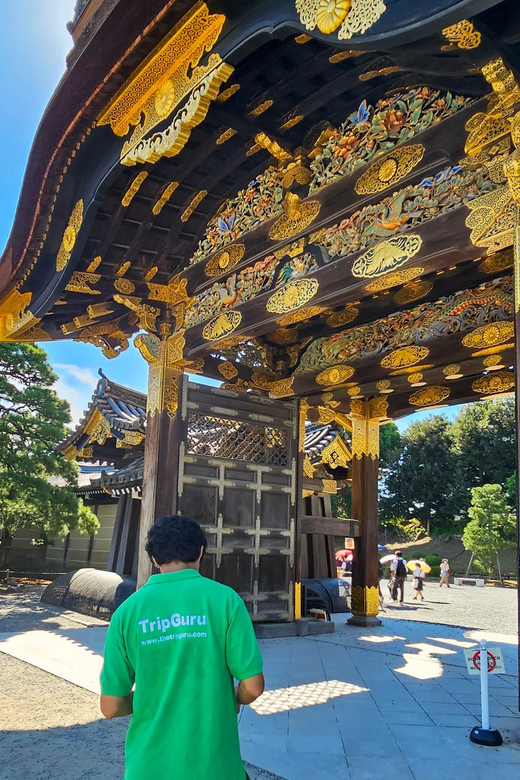
The meeting point is outside Exit 1 at Nijojo-Mae Station. Your guide should be wearing a TripGuru shirt or holding a TripGuru sign. Arrive at least 10 minutes early. Guides wait no more than 10 minutes after the scheduled start, and Kyoto traffic can make a short trip take longer than a navigation app suggests.
Starting at the station is convenient because Nijo Castle is right by the meeting area. You do not need a hotel pickup, and the tour does not include hotel transportation. I would plan your route before leaving, especially for a morning start.
The group is limited to nine participants. That number is small enough for questions and conversation, though the exact feel depends on the day’s attendance. Some sessions may be much smaller. A few participants have found their group felt almost private, but you should book this as a small-group tour rather than expect a private guide.
A few more Kyoto tours and experiences worth a look
Nijo Castle and the Shogun’s World
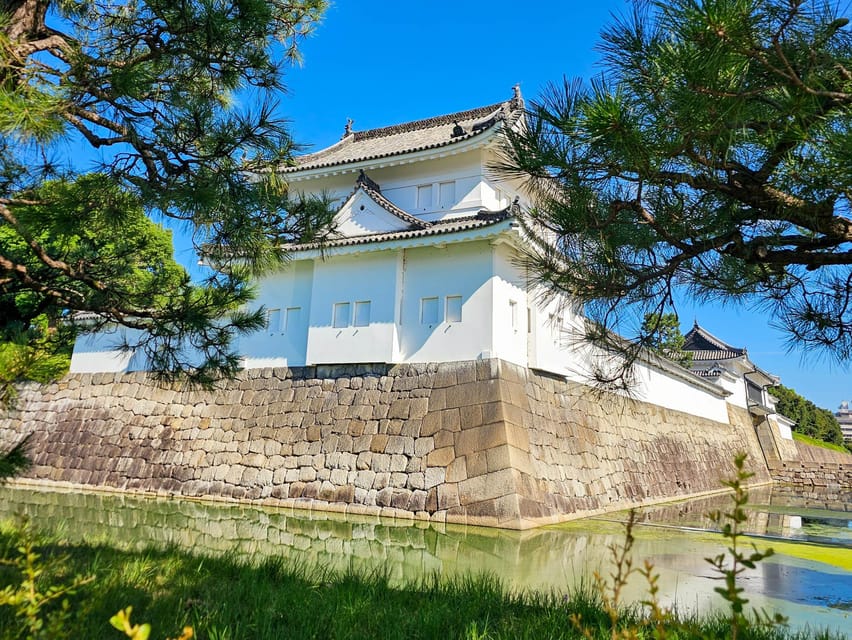
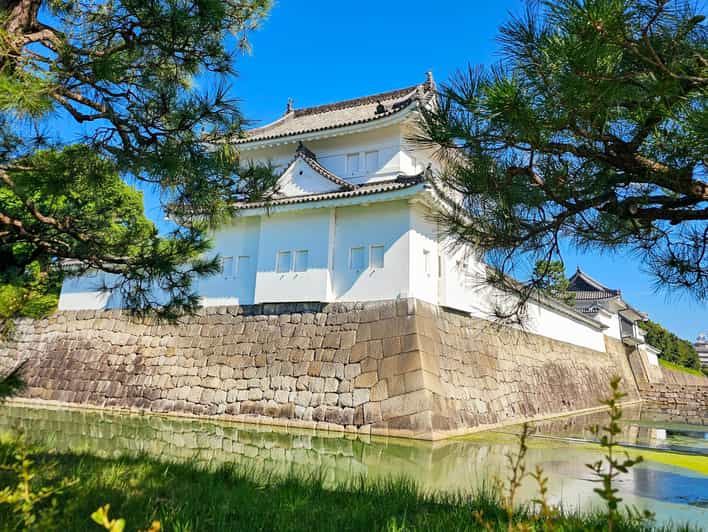
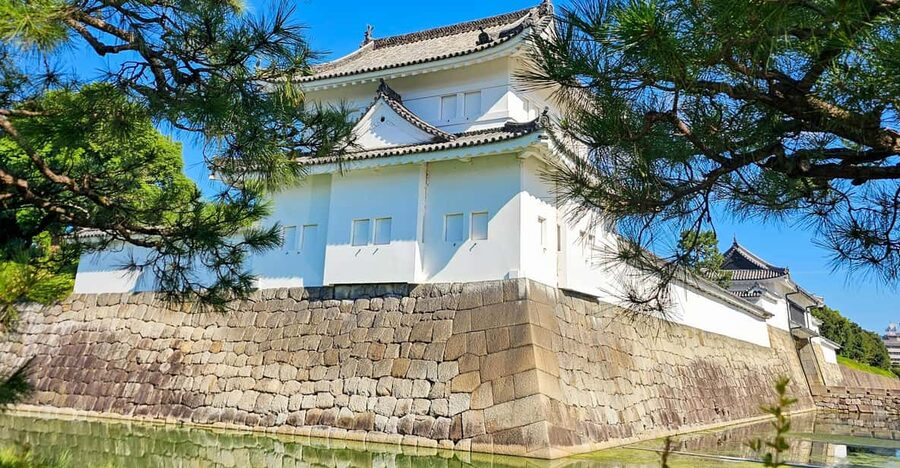
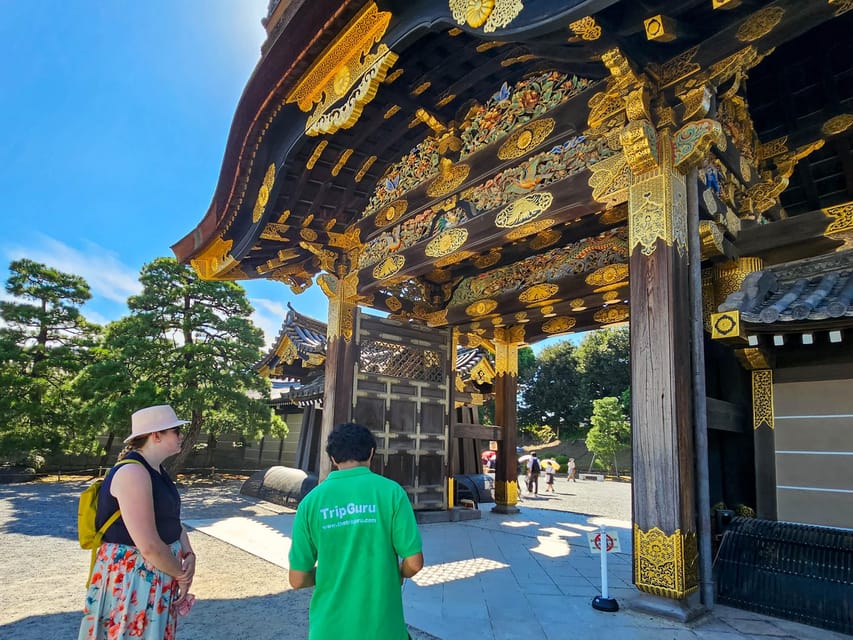
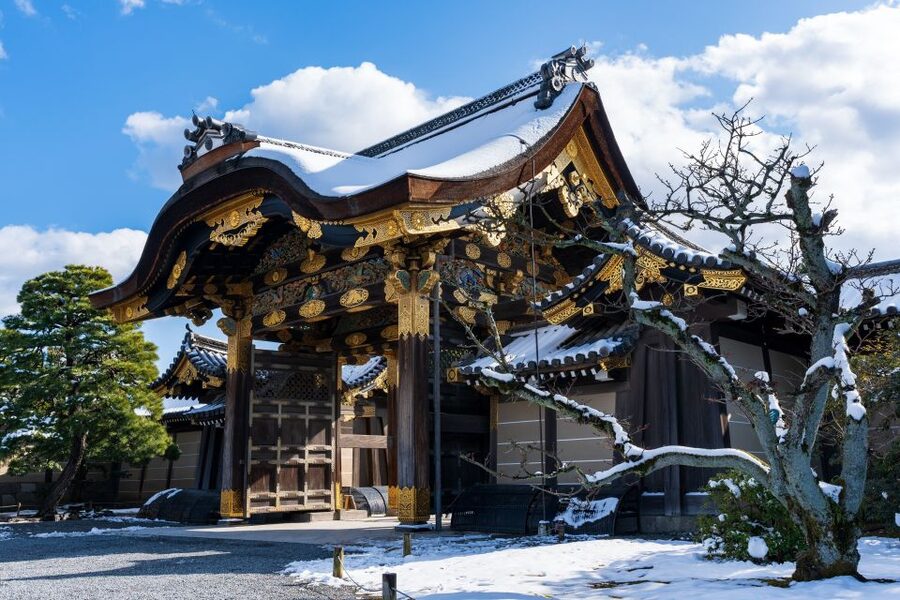
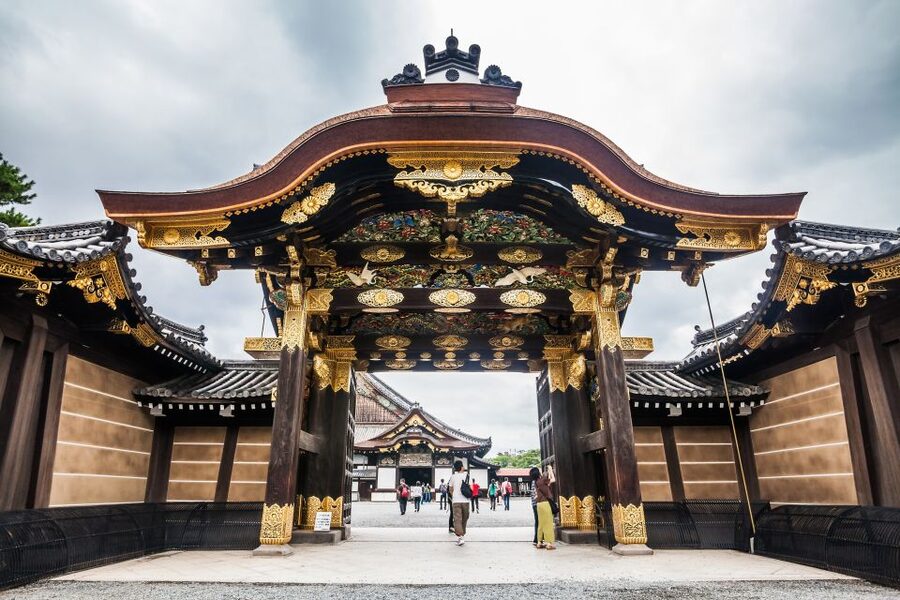
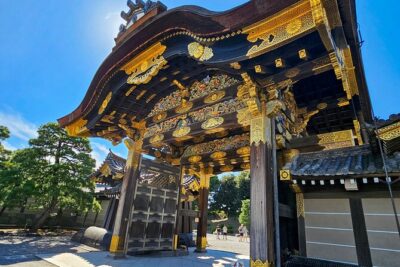
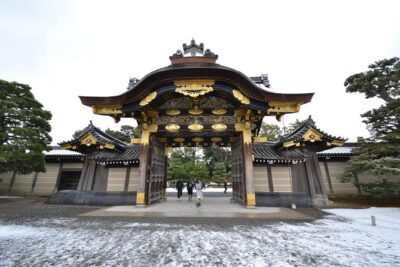
Nijo Castle is the stronger first stop for many people. Its scale, decorative details, gardens, and formal interiors offer plenty to look at, but the setting becomes more memorable when you understand the castle’s role. This was not simply a defensive fortress. It also functioned as a residence and a place where the shogun displayed authority.
The guided visit lasts about one hour. Your admission includes the Ninomaru-goten Palace and its Painting Gallery. The tour guide brings you through the Ninomaru Palace and Garden, which means the visit focuses on the main palace area rather than every part of the wider castle complex.
Inside the palace, pay attention to the relationship between the rooms and the decoration. Wall paintings, screens, room size, and placement all helped communicate rank. A guide can point out details you might otherwise pass without noticing, including the meanings attached to architectural features and symbols.
The famous floorboards are another reason to listen closely. They are designed to make a soft chirping sound as people walk across them. The feature is commonly linked to security, since it could alert occupants to movement inside the building. Your guide can explain how the castle worked as both a grand residence and a place where political control was carefully managed.
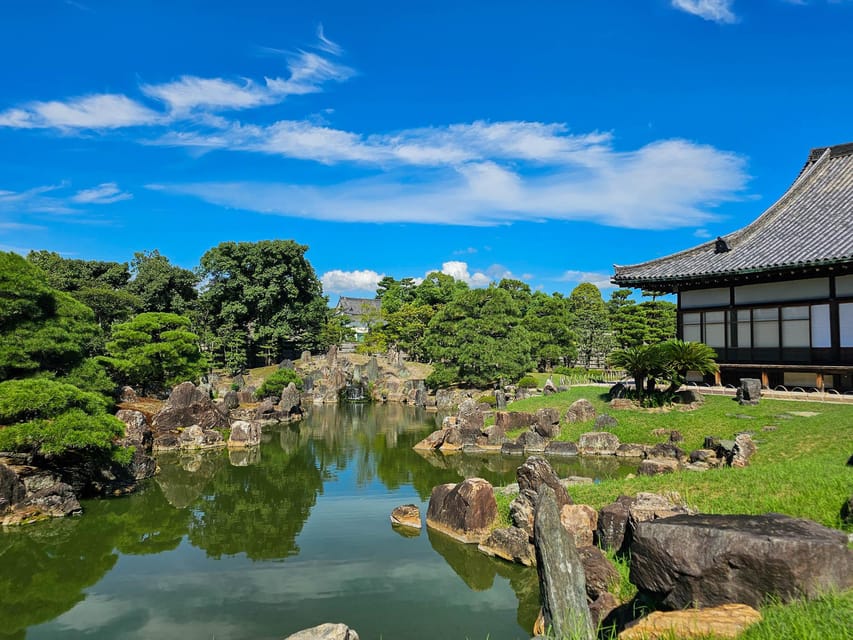
The gardens provide a change of pace after the interiors. You will have time to look at the arrangement of stones, water, plants, and pathways, while your guide supplies the cultural setting. Several guides have also been praised for taking photos at attractive points, but photography help depends on the guide and the group’s timing.
One useful limitation is easy to miss: this tour does not promise a full exploration of every Nijo Castle building. The guide specifically takes you to the Ninomaru-goten Palace and Garden. If you want a longer, slower visit to the entire castle grounds, plan a separate return visit.
Walking Toward the Imperial Palace
The route then continues toward the Kyoto Imperial Palace. This is one reason comfortable footwear matters. You are not spending three hours in one compact building. You are moving between major sites and walking through expansive palace grounds.
The supplied details describe a guided walking tour, and the route finishes at Imadegawa Station. No meals, drinks, hotel transfers, or personal expenses are included. Carry a water bottle and some cash. In hot months, bring a hat as well. A June participant specifically found the heat demanding, and Kyoto’s summer conditions can make open grounds feel much harder than the schedule looks on paper.
The guide may use public transportation during the transfer, but you should not assume every transit cost is included unless it is confirmed at booking. One participant reported that the guide handled subway transfers, while the formal inclusions list only describes the walking tour and Nijo Castle entrance. I would carry cash and check the final booking details.
Kyoto Imperial Palace and the Former Imperial Residence
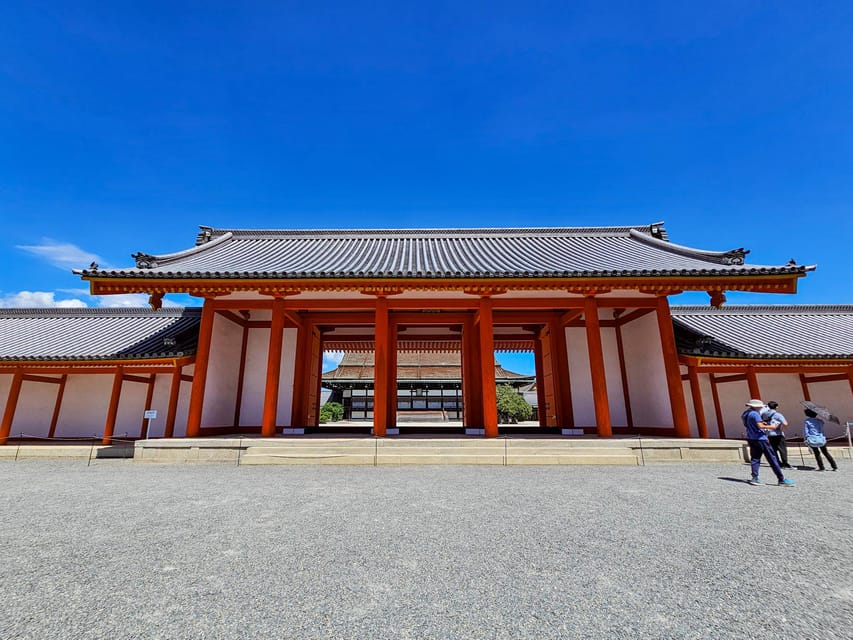
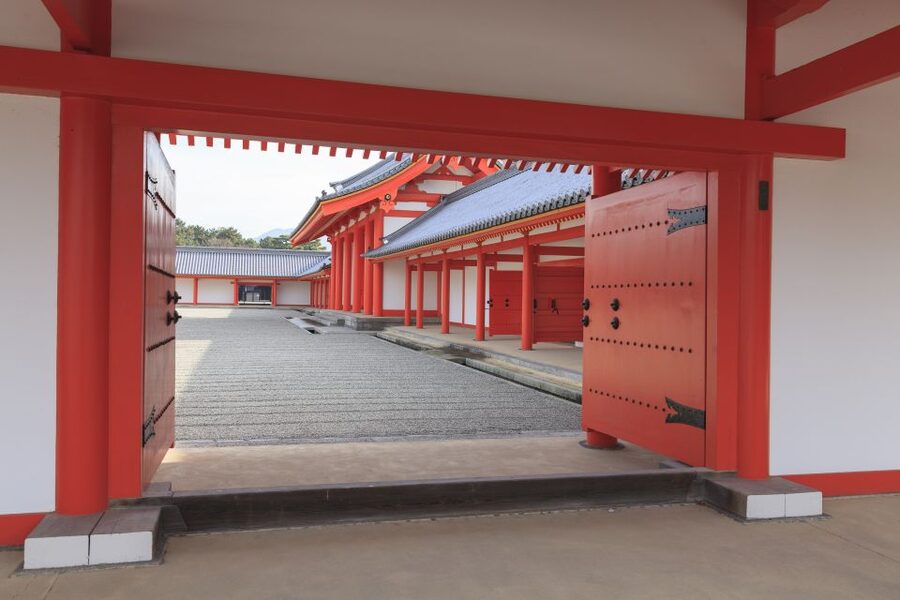
The Imperial Palace gives you a different kind of experience from Nijo Castle. The buildings and grounds are formal, spacious, and tied to the imperial family’s long residence in Kyoto. The guide explains the palace’s role and helps you read the architecture and gardens in context.
Set your expectations correctly. This tour takes you around the impressive palace structure and grounds, but the information provided does not promise entry into palace interiors. One participant felt the palace offered less to see than Nijo Castle, while still rating the overall outing highly. That is a fair warning for anyone who wants rooms filled with furnishings and artwork.
I would treat the Imperial Palace as a place for scale, ceremony, and comparison. Nijo Castle shows the shogun’s authority through decorated interiors and controlled movement. The palace offers a sense of the imperial institution and its long connection to Kyoto. The two stops work best as a pair rather than as competing attractions.
Dress respectfully for the palace grounds. Avoid tank tops, very short clothing, and other outfits that may seem too casual or revealing. This is both practical and courteous, and it prevents a clothing issue from distracting you during the visit.
What the Guides Add
The guide is the main reason to choose this experience over a self-guided visit. The most consistently praised qualities are clear English, historical background, patience, and the ability to answer questions beyond the basic route.
Raphael Matsui has been singled out for explaining both sites and answering broader questions about Japanese history and culture. Jasmine has been praised for clear storytelling, humor, attention to detail, and an ability to make sure everyone can hear. Vincent is noted for managing time well while moving between historical facts and cultural references.
Taku has been described as patient and considerate, with a strong connection to Kyoto. Cecilia has received praise for covering a lot of ground while giving useful historical context. Other guides named in strong feedback include Alex, Kosuke, Naoki, Kenta, Gus, Yuko, Katsuhiko, Miyake, Eloise, Miya, and Katz.
You cannot choose a specific guide unless the operator confirms that option. Still, the repeated pattern is useful: the experience depends heavily on the person leading your group, and the available guides appear to bring different strengths. Some focus on political history, some on architecture and symbols, and others add modern cultural suggestions or local food ideas.
I especially like that the best guide style here is interactive. You can ask about religion, daily life, Japanese customs, or the difference between the emperor and shogun. That makes the tour more than a sequence of dates and names.
Other walking tours we've reviewed in Kyoto


Pace, Weather, and Physical Demands
Three hours is a sensible length for these two sites. A shorter schedule would risk turning both visits into photo stops, while a much longer one could feel tiring, especially in heat. The route has a good balance of indoor palace spaces, gardens, open grounds, and walking between locations.
Still, do not book this expecting a low-effort sightseeing ride. The tour is not suitable for people with mobility impairments, heart problems, respiratory issues, or pregnancy. The provider also specifically recommends comfortable shoes.
Spring and autumn should be pleasant for walking, but conditions vary. Summer requires extra planning. Carry water, use sun protection, and leave room in your schedule for a slower pace if the weather is hot. In cooler months, the open palace grounds can feel exposed, so dress in layers.
A camera is worth bringing. The castle architecture, garden views, and palace grounds offer good photo opportunities. Take care not to let photography replace the explanations, since the guide’s comments are where much of the value lies.
Languages, Timing, and Booking Flexibility
Tours are available with English, French, or Spanish-speaking guides. The start-time choices are useful when you are fitting the tour around a temple visit, train arrival, or evening plans. Same-day booking is also available, subject to open spaces.
I would still avoid leaving it until the last possible minute during busy periods. A small group of nine can fill more quickly than a large coach tour, and you need enough time to reach Nijojo-Mae Station before the meeting time.
The reserve-now, pay-later option helps if your Kyoto schedule is not fixed. Free cancellation is available up to 24 hours before the tour for a full refund. Read the final booking terms carefully, since late cancellation or a missed meeting point may not qualify.
The tour finishes at Imadegawa Station, which is helpful for continuing your day. You can plan lunch, another central Kyoto sight, or a return to your hotel from there. Since the tour does not include meals, bring a snack if you need one during the walk.
Who Will Get the Most From This Tour
I would choose this tour if you have only a few days in Kyoto and want a clear introduction to the city’s political and imperial past. It is also a smart pick if you prefer asking questions instead of studying guidebooks while walking.
It suits first-time visitors, couples, families with older children who can manage the walking, and anyone curious about the difference between the emperor and the shogun. The small group format should also appeal to solo visitors who want company without joining a large bus group.
I would be more cautious if your priority is complete freedom. The route, pace, and stops are set, and the Imperial Palace visit may feel too brief if you want to linger. Art and garden enthusiasts who like quiet, unhurried observation may prefer visiting independently and spending longer at Nijo Castle.
FAQ
How long does the Kyoto Imperial Palace and Nijo Castle tour last?
The activity lasts three hours. About one hour is allocated to Nijo Castle and about one hour to the Kyoto Imperial Palace, with walking and travel between the sites.
Where does the tour begin?
Meet outside Exit 1 of Nijojo-Mae Station, near Nijo Castle. Your guide will wear a TripGuru shirt or hold a TripGuru sign.
Where does the tour finish?
The tour finishes at Imadegawa Station.
What languages are available?
Live guides are available in English, French, and Spanish.
How many people are in the group?
The group is limited to nine participants.
Is admission to Nijo Castle included?
Yes. The price includes entry to Nijo Castle, including the Ninomaru-goten Palace and Painting Gallery.
Does the tour include hotel pickup?
No. Hotel pickup and drop-off are not included.
Are food and drinks included?
No. Meals and other drinks are not included. Bring water and cash for personal needs.
Can I cancel the tour for a refund?
You can cancel up to 24 hours in advance for a full refund.
Is the tour suitable for people with mobility or health concerns?
The activity is not suitable for pregnant women or people with mobility impairments, heart problems, or respiratory issues. Comfortable shoes are recommended.
Should You Book This Kyoto Walking Tour?
Book it if you want the story behind two major Kyoto sights, not just entrance tickets and photographs. The strongest part is the comparison between Nijo Castle’s shogun-era power and the Imperial Palace’s long imperial role, made easier by guides such as Raphael, Jasmine, Vincent, Taku, and Cecilia.
At $49, I see good value for a time-conscious visitor who wants admission, a small group, and a helpful explanation of what the buildings mean. Skip it if you want to explore at your own pace, visit more of Nijo Castle than the Ninomaru area, or spend time inside Imperial Palace buildings. For most first-time Kyoto visitors with three hours to spare, this is a practical and worthwhile introduction.
More Guided Tours in Kyoto



More Walking Tours in Kyoto
More Nijo Castle Tours in Kyoto
More tours in Kyoto we've reviewed





Nijo Castle Tours, compared.
 ★ 4.7Kyoto: Nijo-jo Castle and Ninomaru Palace Guided TourFrom $161 hour
 ★ 5.0Kyoto: Nijo, Kinkaku-ji, Arashiyama, Kiyomizu & Fushimi InariFrom $51
 ★ 4.5Kyoto Imperial Palace & Nijo Castle Guided Walking Tour – 3 HoursFrom $55
 ★ 4.6Kyoto: Nijo Castle and Kyoto Imperial Palace Guided TourFrom $633 hours
 ★ 5.0Nijo Castle and Imperial Palace Visit with GuideFrom $79
 ★ 4.9Kyoto: Nijo Castle World Heritage Guided Tour with AdmissionFrom $401h 30m