
Reviewed · NIJO CASTLE TOURS
Kyoto: Nijo Castle and Kyoto Imperial Palace Guided Tour
Kyoto’s political story comes into focus when you visit Nijo Castle and Kyoto Imperial Palace together. One was built to display the authority of the shogun. The other served as the home of Japan’s emperors. In three hours, you move between two very different symbols of power, with a guide to connect the buildings, politics, and customs.
I like the small groups of up to nine and the guides’ ability to adjust the talk to the people in front of them. Goku, Kayo, Taku, and Nene receive especially strong praise for clear explanations, local tips, patience, humor, and help with photographs. The main drawback is that the Imperial Palace visit may focus mainly on exterior views, so visitors hoping to see richly decorated interiors should set expectations carefully.
In This Review
- Key points before you book
- Why these two Kyoto sights belong together
- Starting at Nakadachiuri Gate
- Nijo Castle and the theatre of shogunal power
- Kyoto Imperial Palace and the quieter side of authority
- The value of a guide who can connect the dots
- A three-hour pace that works best for curious walkers
- What the $63 price gets you
- Who will enjoy this tour most
- Practical advice for a better visit
- Should you book the Nijo Castle and Imperial Palace tour?
- FAQ
- How long does the tour last?
- Where does the tour meet?
- Which sites are included?
- What languages are available?
- How large is the group?
- Can I cancel or pay later?
Key points before you book
- Two major sites in one morning or afternoon: See Nijo Castle and Kyoto Imperial Palace during a focused three-hour walk.
- A useful contrast in power: Compare the shogun’s formal castle with the emperor’s more restrained palace grounds.
- Small-group attention: The group is limited to nine people, which helps with questions and conversation.
- Strong guide record: Goku, Kayo, Taku, and Nene are praised for history, architecture, politics, humor, and local advice.
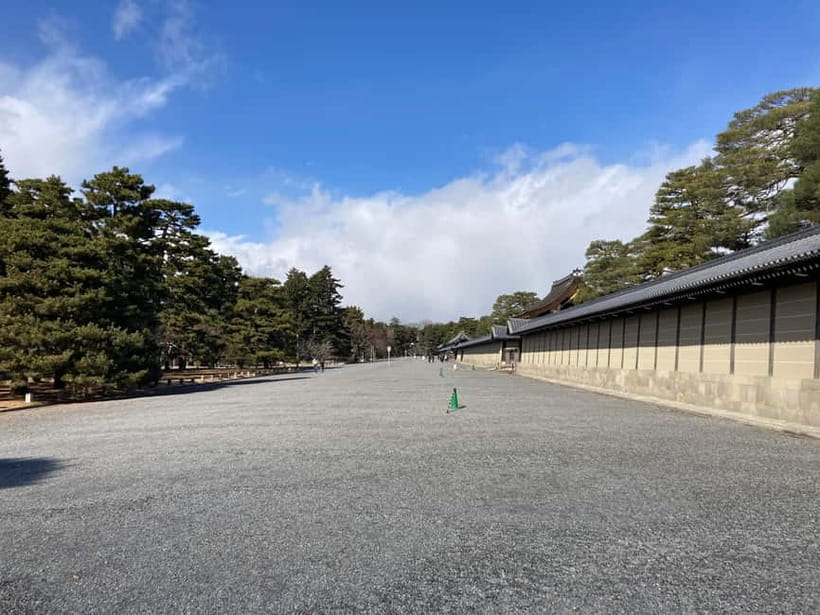
- Mostly an outdoor experience: Gardens, courtyards, streets, and building exteriors make up much of the visit.
- Plan for practical restrictions: Meet at Nakadachiuri Gate, bring cash and a camera, and do not wear shorts.
Why these two Kyoto sights belong together
Many Kyoto sightseeing stops show religion, craft, or traditional neighborhoods. This tour takes a different route. It asks you to look at who governed Japan, where authority was displayed, and how architecture helped communicate rank.
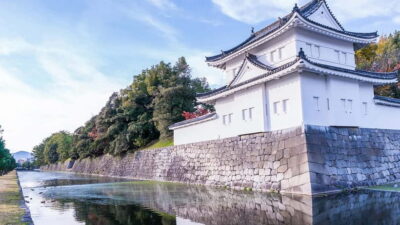
Nijo Castle was built by Tokugawa Ieyasu, the founder of the Tokugawa shogunate. The castle was not simply a defensive site. It also projected control. Its grand rooms, careful decoration, and formal design helped express the authority of the shogun.
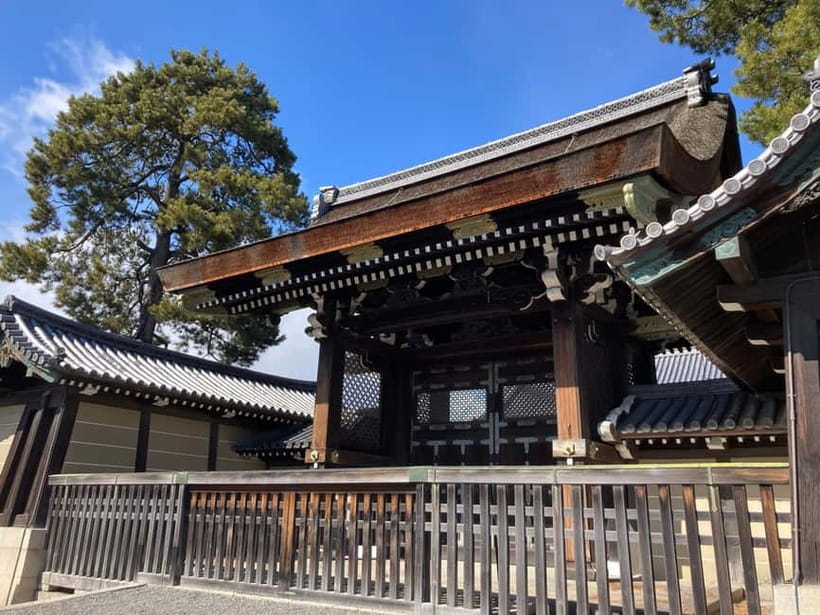
Kyoto Imperial Palace tells a contrasting story. It was the residence of Japan’s emperors and presents a more refined court tradition. The buildings and gardens feel less like a military headquarters and more like a place shaped by ceremony, restraint, and seasonal beauty.
I find the pairing valuable because you do not see either site in isolation. A guide can explain the difference between shogunal power and imperial tradition while the visual contrast is right in front of you. That context is especially useful if Japanese political history is new to you.
A few more Kyoto tours and experiences worth a look
Starting at Nakadachiuri Gate
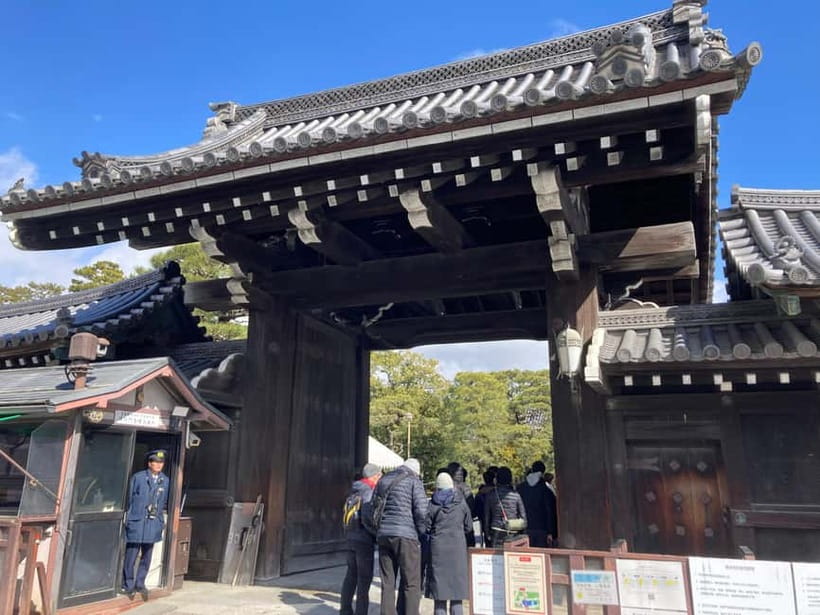
The meeting point is the Nakadachiuri Gate of Kyoto Imperial Palace. You receive advance information about what your guide looks like and what they will be wearing, which matters at a large historic site with several entrances.
Arrive ready to walk. The experience is described as a walking tour, and the route includes the palace grounds, Kyoto streets, and the transfer toward Nijo Castle. One review describes the walk between the palace and Nijo Castle as about 20 minutes, with the guide continuing the discussion during that stretch.
That walk is more than a transfer. It gives you time to ask questions about Japanese and Western culture, politics, or daily life. If you prefer constant sightseeing with no pauses, the walking section may feel like a change of pace. If you like connecting the sites to the modern city around them, it adds useful texture.
Bring a camera and some cash. The clothing rule is simple: shorts are not allowed. Pregnant women are advised not to take this tour, so check the suitability of the walking route before booking.
Nijo Castle and the theatre of shogunal power
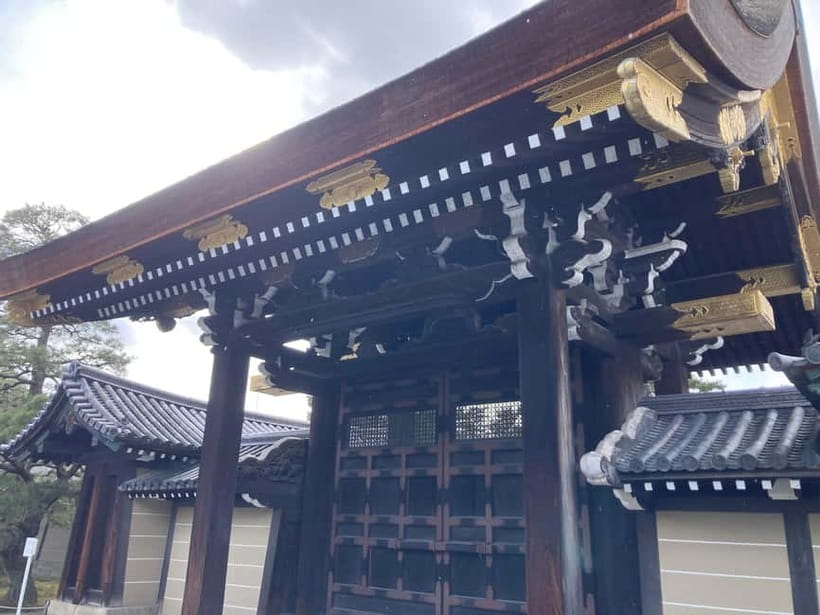
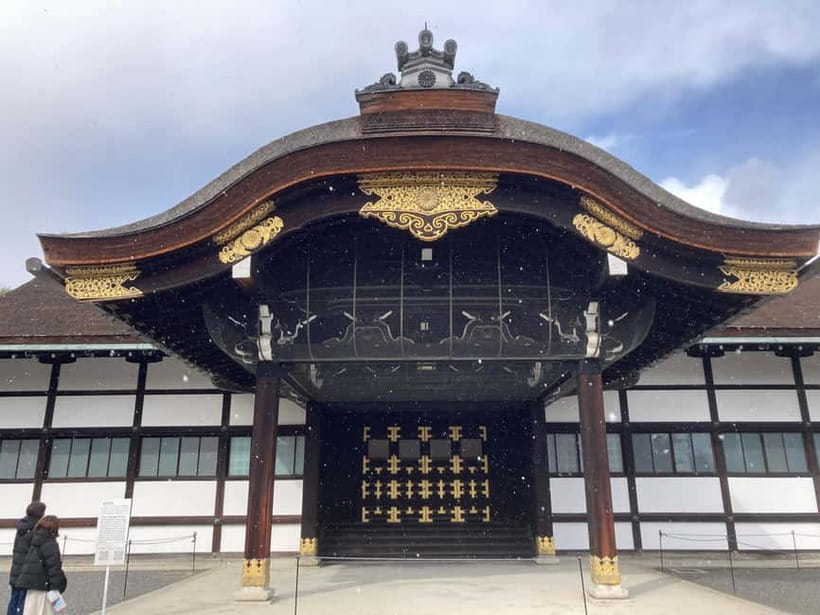
Nijo Castle is likely to be the more dramatic stop. Built under Tokugawa Ieyasu, it represents the military government that controlled Japan for centuries. The point was not only to live comfortably. It was to make authority visible.
Inside, you can expect lavish interiors and intricate details, along with the famous Ninomaru Palace and the Art Gallery included with admission. Your guide helps you read the rooms as political spaces rather than treating them as a series of decorated halls.
Look for the way scale, decoration, and formality work together. The castle’s design reflects the status of the shogun and the need to impress important visitors. A good explanation turns details that might otherwise blur together into evidence of rank and control.
Goku is particularly well suited to visitors who want political background. He has been praised for explaining the events surrounding shoguns and emperors in detail, while still keeping the experience pleasant for families and teenagers. Other guides, including Taku and Kayo, are also praised for connecting history with architecture, art, and wider Japanese culture.
Nijo Castle is not presented only as a serious history lesson. Guides have been described as warm, funny, patient, and willing to answer unexpected questions. That matters because Japanese history can become a list of names and dates without a clear human story. The best moments here come when your guide explains why a space was designed as it was and what it says about the people who used it.
Kyoto Imperial Palace and the quieter side of authority
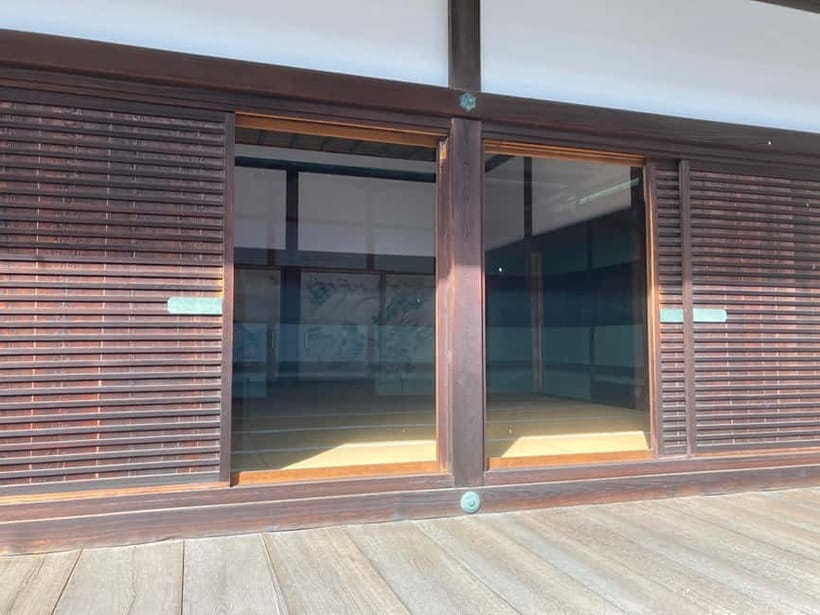
The Imperial Palace offers a different mood. Its architecture and grounds reflect the courtly side of Japan’s past, with elegant spaces and gardens designed to show seasonal beauty.
The gardens are one of the tour’s strongest visual rewards. Spring can be especially attractive, with cherry blossoms adding color to the grounds. Other seasons bring their own changes, and the design encourages you to notice trees, open space, and carefully arranged views rather than simply rushing from one building to the next.
You should know the main limitation before paying for the tour: access to the palace buildings may be limited. One visitor found the Imperial Palace portion less satisfying because the buildings could be viewed only from the outside. That does not make the grounds uninteresting, but it does mean the experience is not an interior palace tour.
If your priority is polished rooms and extensive indoor decoration, Nijo Castle may provide more of that. If you care about gardens, ceremony, exterior architecture, and the setting of the former imperial court, the palace will likely be more rewarding.
Your guide adds the missing context. Without explanation, the palace can seem calm and restrained. With a guide, you can better understand its role as the emperor’s residence and its place in Kyoto’s political and cultural story.
The value of a guide who can connect the dots
The strongest part of this experience is not simply entering two famous sites. It is having someone explain how they relate.
Goku has been praised for answering difficult and unexpected questions, including questions about Japan’s relationship with the United States after the Second World War. That suggests a useful strength: the tour is not limited to a memorized script. You can ask about politics, culture, or modern Japan and receive a thoughtful response, depending on your guide.
Kayo has received praise for mixing humor with clear information. Taku is noted for local restaurant suggestions, help with photographs, and detailed explanations. Nene is described as kind, patient, friendly, and able to take over at short notice while keeping the visit running smoothly.
Guide quality always matters on a history-focused tour. The supplied experience is led by Trip with Goku, but the actual guide may be Goku, Kayo, Taku, Nene, or another listed language guide. I would book this for the small-group format and the subject matter, while understanding that the exact personality and emphasis can vary.
The language choices are English, French, Spanish, Japanese, Portuguese, and Russian. For English speakers, the comments about Goku, Kayo, Taku, and Nene suggest strong communication and a willingness to handle questions. If you have a specific language need, confirm availability for your date before booking.
Other guided tours in Kyoto


A three-hour pace that works best for curious walkers
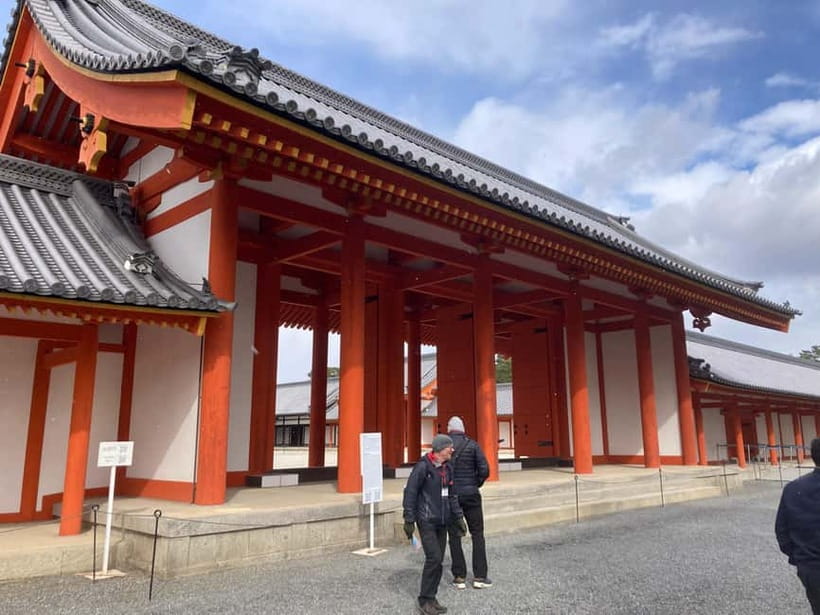
Three hours is enough time to give both sites attention without turning the outing into an all-day commitment. It is also short enough to fit beside other Kyoto plans.
The pace will suit you if you want a structured introduction to two major landmarks. You will not need to spend hours researching the Tokugawa shogunate, the imperial court, and the architectural vocabulary before arriving. The guide supplies the framework while you look at the actual buildings and gardens.
The time can feel quick if you ask many questions or stop often for photographs. One solo visitor found the experience especially enjoyable when the group was very small, and another guide was praised for helping with pictures. A group of up to nine is still intimate enough for conversation, but it may not feel like a private tour on a busy day.
The route also includes Kyoto streets and traditional townhouses, plus a spot known for cherry blossoms. These touches help break up the formal sites. You get a little of the city between the major monuments rather than spending every minute behind a gate.
What the $63 price gets you
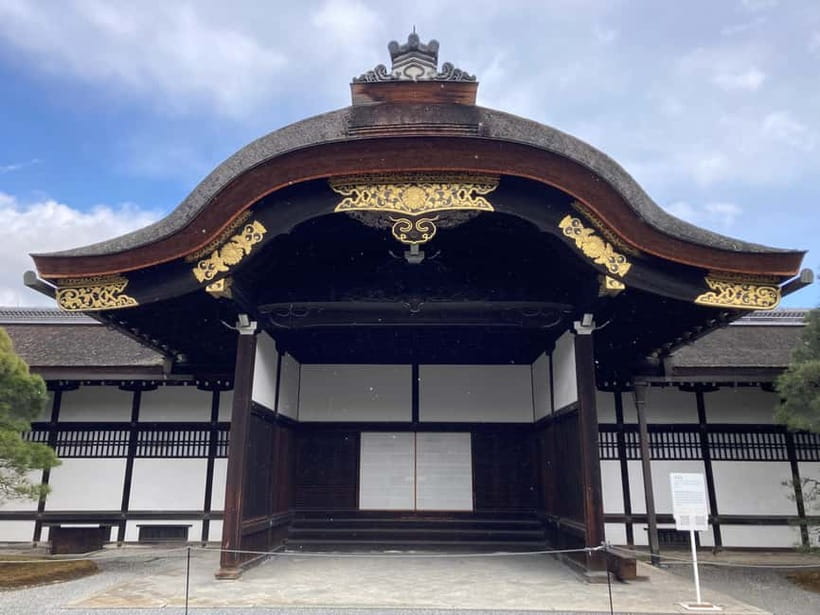
At $63 per person, the tour is not the cheapest way to enter Nijo Castle and the Imperial Palace. You are paying for admission, a professional guide, and a planned route that links two important sites.
The value depends on how much context you want. If you are happy reading signs, using a guidebook, and making your own way between locations, you can probably spend less. If Japanese political history feels confusing, a good guide may be worth the difference, particularly at Nijo Castle, where the design carries a political message that is easy to miss.
The small group improves the calculation. You are not paying for a large bus tour with limited access to the guide. You can ask about architecture, shoguns, emperors, Japanese and Western culture, or local food. Several guides have also offered restaurant suggestions after the tour, which can be useful when you still have meals to plan in Kyoto.
Admission tickets cover Nijo Castle, Ninomaru Palace, and the Art Gallery. The tour does not present the Imperial Palace as a fully open interior visit, so do not calculate the price on the assumption that you will see every palace room.
Free cancellation up to 24 hours before the start and reserve-now, pay-later booking make the $63 commitment easier to manage. Check the available starting times against your Kyoto plans before reserving.
Who will enjoy this tour most
I would recommend this experience to first-time Kyoto visitors who want a clear introduction to Japan’s political past. It is also a good choice for travelers who like architecture but want more than a photo stop.
History fans should look for Goku, if the booking system allows guide selection or provides that information. His explanations of shoguns, emperors, and political events have been singled out as a major strength. Families with teenagers may also appreciate the mix of stories, questions, and walking rather than a silent museum visit.
Solo visitors can benefit from the group setting and the guide’s help with photos. Couples and small families will appreciate the limited group size. The tour can also suit people who want local advice beyond the monuments, since guides have offered suggestions for ramen and other nearby food.
I would hesitate to recommend it if you mainly want indoor palace rooms, dislike walking, or need a very relaxed pace. The Imperial Palace may be viewed largely from outside, and the tour’s value depends heavily on your interest in explanation and context.
Practical advice for a better visit
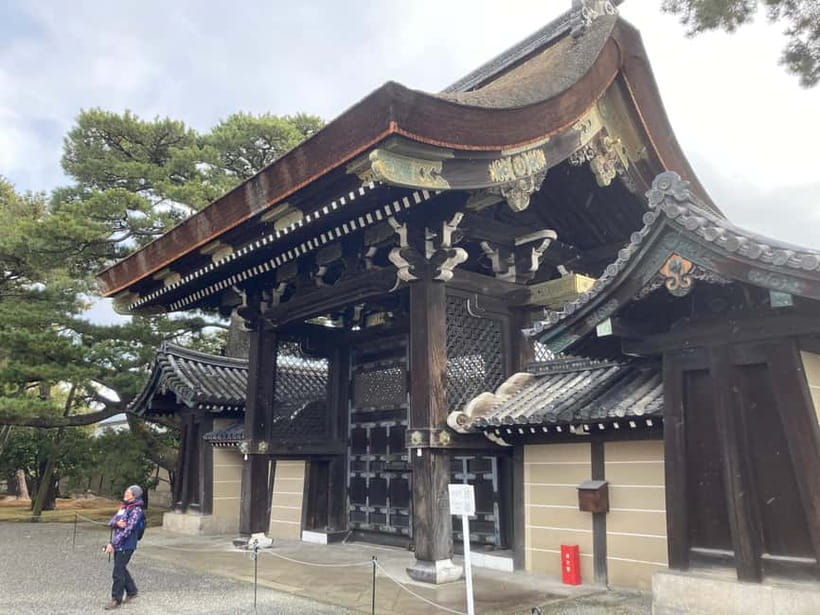
Wear comfortable clothing that follows the no-shorts rule. Bring a camera, and keep cash with you for personal needs.
Meet at Nakadachiuri Gate, not at Nijo Castle. Read the advance message about your guide’s appearance and clothing so you can identify the right person at the palace entrance.
Consider the season when choosing your date. The palace gardens are designed around seasonal beauty, and spring may bring cherry blossoms. Summer heat, autumn color, and winter quiet can change the mood, but the experience remains strongly outdoor-focused.
Keep a little flexibility after the tour. Your guide may suggest restaurants or other local stops, and the discussion can continue beyond the official route. I would avoid scheduling a tight appointment immediately afterward, especially if you want time for photographs or questions.
Should you book the Nijo Castle and Imperial Palace tour?
Book it if you want meaningful historical context and a small group rather than a quick self-guided visit. The combination of Nijo Castle’s shogunal drama and the Imperial Palace’s courtly calm gives you a useful way to understand Kyoto’s role in Japan.
The best reason to choose it is the guide. Goku, Kayo, Taku, and Nene have been praised for clear explanations, warmth, humor, local tips, and thoughtful answers. The main caution is the Imperial Palace access: expect gardens and exterior views, not a full tour of richly decorated interiors.
At $63, I see solid value for a three-hour guided visit with admissions included, especially for a first trip to Kyoto. Skip it only if you prefer exploring at your own speed or if indoor palace access is your top priority.
FAQ
How long does the tour last?
The tour lasts three hours.
Where does the tour meet?
The meeting point is the Nakadachiuri Gate of the Kyoto Imperial Palace. You receive advance information about what the guide looks like and what they will be wearing.
Which sites are included?
The tour visits Nijo Castle and Kyoto Imperial Palace. Admission includes Nijo Castle, Ninomaru Palace, and the Art Gallery.
What languages are available?
Live guides are available in English, French, Spanish, Japanese, Portuguese, and Russian.
How large is the group?
The tour is a small-group experience limited to nine participants.
Can I cancel or pay later?
You can cancel up to 24 hours in advance for a full refund. Reserve-now, pay-later booking is also available.
More Guided Tours in Kyoto
More Nijo Castle Tours in Kyoto
More tours in Kyoto we've reviewed





Nijo Castle Tours, compared.
 ★ 4.7Kyoto: Nijo-jo Castle and Ninomaru Palace Guided TourFrom $161 hour
 ★ 5.0Kyoto: Nijo, Kinkaku-ji, Arashiyama, Kiyomizu & Fushimi InariFrom $51
 ★ 4.7Kyoto: Imperial Palace & Nijo Castle Guided Walking TourFrom $493 hours
 ★ 4.5Kyoto Imperial Palace & Nijo Castle Guided Walking Tour – 3 HoursFrom $55
 ★ 5.0Nijo Castle and Imperial Palace Visit with GuideFrom $79
 ★ 4.9Kyoto: Nijo Castle World Heritage Guided Tour with AdmissionFrom $401h 30m