
Reviewed · NIJO CASTLE TOURS
Kyoto Imperial Palace & Nijo Castle Guided Walking Tour – 3 Hours
Kyoto’s past comes into focus at two very different places: Nijo Castle, where shoguns displayed their power, and the Kyoto Imperial Palace, the former home of Japan’s imperial family. This three-hour walking tour connects them with an English-speaking guide who explains the symbols, buildings, gardens, and political stories that can be easy to miss on your own.
I like the small maximum of nine people, which makes it easier to ask questions and hear the guide. I also like the clear split between the two sites, about 90 minutes at each, with admission fees included. Guides such as Jasmine, Atsushi, Vincent, and Taku-san have earned especially strong praise for clear English, historical detail, and a friendly pace.
The main catch is the gap between the sites. Transportation is not included, and the two places are not next door to each other. If your group walks or gets delayed finding taxis, part of the three-hour schedule can disappear, so plan carefully and confirm the transfer arrangements at the start.
In This Review
- Key points to know before booking
- Two Kyoto power centers in three hours
- Entering Nijo Castle and the world of the shoguns
- The transfer between Nijo Castle and the Imperial Palace
- Kyoto Imperial Palace and the former imperial court
- What the small group changes
- Is $55 a fair price?
- Timing, heat, and what to bring
- Who will enjoy this Kyoto walking tour?
- Should you book it?
- FAQ
- How long does the Kyoto Imperial Palace and Nijo Castle tour last?
- Where does the tour start?
- Where does the tour end?
- Is transportation between Nijo Castle and Kyoto Imperial Palace included?
- How many people can join the tour?
- What happens if I need to cancel?
Key points to know before booking
- Nijo Castle comes first, with about 90 minutes for shogun-era rooms, architecture, gardens, and cultural symbolism.
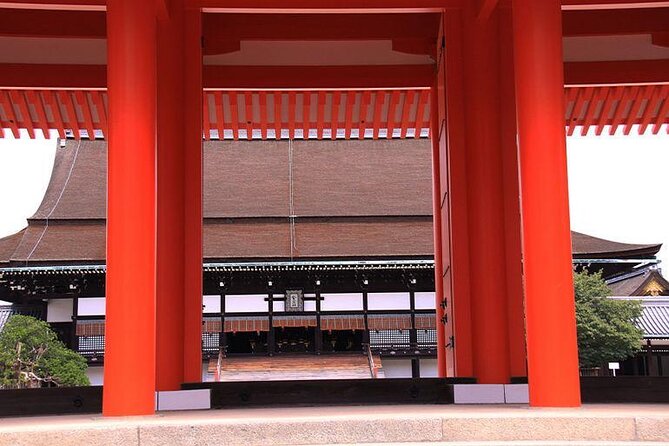
- Kyoto Imperial Palace follows, also with about 90 minutes devoted to imperial buildings and grounds.
- Groups are capped at nine, a useful size for questions, photos, and a more personal pace.
- Admission fees are included, along with an English-speaking guide and the three-hour walking tour.
- You arrange your own transport between the sites, and the route finishes at Imadegawa Station.
- Guide quality is a major part of the value, with Jasmine, Atsushi, Taku-san, Vincent, and others praised for clear explanations and considerate pacing.
Two Kyoto power centers in three hours
This tour works because it places two major symbols of Japanese authority side by side. Nijo Castle introduces you to the military government of the shoguns. The Imperial Palace shifts the story to the emperor and the court.
That contrast gives the visit a useful shape. You are not simply looking at two old compounds and trying to remember which building belongs to whom. A good guide can explain how military and imperial power existed within the same national story, then point out how architecture and ceremony expressed rank.
The tour is conducted in English and lasts about three hours. The published plan gives roughly 90 minutes to each site. That is enough for a guided introduction and the main highlights, but it is not enough for a slow, independent study of every garden, room, or side path.
I would choose this tour early in your Kyoto stay if you want a framework for the city’s history. It can also work late in a busy itinerary because the route is focused and the schedule is not an all-day commitment.
A few more Kyoto tours and experiences worth a look
Entering Nijo Castle and the world of the shoguns
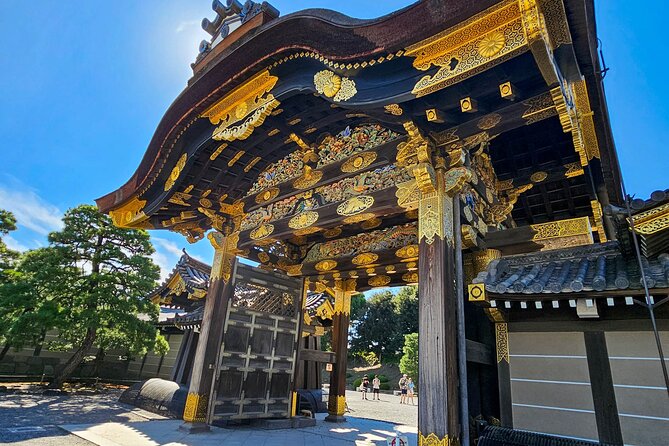
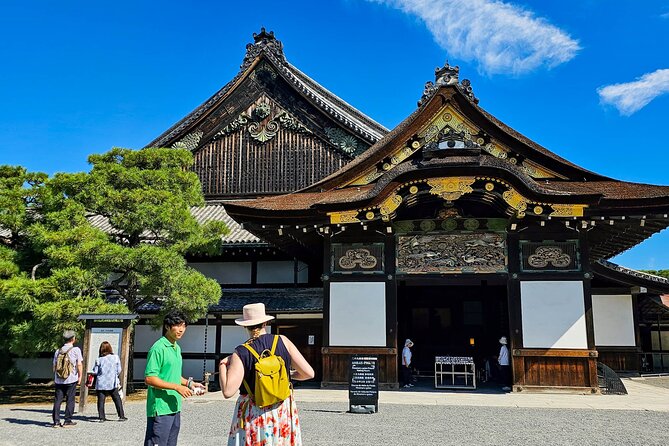
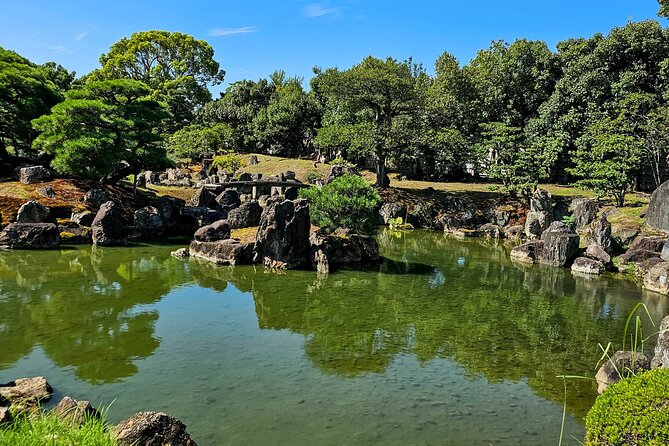
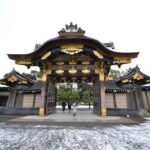
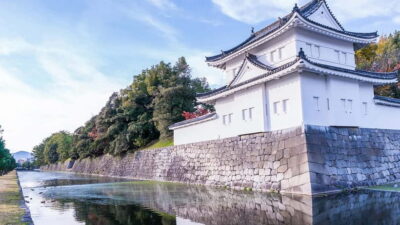
Nijo Castle is the stronger first stop for most visitors. Its grand gates, formal design, gardens, and richly decorated interiors offer plenty to see, but the building becomes more meaningful when you understand why it was made.
Your guide explains the castle as a seat of shogun power and helps connect the rooms to the customs of the period. The most useful part is not simply learning dates. It is noticing how space, decoration, movement, and ceremony helped communicate authority.
The interior details reward a guided visit. Painted panels, carefully arranged rooms, and architectural features reveal how people were expected to behave inside the castle. The floors themselves are part of the story, with the famous nightingale floors designed to make a sound when walked upon. The supplied tour information does not promise that every guide will give the same presentation, but this is exactly the kind of detail a good guide can help you notice.
Jasmine has been praised for explaining the cultural symbolism and historical meaning of the shogun period in a conversational way. Other guides, including Atsushi and Katsuhiko-san, have been singled out for adding special stories and clear background about the castle. The guide you receive will vary, but the strongest part of this tour is the human explanation around the objects and rooms.
Allow time for photographs in the gardens, but do not expect a leisurely garden-only stroll. One guide, Alex, was praised for giving the right amount of information while keeping the group moving. That balance matters here. Nijo Castle can become crowded, and a guide who maintains a steady pace helps you see the main rooms without losing the whole morning to one stop.
If you have children, this stop can work particularly well. Jasmine was praised for answering children’s questions patiently and clearly. The castle’s stories of shoguns, ceremonies, guards, and palace life give younger visitors something concrete to follow.
The transfer between Nijo Castle and the Imperial Palace
This is the part you need to understand before you pay. Nijo Castle and Kyoto Imperial Palace are separate sites, and the tour price does not include hotel pickup, drop-off, meals, or transportation between them.
The route information identifies Nijojo-mae Station as the starting point and Imadegawa Station as the finish. Public transportation or walking can take roughly 30 minutes, according to one detailed account of the route. A taxi may be easier, especially in hot weather or with children, but you pay for it yourself.
Do not assume that the guide will automatically provide a vehicle for the group. One particularly unhappy experience involved a split taxi arrangement, a wrong gate, a long wait, and confusion about how to contact the guide. That appears to have been an isolated operational failure, not a normal feature of the tour, but it highlights a practical weakness.
At the beginning, ask three direct questions:
- How are we getting to the Imperial Palace?
- Is the group traveling together or separately?
- Where exactly will we meet after the transfer?
Keep your phone charged and have the meeting point saved. If you prefer not to manage a transfer during a short tour, you may find a single-site tour easier. If you are comfortable using Kyoto’s public transportation or arranging a taxi, the two-site format gives you a broader historical picture for a modest price.
Kyoto Imperial Palace and the former imperial court
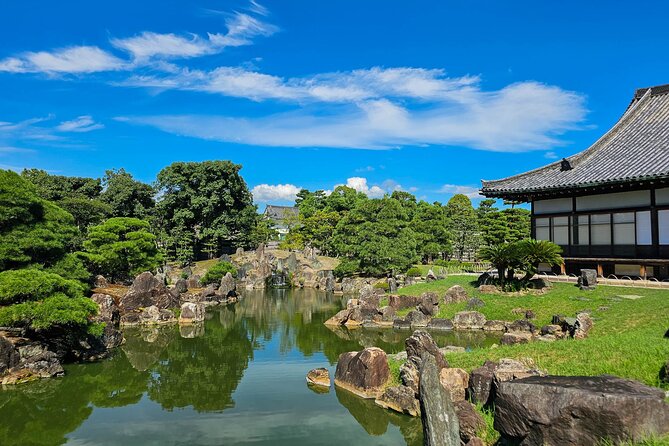
The second half moves from the shogun’s compound to the former residence of Japan’s imperial family. The Imperial Palace offers a different mood. The scale is more formal, the grounds are spacious, and the story centers on the emperor, court life, ceremony, and the long role Kyoto played as Japan’s capital.
Your guide takes you around the buildings and gardens, explaining their purpose and historical setting. This is where a guide can make a large difference. Palace grounds can look beautiful without being immediately easy to interpret. A careful explanation helps you understand what you are seeing rather than simply moving from gate to gate.
The strongest descriptions of the tour praise guides for covering architecture, art, history, and modern Japanese culture. One guide was noted for adding useful links between historical customs and life in Japan today. That kind of context is valuable because it keeps the palace from feeling like a collection of distant court buildings.
You should have time for photographs and for looking at the grounds, but the schedule remains fixed. If you spend the full 90 minutes at Nijo Castle and lose time on the transfer, the palace portion may feel compressed. This is another reason to meet on time and stay close to the group.
The end point is Imadegawa Station, which is helpful if you plan to continue sightseeing in northern central Kyoto. It is less convenient if your next stop is far across town, so check your onward route before booking. The tour does not include a ride back to your hotel.
What the small group changes
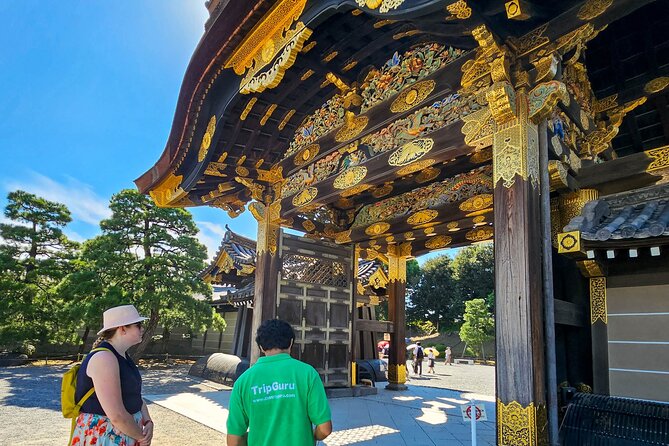
A maximum of nine people is a real advantage in a place where guides must compete with crowds and ambient noise. You can ask about a detail in a wall painting, request a photo, or ask for clarification without holding up a large coach party.
The guide’s speaking style matters just as much as historical skill. Jasmine has been praised for clear English, a good volume and tone, and the ability to answer questions beyond a prepared script. Another guide was appreciated for admitting uncertainty instead of guessing. Those are small but important signs of a trustworthy tour.
The guides also appear to vary in personality. Jasmine is often described as warm, flexible, and energetic. Atsushi is praised for special stories. Taku-san is described as a certified local guide with extensive experience at both locations. Raphael is noted for patience with many questions. These names cannot be guaranteed when you book, but they show the range of guiding styles available.
A small group does not guarantee a perfect tour. One complaint described a guide who seemed focused on finishing on time and offered less cultural explanation than expected. I would treat that as a reminder to ask questions early. If you want more detail, say so. The format allows conversation, but you still need to take part in it.
Other walking tours we've reviewed in Kyoto



Is $55 a fair price?
At $55 per person, the tour is reasonably priced if you want an introduction to both sites and prefer not to build the historical background yourself. Entrance fees are included, and you receive three hours with an English-speaking guide. The group limit also gives the price more value than a large group tour.
You are paying for interpretation, not just entry. Nijo Castle and the Imperial Palace are worth visiting independently, but their meaning can be harder to grasp without context. A good guide shows you what to notice and explains why the places mattered.
The value drops if the transfer is poorly managed or if the guide rushes through the explanations. You also need to budget for your own transport between the sites, plus any food or drinks afterward. A guide took one family to a local lunch spot after the tour, but that was a kindness from the individual guide, not part of the advertised service.
The rating is 4.7 from 106 reviews, with 92 percent recommending the experience. That points to a dependable tour overall, while the lower ratings highlight the two issues worth taking seriously: transport confusion and uneven guiding depth.
Timing, heat, and what to bring
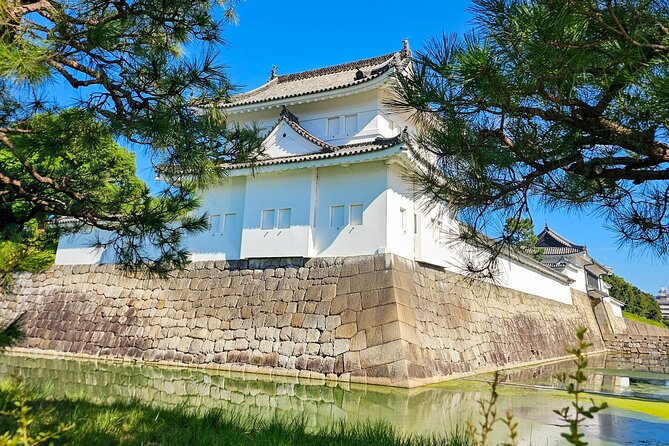
Three hours on foot can feel easy in cool weather and tiring in Kyoto’s summer heat. A highly praised guide built in water and air-conditioning breaks during a hot day, but you should still arrive prepared with water, comfortable shoes, and sun protection.
The tour offers a choice of departure times, so select one that fits your day rather than squeezing it between distant attractions. Starting at Nijojo-mae Station means you should arrive with enough time to find the meeting point. The tour ends at Imadegawa Station, not at your hotel.
A mobile ticket makes access convenient, and confirmation is provided when you book. Most people can participate, and the route is near public transportation. The supplied details do not promise a fully step-free route, special assistance, or a private pace, so contact the provider if you have mobility concerns.
Free cancellation is available if you cancel at least 24 hours before the local start time. Changes or cancellations inside that window are not accepted for a refund.
Who will enjoy this Kyoto walking tour?
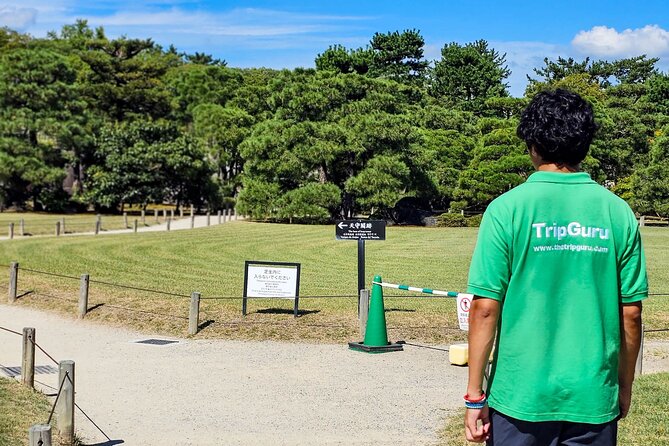
I would recommend it to you if you want the main historical ideas without spending an entire day inside formal compounds. It is especially useful for first-time visitors, families who want explanations in plain English, and anyone who finds Japanese political history difficult to sort out alone.
It also suits people who enjoy asking questions. The small group and personable guides create room for conversation, and several guides have been praised for taking family photographs and helping people find their next transport connection after the tour.
I would hesitate if you want a slow photographic walk, unlimited time in the gardens, or a fully managed door-to-door outing. You must handle the transfer between sites, and the three-hour schedule leaves little spare time if anything goes wrong.
Should you book it?
Book this tour if you want two major Kyoto sights tied together by one historical explanation. At $55, included admission and a group of no more than nine make it a solid value, especially when you are meeting Kyoto for the first time.
Before setting out, confirm the transfer plan and the exact meeting point at the Imperial Palace. If you do that, arrive on time, and ask questions, you are likely to get the most from guides such as Jasmine, Atsushi, Vincent, or Taku-san. If transportation worries you more than historical context matters, visit the sites independently or choose a tour with transport included.
FAQ
How long does the Kyoto Imperial Palace and Nijo Castle tour last?
The walking tour lasts approximately three hours. The planned schedule gives about 90 minutes to Nijo Castle and 90 minutes to Kyoto Imperial Palace.
Where does the tour start?
The tour starts at Nijojo-mae Station, near Nijo Castle, in Nakagyo Ward, Kyoto.
Where does the tour end?
The tour ends at Imadegawa Station in Kamigyo Ward, Kyoto. Hotel drop-off is not included.
Is transportation between Nijo Castle and Kyoto Imperial Palace included?
No. The tour includes an English-speaking guide, entrance fees, and the three-hour walking tour, but you arrange and pay for transportation between the two sites.
How many people can join the tour?
The group has a maximum of nine travelers.
What happens if I need to cancel?
You can receive a full refund if you cancel at least 24 hours before the experience start time. Cancellations or changes made less than 24 hours in advance are not accepted for a refund.
More Guided Tours in Kyoto



More Walking Tours in Kyoto
More Nijo Castle Tours in Kyoto
More tours in Kyoto we've reviewed





Nijo Castle Tours, compared.
 ★ 4.7Kyoto: Nijo-jo Castle and Ninomaru Palace Guided TourFrom $161 hour
 ★ 5.0Kyoto: Nijo, Kinkaku-ji, Arashiyama, Kiyomizu & Fushimi InariFrom $51
 ★ 4.7Kyoto: Imperial Palace & Nijo Castle Guided Walking TourFrom $493 hours
 ★ 4.6Kyoto: Nijo Castle and Kyoto Imperial Palace Guided TourFrom $633 hours
 ★ 5.0Nijo Castle and Imperial Palace Visit with GuideFrom $79
 ★ 4.9Kyoto: Nijo Castle World Heritage Guided Tour with AdmissionFrom $401h 30m