
Reviewed · KYOTO
Kyoto Off The Beaten Path: Hidden Zen Garden & Magical Shrine
Kyoto’s best moments are not always found at its busiest temples. This early-start walking tour takes you from the sacred forest of Shimogamo Jinja to Sanjusangendo’s astonishing 1,001 Kannon statues, then finishes at Tofuku-ji, a major Zen temple with quiet garden spaces.
I like the 8:00 a.m. departure, which gives you a better chance at calm paths and cooler air. I also like the small group, capped at eight people, and the route’s clear sense of place: shrine, Buddhist temple, then Zen temple. The main drawback is the amount of walking. Four hours on your feet may be tiring if you have weak legs or sore joints.
In This Review
- Key points at a glance
- Why this four-hour Kyoto walk works
- Starting at McDonald’s near Shichijo Keihan
- Shimogamo Jinja and its ancient forest
- Sanjusangendo’s 1,001 Kannon figures
- Tofuku-ji and the final Zen garden
- What the guide adds
- Price, extra fees, and overall value
- Who should book this experience
- Cancellation and weather notes
- FAQ
- What time and where does the tour start?
- Where does the tour end?
- How long is the experience?
- Are admission fees included?
- How large is the group?
- Is the tour suitable for people with limited mobility?
- Should you book this Kyoto tour?
Key points at a glance
- Early 8:00 a.m. start: A smart way to approach Kyoto’s famous religious sites before the day gets crowded.
- Three distinct sights: Compare Shinto worship at Shimogamo Jinja with Buddhist art at Sanjusangendo and Zen design at Tofuku-ji.
- Sacred forest setting: Shimogamo’s ancient woodland gives the tour a peaceful opening away from Kyoto’s busiest streets.
- 1,001 Kannon statues: Sanjusangendo offers one of Kyoto’s most striking indoor religious displays.
- Small-group format: The group is limited to eight people, allowing a more personal pace with the English-speaking guide.
- Extra costs are clear: Plan on ¥600 for Sanjusangendo and ¥500 for Tofuku-ji’s Zen garden, in addition to the tour price.
Why this four-hour Kyoto walk works
This is not a checklist tour built around one famous photo stop. It connects three places that show different sides of Kyoto’s religious culture. You begin in a Shinto setting, move to a temple famous for devotional sculpture, and end with Zen architecture and garden design.
That variety is the tour’s strongest feature. You are not seeing three versions of the same temple. Each stop gives the guide a new subject: sacred woodland and shrine tradition at Shimogamo, Buddhist mercy and sculpture at Sanjusangendo, and the spare beauty of Zen buildings and gardens at Tofuku-ji.
The route is also designed at a slower pace. That matters in Kyoto, where a rushed morning can turn into a blur of gates, roofs, statues, and tour groups. With four hours, you have time to hear how the sites fit into Japanese culture, history, and society rather than simply snapping a picture and moving on.
Still, do not treat the slower pace as an easy stroll. This is an active walking experience. The physical-fitness note is important, especially if you are managing knee, hip, or foot problems. Wear comfortable shoes, bring water, and remember that drinks are not included.
If you're still narrowing it down, here are other tours in Kyoto we've reviewed.

Starting at McDonald’s near Shichijo Keihan
The tour begins at 8:00 a.m. outside McDonald’s at Shichijo Keihan, at 229 Hiyoshicho in Kyoto’s Higashiyama Ward. The location is near public transportation, which makes it practical if you are staying elsewhere in Kyoto.
An early meeting time has two benefits. First, you can get moving before the busiest part of the sightseeing day. Second, the morning often gives the tour a more peaceful mood, particularly at Shimogamo Jinja, where the forest setting is a major part of the experience.
The start point is a simple commercial landmark rather than a grand cultural site, so check the address carefully before setting out. Arrive with enough time to find the meeting place and settle in. The end point is also practical: the tour finishes in front of Family Mart at Tofukuji Station.
That point-to-point design is useful. You do not need to return to the starting location after visiting Tofuku-ji. If the temple is your last major stop of the day, you can continue from Tofukuji Station to another part of Kyoto.
Shimogamo Jinja and its ancient forest
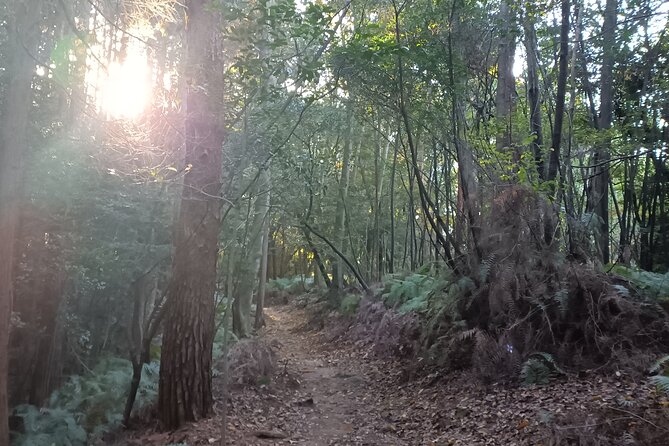
The first stop is Shimogamo Jinja, a UNESCO World Heritage Site with free admission. The shrine is set within an old sacred forest, giving the opening hour a different feel from Kyoto’s crowded central sights.
The forest is not just a backdrop. It helps explain how Shinto places often connect worship with natural surroundings. As you walk beneath the trees, the guide can give context about Japanese religious practice and the role of sacred spaces in daily life.
I like beginning here because the visit eases you into Kyoto. You are not immediately pushed into a packed hall or a large museum-like complex. Instead, the first hour gives you room to notice the relationship between the approach, the woodland, and the shrine itself.
The free admission also keeps the morning’s costs down. Shimogamo is a meaningful stop without an extra ticket, and it offers a useful contrast to the paid temple visits later in the route.
Do not expect this part to be a private forest walk. Shimogamo is a major heritage site, and conditions can change with the season and time of day. The early start improves your odds of a calmer visit, but it cannot guarantee solitude.
Sanjusangendo’s 1,001 Kannon figures
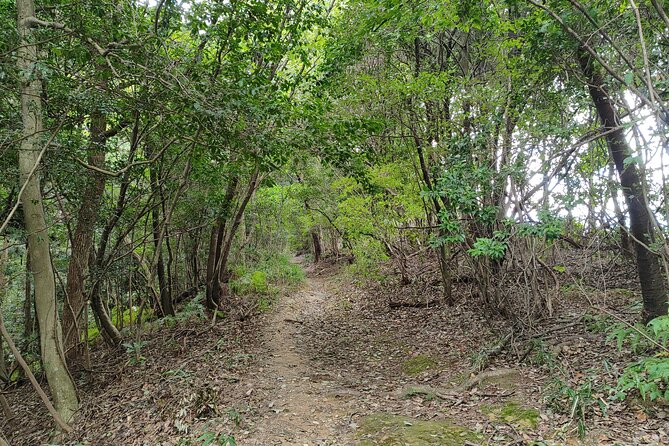
The second stop is Sanjusangendo Temple, where you see a famous collection of 1,001 statues of Kannon, the Buddhist goddess of mercy, along with guardian deities. Admission is not included, so budget ¥600 per person.
This is the tour’s most concentrated art experience. The large number of statues creates its own visual force, but the point is not simply quantity. The figures introduce Buddhist ideas of compassion, protection, and devotion in a way that is easy to grasp even if you know little about Japanese religious art.
For many people, Sanjusangendo will be the most immediately memorable stop. The display gives you a clear focal point after the open setting of Shimogamo’s forest. It is also a chance to ask the guide how Buddhist imagery works and why temples preserve such elaborate collections.
The temple visit includes time for a peaceful walk through the East Garden Pond and Strolling Garden. That outdoor portion changes the rhythm again. After spending time with the statues and guardian figures, you can slow down beside the garden and consider the temple as a complete setting rather than only an indoor attraction.
The main practical point is the separate admission charge. Add ¥600 to your budget, and keep in mind that the total cost of the tour includes more than the advertised booking price. Since the tour is only about four hours, the stop is focused. You should expect an introduction and guided context, not an exhaustive study of every figure.
Tofuku-ji and the final Zen garden
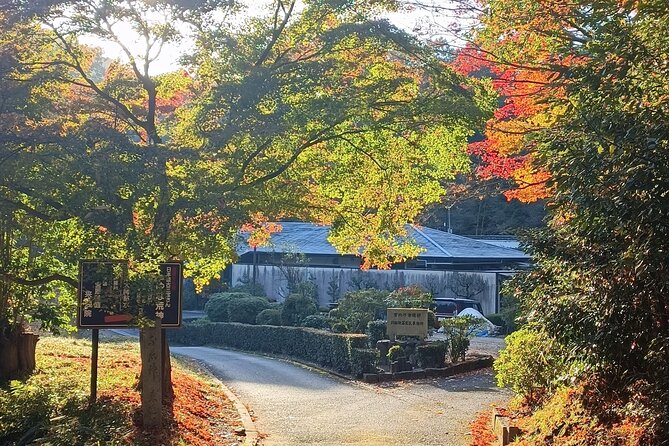
The last stop is Tofuku-ji Temple, a renowned Zen Buddhist temple founded in 1236. It is the head temple of the Rinzai school of Zen Buddhism and is known for its historic buildings and seasonal foliage.
The tour allows two hours here, making Tofuku-ji the longest stop. That extra time makes sense. Zen temple grounds are best understood slowly, through proportions, paths, courtyards, garden views, and the way buildings frame open space.
The focus includes Japanese temple architecture and the Zen garden. The garden admission costs ¥500 per person, paid separately. Together with Sanjusangendo’s ¥600 fee, your additional entrance costs come to ¥1,100 per person.
Tofuku-ji is a strong final stop because it brings together many of the tour’s themes. You have already seen a sacred forest and a major Buddhist sculpture collection. Here, the emphasis shifts toward restraint, order, and the visual language of Zen.
The temple is also famous for autumn foliage. If you visit during that season, the setting may be especially appealing, but the tour is not limited to fall. The buildings and garden provide the main reason to visit throughout the year.
One caution: the final two-hour stop may feel long if you prefer quick visits. For someone who enjoys architecture, garden design, and cultural explanation, it gives the day room to breathe. If you mainly want rapid photo stops, this tour may feel more deliberate than you expect.

What the guide adds
The experience includes an English-speaking local guide. No individual guide name is provided, so you should not book this expecting a particular personality or named specialist.
The guide’s role matters most in the spaces between the visual highlights. Without context, Shimogamo can seem like a pleasant wooded shrine, Sanjusangendo can become a room full of statues, and Tofuku-ji can look like another handsome temple. The explanations connect those sights to Japanese culture, history, religion, and society.
A small group of no more than eight people is another advantage. It is easier to hear, ask a question, and keep a steady pace than it would be in a large coach group. Small groups also suit sites where quiet behavior and attention to surroundings matter.
The tour’s strongest praise is tied to its early start, active walking, and historical insight. That combination tells you what to expect: this is a guided cultural walk, not a vehicle-based sightseeing ride or a casual neighborhood wander.
Price, extra fees, and overall value
The tour costs $97.55 per person. You then pay ¥600 for Sanjusangendo and ¥500 for the Zen garden at Tofuku-ji. Water and other drinks are not included, and alcohol is not permitted.
That puts the base experience at a moderate price for a four-hour, small-group tour. The value depends on how much you want from a guide. If you would visit these sites independently, read the signs, and build your own route, the price may seem high. If you want cultural explanation and a carefully connected route through three important places, the fee is easier to justify.
The small maximum group is important here. You are paying not only for admission handling or transportation, but for a more personal walking experience with an English-speaking local guide. The tour does not include a meal, drinks, or transportation back to the starting point, so those omissions should be part of your budget.
I would consider the value strongest for a first or second Kyoto visit, when you want help making sense of religious sites without spending a full day on one large complex. It is also useful if you have limited time and want three distinct cultural settings in one morning.
Who should book this experience
You should consider this tour if you:
- Want to get beyond Kyoto’s most crowded major sights
- Like walking tours with historical and cultural explanation
- Prefer a small group, with a maximum of eight people
- Enjoy temples, shrines, sculpture, architecture, and gardens
- Can comfortably walk for four hours
- Appreciate an early start and a point-to-point route
It may not suit you if you have weak legs or sore joints, dislike long periods on foot, or want a relaxed outing with plenty of sitting. It is also not the best match if you want every admission fee included in the booking price.
Bring water, wear supportive shoes, and keep the morning open. The tour ends at Tofukuji Station, not back at the starting point, which is convenient if you plan your day around southern Higashiyama or nearby areas.
Cancellation and weather notes
You can cancel for a full refund if you do so at least 24 hours before the local start time. Changes or cancellations made within 24 hours are not accepted for a refund.
The experience depends on good weather. If poor weather forces cancellation, you are offered another date or a full refund. The tour also requires a minimum number of participants, so a cancellation for that reason brings the choice of another date or experience, or a full refund.
FAQ
What time and where does the tour start?
It starts at 8:00 a.m. at McDonald’s, Shichijo Keihan, 229 Hiyoshicho, Higashiyama Ward, Kyoto, 605-0993, Japan.
Where does the tour end?
The tour ends in front of Family Mart at Tofukuji Station, 12 Chome Honmachi, Higashiyama Ward, Kyoto, 605-0981, Japan.
How long is the experience?
The tour lasts approximately four hours.
Are admission fees included?
No. Shimogamo Jinja has free admission. Sanjusangendo costs ¥600 per person, and the Zen garden at Tofuku-ji costs ¥500 per person.
How large is the group?
The tour has a maximum of eight participants.
Is the tour suitable for people with limited mobility?
The tour requires a moderate level of physical fitness and is not recommended for people with weak legs or joints. It is an active walking experience.
Should you book this Kyoto tour?
Book it if you want a thoughtful morning built around three different forms of Japanese religious culture, and if you can handle four hours of walking. The early start, small group, and change from forest to sculpture hall to Zen garden give the experience a clear rhythm.
Skip it if you want a slow, seated visit or an all-inclusive price. For the right person, though, this is a well-shaped introduction to Kyoto’s quieter side, with enough famous material to feel worthwhile and enough breathing room to avoid a rushed temple checklist.
More tours in Kyoto we've reviewed





Kyoto, compared.
 ★ 5.0PERFECT KYOTO 1-Day Bus TourFrom $129
 ★ 4.8Kyoto: Fushimi Inari, Kinkakuji, Bamboo Grove 1 Day Bus TourFrom $122510 minutes - 9 hours
 ★ 4.9Kyoto: Tea Ceremony in a Traditional Tea House in KiyomizuFrom $4945 min
 ★ 4.7Kyoto Geisha Walking Tour: Gion District & Hidden GemsFrom $252 hours
 ★ 4.9Kyoto: Tea Ceremony Ju-An at Jotokuji TempleFrom $291h 10m
 ★ 4.3Kyoto: 45-Minute Tea Ceremony Lesson ExperienceFrom $2245 min