
Reviewed · KYOTO
Strengthen the immunity!! Making miso in Japanese old house.
Kyoto’s okara miso class turns a food byproduct into something you can season meals with at home. In a traditional Japanese residence, you mix soybean pulp with the other ingredients under Naomi’s direction, then take home about 500 grams of miso to ferment for more than three months.
I like two things right away: the hands-on work makes this more than a cooking demonstration, and the tasting gives you miso soup, miso paste, and okara mochi before you leave. I also like the small group size, capped at six, which suits anyone who wants time to ask questions.
The main consideration is timing. The class lasts about one hour, but your miso is not ready to eat immediately. You need patience for the fermentation, and the non-refundable booking policy means you should be certain about your date.
In This Review
- Key points about this Kyoto miso class
- Turning soybean pulp into Kyoto miso
- What happens during the one-hour class
- Why okara makes this class different
- Meeting Naomi in an old Japanese residence
- The tasting: soup, paste, and okara mochi
- Wellness ideas without turning the class into a lecture
- Is $46.15 a fair price?
- Who will enjoy this experience most?
- Planning the visit to Kaze no Waon
- Should you book the okara miso experience?
- FAQ
- Where does the miso-making class take place?
- How long does the experience last?
- How much miso can I take home?
- Is the miso ready to eat after the class?
- How many people can join the class?
- What happens if bad weather cancels the class?
Key points about this Kyoto miso class
- Okara replaces whole soybeans: You use soybean pulp, also called okara, for a quicker and more practical miso-making method.
- Naomi leads the session: She brings experience as a massage therapist, Japanese tea instructor, and cooking instructor.
- You take home 500g: Your finished mixture goes home with you for fermentation of more than three months.
- Three tasting opportunities: Try miso soup, miso paste, and okara mochi during the class.
- Small group setting: A maximum of six people keeps this personal and manageable.
- Old-house setting: The activity takes place at Kaze no Waon in Kyoto’s Ukyo Ward.
Turning soybean pulp into Kyoto miso
Most traditional miso begins with dried soybeans. Those beans are soaked for a day, boiled until soft, and mashed before being mixed with koji and salt for fermentation. That process is rewarding, but it is not a quick stop on a sightseeing day.
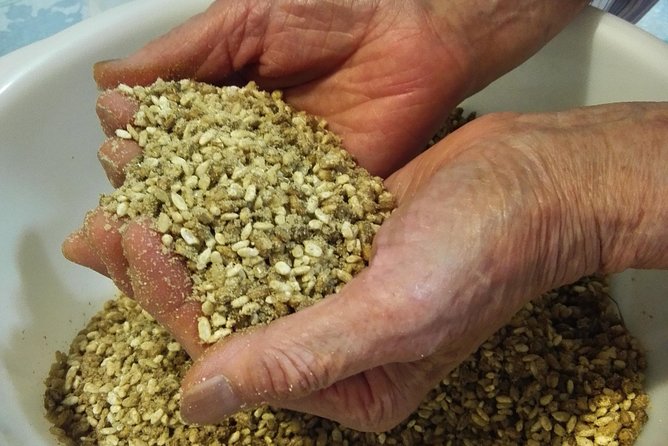
This class uses okara instead. Okara is the soybean pulp left after making tofu. It still contains useful nutrients, but it is often discarded as industrial waste. Using it for miso gives the class a clear environmental purpose, while also cutting out the long soaking and boiling stages.
That difference matters to you as a visitor. You can learn the basic logic of miso without spending hours preparing soybeans. The method is easier and faster to handle in a one-hour class, yet it still shows you how a familiar Japanese seasoning begins.
The process is not a shortcut to instant miso. You make the mixture during the class, but it needs more than three months to ferment. Think of the container you take home as a small food project that continues after your Kyoto visit.
If you're still narrowing it down, here are other tours in Kyoto we've reviewed.

What happens during the one-hour class
You arrive at the reserved time at Kaze no Waon, located at 14 Utanokitanoinchō in Kyoto’s Ukyo Ward. The activity begins and ends at this same meeting point, and the location is described as being near public transportation.
The first part is an explanation of miso’s benefits and the basic preparation method. Naomi also talks about ways to support your intestinal environment. This gives the session a wellness angle, but the focus remains practical: you learn why miso is useful and how the ingredients work together.
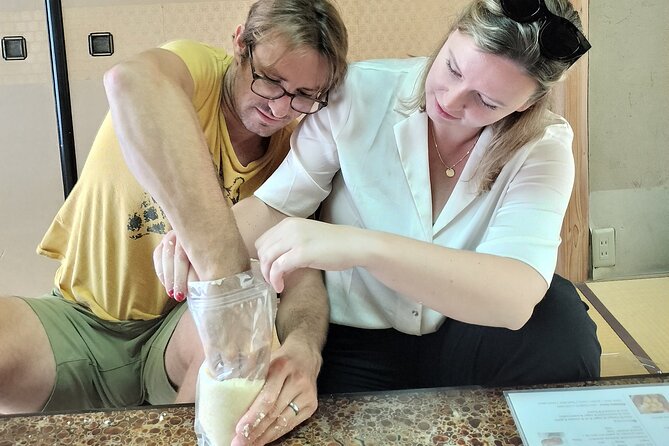
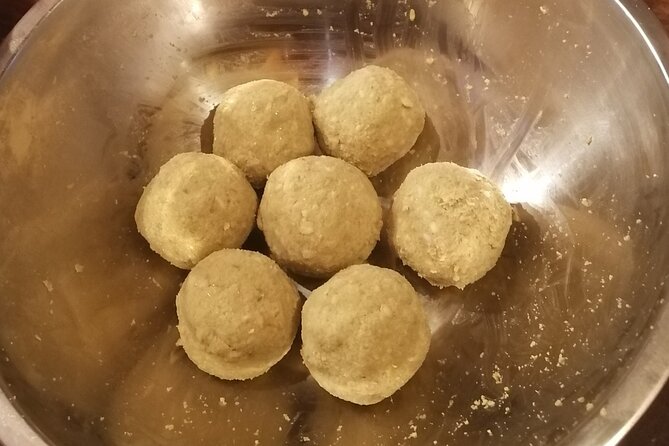
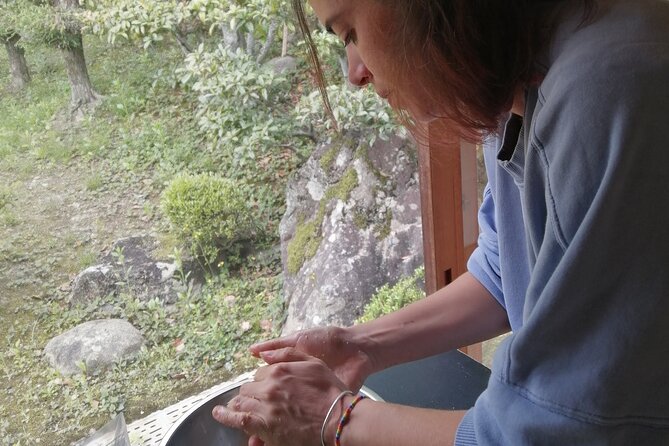
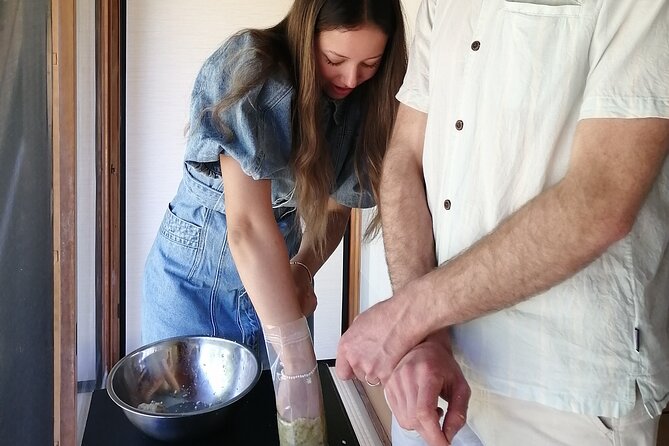
Then comes the main task, making okara miso. You mix your own ingredients under direction, rather than simply watching someone else do the work. That distinction is important. You get a feel for the texture and method, and you leave with a batch that you helped prepare yourself.
The class is designed to be friendly to beginners. The okara method removes some of the hardest preparation steps, so you can focus on combining and handling the mixture. Still, you should expect to participate. This is not a sit-back-and-take-notes activity.
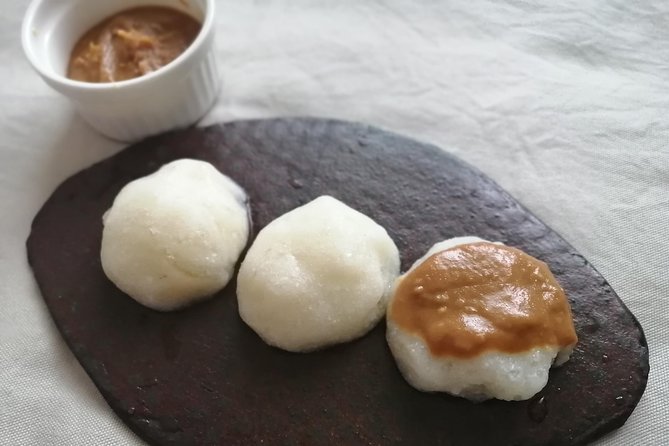
The final part is a tasting. You try miso soup, miso paste, and okara mochi. Each item shows a different use for the same basic ingredient. The soup gives you a familiar Japanese application, tasting the paste lets you notice the seasoning on its own, and the mochi adds a less expected use for okara.
At the end, you take home approximately 500 grams of the miso you made. It is a useful souvenir, though not one you can open for dinner that night. The fermentation period is part of the experience.
Why okara makes this class different
Miso classes can easily become a basic lesson in one of Japan’s best-known seasonings. This one has a more unusual point of entry. Instead of repeating the standard soybean process, it shows you how an ingredient that might be thrown away can be put to work.
I like that the environmental idea is tied to a real kitchen habit. This is not just a talk about reducing waste. You use okara to make a food you can later add to soups, sauces, and other dishes. The lesson connects sustainability with something useful.
Okara is also a practical choice for a short activity. Traditional soybean preparation requires soaking, boiling, and mashing. Since those steps are skipped, the class can fit into about an hour and still leave room for tasting and discussion.
There is a trade-off. If you are specifically hoping to learn the full traditional soybean method from beginning to end, this class will not provide that. You learn about the traditional method, but you make miso using okara. For most people, that is the reason to choose this activity, not a flaw. For a food specialist seeking the classic process, it is worth knowing in advance.
Meeting Naomi in an old Japanese residence
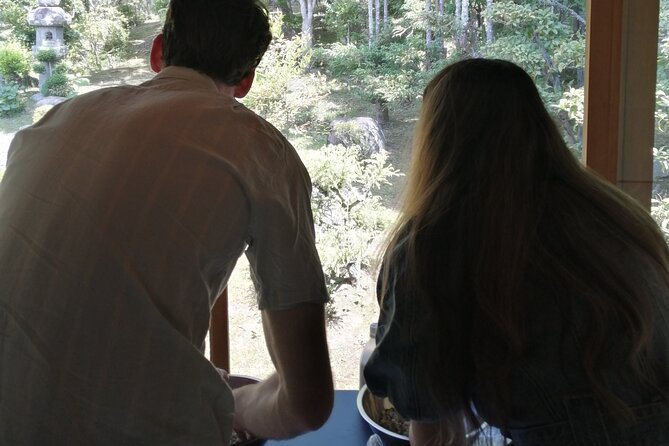
The setting adds a quieter feel than a standard restaurant class. Kaze no Waon is an old Japanese residence in Ukyo Ward, and the activity takes place inside this home-like space. You are not only learning about a seasoning. You are doing so in a place that fits the subject.
Naomi’s background shapes the class. She has worked as a massage therapist for 20 years and also teaches Japanese tea and cooking. Her approach links food with physical and mental well-being, so the conversation includes more than a recipe.
A published comment about the class describes Naomi as taking time to explain the process and guiding each person through mixing the ingredients. That is useful to know because the experience depends on instruction. You are expected to work with your own ingredients, but you are not left to guess what to do.
The group limit of six is another strong point. A small class gives you a better chance to hear the explanation, follow the mixing steps, and ask about the fermentation. It also suits people who prefer a calm activity over a large, fast-moving group.
The class has received a five-star rating from four published evaluations. That is a positive signal, though the sample is small. I would treat it as encouragement rather than proof that every visitor will have the same experience.
The tasting: soup, paste, and okara mochi
The tasting portion helps make the lesson more concrete. Miso paste can be strong and salty when sampled alone, so trying it in several forms helps you understand its range in Japanese cooking.
Miso soup is the most familiar sample. It shows how the seasoning changes when blended into a warm dish. You can think of it as a simple example of how a small amount of miso can give a broth its main character.
The paste tasting keeps things direct. You can focus on the seasoning itself, its texture, and the flavor produced by fermentation. Since your own batch will continue changing at home, this first taste gives you a useful reference point.
Okara mochi is the more unusual item. One published comment specifically praised the handmade mochi and said the participant hoped to make it independently later. That detail suggests the mochi is not just a decorative extra. It is another practical way to see how soybean pulp can be used.
The menu is described as gluten-free and free from MSG, with vegan options available. If those details matter to your diet, tell the provider in advance so you can confirm how the tasting applies to your needs. The supplied information supports vegan availability, but it does not spell out every ingredient or substitution.



Wellness ideas without turning the class into a lecture
Naomi presents miso as part of a wellness lifestyle, with attention to both body and mind. The class includes a discussion of improving the intestinal environment, so you will hear why fermented foods are valued in Japanese cooking.
I appreciate this part when it stays connected to daily use. Miso is not a rare specialty reserved for a formal meal. It is a convenient seasoning that can become part of ordinary home cooking, and the class gives you a reason to keep using it after your holiday.
At the same time, you should keep your expectations sensible. This is a one-hour food experience, not a medical consultation or a full nutrition course. The information is presented as general wellness guidance, and the practical centerpiece remains making and tasting miso.
The gluten-free, MSG-free, and vegan-available approach may make the class appealing if you are careful about ingredients. Still, the available details do not provide a complete allergen list. Ask before booking if you need firm answers about soy, salt, or other ingredients.
Is $46.15 a fair price?
At $46.15 per person, the price is higher than buying a tub of miso in a supermarket. You are paying for instruction, ingredients, a small group, a tasting, and a 500-gram batch to take home. The value depends on how much you want the activity itself, not just the food.
I think the price is reasonable for a hands-on cultural class with a maximum of six people. You get direct guidance rather than a short public demonstration, and the tasting adds three distinct food samples. The old-house setting also gives the hour a sense of place that a packaged food product cannot provide.
The take-home miso adds another layer of value, but only if you can use it. Fermentation takes more than three months, so you need a way to transport and store it after the class. If you are flying home soon, check your own travel plans and storage needs before booking.
For a family or couple who wants a quiet, participatory Kyoto activity, the price can make sense. For someone trying to pack in as many sights as possible, an hour spent making a seasoning may feel less essential. This is best chosen for curiosity and participation, not for a long list of landmarks.
Who will enjoy this experience most?
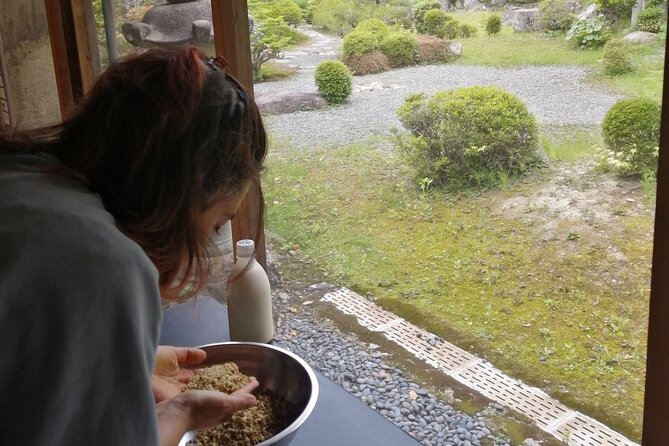
I would recommend the class to you if you like food, fermentation, Japanese home cooking, or low-waste ideas. It also works well if you want a break from temples and shopping and prefer an activity where you make something with your hands.
It should suit solo visitors, couples, and small groups who are comfortable joining a shared class. With only six places, it has a more personal scale than many cooking activities.
Families may enjoy the mixing and tasting, though the supplied information does not state an age minimum or whether children are specially accommodated. If you are booking with young children, confirm that point first.
The class also fits visitors with an interest in wellness. Naomi’s work in massage, tea, and cooking gives the session a broad theme, combining food preparation with ideas about physical and mental balance.
You may want to skip it if you need a fully traditional soybean-making course, dislike fermented foods, or cannot wait several months before using the miso. It is also not ideal if your schedule cannot tolerate a fixed appointment, since the booking cannot be changed or refunded.
Planning the visit to Kaze no Waon
The class begins at the reserved time, so arrive ready to start. The meeting point is Kaze no Waon, 14 Utanokitanoinchō, Ukyo Ward, Kyoto, postal code 616-8201. The activity ends back at that same point.
A mobile ticket is provided, and confirmation is sent within 48 hours of booking, subject to availability. The experience is often booked about eight days ahead, so leaving it until the last moment may limit your options.
The group size is capped at six, which is a good reason to reserve early if your dates are fixed. The provider is maiyuur culture retreat.
The cancellation rule is strict: the experience is non-refundable and cannot be changed for any reason. If poor weather forces the provider to cancel, you are offered another date or a full refund. Since the activity requires good weather, check the forecast and your Kyoto schedule before committing.
Should you book the okara miso experience?
Book this class if you want an active, small-scale food experience with a clear environmental idea. You will make about 500 grams of okara miso, taste soup, paste, and mochi, and leave with a project that continues for more than three months.
I especially like the mix of useful skills and local context. You learn a Japanese seasoning, hear about fermentation and intestinal health, and see how tofu byproduct can become food instead of waste. Naomi’s hands-on guidance and the six-person limit make the hour feel personal.
Skip it if you want a full traditional soybean process or an instant edible souvenir. For everyone else, $46.15 is a fair price for a calm Kyoto activity that gives you something to remember, taste, and eventually use at home.
FAQ
Where does the miso-making class take place?
The class takes place at Kaze no Waon, 14 Utanokitanoinchō, Ukyo Ward, Kyoto, 616-8201, Japan. It begins and ends at the same meeting point.
How long does the experience last?
The activity lasts approximately one hour.
How much miso can I take home?
You can take home about 500 grams of the okara miso you make during the class.
Is the miso ready to eat after the class?
No. The miso takes more than three months to ferment.
How many people can join the class?
The experience has a maximum of six participants.
What happens if bad weather cancels the class?
If poor weather causes the provider to cancel, you are offered a different date or a full refund. Regular cancellations and changes are non-refundable.
More tours in Kyoto we've reviewed







Kyoto, compared.
 ★ 5.0PERFECT KYOTO 1-Day Bus TourFrom $129
 ★ 4.8Kyoto: Fushimi Inari, Kinkakuji, Bamboo Grove 1 Day Bus TourFrom $122510 minutes - 9 hours
 ★ 4.9Kyoto: Tea Ceremony in a Traditional Tea House in KiyomizuFrom $4945 min
 ★ 4.7Kyoto Geisha Walking Tour: Gion District & Hidden GemsFrom $252 hours
 ★ 4.9Kyoto: Tea Ceremony Ju-An at Jotokuji TempleFrom $291h 10m
 ★ 4.3Kyoto: 45-Minute Tea Ceremony Lesson ExperienceFrom $2245 min