
Reviewed · TOURS
Kyoto Urushi Lacquer Factory Tour and Chopstick Making Experience
The most unusual part of this Kyoto experience happens before you touch the chopsticks. Inside Tsutsumi Asakichi Urushi, you see how sap from the Japanese lacquer tree is collected, refined, colored, and prepared for artisans. This is working craft, not a staged folk display, and the factory refines more than 70 percent of Japan’s domestic urushi lacquer.
I like the small group size, capped at five, and the chance to meet a craft tradition at its source. I also like the practical finish: you apply lacquer to a pair of chopsticks using the traditional fuki-urushi technique, then take them home.
The main drawback is the fixed schedule and strict cancellation policy. The tour starts at 10:00 a.m., lasts about 90 minutes, and requires at least two participants to operate. Wear clothes that can get dirty, and do not arrive with large luggage.
In This Review
- Key points to know before booking
- Why this Kyoto craft tour feels different
- Entering Und., the factory store in central Kyoto
- From tree sap to usable urushi lacquer
- The fuki-urushi chopstick workshop
- A 90-minute schedule that fits a Kyoto morning
- What the $97.55 price gives you
- Who will enjoy this experience most
- Practical details that can affect your visit
- Is the Kyoto urushi factory tour worth booking?
- FAQ
- Where does the Kyoto urushi factory tour begin?
- What time does the experience start?
- How long does the experience last?
- Where does the activity end?
- Is the tour conducted in English?
- What does the factory portion cover?
- What do I make during the workshop?
- How many people can join the tour?
- Does the tour require a minimum number of participants?
- Should I bring special clothing or luggage?
Key points to know before booking
- See the source of Japanese lacquer: Learn how sap from the urushi tree becomes a material used by lacquerware artists across Japan.
- Visit a working factory store: Und. sells lacquerware tools and supplies, giving you a look at the trade beyond finished souvenirs.
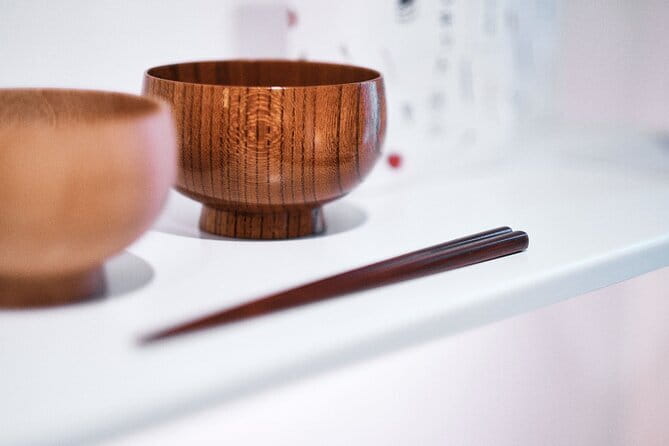
- Make your own chopsticks: Apply lacquer by hand with the traditional fuki-urushi method.
- Keep the group intimate: The maximum is five people, so the guide can give the demonstration and workshop proper attention.
- Plan around the conditions: The English-language experience begins at 10:00 a.m., needs at least two participants, and has no large luggage storage.
Why this Kyoto craft tour feels different
Kyoto offers plenty of hands-on cultural activities, but many focus on a finished object. This one starts earlier in the chain. You learn about the material itself, then see the tools and supplies used by professional lacquerware makers, and only afterward work with lacquer on your own chopsticks.
That order matters. You are not simply painting a souvenir without context. You first learn why urushi is important, how it is prepared, and why Japanese artisans treat it with such care. The workshop then gives you a modest connection to the same material.
The factory belongs to Tsutsumi Asakichi Urushi, a company founded in 1909. Its history follows the changing fortunes of traditional lacquer in Japan. During the 20th century, both production and everyday use declined, but the fourth-generation owner is working to bring urushi back into ordinary life, including modern goods as well as traditional pieces.
I find that aim especially useful for understanding the tour. You are not looking only at an old process preserved behind glass. You are seeing a business that still supplies craftsmen while trying to give lacquer a place in present-day life.
If you're still narrowing it down, here are other tours in Kyoto we've reviewed.

Entering Und., the factory store in central Kyoto
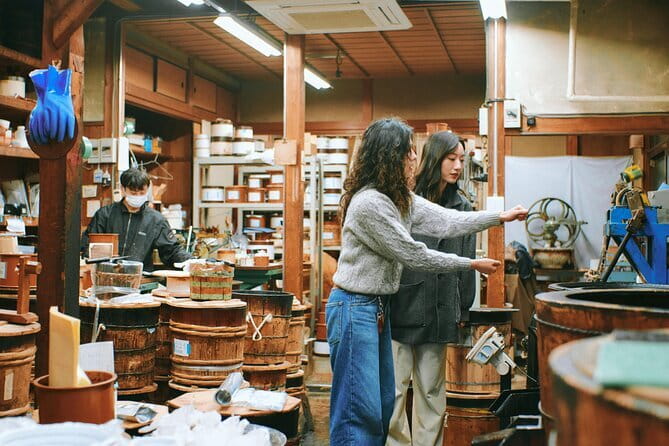
The experience begins at the factory store, called Und. The store specializes in items and tools for lacquerware artists. That gives the opening of the tour a practical feel. Instead of starting with a broad lecture about Japanese culture, you begin among the materials and equipment connected to the trade.
The shop also helps explain the difference between lacquerware and ordinary painted goods. Urushi is not simply decorative paint. It is a natural material that requires collection, refinement, coloring, and careful handling before an artisan can use it.
Your English-speaking guide explains the process as you move through the store and factory. Since the group can be no larger than five people, you should have a better chance to hear the explanation and ask questions than you would in a large group. The available information does not provide the guide’s name, so you should not expect a named host to be guaranteed when you book.
The setting has an old craft atmosphere, but the purpose is not to turn the visit into a museum stop. The store remains connected to working lacquer artists. You get a sense of the small tools, supplies, and specialized materials that support an art form most people only encounter as a finished bowl, tray, box, or pair of chopsticks.
From tree sap to usable urushi lacquer
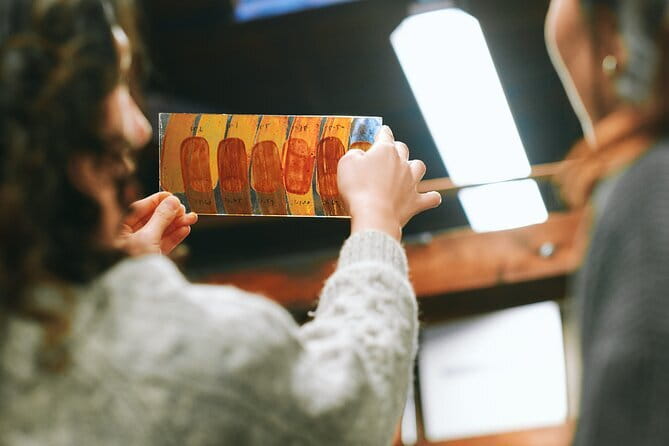
The factory section is the heart of the visit. The guide explains how sap is collected from the Japanese lacquer tree and what happens to it afterward. You then see how the raw material is refined until craftsmen can use it.
That process is valuable because the final shine of lacquerware can hide the work underneath. Urushi passes through stages before it becomes suitable for a particular job. The factory also keeps closely held methods for refining and coloring lacquer for local artisans. You may not leave knowing every technical formula, but you will understand that the material is carefully prepared for different uses.
Tsutsumi Asakichi Urushi refines more than 70 percent of Japan’s domestic urushi lacquer. That figure gives the factory national importance, even though the visit itself remains small and personal. Materials prepared here go on to lacquerware makers across the country.
I would pay close attention to the explanation of coloring. The factory is not only processing clear or raw lacquer. It prepares lacquer to meet the needs of craftsmen, including color work. That makes the tour helpful for anyone interested in how traditional objects are made, repaired, or finished.
You should also keep your expectations sensible. The tour lasts only about 90 minutes, so it cannot provide a full technical course in lacquer chemistry or a long look at every part of the company’s work. Its strength is a clear introduction, a close setting, and a direct workshop afterward.
The fuki-urushi chopstick workshop
After the factory tour, you go to the workshop area on the top floor. Here you apply lacquer to a pair of chopsticks using the fuki-urushi technique.
The supplied information does not specify the exact design choices, number of colors, or drying time. You should therefore book this as a short traditional craft session, not as a lengthy open-ended art class. The important point is that you handle the lacquer yourself and leave with the chopsticks as a gift and keepsake.
I like this part because the object is useful. A small craft item can quickly become clutter in your suitcase, but chopsticks have a clear place in daily life. They also remind you of the material lesson from the factory. You are taking home something connected to urushi, not an unrelated souvenir chosen from a shop shelf.
Wear clothing suitable for getting dirty. That warning is worth taking seriously. Lacquer work can be messy, and your clothing may be close to the material during the workshop. Since the factory has no large luggage storage, bring only what you can keep with you comfortably.
The workshop also gives the visit a good rhythm. The factory explanation may feel technical at times, while applying lacquer requires your attention and hands. You move from watching, to understanding, to making.
A 90-minute schedule that fits a Kyoto morning
The activity begins at 10:00 a.m. and takes about one hour and 30 minutes. That makes it easy to place before lunch or another central Kyoto plan, provided you allow enough time to reach the meeting point.
The start and end point is Tsutsumi Asakichi Urushi at 540 Inaricho, Shimogyo Ward, Kyoto, postal code 600-8098. The location is near public transportation, but private transportation is not included. You are responsible for getting there and returning from the same point.
Because the activity ends where it begins, you do not need to arrange a second pickup location. That is useful when building a day around central Kyoto sights. Still, do not cut your arrival too close. A factory visit works best when you arrive calm, especially if you are carrying supplies or need to find the entrance.
The compact duration is a strength for many people. You get a focused look at a specialized trade without giving up half a day. The tradeoff is that the experience cannot cover every stage in great depth. If you already study lacquer techniques, you may want a longer workshop than this one provides.
The entire tour is conducted in English. That makes the technical explanation more accessible if you do not speak Japanese. It also means you should choose this activity specifically for its English guidance rather than expecting a multilingual session.

What the $97.55 price gives you
At $97.55 per person, this is not a bargain souvenir activity. The value comes from access to a working lacquer factory, an English guide, a small group, and a hands-on item you make yourself.
You are paying for more than the chopsticks. The factory refines a major share of Japan’s domestic urushi supply, and the visit explains a specialized process most people cannot see during a normal Kyoto sightseeing day. The group limit of five also matters. A large class could make the demonstration feel distant, but this format should keep the material and the instructor close at hand.
I would see the price as fair for someone who wants an unusual cultural activity with real production context. It is less convincing for someone mainly looking for a cheap craft class or a quick souvenir. If the factory side interests you as much as the workshop, the cost makes better sense.
The booking pattern also tells you something practical. The experience is booked on average 18 days ahead, so I would not leave it until the last morning of your Kyoto stay. With a maximum of five people, available spaces can be limited even though the activity is short.
The experience accepts bookings for any group size, but it requires at least two participants to run. If that minimum is not met, the provider may cancel by the day before and offer a different date or experience, or provide a full refund. That condition is important if you are making a tight schedule around the visit.
Who will enjoy this experience most
I recommend the tour to anyone curious about how traditional objects are made, especially visitors who prefer working craft to passive sightseeing. It suits adults, couples, families with participants who can manage a short workshop, and anyone seeking a quieter Kyoto activity away from the usual temple route.
It is also a strong choice for people interested in design, conservation, Japanese materials, or artisan businesses. The fourth-generation owner’s effort to bring urushi into modern daily use gives the visit a current purpose, rather than presenting lacquer only as something from the past.
You may like it less if you want a large production facility, a long class, or a guaranteed chance to customize every detail of the chopsticks. The supplied information does not promise extensive design options, and the 90-minute schedule keeps the activity focused.
I would also think twice if you have a packed morning with no flexibility. The activity can be canceled if the minimum number is not reached, and the operator may also cancel because of weather or unforeseen circumstances. Those are normal operating risks, but they matter when you have a rare free day in Kyoto.
Practical details that can affect your visit
Confirmation is provided when you book, and the experience uses a mobile ticket. Keep the ticket easy to access on your phone when you arrive.
The activity is near public transportation, but no private transport is included. The meeting point is also the ending point, so you can plan your next stop from there without arranging a transfer.
Most people can participate, but the clothing advice is simple: wear something that can get dirty. Do not bring large luggage because storage is not available.
The tour is offered in English and has a maximum of five participants. The minimum operating size is two. If you are booking alone, confirm the operating status close to the date, since the provider can cancel if enough people have not booked.
The cancellation terms are strict. This experience is non-refundable and cannot be changed for any reason. If you cancel or request an amendment, you will not receive your payment back. That makes travel insurance or a carefully planned date worth considering, though the supplied information does not specify any insurance coverage.
Is the Kyoto urushi factory tour worth booking?
Book this experience if you want a small, focused look at a living Japanese craft and like the idea of making a useful object with your own hands. The combination of a factory tour, specialist material, English explanation, and fuki-urushi chopstick workshop is unusual in Kyoto.
I would especially recommend it to repeat visitors who have already seen the major temples and want a different side of the city. It also makes sense for anyone who values authentic production over a polished souvenir shop.
Skip it if your priority is the lowest possible price, a flexible cancellation policy, or a long craft lesson with many design choices. For the right person, though, the $97.55 cost buys a rare look at the material behind Japanese lacquerware and a personal memento that connects directly to the visit.
FAQ
Where does the Kyoto urushi factory tour begin?
The tour begins at Tsutsumi Asakichi Urushi, 540 Inaricho, Shimogyo Ward, Kyoto, postal code 600-8098.
What time does the experience start?
The scheduled start time is 10:00 a.m.
How long does the experience last?
The tour lasts approximately one hour and 30 minutes.
Where does the activity end?
The activity ends back at the meeting point, Tsutsumi Asakichi Urushi.
Is the tour conducted in English?
Yes. The entire tour is conducted in English.
What does the factory portion cover?
The guide explains how sap is collected from the Japanese lacquer tree, how it is refined, and how lacquer is colored for use by craftsmen. You also tour the store and factory.
What do I make during the workshop?
You apply lacquer to a pair of chopsticks using the traditional fuki-urushi technique. You take the chopsticks with you afterward.
How many people can join the tour?
The activity accepts bookings for any group size, but the maximum is five participants.
Does the tour require a minimum number of participants?
Yes. At least two participants are required for the tour to operate. If the minimum is not met, the provider may cancel by the day before and offer another date or experience, or provide a full refund.
Should I bring special clothing or luggage?
Wear clothes suitable for getting dirty. Large luggage storage is not available, so bring only what you can keep with you during the activity.
More tours in Kyoto we've reviewed







Tours, compared.
 ★ 5.0PERFECT KYOTO 1-Day Bus TourFrom $129
 ★ 4.8Kyoto: Fushimi Inari, Kinkakuji, Bamboo Grove 1 Day Bus TourFrom $122510 minutes - 9 hours
 ★ 4.7Kyoto Geisha Walking Tour: Gion District & Hidden GemsFrom $252 hours
 ★ 4.7Kyoto: Gion Geisha District Walking Tour – Stories of GeishaFrom $202 hours
 ★ 5.0Hidden Kyoto E-Biking tourFrom $116
 ★ 5.0Kyoto Night Foodie Tour in Gion (9+ dishes + 6 Sake tastings)From $163