
Reviewed · NARA DAY TRIPS
Osaka: Kyoto and Nara Private Day Trip
Nara’s tame-looking deer and Kyoto’s famous temples make a powerful one-day pairing. This private van trip gives you a chance to see both cities without wrestling with train connections, station crowds, or a rigid public tour schedule. Drivers such as Nomi and Musa have also helped families adjust the day and take memorable photos.
I like the private group format, especially for families or groups of friends who want to move at their own pace. I also like the range of sights: Nara’s Great Buddha, Kyoto’s gold-covered Kinkaku-ji, Fushimi Inari’s red gates, and the Arashiyama bamboo paths all bring a different side of Japan to the day.
The drawback is simple: ten hours is a lot of ground to cover. You may see many famous places, but some stops can feel brisk, and entrance fees, food, and drinks are extra. One serious booking concern is that a past customer reported a no-show, while another reported a one-hour delay, so clear pickup confirmation matters.
In This Review
- Key points to know before booking
- One day, two historic Japanese cities
- Nara Park and the deer
- Tōdai-ji and the Great Buddha
- Arashiyama’s bamboo paths and kimono displays
- Kinkaku-ji, Kyoto’s Golden Pavilion
- Nishiki Market, Gion, and Kiyomizu-dera
- Fushimi Inari’s red torii gates
- The driver can make or break the day
- Comfort, walking, and what to pack
- Who will get the most from this private day trip?
- Should you book it?
- FAQ
- Where can pickup and drop-off take place?
- How long does the experience last?
- How many people can join the private group?
- What is included in the price?
- Are meals and entrance fees included?
- Which languages can the driver speak?
- Is the tour suitable for wheelchair users?
Key points to know before booking
- Nara’s deer and Tōdai-ji: Meet free-roaming deer in Nara Park, then see the 15-meter bronze Great Buddha inside one of Japan’s most important temples.
- Kyoto’s headline sights: The day can include Kinkaku-ji, Fushimi Inari Taisha, Arashiyama, Gion, Kiyomizu-dera, and Nishiki Market.
- Private van convenience: Hotel pickup and drop-off are included, with private transportation for groups of up to six.
- Flexible guiding style: Drivers including Nomi and Musa have adjusted plans, helped families, and taken photographs for their groups.
- A full, walking-heavy day: Plan for moderate walking, crowded paths, changing weather, and extra costs for entrance tickets and meals.
- Good value for a full group: The price is $474 per group, not per person, making it more attractive when six people share the van.
One day, two historic Japanese cities
This is an ambitious sightseeing day rather than a slow cultural tour. You start with hotel pickup and spend about ten hours moving between Nara and Kyoto by private van. The exact order can vary, and the detailed schedule lists several Kyoto stops, so confirm the final route with the operator before you go.
The main appeal is efficiency. Nara and Kyoto are close enough to combine by road, yet each deserves more than a few hours. A private vehicle lets you avoid changing trains and gives you a place to leave purchases between stops. You also have a driver available to help with timing and directions.
The tradeoff is that roads can be busy, particularly around popular temples and central Kyoto. A ten-hour plan covering this many locations leaves little room for lingering. I would treat the day as an introduction to both cities, not a complete exploration of either one.
The service costs $474 for a group of up to six. At full capacity, that is good value for a private vehicle, hotel transfers, and a long day of sightseeing. For two people, the per-person cost is much higher, so compare it with public transport and small-group tours before booking. Meals, drinks, personal spending, and entrance tickets are not included.
A few more Osaka tours and experiences worth a look

Nara Park and the deer
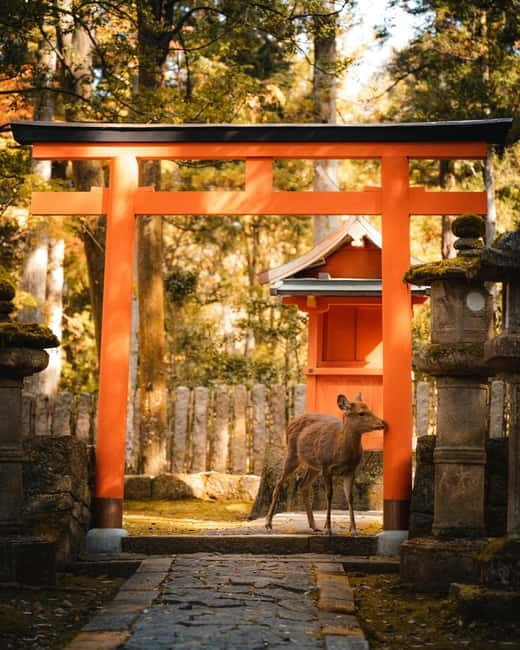
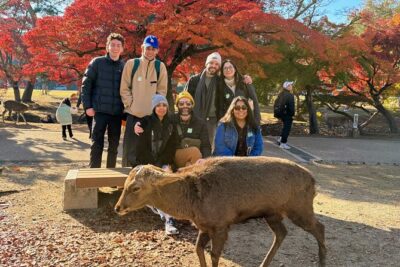
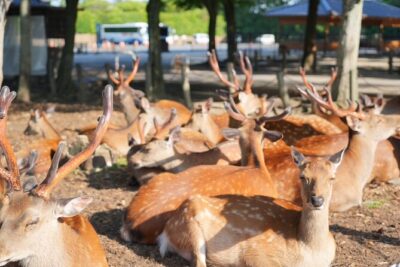
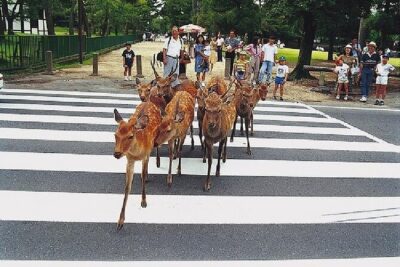
Nara Park is one of the day’s most memorable stops because the deer are part of the public space rather than confined to a zoo. You can walk among them, watch them approach visitors, and take photographs in a setting surrounded by temples and wooded paths.
The deer are wild animals, despite their familiarity with people. Keep your belongings close, follow local guidance, and do not assume every animal wants to be touched. The activity specifically warns that contact is at your own risk.
This stop works well for families. Children usually respond quickly to the deer, and the walk offers a welcome change from formal temple interiors. Still, you should watch young children carefully, particularly when deer gather around food or crowds.
Allowing about an hour here gives you time for a relaxed walk, but not a long wander through every corner of the park. Wear shoes that can handle uneven paths and bring water, sunscreen, and a hat.
Tōdai-ji and the Great Buddha
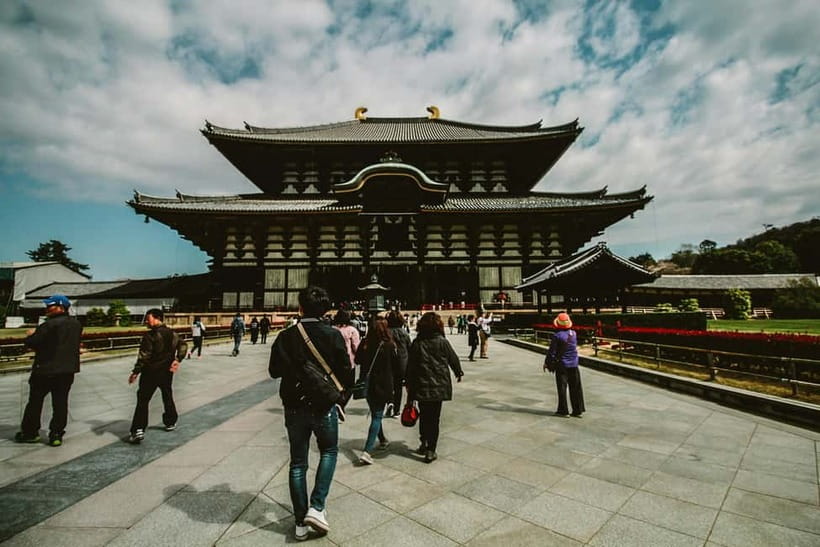
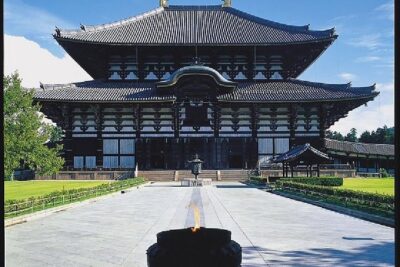
Tōdai-ji is the spiritual heavyweight of the Nara portion. The temple is home to a 15-meter-tall bronze Buddha statue, a sight that makes the stop worthwhile even for visitors who have already seen several Japanese temples.
The scale is the point. A huge wooden temple hall and an enormous seated Buddha give you a sense of Japan’s long Buddhist tradition in a way that photographs cannot fully capture. Your driver can help you reach the entrance and explain the site in English, Hindi, or Urdu, depending on the assigned guide.
Entrance fees are not included, so budget separately for this temple and the other paid attractions. The schedule gives roughly an hour for the visit, which is enough to see the main hall and Buddha but not enough for a slow study of every detail.
The Nara stops are especially useful if you are staying in Osaka and do not plan to spend a separate day in Nara. You get the park and temple in one compact visit, then continue to Kyoto.
Arashiyama’s bamboo paths and kimono displays
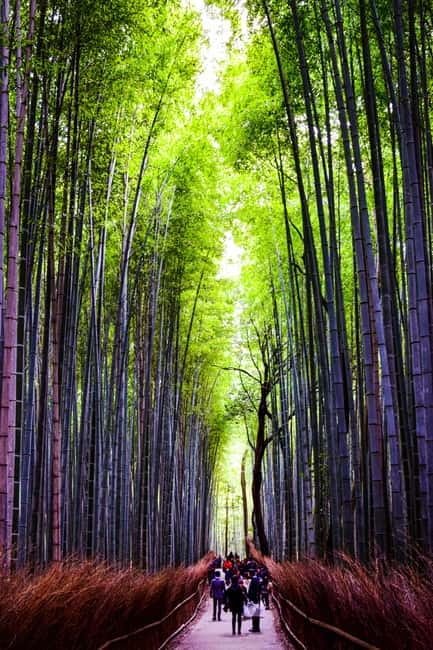
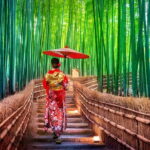
Arashiyama brings a different mood. The bamboo forest offers a shaded walk beneath tall green stalks, while the Arashiyama Kimono Forest adds a colorful design element near the area’s transport hub and shopping streets.
The bamboo path is one of Kyoto’s most photographed places, so do not expect solitude. Your best approach is to enjoy the short walk, look up at the changing light, and resist treating it as a quick photo backdrop only. The schedule allows about an hour for Arashiyama, including sightseeing, free time, shopping, and photographs.
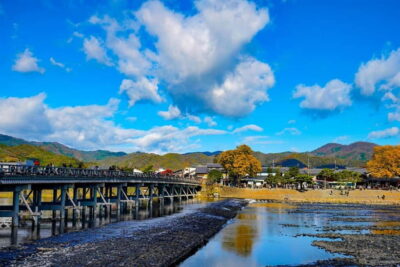
You may also cross Togetsu-kyō Bridge, a scenic span over the Katsura River. The bridge and river views give you a more open setting after the narrow bamboo paths. This is one of the easier places to pause, take family pictures, and get your bearings.
Arashiyama can become a rushed stop if traffic has delayed the morning. If this area matters most to you, ask the driver how much time is planned before the day begins. The schedule is described as customizable, but no exact amount of flexibility is guaranteed.
Kinkaku-ji, Kyoto’s Golden Pavilion
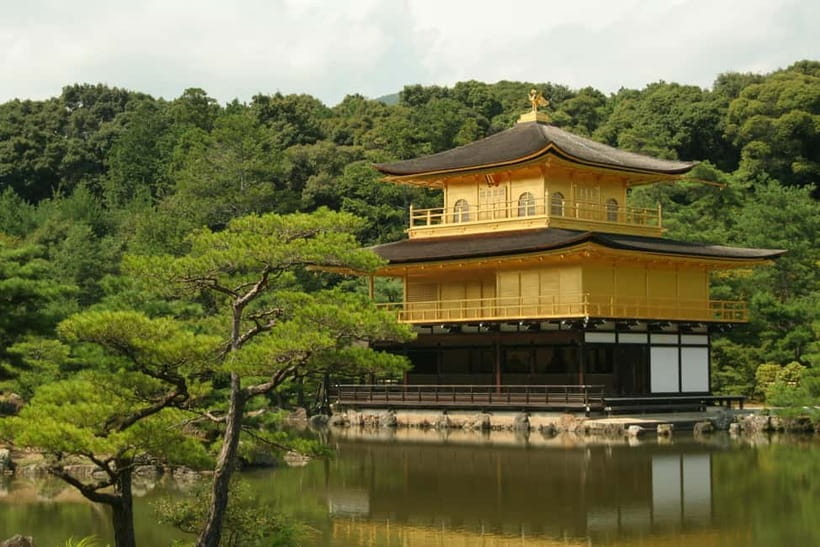
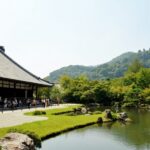
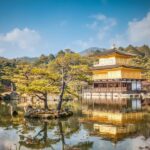
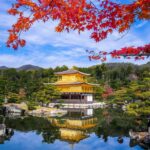
Kinkaku-ji is Kyoto’s famous gold-covered Zen temple. Its upper stories catch the light above a pond, creating the postcard view that appears in guidebooks around the world.
The visit is mainly about the exterior and surrounding garden. You will follow a set walking route, take photographs, and see the pavilion from several angles. The hour listed for this stop should be enough for the main path, though crowds can slow your progress.
Kinkaku-ji is visually striking, but it is not a quiet, private temple visit. The polished gold surface attracts large numbers of people, and the viewing area can feel compressed. I would come for the architecture and reflection on the pond, while keeping expectations realistic about peace and quiet.
As with Tōdai-ji and Kiyomizu-dera, admission costs are separate. Carry some yen or another accepted payment method, but do not assume every small purchase is covered by the tour price.
Other private tours in Osaka

Nishiki Market, Gion, and Kiyomizu-dera
The Kyoto portion may also include Nishiki Market, Gion, and Kiyomizu-dera, each with a different focus.
Nishiki Market is a good place to see Kyoto food culture and browse small shops. The stop is listed as a one-hour break with a guided walk, photographs, sightseeing, and shopping. It is also a practical point to find lunch, though meals are not included. If you have dietary restrictions, tell the driver early rather than waiting until you are hungry.
Gion offers traditional streets and a chance to see one of Kyoto’s best-known historic districts. The itinerary allows about an hour for walking and photographs. Keep your voice low, stay respectful around private homes and businesses, and remember that a famous neighborhood is also a real place where people live and work.
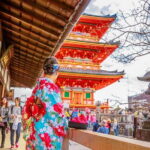
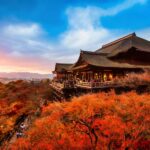
Kiyomizu-dera adds a hillside temple and broad city views. The approach involves walking and can be tiring late in the day, particularly after Nara and Arashiyama. Comfortable shoes are essential. The schedule lists one hour, which lets you see the main highlights but leaves little spare time for browsing every lane near the temple.
These three stops make the day more varied, but they also make it more crowded and time-sensitive. If your confirmed route includes all of them as well as Arashiyama, Kinkaku-ji, and Fushimi Inari, you should expect quick visits rather than long temple sessions.
Fushimi Inari’s red torii gates
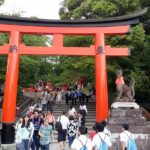
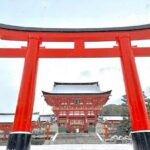
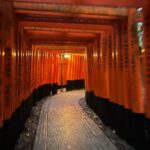
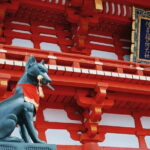
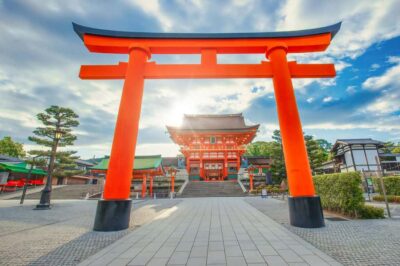
Fushimi Inari Taisha is known for its long corridors of vermillion-red torii gates climbing into the wooded hills. Even a short walk under the gates gives you one of Kyoto’s most recognizable scenes.
The scheduled visit is about an hour, so you will not walk the entire mountain route. That is not a flaw for a day already packed with sights. You can pass through the lower gates, visit the shrine grounds, and take photographs without committing to the full uphill hike.
The shrine can be crowded near the entrance. Walk farther along the torii corridor if time and energy allow, since the flow often changes as you leave the first section. Ask your driver where and when to meet before setting off. A clear meeting point matters at popular sites.
Fushimi Inari is also a useful contrast to Kinkaku-ji. One is a Shinto shrine with repeated gates and mountain paths; the other is a Zen temple known for a single gleaming pavilion. Seeing both helps you notice that Kyoto’s religious sites are not all the same kind of experience.
The driver can make or break the day
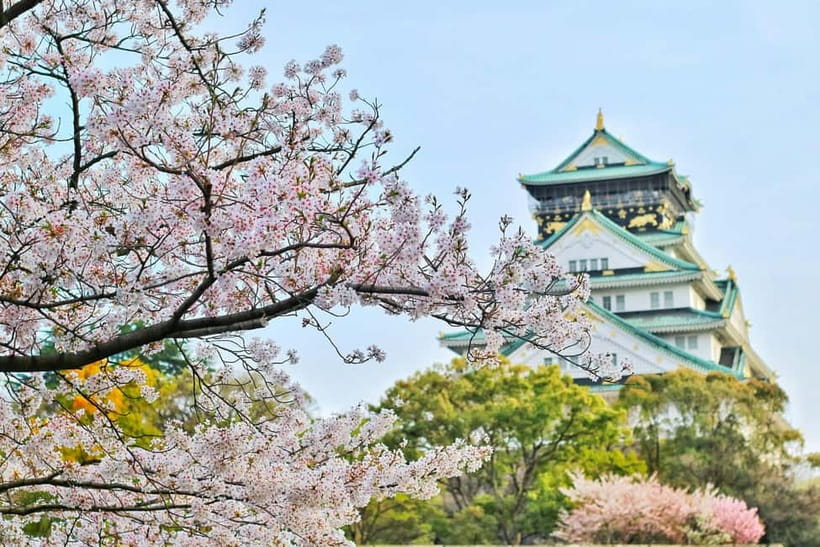
The driver is central to this experience because you are not simply being transported from one attraction to another. The strongest accounts describe Nomi as friendly, flexible, helpful with children, and skilled at explaining local culture. He has also taken polished family photographs, recommended lunch spots, and adjusted plans to suit different groups.
Musa has also been praised for safe driving, kindness, and flexibility when an itinerary changed at the last minute. One family found him particularly helpful when they needed practical support during a long day with children.
The listed driver languages are English, Hindi, and Urdu. The service describes the driver as an English-speaking professional, but the depth of guiding may depend on who is assigned. You should ask questions and confirm whether your driver will provide detailed commentary at each temple or mainly handle transportation and basic explanations.
Photography is a useful extra when it is offered. Several groups appreciated having the driver take family pictures, which can save you from relying on strangers at every stop. It is not listed as a formal included service, so treat it as a welcome possibility rather than a guaranteed feature.
There is one important caution. One customer reported that the driver arrived an hour late but kept them informed. Another reported a complete no-show and lack of communication. Those are serious problems for a day with a fixed schedule. Confirm your pickup time, hotel address, driver contact details, and backup contact shortly before departure.
Comfort, walking, and what to pack
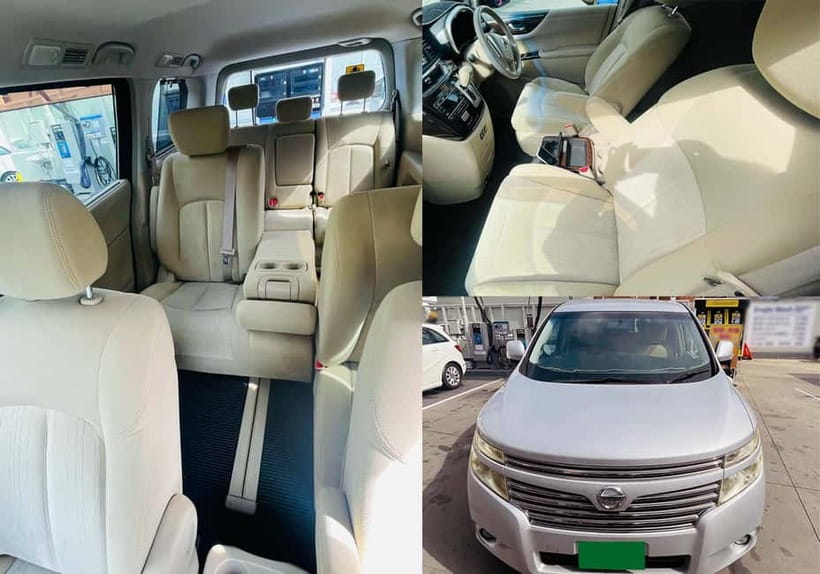
The private van is the main comfort advantage. You have hotel pickup and drop-off, private transportation, and no need to navigate several train stations with bags or children. A full group of six will get the best financial value from the arrangement.
One practical complaint concerned the lack of dedicated USB outlets in the back. A driver stretched a charging cord to the rear when needed, but you should bring a charged phone and your own power bank if you rely on your camera or navigation app all day.
Walking is moderate but spread across many stops. Nara Park, temple grounds, shrine paths, Arashiyama, Gion, and Kiyomizu-dera all require time on your feet. Bring:
- Comfortable walking shoes
- Water
- Sunscreen and a hat
- A camera or a fully charged phone
- A raincoat or umbrella for changing weather
The activity is not suitable for wheelchair users. The combination of temple approaches, uneven paths, stairs, and crowded walkways makes this an important consideration before booking.
Free cancellation is available up to 24 hours before departure for a full refund, and you can reserve now and pay later. Those terms help if your Osaka plans are still shifting, but they do not remove the need to verify pickup arrangements.
Who will get the most from this private day trip?
I would recommend this tour to a family, group of friends, or first-time visitor who wants to cover Nara and Kyoto in one day from an Osaka base. It is especially useful if you value door-to-door transport and do not want to plan several rail journeys.
The private format also suits people who need occasional flexibility. Parents can adjust the pace, groups can request photo stops, and you can discuss lunch timing with the driver. Families with young children have found the personal attention useful, though the long day may still be tiring.
I would be more cautious if you prefer slow travel, long temple visits, or quiet streets. Kyoto alone can fill several days, and this schedule asks you to sample many major sights in a short window. Independent visitors who are comfortable with trains may prefer choosing two or three areas and spending more time in each.
The price makes the most sense for six people. For a smaller party, calculate the total against taxi fares, admission costs, meals, and the value of your time. The van is convenient, but convenience is what you are paying for.
Should you book it?
Book this private day trip if your priority is seeing the main Nara and Kyoto sights efficiently from Osaka. The deer, Great Buddha, Golden Pavilion, red torii gates, bamboo forest, and historic Kyoto districts give you a strong first look at the region, while a good driver can add flexibility and useful local help.
Before paying, confirm the exact stops, pickup time, driver name, language, and what happens if traffic changes the schedule. If you have only one free day and a group large enough to share the $474 cost, this is a practical choice. If you want a peaceful, unhurried Kyoto experience, choose fewer sights or stay overnight instead.
FAQ
Where can pickup and drop-off take place?
Pickup and drop-off options include Nara, Kyoto, and Osaka. Confirm your exact hotel address and final pickup details when booking.
How long does the experience last?
The trip lasts 10 hours. Starting times depend on availability.
How many people can join the private group?
The price covers a private group of up to six people.
What is included in the price?
Hotel pickup and drop-off, private transportation, and a professional English-speaking driver are included.
Are meals and entrance fees included?
No. Meals, beverages, personal expenses, and entrance fees are not included.
Which languages can the driver speak?
The listed driver languages are English, Hindi, and Urdu.
Is the tour suitable for wheelchair users?
No. The activity is not suitable for wheelchair users. You should also expect a moderate amount of walking and bring suitable shoes.
More 1-Day Tours in Osaka

More Private Tours in Osaka
More Nara Day Trips in Osaka
More tours in Osaka we've reviewed



Nara Day Trips, compared.
 ★ 5.0World Heritage Kyoto & Nara Uji Authentic Matcha ExperienceFrom $129
 ★ 4.7Kyoto/Osaka: Nara, Fushimi Inari Taisha, Arashiyama Bus TourFrom $529 - 10 hours
 ★ 4.4Osaka/Kyoto: Arashiyama, Nara & Fushimi Inari Shrine w/LunchFrom $61
 ★ 5.0Nara Early Morning Tour (Kyoto or Osaka Departure Available)From $61
 ★ 4.5Kyoto and Nara Day Trip from KyotoFrom $194
 ★ 4.5Nara Afternoon Tour from Kyoto or OsakaFrom $102