
Reviewed · KYOTO
Kyoto Sushi Making Experience with a Professional Sushi Chef
Kyoto has plenty of food demonstrations where you watch someone else do the clever part. This experience puts the knife, rice, and rolling mat in your hands. You learn from a professional Taisho chef, then eat the sushi you made yourself, with tempura, sake, and matcha rounding out the meal.
I especially like the small group of no more than seven, since hands-on cooking gets awkward when you are peering over twenty shoulders. I also like the smooth cultural arc: wagashi, sushi, sake, and tea are not treated as separate tourist tricks but as parts of one Japanese food lesson.
The main drawback is dietary flexibility. Vegetarian, vegan, and gluten-free meals cannot be accommodated, and allergy-free food is not guaranteed. You also need to arrive on time, since late arrivals cannot join, reschedule, or receive a refund.
In This Review
- Key points to know before booking
- Starting near Karasuma Oike Station
- Choosing wagashi before the cooking
- Watching a Taisho chef shape sushi
- Making nine nigiri and your own sushi roll
- Eating what you made, plus tempura from the chef
- Sake tasting with practical pairing advice
- Matcha and wagashi in a Kyoto-style garden
- What the $161 price includes
- Who will enjoy this Kyoto food experience?
- Timing, group size, and cancellation rules
- My booking advice
- FAQ
- Where does the Kyoto sushi-making experience meet?
- How long does the experience last?
- What sushi will I make?
- Is the class taught in English?
- What else is included besides sushi?
- Do I need cooking experience?
- Can children participate?
- Can the experience accommodate vegetarian, vegan, or gluten-free diets?
- What happens if I arrive late?
- Can I cancel for a refund?
Key points to know before booking
- You make nine pieces of nigiri and roll sushi, with guidance from a professional Taisho chef.
- The meal includes chef-prepared tempura, two drinks, and a sake tasting with pairing advice.
- Your English-speaking guide translates between you and the sushi chefs, who may communicate mainly in Japanese.
- The final matcha session takes place in a Kyoto-style garden, with wagashi you selected earlier.
- The group is limited to seven people, making it a better fit for hands-on learning than a large food tour.
- The full session lasts 210 minutes, so set aside most of an afternoon or evening.
Starting near Karasuma Oike Station
Your meeting point is near Karasuma Oike Station Exit 5, at DIESEL Kyoto. This is a useful central starting point, but do not treat the meeting time casually. The activity starts on time for the sake of the whole group, and late arrivals are not allowed to join.
I would arrive early enough to find Exit 5 without rushing. Kyoto station exits can be confusing, especially when you are navigating with luggage, children, or a phone map that has not quite caught up with you. The activity does not include a separate transport service, so you are responsible for reaching the meeting point.
From there, your guide introduces you to the neighborhood and leads you to the next part of the program. The walk and local orientation help you get your bearings before the cooking begins. It is a small touch, but it gives the afternoon a sense of place rather than dropping you straight into a classroom.
The English-speaking guide is important here. Ayu, Ayuri, and Yuka have led individual sessions, and the guide’s role goes beyond showing the way. The guide translates the chef’s instructions, answers questions about Japanese customs, and helps keep the session moving. One particularly useful part of the format is that you can focus on the cooking instead of trying to communicate through gestures alone.
If you're still narrowing it down, here are other tours in Kyoto we've reviewed.
Choosing wagashi before the cooking
The first food stop is a local shop for wagashi, or traditional Japanese sweets. A friendly expert helps you choose the sweets that will later be served with matcha.
This is a clever beginning. Wagashi are not just sugary snacks. Their shapes, colors, and seasonal designs are part of Japanese food culture, and selecting your own gives the final tea session a personal touch. You are not simply handed a packaged sweet at the end.
The shop visit also sets up a nice contrast with the sushi lesson. Wagashi depends on careful appearance and restrained sweetness, while sushi depends on rice texture, knife work, freshness, and balance. You get a quick look at two very different forms of Japanese craftsmanship before sitting down for the main meal.
The amount of time at the shop is not specified, so I would think of it as an introduction rather than a full shopping excursion. If you want to buy additional sweets, ask your guide what is practical during the visit. The included sweets are the ones used later with your matcha.
Watching a Taisho chef shape sushi
At the sushi restaurant, you meet a professional Taisho chef. The chef first demonstrates the careful work behind nigiri, including precise knife handling and the controlled movements used to shape sushi.
This is where the activity becomes more than a cooking class. You see that nigiri is not simply fish placed on rice. The rice must be handled properly, the portion needs to hold together without becoming dense, and the topping has to sit neatly. The chef’s movements may look quick, but the demonstration gives you a better sense of the practice behind them.
The chefs may speak mainly Japanese, but your guide translates the explanation into English. That arrangement worked well for guests such as Christopher, who appreciated learning from a local chef while having Ayuri explain the cultural details. You can ask questions, and the guide helps make sure the answer is not lost between languages.
You may also get a closer look at the chef’s tools. One session included the chance to examine the knives, which is a memorable detail for anyone interested in Japanese kitchen craft. Children can take part from age four, but an adult must supervise them whenever knives or other risky steps are involved.
Making nine nigiri and your own sushi roll
After watching the demonstration, you try the techniques yourself. The course includes nine nigiri sushi pieces and roll sushi, giving you more than one format to practice.
Nigiri is likely to feel harder at first because small changes in pressure affect the shape. The point is not to produce restaurant-perfect pieces on your first attempt. The point is to understand how the chef works and to feel the difference between pressing too firmly and barely shaping the rice at all.
Rolling sushi offers a more obvious sense of progress. You spread, arrange, and roll the ingredients, then cut the finished piece. It is a skill you can try again at home, although your kitchen may not come with a Taisho chef standing nearby to rescue a lopsided roll.
All cooking levels are welcome. That matters because this is not built only for people who already know Japanese food. You can arrive with no kitchen experience and still follow the lesson. At the same time, people who cook regularly will have plenty to watch in the chef’s technique, knife work, and explanations of sushi’s older and newer forms.
The small group size helps during this part. With up to seven participants, the guide and chef have a better chance of seeing what you are doing and offering help. It is still a group class, so you should expect to share attention rather than receive a private lesson.
Eating what you made, plus tempura from the chef
Once your sushi is ready, you eat it. That sounds simple, but it changes the feel of the class. You notice the rice, shape, and balance differently when your own hands prepared the food.
The chef also serves a tempura set. This gives you a second style of Japanese cooking without asking you to prepare every dish yourself. After the concentration of sushi making, hot tempura provides a welcome change of pace.
The meal includes two drinks, along with sake tasting. The sake portion is not presented as random sampling. Your guide and chef explain how sake can pair with sushi and help bring out different flavors. For anyone who usually orders sake by pointing at a menu, this is useful information you can carry into the rest of your Japan trip.
I like this balance of hands-on work and chef-prepared food. If every course required you to cook, the session could start to feel like kitchen duty. If nothing required your participation, it would be just another demonstration. Here, you make the sushi and let the chef handle the tempura.
The food restrictions deserve a clear warning. The meal cannot accommodate vegetarian or vegan diets, and gluten-free requests are not accepted. The kitchen is not described as allergy-free, so you should not book this expecting guaranteed protection from cross-contact or substitutions. The team may try to adjust where possible, but changes are not assured.

Sake tasting with practical pairing advice
The sake tasting is one of the more useful extras because it connects drink to food. You learn that the right pairing is not only about choosing a sake you already like. The taste of the sushi, the seasoning, and the character of the drink all affect the result.
You do not need to be a sake expert. The format is meant to introduce you to the art of tasting and pairing, not test your vocabulary. I would pay attention to the guide’s examples and ask which styles might work with dishes you order elsewhere.
The tasting also gives you a little cultural context without turning the activity into a lecture. Guests who enjoy food history and modern developments in sushi will find more to think about here. The chef explains both tradition and newer approaches, while the guide makes the information accessible in English.
Because the exact sake pours are not specified, you should not book this expecting a particular brand or a large tasting flight. The included benefit is the lesson and tasting itself, together with two drinks during the overall meal.
Matcha and wagashi in a Kyoto-style garden
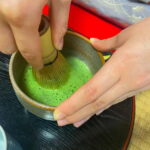
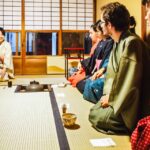
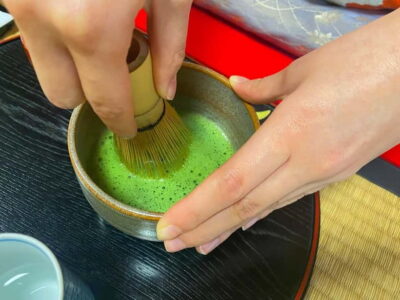
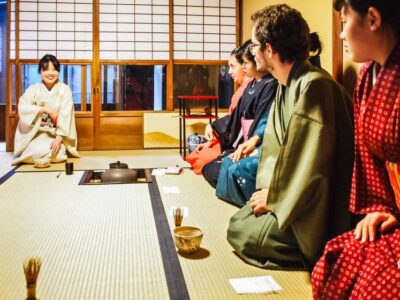
The final part moves to a quieter setting, a Kyoto-style garden. Sitting on tatami mats, you learn how to whisk your own matcha and serve it with the wagashi chosen earlier.
This ending works well. Sushi requires close attention to your hands, while matcha asks you to slow down and focus on a different kind of motion. The guide leads the preparation, so you do not need previous tea ceremony experience.
The garden setting adds atmosphere, but the real value is participation. You are not merely watching a formal tea ritual from the edge of the room. You whisk the matcha yourself, then taste it with the sweet selected at the beginning.
For many people, this will be the most peaceful part of the 210-minute session. It also gives the activity a clearer Kyoto identity. Sushi is associated with Japan as a whole, but the combination of tatami, wagashi, matcha, and a garden feels closely tied to the city’s traditional culture.
Your guide may also take photographs during the experience. That is useful because your hands are occupied during the cooking and tea sessions. You can stay focused on the class instead of constantly reaching for your phone.
What the $161 price includes
At $161 per person, this is not a cheap meal. I would judge it as a food-and-culture workshop rather than compare it with the cost of eating sushi at a casual restaurant.
The price includes a professional chef, sushi ingredients, the sushi you prepare, a tempura set, two drinks, sake tasting, wagashi, the matcha session, and tour photos. It also covers the English-speaking guide who handles translation and local explanation. Those pieces add up, particularly in a group capped at seven people.
The value is strongest if you want to learn and eat in the same sitting. A normal sushi dinner may give you more food for less money, but it will not show you how the chef shapes nigiri, let you make nine pieces yourself, or explain sake pairings as you taste them.
The value is also better for couples, families, and friends who want a shared activity. You leave with a practical sushi-rolling skill, a better sense of how nigiri is formed, and a cultural lesson that continues through the matcha and wagashi.
If your only goal is a large, inexpensive meal, I would spend the money elsewhere. This is a premium half-day-style activity built around access, instruction, translation, and participation.
Who will enjoy this Kyoto food experience?
I would recommend it most strongly to:
- First-time visitors who want an organized introduction to Japanese food culture
- Couples looking for a meal that includes an activity
- Families with children aged four or older, provided an adult supervises knife work
- Home cooks who want to learn sushi basics from a professional
- Sake drinkers who want simple pairing guidance
- Visitors who enjoy cultural activities as much as sightseeing
You do not need cooking experience. You do need to be comfortable with seafood-based food preparation and a group format.
I would not choose it for vegans, vegetarians, or anyone who needs strict gluten-free or allergy-controlled meals. It is also not suitable for wheelchair users. The practical format involves moving between several settings and includes hands-on work, so accessibility needs should be considered carefully before booking.
Timing, group size, and cancellation rules
The activity lasts 210 minutes, or three and a half hours. That is long enough for the food stops, cooking lesson, meal, sake tasting, and matcha session without forcing everything into a rushed hour.
Starting times vary, so you need to check availability for the date you want. I would avoid placing a major train journey or timed attraction immediately afterward. The program has several parts, and the guide needs to move the group through them at a steady pace.
The group is limited to seven participants, but it is still a shared experience. You will not receive uninterrupted one-on-one instruction. The small size is a good compromise between personal help and the social feel of a class.
You can cancel up to 24 hours ahead for a full refund, and the reserve-now, pay-later option lets you hold a place without paying immediately. The activity may be canceled for unsafe weather. The strictest rule is the start time, so plan around the meeting point rather than cutting it close.
My booking advice
I would book this if you want your Kyoto meal to teach you something. The combination of a Taisho chef, nine nigiri pieces, roll sushi, tempura, sake pairing, and matcha makes the three and a half hours feel varied rather than repetitive.
I would be especially happy to book it with Ayu, Ayuri, or Yuka as guide and translator, since their role is central to understanding the chefs and the cultural details. The food is only half the experience. The explanations and photographs help you enjoy the lesson without worrying about missing an instruction.
Skip it if you need a controlled allergy-free meal, a vegetarian menu, wheelchair access, or a flexible arrival time. For everyone else, $161 is a fair price for a small, guided food class that combines practical skills with a proper meal and a calm Kyoto finish.
FAQ
Where does the Kyoto sushi-making experience meet?
The meeting point is near Karasuma Oike Station Exit 5, at DIESEL Kyoto.
How long does the experience last?
The activity lasts 210 minutes, or three and a half hours.
What sushi will I make?
You will make nine pieces of nigiri sushi and roll sushi under the guidance of a professional Taisho chef.
Is the class taught in English?
The activity language is English. The guide translates the chefs’ explanations and helps answer questions.
What else is included besides sushi?
The experience includes a tempura set, two drinks, sake tasting, a matcha-making session, Japanese wagashi sweets, and tour photos.
Do I need cooking experience?
No. All cooking levels are welcome.
Can children participate?
Children aged four and older can participate. An accompanying adult must supervise children when they handle knives or take part in potentially dangerous steps.
Can the experience accommodate vegetarian, vegan, or gluten-free diets?
No. Vegetarian, vegan, and gluten-free requests cannot be accommodated. Allergy-free meals are also not guaranteed.
What happens if I arrive late?
The activity starts on time. Late arrivals cannot join, reschedule, or receive a refund.
Can I cancel for a refund?
Yes. You can cancel up to 24 hours in advance for a full refund. You can also reserve now and pay later.
More tours in Kyoto we've reviewed

Kyoto, compared.
 ★ 5.0PERFECT KYOTO 1-Day Bus TourFrom $129
 ★ 4.8Kyoto: Fushimi Inari, Kinkakuji, Bamboo Grove 1 Day Bus TourFrom $122510 minutes - 9 hours
 ★ 4.9Kyoto: Tea Ceremony in a Traditional Tea House in KiyomizuFrom $4945 min
 ★ 4.7Kyoto Geisha Walking Tour: Gion District & Hidden GemsFrom $252 hours
 ★ 4.9Kyoto: Tea Ceremony Ju-An at Jotokuji TempleFrom $291h 10m
 ★ 4.3Kyoto: 45-Minute Tea Ceremony Lesson ExperienceFrom $2245 min