
Reviewed · KYOTO
Learn Japanese guitar “Shamisen”
The best part of this Kyoto experience is the setting: you learn the shamisen, Japan’s three-string instrument, inside a private traditional house near Nijo Castle. The lesson starts with the basics, so you do not need musical experience, and it ends with green tea and seasonal Japanese sweets.
I like the small group size, limited to two people, and the way music, architecture, and tea come together in one hour. The main drawback is the price, $92.96 per person, for a short session. You should also think twice if sitting on a tatami floor is hard on your knees.
In This Review
- Key points at a glance
- Playing shamisen beside Nijo Castle
- What the one-hour lesson includes
- Why the private setting adds value
- Tea, sweets, and Japanese manners after the music
- The 3:00 pm start and Kyoto planning
- Is $92.96 a fair price?
- Sitting on tatami and other practical concerns
- Who will enjoy this Kyoto experience most?
- Should you book the shamisen lesson?
- FAQ
- Where does the shamisen lesson take place?
- What time does the activity start?
- How long does the experience last?
- Is the lesson suitable for beginners?
- How many people can join?
- What is included in the price?
- Do I need to remove my shoes?
- Can I cancel for a full refund?
Key points at a glance
- Private Kyoto townhouse: Enter a traditional residence near Nijo Castle that is not normally open for casual visits.
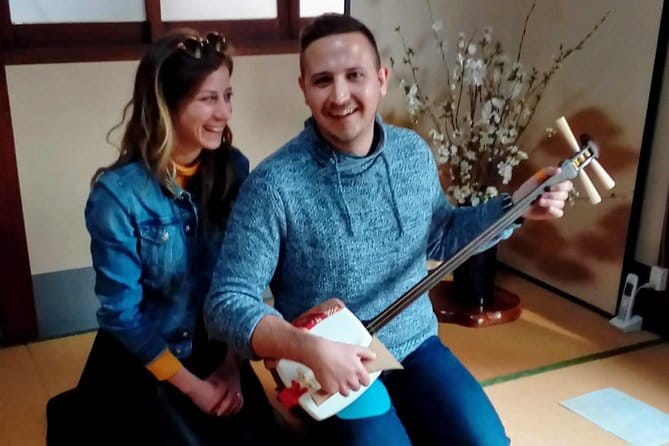
- Beginner-friendly shamisen lesson: Learn the instrument from the ground up and practice a traditional Japanese song.
- Maximum of two people: The tiny group gives the lesson a personal feel, though it may not suit anyone seeking a lively group class.
- Tea after the music: Finish with green tea, seasonal Japanese confectionery, and a look at traditional tea manners.
- One-hour format: The compact session fits neatly into an afternoon in Kyoto, with a 3:00 pm start.
- Tatami-room setting: You must remove your shoes, and the floor seating may be uncomfortable if your knees hurt.
Playing shamisen beside Nijo Castle
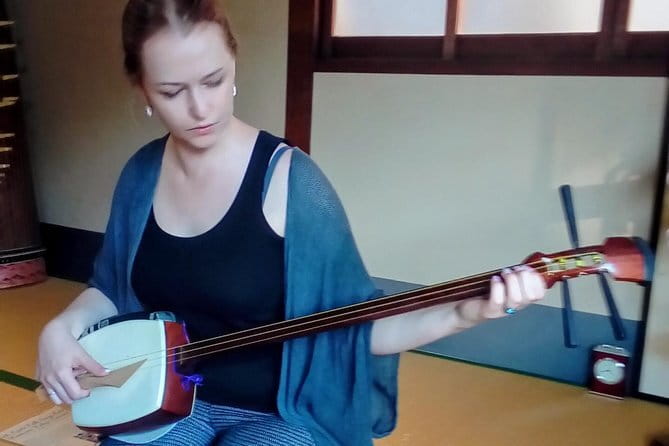
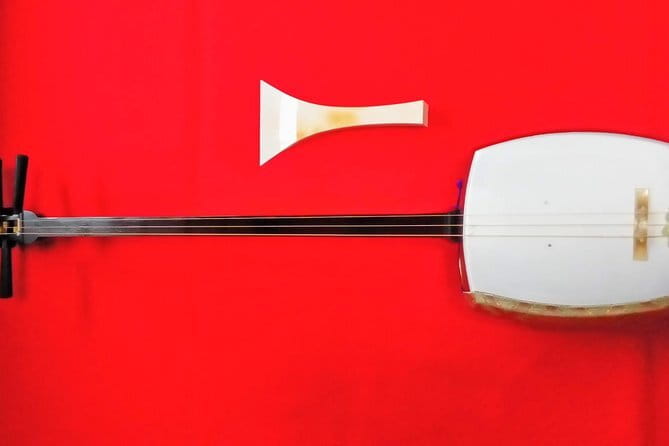
The shamisen looks a little like a guitar, but it has only three strings and a sound all its own. This class gives you a direct way to hear and handle a traditional Japanese instrument instead of only seeing one in a museum or during a stage show.
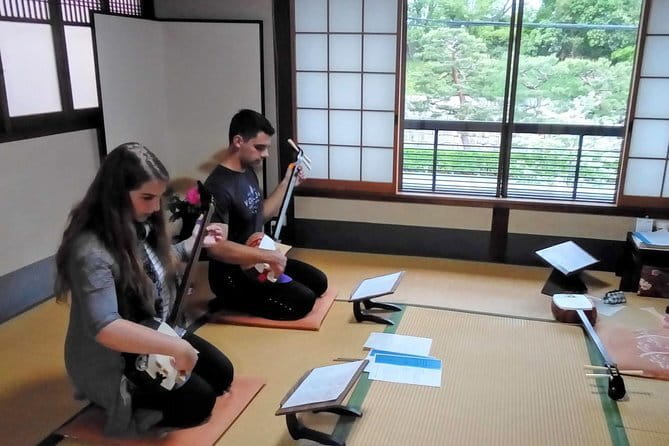
Your lesson takes place at 京都箏花洛 koto karaku, at 535-21 Warayachō in Kyoto’s Kamigyo Ward. The house is directly in front of Nijo Castle, in an area that is easy to connect with a sightseeing day. The address is close to public transportation, but private transportation is not included, so you make your own way there.
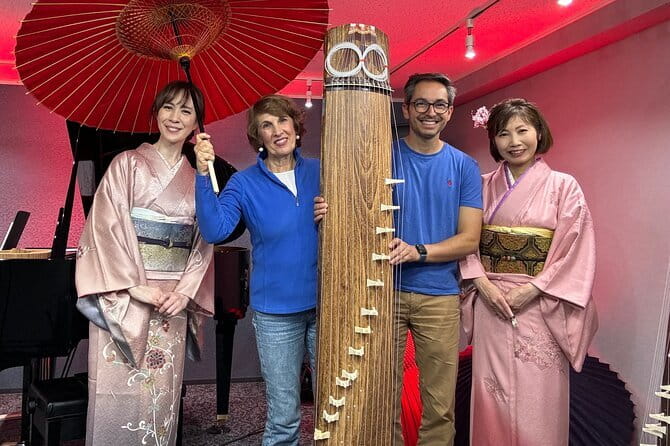
I like the fact that the lesson is not tucked into a modern studio. You enter a traditional Kyoto architectural residence, a place normally closed to ordinary passersby. That gives the hour a sense of place before you even pick up the instrument.
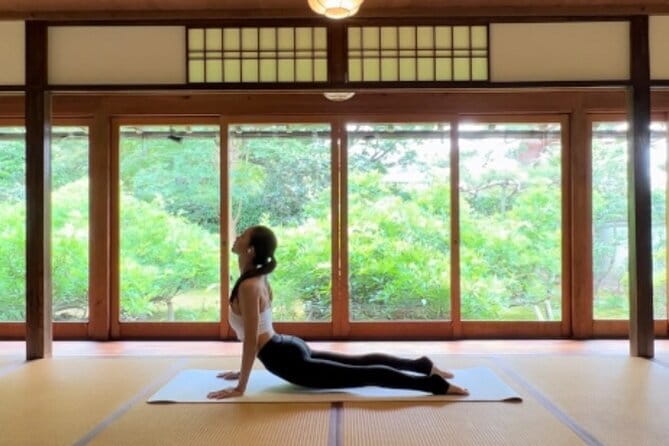
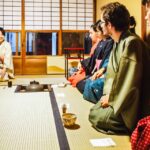
The room is a traditional tatami space. Shoes come off at the door, as they do in many Japanese homes and cultural settings. This is a small but important detail: wear socks you are comfortable being seen in, and avoid arriving with wet or muddy footwear.
If you're still narrowing it down, here are other tours in Kyoto we've reviewed.

What the one-hour lesson includes
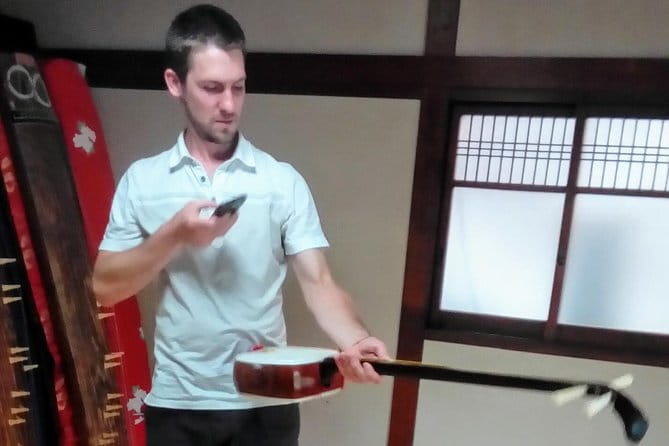
The session is designed for beginners. You learn how to play the shamisen from the basics, then work toward a traditional Japanese song. The available information does not promise that you will master a full piece in one hour, and you should not expect a conservatory-style course. Think of it as a focused introduction with enough hands-on practice to give you a feel for the instrument.
The shamisen’s three strings make the lesson approachable in one sense. You are not facing a large keyboard or a complicated arrangement. At the same time, the instrument is not automatically easy. Producing a clean, attractive sound takes control, and the class description is candid that it can be a little difficult.
That difficulty is part of the fun. If every note came out perfectly at once, the experience would feel more like a demonstration than a lesson. You get to try something unfamiliar, hear the distinctive tone, and work through a simple traditional song with guidance from a professional musician.
The room matters here. One account of a mid-December 2019 session noted that the student was alone and could hear the shamisen clearly in the traditional house. A solo lesson is not guaranteed, since the maximum is two people, but the small format should allow close attention. If two people book together, you can expect a much quieter class than a large cultural workshop.
Why the private setting adds value
Kyoto offers many ways to encounter traditional culture. Some are performances where you sit back and watch. This experience asks you to take part, but it does so in a setting with genuine architectural character.
The private residence is a major part of the appeal. You are not simply paying for access to an instrument. You are paying for instruction in a house that most people cannot enter, plus the chance to sit in a tatami room and follow local customs for a little while.
I would not book this solely for the architecture, since the activity lasts about an hour. Still, the house gives the lesson a stronger connection to Kyoto than a generic music classroom would. Its position by Nijo Castle also makes it practical. You could place the class after visiting the castle, though the exact timing of your wider day is up to you.
The small capacity has two sides. A maximum of two people means the class is intimate and less exposed than a larger group lesson. It also means you should not expect the energy or social mix of a class with ten or twenty participants. For couples, friends, or solo visitors who prefer personal instruction, that tradeoff is likely a good one.
Tea, sweets, and Japanese manners after the music
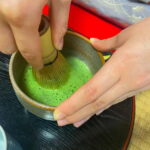
After playing the shamisen, the experience shifts from music to tea. Green tea and seasonal Japanese confectionery are included, along with an introduction to traditional Japanese manners while you enjoy them.
This final portion helps the hour feel like a cultural visit rather than a simple instrument rental. The tea gives you time to settle down after the lesson, and the sweets add a seasonal touch. The exact confectionery changes, so you should not expect a particular type in advance.
Coffee and tea are listed among the inclusions, with green tea and seasonal Japanese sweets specifically described as part of the experience. The cultural focus is clearly on green tea and the customs surrounding it.
I like this pairing because the two parts balance each other. The shamisen lesson is active and requires concentration. Tea is quieter and more reflective. You get a short taste of both performance practice and traditional hospitality without committing half a day.
Do keep your expectations sensible. This is not presented as a formal tea ceremony with an extended sequence of rituals. It is a chance to learn and observe traditional manners while drinking tea in a fitting setting.
The 3:00 pm start and Kyoto planning
The class starts at 3:00 pm and ends back at the meeting point after roughly one hour. That timing makes it an easy afternoon add-on, especially if you are already exploring central Kyoto.
The experience provider is 京都 筝 花洛 koto karaku. The listed meeting point is:
京都箏花洛 koto karaku
535-21 Warayachō
Kamigyo Ward, Kyoto 602-8144, Japan
The location is near public transportation, but you should allow time to find the residence. Traditional addresses in Kyoto can be less obvious than a large museum entrance, and the activity takes place in a private home rather than a highly visible tourist attraction. Your confirmation will be received when you book, so keep those details available on the day.
There is no private transportation included. That is not a serious weakness for an activity in Kyoto, but it does mean the $92.96 price is for the lesson and cultural experience, not door-to-door service.
The one-hour duration is both a strength and a limitation. I like it for a packed Kyoto schedule. You can fit it between major sights without surrendering an entire afternoon. If you are seeking a serious music course or a longer introduction to shamisen, the short session may feel too brief.


Is $92.96 a fair price?
At $92.96 per person, this is not a bargain activity in the usual sense. You could spend less on a self-guided cultural visit or a casual sightseeing stop. The value comes from the combination of professional instruction, private access to a traditional residence, a maximum group size of two, and tea with seasonal sweets.
For one person booking alone, the cost is easier to justify if personal attention matters to you. A private or near-private lesson can make a beginner more comfortable, especially when the instrument is unfamiliar and the technique takes some effort.
For two people, the price buys a shared experience rather than a standard sightseeing ticket. You can learn together, compare your first attempts, and then sit down for tea. I would consider it a good splurge for someone who values hands-on culture and does not want another passive tour.
The price is harder to justify if your main goal is simply to hear shamisen music. This class is for playing, not just listening. It is also less appealing if your Kyoto budget is tight or if you would rather spend several hours at a major sight.
Since the average booking point is 27 days ahead, I would not leave this until the last minute if the 3:00 pm slot matters to you. The capacity is only two people, and the limited format can fill well before the date.
Sitting on tatami and other practical concerns
The venue uses a tatami room, and you remove your shoes. The activity is not recommended if your knees hurt. That warning deserves attention because the class and tea portion both take place in a traditional Japanese interior, where floor seating is part of the experience.
If your knees are healthy, the tatami setting should add to the atmosphere. If you have trouble sitting on the floor, contact the provider before booking to ask what arrangements may be possible. The supplied details do not promise chairs or other seating, so you should not assume they will be available.
Most people can participate, and the activity is near public transportation. No special musical background is needed. The lesson begins with fundamentals, making it suitable for someone who has never held a shamisen.
The mobile ticket is convenient. You can keep the booking on your phone rather than arranging a paper voucher. Confirmation is provided at booking, so check the meeting address and start time before setting out.
Free cancellation is available if you cancel at least 24 hours before the 3:00 pm start. If you cancel or request changes within 24 hours, you will not receive a refund and changes will not be accepted. The cut-off follows Kyoto local time.
Who will enjoy this Kyoto experience most?
I would choose this class if you want a personal cultural activity with a clear beginning and end. It suits you especially well if you like trying traditional arts, prefer small groups, and appreciate historic homes more than polished entertainment venues.
It is also a good fit for:
- First-time shamisen players who want instruction from the basics
- Couples or friends looking for a shared Kyoto activity
- Solo visitors who are comfortable with a small, quiet lesson
- Music lovers who want to make the sound themselves
- Visitors already planning time near Nijo Castle
- People who enjoy tea, sweets, and traditional Japanese manners
I would be more cautious if you want a long lesson, a large social group, or a low-cost activity. The hour passes quickly, and the class is an introduction rather than a full study of shamisen.
The setting may also be less comfortable for children or adults who dislike removing shoes or sitting on tatami. The information says most people can participate, but it specifically flags knee pain, so take that seriously.
Should you book the shamisen lesson?
Book it if you want to do something distinctly Japanese in a private Kyoto home, especially if you are happy to pay for personal attention and a carefully chosen setting. The strongest features are the tiny group, beginner-level teaching, traditional song practice, and tea afterward.
Skip it if your priority is value measured by hours, or if you only want to watch a performance. At $92.96 for about an hour, the experience works best as a special cultural splurge.
For the right visitor, the short length is a benefit. You get music, architecture, tea, and a memorable change of pace without giving up a full day of sightseeing. Just arrive ready to remove your shoes, sit on the floor, and accept that your first shamisen notes may be more adventurous than elegant.
FAQ
Where does the shamisen lesson take place?
It takes place at 京都箏花洛 koto karaku, 535-21 Warayachō, Kamigyo Ward, Kyoto 602-8144, Japan. The traditional residence is directly in front of Nijo Castle.
What time does the activity start?
The activity starts at 3:00 pm.
How long does the experience last?
The experience lasts approximately one hour and ends back at the meeting point.
Is the lesson suitable for beginners?
Yes. The shamisen instruction begins with the basics, and no previous experience is stated as a requirement.
How many people can join?
The activity has a maximum of two participants.
What is included in the price?
The price includes use of a shamisen, coffee and/or tea, green tea, and seasonal Japanese confectionery.
Do I need to remove my shoes?
Yes. The venue is a traditional Japanese tatami room where shoes are removed.
Can I cancel for a full refund?
Yes, if you cancel at least 24 hours before the experience start time. Cancellations or changes made less than 24 hours before the start are not accepted, and the amount paid will not be refunded.
More tours in Kyoto we've reviewed










Kyoto, compared.
 ★ 5.0PERFECT KYOTO 1-Day Bus TourFrom $129
 ★ 4.8Kyoto: Fushimi Inari, Kinkakuji, Bamboo Grove 1 Day Bus TourFrom $122510 minutes - 9 hours
 ★ 4.9Kyoto: Tea Ceremony in a Traditional Tea House in KiyomizuFrom $4945 min
 ★ 4.7Kyoto Geisha Walking Tour: Gion District & Hidden GemsFrom $252 hours
 ★ 4.9Kyoto: Tea Ceremony Ju-An at Jotokuji TempleFrom $291h 10m
 ★ 4.3Kyoto: 45-Minute Tea Ceremony Lesson ExperienceFrom $2245 min