
Reviewed · KYOTO
Roketsu dyeing experience: M course Roketsu Dyeing Experience
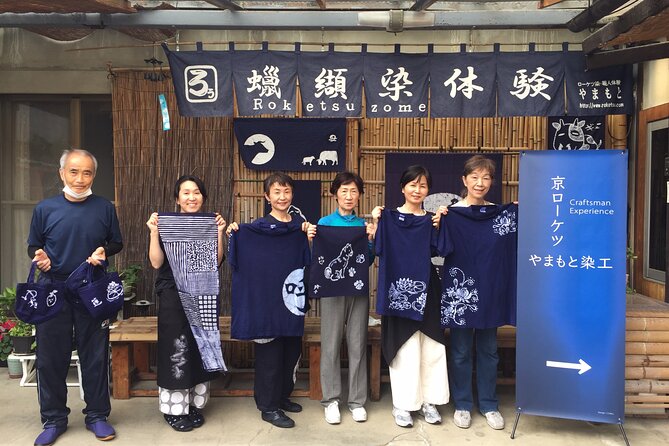
Kyoto’s Roketsu workshop lets you draw your own design and dye it yourself, rather than simply watching a craft demonstration. You choose a stencil or work freehand, apply melted wax to fabric, and see the finished piece emerge through traditional bucket dyeing.
I like the calm, hands-on pace and the fact that your finished shirt, bag, or wall hanging is ready to take home the same day. I also like the warm family-run setting, where the owner and his mother Yoko guide you through each step without demanding perfect art skills.
The main thing to consider is communication. The instructors speak limited English, so demonstrations and hands-on help carry much of the explanation. Intricate designs can also stretch a planned 90 minutes to two or three hours.
In This Review
- Key Points Before You Book
- What Roketsu Dyeing Adds to a Kyoto Day
- Arriving at Roketsu73 in Nishikyogoku
- Choosing Between a Shirt, Bag, Banner, or Wall Hanging
- Picking a Pattern Without Overthinking It
- Applying Wax and Building the Design
- The Bucket Dyeing Reveal
- Working With the Owner and Yoko
- Why the $25.77 Price Is Strong Value
- Who Will Enjoy This Most
- Timing, Weather, and Cancellation Practicalities
- My Advice for Getting the Best Result
- Should You Book the Roketsu Workshop?
- FAQ
- Where does the Roketsu dyeing experience take place?
- How long does the activity take?
- What can I make during the workshop?
- Can I choose my own design?
- Do I need drawing or craft experience?
- Can I take my finished item home immediately?
- Is the workshop suitable for families?
- Is the experience available by public transportation?
- What happens if the experience is canceled because of weather?
Key Points Before You Book
- Traditional bucket dyeing: You take part in the full process, not just a quick craft demonstration.
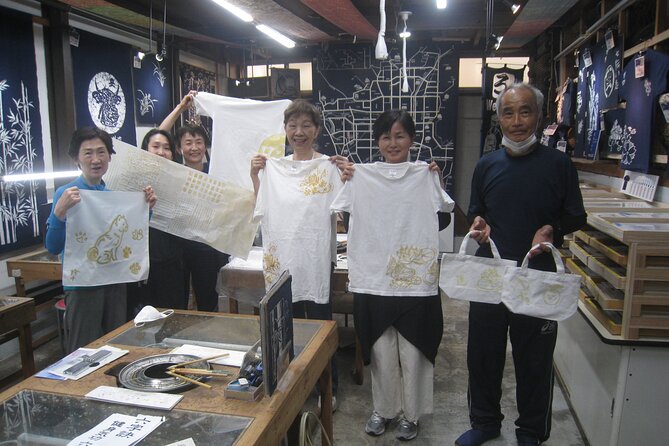
- Choose your own project: Options include T-shirts, tote bags, decorative banners, and wall hangings.
- Hundreds of design choices: Use the studio’s stencils, combine patterns, or bring your own sketch.
- A souvenir made by you: Your finished item can be collected on the day.
- Relaxed family workshop: The owner and his mother Yoko offer patient, practical help.
- Good value at $25.77: The price includes a cultural activity and a personal item you can keep using or display.
What Roketsu Dyeing Adds to a Kyoto Day
Many Kyoto sightseeing days are built around temples, shrines, gardens, and long walks. This workshop gives you a different kind of connection to the city. You sit down, work with your hands, and make something that carries your own choices rather than a shop label.
Roketsu is a wax-resist dyeing method. You place wax on parts of the fabric that should resist the dye. The dye colors the uncovered areas, while the wax protects the design. Once the wax is removed, the pattern appears in the cloth.
That basic idea is easy to grasp, but the finished result has plenty of character. Small differences in the wax, dye, and fabric mean that two people using similar sketches will not produce identical pieces. Your work can look planned and personal at the same time.
This is not presented as a formal museum lecture. You get involved. The studio staff demonstrate the process, help you handle the materials, and step in when you need a correction or suggestion. The result is a working craft session with a cultural element, not a passive sightseeing stop.
If you're still narrowing it down, here are other tours in Kyoto we've reviewed.
Arriving at Roketsu73 in Nishikyogoku
The workshop is at Roketsu73, Nishikyogoku Umazukacho, in Kyoto’s Ukyo Ward. It is outside the city’s busiest sightseeing core, but the studio is near public transportation and has been described as easy to reach.
That location matters. You are not being swept through a crowded tourist attraction with a fixed photo stop. The workshop gives you a slower few hours in a local setting, with the craft itself as the focus.
The activity begins and ends at the same meeting point. Allow a little flexibility around the stated duration, especially if you are visiting with children, working alone, or choosing a detailed pattern. The official estimate is about 90 to 120 minutes, but more complex designs have taken about three hours.
The studio can accept up to 30 participants. That is a fairly large maximum for a craft class, so the feel may depend on how many people are booked at your time. The owner and his mother provide individual help, but you should not expect the quiet, private attention of a one-person lesson.
Choosing Between a Shirt, Bag, Banner, or Wall Hanging
The first creative decision is the item you want to dye. Available choices mentioned by participants include T-shirts, tote bags, decorative banners, and wall hangings. The right choice depends on how you plan to use the souvenir.
A T-shirt gives you something practical to wear after the trip. It also gives the design a larger, more visible surface, though folds and seams may make placement important. A tote bag is a useful middle ground and can work well for a first attempt.
A banner or wall hanging is better if you want the craft to become a home decoration. These pieces can also suit a design with a strong central image or a long repeated pattern.
You select the item before working on the design. Since the price is only $25.77 per person, the activity offers good value if the chosen item is included in that experience price, as the supplied details indicate. If you want to make several pieces, confirm the current options and any added charges when booking.
Picking a Pattern Without Overthinking It
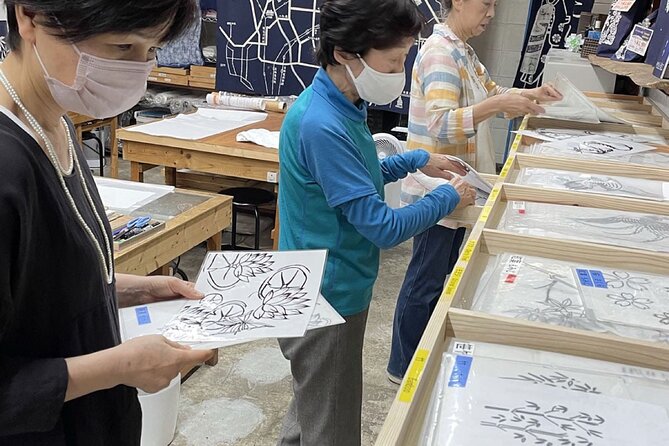
The studio has dozens, and in some descriptions hundreds, of stencil designs. You can select one pattern, combine several ideas, or create a freehand drawing. You may also bring your own sketch if you already have something in mind.
I would not arrive with the goal of making a perfect artwork. The charm of this process is that small irregularities remain part of the result. A simple design with clear shapes may be easier to manage than an elaborate image packed with tiny details.
A practice run on a small piece of cloth is part of the process described by participants. This is useful for testing your hand and seeing how the wax behaves before you work on the final fabric.
If you are not confident at drawing, use the stencils. The instructors can show you how to arrange and apply them, and the finished work can still feel personal because you choose the combination and placement.
If you are comfortable drawing, freehand work gives you more control. You can also mix a stencil with your own lines. Families can choose different patterns, and solo participants can take their time without feeling out of place.
Applying Wax and Building the Design
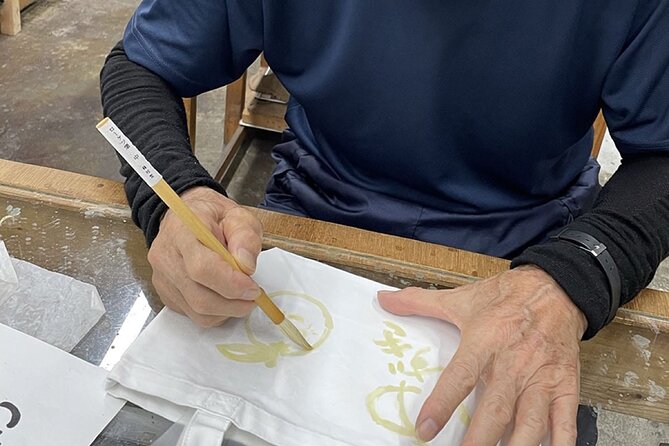
Once you have chosen your fabric and pattern, you apply melted wax to the areas that should remain protected from the dye. This is the point where the workshop becomes truly hands-on.
You do not need advanced art skills. The staff guide you through the technique, and their help is especially useful when you are unsure how much wax to apply or how to keep the edges of a design clear.
The language barrier can make the first explanation less precise. English is limited, so you may need to watch closely and follow the visual demonstration. The process is practical enough that many people manage through a mixture of showing, copying, and short instructions.
This is also where patience helps. If you choose a detailed image, the drawing stage may take far longer than expected. One family spent several hours because different members chose complex designs, while other participants finished sooner. You are not forced to rush, but a full design can turn a two-hour activity into a half-day commitment.
For that reason, keep your wider Kyoto schedule loose. Do not place this workshop between two reservations with tight travel times.

The Bucket Dyeing Reveal
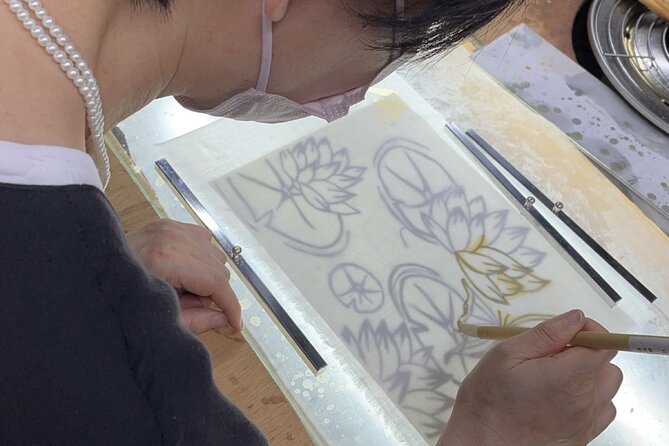
After the wax has been applied, the fabric is dyed using the workshop’s traditional bucket dyeing process. This is the part many craft classes would handle entirely for you, but here you get to experience the complete dyeing method.
The dye transforms the plain fabric, while the waxed sections resist the color. When the wax is removed, the pattern becomes visible. This reveal gives the activity a real payoff because you can see how your earlier choices affected the final piece.
The end result is not always perfectly predictable. That is a benefit if you like handmade work, but a possible drawback if you want precise, factory-like lines. The process creates variation, and the owner’s skill helps bring out a strong result even when your own technique is basic.
The studio finishes the item so you can take it home on the day. That makes the workshop especially practical during a short Kyoto stay. You do not need to return later or arrange shipping for the standard experience described here.
Working With the Owner and Yoko
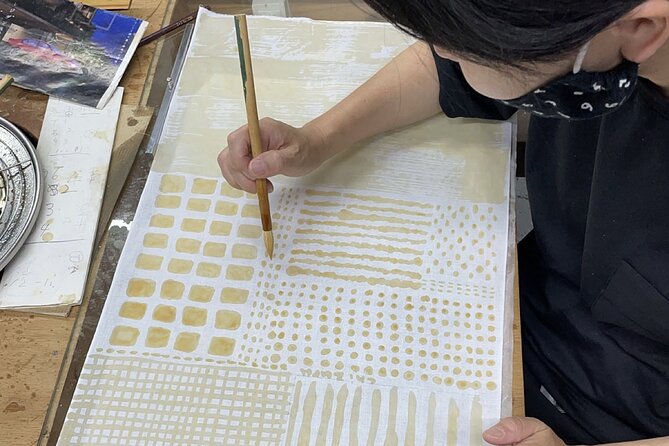
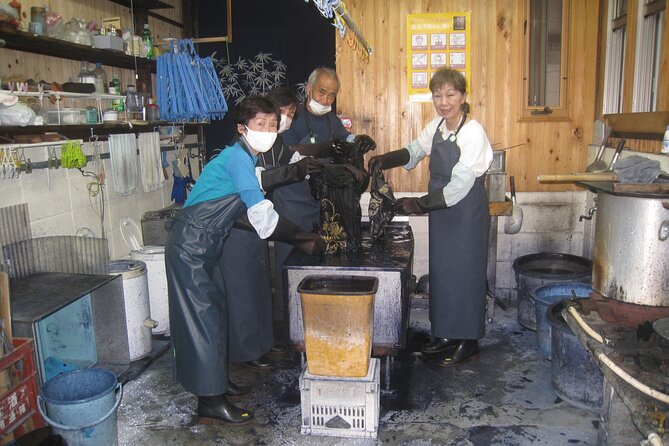
The strongest part of the experience is the personal guidance. The owner and his mother Yoko help with the design and dyeing process, and the family-run setting gives the class a friendly, informal feel.
You can expect them to show you each step and offer corrections when needed. Their help is gentle rather than hurried. That matters if you are working with young children, trying a craft for the first time, or worried that your drawing will not be good enough.
The family atmosphere also suits people who want a more local activity. You are supporting a small workshop rather than spending another hour in a major sightseeing venue.
Still, set realistic expectations about language. The instructors speak little English, and one of the practical challenges is understanding detailed explanations. The activity remains accessible because it is visual and physical, but this is not the best choice if you want long spoken explanations about dye chemistry or Kyoto textile history.
Why the $25.77 Price Is Strong Value
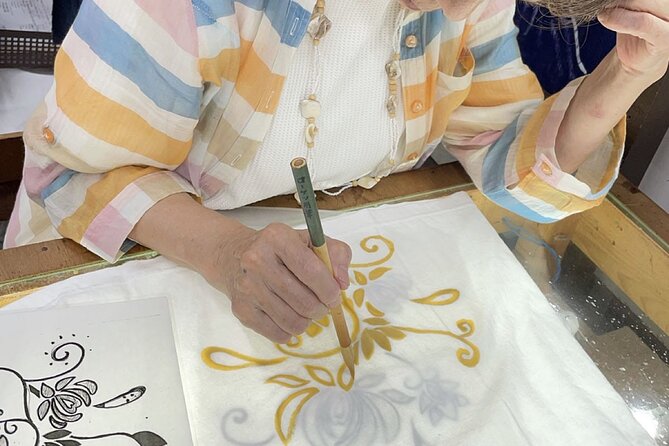
At $25.77 per person, the workshop is inexpensive compared with many organized Kyoto activities. You receive roughly two hours of instruction and practical work, plus a personal textile that you can take home that day.
The value is not just in the material object. You also get the memory of making it, and the result can be worn or displayed. A mass-produced souvenir may cost less, but it will not carry your own pattern choices or the story of how it was made.
The price looks particularly good for families. Parents and teenagers can work side by side, and the activity gives everyone something to do rather than asking children to quietly follow another temple visit. A family of six has completed the activity together, with the adults and teens choosing different items and designs.
The main value question is time. If you need a quick 60-minute stop, this may not fit. If you want a slower break from sightseeing and are willing to spend 90 minutes to three hours, the cost is easy to justify.
Who Will Enjoy This Most
I would recommend Roketsu dyeing to:
- People who enjoy crafts, drawing, or handmade design
- Families with children and teenagers
- Couples looking for a shared souvenir
- Solo visitors who want a calm activity
- Anyone who needs a seated break from walking
- Visitors seeking a traditional Japanese craft outside the main tourist circuit
You do not need to be artistic. The stencil selection and staff guidance make the activity approachable, and even simple designs can produce attractive results.
It may be less suitable if you dislike hands-on work, want a tightly scheduled tour, or need detailed instruction in fluent English. It is also not ideal for anyone who expects every final piece to look identical to a sample.
Most people can participate, and service animals are allowed. The experience is near public transportation, but the exact route is not provided here, so check the meeting point carefully before setting out.
Timing, Weather, and Cancellation Practicalities
The workshop normally takes about two hours, but treat that as an estimate rather than a guarantee. Simple designs may finish within the planned 90 to 120 minutes. Freehand drawings, large groups, and intricate patterns can take longer.
Book ahead if possible. The experience has been booked more than ten times in a recent week, and popular time slots may fill. Confirmation is issued within 48 hours, subject to availability.
Free cancellation is available when you cancel at least 24 hours before the local start time. Cancellations or changes made inside that window are not accepted for a refund.
The activity requires good weather. If poor weather causes a cancellation, you are offered another date or a full refund. Although the craft takes place indoors, you should still keep that weather-related condition in mind when planning.
My Advice for Getting the Best Result
Choose a design you can complete without pressure. A bold, clean image often works better than a highly detailed picture if you have never applied wax before.
Arrive with an open mind about small variations. The point is not to reproduce a machine-made pattern. The finished piece may have uneven edges or subtle differences in color, and those marks show that you made it by hand.
If you bring your own sketch, keep the main shapes clear. The studio allows original works, but the staff still need to translate your idea into a workable wax-resist design.
Give yourself extra time after the workshop. You may finish in two hours, but you might also want to stay longer while refining your drawing. The studio does not appear to rush people who need more time, which is helpful but makes a tight follow-up plan risky.
Should You Book the Roketsu Workshop?
Book it if you want a personal Kyoto souvenir, a calm break from walking, and a direct connection with a traditional craft. The combination of stencil choice, freehand design, bucket dyeing, and same-day pickup gives you more involvement than a standard demonstration.
I would especially choose it for a family, a creative couple, or a solo visitor who wants to make something rather than buy something. The price is fair, the activity is unusual, and the guidance makes it friendly to beginners.
Skip it if you need fluent English instruction, have no spare time beyond a fixed two-hour window, or prefer polished factory-perfect results. For everyone else, Roketsu73 offers a memorable and practical Kyoto experience with a souvenir that truly belongs to you.
FAQ
Where does the Roketsu dyeing experience take place?
It takes place at Roketsu73, Nishikyogoku Umazukacho, Ukyo Ward, Kyoto, Japan.
How long does the activity take?
The stated duration is about two hours, or roughly 90 to 120 minutes. Detailed designs and larger groups can take longer, with some participants spending about three hours.
What can I make during the workshop?
Options mentioned include a T-shirt, tote bag, decorative banner, or wall hanging. The exact available selection may depend on the workshop’s current choices.
Can I choose my own design?
Yes. You can select from the studio’s stencil designs, combine patterns, work freehand, or bring your own sketch for an original piece.
Do I need drawing or craft experience?
No. The workshop provides guidance through each step, and the stencil options make it suitable for beginners.
Can I take my finished item home immediately?
Yes. The finished item can be taken home on the day, usually after about 90 to 120 minutes, though complex designs may require more time.
Is the workshop suitable for families?
Yes. Most people can participate, and families with children and teenagers have completed the activity together.
Is the experience available by public transportation?
The workshop is near public transportation. The provided information does not specify a particular station or route.
What happens if the experience is canceled because of weather?
You will be offered a different date or a full refund if poor weather causes the activity to be canceled.
More tours in Kyoto we've reviewed




Kyoto, compared.
 ★ 5.0PERFECT KYOTO 1-Day Bus TourFrom $129
 ★ 4.8Kyoto: Fushimi Inari, Kinkakuji, Bamboo Grove 1 Day Bus TourFrom $122510 minutes - 9 hours
 ★ 4.9Kyoto: Tea Ceremony in a Traditional Tea House in KiyomizuFrom $4945 min
 ★ 4.7Kyoto Geisha Walking Tour: Gion District & Hidden GemsFrom $252 hours
 ★ 4.9Kyoto: Tea Ceremony Ju-An at Jotokuji TempleFrom $291h 10m
 ★ 4.3Kyoto: 45-Minute Tea Ceremony Lesson ExperienceFrom $2245 min