
Reviewed · KYOTO
Traditional Concert in Public bath near Kyoto Station
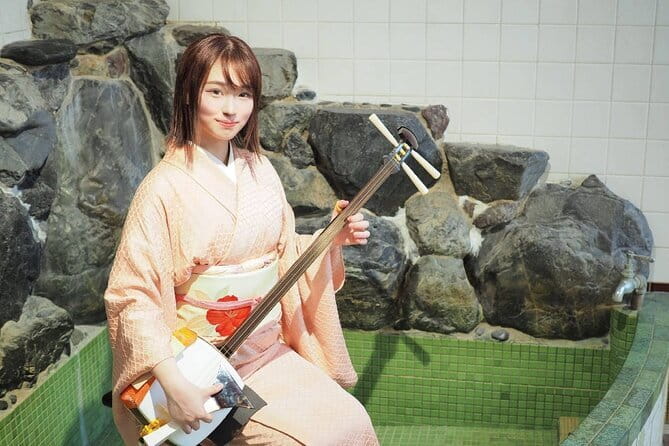
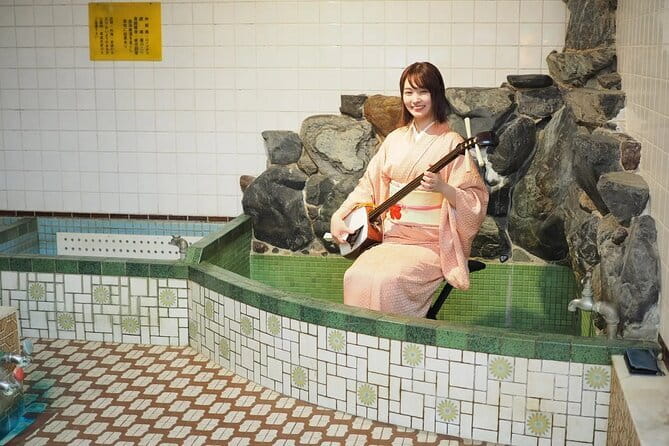
A concert in a former Japanese sento is already more interesting than a standard theater performance. At Kujo-yu, the old bathhouse’s tiled walls and high ceiling help carry the delicate sounds of the koto and shamisen through the room.
I like the setting, which gives you a close look at a local building with a new purpose. I also like the changing program, which can include classical pieces, modern arrangements, and original music. The main drawback is the short length: at about one hour, this is a focused introduction rather than a full evening of music.
In This Review
- Key points to know before booking
- Why a former sento makes such a good concert hall
- Koto and shamisen, heard up close
- Entering Kujo-yu near Kyoto Station
- What the one-hour program feels like
- Is $32.52 good value?
- Who should book this concert?
- Practical details that shape the experience
- My take: a smart Kyoto add-on for the right audience
- FAQ
- Where does the concert take place?
- How long does the concert last?
- What instruments are featured?
- What kind of music is performed?
- Does the program stay the same for every concert?
- How much does admission cost?
- What does the ticket include?
- Are coffee or tea included?
- Is private transportation provided?
- Can I cancel for a refund?
Key points to know before booking
- A former bathhouse becomes the concert hall: Kujo-yu’s tiled walls and high ceiling create a setting you will not find in a normal music venue.
- Koto and shamisen take center stage: You hear two important Japanese instruments in a small, focused performance.
- The music changes with the season and performers: The program may range from classical Japanese works to new arrangements and original compositions.
- The location is near Kyoto Station: This makes the concert an easy cultural addition to a day of sightseeing.
- The ticket costs $32.52 per person: For roughly an hour of live music in a distinctive historic space, the value is strongest if you care about atmosphere as much as performance length.
- You get a mobile ticket: Confirmation arrives at booking, and public transportation is nearby.
Why a former sento makes such a good concert hall
Kyoto has no shortage of temples, gardens, tea rooms, and conventional performance spaces. Kujo-yu gives you something different: a former public bathhouse that has been carefully renovated and given a new life as a community-oriented space.
A sento was built for everyday use. People came to wash, relax, and spend time in a shared local setting. Even after its renovation, Kujo-yu keeps the visual character that makes a bathhouse memorable. The tiled surfaces and tall ceiling are not decoration added for tourists. They are part of the building’s original purpose.
That architecture matters to the music. The koto has a delicate, plucked sound, while the shamisen has a firmer, more pointed tone. In a room with hard tiled walls, those notes can travel clearly. You may notice the sound of each string hanging in the air a little longer than it would in a heavily carpeted hall.
I like this kind of venue because it connects the performance to daily Japanese life. You are not only sitting in front of instruments. You are hearing traditional music inside a place that once served the local community. That link gives the concert a sense of place that a generic auditorium cannot provide.
The setting also makes the event feel personal. The information provided does not specify the size of the audience, but the concert is described as intimate. You should expect a concentrated performance rather than a large production with elaborate staging or a full orchestra.
A few more Kyoto tours and experiences worth a look
Koto and shamisen, heard up close
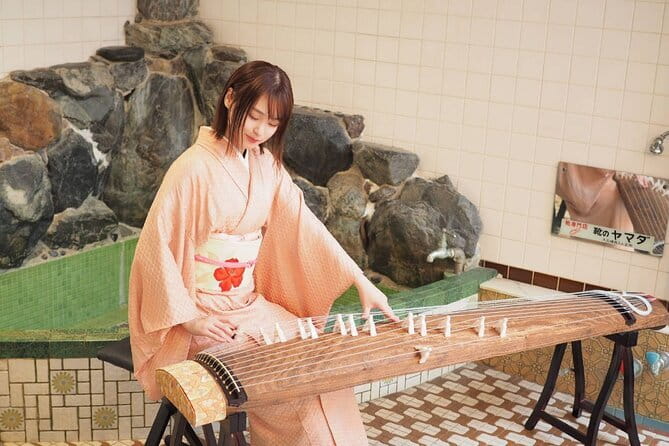
The koto is a traditional Japanese string instrument with a long body and multiple strings. Its sound can be gentle and precise, with notes that suit quiet, measured music. The shamisen is a three-stringed instrument with a distinct tone and a stronger attack. Hearing the two instruments in the same program gives you a useful contrast.
If Japanese music is new to you, this concert offers a manageable first step. You do not need a long background in musical styles or Japanese history to appreciate the difference between the instruments. The room and the short running time help keep the experience approachable.
The program is not limited to one narrow style. You may hear classical Japanese masterpieces, contemporary arrangements, and original compositions. This variety is important because it keeps the concert from feeling like a museum display. Traditional instruments can carry old music, but they can also be used in newer works.
The exact pieces are not fixed. The repertoire changes according to the season and the performers. That is a benefit if you return to Kyoto or happen to attend at a different time, though it also means you cannot choose the concert based on a particular composition.
The available information does not name the individual musicians or explain the balance between koto and shamisen in each performance. If you need a precise set list or want to hear a specific artist, check the current details before booking. If you mainly want a thoughtful introduction to Japanese instruments, the changing program should work in your favor.
Entering Kujo-yu near Kyoto Station
The venue, Kujo-yu, is near Kyoto Station and close to public transportation. That location makes the concert easy to add before or after other plans. You can place it into a day that already includes central Kyoto sights without committing to a long excursion outside the city.
The name you may see for the venue is コワーケーションスペース九条湯. The building is a former sento, and its current use gives the event a slightly unusual character. You are going to a concert, but the room still carries the visual language of a bathhouse.
Do not expect a large tourist attraction with many exhibits or a long guided explanation. The core activity is simple: enter the renovated space, take your place, and listen. The experience gains its appeal from the building, the instruments, and the performance itself.
Because the concert lasts about one hour, timing is one of its strengths. Kyoto sightseeing days can become tiring, especially when you are moving between temples and crowded streets. A short seated performance gives you a cultural break without taking up an entire afternoon or evening.
The tradeoff is that the one-hour format leaves little room for extra programming. Coffee and tea are not included, and private transportation is not included. You will need to arrange your own way to the venue, but public transportation is nearby.
What the one-hour program feels like

The concert’s structure is not described in detail, so you should not expect a fixed lecture, instrument demonstration, or formal tour of the bathhouse unless the current performance notes say otherwise. The reliable promise is live traditional Japanese music in the renovated sento.
That simplicity can be a good thing. You are not paying for a long package filled with unrelated stops. The ticket covers the concert, so most of your time goes toward listening. For someone with limited time in Kyoto, this makes the event easy to understand and easy to fit into a busy schedule.
The room itself is part of the experience from the moment you arrive. High ceilings and tiled walls give Kujo-yu a look unlike a standard concert room. As the music travels through the space, the old bathhouse becomes part of the performance rather than a separate backdrop.
I would approach this as a quiet cultural hour, not as a big spectacle. The appeal lies in attention to sound and place. If you enjoy intimate performances, unusual architecture, and a closer connection to local culture, that is a strong combination.
If you prefer a fast-moving activity with several sights, this may feel too still. The concert asks you to sit and listen. That is exactly why it works for some schedules and not for others.
Is $32.52 good value?
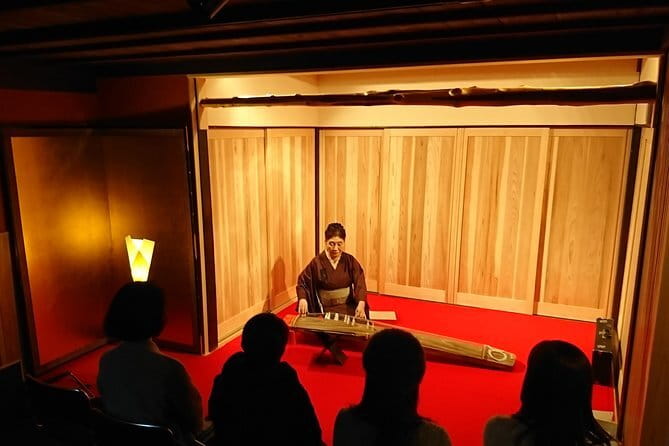
At $32.52 per person, the price is reasonable if you value a distinctive venue and live performance. A standard one-hour concert can feel expensive when the hall is ordinary. Here, the former bathhouse gives the ticket an added layer of interest.
You are paying for more than a short musical slot. The price includes admission to the concert, access to a carefully renovated historic community space, and the chance to hear Japanese instruments in a room with unusual acoustics. There is no private transportation, food, or drink folded into the cost, so compare it with what you want from the outing.
The value is strongest for a visitor who wants something beyond Kyoto’s familiar temple route. This is not a replacement for a major theater production, and the one-hour duration limits the amount of music you will hear. Still, it can be a smart choice when you want a compact cultural activity near the station.
I would also consider the cost in relation to your overall schedule. If you are spending a full day visiting major sights, the concert offers a clear beginning and end. You do not need to reserve a large part of the day for it. That convenience has real value in Kyoto.

Who should book this concert?
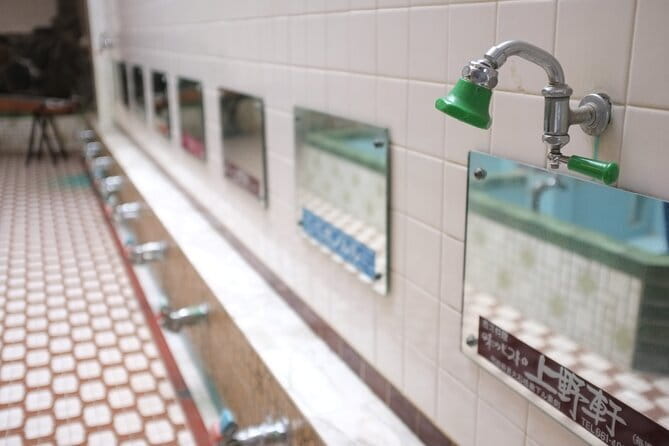
This experience suits you best if you like small-scale cultural events and unusual buildings. It is a good match for first-time visitors who want to hear traditional Japanese instruments without committing to a long formal performance.
Music lovers should appreciate the chance to hear koto and shamisen in a room that supports their sound. The varied repertoire also gives you more than a single historical style. Classical pieces, modern arrangements, and original works can show how these instruments continue to be used.
It is also a good choice for couples, solo visitors, and families whose members can sit quietly for an hour. The available information says most people can participate, so you do not need specialist musical knowledge or a particular level of experience.
You may want to skip it if you are looking for a large stage show, a detailed walking tour, or a meal-and-music package. Coffee and tea are not included, and there is no private ride. The concert is narrow in scope, but it delivers that scope clearly.
Practical details that shape the experience
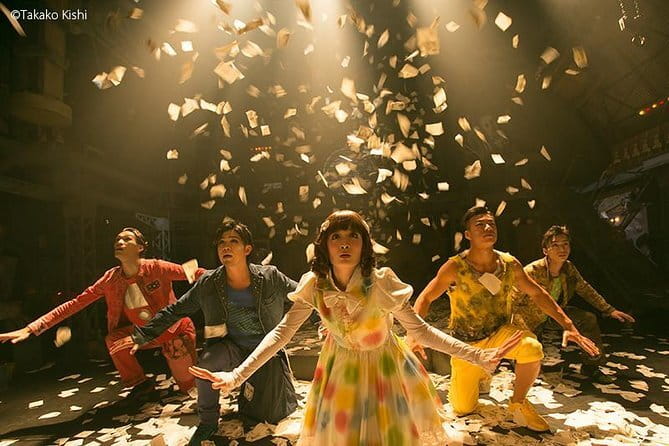
Your ticket is mobile, and confirmation is provided when you book. Keep the ticket available on your phone so you can present it at the venue.
The concert takes place in Kyoto, at Kujo-yu near Kyoto Station. Public transportation is nearby. The experience does not include private transportation, so plan your route before the performance rather than assuming a pickup service.
The ticket includes admission to the concert only. Coffee and tea are not included, so do not book this expecting refreshments as part of the program.
The experience is approximately one hour. Since the program changes with the season and performers, the exact musical content can vary. That is worth remembering if you are booking far ahead, which many people do. The average booking point is about 32 days in advance, so popular dates may deserve early attention.
Free cancellation is available if you cancel at least 24 hours before the local start time. A cancellation made less than 24 hours before the start is not refunded, and changes inside that window are not accepted. This gives you flexibility early on, but not at the last minute.
My take: a smart Kyoto add-on for the right audience
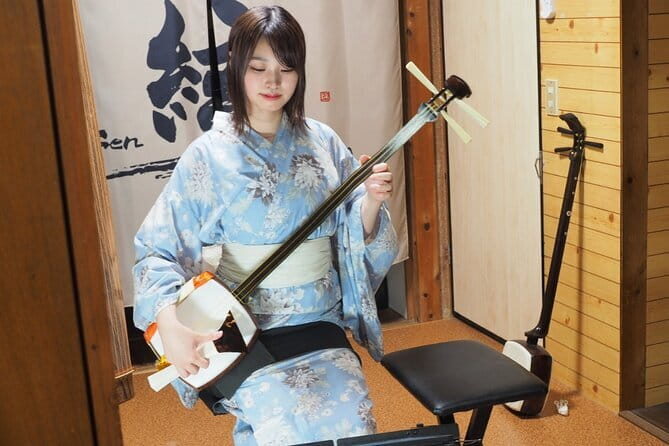
I recommend this concert if you want a short, memorable encounter with Japanese music in a setting that feels tied to local life. The renovated Kujo-yu bathhouse is the main attraction, and the koto and shamisen make good use of its high ceiling and tiled surfaces.
The strongest reasons to book are the unusual venue, the intimate format, and the changing program. The main limits are equally clear: it lasts only about an hour, includes no refreshments or private transportation, and does not promise a particular set list or named performer.
Book it when you want your Kyoto itinerary to include something beyond temples and photographs. Skip it if you need a large-scale performance or a packed activity with several stops. At $32.52, it is a fair purchase for a focused cultural hour, especially when the atmosphere of the old sento matters as much to you as the music.
FAQ
Where does the concert take place?
The concert takes place at コワーケーションスペース九条湯, also called Kujo-yu, a renovated former Japanese sento near Kyoto Station.
How long does the concert last?
The experience lasts approximately one hour.
What instruments are featured?
The concert features traditional Japanese instruments including the koto and shamisen.
What kind of music is performed?
The program can include classical Japanese masterpieces, contemporary arrangements, and original compositions.
Does the program stay the same for every concert?
No. The repertoire changes according to the season and the performers.
How much does admission cost?
The listed price is $32.52 per person.
What does the ticket include?
The ticket includes admission to the concert.
Are coffee or tea included?
No. Coffee and tea are not included.
Is private transportation provided?
No. Private transportation is not included, but the venue is near public transportation.
Can I cancel for a refund?
Yes. You can receive a full refund by canceling at least 24 hours before the local start time. Less than 24 hours before the start, refunds and changes are not accepted.
More Concerts & Music in Kyoto
More tours in Kyoto we've reviewed





Kyoto, compared.
 ★ 5.0PERFECT KYOTO 1-Day Bus TourFrom $129
 ★ 4.8Kyoto: Fushimi Inari, Kinkakuji, Bamboo Grove 1 Day Bus TourFrom $122510 minutes - 9 hours
 ★ 4.9Kyoto: Tea Ceremony in a Traditional Tea House in KiyomizuFrom $4945 min
 ★ 4.7Kyoto Geisha Walking Tour: Gion District & Hidden GemsFrom $252 hours
 ★ 4.9Kyoto: Tea Ceremony Ju-An at Jotokuji TempleFrom $291h 10m
 ★ 4.3Kyoto: 45-Minute Tea Ceremony Lesson ExperienceFrom $2245 min