
Reviewed · WORKSHOPS
Kyoto: Japanese Music Concert and Music Class Experience
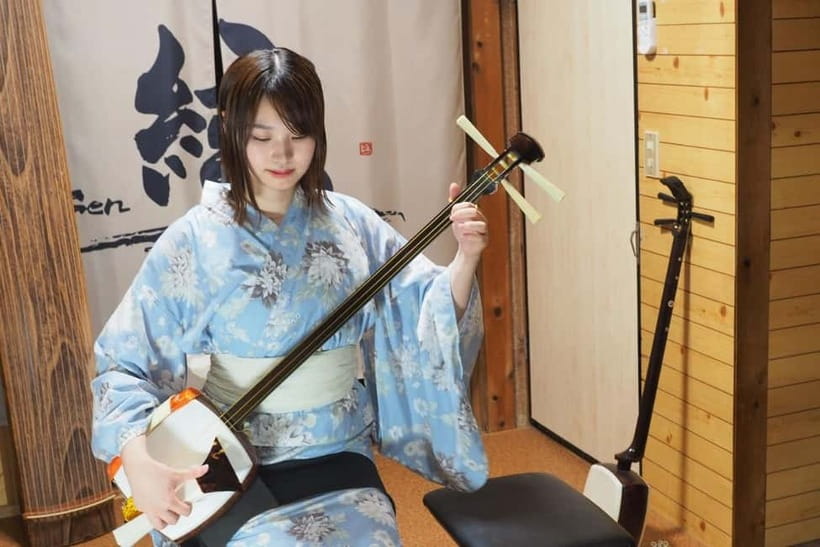
The unusual part comes first: this is a Japanese music concert held in a small old home, not a grand hall, temple, or formal townhouse. You sit close to the performers, hear the koto and shamisen clearly, then try the koto with guidance from a professional. Aoi and Shohei help keep the session warm and approachable.
I like the intimate setting and the chance to ask questions without a large audience between you and the musician. I also like the musical range, from classical pieces to contemporary works and original compositions. The main consideration is the size of the house: if you want a grand Kyoto spectacle, this modest room may feel too quiet and simple.
In This Review
- Key points to know before booking
- A concert in a real Kyoto home
- Starting with the koto, shamisen, and unusual sheet music
- The live performance, from classical music to original works
- A close Q&A with the musician
- Your first turn at the koto
- Why the small group matters
- Is $77 a fair price?
- Fitting the music session into your Kyoto day
- Who will enjoy this experience most?
- Who may want a different Kyoto activity?
- Booking details that affect your plans
- Should you book this Kyoto music experience?
- FAQ
- How long does the Kyoto Japanese music experience last?
- How much does the experience cost?
- Which instruments will I learn about?
- Can a complete beginner join the koto lesson?
- What languages are available?
- Is the experience private?
- What is included in the price?
Key points to know before booking
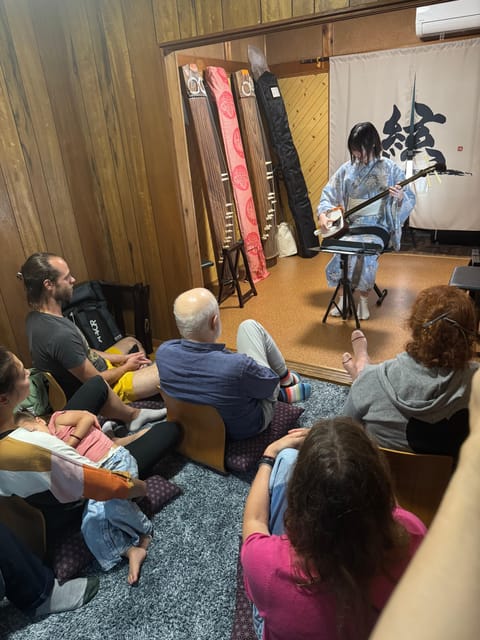
- Hear the koto and shamisen up close: The small home setting lets you watch the performers closely and notice the instruments’ techniques.
- Play a simple koto piece: A professional instructor guides beginners through their first attempt, even if you have no musical background.
- Ask questions after the concert: You have time for a close-up Q&A, photos, and conversation with the performer.
- Expect a changing program: The music may shift with the season or performer, including classical, contemporary, and original works.
- Plan around western Kyoto sights: Saiin Station makes Arashiyama, Nijo Castle, Kinkakuji, and Nishiki Market practical add-ons.
- Pay for access, not a long show: At $77 per person and 100 minutes, the value comes from the live concert, personal contact, instruction, and instrument use.
A concert in a real Kyoto home
Kyoto has no shortage of temples, shrines, gardens, and restored wooden houses. This experience offers something different: traditional music in a cozy home that feels more like a Japanese family’s living space than a performance venue.
That setting changes the mood. You are not watching from the back of a large auditorium. The room is small, so the instruments feel close and immediate. You can see the performer’s hands, follow the movement of the strings, and ask about details that are easy to miss in a formal concert.
The house is old and small, which is part of its appeal. It is also the reason I would set expectations carefully. This is a personal cultural activity rather than a polished stage production. The atmosphere is homey and direct, with less ceremony and more human contact.
The session lasts 100 minutes. That is long enough to hear a proper performance, learn basic background, speak with the musician, and try the koto. It is short enough to fit into a full Kyoto day.
A few more Kyoto tours and experiences worth a look
Starting with the koto, shamisen, and unusual sheet music
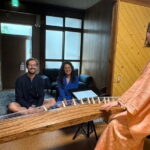
The program begins with a short introduction to Japanese traditional instruments. The koto and shamisen receive particular attention, and you learn how their music is written.
For many visitors, this introduction may be more useful than a broad lecture on Japanese music. You are given a framework for listening. Once you know what the instruments are and that their sheet music works differently from Western notation, the concert becomes easier to follow.
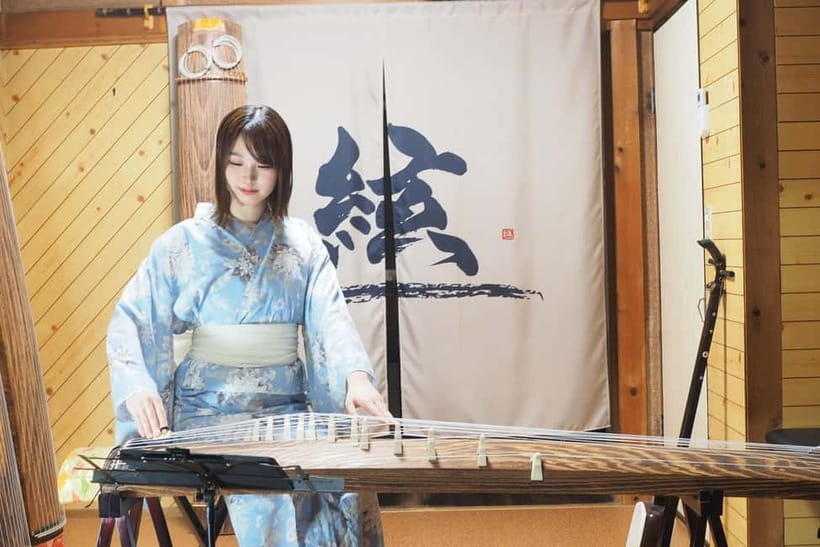
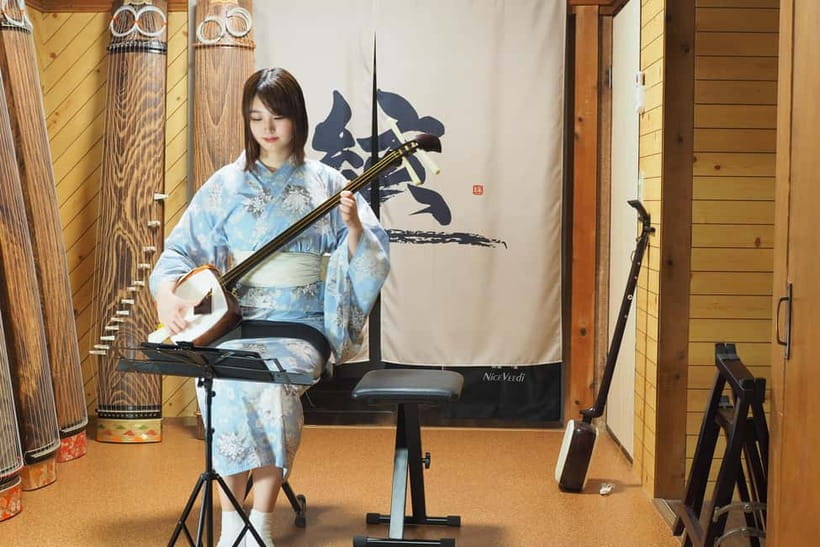
The koto is a long stringed instrument traditionally played while seated. Its sound can be delicate and clear, but the performer’s technique gives it far more range than a quick introduction might suggest. The shamisen adds a different color, with its own shape, tone, and playing style.
I appreciate that the explanation is brief. You get enough context to understand what you hear without losing too much of the 100-minute session to a classroom talk. If you are new to Japanese instruments, this is a good balance between information and music.
The instructors speak English and Japanese. That gives English-speaking visitors a practical way to ask questions, though the exact amount of English instruction can depend on the session and performer.
The live performance, from classical music to original works
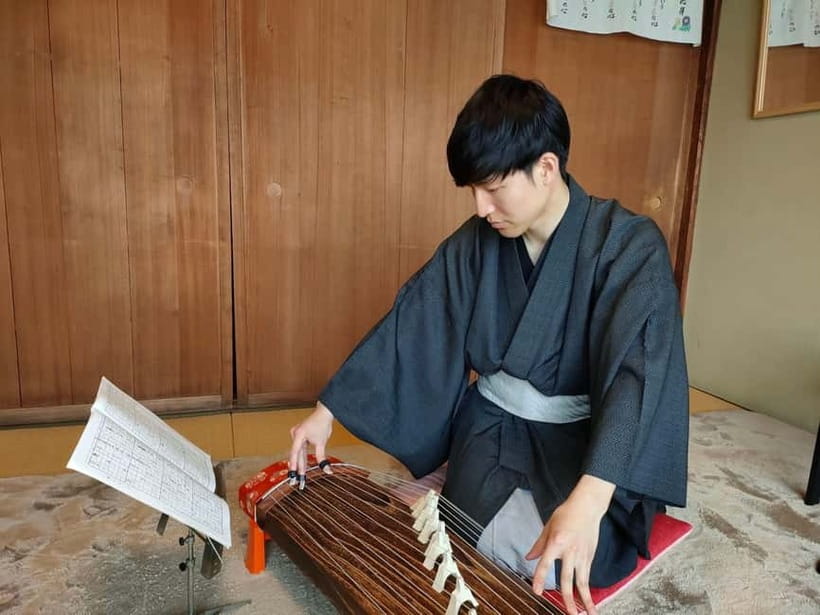
After the introduction, professional musicians perform a selection of pieces. The program can include classical music, contemporary compositions, and original works, and it may change according to the season or the performer.
That variety matters. You are not limited to hearing one narrow version of Japanese music. A classical piece can show the instrument’s traditional character, while a newer composition can make clear how these instruments still fit into modern performance.
Because the concert is held in a small room, the sound has a direct quality. You may find yourself paying attention to the attack of each note, the pauses between phrases, and the physical work behind the music. The setting also makes the performance feel personal rather than distant.
The program is not described as a fixed set list, so I would not book this expecting one exact piece. If there is a particular composer, song, or style you hope to hear, ask about the planned program before reserving.
One especially appealing feature is that the concert does not require prior music knowledge. You do not need to read music, know the names of Japanese instruments, or understand formal concert etiquette. You simply listen, notice, and ask questions.
A close Q&A with the musician
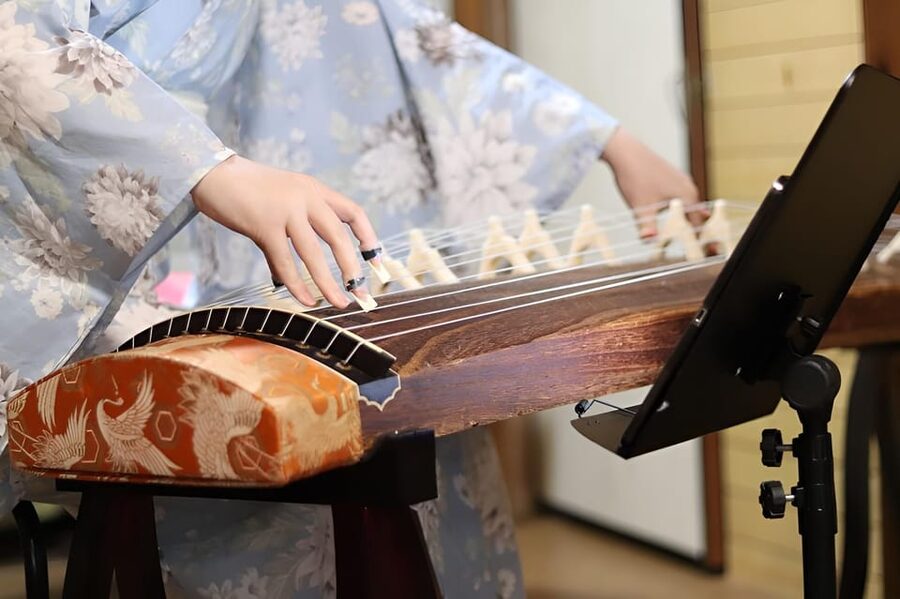
The concert is followed by time to speak with the performer. This is where the activity moves beyond a standard stage show.
You can ask about the instruments, the music, the sheet music, or the techniques used during the performance. Since the group is private or small, the conversation can feel more natural than a question period with dozens of people.
You also have an opportunity for photos. That is useful if you want a record of the visit, but the real value is the access. You can look closely at the instrument and connect the sound you just heard with the person who produced it.
The available information identifies Aoi and Shohei as part of the teaching team. One particularly personal touch described for the experience was Aoi playing a birthday song for a participant. If you are booking for a birthday or another special occasion, it is sensible to ask in advance if a similar request can be arranged. It should not be treated as guaranteed, but the setting is well suited to small personal touches.
Your first turn at the koto
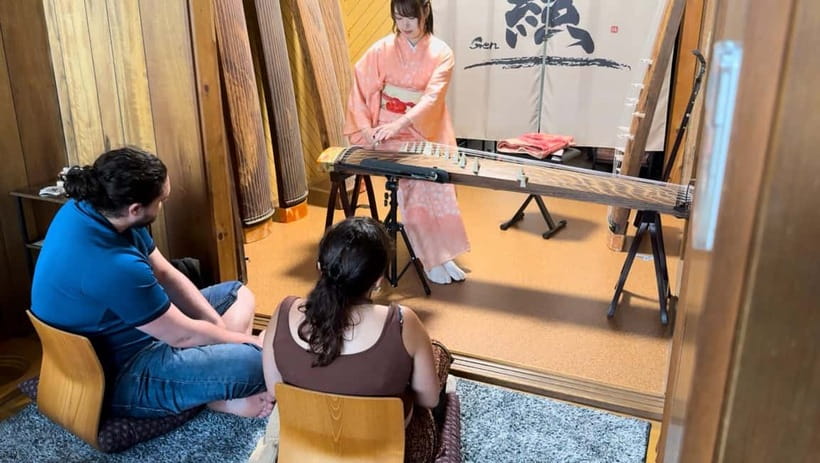
At the end, you get to try the koto yourself. A professional guides you through a simple piece and shows you how to approach the instrument.
This is not presented as a full music course. It is a first encounter. That is exactly why it works for many visitors. You get a short, hands-on lesson without needing to commit to several hours of technical instruction.
I would not worry if you have no musical background. The activity is designed for beginners, and the instructors are described as patient and encouraging. One participant with no musical experience found the lesson approachable, which fits the general purpose of the session.
The lesson also helps you understand the concert better. After trying to place your fingers and produce a clean note, you gain more respect for the control required in a professional performance. Even a simple piece can show you that the instrument is not as easy as it first looks.
The koto and the necessary materials are provided. You do not need to bring an instrument or buy accessories. The lesson is included in the $77 price, along with instructor guidance and use of the koto.
A few more Kyoto tours and experiences worth a look


Why the small group matters
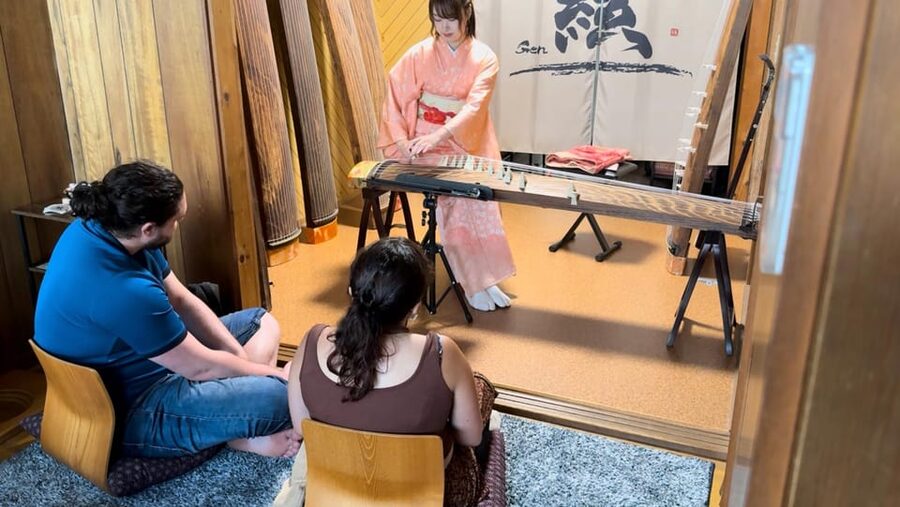
Private or small-group availability is one of the strongest reasons to choose this activity. A small group makes it easier to see the instrument, hear the explanations, and ask questions.
It also makes the practical lesson less intimidating. If you are nervous about playing in front of strangers, a private session gives you more room to make mistakes and try again. The booking information says the session can be private for your group, but the exact format depends on availability.
The intimate format can produce very different experiences from one booking to another. A larger small group may feel social and lively. A private session may feel almost like a personal music appointment. One participant described being alone with the performer and guides for the lesson, while another attended the concert as part of a group of three.
That flexibility is good for couples, families with older children, and small groups of friends. It may be less suitable if you prefer a large audience, a formal theater, or a highly predictable performance schedule.
Is $77 a fair price?
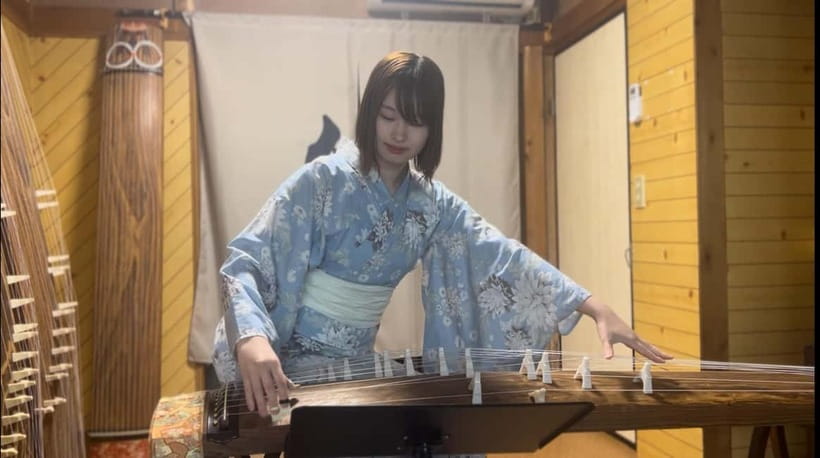
At $77 per person, this is not the cheapest cultural activity in Kyoto. You are paying more than you would for a self-guided visit to a temple or market.
The comparison is not quite fair, though. The price includes a live performance, a cultural introduction, time with a professional musician, use of the koto, instruction, materials, and photos of the experience. You are buying access and participation, not only a seat.
I consider the price reasonable if you value direct contact and want to do something that is difficult to arrange independently. A concert alone might be enough for some people. The added lesson and Q&A are what make this feel like a fuller activity.
The value improves for a special occasion or a small private group. A birthday song, a shared first attempt at the koto, or a conversation with the performer can make the cost feel more worthwhile.
Still, you should know what the price does not include. Transportation, food, drinks, souvenirs, and extra koto accessories are separate. The house setting also means you are not paying for elaborate production, a large venue, or a long performance.
Fitting the music session into your Kyoto day
The location works well with several western and central Kyoto sights. Saiin Station is within walking distance and connects the Hankyu Line with the Randen Line, making this a practical stop before or after Arashiyama.
Arashiyama takes about 25 minutes by train and on foot from the area. You could pair the music session with the bamboo grove, river area, or other Arashiyama sights, but allow enough time for train transfers and walking.
Nijo Castle is about 20 minutes away by train and on foot. The nearby Nijo Castle-mae Station on the Tozai Line makes the two activities a sensible combination.
Kinkakuji, the Golden Pavilion, is about 20 to 25 minutes away by bus and on foot. The route from Nishioji Sanjo bus stop takes about 16 minutes by bus, with walking included in the broader estimate. Bus timing in Kyoto can vary, so leave a little breathing room if you have a fixed concert start.
Nishiki Market is about 25 minutes away by train and on foot. The Hankyu Line gives you a direct ride toward Karasuma or Kawaramachi, making this pairing handy for food and shopping.
I would avoid booking the music experience too tightly between major sights. Late arrivals may shorten your session, and the introduction, performance, conversation, and lesson work best when you are present from the beginning.
Who will enjoy this experience most?
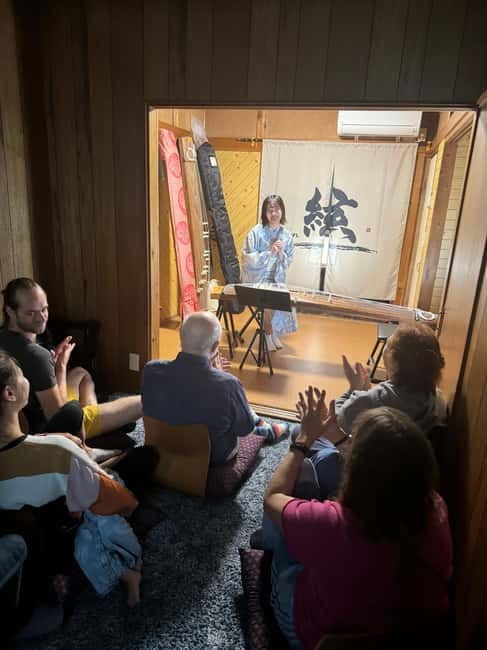
I would recommend it to curious first-time visitors who want more than a photo stop. You get a close look at Japanese musical traditions and a chance to participate without needing special skills.
It is also a good fit for families with children old enough to sit through a concert and follow simple instruction. The activity is not suitable for babies and very young children. The age information lists restrictions for children under 2, under 3, and under 4, so confirm the applicable rule when booking if you are traveling with a young child.
Music lovers will appreciate the professional performance and the changing program. You do not need to be a specialist, but you should enjoy listening carefully and trying something unfamiliar.
Couples and small groups may like the private format, especially if they want a quieter cultural experience. The activity can also suit solo visitors, since the lesson and conversation remain personal even when the concert group varies.
Tell the organizers about physical limitations or allergies ahead of time. Transportation is not included, so you will need to arrange your own route to the house.
Who may want a different Kyoto activity?
If your priority is a major historic building, a large-scale show, or a formal temple setting, this may not be your best choice. The appeal is the old home and the close contact, not grandeur.
You may also prefer another activity if you want a long, technically demanding lesson. The koto portion is an introductory experience, with a simple piece and professional guidance rather than a complete course.
The program changes with the season and performer. That is a plus if you like variety, but it means you cannot count on a particular musical lineup unless you check first.
Finally, late arrival is a real concern. Since the session is only 100 minutes and includes several connected parts, missing the opening may mean missing the instrument introduction or reducing your lesson time.
Booking details that affect your plans
The experience costs $77 per person and lasts 100 minutes. Starting times vary, so check availability for the date you want.
Cancellation is free up to 24 hours in advance for a full refund. You can also reserve now and pay later, which helps if you are still arranging a Kyoto itinerary.
English and Japanese are available. Private and small-group formats are offered, though the exact group setup should be confirmed at booking.
The price includes all needed materials, the koto, instructor guidance, the cultural introduction, and photos. It does not include transport, meals, drinks, souvenirs, or additional accessories.
Should you book this Kyoto music experience?
Book it if you want a personal cultural activity with real participation. The strongest reasons are the old-home setting, professional live music, direct conversation, and the chance to play the koto yourself.
I would especially choose it for a small group, a birthday, or a first visit to Kyoto when you want an experience that feels different from another temple stop. At $77, it offers good value when you make full use of the concert, questions, photos, and lesson.
Skip it if you need a grand venue, a fixed concert program, or a long technical class. For everyone else, this is a thoughtful way to spend 100 minutes with Japanese music, close enough to see how the sound is made.
FAQ
How long does the Kyoto Japanese music experience last?
The experience lasts 100 minutes. Check availability for the starting time on your chosen date.
How much does the experience cost?
The price is $77 per person.
Which instruments will I learn about?
The introduction covers traditional Japanese instruments including the koto and shamisen. You also have the opportunity to play the koto.
Can a complete beginner join the koto lesson?
Yes. The activity is beginner-friendly, and a professional instructor guides you through playing a simple piece.
What languages are available?
The instructors offer the experience in English and Japanese.
Is the experience private?
Private and small-group options are available. Confirm the exact format when checking availability.
What is included in the price?
The price includes the materials and tools needed, use of the koto, instructor guidance, a brief cultural introduction, a private session for your group, and photos of the experience. Transportation, meals, drinks, souvenirs, and extra koto accessories are not included.
More Workshops & Classes in Kyoto
More Concerts & Music in Kyoto
More tours in Kyoto we've reviewed



Workshops, compared.
 ★ 4.3Kyoto: 45-Minute Tea Ceremony Lesson ExperienceFrom $2245 min
 ★ 5.0Ramen Cooking Class at Ramen Factory in KyotoFrom $131
 ★ 4.9Kyoto: Ramen Cooking Class at a Ramen Factory with SouvenirFrom $1271h 30m
 ★ 4.9Kyoto: Samurai Class, Become a Samurai WarriorFrom $70
 ★ 5.0Ninja 1-hour Hands-on Lesson by Japanese master in Kyoto -EntryFrom $80
 ★ 5.0Kyoto: Ramen, Gyoza, and Onigiri Cooking ClassFrom $901h 30m