
Reviewed · BAR HOPPING & IZAKAYA TOURS
Authentic Japanese Cooking Experience at Izakaya restaurant
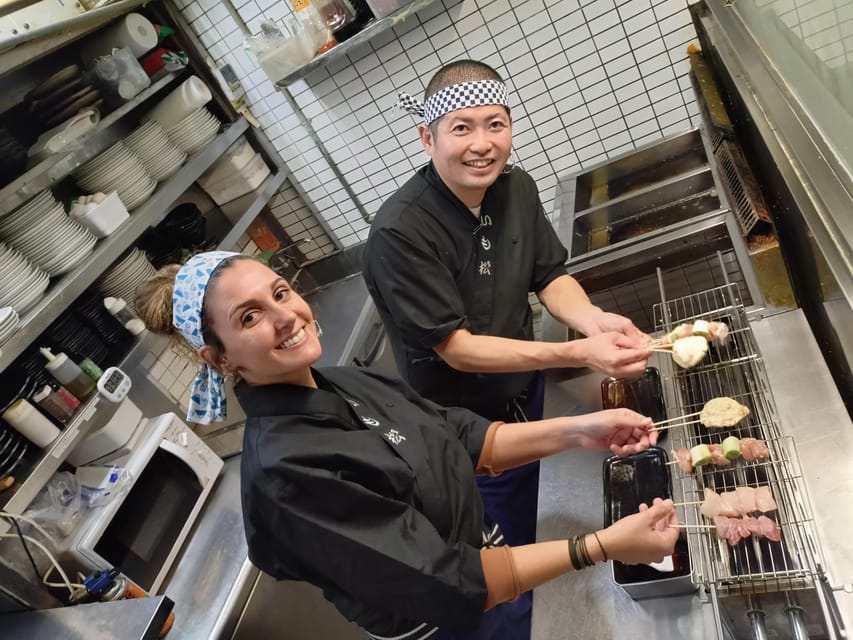
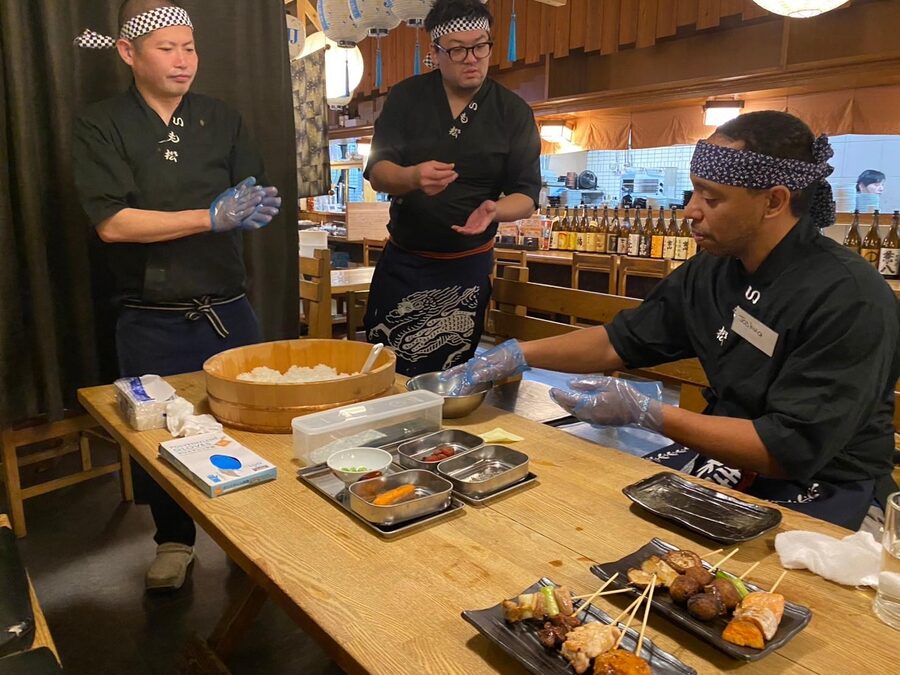
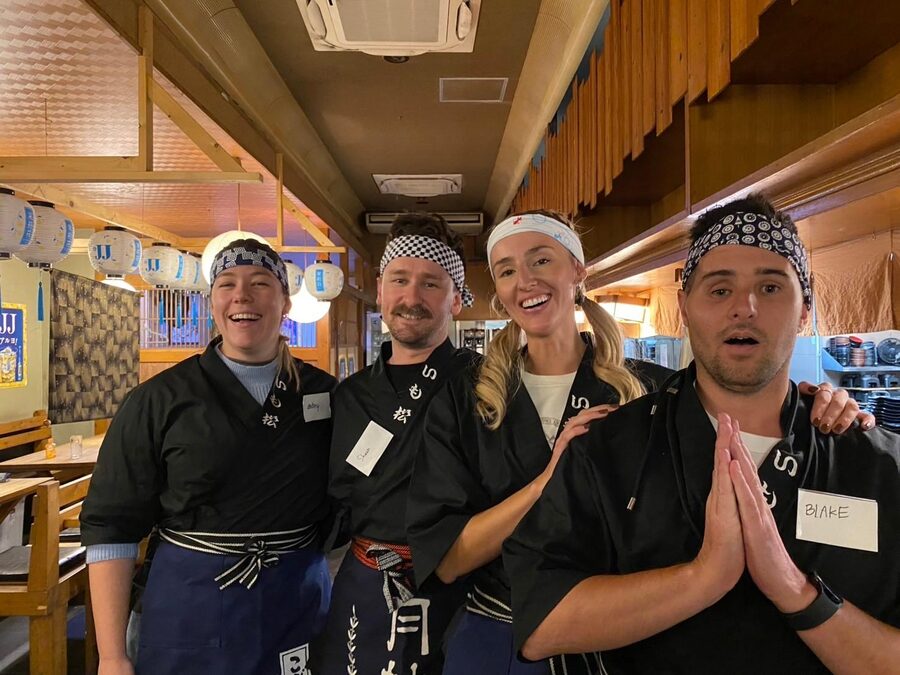
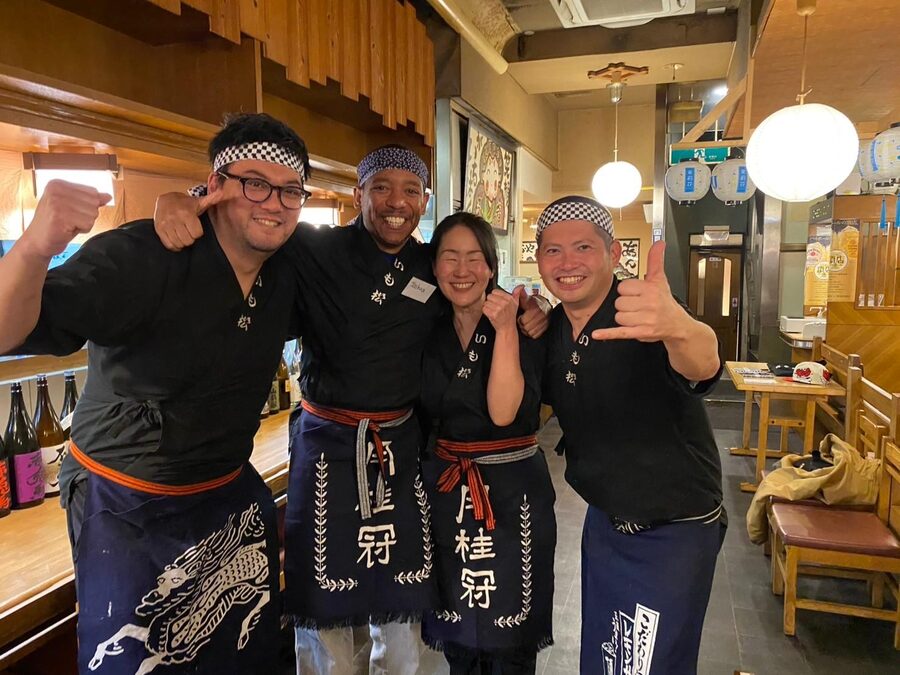
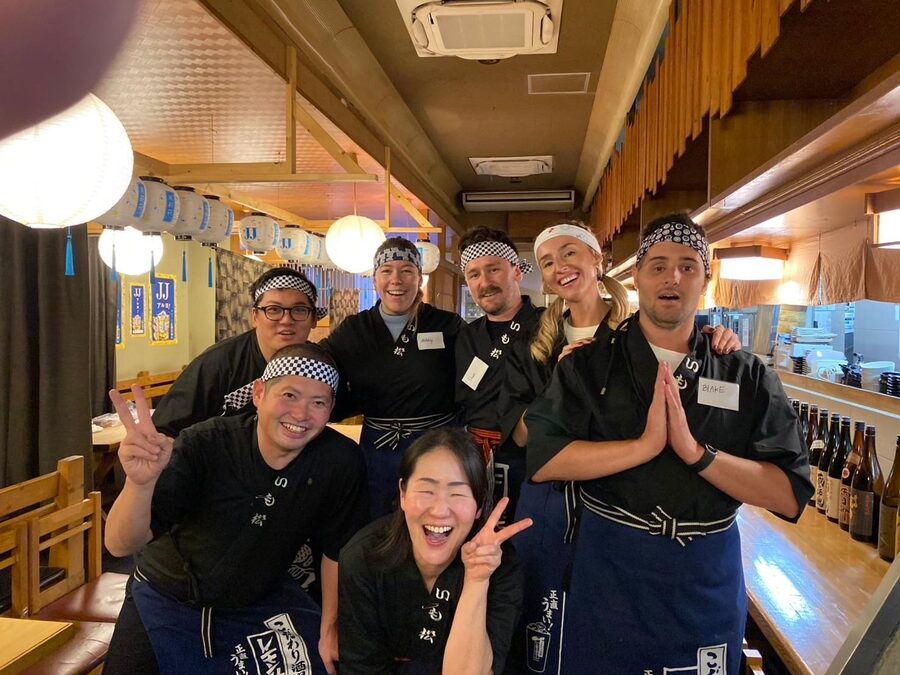
The best part of this Kyoto cooking class is its setting: you are not in a polished school kitchen, but in an izakaya restaurant near Sanjo and Kawaramachi. You prepare three Japanese staples, then sit down to eat what you made. I like the hands-on mix of grilling, rice shaping, and omelet rolling. I also like that the class stays small, with no more than eight people.
The 90 minutes go by quickly, so this is a taste of Japanese cooking rather than a full culinary course. The price is also high at $139 per person, especially if you are mainly looking for a meal. Still, the class includes all food, tools, one soft drink, instruction, and a souvenir bandana.
In This Review
- Key points at a glance
- Cooking Japanese comfort food at Izakaya Factory
- Starting at Imomatsu in Kyoto’s Kiyamachi area
- Yakitori: the class begins at the grill
- Onigiri: simple rice, many possibilities
- Dashi-maki tamago and the art of the rolled omelet
- Sitting down to eat your own izakaya meal
- Dietary options and what they mean
- Is $139 a fair price?
- Who should book this Kyoto cooking class?
- Practical details before you reserve
- Should you book Izakaya Factory?
- FAQ
- Where does the Japanese cooking class take place?
- How long does the cooking experience last?
- Which dishes will I prepare?
- Is the class suitable for beginners?
- Is the instructor able to speak English?
- How many people can join the class?
- Are dietary options available?
- What is included in the price?
- Can I cancel the booking for a refund?
Key points at a glance
- Three classic dishes: Grill yakitori, shape filled onigiri, and prepare dashi-maki tamago.
- A real izakaya setting: The class takes place at Imomatsu, in Kyoto’s Kiyamachi area.
- Small group format: No more than eight participants means more room for questions and guidance.
- A meal after the cooking: You eat the dishes you prepare instead of simply taking recipes home.
- Dietary choices available: Vegetarian, vegan, and Muslim-friendly courses can be arranged.
- Central Kyoto location: The venue is a five-minute walk from Keihan Sanjo Station and seven minutes from Hankyu Kawaramachi Station.
Cooking Japanese comfort food at Izakaya Factory
Izakaya Factory gives you a short, practical introduction to food commonly associated with Japanese drinking spots and casual restaurants. The menu is not built around rare ingredients or elaborate restaurant tricks. It focuses on familiar dishes that show different parts of Japanese cooking.
You will work with chicken skewers, seasoned rice, and rolled egg. That combination matters because each dish uses a different technique. Yakitori teaches you about skewering and grilling. Onigiri is about texture, filling, and shaping. Dashi-maki tamago requires timing, control, and a gentle hand with the pan.
The class is designed for beginners, so you do not need previous cooking experience. That makes it a useful choice if you want something more active than a standard restaurant meal but do not want a demanding culinary workshop.
The English-speaking instructor guides the class, with Japanese also available. One especially useful part of the session is the omelet demonstration. The instructor makes the rolled egg look simple, but this is the dish most likely to require patience when you try it yourself.
A few more Kyoto tours and experiences worth a look



Starting at Imomatsu in Kyoto’s Kiyamachi area
The meeting point is Imomatsu, located in the basement of the Sixth Sightseeing Building at Zaimokucho, Nakagyo Ward. The address is in Kyoto’s Kiyamachi area, close to Sanjo and Kawaramachi.
The venue is easy to reach by public transportation. It is about a five-minute walk from Keihan Sanjo Station, a seven-minute walk from Hankyu Kawaramachi Station, and listed as 234 meters from Sanjo Station. Those details make this activity easy to fit between sightseeing stops in central Kyoto.
You will want to allow enough time to find the basement location. The supplied meeting information is clear about the building and station access, but the activity itself lasts only 90 minutes, so arriving late could cut into your cooking time.
The class ends back at the same meeting point. There is no included transportation, but you do not need a separate transfer during the activity.
Yakitori: the class begins at the grill
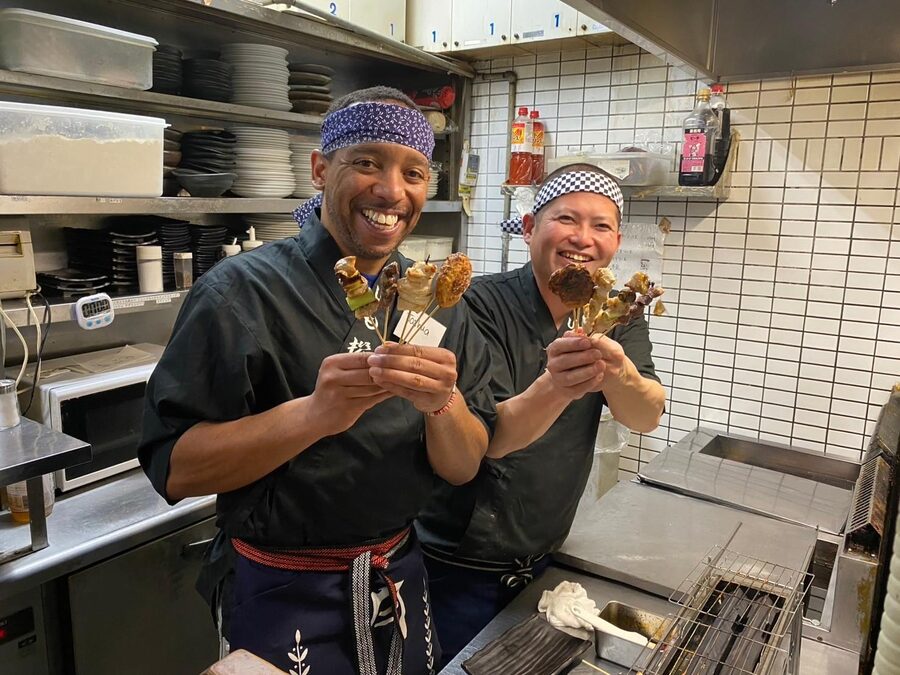
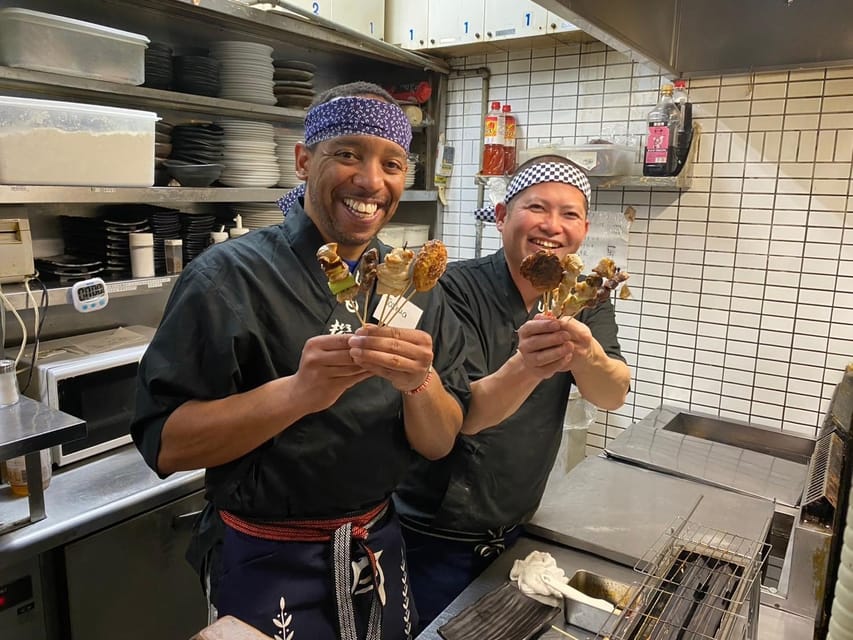
Yakitori is savory chicken cooked on skewers, and the grilling portion gives the class its most distinctly izakaya feel. You prepare the skewers and grill them as part of the group’s meal.
This is a good first dish because the process is direct and easy to understand. You can see the food change as it cooks, and the grill adds the aroma and character people expect from yakitori. The practical lesson is less about memorizing a recipe and more about handling skewers and cooking them carefully.
The class presents yakitori as it might appear in a casual Japanese drinking spot, not as a complicated fine-dining dish. That makes it useful for home cooks. After returning home, you can recreate the idea with ordinary ingredients and adapt the seasoning to your own kitchen.
The limitation is time. Since the whole class lasts an hour and a half, you should not expect a long lesson on every cut of chicken, sauce variation, or grilling style. The focus is on taking part and eating the finished food.
Onigiri: simple rice, many possibilities
Onigiri looks easy, and the basic idea is simple: shape rice around a filling. The skill comes in getting the rice to hold together without pressing it into a hard block.
You will form the rice by hand and choose from different fillings. This gives you a closer connection to an everyday Japanese food than simply ordering an onigiri from a convenience store. You learn how the shape, pressure, and filling work together.
I like this part of the class because it is friendly for all ages and ability levels. It does not require complicated equipment. It also gives you something you can make at home without needing a special kitchen setup.
The filling choices are one of the appealing details. The experience provides various fillings, though the exact choices are not specified in advance. If you have a dietary restriction, select the appropriate vegetarian, vegan, or Muslim-friendly course when booking rather than relying on standard ingredients.
Onigiri can be a small meal, a snack, or a packed lunch. Learning to make it gives the class value beyond the 90 minutes because the technique is practical and easy to repeat.
Dashi-maki tamago and the art of the rolled omelet
Dashi-maki tamago is a Japanese rolled omelet made with dashi, the savory stock used in many Japanese dishes. It is light, soft, and more delicate than a basic Western-style omelet.
This is likely the most technical part of the class. You add the egg in stages and roll it as it cooks. The instructor shows how to make the omelet look neat and fluffy, then you get the chance to try the same method.
One participant specifically appreciated how easy the instructor made the omelet appear and hoped the special frying pan was included with the experience. That is a useful warning: do not assume a specialty pan comes with the class. The included items are ingredients, cooking tools, a soft drink, and a bandana souvenir, but no frying pan is listed.
Even so, the omelet lesson can be the most rewarding part for anyone interested in Japanese home cooking. It teaches a technique rather than just assembling ingredients. Your first attempt may not look perfect, but that is part of the appeal.
A few more Kyoto tours and experiences worth a look

Sitting down to eat your own izakaya meal
Once the cooking is complete, you sit down and eat the dishes you prepared. This closing meal changes the pace of the experience. Instead of rushing from one demonstration to the next, you have time to enjoy the result and think about what you learned.
The meal includes the yakitori, onigiri, and dashi-maki tamago made during the class. One soft drink is included. Alcohol is not part of the listed inclusions, which is useful to know if you are expecting a traditional bar-style izakaya evening.
The meal is also where the class feels most social. With a maximum of eight participants, the setting should be more personal than a large group demonstration. On one occasion, a couple had the class to themselves, which gave them extra one-on-one time with the instructor. You cannot count on a private session, but the small-group limit keeps the class from feeling crowded.
The experience ends with a bandana souvenir. It is a small keepsake rather than a major gift, but it is more useful than a paper certificate and gives you a physical reminder of the class.
Dietary options and what they mean
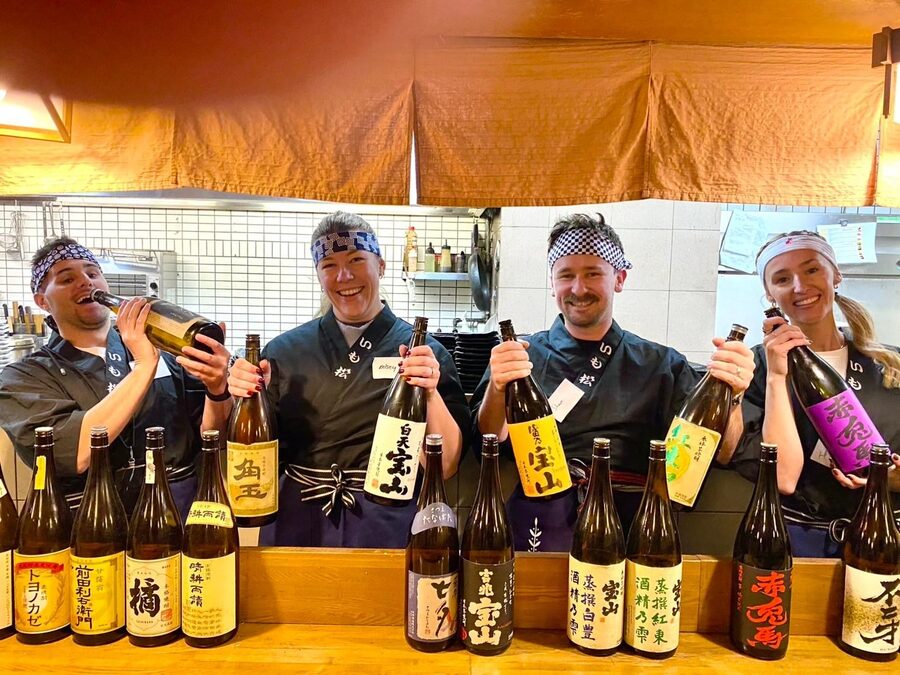
The class offers vegetarian, vegan, and Muslim-friendly courses. The Muslim-friendly option uses no pork, alcohol, or non-Halal meat. This is an important practical feature because standard izakaya food can include ingredients that are difficult to identify at a glance.
You should choose the correct course when booking and confirm your needs through the available booking process if anything is unclear. The supplied information confirms the three options, but it does not list every ingredient or explain how each dish is altered.
Vegetarian and vegan participants can take part in the same basic format, with suitable ingredients provided. The menu is therefore more flexible than many casual Japanese food activities, where meat, fish, or alcohol-based seasonings may be built into every dish.
The class is suitable for all cooking skill levels. That does not mean every technique will feel effortless. The rolled omelet takes practice, while the rice shaping and yakitori are more approachable from the start.
Is $139 a fair price?
At $139 per person, this is not a cheap way to eat lunch or dinner in Kyoto. You can find ordinary restaurant meals for far less. The price makes more sense when you count the instruction, ingredients, cooking tools, meal, soft drink, souvenir, and small-group format together.
You are paying for participation, not just food. If you want to understand how three Japanese dishes are made and try the techniques yourself, the cost is easier to justify. If you mainly want to sample yakitori and omelet, a restaurant visit will be better value.
The small group is an important part of the calculation. A class limited to eight people gives the instructor more opportunity to watch your technique and answer questions. It also helps if you are nervous about shaping the rice or rolling the omelet.
The short duration keeps the activity manageable during a packed Kyoto schedule. You will not lose half a day, but you also should not expect a large menu or a lengthy cultural lecture. This is a compact cooking session with a meal at the end.
Who should book this Kyoto cooking class?
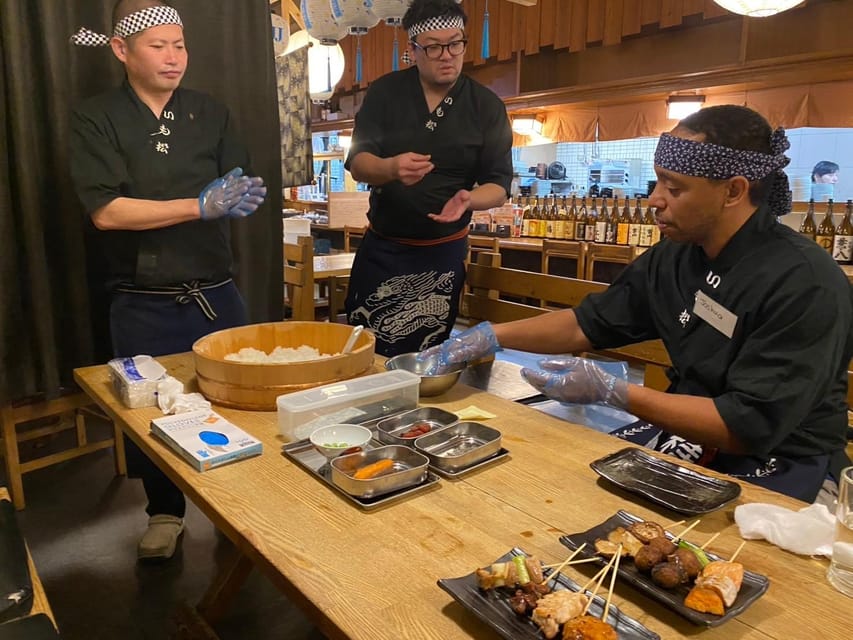
I would recommend it to first-time visitors who want a direct connection with Japanese food. It suits couples, families, solo participants, and small groups who prefer doing something together rather than sitting quietly through a tasting.
It is especially useful for people who want recipes and methods they can repeat at home. Onigiri is the easiest technique to carry back to your own kitchen. Yakitori gives you a simple grilling project. Dashi-maki tamago offers a more challenging skill to practice.
The class also fits travelers with vegetarian, vegan, or Muslim dietary needs better than many izakaya-focused activities. The course choices make it possible to take part without accepting pork, alcohol, or non-Halal meat in the Muslim-friendly option.
You may want to skip it if your priority is a long, detailed cooking course. Ninety minutes is enough for a focused introduction, but not enough for extensive practice or a broad survey of Japanese cuisine.
It may also be a poor match if you dislike group activities or prefer to choose every dish yourself. The menu is centered on the three featured foods, and the experience follows a set format.
Practical details before you reserve
The activity runs for 1.5 hours, with starting times based on availability. Check the available time before planning other Kyoto activities around it.
The meeting point is Imomatsu, in the basement of the Sixth Sightseeing Building in Kiyamachi. It is close to Keihan Sanjo Station and Hankyu Kawaramachi Station. Transportation to and from the venue is not included, but the central location makes the journey straightforward by train.
The instructor speaks English and Japanese. All ingredients and cooking tools are included. You also receive one soft drink and a bandana souvenir.
Free cancellation is available up to 24 hours before the activity for a full refund. You can also reserve now and pay later, which helps if your Kyoto schedule is still changing.
Should you book Izakaya Factory?
Book this experience if you want a small, hands-on food class with a meal built in. The strongest reasons are the central Kyoto location, the eight-person limit, the useful mix of beginner-friendly and more technical dishes, and the dietary choices.
I would be more cautious if you are judging the experience purely by the amount of food. At $139, the value comes from instruction and participation rather than the meal alone. For a quick introduction to yakitori, onigiri, and dashi-maki tamago, it offers a pleasant and practical slice of Japanese food culture. For a full cooking school session, it is too short.
FAQ
Where does the Japanese cooking class take place?
The class takes place at Imomatsu, in the basement of the Sixth Sightseeing Building at Zaimokucho, Nakagyo Ward, Kyoto, in the Kiyamachi area.
How long does the cooking experience last?
The activity lasts 1.5 hours. Starting times depend on availability.
Which dishes will I prepare?
You will grill yakitori, shape onigiri with fillings, and make dashi-maki tamago, a traditional Japanese rolled omelet.
Is the class suitable for beginners?
Yes. The activity is suitable for all skill levels, including people with no previous cooking experience.
Is the instructor able to speak English?
Yes. Instruction is available in English and Japanese.
How many people can join the class?
The class is limited to eight participants.
Are dietary options available?
Yes. Vegetarian, vegan, and Muslim-friendly courses are available. The Muslim-friendly course uses no pork, alcohol, or non-Halal meat.
What is included in the price?
The price includes all ingredients, cooking tools, one soft drink, an English-speaking instructor, the meal you prepare, and a bandana souvenir.
Can I cancel the booking for a refund?
Yes. You can cancel up to 24 hours in advance for a full refund. Reserve-now-and-pay-later booking is also available.
More Dining Experiences in Kyoto
More Bar Hopping & Izakaya Tours in Kyoto

More tours in Kyoto we've reviewed

Bar Hopping & Izakaya Tours, compared.
 ★ 4.9Kyoto: Izakaya Bars Guided Walking TourFrom $253 hours
 ★ 5.0Kyoto Bar Hopping Night TourFrom $105
 ★ 5.0Kyoto Local Bar Crawl in Kawaramachi AreaFrom $28
 ★ 4.9Kyoto: Afternoon Japanese Izakaya Cooking ClassFrom $673 hours
 ★ 5.0Izakaya Style Cooking ClassFrom $71
 ★ 5.0Kyoto Local Gourmet Night Experience: Kaiseki & Izakaya & MatchaFrom $70