
Reviewed · GION & GEISHA WALKS
Dinner with Maiko in a Traditional Kyoto Style Restaurant Tour
Kyoto’s geisha world is usually glimpsed from a respectful distance. This 3.5-hour evening gives you a rare, carefully arranged look inside it, beginning with a walk through Gion and ending over dinner with a maiko, the apprentice geisha of Kyoto. You’ll watch traditional dance, play games, and ask questions through your guide.
I like the small maximum of seven, which keeps the evening personal rather than turning it into a stage show. I also like the guide’s role as interpreter and cultural bridge. Guides such as Hikari, Josh, and Peco have been praised for making the questions flow, explaining local customs, and helping first-time visitors feel at ease.
The main caution is the seating. One account found that people at the far end could not see the dance well, and that matters even more if someone in your party has limited hearing. At $299.95 per person, this is also a special-occasion purchase, not a casual night out.
In This Review
- Key things to know before booking
- Why this Gion evening feels different
- A 40-minute walk through Gion
- Dinner in a private Kyoto-style setting
- Meeting the maiko: performance, questions, and games
- Seating can affect your view
- The short walk after dinner
- Is $299.95 a fair price?
- Who should book this experience?
- Booking, timing, and cancellation details
- Should you book Dinner with Maiko?
- FAQ
- How long does the Dinner with Maiko tour last?
- Where does the tour meet and finish?
- How many people can join the tour?
- What is the minimum age?
- Can I request a special meal or report an allergy?
- Can I cancel for a full refund?
Key things to know before booking
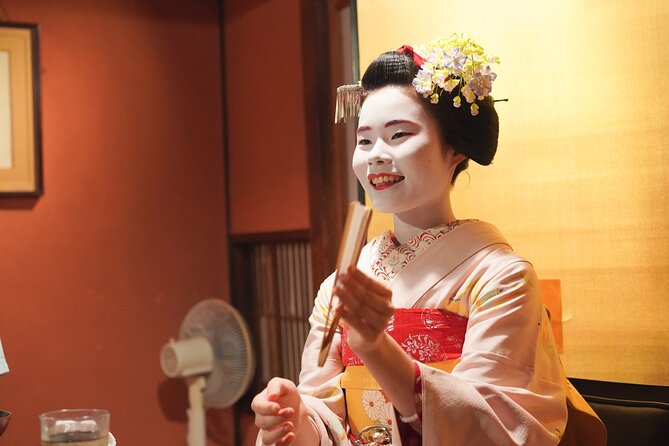
- A maiko joins your private dinner: You get time for conversation, traditional games, and an elegant dance performance.
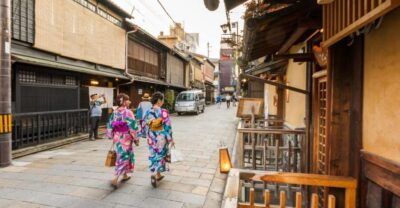
- Gion comes first: The opening walk takes about 40 minutes and points out wooden machiya houses, local sights, and details you could easily pass without a guide.
- Dinner is multi-course: The meal can include around nine small traditional dishes, with alcoholic and nonalcoholic drinks available.
- Your guide matters: Hikari, Josh, and Peco have all led this experience, translating questions and explaining the customs around maiko and geiko.
- The group is capped at seven: That is a real advantage for questions and conversation, though seating can affect your view.
- Plan for a lot of walking: The tour is not recommended if you have mobility difficulties, and participants must be at least 15.
Why this Gion evening feels different
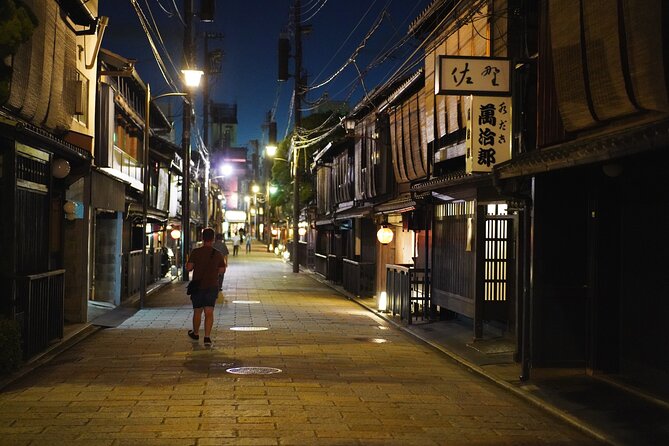
Gion is not a theme park built for quick photographs. It is a traditional Kyoto district of narrow streets, wooden machiya houses, tea houses, and long-established entertainment arts. The famous geisha presence is real, but it is also private and governed by customs that can be hard to understand from the outside.
That is where this tour earns its place. You are not simply sent into Gion to look for a maiko. A guide leads you through the neighborhood, explains what you are seeing, and then accompanies you to a private restaurant setting where the cultural exchange has been arranged in advance.
The evening usually feels more like a hosted cultural lesson than a restaurant reservation. You eat, listen, ask questions, and watch a performance. You also get context about the training, work, and artistic traditions behind the maiko’s appearance.
The word maiko refers to an apprentice geisha, generally a young woman still learning the arts required in Kyoto’s traditional entertainment districts. A geiko is a fully trained professional in Kyoto terminology. The distinction matters because this is not simply a meeting with someone wearing a costume. The hairstyle, kimono, dance, music, manners, and conversation are connected to a demanding artistic profession.
A few more Kyoto tours and experiences worth a look

A 40-minute walk through Gion
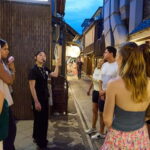
The tour begins at the Statue of Izumo-no-Okuni near Kawabatacho in Higashiyama Ward. From there, you walk through Gion for roughly 40 minutes before heading to dinner.
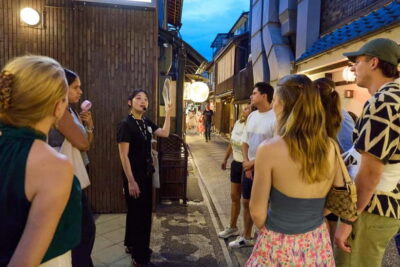
The walk is short enough to leave plenty of time for the main event, but it gives the evening a useful beginning. You see the preserved wooden facades and narrow lanes that give Gion its particular mood. Your guide can also explain how to behave in the district, where photography may be sensitive, and why simply chasing after a maiko is poor manners.
One especially appealing detail is the chance to notice small local features that do not announce themselves to people passing through. One guide pointed out a school timetable along the route, a detail most people would never think to look for. That kind of observation makes the walk feel less like a standard sightseeing circuit.
Do not expect a long historical tour with a full lecture at every corner. The walk is an introduction, not the whole evening. Its value is that it helps you read Gion before you sit down to dinner. You start to see the district as a living neighborhood with working institutions, not just a photogenic collection of old buildings.
Wear comfortable shoes. The tour is not recommended for people with mobility issues, and the group starts on time. If you arrive late, you may miss part of the walk or disrupt the small group.
Dinner in a private Kyoto-style setting
The central portion lasts about 2 hours and 40 minutes. You move into a traditional restaurant or teahouse setting for dinner with your group and the maiko.
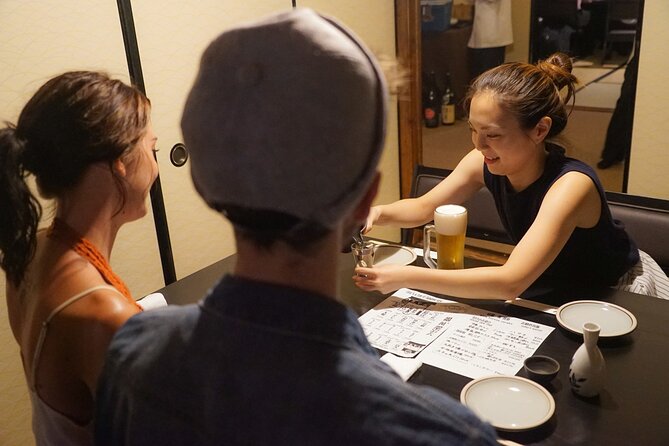
The atmosphere is part of the appeal. One account describes a small teahouse with a private room reserved for the group. You are not being placed in a large public dining room where the performance competes with surrounding noise. The private arrangement helps the evening feel focused and allows questions to be directed to the maiko through the guide.
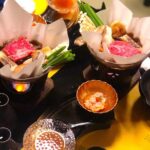
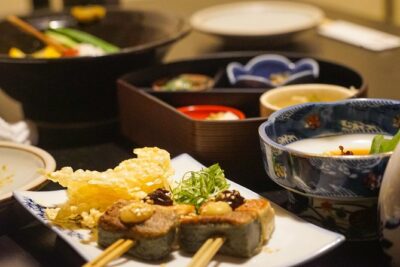
The dinner can include many small courses, with one account describing nine typical dishes. That format gives you a chance to sample several flavors and textures instead of committing to one large entrée. Food is an important part of the experience, though expectations should stay sensible. Most people found it delicious or top notch, while one person considered the food merely okay.
Drinks are another part of the value. The available choices can include wine, sake, plum wine, beer, tea, and nonalcoholic drinks, with free-flowing drinks noted in the experience details. If you do not drink alcohol, you should still have suitable choices. If you have dietary requests or allergies, contact the operator at least one day before the tour. Requests made on the day cannot be accommodated, and an allergy-free meal or a substitution cannot be guaranteed because the food is prepared in kitchens the operator does not control.
This is not the best choice for someone who wants to select every dish from a menu or eat a familiar meal. It is better suited to you if trying a set of traditional dishes is part of the fun. The meal is one piece of a larger cultural evening, not a standalone gourmet restaurant booking.
Meeting the maiko: performance, questions, and games
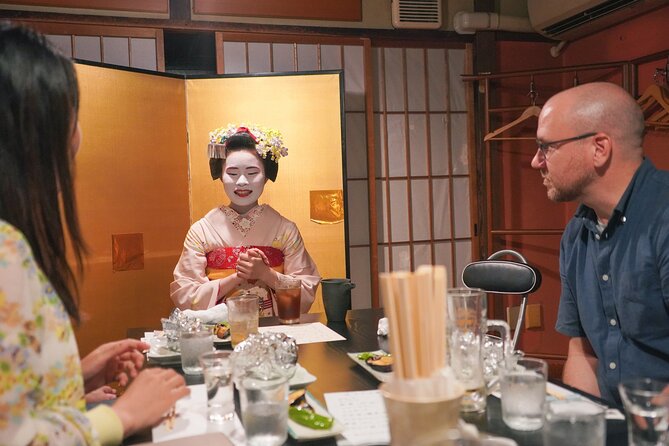
The maiko encounter is the reason most people consider spending $299.95 on this tour. You have time to ask about her life, training, ambitions, and decision to enter the profession. Your guide translates, so you do not need Japanese-language ability to take part.
The quality of this exchange depends partly on your expectations. You can ask questions, but the evening is built around a hosted cultural program, not an unrestricted private interview. There is a performance, traditional games, and conversation. One less enthusiastic account found the talk limited, while another described more than an hour of questions and answers. The honest way to frame it is this: you should expect a welcoming and guided interaction, but not necessarily a long, free-ranging conversation about every subject.
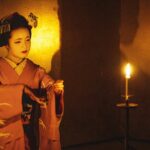
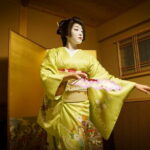
The performance is usually the emotional center of the night. The dance is elegant and formal, and it offers a glimpse of an art form that is difficult to encounter in ordinary sightseeing. You are seeing a trained performer in a setting designed for close observation, rather than watching from a distant street or crowded theater.
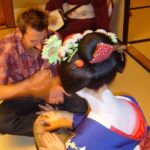
The games help keep the mood relaxed. They also give you a way to participate if you are unsure what to ask. A good guide can explain what is happening and prevent the evening from becoming stiff or overly ceremonial.
Several guides have made a strong impression. Hikari has been praised for her interpreting and for making people comfortable enough to ask questions. Josh has been associated with a well-liked Gion walk and dinner, while Peco has been described as energetic and enthusiastic about the subject. Your guide is not a minor detail here. The guide explains etiquette, translates the exchange, and determines how much cultural meaning you take away.
Seating can affect your view
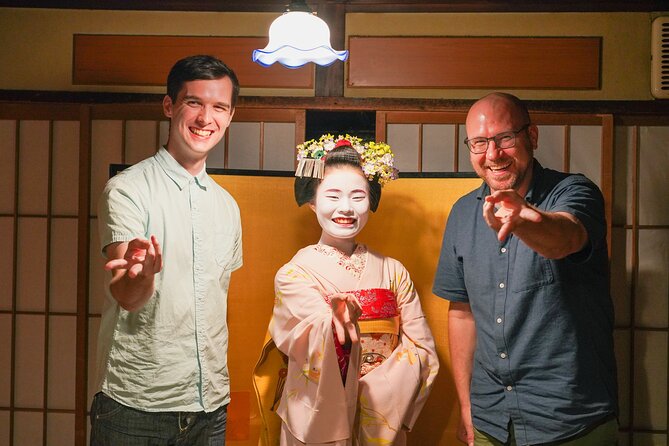
There is one practical weakness worth taking seriously: the room layout. One person found that those seated at the far end could not see the maiko clearly during the dance because other people were in the way.
That issue may not affect every group, but it is a fair concern in a small private room. A dance is different from a talk. If you cannot see the performer’s movements, you lose a major part of what you paid for.
If anyone in your party is deaf or has difficulty hearing, sight lines become even more important. Contacting the operator in advance to explain the need for a clear view would be sensible, though the supplied information does not promise a particular seat or layout.
A small group helps, but it does not solve every room-design problem. If watching the full dance from a direct angle is your top priority, ask about seating before booking rather than assuming every place in the room offers the same view.
A few more Kyoto tours and experiences worth a look

The short walk after dinner

After the meal and performance, the experience ends with about 10 minutes of walking through Kyoto at night. It is a gentle close to the evening rather than another major sightseeing stop.
The official end point is the restaurant in Gion. That is useful to know if you plan to continue exploring, return to your hotel, or arrange a taxi afterward. The tour does not return you to the starting statue.
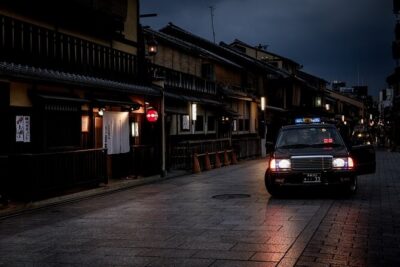
Ending in Gion also gives you a chance to spend a few quiet minutes taking in the district after dark. The daytime crowds have softened, and the wooden streets make a fitting backdrop for the final part of the experience. Keep in mind that this is still a walking tour, so comfortable shoes remain important from the first meeting point through the end.
Is $299.95 a fair price?
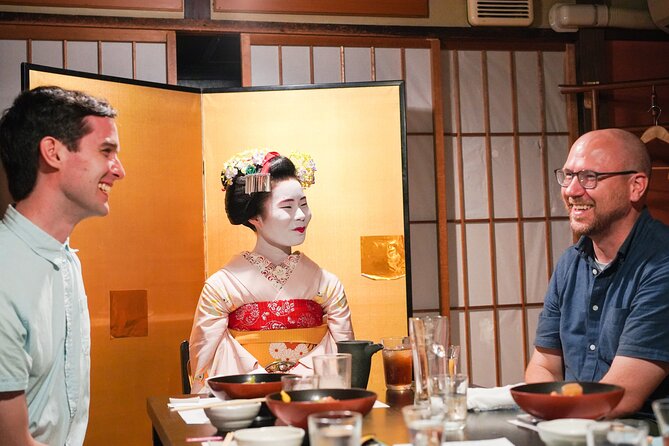
At $299.95 per person, this tour costs far more than an ordinary Kyoto dinner. You are paying for the meal, drinks, a small-group guide, translation, access to a private setting, and a maiko performance arranged specifically for the group.
I would not compare it with a restaurant meal alone. The better comparison is with a private cultural program that includes food and a performance. If you have a serious interest in Kyoto’s traditional arts, the chance to ask direct questions and see a maiko perform can make the price reasonable, especially because independent visitors may have no easy way to arrange the same encounter.
The value is weaker if you mainly want a lavish dinner. The food receives strong praise overall, but it is not described in a way that makes the meal alone worth $299.95. You should book because you want the combined evening: Gion, context, dinner, conversation, games, and dance.
The maximum group size of seven improves the value. You are less likely to disappear into a crowd, and each person has a better chance to ask something. The tradeoff is that a small private room may still have imperfect seating.
Who should book this experience?
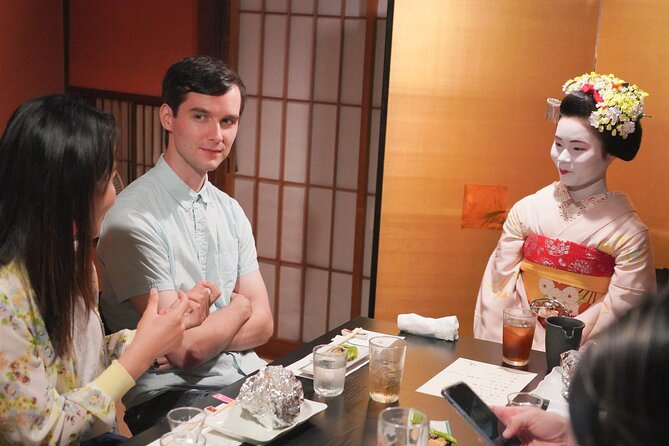
This tour suits adults and older teenagers who want a respectful introduction to geisha culture without trying to navigate Gion’s etiquette alone. It is particularly good for a first visit to Kyoto, since the walk gives you basic context before the dinner begins.
It also suits you if you enjoy asking questions and trying unfamiliar food. The evening works best when you arrive curious rather than expecting a staged photo opportunity.
The minimum age is 15. Children and babies cannot join the group tour, even with parents. Families with younger children can ask about booking a private tour instead.
You should think twice if walking is difficult, if you need a guaranteed special diet, or if you want a quiet dinner with no scheduled performance. The operator can cancel for unsafe weather, and Kyoto’s conditions can be severe, with summer temperatures reported as high as 40°C and winter lows as low as -5°C. Dress for the season, especially since the evening begins outdoors.
Booking, timing, and cancellation details
The meeting point is the Statue of Izumo-no-Okuni, Kawabatacho, Higashiyama Ward, Kyoto. The tour ends at the restaurant in Gion, not back at the starting point. It is near public transportation, and a mobile ticket is provided.
Arrive early. The tour must begin on time out of respect for the group and the evening’s arrangements. Confirmation is sent when you book.
The cancellation terms need a careful look. The stated cancellation policy allows a full refund when you cancel at least 24 hours before the start time. Changes made less than 24 hours before the experience are not accepted, and late cancellations are not refunded. The additional tour information also refers to free cancellation or rescheduling up to seven days before the tour, so I would check the exact terms shown at checkout if flexibility matters to you.
Should you book Dinner with Maiko?
Book it if meeting a maiko, learning about her work through an interpreter, and seeing a traditional dance are high on your Kyoto wish list. The small group, private dinner room, drinks, and Gion walk give the evening more substance than a quick performance alone.
I would skip it if your budget is tight or if you are mainly chasing the best meal in Kyoto. Also reconsider if you have mobility or seating needs that cannot be discussed in advance.
For the right person, this is one of the rare Kyoto experiences that connects the streets of Gion with the people who keep its traditional arts alive. Go with realistic expectations, arrive on time, ask thoughtful questions, and treat the performance with respect. That is how you get the most from the price.
FAQ
How long does the Dinner with Maiko tour last?
The experience lasts approximately 3 hours and 30 minutes. About 40 minutes are spent walking through Gion, around 2 hours and 40 minutes at the dinner and maiko encounter, and about 10 minutes walking afterward.
Where does the tour meet and finish?
The tour begins at the Statue of Izumo-no-Okuni in Kawabatacho, Higashiyama Ward, Kyoto. It ends at the restaurant in Gion rather than at the original meeting point.
How many people can join the tour?
The maximum group size is seven people. This keeps the setting relatively personal and allows time for questions.
What is the minimum age?
Participants must be at least 15 years old. Small children and babies are not allowed on the group tour, even when accompanied by parents. Families with younger children should ask about a private tour.
Can I request a special meal or report an allergy?
You must provide dietary requests or allergy information at least one day before the tour. Requests made on the tour day cannot be accommodated, and allergy-free meals, dietary restrictions, or substitutions cannot be guaranteed.
Can I cancel for a full refund?
The stated cancellation policy allows a full refund if you cancel at least 24 hours before the experience begins. Cancellations or changes made less than 24 hours before the start time are not accepted for a refund.
More Dinner Experiences in Kyoto
More Dining Experiences in Kyoto
More Gion & Geisha Walks in Kyoto

More tours in Kyoto we've reviewed




Gion & Geisha Walks, compared.
 ★ 4.7Kyoto Geisha Walking Tour: Gion District & Hidden GemsFrom $252 hours
 ★ 4.7Kyoto: Gion Geisha District Walking Tour – Stories of GeishaFrom $202 hours
 ★ 4.9Best of Kyoto: Gion, Geisha, Pagodas & CobblestonesFrom $242 hours
 ★ 4.5Night Walk in Gion: Kyoto’s Geisha DistrictFrom $211h 40m
 ★ 5.0Kyoto Night Foodie Tour in Gion (9+ dishes + 6 Sake tastings)From $163
 ★ 5.0Kyoto Gion Geisha District Walking Tour – The Stories of GeishaFrom $25