
Reviewed · GION & GEISHA WALKS
Kyoto Gion Cultural Walk & Geisha Show with Dining Options
Kyoto’s geisha quarter makes far more sense after someone explains what you’re seeing. This experience pairs a walk through Gion with a 45-minute meeting and show by an apprentice maiko, so you get both the streets and the living tradition behind them. You’ll hear about geiko culture, Kabuki, Shinto, Zen, and the customs that visitors often misunderstand.
I especially like the small group, limited to nine people, and the chance to ask questions through a guide who can translate. Guides including Ken, Kenta, and Akari have been singled out for their warmth, care, and grasp of the subject. The main caution is the dining option: some people found the meal excellent, while one person felt the portion was too small for the price.
In This Review
- Key points at a glance
- Why this Gion walk is more than a photo hunt
- From Kabuki’s beginnings to Gion’s riverfront
- Tatsumi Shrine and the beliefs beneath the surface
- Hanamikoji Street and the rules of respectful looking
- Kennin-ji adds a Zen chapter
- Zenkyo-an and its unusual boar guardians
- The maiko meeting is the evening’s main event
- Dining options, portions, and the real value of the price
- Group size, walking effort, and weather
- Who will get the most from this experience
- Should you book the Kyoto Gion Cultural Walk and Geisha Show?
- FAQ
- How long does the Kyoto Gion Cultural Walk and Geisha Show last?
- Where does the tour begin?
- Does the tour include a geisha performance?
- Is dinner included?
- How many people can join the tour?
- Is the tour suitable for people with leg problems?
- What is the cancellation policy?
Key points at a glance
- A two-part Gion experience: Walk through Kyoto’s best-known geiko district, then meet an apprentice maiko in a seated cultural session.
- Seven meaningful stops: The route links Kabuki, Shinto, Zen Buddhism, shrines, temples, and traditional entertainment.
- Small group size: With a maximum of nine people, you can ask questions without shouting across a crowd.
- Guides who interpret as well as lead: Ken, Kenta, and Akari have provided cultural explanation, translation, and practical help during the evening.
- A real performance, not just a photo stop: The maiko performs one or two dances and joins a question-and-answer session.
- Choose the meal carefully: Dining can add pleasure and convenience, but the value depends on your appetite and the option you select.
Why this Gion walk is more than a photo hunt
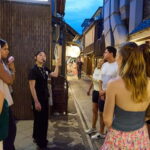
Gion is easy to admire and easy to misunderstand. You see wooden facades, narrow lanes, paper lanterns, and perhaps a maiko hurrying to an appointment. Without context, it can feel like a set built for visitors. This tour gives you the background needed to read the district as a working cultural quarter rather than a collection of pretty streets.
The walk lasts about 1.5 to 2 hours. It is not a long march across Kyoto, but you will be on your feet and moving between several stops. The guide explains the difference between geiko and maiko, the role of traditional arts, and the customs surrounding these performers. The language matters: in Kyoto, geisha are commonly called geiko, while a maiko is an apprentice.
That distinction is one reason I would choose this over a simple evening stroll. You are not promised a chance sighting on the street. Instead, the central event is a planned meeting with an apprentice maiko, where you can watch a performance and ask questions in a respectful setting.
The experience is offered by Ken’s Tours Kyoto, and the guide may be Ken, Kenta, or Akari. Each name appears repeatedly in the feedback, with particular praise for clear explanations, friendly hosting, and help with translation. Akari has also been described as attentive to solo participants and willing to help with practical needs, while Kenta and Ken are often noted for their detailed explanations of geiko culture.
A few more Kyoto tours and experiences worth a look

From Kabuki’s beginnings to Gion’s riverfront
The meeting point is by the Statue of Izumo-no-Okuni in Kawabatacho, near the southern Higashiyama area. This is a good opening because the statue introduces a less familiar side of Japanese theater.
Izumo-no-Okuni is associated with the beginnings of Kabuki. Your guide explains that Kabuki is now performed by men, but its early development began with women. The stop lasts about 15 minutes and costs nothing beyond the tour price. It gives you a useful reminder that Japanese performance traditions have changed over time and are not as fixed as they may first appear.
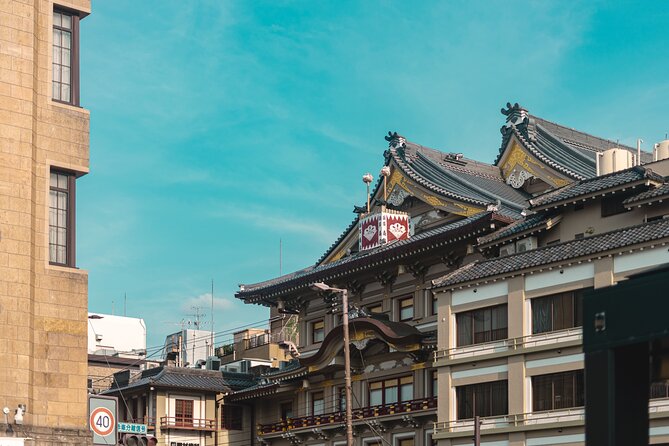
Next comes Minamiza Theater, the oldest Kabuki theater in Kyoto. You pause for around 10 minutes to look at its architecture and hear about the connection between Kabuki and modern technology, including the use of virtual reality. This is a short stop, but it adds depth to the evening. Gion’s theaters are not just backdrops for photographs. They are part of the district’s continuing performance life.
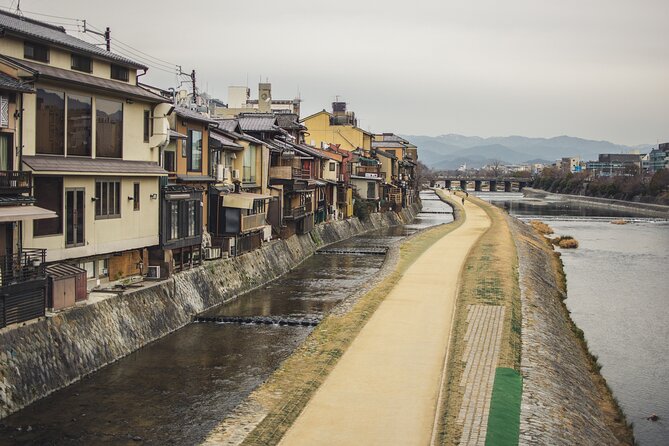
From there, the route moves toward Gion Shirakawa. This is one of the prettiest parts of the walk, with traditional buildings and old-style streets along the river. You will have about 15 minutes here, enough to get a feel for the setting without turning the tour into a long photography session.
The guide uses Gion Shirakawa to explain the world of geiko and maiko. This is also where you need to keep your expectations sensible. You might see a performer heading to work, but the walk does not guarantee a street encounter. The scheduled meeting later in the tour is the dependable part of the experience.
Tatsumi Shrine and the beliefs beneath the surface
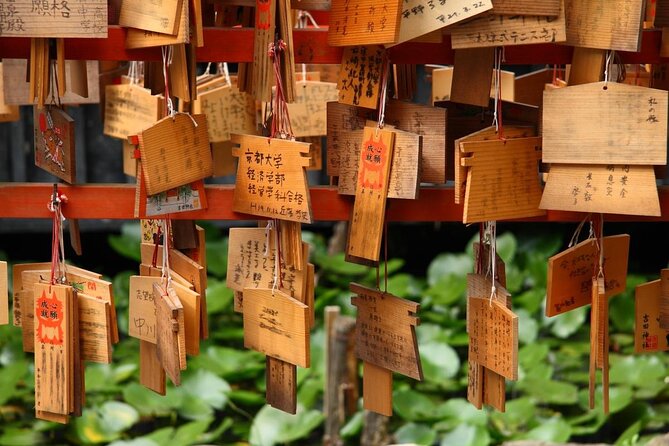
Tatsumi-jinja, also called Tatsumi Dai-myojin, provides a change of pace. This small Shinto shrine is a place to learn about Japan’s native religious tradition, including the idea that countless gods inhabit the natural and human world.
The stop takes about 15 minutes. You will not get a full course in Shinto, but the explanation helps you understand why shrines appear so naturally beside homes, shops, theaters, and roads. The guide can also explain how local religious customs fit into everyday life.
I like this part of the route because it keeps the evening from becoming solely about geisha culture. Gion developed within a broader Japanese setting of faith, theater, food, craft, and neighborhood life. The shrine gives the walk a little balance.
Hanamikoji Street and the rules of respectful looking
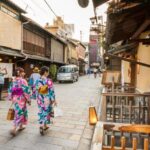
Hanamikoji is Gion’s main street, and it is the place many people picture when they think of Kyoto’s geisha district. The tour spends about 10 minutes here. Traditional facades line the street, and you might spot a maiko or geiko going between appointments.
This is a good moment to listen closely to the guide’s advice about respectful behavior. A performer is a working person, not a public prop. The planned meeting later gives you a proper chance to ask questions and take part in the experience without chasing anyone through the street.
You should also expect Gion to feel different at different times of day. The walk focuses on atmosphere and interpretation rather than shopping or entering private establishments. Shops, shrines, theaters, and old buildings pass by as part of the story.
Kennin-ji adds a Zen chapter
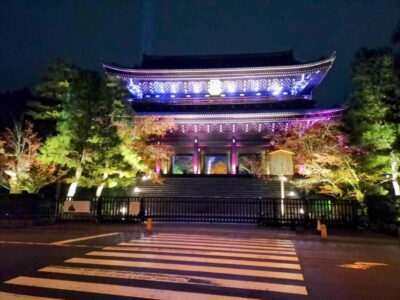
The route continues to Kennin-ji, a Zen Buddhist temple founded in 1202. The allotted stop is about 15 minutes, and admission is not included, so check the day’s arrangements and be prepared for an extra temple fee if entry is part of your visit.
The value here is the connection between place and belief. Your guide discusses Zen Buddhism and shows how Gion contains more than entertainment venues. A geiko’s training involves artistic disciplines, while the district itself sits within a city shaped by temples, shrines, and religious practice.
Because this is a short guided visit, do not expect a full temple tour. The stop works best as a compact introduction. If Kennin-ji is high on your Kyoto list, you may want to return separately when you have more time.
Other walking tours we've reviewed in Kyoto


Zenkyo-an and its unusual boar guardians
The final listed stop is Zenkyo-an, also known as Marishitendo, a Kennin-ji subtemple in Gion. It is known for boar guardians and associations with luck and safety. The stop lasts about 15 minutes, and admission is not included.
This is exactly the sort of detail that can pass unnoticed when you explore alone. A guide can point out the symbols, explain their meaning, and connect the small subtemple to the wider religious life of Kyoto. You get a more varied walk than a route that only follows the most photographed streets.
The order or exact timing of stops may shift, especially around the scheduled performance. The total walk runs about 1.5 to 2 hours, followed by the 45-minute maiko meeting and show.
The maiko meeting is the evening’s main event
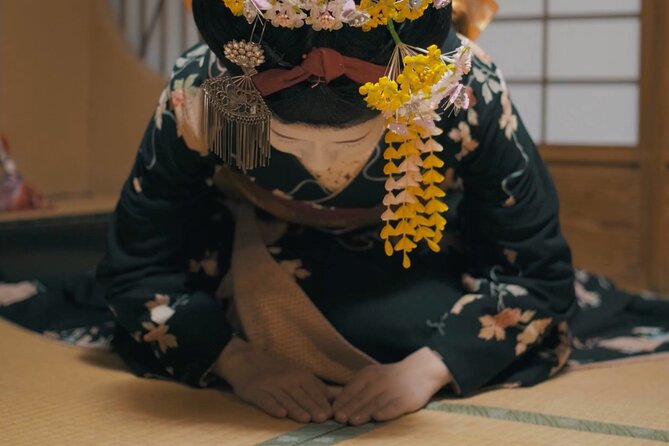
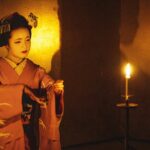
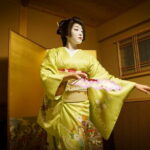
After the walk, you meet an apprentice geisha, properly called a maiko. The session lasts about 45 minutes and includes tea, conversation, questions, and one or two dances.
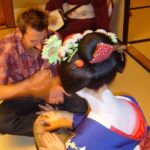
This is the part that makes the experience unusual. You are not only watching a stage performance from a distance. You have a chance to ask about the maiko’s world, while the guide interprets and keeps the conversation moving. English-speaking visitors especially benefit from this, since the guide can explain cultural points that might otherwise be lost.
The performance is brief, which is worth knowing in advance. You are not attending a full theater production. The show is designed as a close cultural encounter, with the dance forming one part of the session. The question-and-answer time may be just as valuable as the performance itself.
The setting also calls for courtesy. Listen carefully, avoid treating the maiko as a novelty, and follow the guide’s instructions about photographs and sharing images. One participant specifically regretted not being able to share photographs from the meeting, so you should clarify the photography rules at the start rather than assume that every image can go online.
Dining options, portions, and the real value of the price
The listed price is $121.37 per person, though the final amount can vary by date and dining choice. The base experience includes the Gion guiding and the 45-minute meeting and show. Dining options are available, so read the selected option closely before booking.
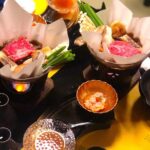
The meal can make the evening easier. You do not need to find a restaurant between the walk and the performance, and you can continue the cultural conversation while eating. Several accounts describe the food as delicious or high quality, with one meal served family style and a range of choices that accommodated dietary restrictions.
But I would not book the meal automatically if you are mainly interested in the maiko experience. One person found the dinner too small for the cost and left hungry. That does not mean every dining option has the same menu or portion, but it is a fair warning to compare the meal choice with your appetite and budget.
At roughly $121 per person, the value rests on three things: the small group, the guide’s interpretation, and access to the private meeting and performance. If you simply want to see Gion’s streets, you can walk much of the district for free. If you want a structured explanation and a respectful chance to meet an apprentice maiko, the price is easier to justify.
The strongest value comes for people who would otherwise struggle to understand what they are seeing. Translation is important, and a good guide can turn a short performance into a meaningful cultural exchange. Guides have also helped with photographs, drinks, serving during the meal, and sudden weather changes. Those small acts matter during a three-hour outing.
Group size, walking effort, and weather
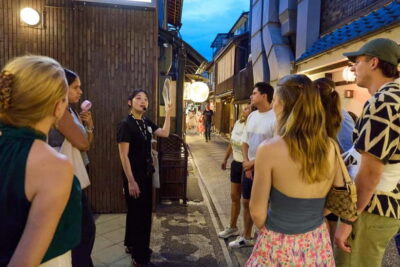
The group is capped at nine people. That is small enough for direct questions and easier conversation than you usually get on a large city tour. It also means the experience can feel more personal, particularly during the maiko meeting.
Most people can participate, but the walk is not recommended for anyone with leg problems. You will spend up to two hours walking and standing, with additional time seated during the meal and performance. Wear comfortable shoes and plan for Kyoto’s weather.
The activity requires good weather. If poor conditions force a cancellation, you are offered another date or a full refund. The same applies if the minimum number of participants is not reached. You can cancel for a full refund up to 24 hours before the start time, but changes or cancellations inside that window are not accepted.
The guides appear to take weather seriously. One account describes Kenta providing cold cloths and icy drinks during hot weather, then producing umbrellas and ponchos when a storm arrived. You should still bring suitable clothing, but practical care can make a real difference.
Who will get the most from this experience
I would recommend this tour to you if you want more than a quick look at Gion. It suits first-time Kyoto visitors who want cultural context, couples seeking an unusual evening, families with older children, and solo visitors who prefer a small group with a guide.
It is also a good fit if you have questions about geisha culture and want answers without relying on stereotypes. The guides explain the connection between geiko, maiko, Kabuki, Shinto, Zen, and Kyoto’s traditional neighborhoods.
You may want to skip it if you dislike organized walking tours, have limited mobility, or mainly want a large meal. The walk is structured, the show is relatively short, and the dining value can vary. You should also avoid booking it with the expectation that you will photograph geiko on the street.
Should you book the Kyoto Gion Cultural Walk and Geisha Show?
Book it if the scheduled meeting with an apprentice maiko is the reason you are coming. The walk prepares you for that moment, while the guide provides the translation and context that make the performance easier to understand.
I would choose the experience without dining if you are cautious about cost or portions, then make your own meal plans. If convenience matters and you select a meal option that suits your appetite, dinner can round out the evening nicely.
For most curious visitors, this is one of the more worthwhile ways to approach Gion. You see the famous streets, but you also learn how theater, religion, neighborhood customs, and traditional arts fit together. Just bring comfortable shoes, keep your expectations respectful, and treat the maiko meeting as a cultural exchange rather than a staged photo opportunity.
FAQ
How long does the Kyoto Gion Cultural Walk and Geisha Show last?
The experience lasts approximately three hours. The guided walk takes about 1.5 to 2 hours, followed by a 45-minute meeting and show with an apprentice maiko.
Where does the tour begin?
The meeting point is at the Statue of Izumo-no-Okuni in Kawabatacho, Higashiyama Ward, Kyoto.
Does the tour include a geisha performance?
Yes. The experience includes a 45-minute meeting and show with an apprentice geisha, or maiko. The session includes one or two dances and time for questions.
Is dinner included?
Dining options are available, but the basic inclusions specifically cover the Gion walk and the maiko meeting and show. Check the option you select to confirm whether a meal is included.
How many people can join the tour?
The maximum group size is nine people.
Is the tour suitable for people with leg problems?
It is not recommended for people with leg problems because the experience includes up to two hours of walking and standing.
What is the cancellation policy?
You can cancel up to 24 hours before the start time for a full refund. Cancellations or changes made less than 24 hours before the start time are not accepted. Poor weather or failure to meet the minimum group size may lead to another date, another experience, or a full refund.
More Dining Experiences in Kyoto


More Walking Tours in Kyoto
More Gion & Geisha Walks in Kyoto
More tours in Kyoto we've reviewed





Gion & Geisha Walks, compared.
 ★ 4.7Kyoto Geisha Walking Tour: Gion District & Hidden GemsFrom $252 hours
 ★ 4.7Kyoto: Gion Geisha District Walking Tour – Stories of GeishaFrom $202 hours
 ★ 4.9Best of Kyoto: Gion, Geisha, Pagodas & CobblestonesFrom $242 hours
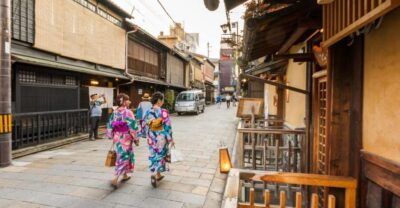 ★ 4.5Night Walk in Gion: Kyoto’s Geisha DistrictFrom $211h 40m
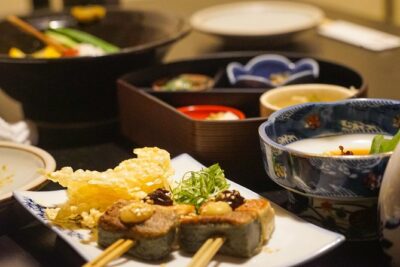 ★ 5.0Kyoto Night Foodie Tour in Gion (9+ dishes + 6 Sake tastings)From $163
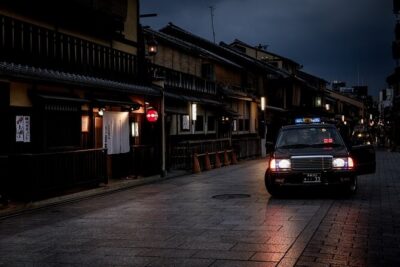 ★ 5.0Kyoto Gion Geisha District Walking Tour – The Stories of GeishaFrom $25