
Reviewed · GION & GEISHA WALKS
Private Dinner with a Geisha
Meeting a real geiko or maiko over dinner is the heart of this Kyoto experience. You begin near Minamiza Kabuki Theatre, walk through Gion with an English-speaking guide, then enter a Japanese restaurant or private tea house for food, conversation, music, dance, and games.
I like the way the evening gives you context before the meeting, rather than dropping you into a formal room without explanation. I also like the chance to ask personal questions through a guide such as Mia or Mie, then see traditional dance and shamisen music at close range.
The main caution is the food. Kaiseki is traditional and can include raw fish, seafood, unfamiliar vegetables, and fixed courses. Dietary needs must be stated when booking, but some diners found restrictions were not handled well, so this is not the safest choice for picky eaters or strict diets.
In This Review
- Key points to know before booking
- Why this Gion evening feels different
- Starting at Minamiza and walking through Gion
- Entering the restaurant or private tea house
- Meeting the maiko or geiko over dinner
- Dance, shamisen, songs, and traditional games
- What the $381.49 price really buys
- Timing, transport, and practical comfort
- Food concerns and communication warnings
- Who should book this experience
- Should you book Private Dinner with a Geisha?
- FAQ
- Where does the Private Dinner with a Geisha begin?
- What time does the activity start?
- How long does the experience last?
- Does the experience include a Gion walking tour?
- Will I meet a geiko or a maiko?
- Is dinner included?
- Are drinks included?
- Can I request a special diet?
- Can children attend?
- Is this a private tour?
Key points to know before booking
- Meet at 5:00 pm near Minamiza Kabuki Theatre: The starting point is 198 Nakanochō, facing Shijo Street.
- Walk through Gion first: The guide explains the district, geiko customs, and the difference between a geiko and a maiko.
- Kaiseki dinner is part of the experience: Choose from casual, half-course, full-course, or private tea house options, depending on availability.
- Expect live Japanese entertainment: A geiko or maiko may sing, play instruments, dance, and lead simple games.
- Private means only your booking group participates: Group size and room arrangements can vary by option, so confirm the details before paying.
- Budget carefully: At $381.49 per person, this is a major splurge, but it offers access to a setting once limited to elite Japanese dining circles.
Why this Gion evening feels different
Kyoto has plenty of staged cultural shows, but this experience is built around personal contact. The special part is not just seeing a woman in formal kimono perform. It is having time to ask about her training, daily routine, clothing, studies, and life within the geiko and maiko world.
The terms matter. A maiko is an apprentice, usually recognized by elaborate hair ornaments, colorful kimono, and a youthful style. A geiko is a fully trained performer. In Kyoto, geiko is the local term commonly used for what many visitors call a geisha.
You do not simply arrive for dinner and watch from a distance. The guide prepares you during the walk, translates questions, and explains customs that can be easy to misunderstand. That preparation makes the conversation more relaxed and helps you avoid treating the evening like a photo opportunity.
The setting also matters. A traditional Japanese room, low tables, formal service, and carefully arranged courses create a very different mood from a theater performance. The experience gives you a glimpse of how private entertainment in Kyoto works, though the exact room, performers, and dinner format depend on the option you select.
A few more Kyoto tours and experiences worth a look

Starting at Minamiza and walking through Gion
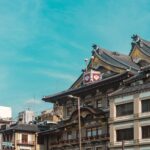
The meeting point is in front of the main gate of Minamiza Kabuki Theatre, at 198 Nakanochō in Higashiyama Ward. The listed start time is 5:00 pm, and the activity ends back at the meeting point after the dinner portion.
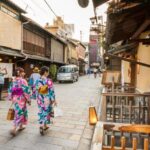
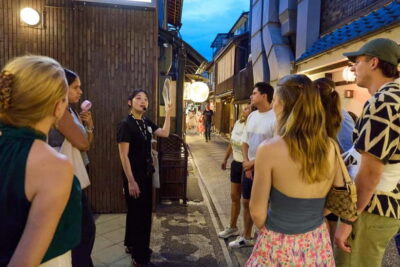
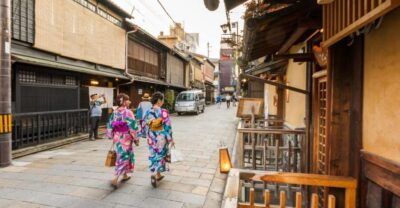
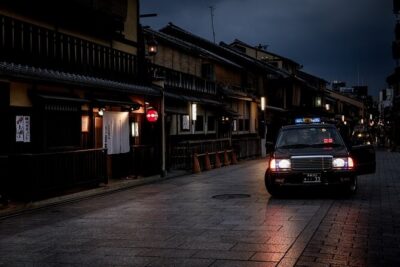
For most options other than the casual dinner, the evening begins with a guided walk through Gion. This is useful because the district can look like a collection of photogenic wooden buildings if you do not know what you are seeing. Your guide explains the traditional houses, the role of the geiko district, and the customs surrounding private entertainment.
The walk lasts about 45 minutes in some versions of the experience. It is not a major sightseeing tour of all Kyoto, so keep your expectations in check. Its purpose is to set the scene for dinner and explain the culture you are about to encounter.
I especially like this order. If you met the performer first, you might spend the whole evening asking basic questions about terminology and dress. Instead, the guide can explain the difference between a maiko and geiko, outline the etiquette, and give you useful background before you enter the restaurant or tea house.
The group may be larger than you expect in some arrangements. One booking had 13 people present, and the guide became difficult to hear during the walk. If hearing every word is important to you, stay close to the guide and ask about the expected group size before confirming.
Entering the restaurant or private tea house
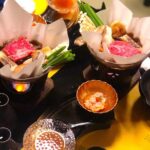
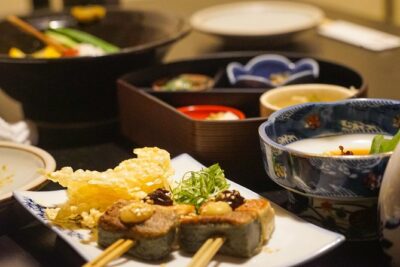
After the walk, you continue to a Japanese restaurant or tea house. The room is traditional, and the dinner is served in several courses. Depending on the package, you may receive a half or full kaiseki meal, with dishes such as tempura, seafood, vegetables, and other seasonal Japanese preparations.
Kaiseki is not one large plate of food. It is a sequence of small courses designed around presentation, texture, and taste. For many people, that makes the meal part of the cultural lesson. You see how Japanese dining can focus on restraint and detail rather than sheer quantity.
The half-course option may be enough for many appetites. One account described it as plenty of food, while another advised arriving hungry for the more elaborate tea house dinner. The amount and menu vary, so do not assume that every package offers the same meal.
The food can be excellent, and several diners found it one of the strongest parts of the evening. Others had a poor experience, including one person who found the dishes barely edible. That difference may come down to personal taste, unfamiliar ingredients, or the particular restaurant used that night.
If you are adventurous with food, the fixed menu can be an enjoyable part of the event. If you avoid seafood, shellfish, raw fish, or traditional Japanese dishes, you need to think carefully before booking. The menu cannot necessarily be changed, and dietary requests have not always been handled reliably.
State every dietary requirement at the time of booking. It is also sensible to ask the operator to confirm how it will be handled before the day of the tour. This is especially important for vegetarian and vegan diners, since the meal is planned in advance.
Meeting the maiko or geiko over dinner
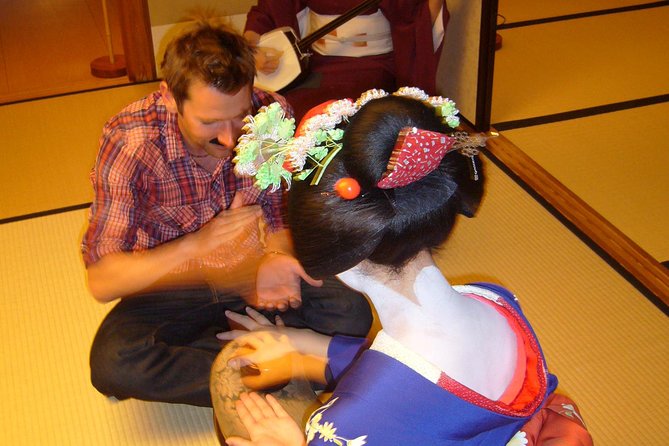
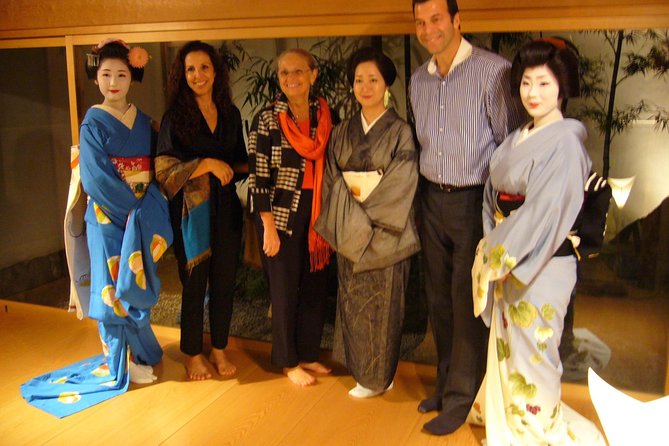
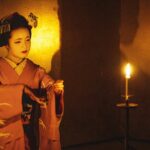
The performer joins you during the meal. Depending on the selected option and availability, you may meet a maiko, a geiko, or both. The conversation is conducted with help from your English-speaking guide, who translates questions and answers.
This is where the price begins to make more sense. You are not paying only for dinner and a dance. You are paying for access to a private cultural setting, interpretation, and a rare chance to speak directly with a trained performer.
Questions can cover the performer’s training, daily schedule, clothing, hair, studies, and route from maiko to geiko. One family asked how a maiko sleeps while preserving her hairstyle, while another group learned about the performer’s plans and pop-culture interests. Those small personal details can make the evening feel human rather than staged.
The performer may also explain her formal kimono and accessories. You might hear about the work involved in dressing, the dances she has studied, and the discipline behind the polished presentation. The quality of this part depends heavily on your guide and interpreter, so an English-speaking guide with strong cultural knowledge is important.
Mia is named in several accounts as a particularly warm and engaging guide. Mie and Mei are also named by diners who valued their translation and background explanations. Guide assignments are not guaranteed, but these examples show how much the right interpreter can shape the evening.
The tone is formal, but it is not necessarily stiff. The performer may chat with you, keep your glasses filled, respond to questions, and join in a simple drinking game. You should still follow the guide’s lead and treat the setting with respect. This is a working cultural tradition, not a costume encounter arranged for casual amusement.
Dance, shamisen, songs, and traditional games
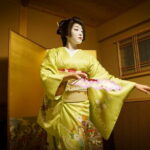
The entertainment usually includes a geiko or maiko dance performance. You may also see singing and a musical instrument such as the shamisen, a traditional three-stringed instrument.
The performance is often the visual high point of the evening. Formal movement, hand gestures, music, kimono, and controlled pacing create a feeling very different from a Western stage show. The performance may be brief, and the room may not have much space for movement, so do not expect a full theater production.
One dinner included two dances from a maiko who had studied 20 dances. Other arrangements included games and group participation. You may be taught a simple drinking game or a small dance, giving the evening a playful side after the more formal performance.
Drinks are not included in every package. They are included with the private tea house option, while other versions allow drinks for purchase. Japan’s minimum drinking age is 20, so younger participants can attend but cannot legally drink.
Photography is mentioned in the dinner accounts, including pictures with the performer. Still, ask before taking photographs, and follow the guide’s instructions. The tour operator says it can refuse service to people who do not show proper respect for the traditions.
Other private tours in Kyoto



What the $381.49 price really buys
At $381.49 per person, this is not a bargain meal. You can eat well in Kyoto for far less. If your goal is simply to sample kaiseki cuisine, use your money on a restaurant reservation instead.
The value comes from the combination of access, interpretation, and entertainment. A private or small-group dinner with a geiko or maiko is difficult to arrange independently, especially when you do not speak Japanese or have personal connections in Kyoto.
I would view the cost as a cultural splurge, similar to paying for a special theater performance or private museum access. It makes the most sense if meeting a geiko or maiko is high on your Kyoto wish list and you want conversation, not just a staged dance.
The private tea house option may be worth the extra cost for families or groups who want a more personal setting. One family chose it after previously attending a less expensive group version and felt the private format was worth the added expense. The private setting can also make it easier to ask questions and hear the translation.
Group discounts may be available, but the booking system and maximum group sizes can be confusing. If your party is larger than the stated booking limit, contact the operator before paying and get the arrangement confirmed in writing.
Timing, transport, and practical comfort
The advertised duration is about three hours and 30 minutes, while the itinerary describes roughly three hours for the walk and party. Plan for an evening commitment of at least three hours, and allow extra time if dinner service is slow.
The activity is near public transportation, but the supplied details do not specify a particular train or bus route. The clearest plan is to reach Minamiza Kabuki Theatre before 5:00 pm and use the theater as your visual landmark.
The tour ends back at the meeting point. That makes it easier to plan a later evening meal or return to your hotel, though you should not book a tight reservation immediately afterward. Some dinners felt longer than expected, and service was reported as slow in one case.
Most people can participate, and children may attend with an adult. The experience can work well for families, including teenagers. One guide made the cultural material accessible for teenagers, while another family included a three-year-old in a shorter casual format.
The private format is helpful for families and couples. It lets you ask questions suited to your group rather than listening to a generic lecture. It also gives younger people a chance to participate in games and conversation, though the formal setting may not suit every small child.
Food concerns and communication warnings
Food is the largest practical risk. Traditional kaiseki may include raw fish, seafood, and ingredients unfamiliar to you. If you are a picky eater, vegan, vegetarian, allergic, or unable to eat shellfish, do not assume the fixed menu can be adjusted.
The operator asks you to provide dietary requirements at booking. That is not the same as a guarantee that every request will be met, so seek confirmation before the tour. If you receive no reply, consider that a warning sign and decide if the cultural portion is still worth the risk.
Communication after booking has also been uneven. Some people had difficulty getting answers through the booking channel, and one group arrived to find that restrictions had not been accommodated. The tour itself may run smoothly, but pre-tour questions deserve firm follow-up.
The guide usually acts as the bridge between you and the performer. Strong English and good translation can turn a polite meeting into a real conversation. If the group is large, stay near the guide during the walk and speak up if you cannot hear.
Who should book this experience
I would recommend it to you if you have a serious interest in Japanese culture, traditional performance, Kyoto history, or personal storytelling. It is also a strong choice for a special anniversary, milestone birthday, or family evening that you want everyone to remember.
It suits adventurous eaters who are happy to accept a traditional fixed menu. It is less suitable if dinner quality is your main priority, if you need extensive menu control, or if raw fish and seafood are a concern.
Couples and private family groups will get the most from the personal setting. Teenagers can enjoy the games and direct conversation, and several families found the evening worked well across generations.
You should also arrive with questions. Ask about training, dance, kimono, daily routines, and the difference between maiko and geiko. The more thoughtfully you engage, the more meaningful the conversation is likely to become.
Should you book Private Dinner with a Geisha?
Book it if the geiko or maiko encounter is your main reason for going. The dance, music, games, translation, and Gion walk combine into an evening that is much more personal than a standard cultural show.
Skip it if you mainly want an inexpensive dinner or need complete control over the menu. At $381.49, this is a deliberate splurge, not a casual night out.
For the best chance of a good fit, choose the private tea house option if your budget allows, confirm dietary arrangements before payment, and leave plenty of time in your schedule. If you respect the setting and come ready to listen, this can become one of the most distinctive experiences of a Kyoto visit.
FAQ
Where does the Private Dinner with a Geisha begin?
The meeting point is in front of the main gate of Minamiza Kabuki Theatre, facing Shijo Street, at 198 Nakanochō, Higashiyama Ward, Kyoto.
What time does the activity start?
The listed start time is 5:00 pm.
How long does the experience last?
The duration is approximately three hours and 30 minutes. The itinerary describes about three hours for the Gion walk and dinner event.
Does the experience include a Gion walking tour?
For options other than the casual dinner, the evening includes a guided walk through Gion on the way to the restaurant or private tea house.
Will I meet a geiko or a maiko?
Depending on the option and availability, you may meet a geiko, a maiko, or both.
Is dinner included?
Yes. Dinner is included, with either a half or full kaiseki-style meal depending on the option selected.
Are drinks included?
Drinks are included with the private tea house option. For other options, drinks are available for purchase.
Can I request a special diet?
You should provide dietary requirements when booking. The menu is traditional and may include seafood, raw fish, vegetables, and other fixed-course dishes. Requests may not always be accommodated, so confirm in advance.
Can children attend?
Children may attend, but they must be accompanied by an adult.
Is this a private tour?
The activity is described as private, with only your group participating. However, group size and arrangements can vary by selected option, so confirm the details before booking.
More Dining Experiences in Kyoto


More Private Tours in Kyoto
More Gion & Geisha Walks in Kyoto

More tours in Kyoto we've reviewed



Gion & Geisha Walks, compared.
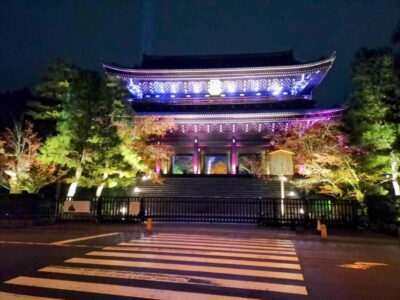 ★ 4.7Kyoto Geisha Walking Tour: Gion District & Hidden GemsFrom $252 hours
 ★ 4.7Kyoto: Gion Geisha District Walking Tour – Stories of GeishaFrom $202 hours
 ★ 4.9Best of Kyoto: Gion, Geisha, Pagodas & CobblestonesFrom $242 hours
 ★ 4.5Night Walk in Gion: Kyoto’s Geisha DistrictFrom $211h 40m
 ★ 5.0Kyoto Night Foodie Tour in Gion (9+ dishes + 6 Sake tastings)From $163
 ★ 5.0Kyoto Gion Geisha District Walking Tour – The Stories of GeishaFrom $25